
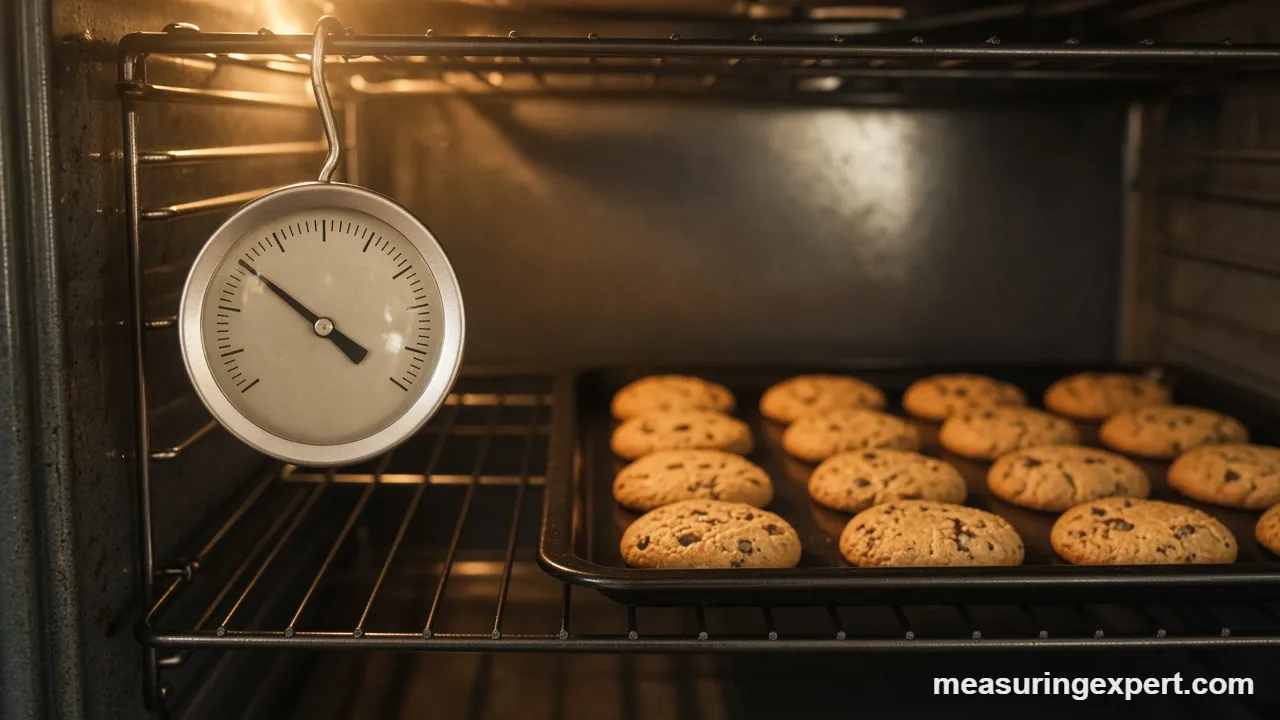
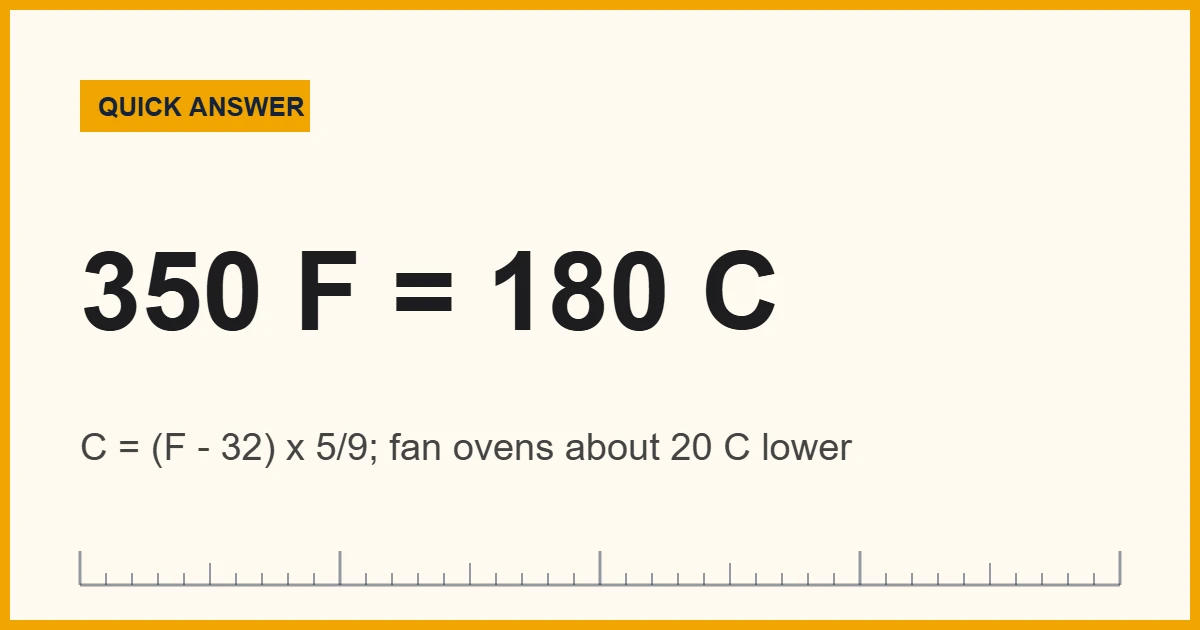
To convert Fahrenheit to Celsius for baking, subtract 32 and multiply by 5/9: C = (F – 32) x 5/9. So 350 F is exactly 176.7 C, which recipes round to 180 C. Likewise, 325 F is about 160 C, 375 F is 190 C, and 400 F is 200 C. For a fan oven, set about 20 C lower.
Oven Temperature Converter: Fahrenheit to Celsius
First, enter the temperature from your recipe and choose its scale. The converter then shows Celsius, Fahrenheit and kelvin at once, so you can also check a European recipe in reverse.
In general, American recipes give oven settings in Fahrenheit. Meanwhile, ovens sold in the UK, Europe, Australia and much of the world are marked in Celsius, and older British recipes use gas marks. As a result, a cake recipe from one country can leave you staring at a dial that does not match. Luckily, the fix is quick once you know the formula, and it never changes.
In fact, the two scales differ in two ways. First, they start at different points: water freezes at 32 F but at 0 C. Second, the steps are different sizes, because one Celsius degree is 1.8 Fahrenheit degrees. The US National Institute of Standards and Technology (NIST) gives the exact relationship on its SI temperature page: C = (F – 32) / 1.8. Also, dividing by 1.8 is the same as multiplying by 5/9, so both versions of the formula give identical answers.
Fahrenheit to Celsius Oven Temperature Chart
This chart covers the oven settings that appear in almost every baking book. The exact column, for example, comes straight from the formula. The recipe column, by contrast, shows the round number you will usually see printed in metric recipes and on oven dials.
| Fahrenheit | Celsius (exact) | Celsius (recipe) | Fan oven (C) | Gas mark | Typical use |
|---|---|---|---|---|---|
| 250 F | 121.1 C | 120 C | 100 C | 1/2 | Meringues, drying |
| 275 F | 135.0 C | 140 C | 120 C | 1 | Slow cooking, custards |
| 300 F | 148.9 C | 150 C | 130 C | 2 | Cheesecake, fruit cake |
| 325 F | 162.8 C | 160 to 170 C | 140 to 150 C | 3 | Pound cake, shortbread |
| 350 F | 176.7 C | 180 C | 160 C | 4 | Cakes, cookies, brownies |
| 375 F | 190.6 C | 190 C | 170 C | 5 | Muffins, pies, quick breads |
| 400 F | 204.4 C | 200 C | 180 C | 6 | Scones, roast vegetables |
| 425 F | 218.3 C | 220 C | 200 C | 7 | Puff pastry, bread |
| 450 F | 232.2 C | 230 C | 210 C | 8 | Pizza, crusty loaves |
| 475 F | 246.1 C | 240 C | 220 C | 9 | Very hot: pizza, flatbread |
So print this chart and tape it inside a cupboard door, since it covers nearly every recipe you will meet. The fan column follows the common 20 C reduction, and the gas marks follow the standard British scale.
How to Convert Fahrenheit to Celsius Step by Step
Of course, you can do the math with a phone calculator or on paper. For example, here is the method for 375 F.
- Write down the Fahrenheit number. In this example, the recipe says 375 F.
- Subtract 32. This removes the offset between the two freezing points: 375 – 32 = 343.
- Multiply by 5. Next, 343 x 5 = 1,715.
- Divide by 9. Then 1,715 / 9 = 190.56 C.
- Round for your oven. Finally, set the dial to 190 C, or 170 C if you use the fan setting.
C = (F – 32) x 5/9 | F = C x 9/5 + 32
Similarly, going the other way is just as simple. For instance, to turn 180 C into Fahrenheit, multiply by 9/5 (180 x 1.8 = 324) and add 32, which gives 356 F. American recipes, however, would call that 350 F.
A Quick Mental Shortcut
The popular shortcut “subtract 30, then halve” works for weather, but it fails at oven heat. For example, it turns 350 F into 160 C, which is almost 17 degrees too cool. Instead, a better shortcut is to subtract 32, halve the result, then add one tenth of that half. So for 350 F: 318 / 2 = 159, plus 15.9, gives about 175 C. As a result, that lands within 2 degrees of the exact answer.
Gas Marks vs Fahrenheit and Celsius
In contrast, gas marks are a British oven scale that still shows up in older UK cookbooks and on some gas cookers. Specifically, each step from gas mark 1 to 9 adds 25 F, starting at 275 F. Because of this, you can find the Fahrenheit value with a simple rule: F = 250 + (25 x gas mark). Gas marks 1/4 and 1/2 sit below that at about 225 F and 250 F.
| Gas mark | Fahrenheit | Celsius (recipe) | Oven description |
|---|---|---|---|
| 1/4 | 225 F | 110 C | Very cool |
| 1 | 275 F | 140 C | Cool |
| 3 | 325 F | 160 to 170 C | Moderate |
| 4 | 350 F | 180 C | Moderate |
| 5 | 375 F | 190 C | Moderately hot |
| 6 | 400 F | 200 C | Moderately hot |
| 7 | 425 F | 220 C | Hot |
| 8 | 450 F | 230 C | Hot |
However, gas mark 3 is the awkward one. Its exact value is 162.8 C, so some publishers print 160 C while others print 170 C. So if a cake browns too fast at 170 C, drop to 160 C next time. Similarly, cups and spoons differ between countries, so see our guide to US vs UK cooking measurements before you convert the ingredient list too.
Fahrenheit to Celsius for Fan and Convection Ovens
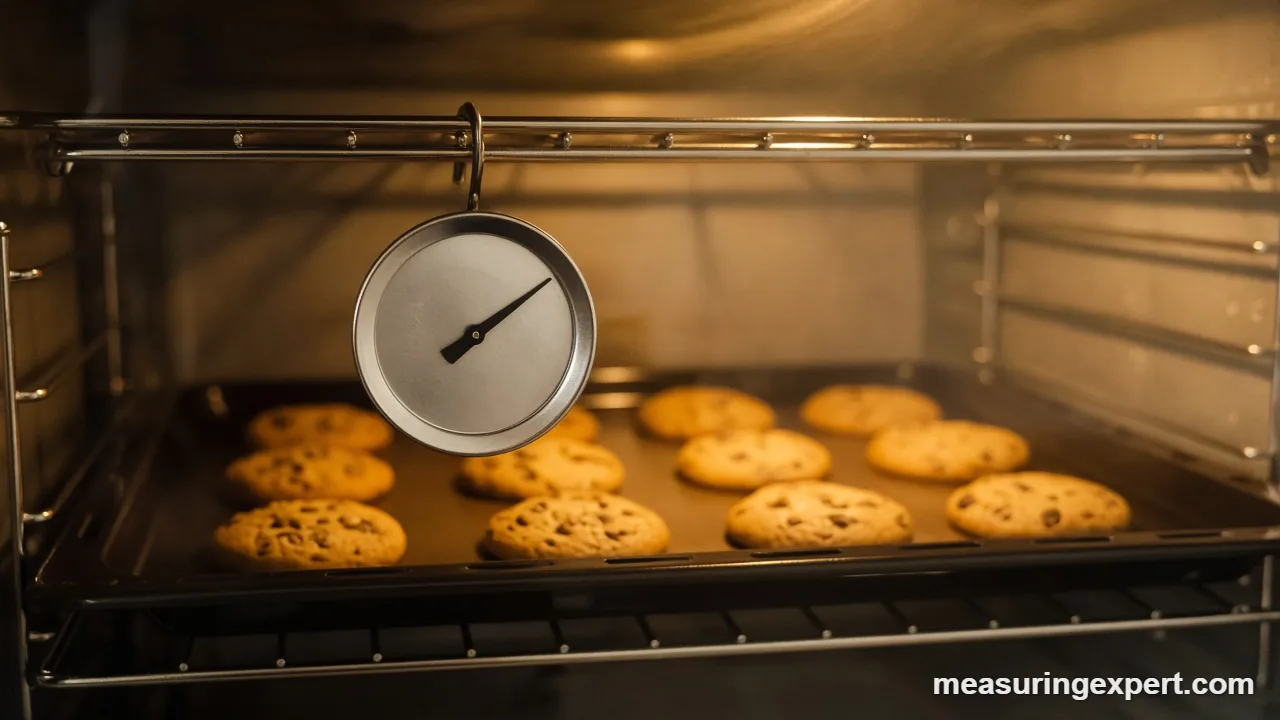
Unlike a conventional oven, a fan (convection) oven blows hot air around the food. Therefore it transfers heat faster than a still oven at the same setting. The usual advice is to lower the temperature by about 20 C, and the UK consumer group Which? says fan temperatures are typically around 20 C lower than conventional ones. American recipes and oven manuals, meanwhile, usually say to reduce by 25 F.
| People often confuse | What it really means |
|---|---|
| A temperature of 20 C | A reading on the scale, equal to 68 F (room temperature) |
| A difference of 20 C | A gap of 36 F, because each Celsius degree is 1.8 F degrees |
| A difference of 25 F | A gap of about 13.9 C, so the US fan rule is gentler than the UK one |
Above all, notice the trap in the last two rows. When you convert a difference, you do not subtract 32; you only multiply by 5/9. In practice, start with the smaller 25 F (about 14 C) reduction for delicate cakes. Then check for doneness a few minutes early, because fan ovens also cook faster.
Recommended Oven Thermometers for Accurate Baking
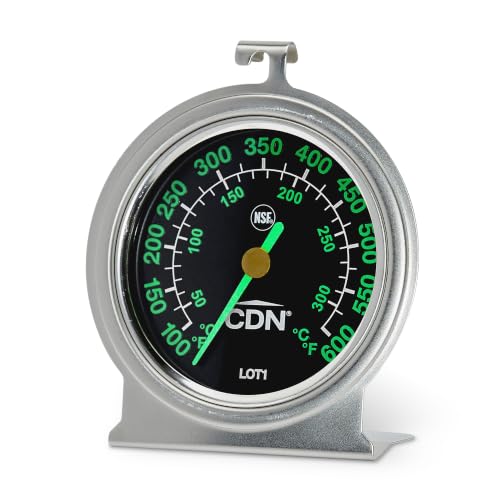
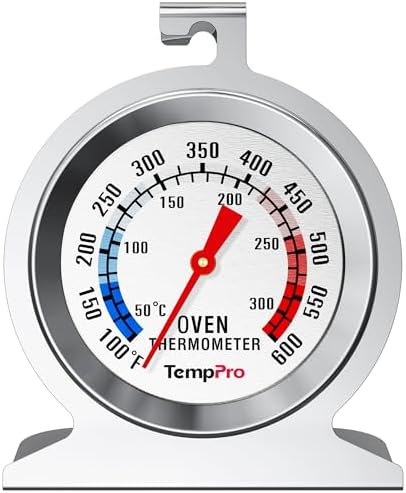
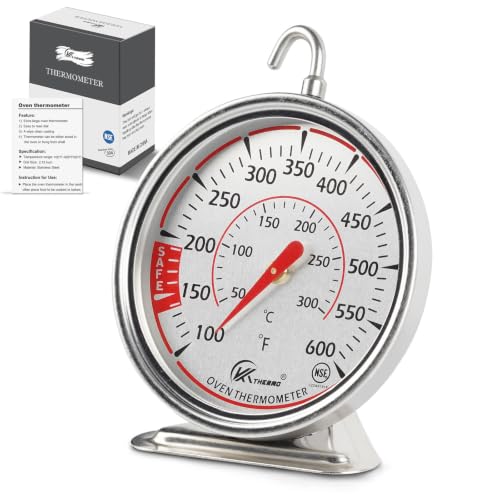
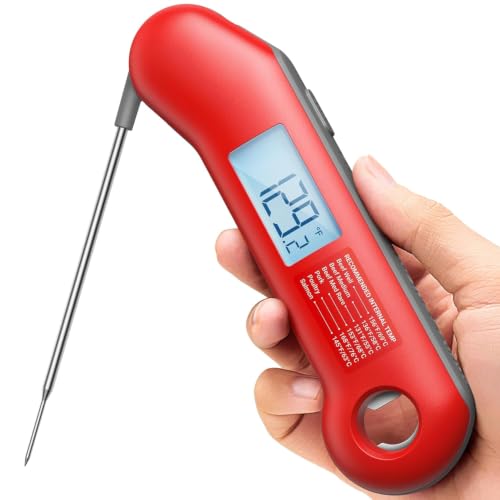
Still, a converted number only helps if your oven actually reaches it. An inexpensive oven thermometer shows the real air temperature inside the oven, so you can adjust the dial with confidence. Look for one that reads in both Fahrenheit and Celsius, hangs from or stands on a rack, and has a clear, large dial. A digital probe thermometer is also useful for checking the food itself. For a deeper comparison, see our roundup of the best oven thermometers.

As an Amazon Associate, Measuring Expert earns from qualifying purchases.
Is Your Oven Telling the Truth?
To begin with, ovens cycle on and off around the set point, so the air inside swings above and below it. In addition, many thermostats are simply off. For instance, in Which? testing, the least accurate ovens overshot the set temperature by as much as 40 C, and one model set to 180 C measured only 150 C in parts of the oven. So a perfect conversion can still bake badly in a poorly calibrated oven.
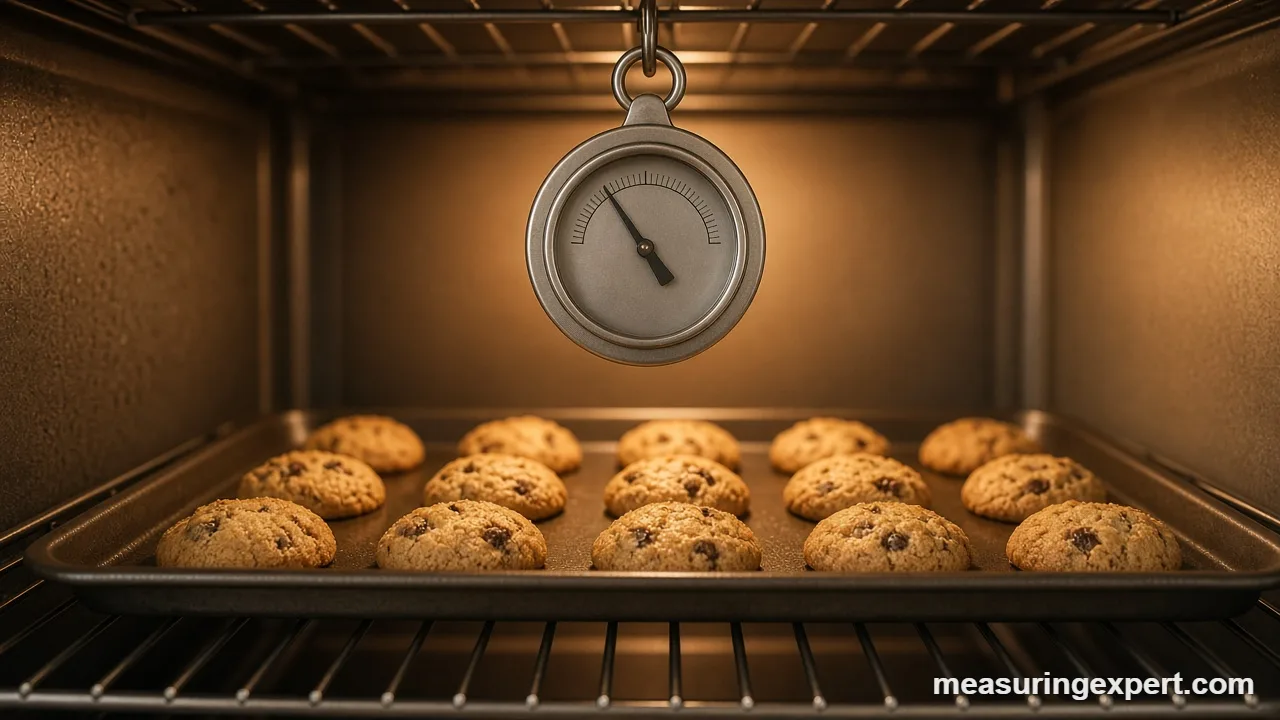
That is why you should check yours. First, place an oven thermometer on the middle rack. Next, preheat to 350 F (180 C) and wait at least 20 minutes. Then read the thermometer without opening the door if you can, and take two or three readings a few minutes apart. Finally, average them and compare that figure with the dial. If your oven runs 15 degrees hot, set it 15 degrees lower from now on.
For a wider look at why small errors add up in the kitchen, read our article on precision in cooking measurements.
Common Fahrenheit to Celsius Mistakes
Do
- Subtract 32 before you multiply by 5/9.
- Round to the nearest 5 or 10 degrees for the dial.
- Check whether a recipe already lists a fan setting.
- Use an oven thermometer to learn your oven’s real heat.
- Preheat fully before the tray goes in.
Don’t
- Use “subtract 30 and halve” for oven temperatures.
- Take 32 off when you convert a temperature difference.
- Reduce twice for a fan oven, because once is enough.
- Trust the dial on an older oven, because thermostats drift.
- Open the door often; each opening lets heat escape.
Honest Limits of Temperature Conversion
Admittedly, the formula itself is exact, but baking is not. For one thing, recipe writers round, so 180 C and 350 F are close cousins rather than identical twins. Moreover, oven thermostats drift, racks near the top run hotter, and dark metal pans brown faster than glass. In short, the converted number is a starting point. So watch the bake, use the doneness cues in the recipe, and adjust time before you adjust heat. Altitude also changes baking, although it changes the boiling point of water rather than the oven temperature itself.
Fahrenheit to Celsius Baking FAQs
What is 350 F in Celsius for baking?
350 F is exactly 176.7 C. Recipes and oven dials round it to 180 C, or 160 C on a fan setting.
What is the formula for Fahrenheit to Celsius?
Subtract 32 from the Fahrenheit number, then multiply by 5/9. Dividing by 1.8 instead of multiplying by 5/9 gives the same result.
What is 325 F in Celsius?
325 F works out to 162.8 C. Most metric recipes print 160 C, though some use 170 C for gas mark 3.
Is 375 F the same as 190 C?
Almost. The exact figure is 190.6 C, so setting 190 C is the standard conversion. It also matches gas mark 5.
What is 400 F in Celsius?
400 F equals 204.4 C. Recipes round it to 200 C, which is gas mark 6, or 180 C for a fan oven.
What are 425 F and 450 F in Celsius?
425 F is 218.3 C, rounded to 220 C. Meanwhile, 450 F is 232.2 C, usually written as 230 C.
How much lower should a fan oven be?
Lower it by about 20 C, or 25 F in US terms. However, skip this step if the recipe already gives a fan temperature.
Why does my cake burn even at the right temperature?
Your oven may run hot. First, check it with an oven thermometer, then lower the dial by the difference you measure.
What gas mark is 180 C?
180 C is gas mark 4, which equals 350 F. In fact, it is the most common setting for cakes and cookies.
Do I subtract 32 when converting a temperature change?
No. For a change, only multiply by 5/9. So a 25 F reduction equals about 13.9 C, and 20 C equals 36 F.
Fahrenheit to Celsius: The Bottom Line
To sum up, take the Fahrenheit number, subtract 32, and multiply by 5/9. As shown above, that turns 325, 350, 375, 400, 425 and 450 F into roughly 160, 180, 190, 200, 220 and 230 C. For a fan oven, go about 20 C lower, and for a British gas cooker, use the gas mark column above.
Above all, remember that your oven may not match its dial. A simple oven thermometer, together with the converter at the top of this page, gives you the right number and the right heat.
2 thoughts on “How to Convert Fahrenheit to Celsius for Baking (Oven Chart)”