

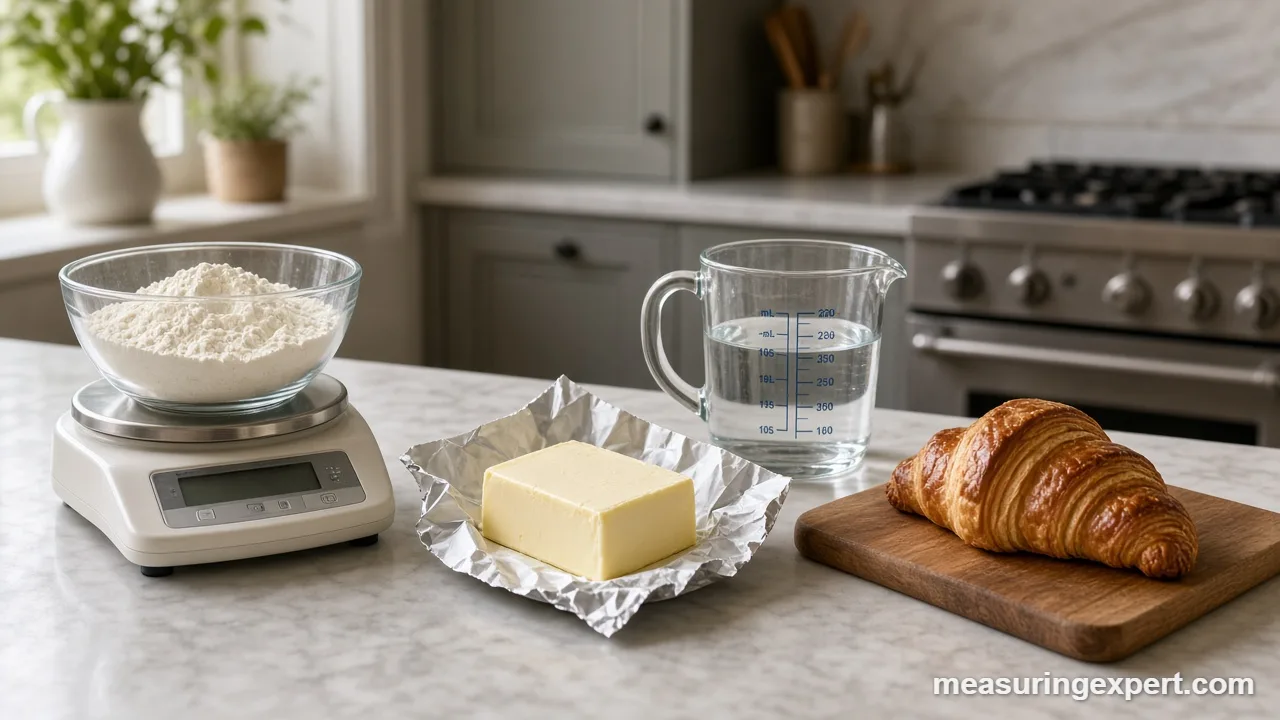
To convert European recipes to US measurements, weigh dry ingredients or use a per-ingredient chart: 100 g of all-purpose flour is about 3/4 cup plus 1 tbsp, while 100 g of sugar is about 1/2 cup. For liquids, 100 mL (1 dL) is 0.42 US cup. Finally, multiply Celsius by 1.8 and add 32 for Fahrenheit.
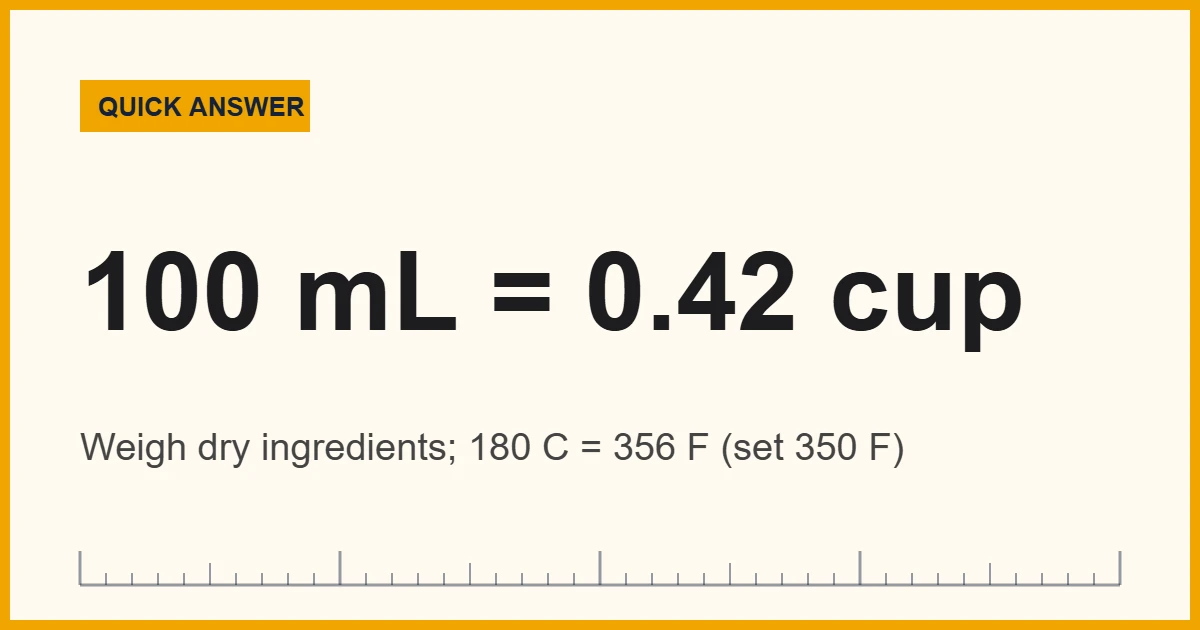
Convert European Recipes From mL to Cups
First, enter the milliliters from your recipe below. The converter then shows US cups, tablespoons, teaspoons and fluid ounces, using the exact US definitions. For deciliters, multiply by 100 first (2 dL = 200 mL); for centiliters, multiply by 10.
Most European recipes measure by weight, not by volume, because the metric system makes weighing easy. So a German cake recipe asks for 250 g of flour, a French one lists 20 cL of cream, and an Italian bread calls for type 00 flour at 220 C. By contrast, a US kitchen runs on cups, sticks of butter and Fahrenheit. Still, none of this is hard to convert. However, each part needs a different method, and that is where most mistakes happen.
Liquids are the easy part, because milliliters and cups both measure volume. Dry ingredients, however, are trickier. After all, a gram is a unit of mass, so the number of cups depends on the ingredient: 100 g of flour fills almost twice the space of 100 g of sugar. For example, King Arthur Baking’s ingredient weight chart puts a cup of all-purpose flour at 120 g but a cup of granulated sugar at 198 g. Meanwhile, the US National Institute of Standards and Technology (NIST) lists a cup as about 240 mL in its metric kitchen equivalents.
Metric Liquids in US Cups: Quick Chart
Use this chart for milk, water, stock, cream and oil, because they all convert by volume. In addition, the values use the exact US cup (236.59 mL), so they are slightly smaller than the rounded 240 mL figure on food labels.
| Metric amount | US cups | Practical measure |
|---|---|---|
| 10 mL (1 cL) | 0.04 cup | 2 tsp |
| 25 mL | 0.11 cup | 1 tbsp + 2 tsp |
| 50 mL (5 cL) | 0.21 cup | 3 tbsp + 1 tsp |
| 100 mL (1 dL) | 0.42 cup | scant 1/2 cup |
| 125 mL | 0.53 cup | 1/2 cup + 1/2 tbsp |
| 150 mL | 0.63 cup | about 2/3 cup |
| 200 mL (2 dL) | 0.85 cup | 3/4 cup + 1 1/2 tbsp |
| 250 mL (1/4 L) | 1.06 cups | 1 cup + 1 tbsp |
| 300 mL | 1.27 cups | 1 1/4 cups |
| 500 mL (1/2 L) | 2.11 cups | 2 cups + 2 tbsp |
| 750 mL | 3.17 cups | 3 cups + 2 3/4 tbsp |
| 1,000 mL (1 L) | 4.23 cups | 4 1/4 cups |
For convenience, print this chart and tape it inside a cabinet door. Also, a liquid measuring cup with a mL scale skips the math entirely, since you can simply pour to the metric line.
Grams to Cups for European Recipes, by Ingredient
Unfortunately, there is no single grams-to-cups number. Instead, every ingredient has its own weight per cup, depending on its density and how it settles. Overall, the figures below follow King Arthur Baking’s chart, except water, which is calculated from its density of 1 g per mL.
| Ingredient | 1 US cup weighs | 100 g is about | 250 g is about |
|---|---|---|---|
| All-purpose or bread flour | 120 g | 0.83 cup (3/4 cup + 1 tbsp) | 2 cups + 1 tbsp |
| Granulated sugar | 198 g | 0.51 cup (1/2 cup) | 1 1/4 cups |
| Brown sugar, packed | 213 g | 0.47 cup (scant 1/2 cup) | 1 cup + 3 tbsp |
| Powdered (icing) sugar | 113 g | 0.88 cup (7/8 cup) | 2 1/4 cups |
| Butter | 227 g | 0.44 cup (7 tbsp) | 1 cup + 1 2/3 tbsp |
| Cocoa powder, unsweetened | 84 g | 1.19 cups (1 cup + 3 tbsp) | 3 cups |
| Almond flour | 96 g | 1.04 cups | 2 1/2 cups + 1 2/3 tbsp |
| Chocolate chips | 170 g | 0.59 cup (1/2 cup + 1 1/2 tbsp) | 1 1/2 cups |
| Milk or heavy cream | 227 g | 0.44 cup | 1.10 cups |
| Vegetable oil | 198 g | 0.51 cup | 1 1/4 cups |
| Honey | 336 g (21 g per tbsp) | 0.30 cup (4 3/4 tbsp) | 3/4 cup |
| Water | 237 g | 0.42 cup | 1.06 cups |
So to convert any amount, divide the grams by the weight of one cup. For instance, 350 g of flour divided by 120 g gives 2.92 cups, or just under 3 cups. For ounces, see our guide to how much an ounce is; in short, 100 g equals 3.53 oz.
Recommended Tools for Converting European Recipes
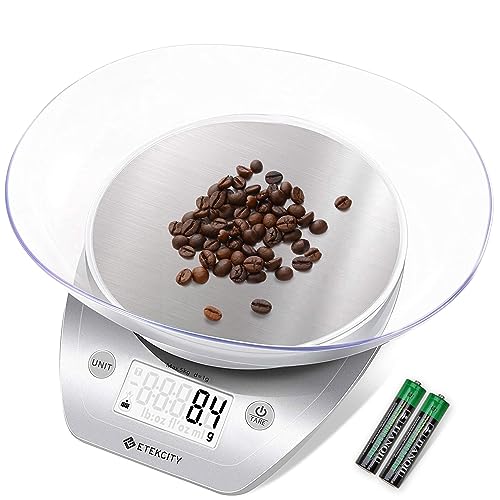
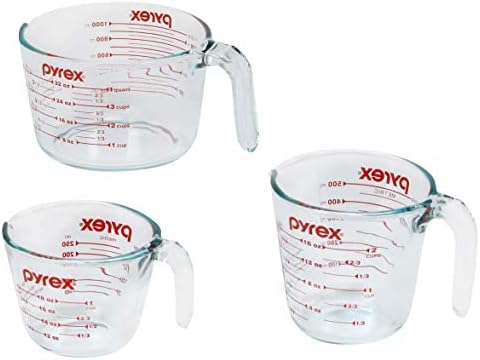
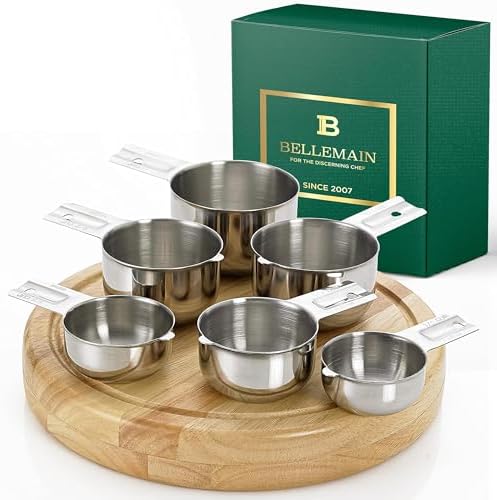
A digital kitchen scale is the single most useful tool here, because it lets you follow European recipes exactly as written, in grams. First, choose one with a tare button and 1 g steps. Next, add a clear liquid measuring cup marked in both mL and cups. Finally, a nesting set of dry measuring cups helps when you bake US recipes too.


As an Amazon Associate, Measuring Expert earns from qualifying purchases.
Deciliters, Centiliters and the Metric Cup
For instance, Scandinavian, Swiss and German recipes often use deciliters, while French and Italian ones like centiliters. Fortunately, both are simple multiples of the milliliter. For example, one deciliter (dL) is 100 mL, and one centiliter (cL) is 10 mL. As a result, 2 dL of milk is 200 mL, or about 0.85 US cup. Also, our explainer on what the dL measurement is covers the unit in more depth.
| Unit | US equivalent |
|---|---|
| 1 centiliter (cL) = 10 mL | 2 tsp (0.34 fl oz) |
| 1 deciliter (dL) = 100 mL | 0.42 cup (6 3/4 tbsp) |
| Metric cup = 250 mL | 1.06 US cups |
| US cup = 236.59 mL | 16 tbsp |
| US legal (label) cup = 240 mL | about 16 1/4 tbsp |
| Metric tablespoon = 15 mL | 1.01 US tbsp |
| Metric teaspoon = 5 mL | 1.01 US tsp |
Oven Temperatures in European Recipes
Likewise, European recipes give oven heat in degrees Celsius. To convert, first multiply by 9/5 (or 1.8) and then add 32. So 180 C becomes 356 F, which most US cooks round to 350 F. Similarly, 200 C is 392 F, usually set as 400 F. In addition, for a fuller table and baking-specific advice, see our Fahrenheit to Celsius baking guide.
| Celsius | Fahrenheit (usual US setting) |
|---|---|
| 150 C | 302 F (set 300 F) |
| 160 C | 320 F (set 325 F) |
| 170 C | 338 F (set 340 F) |
| 180 C | 356 F (set 350 F) |
| 190 C | 374 F (set 375 F) |
| 200 C | 392 F (set 400 F) |
| 220 C | 428 F (set 425 F) |
| 230 C | 446 F (set 450 F) |
| 250 C | 482 F (set 475 to 500 F) |
Also, watch for the word “fan” or “circulating air” (Umluft in German, chaleur tournante in French). Fan ovens cook faster, so recipes often list a lower temperature for them. So if your US oven has no convection setting, a common rule is to add about 20 C to a fan temperature. For example, “160 C fan” works out to about 180 C, or 350 F, in a regular oven.
European Butter Blocks vs US Sticks
First of all, in much of Europe butter comes in 250 g blocks (and sometimes 125 g half blocks), with no tablespoon marks on the wrapper. A US stick, by contrast, weighs 1/4 pound, or 113 g, and holds 8 tablespoons. Therefore, a 250 g block equals about 2.2 sticks, or 8.8 oz.
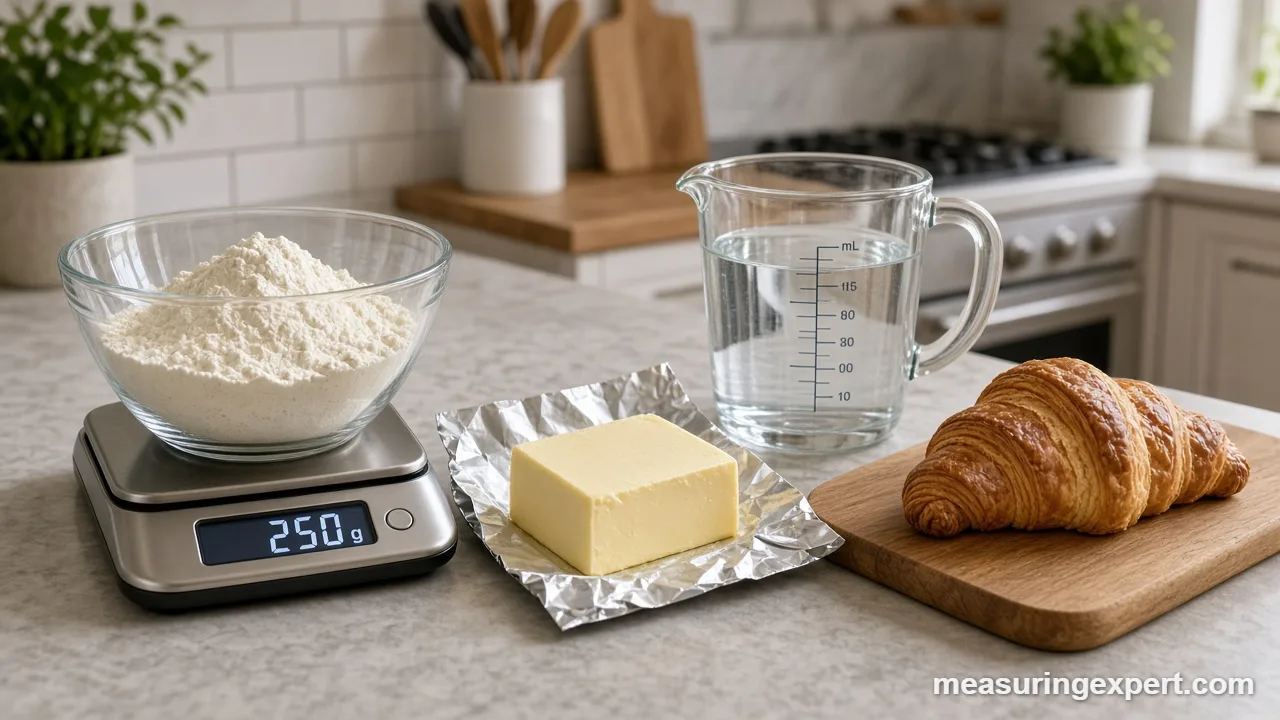
- 250 g butter = 2 sticks + 1 2/3 tbsp (about 1 cup + 1 2/3 tbsp).
- 125 g butter = 1 stick + about 1 tbsp.
- 100 g butter = 7 tbsp (just under 1 stick).
- 50 g butter = 3 1/2 tbsp.
Similarly, European-style butter tends to have a little more fat and less water than standard US butter. In addition, many European recipes assume unsalted butter, so use unsalted unless the recipe says otherwise.
Flour Type Numbers: 00, 405, 550 and T55
European flour, by contrast, is labeled by type number rather than by name. The number reflects ash, the mineral content left after a sample is burned, so a higher number means a darker, less refined flour. For example, German numbers give milligrams of ash per 100 g, so Type 405 has roughly 0.4 percent ash, while French numbers are about one tenth of the German figure. Italy, meanwhile, uses 00, 0, 1 and 2. The Weekend Bakery’s flour type guide lines them up like this:
| Germany | France | Italy | Closest US flour |
|---|---|---|---|
| Type 405 | T45 | 00 | Pastry or cake flour |
| Type 550 | T55 | 0 | All-purpose flour |
| Type 812 | T80 | 1 | Bread or high-gluten flour |
| Type 1050 | T110 | 2 | First clear flour |
| Type 1700 | T150 | Integrale | Whole wheat flour |
Above all, keep in mind that the type number describes refinement, not protein. Italian 00, for instance, is very finely milled, yet it can be low or high in protein depending on the brand. So for pizza dough, a 00 labeled for pizza is closer to US bread flour, while a 00 for cakes behaves like pastry flour. In short, US all-purpose flour is a safe stand-in for Type 405 and 550 in most home baking.
How to Convert European Recipes Step by Step
- Read the whole recipe first. Then note every unit: g, kg, mL, dL, cL, C and any “fan” oven setting.
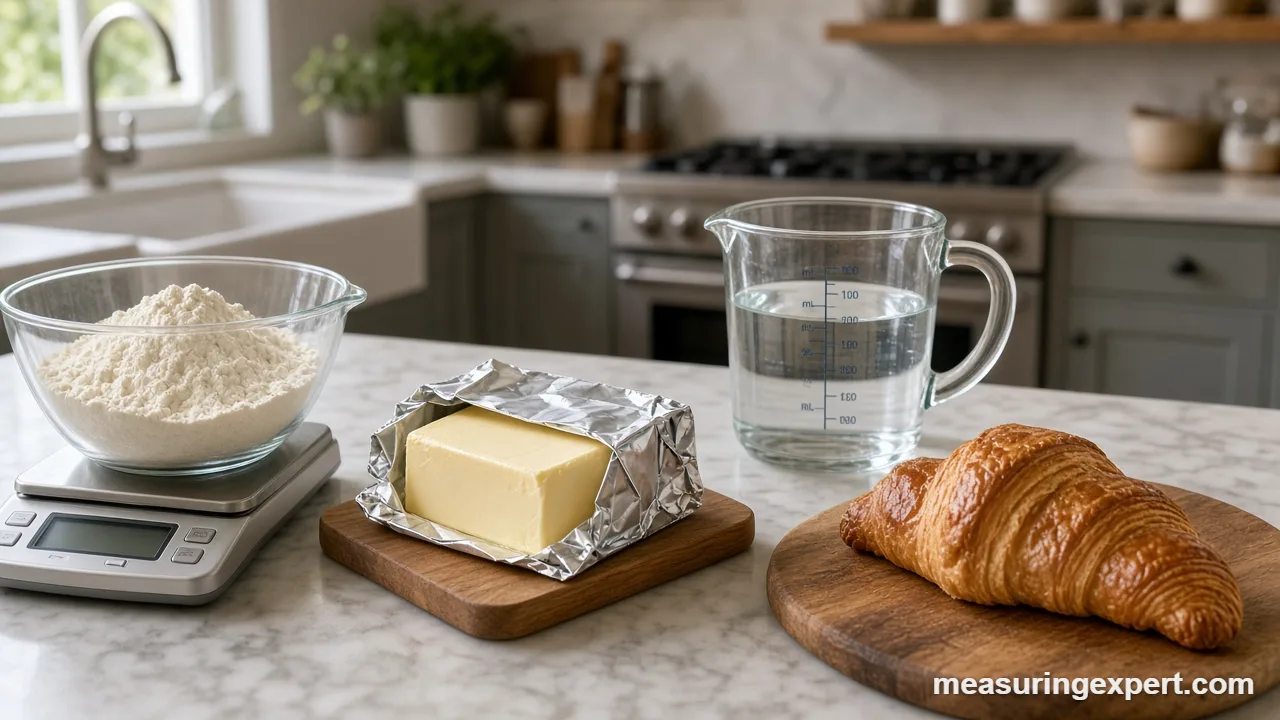
- Weigh dry ingredients if you can. Put a bowl on the scale, press tare, and then add grams exactly as written.
- Without a scale, use the ingredient chart. In that case, divide the grams by the weight of one cup of that ingredient.
- Convert liquids by volume. Next, enter the mL in the converter above, or pour to the mL line on a measuring cup.
- Swap butter blocks for sticks. Use 113 g per stick, so 250 g is about 2 sticks plus 1 2/3 tablespoons.
- Pick the matching flour. For example, use pastry flour for 405 or T45 and all-purpose for 550 or T55.
- Set the oven in Fahrenheit. Multiply Celsius by 1.8, add 32, and add about 20 C first for a fan temperature.
- Write the US amounts on the recipe. As a result, you can cook straight from your notes next time.
Do and Don’t
Do
- Weigh flour, sugar and butter in grams.
- Also check whether “cup” means 250 mL.
- Look for “fan” next to oven temperatures, because it changes the setting.
- Then spoon and level flour when using cups.
- Finally, keep salt and yeast in grams or exact spoons.
Don’t
- Use one grams-to-cups number for everything, because densities differ.
- Pack flour into a cup by scooping, because it adds weight.
- Trust the oven dial without a thermometer, since many run hot.
- Treat Italian 00 as one fixed flour, since protein varies.
- Round small amounts of leavening up, because it can ruin flavor.
Honest Limits of Recipe Conversion
Cup conversions for dry ingredients are only averages, because no two scoops are identical. For one thing, flour settles in the bag, sugar crystals vary in size, and two people filling the same cup can differ by 10 percent or more. Also, European and US flours absorb water differently, so a converted bread dough may need a spoonful more or less liquid. In addition, rounding adds small errors. For example, 180 C is really 356 F, not 350 F. Of course, these gaps rarely ruin a stew. Still, in baking they add up, which is why weighing is the most reliable way to follow a European recipe.
When Accuracy Really Matters
For soups, sauces and roasts, rounded conversions are fine, since small errors even out. However, three cases call for more care:
- Leavening and yeast. A few grams of baking powder or yeast make a big difference, so weigh them or use exact metric spoons.
- Salt in bread and cures. Different salts have different densities, so grams are far more reliable than spoons.
- Candy, caramel and pastry. These depend on exact ratios and temperatures, so use a scale and an accurate thermometer.
European Recipes: Frequently Asked Questions
Why do European recipes use grams instead of cups?
Europe uses the metric system, and weighing is also more consistent than scooping. After all, a gram of flour is always a gram, while a cup of flour can vary with how it is filled.
How many grams is 1 cup of flour?
One US cup of all-purpose flour weighs about 120 g when spooned and leveled. However, scooped flour can weigh more.
How many cups is 250 g of sugar?
About 1 1/4 US cups of granulated sugar, since one cup weighs about 198 g.
How many cups is 1 dL?
In short, one deciliter is 100 mL, which is 0.42 US cup, or about 6 3/4 tablespoons.
How do I convert 180 C for a US oven?
180 C equals 356 F. So most cooks set the oven to 350 F. If the recipe says 180 C fan, use about 200 C, or 400 F, in a regular oven.
How many sticks of butter are in 250 g?
About 2.2 sticks. That is 2 sticks plus 1 2/3 tablespoons, because one US stick weighs 113 g.
What is the US equivalent of type 00 flour?
First, check the protein. Soft 00 for cakes is close to pastry flour, while 00 made for pizza is closer to bread flour.
What can I use instead of type 405 or 550 flour?
Use US pastry or all-purpose flour for type 405, and also all-purpose flour for type 550.
Do European recipes use a different cup size?
Often, yes. For example, a metric cup is 250 mL, while a US cup is 236.59 mL. The metric cup is about 6 percent larger.
Is a European tablespoon the same as a US tablespoon?
Nearly. A metric tablespoon is 15 mL and a US tablespoon is 14.79 mL, so you can use them interchangeably.
Converting European Recipes: The Bottom Line
To sum up, liquids convert directly: 100 mL is 0.42 cup and 250 mL is just over 1 cup. Dry ingredients, however, need a per-ingredient chart or a scale, because 100 g of flour and 100 g of sugar fill very different cups. Meanwhile, ovens need Celsius times 1.8 plus 32, butter blocks need 113 g per stick, and flour type numbers point to the closest US flour.
Finally, if you cook from European recipes often, a kitchen scale is the best upgrade you can make. Until then, keep the charts above handy and use the converter at the top of this page for any milliliter amount.