

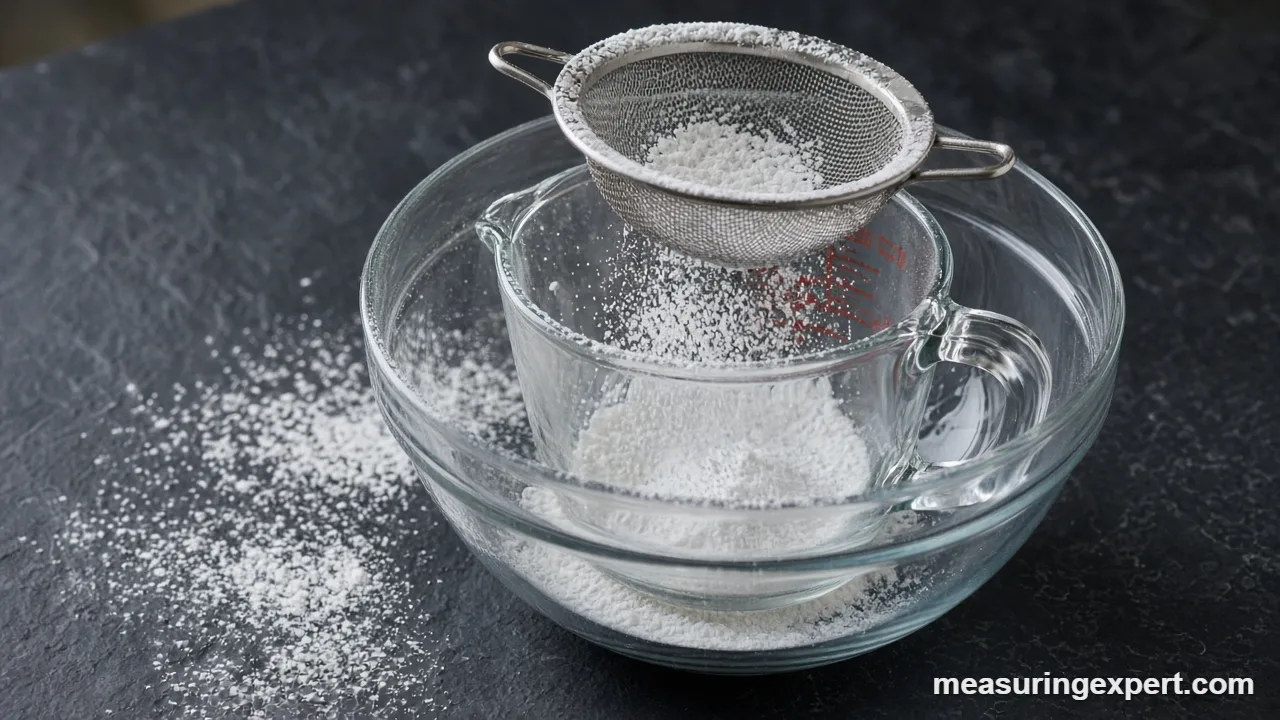
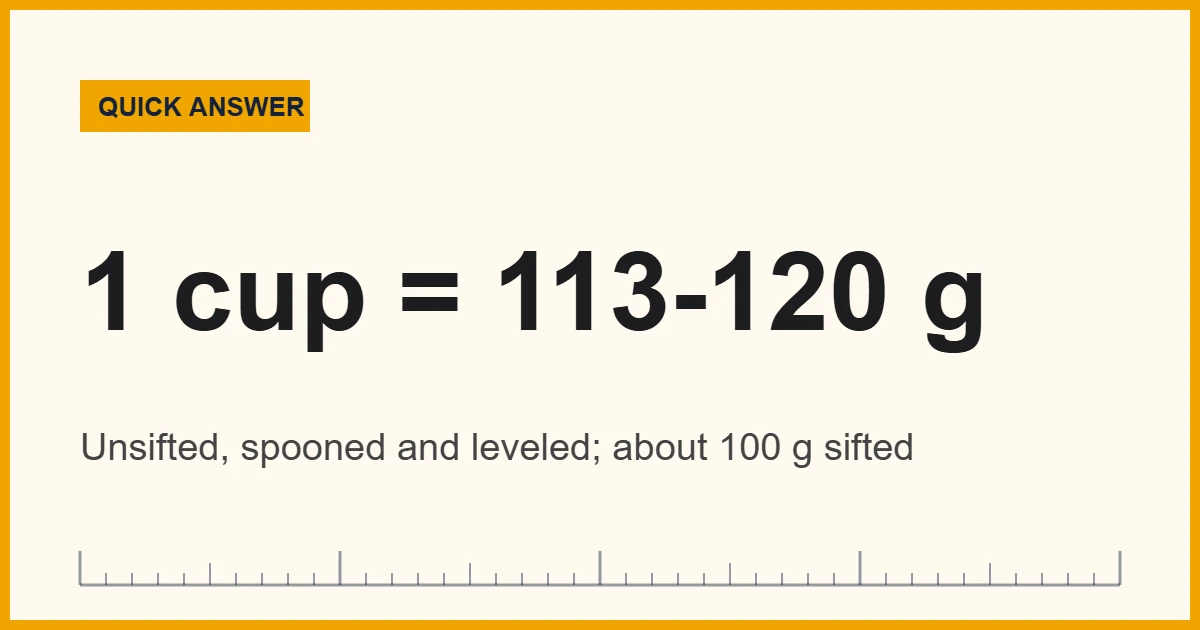
To measure powdered sugar without clumps, sift it first if the recipe says “1 cup sifted powdered sugar,” then spoon it into a dry cup and level it. If the recipe says “1 cup powdered sugar, sifted,” measure first and sift after. One unsifted US cup weighs about 113 to 120 g (4 to 4.2 oz).
Convert Grams to Ounces for Your Recipe
Recipes list powdered sugar in cups, grams or ounces, so it helps to switch quickly. Next, type a weight below. For example, enter 113 for one cup by the King Arthur chart, or 120 for the USDA figure. The converter then shows ounces, pounds and kilograms.
Powdered sugar, also called confectioners’ sugar or icing sugar, is granulated sugar ground to a fine powder. Most US brands also add a little cornstarch to slow caking. Because the grains are so small, the powder packs down in the bag and soaks up moisture from the air. As a result, a scooped cup can hold far more sugar than a fluffy, spooned cup.
That gap matters, especially in frosting, glaze and meringue. For instance, too much sugar makes buttercream stiff and gritty, while too little leaves glaze runny. King Arthur Baking, a flour company that publishes one of the most used ingredient weight charts, lists one cup of unsifted confectioners’ sugar at 113 g, or 4 oz. Meanwhile, USDA nutrient data puts a cup closer to 120 g unsifted and 100 g sifted. In short, the method you use can shift the amount by 15 to 20 percent.
Sift Before or After? Read the Recipe Wording
The position of the word “sifted” tells you when to sift. In fact, recipe writers follow a simple grammar rule. If the word comes before the ingredient, it describes the sugar going into the cup. On the other hand, if it comes after a comma, it describes a step you do after measuring.
| Recipe says | What to do | About how much per cup |
|---|---|---|
| 1 cup sifted powdered sugar | Sift onto paper first, then spoon the sifted sugar into the cup and level it. | about 100 g (3.5 oz) |
| 1 cup powdered sugar, sifted | Spoon and level unsifted sugar first, then sift it into the bowl. | about 113 to 120 g (4 to 4.2 oz) |
| 1 cup powdered sugar (no sifting note) | Spoon and level unsifted sugar. Sift only if you see lumps. | about 113 to 120 g |
| 120 g powdered sugar | Weigh it. Sifting changes nothing, because weight stays the same. | exactly what the scale shows |
Measure Powdered Sugar by Weight: Cups to Grams Chart
This chart uses 113 g per cup from King Arthur and 120 g per cup from USDA data for unsifted sugar. By contrast, sifted sugar uses about 100 g per cup. Ounces are avoirdupois weight ounces, where 1 oz equals 28.35 g. Also, feel free to print it and tape it inside a cabinet door.
| US cup measure | Unsifted (grams) | Unsifted (ounces) | Sifted (grams) |
|---|---|---|---|
| 1 tablespoon | 7 to 8 g | 0.25 oz | about 6 g |
| 1/4 cup | 28 to 30 g | 1.0 to 1.1 oz | 25 g |
| 1/3 cup | 38 to 40 g | 1.3 to 1.4 oz | 33 g |
| 1/2 cup | 57 to 60 g | 2.0 to 2.1 oz | 50 g |
| 2/3 cup | 75 to 80 g | 2.7 to 2.8 oz | 67 g |
| 3/4 cup | 85 to 90 g | 3.0 to 3.2 oz | 75 g |
| 1 cup | 113 to 120 g | 4.0 to 4.2 oz | 100 g |
| 2 cups | 226 to 240 g | 8.0 to 8.5 oz | 200 g |
| 3 cups | 339 to 360 g | 12.0 to 12.7 oz | 300 g |
| 4 cups | 452 to 480 g | 15.9 to 16.9 oz | 400 g |
So a 1 lb (454 g) box holds roughly 3 3/4 to 4 cups of unsifted powdered sugar. For other baking staples, see our cups to grams chart for baking.
Recommended Tools to Measure Powdered Sugar
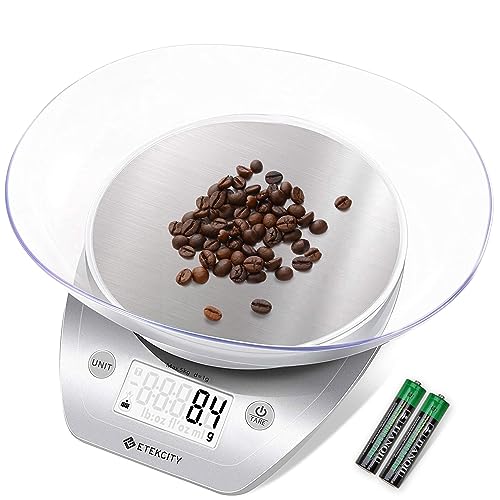
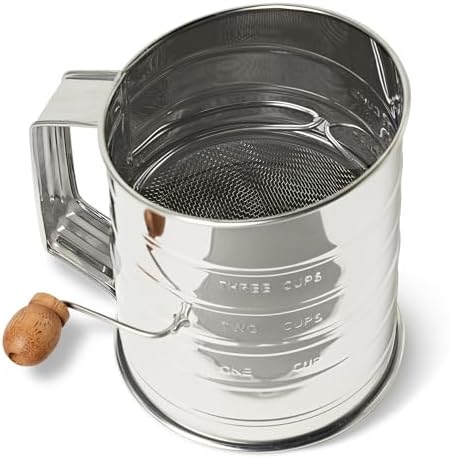
A few simple tools solve most clumping and accuracy problems. First, a fine-mesh strainer or a crank sifter breaks up lumps in seconds. Next, a digital kitchen scale that reads in 1 g steps removes the guesswork of cups. Finally, an airtight container keeps the sugar dry, so it clumps less in the first place.



As an Amazon Associate, Measuring Expert earns from qualifying purchases.
How to Measure Powdered Sugar Step by Step
In general, use this spoon-and-level method whenever a recipe gives cups. In fact, it matches the way King Arthur and most test kitchens fill a dry cup.
- Read the wording. Check whether “sifted” comes before or after the ingredient, and decide when to sift.
- Loosen the sugar. Stir the sugar in its bag or container with a spoon to break up packed areas.
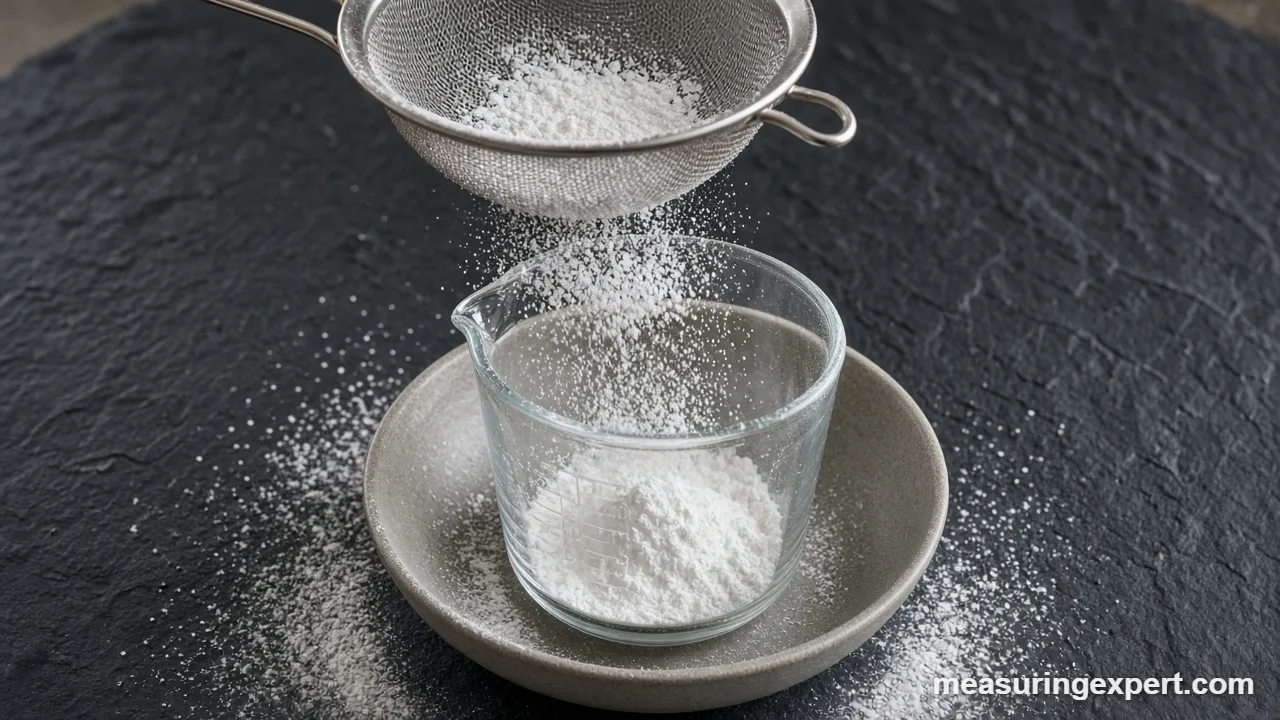
- Sift if needed. Shake the sugar through a fine-mesh strainer onto parchment or into a bowl.
- Spoon it in. Use a large spoon to drop sugar lightly into a dry measuring cup until it mounds over the rim.
- Level the top. Sweep a straight edge, such as the back of a knife, across the rim in one pass.
- Avoid packing. Do not tap, shake or press the cup, since that squeezes in extra sugar.
- Or weigh it instead. Set a bowl on a scale, press tare, and add sugar until you reach the gram weight.
Why Clumps Form in the Bag
First of all, sugar attracts water from the air. Powdered sugar has a huge surface area for its weight, so it picks up humidity fast. As a result, the moist grains stick together and harden into lumps. Of course, cornstarch slows this process, but it cannot stop it in a damp kitchen.
Packing also plays a part. For one thing, boxes and bags settle during shipping, and the bottom layer gets pressed under the weight above it. Meanwhile, warm spots near the stove or dishwasher add steam. For these reasons, an old, half-open box almost always has hard lumps at the bottom.
| People often confuse | What it really means |
|---|---|
| Lumps vs caking | Soft lumps break apart in a sieve. Hard caking needs crushing or a quick pulse in a blender. |
| Powdered sugar vs superfine sugar | Superfine (caster) sugar is fine crystals with no starch. Powdered sugar is ground much finer and usually contains cornstarch. |
| Fluid ounce vs ounce | A fluid ounce measures volume. A weight ounce is 28.35 g; recipes for powdered sugar in ounces mean weight. |
Storage That Keeps Lumps Away
Above all, good storage saves you from sifting every time. First, move the sugar from the paper bag into an airtight container with a gasket lid. Next, keep it in a cool, dry cabinet away from the stove, kettle and dishwasher. Also, close the lid right after each use, because even a few humid hours can start new lumps.
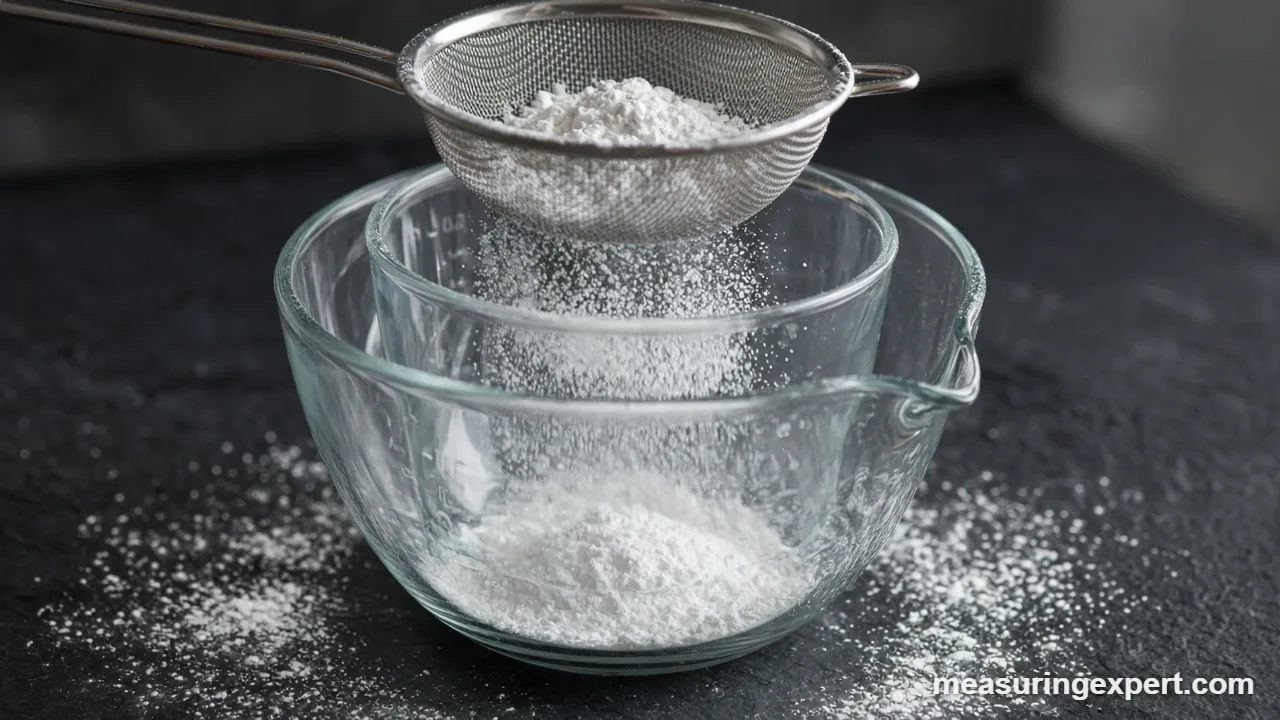
In addition, use a dry spoon every time. Otherwise, a wet or buttery spoon drops moisture into the container, and that spot turns into a hard clump. Likewise, if you live somewhere very humid, buy smaller boxes that you finish within a few months. Some bakers add a food-safe desiccant packet made for pantry use; however, never use packets from shoe boxes or electronics, since those are not food grade.
How to Fix Lumpy Sugar Before You Measure Powdered Sugar
- Sieve and press. Push the sugar through a strainer with the back of a spoon; most lumps crumble right away.
- Roll hard chunks. Seal them in a zip-top bag and roll with a rolling pin.
- Use a blender. Pulse for a few seconds in a completely dry jar, then let the dust settle before opening.
- Whisk in a bowl. For a quick dusting, a whisk breaks soft clumps almost as well as a sifter.
Then, after fixing the lumps, return to the spoon-and-level method or simply weigh the amount. Our guide on how to measure baking ingredients covers the same approach for flour, cocoa and brown sugar.
Do and Don’t When You Measure Powdered Sugar
Do
- Check where the word “sifted” appears.
- Spoon sugar loosely into a dry cup.
- Level with one straight sweep.
- Weigh it when the recipe gives grams.
- Keep the container sealed and dry.
Don’t
- Scoop straight from the bag.
- Tap the cup to settle the powder.
- Use a liquid measuring cup for dry sugar.
- Swap granulated sugar one-for-one by volume.
- Dry damp sugar in a hot oven.
Honest Limits of Cup Measurements
Published weights for a cup of powdered sugar range from about 100 g to 125 g. Specifically, the spread comes from sifting, brand, humidity and how gently you spoon. Therefore, the numbers in this guide describe typical results, not a fixed density. Indeed, even a careful baker can land 5 g above or below on any given day.
For most cookie glazes, that difference does not matter, because you adjust thickness with a few drops of milk anyway. For delicate recipes such as macarons, royal icing or a stable meringue, however, a scale gives far more consistent results. Similarly, if you scale a recipe up for a big batch, small cup errors multiply quickly.
Frequently Asked Questions
How do you measure powdered sugar correctly?
Stir the sugar to loosen it, spoon it lightly into a dry measuring cup, and level it with a straight edge. For the most accurate result, weigh it instead: about 113 to 120 g per unsifted cup.
Should you sift powdered sugar before or after measuring?
Follow the wording. “1 cup sifted powdered sugar” means sift first, then measure. “1 cup powdered sugar, sifted” means measure first, then sift.
How much does 1 cup of powdered sugar weigh?
King Arthur lists 113 g (4 oz) for one unsifted cup. USDA data gives about 120 g unsifted and 100 g sifted.
Is 2 cups of powdered sugar 16 oz?
No. Two cups of unsifted powdered sugar weigh about 8 to 8.5 oz (226 to 240 g). A 16 oz (1 lb) box holds roughly 3 3/4 to 4 cups.
How many cups are in a 1 lb box of powdered sugar?
A 1 lb box holds about 3 3/4 to 4 cups unsifted, depending on how you fill the cup. Sifted, it can stretch to about 4 1/2 cups.
Can I measure powdered sugar without a sifter?
Yes. Press it through a fine-mesh strainer, whisk it in a bowl, or skip sifting and weigh it. A scale gives the right amount no matter how lumpy the sugar looks.
How do you keep powdered sugar from clumping?
Store it in an airtight container in a cool, dry place, close the lid right away, and always use a dry spoon. Buy smaller boxes if your kitchen is humid.
How many grams is a tablespoon of powdered sugar?
A level tablespoon of unsifted powdered sugar weighs about 7 to 8 g, or roughly a quarter ounce. Sifted, it is closer to 6 g.
Can I swap granulated sugar for powdered sugar by volume?
Not one-for-one. A cup of granulated sugar weighs about 198 g, so it is much heavier and coarser. Weigh the sugar and expect a different texture.
Why does my frosting turn out stiff when I measure powdered sugar by cups?
You probably scooped or packed the cup, which adds extra sugar. Spoon and level next time, or weigh it, and thin stiff frosting with a little milk.
The Bottom Line
To sum up, read where the word “sifted” sits, spoon the sugar into a dry cup, and level it without packing. One unsifted cup weighs about 113 to 120 g, while a sifted cup weighs about 100 g. Meanwhile, airtight, dry storage keeps lumps from forming at all.
Finally, if your recipe lists grams, use a scale and skip the cup. Then the converter at the top of this page turns those grams into ounces or pounds in a second.