

Precision in cooking means measuring the same way every time so a recipe turns out as written. It matters most in baking, where flour, sugar, fat, liquid and leavening work as a chemical ratio. Weighing ingredients in grams, leveling spoons and checking oven heat with a thermometer give the most repeatable results.
Most home cooks have lived this story. You bake the same cookie recipe twice, and one batch spreads into thin, greasy disks while the other stays tall and cakey. The recipe did not change. Instead, the amounts that went into the bowl changed, because a cup of flour scooped one day and spooned the next does not hold the same amount.
In short: precision in cooking is about repeatability. A soup or stir-fry forgives small errors, because you taste and adjust as you go. A cake, a loaf of bread or a batch of macarons does not, because you cannot taste the batter and fix it after it bakes. Flour gives structure, sugar keeps things tender and moist, fat adds richness, and leaveners such as baking soda and yeast make gas. Change one by 15 or 20 percent and the texture shifts. That is why bakers weigh dry ingredients, level every spoonful, and check the real oven temperature instead of trusting the dial.
What Precision in Cooking Really Depends On
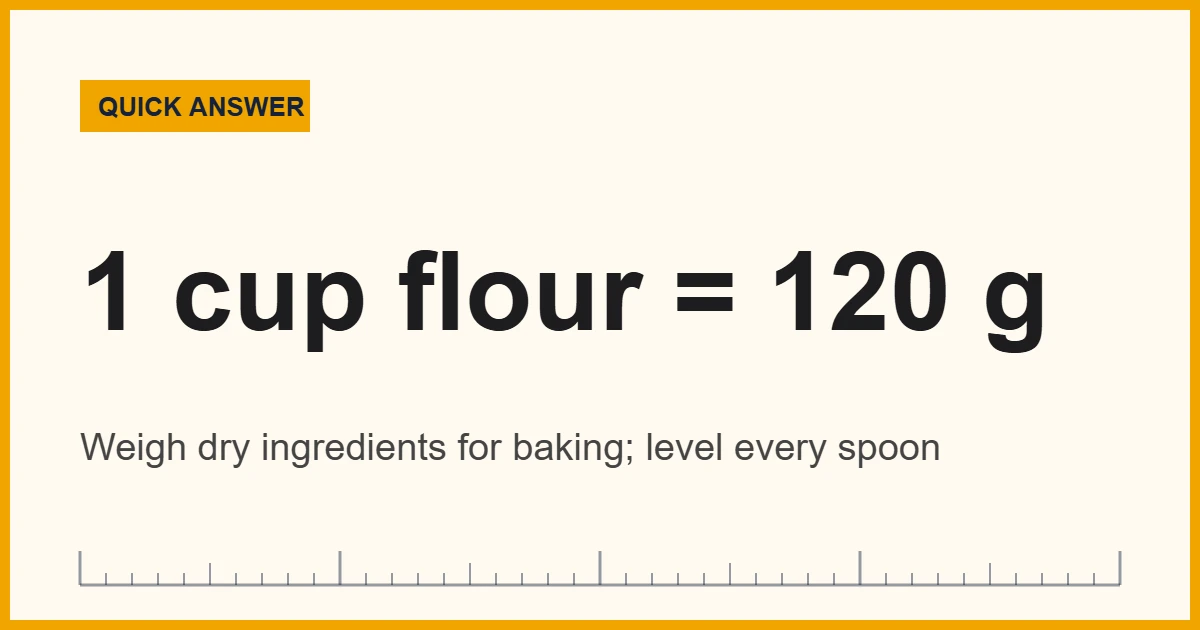
The numbers behind these units are fixed. For example, the US National Institute of Standards and Technology (NIST) lists simple metric kitchen equivalents: about 5 mL for a teaspoon, 15 mL for a tablespoon and 240 mL for a cup. Similarly, King Arthur Baking’s ingredient weight chart sets a cup of all-purpose flour at 120 grams. The weak link, therefore, is not the unit itself but how we fill it.
Below, you will find a gram and ounce converter, the tools that help, a clear look at accuracy versus precision, and a simple method for measuring well. After that come the mistakes that cause most baking failures and the limits of even careful measuring.
Convert Recipe Weights Between Grams and Ounces
Many precise recipes list grams, while US kitchen scales often default to ounces. So enter the weight from your recipe below and pick its unit. The converter then uses the exact definition of 1 ounce = 28.349523125 grams and shows the result in ounces, pounds and kilograms.
Recommended Tools for Precision in Cooking
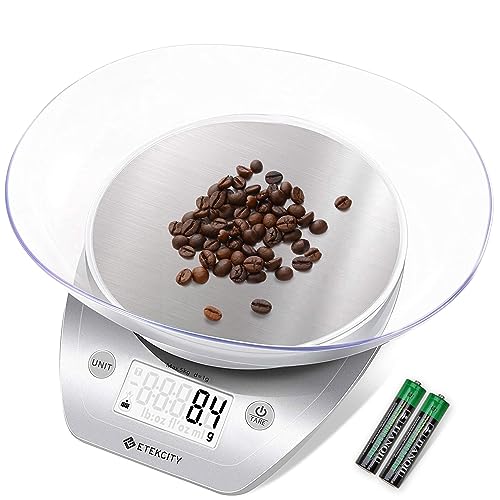
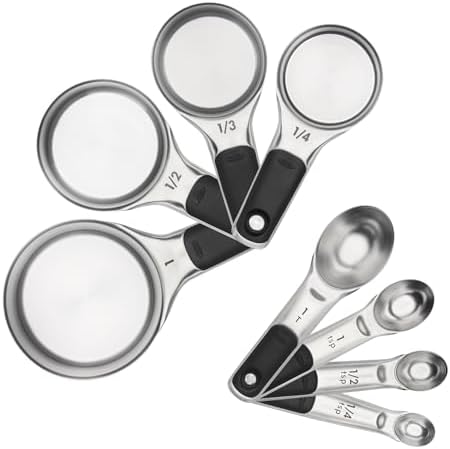
A short list of tools covers almost every recipe. First, a digital kitchen scale with a tare button and 1-gram steps does most of the work. Next, a small scale that reads to 0.1 gram helps with yeast, salt and spices. In addition, a set of engraved measuring cups and spoons with flat rims handles recipes written in volume. Finally, an instant-read thermometer tells you when meat, bread and custard are done, so you are not guessing from color alone.



As an Amazon Associate, Measuring Expert earns from qualifying purchases.
Key Takeaways
- Precision in cooking is about getting the same result each time you make a recipe.
- Baking needs the most care because its ingredients work as a fixed ratio.
- A cup of all-purpose flour should weigh about 120 g (4 1/4 oz), yet a scooped cup often weighs more.
- Weighing in grams removes most of the error that comes from packing and scooping.
- Level every spoonful of baking soda, baking powder and salt.
- Check your oven with a separate thermometer; many dials run hot or cold.
- Savory cooking can be looser, because you can taste and adjust.
Accuracy vs Precision in Cooking: Not the Same Thing
People often use these words as if they meant the same thing. In measurement, however, they describe two different qualities, and a kitchen needs both.
| Term | What it means | Kitchen example |
|---|---|---|
| Accuracy | How close a measurement is to the true value | Your scale reads 500 g when you place a 500 g bag of sugar on it. |
| Precision | How close repeated measurements are to each other | Three cups of flour you measure in a row all weigh 120 to 122 g. |
| Resolution | The smallest step a tool can show | A typical kitchen scale shows 1 g steps; a pocket scale shows 0.1 g. |
You can be precise without being accurate. For instance, if you always pack flour tightly, every cup weighs about the same, but every cup is too heavy. Likewise, an oven that always runs 25 degrees hot is consistent but wrong. Good precision in cooking, then, means consistent technique plus tools that read true.
Why Precision in Cooking Matters Most in Baking
Baking is chemistry you cannot taste halfway through. Flour proteins form gluten, which gives bread and cake their structure. Sugar holds on to water, so it keeps crumbs soft and helps cookies spread. Meanwhile, fat coats the flour and limits gluten, which makes pastry tender. Leaveners then release gas that the structure has to trap.
Because each ingredient has a job, the ratio between them matters more than any single amount. Bread bakers make this clear with baker’s percentages, where every ingredient is written as a share of the flour weight. A simple loaf might use 500 g flour, 350 g water (70 percent), 10 g salt (2 percent) and 7 g instant yeast (1.4 percent). As a result, if your flour is off by 50 g, the dough is no longer 70 percent water, and it handles very differently.
| Ingredient | Too much | Too little |
|---|---|---|
| Flour | Dry, dense, crumbly cake; cookies that do not spread | Weak structure; cakes sink and cookies spread thin |
| Sugar | Sticky, overly brown, may collapse | Pale, dry, less tender |
| Butter or oil | Greasy, heavy, extra spread | Tough, dry, short shelf life |
| Baking soda | Soapy or bitter taste, dark crumb | Flat, dense texture |
| Salt | Salty taste; in bread, slow rise | Flat taste; in bread, slack dough |
Weight vs Volume: The Biggest Source of Error
Volume tells you how much space an ingredient fills. Weight tells you how much of it there actually is. For liquids such as water and milk, the two line up well; a US cup of water holds about 236.6 mL and weighs close to 236 g. Dry ingredients, however, trap air, so the same cup can hold very different amounts depending on how you fill it.
Flour is the classic case. If you spoon it into the cup and level it, you get close to 120 g. If you dip the cup into the bag and pack it, you can easily end up with 140 g or more. For example, a cup weighing 145 g is about 21 percent heavier than intended. Over three cups in a cake recipe, that adds up to roughly the weight of an extra half cup of flour. Our full guide to weight vs volume in cooking includes a grams-per-cup chart for common ingredients.
| Ingredient (1 US cup) | Typical weight | Why it varies |
|---|---|---|
| All-purpose flour | 120 g (4.23 oz) | Packing, sifting, humidity |
| Granulated sugar | 198 g (6.98 oz) | Crystal size |
| Brown sugar, packed | 213 g (7.51 oz) | How firmly you press it |
| Butter (2 sticks) | 226 g (7.97 oz) | Little variation; wrappers are marked |
| Water | about 236 g (8.3 oz) | Almost none |
Weights above follow King Arthur Baking’s chart, except water, which follows the exact US cup of 236.59 mL. Results vary with brand and how the ingredient is packed.
How to Get Precision in Cooking at Home
- Read the whole recipe first. Note whether it lists grams, cups or both, and whether it says “packed”, “sifted” or “heaping”.
- Zero the scale with the bowl on it. Press tare, add the first ingredient, then tare again before the next one.
- Spoon and level dry ingredients when using cups. Spoon flour loosely into the cup, then sweep a straight edge across the rim.
- Check liquids at eye level. Set a clear measuring cup on the counter and bend down so the bottom of the curved surface sits on the line.
- Measure leaveners and salt last and level. Dip the spoon, then scrape it flat with a knife.
- Preheat and verify the oven. Place an oven thermometer in the center and wait until it reads the target temperature.
- Write down what worked. If you adjust a recipe, note the weights so you can repeat it next time.
Precision in Cooking With Small Amounts and Seasoning
Small amounts carry big effects. A teaspoon of salt is only about 4.93 mL, so mistaking it for a tablespoon triples the salt. Similarly, a heaping teaspoon of baking soda can hold far more than a level one, and the excess shows up as a metallic, soapy taste.
Scale resolution matters here too. On a scale with 1 g steps, a reading of 3 g could really be anywhere from 2.5 g to 3.5 g, which is an error of up to about 17 percent. For yeast, salt in bread, or spice blends, a 0.1 g pocket scale is therefore the better tool. As for vague terms like a pinch, a dash or a smidgen, our guide on how to measure small quantities explains what each one usually means in spoons.
Temperature: The Other Half of Precision in Cooking
Measuring ingredients correctly does little good if the heat is wrong. Many home ovens drift from their set point, and the dial cannot tell you by how much. So a cheap oven thermometer is one of the most useful precision tools you can own. If it reads 375 F when the dial says 350 F, simply set the dial lower next time.
| Common oven setting | Celsius (exact) | Celsius in recipes |
|---|---|---|
| 325 F | 162.8 C | 160 to 165 C |
| 350 F | 176.7 C | 175 to 180 C |
| 375 F | 190.6 C | 190 C |
| 400 F | 204.4 C | 200 to 205 C |
| 425 F | 218.3 C | 220 C |
Food safety depends on internal temperature, not color. For example, FoodSafety.gov lists safe minimum internal temperatures of 165 F (74 C) for all poultry, 160 F (71 C) for ground beef, and 145 F (63 C) with a 3-minute rest for beef and pork steaks, roasts and chops. An instant-read thermometer is the only way to check these numbers.
Common Mistakes That Ruin Precision in Cooking
- Scooping flour straight from the bag. This packs it down and adds weight.
- Reading a liquid cup from above. Looking down at an angle makes the level seem higher than it is.
- Swapping tsp and tbsp. A capital T usually means tablespoon, while a lowercase t means teaspoon.
- Forgetting to tare. The bowl’s weight then ends up in your flour total.
- Mixing US and metric cups. A metric cup is 250 mL, about 6 percent more than a US cup.
- Trusting the oven dial. Instead, check it with a thermometer once in a while.
Do and Don’t for Precise Kitchen Measuring
Do
- Weigh flour, sugar and other dry ingredients for baking.
- Level every spoon and dry cup with a straight edge.
- Check liquid lines at eye level.
- Test your oven with a separate thermometer.
- Replace scale batteries when the display dims.
Don’t
- Pack flour unless the recipe says so.
- Guess at baking soda or salt amounts.
- Assume all cups and spoons are the same size worldwide.
- Judge meat doneness by color alone.
- Weigh hot food on a scale that is not made for heat.
Honest Limits of Precision in Cooking
Even perfect measuring cannot remove every variable. Flour absorbs different amounts of water from one bag or season to the next, so bread dough may still need a spoonful more water or flour. Eggs also vary; a “large” egg in the US is graded by the dozen, so single eggs differ a little. In addition, ovens have hot spots, and pans of different colors brown at different speeds. In short, precise measuring narrows the gap between batches, but your eyes and hands still finish the job. Weights on this page are typical values, not guarantees, and depend on brand and packing.
When to Ask a Professional
Most home recipes need nothing more than a scale and good habits. However, a few situations call for expert help. If you cook for someone with a food allergy or a medical diet, a registered dietitian can help with portions and labels. Likewise, if you plan to sell baked goods, check your state’s food rules and get scales certified where required. Finally, if a gas oven heats very unevenly, a qualified technician should inspect it.
Precision in Cooking FAQs
What is precision in cooking?
It means measuring ingredients and heat the same way every time, so a recipe gives the same result batch after batch.
Why is precision in cooking important for baking?
Baking relies on fixed ratios of flour, sugar, fat, liquid and leavening. Because you cannot taste and fix a batter after it bakes, small errors change texture and rise.
Is weighing ingredients really better than using cups?
Yes, for dry ingredients. A cup of flour can vary a lot with packing, while 120 g is always 120 g.
How much does a cup of flour weigh?
King Arthur Baking uses 120 g (about 4 1/4 oz) for a spooned and leveled cup of all-purpose flour. A scooped cup often weighs more.
What is the difference between accuracy and precision?
Accuracy is how close a reading is to the true value. Precision is how close repeated readings are to each other.
Does precision in cooking matter for savory dishes?
Less than in baking, because you can taste and adjust. It still matters for salt in brines, cures and pickles.
What scale is best for precision in cooking?
A digital scale with a tare button and 1 g steps covers most recipes. A 0.1 g pocket scale helps with yeast, salt and spices.
How do I measure liquids precisely?
Use a clear measuring cup on a flat counter and read the line at eye level, or weigh water-based liquids on a scale.
Why do my cookies come out different every time?
The usual causes are flour measured by scooping, butter at different temperatures, and an oven that runs hot or cold.
Should I trust my oven dial?
Not completely. Many ovens drift, so place an oven thermometer in the center and adjust the dial to match.
Precision in Cooking: The Bottom Line
To sum up, precision in cooking is less about fancy tools and more about doing the same thing every time. Weigh dry ingredients for baking, level every spoonful, read liquids at eye level, and check your oven with a thermometer.
Savory cooking leaves room to taste and adjust, so relax there. For cakes, breads and cookies, though, a kitchen scale is the single best upgrade you can make. Next time a recipe lists grams, use the converter at the top of this page and follow it exactly.