

Weight vs volume: weight measures how much of an ingredient you have (grams or ounces on a scale), while volume measures how much space it fills (cups and spoons). Weighing is more accurate for dry ingredients, because one cup of flour can be 120 g or 150 g depending on how you fill it.
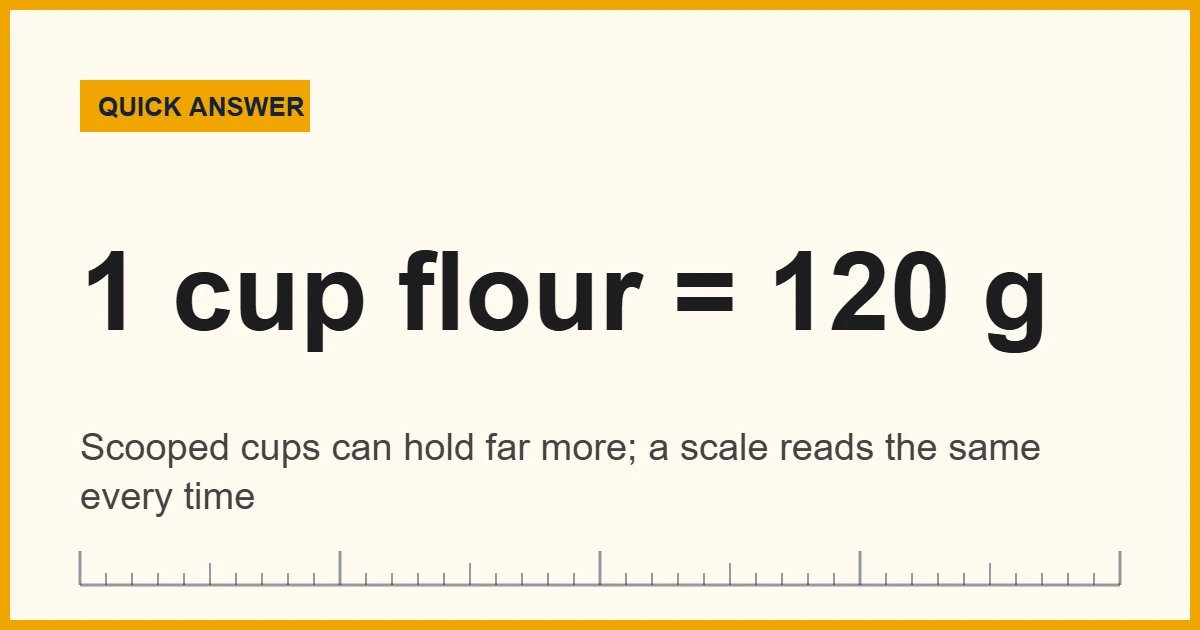
Two cooks can follow the same cookie recipe to the letter and still end up with different cookies. Usually, the culprit is the flour. One person spoons it gently into the cup. The other scoops the cup straight through the bag, which presses more flour in. Both measured “1 cup”, yet one bowl holds noticeably more flour than the other.
In short: a scale measures the amount of food itself, so it gives the same answer every time, whereas a cup only measures space, and how full that space gets depends on your hand. That is the whole weight vs volume debate in one sentence.
The official US cup is a fixed size. For example, the National Institute of Standards and Technology (NIST), which keeps US measurement standards, lists 1 cup as about 240 mL on its metric kitchen chart (the exact customary cup is 236.6 mL). The size of the cup is never the problem. Instead, the problem is that dry foods settle, clump and pack, so the weight inside a cup changes.
This guide therefore explains why weighing beats cups, gives you a grams-per-cup chart for common baking ingredients, and shows how to switch your own recipes over. If you came here for fluid ounces versus weight ounces, our guide to dry and liquid measurements covers that in detail.
Convert Grams to Ounces for Your Recipe
Many recipes list grams, while older US scales show ounces. So enter a weight below to switch between grams, ounces, pounds and kilograms. To go from cups to grams, first find your ingredient in the chart further down, then multiply.
The converter uses the exact definition of the ounce, 28.349523125 grams, so 120 grams of flour comes out at 4.23 ounces.
Recommended Kitchen Scales and Measuring Tools
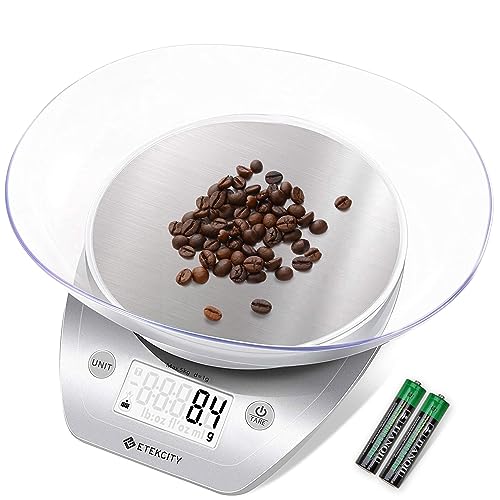
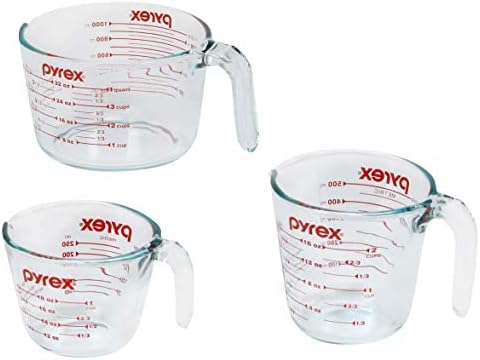
You do not need an expensive scale to cook by weight. First, look for 1-gram steps and a tare button. Next, check the capacity: about 5 kg (11 lb) handles a big mixing bowl. Also, a pull-out or large display helps when a wide bowl covers the screen. Finally, keep a good set of cups and spoons for small amounts and liquids.



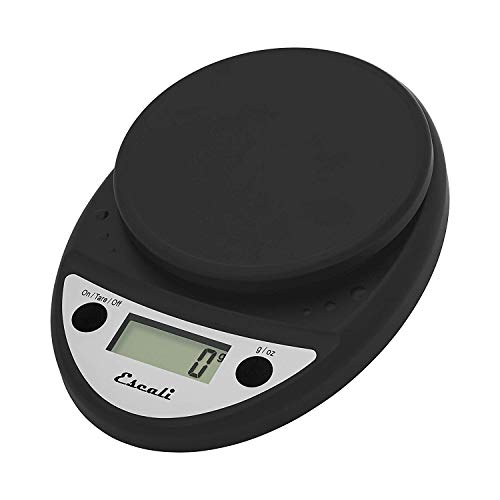
As an Amazon Associate, Measuring Expert earns from qualifying purchases.
Key Takeaways
- Weight measures the amount of food; volume measures the space it fills.
- A cup of flour can vary a lot in weight, because flour packs down.
- King Arthur Baking counts 1 cup of all-purpose flour as 120 g.
- Sugar is heavier per cup than flour: about 198 g versus 120 g.
- For water, milk and thin liquids, a marked cup is close enough.
- Grams give finer steps than ounces and make scaling recipes easy.
- Fluid ounces (volume) and ounces (weight) are different units.
Weight vs Volume: Why Weighing Beats Cups
A cup of flour is mostly air. Flour particles are tiny and irregular, so they leave gaps between them. When you scoop, the cup pushes those particles together. When you spoon flour in, however, the gaps stay open. As a result, the same cup holds a different amount of flour each time.
Here is what that means in numbers. Suppose a recipe was written for 120 grams per cup, and your scooped cup actually holds 140 grams. That is about 17 percent more flour. Across 3 cups, you would add 420 grams instead of 360 grams, an extra half cup. So cookies spread less, cakes turn dense, and bread dough feels stiff.
A scale removes that variable completely. Because 120 grams is 120 grams however you pour it, the result does not depend on technique. In addition, a scale means fewer dirty cups, since you can add every ingredient to one bowl on the scale.
Weight vs Volume Chart: Grams per Cup
The weights below come from the King Arthur Baking ingredient weight chart, converted to US cups where the chart lists a smaller amount. Ounces use the exact 28.35-gram ounce. Other publishers use slightly different figures, so if a recipe states its own grams per cup, follow the recipe.
| Ingredient (1 US cup) | Grams | Ounces (weight) | Note |
|---|---|---|---|
| All-purpose flour | 120 g | 4.23 oz | Spoon and level if you must use cups |
| Bread flour | 120 g | 4.23 oz | Same as all-purpose in this chart |
| Cake flour (unbleached) | 120 g | 4.23 oz | Sift only if the recipe says so |
| Granulated sugar | 198 g | 6.98 oz | Flows freely, so cups are fairly consistent |
| Brown sugar, packed | 213 g | 7.51 oz | Press firmly into the cup |
| Powdered sugar, unsifted | 113 g | 3.99 oz | Clumps easily; weighing avoids guesswork |
| Butter | 227 g | 8.01 oz | 2 US sticks; 1 stick = 113 g |
| Unsweetened cocoa | 84 g | 2.96 oz | Very light and easy to over-pack |
| Chocolate chips | 170 g | 6.00 oz | Gaps between chips change the fill |
| Long-grain white rice, dry | 198 g | 6.98 oz | Before cooking |
| Milk | 227 g | 8.01 oz | A liquid cup is fine for milk |
| Vegetable oil | 198 g | 6.98 oz | Lighter than water |
| Honey | 336 g | 11.85 oz | Heavy; grease the cup or weigh it |
| Water | about 236 g | about 8.33 oz | Roughly 1 g per mL |
Printable tip: copy this chart onto an index card and tape it inside a cabinet door. For smaller amounts, divide by 16 for a tablespoon; for example, a tablespoon of all-purpose flour is about 7.5 grams.
Weight vs Volume Measurements Compared
Both methods have a place in the kitchen. This table shows where each one wins.
| Question | Weight (scale) | Volume (cups and spoons) |
|---|---|---|
| What it measures | How much food there is | How much space the food fills |
| US units | Ounces, pounds | Teaspoons, tablespoons, cups, fluid ounces |
| Metric units | Grams, kilograms | Milliliters, liters |
| Changes with packing? | No | Yes, especially for flour, cocoa and powdered sugar |
| Best for | Flour, sugar, cocoa, nuts, chocolate, bread dough | Thin liquids, pinches of spice, quick weeknight cooking |
| Scaling a recipe | Simple multiplication | Awkward fractions such as 2/3 of 3/4 cup |
| Equipment | One digital scale | Nested dry cups, a liquid cup and spoons |
Notice that the word “ounce” appears on both sides. In fact, a weight ounce is about 28.35 grams, while a US fluid ounce is a volume of about 29.57 mL. To see how much an ounce really holds, read how much is an ounce.
How to Bake by Weight, Step by Step
Switching to a scale takes one batch to get used to. Then it is usually faster than cups.
- Set the bowl on the scale. Place your empty mixing bowl in the center of a digital kitchen scale on a flat counter.
- Press tare. Press tare or zero so the display ignores the bowl and shows 0.
- Choose grams. Switch the unit to grams, which gives finer steps than ounces.
- Add the first ingredient. Spoon or pour the ingredient in slowly until the display shows the weight the recipe asks for.
- Tare again and keep going. Press tare again before each new ingredient, so you can add everything to the same bowl.
- Write down your weights. If you convert a family recipe from cups, note the grams so the next batch comes out the same.
Converting a Cup Recipe to Weight vs Volume
You can convert almost any favorite recipe in a few minutes. First, list each ingredient with its cup amount. Next, look up grams per cup in the chart above. Then multiply. For example, 2 1/4 cups of all-purpose flour becomes 2.25 times 120, or 270 grams. Similarly, 3/4 cup of granulated sugar becomes 0.75 times 198, or about 149 grams.
Leave small amounts as they are. Teaspoons of baking soda, salt and spices are easy to measure with spoons, and a regular kitchen scale is not precise enough for 3 grams anyway. After that, bake once and write the grams on the recipe card. If the result matches your memory of the original, you are done. If it seems dry, the original cook probably scooped flour, so reduce the flour slightly next time.
When Volume Measurements Are Perfectly Fine
Cups are not wrong; they are just less exact. Thin liquids such as water, milk, stock and juice pour evenly and fill a cup the same way every time. So a clear liquid measuring cup read at eye level is accurate enough for nearly all cooking.
Volume also works well for forgiving dishes. Soups, stews, stir-fries and salad dressings tolerate small differences, and most cooks adjust them by taste anyway. Likewise, a pinch of herbs or a spoon of oil for the pan does not need a scale. Save the scale for baking, candy, bread and anything else where ratios decide whether the recipe works.
Weight vs Volume Do and Don’t List
Do
- Weigh flour, sugar and cocoa for baking.
- Press tare before every new ingredient.
- Use grams for finer steps than ounces.
- Read liquid cups at eye level on a flat counter.
- Follow a recipe’s own grams-per-cup figure when it gives one.
Don’t
- Scoop flour straight from the bag with the cup.
- Assume 8 fluid ounces always weighs 8 ounces.
- Mix grams and cups for the same ingredient.
- Rely on a scale for tiny amounts like 1 gram of yeast.
- Leave the scale on a crooked or wobbly surface.
Honest Limits of Weighing
A scale solves the packing problem, but it is not magic. For one thing, grams-per-cup charts disagree. King Arthur uses 120 grams for a cup of all-purpose flour, while other charts list 125 or 130 grams. So a converted recipe is only as good as the figure its writer used.
Ingredients also vary. Flour absorbs moisture on humid days, brown sugar dries out, and two brands of cocoa can differ in density. Besides that, cheap kitchen scales typically read in 1-gram steps, which is too coarse for a quarter teaspoon of yeast. In short, weighing makes results far more repeatable, but taste, texture and the look of the dough still matter.
When to Ask a Professional
For home cooking, the guidance on this page is enough. Some situations, however, need an expert. If you weigh food to manage a medical diet, such as carbohydrate counting for diabetes or a kidney diet, a registered dietitian can set targets and check your method. Likewise, if you sell food by weight, US law expects a scale that is approved for trade and checked by your local weights and measures office, not a home kitchen scale.
Weight vs Volume FAQs
What is the difference between weight vs volume in cooking?
Weight tells you how much of an ingredient there is, measured in grams or ounces on a scale. Volume tells you how much space it fills, measured in cups, spoons or milliliters. So a cup of flour and a cup of sugar fill the same space but weigh very different amounts.
Is it better to measure by weight or volume?
For dry baking ingredients such as flour, sugar and cocoa, weight is better because it does not change with how you fill the cup. For water, milk and other thin liquids, a marked liquid measuring cup is accurate enough for most cooking.
How many grams are in a cup of flour?
King Arthur Baking uses 120 grams for 1 cup of all-purpose flour, which is about 4.23 ounces. Other charts list 125 to 130 grams, and a cup scooped straight from the bag can weigh even more.
Why does a cup of sugar weigh more than a cup of flour?
Sugar crystals are denser and pack more tightly than fluffy flour. As a result, a cup of granulated sugar weighs about 198 grams, while a cup of all-purpose flour weighs about 120 grams.
Does 1 cup of water weigh 8 ounces?
Close, but not exactly. A US cup holds about 236.6 mL, and that much water weighs about 236 grams, or 8.33 ounces. The 8 in 8 fluid ounces is a volume, not a weight.
Is a fluid ounce the same as an ounce?
No. A fluid ounce measures volume, about 29.57 mL. An ounce measures weight, about 28.35 grams. They only roughly match for water.
Can I convert a recipe from cups to grams?
Yes. Multiply the number of cups by the grams per cup for that ingredient, using a chart like the one on this page. Then round to the nearest gram or two.
Weight vs volume for liquids: should I weigh milk and oil too?
You can, and it saves washing a measuring cup. A cup of milk weighs about 227 grams and a cup of vegetable oil about 198 grams. However, for thin liquids a marked cup read at eye level is already very close.
What kind of scale do I need for cooking by weight?
A digital kitchen scale that reads in 1-gram steps, has a tare button and handles at least 5 kg (11 lb) covers almost every home recipe. For yeast or spices, a pocket scale that reads 0.1 gram is handy.
Why do some recipes still use cups?
Cups are fast, familiar and need no extra tool, so most US home recipes still use them. For everyday cooking that is fine. Meanwhile, many bakers and professional recipes list grams because the results repeat more reliably.
The Bottom Line on Weight vs Volume
To sum up, volume tells you how much space an ingredient fills, and weight tells you how much of it you really have. Because dry ingredients pack and settle, the same cup can hold very different amounts, so a scale gives more consistent baking. Thin liquids, by contrast, measure well in a marked cup.
So start small: weigh your flour and sugar next time you bake, using the chart above, and keep your cups for milk, water and small spoon amounts. After one or two batches, you will likely find the scale faster and the results more predictable.
2 thoughts on “Weight vs Volume in Cooking: Why Weighing Beats Cups (Grams per Cup Chart)”