

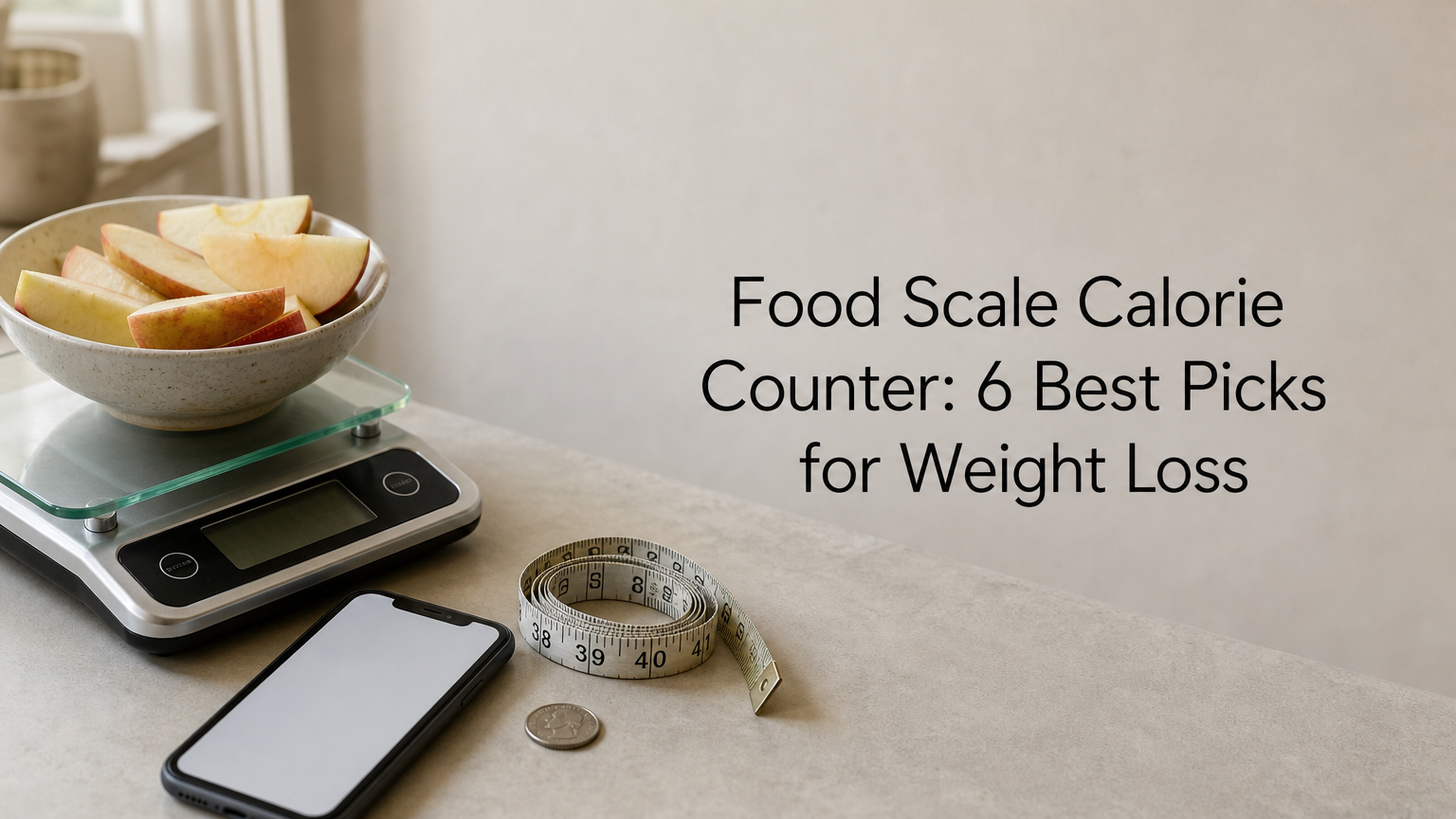
The best food scale calorie counter depends on how you log your meals. If you want calories on the scale itself with no phone involved, the Greater Goods Nourish and the Nutra Track show calories and macros from a built-in database. If you like charts and trends, the Etekcity ESN00 and the RENPHO smart scale send weight to an app. If you already use a tracking app, a plain scale like the OXO Good Grips or the Amazon Basics model does the job for less.
The name of this product category promises more than the hardware delivers. No scale measures calories. It weighs food, and a database turns grams into an estimate. So the database, the weight accuracy, and your logging habits matter more than any feature printed on the box.
Measuring Expert publishes kitchen scale roundups and accuracy guides. This list compares six scales on the specs that affect daily tracking, explains where the calorie numbers come from, and ends with a step-by-step method for using one to lose weight. We do not sell scales, so the picks come down to trade-offs.
How calorie counting scales work and how accurate they are
A calorie counting scale weighs your food and then looks up that food in a database to estimate calories and macros. The weight is measured. The calories are calculated. Understanding that split tells you what to trust and what to double-check.
What the calorie number really comes from
No scale measures calories directly. It reads weight with a sensor, matches the food to a database entry, and multiplies. If an entry lists a food at 120 calories per 100 grams, then 150 grams shows as 180 calories. Macros use the same math, at roughly 4 calories per gram of protein and carbohydrate and 9 per gram of fat.
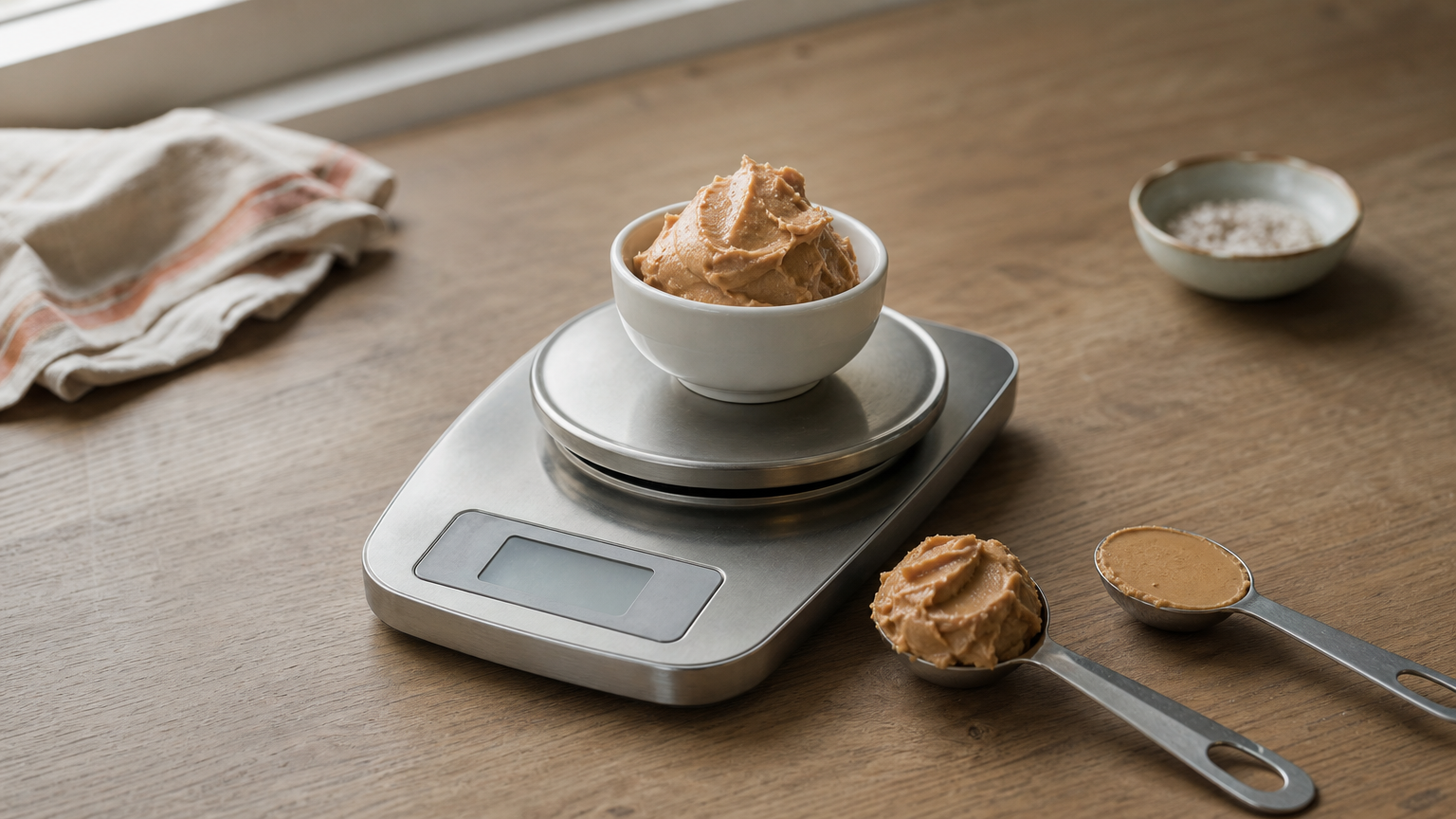
That makes a food scale to count calories accurate about weight but approximate about energy. A database entry is an average, and real food varies by brand, ripeness, and cooking. Nutrition labels can also be off by up to about 20 percent. Even so, weighing beats scooping. A heaped spoon of peanut butter can run 15 grams over the 32-gram serving on the label, which adds about 90 calories at roughly 6 calories per gram.
A scale gives you exact grams, and the calories are only as good as the database behind them.
Built-in, app-connected, or plain scale
You have three routes. Each one changes where the food data lives and how much work logging takes.
| Type | How you get calories | Strength | Limit |
|---|---|---|---|
| Built-in database | Weigh food, enter its food code, read calories on the screen | Works without a phone or account | Database holds around 1,000 to 2,000 foods |
| App-connected | Choose the food in the app, which pairs with the scale’s weight | Trends and more nutrients | Depends on the app and your phone |
| Plain scale plus tracking app | Read grams, then type them into a logging app | Largest food choice, lowest price | One extra step per food |
Built-in scales suit simple, repeatable diets. A plain scale with an app suits people who eat varied meals or restaurant-style recipes, because a phone app can hold far more foods than a scale’s memory.
What to check before you buy
Whichever route you pick, these specs decide whether the scale holds up in daily use:
- Resolution: 1 gram increments are enough for most food. Oils and spices matter little at that level, since 1 gram of oil is about 9 calories.
- Capacity: 11 pounds (5 kilograms) covers a bowl plus a full meal.
- Tare button: it zeroes out your bowl. Without it, the scale is nearly useless for tracking.
- Display: a backlit screen helps in dim kitchens, and a pull-out or high-mounted display stops a big bowl from hiding it.
- Custom entries: you need these on a built-in scale for your own recipes and store-brand foods.
- Power: AAA batteries are easy to replace. Button cells are less common.
1. Greater Goods Nourish Digital Kitchen Food Scale
How it works
The Greater Goods Nourish is a built-in database scale. You place food on the platform, enter its food code, and the backlit screen shows weight with calories, protein, carbohydrates, fat, and more. The database covers over 2,000 foods, and you can save custom entries for anything missing.
The food codes live in a booklet, and a companion app works as a code lookup tool. The scale runs fully offline with no account, so the app is optional. Capacity is 11 pounds, and weight displays in grams and pounds/ounces.
Who it suits and what it costs
Pick this one if you want calories on the scale and a phone-free counter. It rewards people who eat a repeatable set of foods, because you look up each code once and save your regulars. Listings have shown it around $35, but check the current price before you buy.
Strengths and limits
This scale makes the most sense for a simple diet, and its weak points show up when your meals get varied.
- Pro: no phone, account, or Wi-Fi needed.
- Pro: custom entries for your own foods.
- Con: no milliliter setting, which matters if you weigh liquids.
- Con: a smaller database than a phone app, and no sync with other trackers, so you copy totals by hand.
Choose it when you want the calories on the counter, and accept that you will type the totals into any other tracker yourself.
2. Nutra Track Food and Nutrition Scale
How it works
The Nutra Track also carries a built-in nutrition database, but it prints food categories right on the tempered glass platform: grains, vegetables, fruits, legumes, and meats. You find the code, enter it, and the backlit screen shows calories and macros beside the weight. No app or internet is involved.
A 27-page booklet lists additional codes, covering over 999 foods in total. It weighs from 1 gram up to 11 pounds in 1 gram or 0.1 ounce steps. Units include grams, kilograms, pounds, ounces, fluid ounces, and milliliters, and it runs on three AAA batteries.
Who it suits and what it costs
This scale suits shoppers who want a fuller unit list than the Greater Goods model, including milliliters, plus the same phone-free routine. It has been listed around $33 on Amazon. Prices move, so confirm before you buy.
Strengths and limits
Treat this scale as an all-in-one for people who want fewer apps in their kitchen.
- Pro: all major units, including fluid ounces and milliliters.
- Pro: slim glass design at about half an inch thick, easy to wipe down.
- Con: more buttons than a basic scale, so expect a short learning curve.
- Con: the food list is smaller than any phone app’s, and glass can crack if you drop it.
If you want phone-free tracking with milliliters on the dial, this is the more flexible of the two built-in scales.
3. Etekcity ESN00 Smart Nutrition Scale
How it works
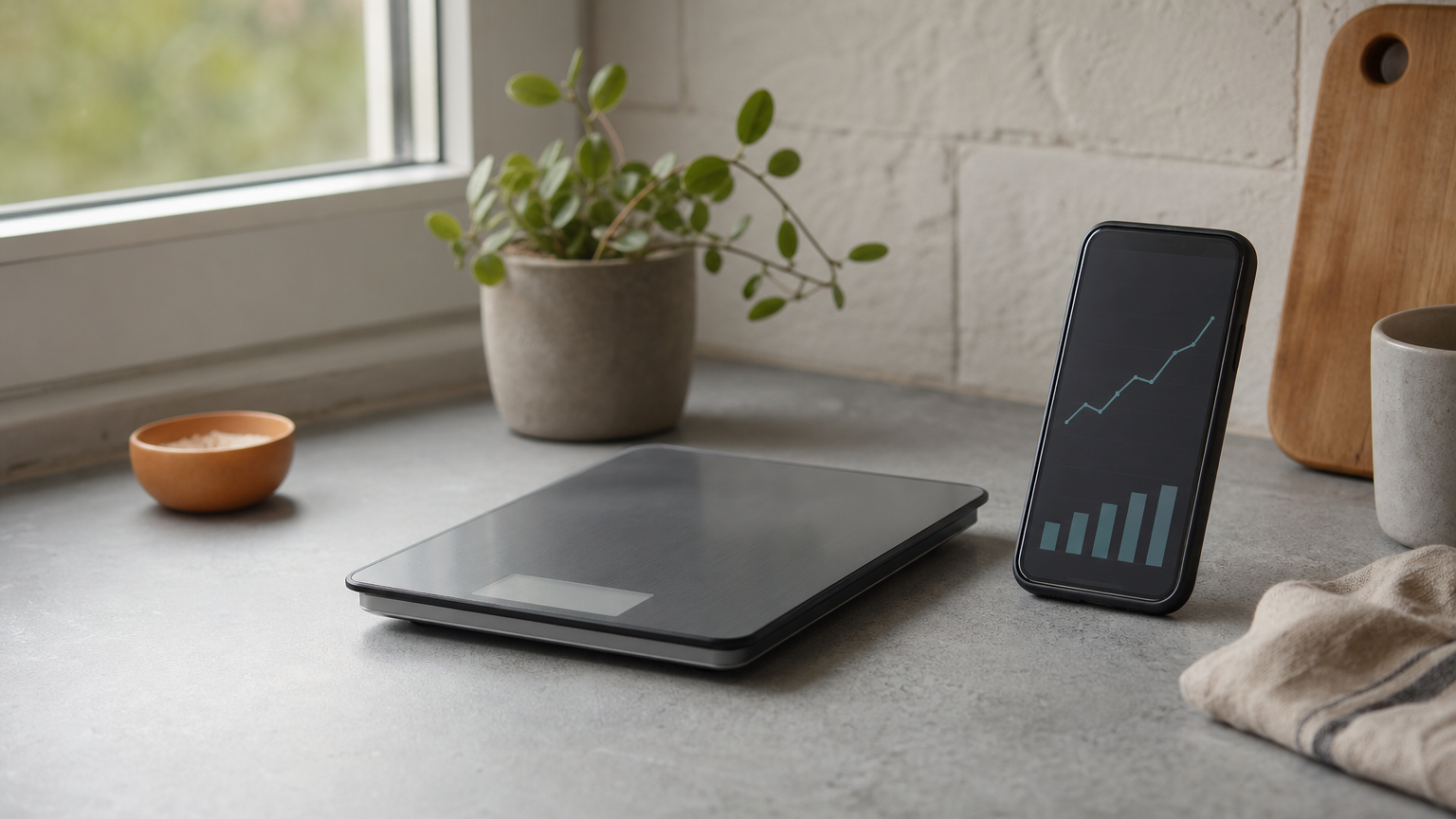
The Etekcity ESN00 is an app-connected smart scale. You tell the app what you are weighing, and the app calculates nutrition values from the weight on the scale. It tracks up to 19 nutrients, not just calories and macros, and builds daily, weekly, and monthly views of your eating.
That trend view is the real point of this style of scale. Instead of one day’s total, you see patterns, like a protein dip on busy weekdays.
Who it suits and what it costs
It fits people who like data and trends and do not mind carrying a phone into the kitchen. It is a good match if you track more than calories, such as fiber or sodium. Pricing varies by retailer, so check the product page for the current figure along with capacity and increment specs.
Strengths and limits
An app-connected scale lives or dies by its software, so weigh these points against how you cook.
- Pro: 19 nutrients and long-term trend charts.
- Pro: food selection happens on your phone screen, which is faster than punching codes.
- Con: it depends on the app and your phone to work at full strength.
- Con: check whether you can add your own recipes, since no database holds every food.
Buy it for the trend reports, not for the weighing itself, and only if you will actually open the app at every meal.
4. RENPHO Smart Food Scale with app
How it works
The RENPHO smart food scale connects to the RENPHO Health app, where a nutritional calculator and a large food database turn your weighed portions into calories and nutrients. Its listing describes a stainless-steel build and operation through a smartphone.
The flow matches other smart scales: weigh, pick the food in the app, read the breakdown, and save the meal. The app stores your history for later review.
Who it suits and what it costs
It suits shoppers who want app-driven logging and a metal platform, and who are comparing it against the Etekcity. Read the current listing for price, capacity, and resolution, because retailers change bundles and versions. Match those numbers to the checklist above before you decide.
Strengths and limits
The same trade-offs apply as with any smart scale, so test the app flow early while returns are still easy.
- Pro: a large database and nutritional calculator in your pocket.
- Pro: stainless-steel platform that wipes clean.
- Con: the scale is only as convenient as its app, so poor pairing slows every meal.
- Con: like all databases, entries are averages, so confirm key foods against the package label.
A smart scale saves typing only when the app is quick, so judge the app first and the hardware second.
5. OXO Good Grips 11-Pound Stainless Steel Food Scale
How it works
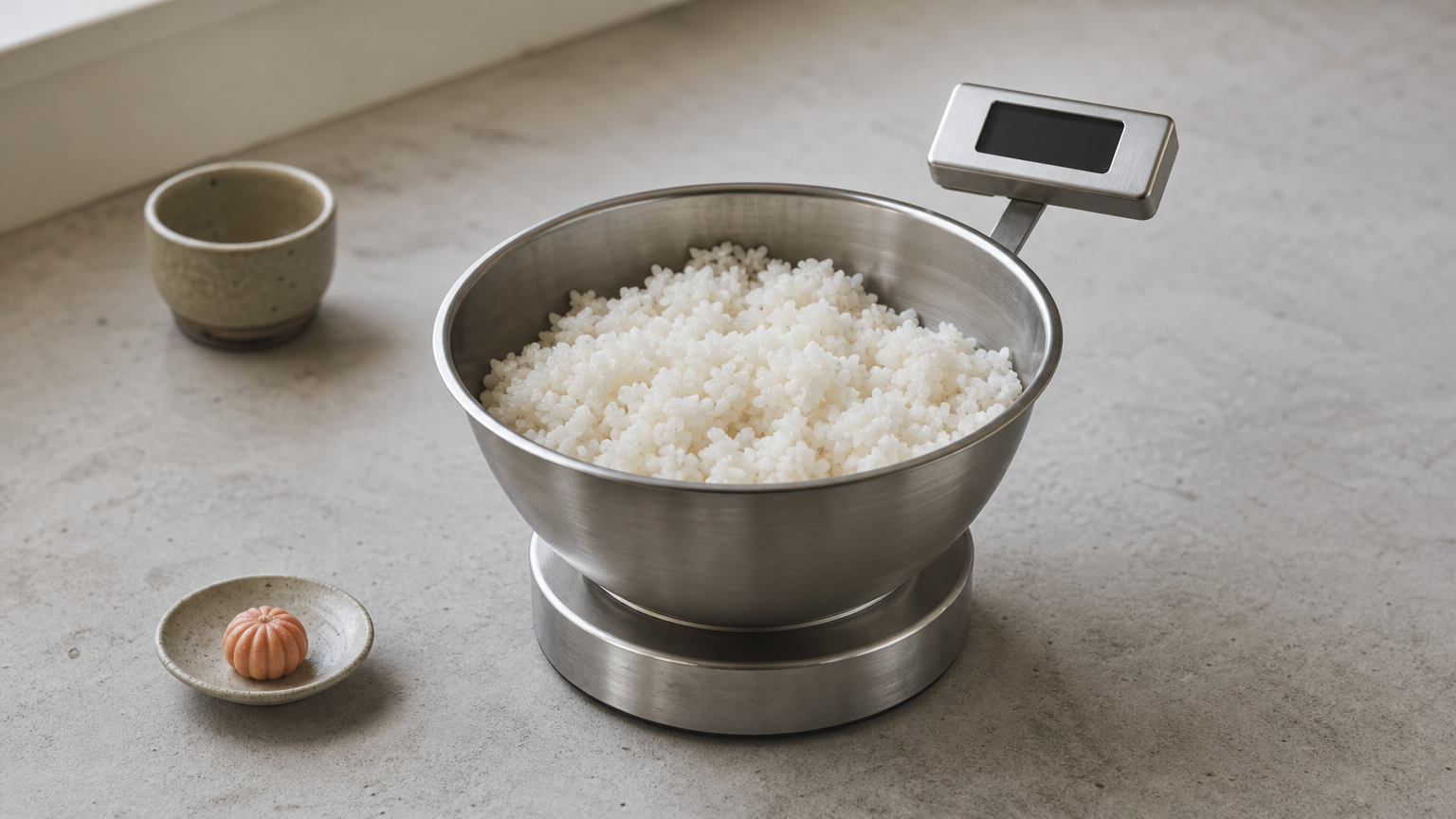
The OXO is a plain scale with no calorie database. You weigh, tare, read the grams, and type them into a tracking app such as MyFitnessPal. That sounds like extra work, but it gives you the biggest food choice and the most reliable weight reading.
The standout feature is a pull-out display that stays visible even under a large bowl. It also has a large backlit screen and a removable stainless-steel platform for cleanup. It weighs up to 5,000 grams (11 pounds) in 1 gram steps and shows pounds, ounces, grams, and kilograms.
Who it suits and what it costs
It suits meal preppers and families who weigh large portions and log in a separate app. Expect to pay around $63 on Amazon, more than most plain scales. The pull-out display and removable platform are what you are paying for.
Strengths and limits
Think of this as the durable choice for people who have already settled on an app.
- Pro: the display is never hidden behind a bowl.
- Pro: removable platform makes spills easy to clean.
- Con: no milliliter setting.
- Con: a bigger footprint, at about 9.5 by 7.1 inches, and a higher price than basic models.
Pay more for this scale if you weigh big bowls every day, because the pull-out display solves the most common annoyance.
6. Amazon Basics Digital Kitchen Scale
How it works
The Amazon Basics scale is the budget plain scale. Two buttons switch units or tare, and the LCD shows grams, ounces, pounds, fluid ounces, or milliliters. It weighs up to 5,000 grams in 1 gram steps, uses two AAA batteries (included), and shuts off after about two minutes.
Pair it with any logging app. You get the same weighing accuracy for calorie tracking as the pricier models, minus the extras.
Who it suits and what it costs
It suits beginners and anyone testing whether weighing food sticks. It has been listed around $11, so the risk is low. If you find you use it daily, you can upgrade later and keep this one for baking.
Strengths and limits
At this price, the limits are the cost of doing business, and none of them affect accuracy.
- Pro: lowest price on this list and simple to use.
- Pro: milliliter and fluid ounce settings included.
- Con: the display is not backlit, so dim kitchens are harder.
- Con: a plastic base feels less premium, and there are no nutrition features at all.
Start here if you are unsure, since the weight reading is what counts and any app supplies the calories.
How to count calories with a food scale step by step
To count calories with a food scale, weigh each food in grams, log that exact weight in your app or enter its code on the scale, and tare between ingredients. Consistency matters more than perfection.
Weighing and logging steps
Follow the same routine at every meal until it becomes automatic:
- Set the unit to grams. Use fluid ounces or milliliters only for liquids.
- Place your empty bowl or plate on the scale and press tare.
- Add food until you reach your target weight.
- Log the exact grams in your tracking app, or enter the food code on a built-in scale.
- Press tare again before adding the next ingredient to the same bowl.
- Log it right away, because weights are forgotten fast.
For sticky foods, use the jar trick. Put the jar of nut butter on the scale, tare it, scoop out a serving, and read the negative number. That is your serving, with no extra dish to wash.
Raw, cooked, and accuracy habits
Weigh food raw whenever the database entry is for raw food, because cooking changes water content and therefore weight. If you weigh it cooked, pick the cooked entry. Mixing the two is the most common logging mistake.
Test your kitchen scale’s accuracy now and then with a known weight. A US nickel weighs 5 grams, so a stack of five should read 25 grams. Use a flat, hard surface and fresh batteries.
Does it help with weight loss?
Weighing makes portions visible, and for many people that awareness is the benefit. Tracking is a tool, not a guarantee, and your calorie target depends on your body and goals. For a specific plan or a medical condition, talk to your doctor or a registered dietitian.
Weigh the same way every day and log honestly, because a consistent routine beats a perfect one.
Pick the scale that fits how you track
Every scale here weighs food well enough for daily logging. The real choice is where your calorie data lives: on the scale, in an app, or in an app you already use. Built-in picks like the Greater Goods Nourish and Nutra Track keep things simple. Smart picks like the Etekcity ESN00 and RENPHO add trends. The OXO and Amazon Basics stay accurate and let you choose any app.
Keep the calorie figures in perspective, since they are estimates built on averages. A steady weighing habit does more for your results than any extra feature. For more tested guidance, browse our portion control scale picks and the other kitchen scale and measuring tool guides at Measuring Expert.