

Dry and liquid measurements differ in what they count: liquid units such as the fluid ounce measure volume, while the ounce on a scale measures weight. In US kitchens a cup is the same 236.6 mL either way, but a US dry pint (550.6 mL) is about 16% bigger than a liquid pint (473.2 mL).
Most confusion about dry and liquid measurements comes from one word that does two jobs. In the US, “ounce” can mean a fluid ounce of volume or an ounce of weight. In addition, pints and quarts come in a dry size and a liquid size. As a result, a recipe, a farmers market sign and a food label can all say “pint” or “ounce” and mean different amounts.
This page sticks to the measurement systems themselves. If you want to know how the cups differ in shape and how to fill each one, see our guide to the liquid vs dry measuring cup. Here, instead, you will find what each unit really holds, how the US, imperial and metric systems compare, and when weighing beats both.
In short: volume units tell you how much space something fills, and weight units tell you how heavy it is. For water the two are close; for flour, honey or oil they are not.
Also, these numbers are not opinions. For example, the National Institute of Standards and Technology (NIST), which keeps the official US unit definitions, lists the liquid pint as 28.875 cubic inches and the dry pint as 33.6003125 cubic inches in Handbook 44, Appendix C. Therefore, every conversion below comes from those definitions.
Finally, the converter just below handles the volume side for any amount, including the smaller British fluid ounce and pint.
Convert Fluid Ounces to mL, Cups and Imperial Units
First, enter an amount and pick a unit. The converter then shows US fluid ounces, imperial fluid ounces, milliliters, cups and both kinds of pint. Note that it covers liquid (volume) units only; for weight, use the ounce and gram figures in the tables below.
Recommended Tools for Dry and Liquid Measurements
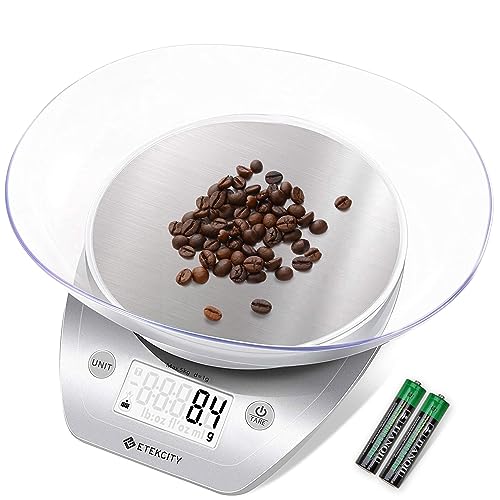
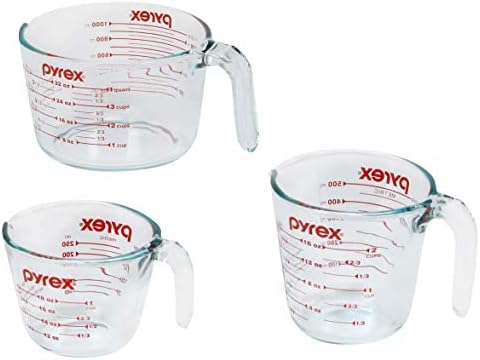
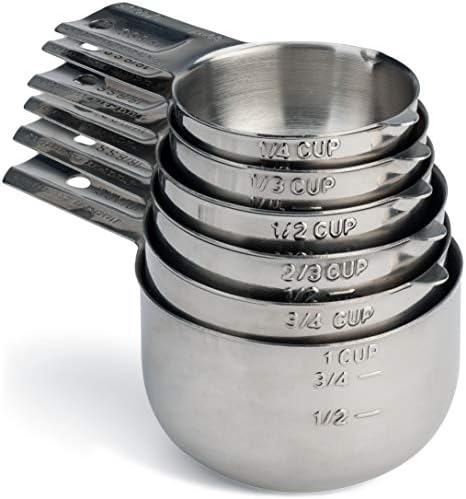
You only need two kinds of tool to handle both systems well. First, a digital kitchen scale that switches between grams and ounces settles every weight question. Next, a clear liquid measuring cup with mL and fl oz lines covers volume. Also, a set of nesting cups is still handy for recipes written in cups. In general, look for a scale with a tare button and 1 g steps, and for a liquid cup with markings you can read from above or at eye level.


As an Amazon Associate, Measuring Expert earns from qualifying purchases.
Key Takeaways
- A fluid ounce (fl oz) measures volume: about 29.57 mL in the US.
- An ounce (oz) on a scale measures weight: about 28.35 g.
- One US cup is about 236.6 mL for dry and liquid ingredients alike.
- A US dry pint is about 550.6 mL; a US liquid pint is about 473.2 mL.
- The UK uses one imperial pint (about 568.3 mL) for everything.
- Converting cups to grams needs the ingredient’s density, so weighing is more reliable.
- For medicine, ignore kitchen units and use the mL dosing device.
Volume vs Weight: The Core of Dry and Liquid Measurements
Volume is the space an ingredient takes up. Weight, by contrast, is how hard gravity pulls on it. For example, a cup, a tablespoon, a fluid ounce and a milliliter are all volume units. Likewise, an ounce, a pound, a gram and a kilogram are all weight units (strictly, mass units).
So where does “dry” come in? In everyday use, people call a measurement dry when they scoop a solid, and liquid when they pour. However, a cup of flour and a cup of water fill exactly the same space. Instead, what changes is how much that space weighs. A cup of water weighs about 236 g, for example, while a cup of spooned all-purpose flour weighs only about 120 g. That gap is exactly why bakers prefer scales.
| Ingredient (1 US cup) | Volume | Approximate weight |
|---|---|---|
| Water | 236.6 mL / 8 fl oz | 236 g / 8.3 oz |
| All-purpose flour (spooned and leveled) | 236.6 mL / 8 fl oz | 120 g / 4.2 oz |
| Granulated sugar | 236.6 mL / 8 fl oz | 198 g / 7.0 oz |
| Brown sugar (packed) | 236.6 mL / 8 fl oz | 213 g / 7.5 oz |
| Honey | 236.6 mL / 8 fl oz | 336 g / 11.9 oz |
The flour, sugar and honey weights come from the King Arthur Baking ingredient weight chart. Your own cup may differ a little, because packing and humidity change the result.
Fluid Ounces vs Weight Ounces
Above all, this is the pair that trips up the most cooks. A US fluid ounce is exactly 29.5735295625 mL, which is 1/128 of a US gallon. An avoirdupois ounce, on the other hand, is exactly 28.349523125 g, or 1/16 of a pound. One measures space and the other measures heaviness, so they only match by coincidence.
| Fluid ounce (fl oz) | Ounce (oz) | |
|---|---|---|
| Measures | Volume | Weight (mass) |
| Exact size | 29.5735 mL (US) | 28.3495 g |
| Measured with | Liquid cup, jigger, syringe | Scale |
| Larger unit | 16 fl oz = 1 US pint | 16 oz = 1 pound |
| Where you see it | Drinks, milk, oil, recipes | Meat, cheese, flour bags, postage |
For instance, 1 fl oz of water weighs about 1.04 oz. That is why the old saying “a pint’s a pound the world around” is close but not exact: 16 fl oz of water weighs about 16.7 oz. Similarly, a can label that says “15 oz” usually means weight, while a bottle that says “16.9 fl oz” means volume. Our page on how much an ounce is goes further into the weight ounce, including the heavier troy ounce used for precious metals.
US Dry Pints and Quarts vs Liquid Pints and Quarts
Here the US system really does have two separate sets of units. On one side, liquid pints and quarts measure milk, oil and drinks. Dry pints and quarts, meanwhile, measure loose produce such as berries, cherry tomatoes and shelled peas. Because the dry units are bigger, a “pint” of blueberries holds more than a pint of milk.
| Unit | US liquid | US dry | Difference |
|---|---|---|---|
| Pint | 28.875 in³ / 473.18 mL / 2 cups | 33.6003 in³ / 550.61 mL / about 2.33 cups | Dry is about 16.4% larger |
| Quart | 57.75 in³ / 946.35 mL / 4 cups | 67.2006 in³ / 1.101 L / about 4.65 cups | Dry is about 16.4% larger |
| Gallon | 231 in³ / 3.785 L | 268.8025 in³ / 4.405 L (rarely used) | Dry is about 16.4% larger |
| Peck | – | 8 dry quarts / 8.81 L | Dry only |
| Bushel | – | 4 pecks / 35.24 L | Dry only |
In practice, you will meet dry pints and quarts at farm stands and in older recipes that call for “1 quart strawberries”. You will almost never see a dry cup or a dry fluid ounce, because those units do not exist. For the liquid side of the family, see how many pints are in a gallon.
Dry and Liquid Measurements in the Imperial and Metric Systems
Britain, however, took a simpler route. In 1824 it replaced its separate wine and grain gallons with one imperial gallon, now exactly 4.54609 L. As a result, imperial pints and quarts work the same for beer, milk and grain. The US, by contrast, kept the old 231-cubic-inch wine gallon for liquids and the Winchester bushel for dry goods.
| Unit | US customary | British imperial | Metric |
|---|---|---|---|
| Fluid ounce | 29.57 mL | 28.41 mL | Not used (mL) |
| Pint | 473.18 mL liquid, 550.61 mL dry | 568.26 mL (20 imp fl oz) | Not used |
| Gallon | 3.785 L liquid | 4.546 L | Not used (L) |
| Separate dry units? | Yes | No | No |
| Weight unit | Ounce / pound | Ounce / pound (stone for body weight) | Gram / kilogram |
Notice the twist: the imperial fluid ounce is about 4% smaller than the US one, yet the imperial pint is about 20% bigger, because it holds 20 fluid ounces instead of 16. Metric, on the other hand, avoids all of this. In fact, it uses milliliters and liters for volume and grams for weight, and 1 mL of water weighs very close to 1 g. Our guide to US vs UK cooking measurements compares the cups and spoons too.
How to Weigh Dry Ingredients Instead of Scooping
After all, weighing removes the biggest error in the kitchen, which is how tightly you pack a cup. Follow these steps with any digital scale:
- Place the bowl on the scale. Set an empty bowl or container in the center of a digital kitchen scale.
- Press tare. Press tare or zero so the display ignores the bowl and reads 0.
- Pick your unit. Switch the scale to grams for the finest steps, or to ounces if your recipe uses them.
- Add the ingredient slowly. Spoon or pour the ingredient in until the display shows the target weight.
- Tare again for the next ingredient. Press tare again and add the next ingredient to the same bowl, so you wash fewer cups.
- Use liquid cups for thin liquids. Measure water, milk or stock in a spouted liquid cup at eye level, or weigh them too if the recipe lists grams.
Converting Between Dry and Liquid Measurements
Basically, there are two kinds of conversion, and they behave very differently. Volume to volume is pure arithmetic: 1 cup = 16 tablespoons = 236.6 mL for any ingredient. Volume to weight, however, needs to know how dense the ingredient is.
- Cups to mL (any ingredient): multiply cups by 236.59. For instance, 3/4 cup is about 177.4 mL.
- Fluid ounces to mL: multiply by 29.57. Thus 12 fl oz is about 354.9 mL.
- Cups to grams: multiply cups by the grams per cup for that ingredient. Flour at 120 g per cup gives 2 cups = 240 g.
- Ounces (weight) to grams: multiply by 28.35. So a 16 oz bag is about 453.6 g.
- Dry pints to cups: multiply by about 2.33. Two dry pints of berries are about 4 2/3 cups.
Because of the density step, no single chart can turn every “cup” into grams. Instead, use a chart for the specific ingredient, or weigh it once and note the number for next time.
Do and Don’t for Dry and Liquid Measurements
Do
- Check whether “oz” on a recipe means fl oz or weight.
- Weigh flour, sugar and cocoa when a recipe gives grams.
- Read liquid cups at eye level on a flat counter.
- Ask whether a British recipe uses imperial pints.
- Treat a pint basket of berries as a dry pint.
Don’t
- Assume 8 oz of any ingredient equals 1 cup.
- Mix US and imperial fluid ounces in one recipe.
- Pack flour into a cup unless the recipe says so.
- Trust a cups-to-grams number without the ingredient name.
- Use kitchen spoons or cups for medicine doses.
Honest Limits of Volume-to-Weight Conversions
To begin with, every gram figure on this page is an average. Flour, for example, can weigh 120 g or 150 g per cup depending on whether you spoon it in or scoop it straight from the bag. Similarly, brown sugar changes with how hard you pack it, and honey changes slightly with temperature. Moreover, even water is not exactly 1 g per mL at room temperature; it is about 0.998 g. In short, the volume definitions are exact, but any cup-to-weight number is a good estimate, not a law. When results matter, therefore, weigh the ingredient and trust the scale over the chart.
When Precision Calls for a Professional
Of course, home cooking forgives small errors, but some jobs do not. For instance, commercial bakeries scaling recipes, labs preparing solutions, and anyone selling food by weight need calibrated equipment. In the US, for example, scales used for trade must meet NIST Handbook 44 rules and pass inspection by state or local weights and measures officials. If you sell produce by the pint or pound, contact your local weights and measures office. Similarly, for a lab balance, use a calibration service. For liquid medicine, use the oral syringe or dosing cup that comes with it and ask a pharmacist if the label is unclear.
Dry and Liquid Measurements FAQs
Is 1 cup dry the same as 1 cup liquid?
Yes, by volume. A US cup is about 236.6 mL whether it holds flour or milk. Instead, the only difference is the tool: you level dry ingredients in a nesting cup and read liquids at a line in a spouted cup.
Is 8 oz dry the same as 8 fl oz liquid?
Not usually. Eight fluid ounces is a volume of about 236.6 mL, while 8 ounces on a scale is a weight of about 226.8 g. In fact, they only line up for water and similar liquids, and even then 8 fl oz of water weighs about 8.3 oz.
How many cups are in a US dry pint?
A US dry pint holds about 550.6 mL, which is roughly 2 1/3 US cups. A US liquid pint holds exactly 2 cups, or about 473.2 mL.
Are dry and liquid measurements the same in the UK?
Yes. The British imperial system uses one set of pints, quarts and gallons for both. An imperial pint is about 568.3 mL and holds 20 imperial fluid ounces.
How many grams are in a fluid ounce?
It depends on the liquid. A US fluid ounce of water weighs about 29.6 g. For example, oil weighs less per fluid ounce, and honey or syrup weighs noticeably more.
Why are dry and liquid measurements different in the US?
The US kept two old English standards. Liquid units come from the 231-cubic-inch wine gallon, while dry units come from the Winchester bushel of 2,150.42 cubic inches. Britain, by contrast, replaced both with one imperial gallon in 1824.
Is a dry ounce a real unit?
Not as a separate volume unit. When people say dry ounce, they almost always mean the ordinary avoirdupois ounce of weight, about 28.35 g.
Should I weigh or measure ingredients by volume?
Weigh dry ingredients such as flour, sugar and cocoa when you can, because scooping varies a lot. For water, milk and other thin liquids, a marked liquid cup is accurate enough for cooking.
Does a pint of blueberries mean a dry pint?
Traditionally, yes. Berry and cherry tomato baskets sold by the pint use the dry pint of about 550.6 mL. However, many stores now sell berries by weight, so check the label.
How do I convert between dry and liquid measurements?
Volume to volume is easy: cups, tablespoons and milliliters work the same for any ingredient. On the other hand, volume to weight needs the ingredient’s density, so use a gram chart for that ingredient or, better, weigh it.
Dry and Liquid Measurements: The Bottom Line
To sum up, the real split is between volume and weight. In other words, fluid ounces, cups and milliliters measure space, while ounces, pounds and grams measure heaviness. A US cup is the same for flour and milk, but a US dry pint is about 16% bigger than a liquid pint, and the British imperial pint is bigger still.
So when a recipe matters, look for “fl”, check which country it comes from, and weigh dry ingredients whenever you can. For quick volume math, the converter at the top of this page handles US and imperial fluid ounces, cups and pints in one step.
2 thoughts on “Dry and Liquid Measurements: Fluid Ounces, Pints and Weight Explained”