

Ankle girth is the smallest circumference of your lower leg, just above the two ankle bones. To measure it, wrap a soft, non-stretch tape level around that narrow spot, keep it snug but not tight, and read it to the nearest 1 mm or 1/16 inch. Then repeat and average two close readings.
Most people only think about their ankles when they buy compression socks, fit an ankle brace or track swelling after a sprain. Suddenly, a size chart asks for a number, and it is not obvious where the tape should go. Should it sit on the ankle bones, above them, or around the heel?
The standard answer is simple. Ankle girth is taken at the narrowest point of the lower leg, which sits a short distance above the bony bumps on each side of the ankle (the malleoli). Stand with your weight spread evenly, or sit with the leg relaxed. Next, find the slimmest spot by sliding the tape up and down. Then wrap it horizontally, flat on the skin, without pressing into it. Read where the zero end meets the tape and write it down in centimeters and inches. Finally, measure a second time; if the two readings differ by more than about 2 mm, take a third and average the closest pair. Swelling checks after an injury use a different route, called the figure-of-eight, which loops under the foot.
Why One Spot and One Method Matter
In short: narrowest point, level tape, light tension, two readings. That routine gives you a number you can compare week to week or match to a size chart.
Clinicians rely on the same careful approach. For example, a study in the South African Journal of Physiotherapy found that the figure-of-eight tape method gave highly repeatable ankle readings between examiners. As a result, it remains a common way to track ankle swelling in clinics.
Below, you will find a converter, a step-by-step method, the figure-of-eight route, typical values, and advice on when a change in size needs a doctor. For other body sites, see our wider guide to taking accurate girth measurements.
Convert Your Ankle Girth Between cm and Inches
Size charts for socks, braces and boots switch between metric and US units. So type your reading below and pick the unit you used. The converter uses the exact definition of 1 inch = 2.54 cm and also shows millimeters.
Recommended Tape Measures for Ankle Girth
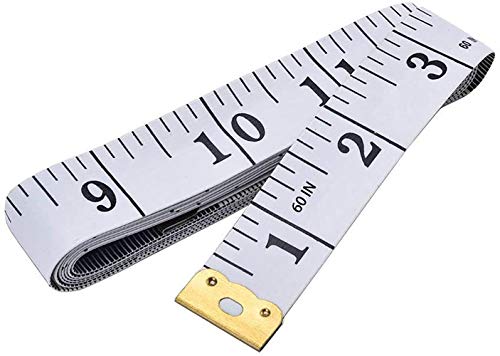
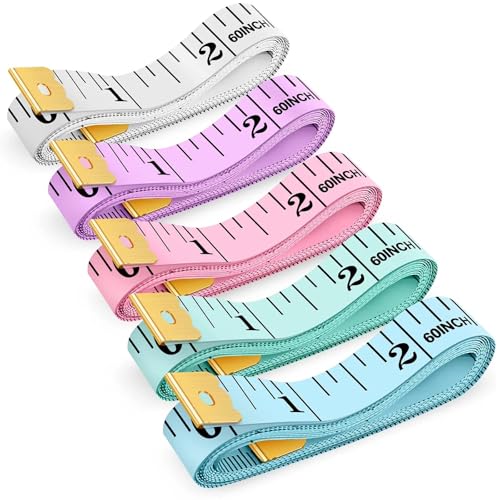
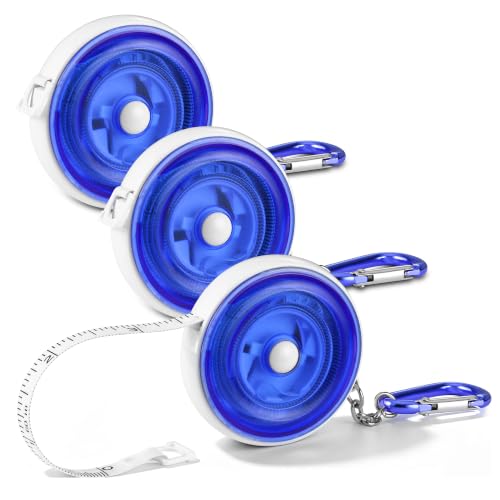
A soft body tape is the only tool you really need. First, choose a tape with both inch and centimeter scales, because size charts mix units. Next, look for fiberglass or coated vinyl that will not stretch with use. In addition, a narrow tape follows the curve of the ankle better than a wide one. Finally, a retractable tape with a lock button holds the reading in place while you check it, which helps when you measure alone.


As an Amazon Associate, Measuring Expert earns from qualifying purchases.
- Ankle girth is the minimum circumference just above the ankle bones.
- Keep the tape level, flat on the skin and snug, never tight.
- Read to the nearest 1 mm (0.1 cm) or 1/16 inch.
- Take two readings and average them; add a third if they disagree.
- Average adult values sit around 20 to 22 cm (8 to 8.7 inches).
- Use the figure-of-eight method, not plain girth, to track a swollen ankle.
- New swelling in one leg needs a medical check, not just a tape.
Where Is Ankle Girth Measured?
The ankle joint links the two lower-leg bones, the tibia and fibula, to the talus in the foot. On the inside of the ankle you can feel the medial malleolus, which is the lower end of the tibia. On the outside sits the lateral malleolus, the lower end of the fibula. Behind both runs the Achilles tendon, the thick cord that joins the calf muscles to the heel.
Ankle girth is not taken over those bones. Instead, it goes around the slim section of the leg just above them, where the calf muscles have already narrowed into tendon. That spot is usually a few centimeters above the ankle bones. However, its exact height varies from person to person, so you find it by feel rather than by a fixed distance.
The original version of this page described the site as both the “narrowest” and the “bulkiest” part of the ankle. Only the first is correct. Measuring over the bones gives a bigger, less repeatable number, because the tape bridges bony bumps instead of lying flat.
How to Measure Ankle Girth Step by Step
You can do this alone, although a helper makes it easier to keep the tape level. Either way, use the same method every time so your numbers stay comparable.
- Bare the leg. Remove socks and roll trousers above the calf, because fabric adds a few millimeters.
- Stand or sit relaxed. Stand with weight on both feet, or sit with the knee bent and the foot flat on the floor.
- Find the narrowest point. Slide the tape up from the ankle bones until the reading is at its smallest.
- Level the tape. Keep it horizontal all the way around, including across the Achilles tendon at the back.
- Set light tension. Let the tape lie flat on the skin without denting it; you should still be able to slide it.
- Read and record. Note the value where the zero end meets the scale, to 1 mm or 1/16 inch, plus the side measured.
- Repeat and average. Take a second reading and average the two; if they differ by more than about 2 mm, take a third.
Time of day matters too. Ankles often swell a little after hours on your feet, so morning readings tend to be smaller. Therefore, if you are tracking change, measure at the same time each day.
Figure-of-Eight Method for Ankle Swelling
A plain ankle girth only captures one ring of the leg. Swelling after a sprain, however, collects around the joint and the top of the foot. For that reason, therapists often use the figure-of-eight method, which wraps the tape around the ankle and the midfoot in one loop.
In the study mentioned earlier, subjects sat with the leg straight and the foot hanging freely over the edge of a treatment table. The route below follows the common clinical description. Even so, follow your therapist’s version if they gave you one, because small changes in the path change the number.
- Start at the front of the ankle, midway between the lateral ankle bone and the tendon you feel at the front (tibialis anterior).
- Cross the top of the foot toward the inner side, just past the bony bump on the inner midfoot.
- Pass under the arch to the outer side of the foot, near the bump at the base of the fifth (little-toe) metatarsal.
- Come back over the top of the foot, then go around the inside of the ankle just below the medial ankle bone.
- Wrap behind the Achilles tendon and under the lateral ankle bone, then finish at the starting point.
Because the tape travels around both the ankle and the foot, a figure-of-eight reading is far larger than ankle girth. Consequently, never compare one with the other; compare each only with earlier readings taken the same way.
Ankle Girth vs Other Lower-Leg Measurements
Several lower-leg numbers sound alike, and size charts do not always define them. This table separates the ones people mix up most.
| Measurement | Where the tape goes | Main use |
|---|---|---|
| Ankle girth | Level ring at the narrowest point above the ankle bones | Compression socks, braces, fitness tracking |
| Malleolar girth | Level ring directly over both ankle bones | Some clinical swelling checks |
| Figure-of-eight | Loop around the ankle and under the midfoot | Tracking swelling after injury |
| Calf girth | Level ring at the widest part of the calf | Boots, compression sleeves, muscle tracking |
| Heel-to-instep (diagonal) | Around the back of the heel and over the top of the foot | Fitting tall boots and some footwear |
Typical Ankle Girth Values for Adults
There is no single “normal” ankle girth, since it tracks body size, frame and fat mass. Still, survey data give a useful range. Topend Sports, summarizing US anthropometric survey data, lists the average ankle girth as about 22.2 cm for men and 20.5 cm for women.
| Group | 1st percentile | Average | 99th percentile |
|---|---|---|---|
| Adult men | 7.61 in (19.3 cm) | 8.73 in (22.2 cm) | 9.90 in (25.1 cm) |
| Adult women | 7.08 in (18.0 cm) | 8.08 in (20.5 cm) | 9.31 in (23.6 cm) |
In other words, most adults fall between about 18 and 25 cm (7 to 10 inches). A reading outside that band is not a diagnosis. Instead, your own baseline is the comparison that matters most, especially when you are watching for swelling. A sudden change from your usual number tells you far more than any population average.
What Your Ankle Girth Is Used For
The number turns up in more places than you might expect:
- Compression socks and stockings. Sizing usually starts with ankle girth, then calf girth and leg length.
- Ankle braces and supports. Many sleeve braces size by ankle girth or by a figure-of-eight style wrap.
- Boots and riding chaps. Tall boots and half chaps list ankle and calf girth together.
- Fitness and frame size. Some bodybuilders log ankle girth alongside wrist girth as a rough guide to bone frame.
- Rehab tracking. Comparing the injured and healthy sides over weeks shows whether swelling is settling.
For clothing fit you may also need leg length. Our guide to what an inseam measurement is covers that step, and the same tape works for measuring back length too.
Do and Don’t When Measuring Ankle Girth
Do
- Use a soft tape that does not stretch.
- Measure bare skin at the narrowest point.
- Keep the tape level all the way around.
- Record the side and the time of day.
- Compare left and right legs.
Don’t
- Wrap the tape over the ankle bones.
- Pull hard enough to dent the skin.
- Measure through socks or leggings.
- Mix figure-of-eight and plain girth numbers.
- Rely on a single quick reading.
Honest Limits of Ankle Girth Readings
A tape is cheap and quick, but it is not perfectly precise. For one thing, tape tension alone can shift a reading by a few millimeters. Moreover, the narrowest point is a judgment call, and two people may choose spots a centimeter apart. Ankles also change size over the day, after exercise, in heat, and on long flights.
So treat small changes with caution. A difference of 2 to 3 mm between readings is usually measurement noise, not real change. Similarly, the averages above come from adult survey data, so they say little about children, very tall or very short people, or athletes with unusual builds. In short, the tape is best at tracking your own trend with a consistent method.
When to See a Doctor or Professional
Measuring your ankle is a good way to notice change, but it cannot explain it. Swelling can come from a sprain, standing for long periods, heat, pregnancy, some medicines, or conditions that affect the heart, kidneys, liver or veins. MedlinePlus advises contacting a provider for new swelling in only one leg, redness or warmth, fever, or swelling that keeps getting worse. It also advises calling 911 for swelling with shortness of breath or chest pain.
For compression stockings with a medical pressure class, ask a doctor, nurse or certified fitter to take the measurements. Likewise, a physical therapist can set up a figure-of-eight routine if you are recovering from an ankle injury.
Frequently Asked Questions
Where do you measure ankle girth?
Measure it at the narrowest part of the lower leg, just above the two ankle bones. Slide the tape up from the bones until the reading is smallest.
What is an average ankle girth?
Survey data put the adult average at about 22.2 cm (8.73 in) for men and about 20.5 cm (8.08 in) for women. Most adults fall between about 18 and 25 cm.
Is ankle girth the same as ankle circumference?
Yes. Girth and circumference both mean the distance around a body part. Size charts may use either word for the narrow spot above the ankle bones.
Should I measure ankle girth standing or sitting?
Either works if you stay consistent. Standing with weight on both feet is common for size charts, while sitting with the foot flat suits repeat checks.
How tight should the tape be?
Snug but not tight. The tape should lie flat on the skin without denting it, and you should still be able to slide it slightly.
Can I measure ankle girth without a tape measure?
Yes. Wrap a piece of string or a paper strip around the narrowest point, mark where it overlaps, then lay it flat against a ruler.
Why is my left ankle girth different from my right?
A small difference of a few millimeters is normal. A new or growing difference, especially with pain, redness or warmth, should be checked by a doctor.
What is the figure-of-eight ankle measurement?
It is a tape route that loops around the ankle and under the midfoot. Therapists use it to track swelling, and it reads much larger than plain girth.
Does ankle girth change during the day?
Often, yes. Ankles can swell slightly after standing, walking or sitting for long periods, so morning readings are usually a little smaller.
How do I convert ankle girth from cm to inches?
Divide centimeters by 2.54. For example, 22 cm divided by 2.54 equals about 8.66 inches, or use the converter on this page.
Ankle Girth: The Bottom Line
To sum up, ankle girth is the smallest ring around your lower leg, just above the ankle bones. A soft tape, a level wrap, light tension and two readings give you a number you can trust for size charts and for tracking change.
Finally, remember what the tape can and cannot do. It is excellent for spotting a trend in your own measurements, but it cannot tell you why an ankle has swollen. If a change is new, one-sided or painful, put the tape down and see a doctor.
1 thought on “How to Measure Ankle Girth Accurately: Where, How and Typical Values”