
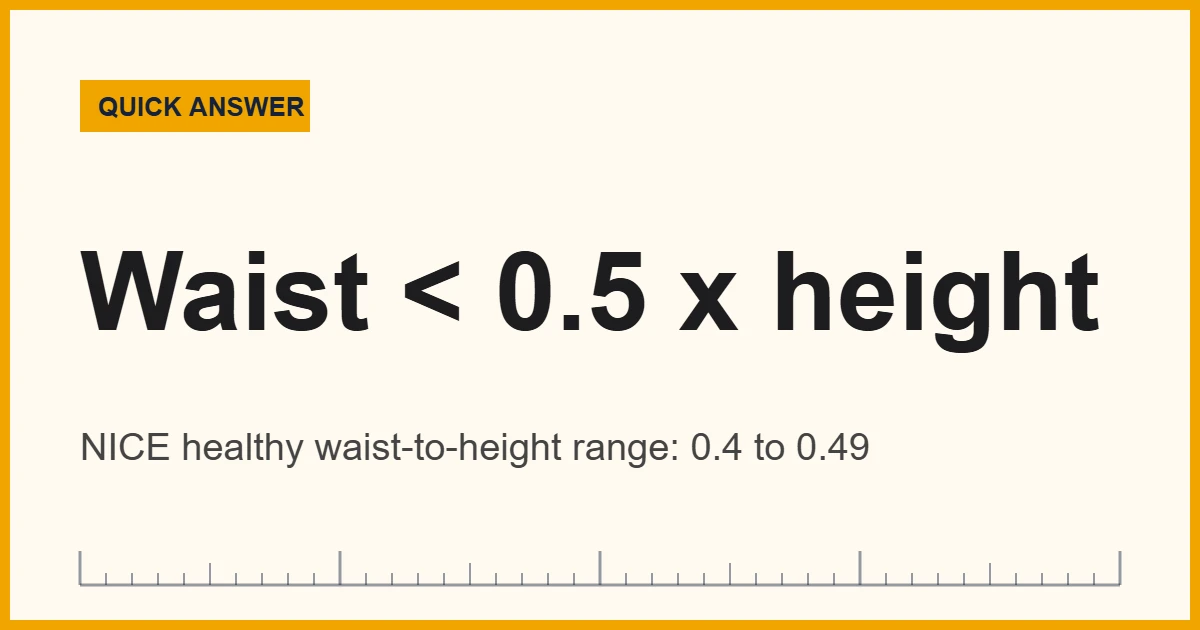
Ideal girth measurements are not one magic number. Instead, health bodies use ratios: the UK’s NICE says a waist under half your height (a ratio of 0.4 to 0.49) is the healthy range, and the WHO flags a waist-to-hip ratio above 0.90 for men or 0.85 for women.
People search for a perfect waist, chest or thigh size, but no medical body publishes a single ideal set of girths for everyone. What they do publish, however, is simpler and more useful. For example, they compare your waist with your height or your hips, because a ratio scales with your frame.
Instead, this page focuses on what those numbers mean. So if you still need the technique, our guide to taking girth measurements covers tape placement, tension and every body site step by step.
In short: measure your waist and your height in the same unit, divide, and aim for less than 0.5. After that, a waist-to-hip ratio adds detail, and clothing size charts tell you which size fits, not which body is “right”.
Also, the guidance here comes from public health sources. In particular, the British Heart Foundation explains the NICE waist-to-height ranges, and the US National Heart, Lung, and Blood Institute (NHLBI) sets waist size limits for adults.
Convert Your Ideal Girth Measurements Between Inches and Centimeters
Health guidance often comes in centimeters, while US tape measures and size charts use inches. Therefore, type your waist, hip or height below to switch units before you work out a ratio.
One inch is exactly 2.54 cm, so a 34-inch waist is 86.36 cm. Also, a ratio has no unit, which means you get the same answer in inches or centimeters as long as you do not mix them.
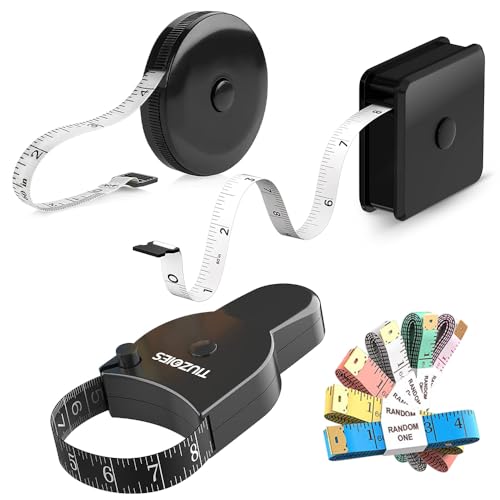
Recommended Tape Measures for Body Girths
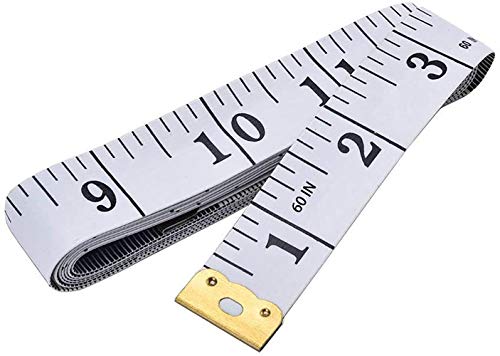
Above all, a soft, non-stretch tape is all you need. First, look for one with both inches and centimeters. Next, consider a retractable or self-locking body tape, because it keeps even tension when you measure yourself without help.



As an Amazon Associate, Measuring Expert earns from qualifying purchases.
Key Takeaways
- No health authority publishes one ideal waist, chest or thigh size for all adults.
- Waist-to-height ratio: under 0.5 is the healthy range in NICE guidance, as the BHF explains.
- A ratio of 0.5 to 0.59 means increased risk, and 0.6 or more means the highest risk.
- WHO flags a waist-to-hip ratio above 0.90 in men and above 0.85 in women.
- NHLBI says a waist over 40 inches (men) or 35 inches (women) raises health risk.
- Clothing size charts describe fit, not health, and they differ between brands.
- Use the same unit for both numbers, and measure the same way each time.
What Ideal Girth Measurements Really Mean
Girth simply means the distance around something. On the body, it is the circumference of your waist, hips, chest, arm, thigh, calf or even ankle, as in our guide on how to measure ankle girth. However, “ideal” depends on why you are asking.
For health, the useful question is where you carry fat, not how small a single number is. That is why guidance looks at the waist compared with height or hips. For clothing, by contrast, the ideal is whatever matches a brand’s size chart so the garment fits. For fitness, meanwhile, many people track arm or thigh girth over time to follow their own progress.
So the honest answer is that ideal girth measurements are relative. For example, a tall person and a short person can both be in the healthy range with very different waist sizes. Similarly, two people with the same waist can wear different sizes in two brands.
Waist-to-Height Ratio: The Simplest Health Check
To begin with, the waist-to-height ratio divides your waist girth by your height. NICE recommends it for estimating belly fat, and the BHF summarizes the ranges this way:
| Waist-to-height ratio | What it means (NICE, via BHF) |
|---|---|
| 0.4 to 0.49 | Healthy range |
| 0.5 to 0.59 | Increased risk of health problems |
| 0.6 or above | Highest risk of health problems |
The quick rule follows from the table: keep your waist to less than half your height. For example, someone 5 ft 9 in tall (69 in, or 175.26 cm) and with a 34-inch waist has a ratio of 34 / 69 = 0.49, which is just inside the healthy range.
Next, here is what half and six-tenths of your height work out to. Because the ratio uses height, the table works for men and women alike.
| Height | Waist at ratio 0.5 | Waist at ratio 0.6 |
|---|---|---|
| 5 ft 0 in (152.4 cm) | 30 in (76.2 cm) | 36 in (91.4 cm) |
| 5 ft 2 in (157.5 cm) | 31 in (78.7 cm) | 37.2 in (94.5 cm) |
| 5 ft 4 in (162.6 cm) | 32 in (81.3 cm) | 38.4 in (97.5 cm) |
| 5 ft 6 in (167.6 cm) | 33 in (83.8 cm) | 39.6 in (100.6 cm) |
| 5 ft 8 in (172.7 cm) | 34 in (86.4 cm) | 40.8 in (103.6 cm) |
| 5 ft 10 in (177.8 cm) | 35 in (88.9 cm) | 42 in (106.7 cm) |
| 6 ft 0 in (182.9 cm) | 36 in (91.4 cm) | 43.2 in (109.7 cm) |
| 6 ft 2 in (188.0 cm) | 37 in (94.0 cm) | 44.4 in (112.8 cm) |
A waist below the “0.5” column is in the healthy range. In addition, the BHF lists 0.4 as the bottom of that range, so a waist far below 0.4 times your height is not a goal either.
Waist-to-Hip Ratio and Waist Size Limits
The waist-to-hip ratio divides waist girth by hip girth, measured around the widest part of the buttocks. The World Health Organization covered it in its expert report on waist circumference and waist-hip ratio, which defines abdominal obesity as a ratio above 0.90 for men and above 0.85 for women.
For instance, a 32-inch waist and 40-inch hips give 32 / 40 = 0.80. On 40-inch hips, the WHO limits fall at a 36-inch waist for men and a 34-inch waist for women.
By contrast, the NHLBI uses waist girth on its own. According to the institute, a waist of more than 35 inches (88.9 cm) for women or more than 40 inches (101.6 cm) for men increases health risk. As a result, it is a fast first check, although it does not adjust for height the way a ratio does.
| Measure | Men | Women | Source |
|---|---|---|---|
| Waist-to-height ratio, healthy range | 0.4 to 0.49 | 0.4 to 0.49 | NICE (via BHF) |
| Waist-to-hip ratio, abdominal obesity | above 0.90 | above 0.85 | WHO |
| Waist girth, increased risk | over 40 in (101.6 cm) | over 35 in (88.9 cm) | NHLBI |
For context, CDC data from 2021 to 2023 give an average adult waist of 40.6 inches for US men and 38.5 inches for US women. In other words, an average figure is not the same as a healthy one.
Ideal Girth Measurements for Health vs Clothing Fit
In practice, the same tape measure serves two very different goals. Here is how health checks and size charts differ:
| Question | Health ratios | Clothing size charts |
|---|---|---|
| What it tells you | Whether belly fat may raise health risk | Which labeled size should fit |
| Girths used | Waist, hips, plus height | Bust or chest, waist, hips, inseam and more |
| Who sets it | WHO, NICE, NIH | Each brand, often starting from industry tables |
| Same everywhere? | Yes, the ranges are published | No, sizes vary by brand and country |
| Where to measure the waist | Midway between lowest rib and top of hip bone (BHF) | Wherever the brand’s chart says, often the natural waist |
US apparel makers often begin with ASTM tables. For example, ASTM D5585 lists body measurements for women’s misses sizes 00 through 20, and designers then add ease for fabric and style. Consequently, your size can change from one label to the next even when your girths do not. So always compare your numbers with the chart for the exact brand you are buying. For tops and dresses, our explainer on what bust measurement means shows how that girth is taken.
How to Check Your Ideal Girth Measurements at Home
- Measure your height. Stand barefoot against a wall, mark the top of your head, and measure from the floor to the mark.
- Find your waist point. Locate your lowest rib and the top of your hip bone, then place the tape halfway between them.
- Read the waist girth. Keep the tape level and snug but not digging in, breathe out normally, and read the number.
- Measure your hips. Wrap the tape around the widest part of your buttocks with your feet together.
- Convert if needed. Use the converter above so that all three numbers are in the same unit.
- Do the division. Divide waist by height, then waist by hips, and compare the results with the tables on this page.
Then repeat each girth twice. If the two readings differ by more than about half an inch, measure a third time and use the average. For full detail on tape tension and other body sites, see our girth measuring guide.
Do and Don’t for Body Ratio Checks
Do
- Measure on bare skin or thin clothing.
- Use a non-stretch tape and keep it level.
- Check at the same time of day each time.
- Write down the unit with every number.
- Look at trends over weeks, not single days.
Don’t
- Suck in your stomach or pull the tape tight.
- Mix inches and centimeters in one ratio.
- Treat a brand’s size chart as a health target.
- Copy “perfect proportion” charts as goals.
- Diagnose yourself from one reading.
Honest Limits of Ideal Girth Measurements
Ratios are screening tools, not a diagnosis. First, the ranges come from population studies, so they describe risk across many people rather than certainty for you. Second, everything on this page is adult guidance, so ask a pediatrician about children and teenagers. Third, a muscular athlete and a sedentary person can share a waist size while having very different health.
Besides, measurement error matters too. A tape placed an inch too high or low, or pulled at a different tension, can shift a ratio by a few hundredths. Moreover, sources place the waist slightly differently: the BHF says midway between rib and hip bone, while NHLBI says just above the hip bones. So pick one method and stick with it.
When to Talk to a Doctor
If your waist-to-height ratio is 0.5 or higher, the range linked to increased risk, it makes sense to speak with a health professional. The same applies if your waist passes the NHLBI limits or your girth changes quickly without an obvious reason. After all, a doctor can combine these numbers with blood pressure, blood tests and your history, which a tape measure cannot do.
Ideal Girth Measurements: FAQs
Is there one set of ideal girth measurements for everyone?
No. Health bodies publish ratios and waist limits rather than one ideal size. A waist under half your height is the healthy range in NICE guidance.
What is a healthy waist-to-height ratio?
According to the BHF summary of NICE guidance, 0.4 to 0.49 is healthy, 0.5 to 0.59 means increased risk, and 0.6 or above means the highest risk.
Are ideal girth measurements the same for men and women?
The waist-to-height ranges are the same for both. However, WHO waist-to-hip limits differ: above 0.90 for men and above 0.85 for women.
What waist size is too big?
The NHLBI says a waist over 40 inches (101.6 cm) for men or over 35 inches (88.9 cm) for women increases health risk.
How do I calculate my waist-to-hip ratio?
Divide your waist girth by your hip girth in the same unit. For example, a 32-inch waist and 40-inch hips give 0.80.
Where should I measure my waist for a health check?
The BHF says to measure halfway between the bottom of your ribs and the top of your hips, after breathing out naturally.
Do clothing size charts show ideal girth measurements?
No. Size charts show which size should fit a given set of girths. They vary by brand and say nothing about health.
Can I use centimeters instead of inches?
Yes. A ratio has no unit, so the answer is the same in either system, as long as both numbers use the same unit.
Is waist-to-height ratio better than BMI?
It answers a different question. BMI reflects overall weight for height, while the waist ratio estimates belly fat. So the two work best together; ask your doctor which matters for you.
How often should I recheck my waist ratio?
Every few weeks is plenty for tracking. Measure at the same time of day, with the same tape and method, so changes are real.
The Bottom Line
To sum up, ideal girth measurements are ratios, not fixed sizes. Keep your waist under half your height, and use the WHO waist-to-hip limits or the NHLBI waist limits as extra checks.
Finally, keep health and fit separate. A size chart tells you what to buy, while a ratio tells you whether to talk to a doctor. For the measuring technique itself, start with our girth measurements guide.