
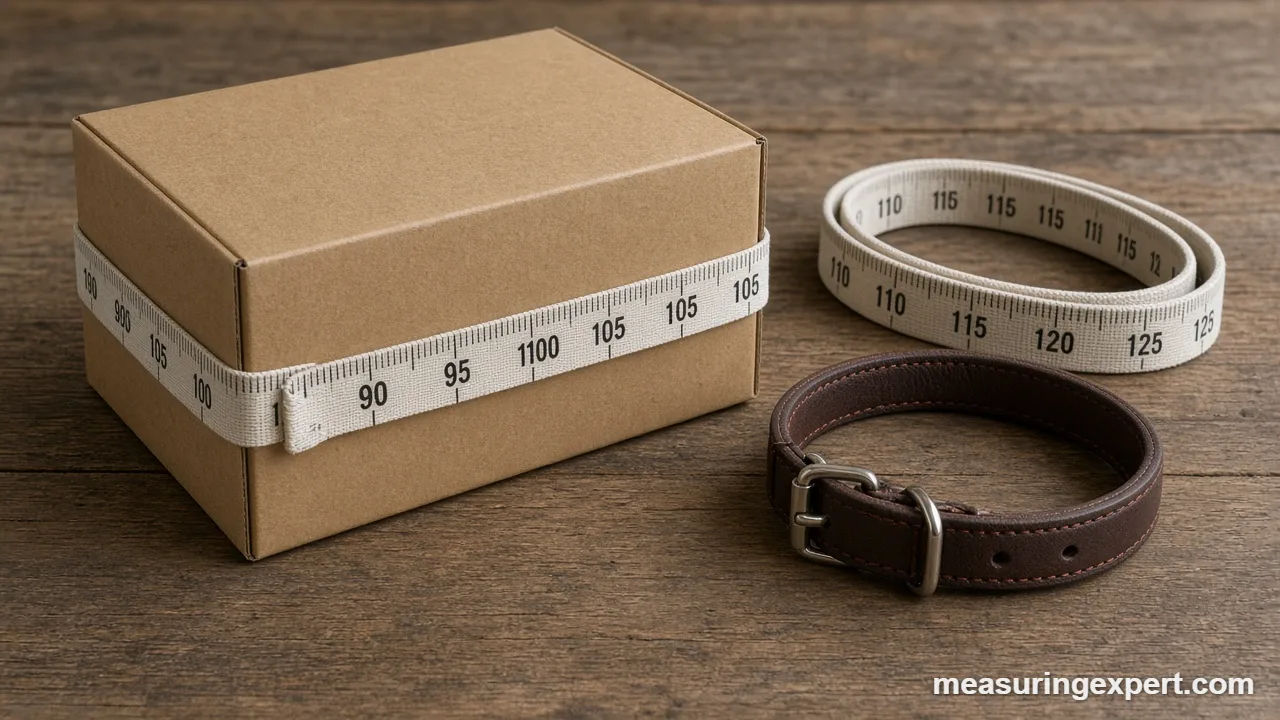
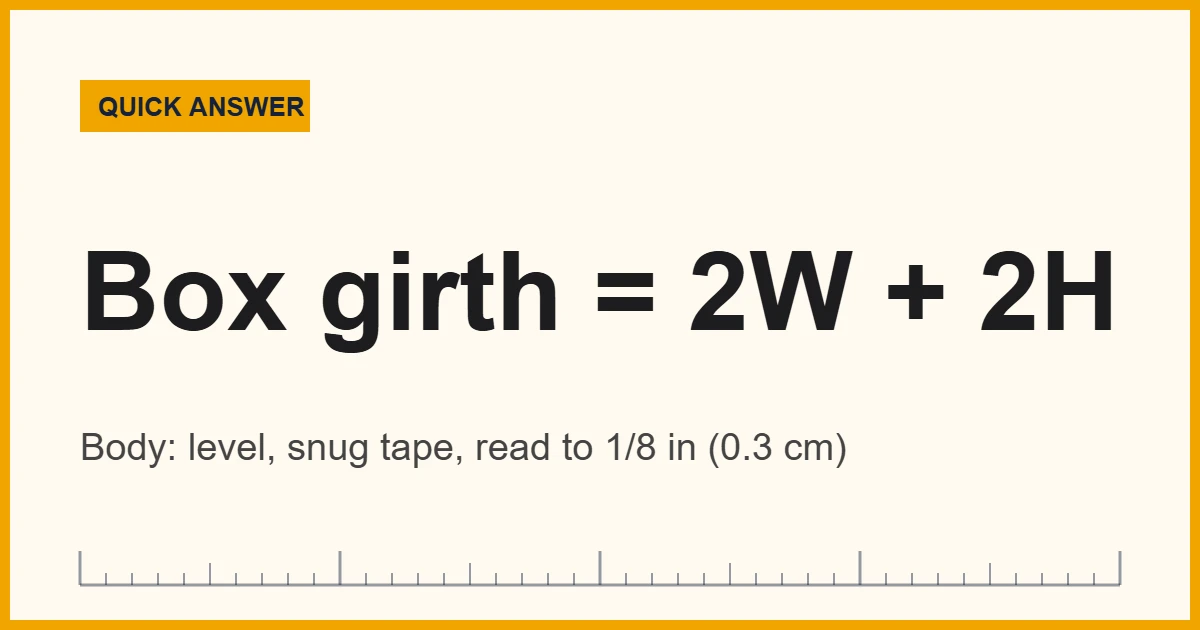
Accurate girth measurements come from wrapping a flexible, non-stretch tape around the right spot on a body, box or animal, keeping it level and snug without squeezing, and reading it to the nearest 1/8 inch (about 0.3 cm). For a box, girth is 2 x width plus 2 x height.
Girth simply means the distance around something. For example, tailors use it for chest, hips and thighs. Shipping carriers also use it to decide whether a box fits their size limits. Horse owners, meanwhile, use heart girth to estimate weight and to size tack, and dog owners use chest girth to buy a harness that fits.
In short: use a soft tape for bodies and animals, a rigid tape for boxes, measure at a defined landmark, and repeat each reading at least twice. Above all, record the number in both inches and centimeters so you can compare it with any size chart.
The US Centers for Disease Control and Prevention (CDC) describes the same habits in its NHANES body measures manual. For example, trained staff keep the tape snug but never compress the skin, and they record each circumference to the nearest 0.1 cm.
Overall, this guide covers girth on people, packages and animals. For trees, the method is different (you measure at breast height and often convert to diameter), so see our separate guide on how to measure tree girth.
Convert Girth Measurements Between Inches and Centimeters
Size charts mix units, so enter your reading below. The converter then uses the exact definition of 1 inch = 2.54 cm and also shows millimeters, feet and meters.
Recommended Tapes for Taking Girth Measurements
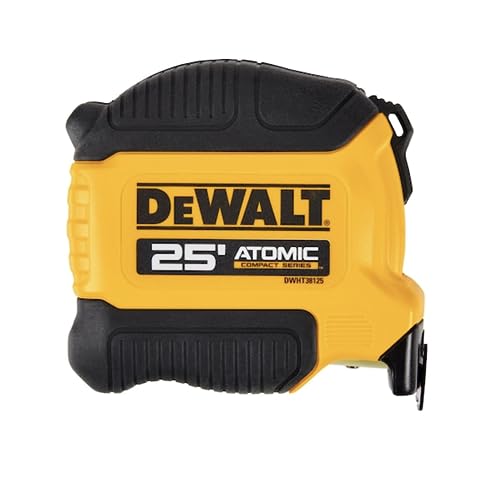
You need two kinds of tape. First, a soft fiberglass or vinyl tape wraps around curves on a body or an animal without stretching. Second, a locking steel tape gives clean, straight readings on box edges. If you own a horse, a weight tape adds a printed weight scale to the same heart girth wrap.


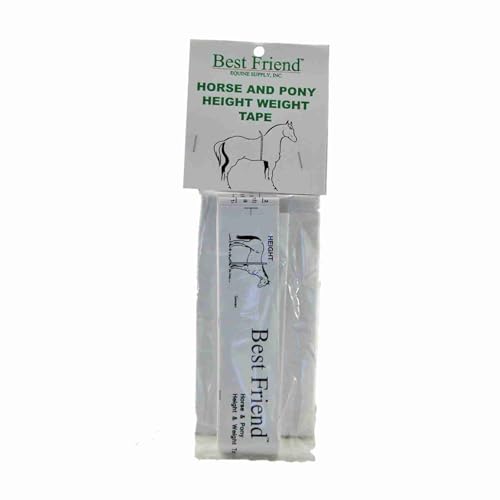
As an Amazon Associate, Measuring Expert earns from qualifying purchases.
- In short, girth is a circumference: the distance all the way around.
- For a box, girth is 2 x width + 2 x height, not the length.
- USPS caps most parcels at 108 inches of length plus girth; UPS allows 165 inches.
- Body girth needs a non-stretch tape, level and snug, read to 1/8 inch or 0.1 cm.
- Horse weight estimate: heart girth x heart girth x body length / 330 (inches, pounds).
- Repeat every reading twice and average readings that differ slightly.
- Trees, however, follow a separate, forestry-based method.
Three Kinds of Girth Measurements
People use the word girth in three main settings. Although the idea is the same, the landmark and the tool change. As a result, the most common mistake is borrowing a method from the wrong setting, such as adding a box’s length into its girth.
| Setting | What girth means | Best tool | Typical use |
|---|---|---|---|
| Body | Distance around a body part at a set landmark | Soft non-stretch tape | Clothing size, fitness tracking, health checks |
| Package | Distance around the box at its thickest part, at a right angle to the length | Steel tape or ruler | Carrier size limits and pricing |
| Horse | Heart girth: around the barrel just behind the withers and elbows | Soft tape or weight tape | Weight estimates, saddle girth size |
| Dog | Chest girth: around the widest part of the rib cage | Soft tape | Harness and coat size |
| Tree | Circumference at breast height (4.5 ft in the US) | Diameter tape | Forestry and record trees (separate guide) |
Body Girth Measurements: Where to Place the Tape
First, each site has a landmark. Consistency matters more than which brand’s chart you follow, so pick one landmark and stick with it. In addition, measure the same side of the body each time, because left and right limbs often differ slightly.
| Site | Landmark | Tip |
|---|---|---|
| Neck | Just below the Adam’s apple | Also, keep the tape slightly angled down at the front. |
| Chest | Fullest part, across the nipples and under the arms | Relax your arms and breathe normally while you read it. |
| Bust | Fullest part of the bust, over a non-padded bra | Padding adds to the reading, so skip it. |
| Waist (health) | Just above the top of the hip bones | Read it when you finish a normal breath out. |
| Waist (clothing) | Natural waist, the narrowest part of the torso | First, bend sideways to find the crease. |
| Hips | Widest part of the buttocks | Stand with feet together while you measure. |
| Thigh | Widest part, just below the buttock crease | Keep your weight even, since a shifted stance changes it. |
| Upper arm | Midpoint between the shoulder tip and the elbow point | Let the arm hang loose so the muscle stays relaxed. |
| Calf | Widest part of the calf | Slide the tape up and down until you find the maximum. |
Waist Girth Measurements: Two Landmarks
Above all, the waist is the site people get wrong most often. The old version of this page said to measure at the narrowest point, which suits clothing. Health guidance, however, uses the top of the hip bones instead, and the two readings can differ by an inch or more. For the health side, see our guide to abdominal girth measurement. Similarly, the inside leg needs its own method, covered in our inseam measurement guide.
How to Take Body Girth Measurements
- Prepare the tape. Use a soft fiberglass or vinyl tape that does not stretch, and check that the zero end is not worn or cut.
- Remove bulky clothing. Next, strip down to bare skin or one thin layer for the truest reading.
- Find the landmark. Use the table above, and look in a mirror so you can see the tape while you wrap it.
- Wrap the tape level. Keep it parallel to the floor for the torso, or at a right angle to the limb for arms and legs.
- Snug, not tight. The tape should touch the skin all around, but it should not dent it.
- Breathe out normally. Then read the tape where the zero end meets the scale, to the nearest 1/8 inch or 0.1 cm.
- Repeat once. If the two readings differ by more than 1/4 inch (about 0.6 cm), take a third and average the closest two.
Measuring yourself works for most sites. Nevertheless, a helper makes chest and hip readings easier, because they can check that the tape stays level across your back.
Package Girth Measurements for Shipping
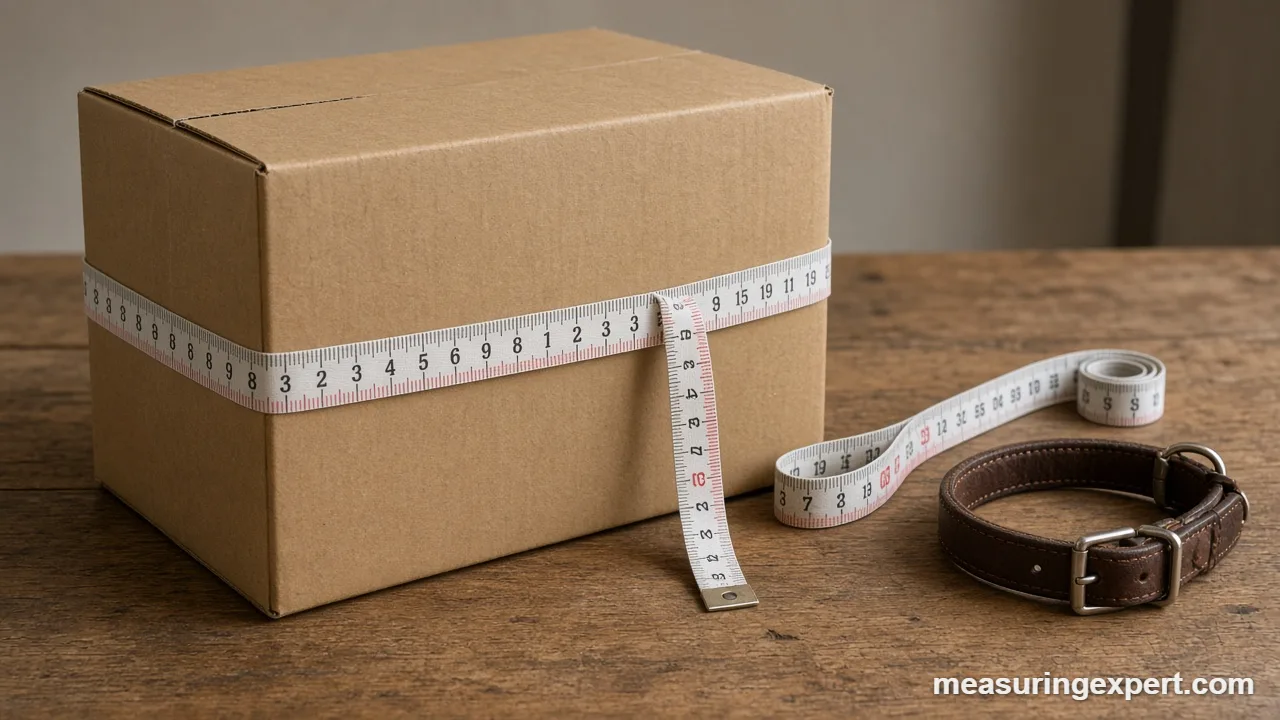
First, carriers define length as the longest side of the box. Girth is then the distance around the box at its thickest part, at a right angle to that length. So for a rectangular box, girth = 2 x width + 2 x height. Finally, carriers add the two together: length plus girth.
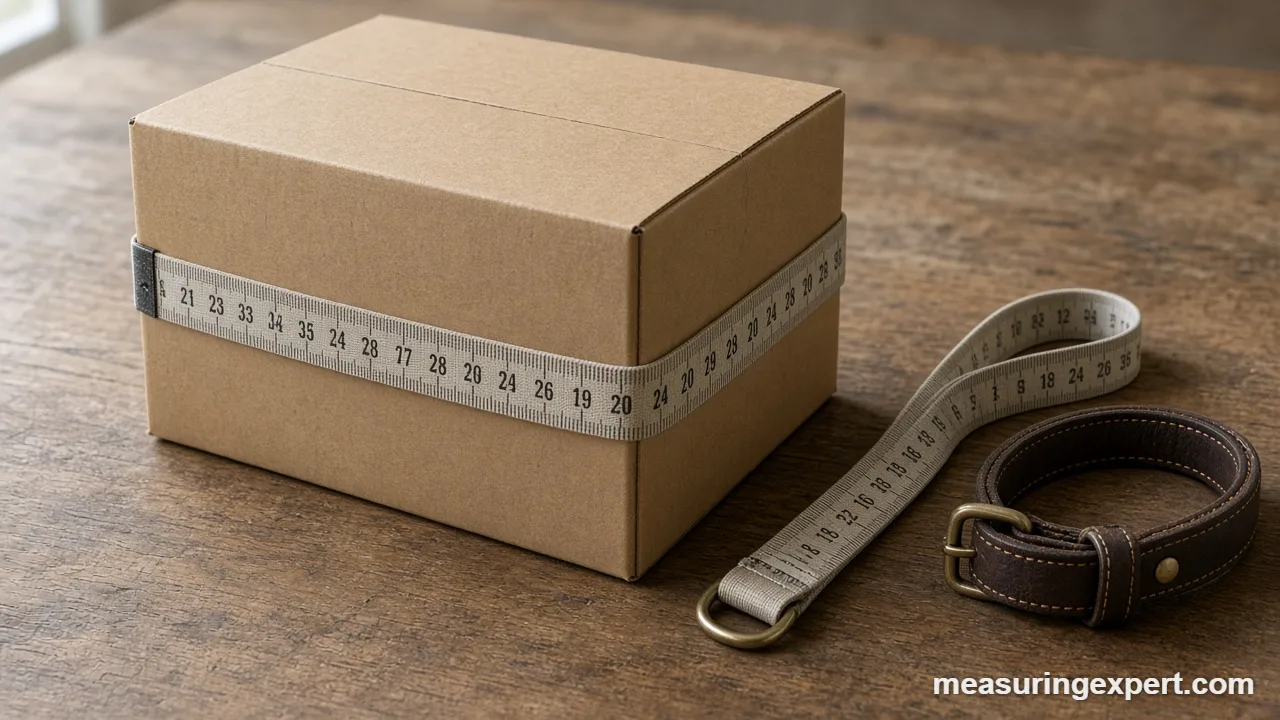
For example, take a box that measures 20 x 12 x 10 inches. First, the length is 20 inches. Next, the girth is 2 x 12 + 2 x 10 = 44 inches (111.76 cm). Therefore, length plus girth is 64 inches (162.56 cm), well under every limit below. For a round mailing tube, girth is pi x diameter, so a 4-inch tube has a girth of about 12.57 inches (31.93 cm).
| Carrier and service | Max length plus girth | Metric |
|---|---|---|
| USPS, most parcels (for example, Priority Mail) | 108 in | 274.32 cm |
| USPS Ground Advantage and Parcel Select | 130 in (oversized pricing above 108 in) | 330.2 cm |
| UPS | 165 in (max length 108 in) | 419.1 cm |
The limits above come from the USPS Quick Service Guide 201e and the UPS size guide, as of October 2026. Because carriers update their rules, check the current page before you ship something close to a limit.
Girth Measurements for Horses and Dogs
With animals, the tape position also matters as much as it does on people. However, animals move, so work calmly and take several readings.
Horse heart girth and weight
First, run the tape around the barrel, over the highest point of the withers and just behind the elbows. Then measure body length from the point of the shoulder straight back to the point of the buttock. The University of Arkansas Cooperative Extension Service gives this horse weight formula: weight (lb) = heart girth x heart girth x body length / 330, with both lengths in inches.
For example, a horse with a 72-inch (182.88 cm) heart girth and a 66-inch (167.64 cm) body length works out to 72 x 72 x 66 / 330 = 1,036.8 lb, or about 470 kg. The extension service also notes the method is less accurate for pregnant mares and horses with unusual conformation. In short, treat it as an estimate, not a scale weight.
Dog chest girth
First, wrap the tape around the widest part of the rib cage, just behind the front legs. Then compare the number with the harness maker’s chart. If your dog falls between two sizes, follow the maker’s advice; many charts suggest leaving room for two fingers under the strap.
Accuracy of Girth Measurements: Common Errors
Accuracy and precision, however, are not the same thing. For instance, a tape can give the same wrong number every time if you always pull it too hard. The table below separates the terms, and the list after it covers the errors that cause most bad readings.
| Term | Meaning | Girth example |
|---|---|---|
| Accuracy | How close a reading is to the true value | For example, a stretched tape reads short every time. |
| Precision | How close repeated readings are to each other | Three readings within 1/8 inch are precise, even when the tape is wrong. |
| Resolution | The smallest mark you can read | 1/16 inch or 1 mm on most sewing tapes |
- Tilted tape. A tape that dips at the back reads long, so check it in a mirror.
- Too much tension. Pulling hard dents soft tissue, so the tape reads short.
- Old vinyl tape. Cheap vinyl stretches over time, so compare it with a steel ruler once a year.
- Wrong landmark. Moving a waist tape from the navel to the hip bones also changes the number.
- Different times of day. Meals and fluid shift body girth, so measure at the same time each day.
Do and Don’t
Do
- Use a non-stretch fiberglass tape on bodies and animals.
- Keep the tape level and flat, so it has no twists.
- Write the reading down before you forget the unit.
- Measure boxes only when you finish packing them.
- Repeat each reading at least twice.
Don’t
- Pull the tape until it dents the skin.
- Add a box’s length into its girth.
- Measure over a coat, a padded bra or thick fur.
- Mix inches and centimeters in one record, since that invites errors.
- Rely on a weight tape for medicine doses.
Honest Limits
First, a tape measure tells you size, not composition. For instance, two people with the same thigh girth can have very different amounts of muscle and fat. Similarly, small changes of 1/4 inch from week to week often reflect tape placement, breathing or a recent meal rather than real change. Look for trends over several weeks instead. Finally, horse weight formulas and harness charts rest on averages, so an individual animal can sit outside them.
When to Call a Professional
Generally, most girth readings are simple home tasks. Even so, some situations call for an expert. For example, a tailor or bra fitter can measure tricky sites more consistently than you can alone. Likewise, a vet should weigh an animal before dosing, and a doctor should interpret any waist reading that worries you. Finally, if you ship freight close to a carrier limit, ask the carrier for a quote first.
Girth Measurements FAQs
What does girth mean in measurements?
Girth is the distance around an object or body part. In other words, it is a circumference, measured with a tape wrapped all the way around.
How do you calculate the girth of a box?
Measure the two shorter sides and add them twice: girth = 2 x width + 2 x height. For example, a 20 x 12 x 10 inch box has a girth of 44 inches.
What is length plus girth?
It is the longest side of a package plus its girth. Carriers then use it for size limits, such as 108 inches for most USPS parcels and 165 inches for UPS.
Is girth the same as circumference?
Yes, in practice, because girth is the everyday word for the circumference of a body, animal or package.
What tape is best for taking body girth measurements?
Use a soft fiberglass or vinyl tape that does not stretch, marked in inches and centimeters. However, a steel tape does not follow body curves well.
How tight should the tape be?
Snug enough to touch all the way around, but not so tight that it dents the skin or fur.
Where do you measure a horse’s heart girth?
Run the tape around the barrel over the highest point of the withers and just behind the elbows.
How accurate is a horse weight tape?
It gives an estimate only. The heart girth formula is less accurate for pregnant mares and horses with unusual builds, so ask a vet before dosing medicine.
How do you measure a dog’s chest girth?
Wrap a soft tape around the widest part of the rib cage, just behind the front legs, then compare it with the harness maker’s chart.
How do you measure tree girth?
Trees, however, use a forestry method at breast height, 4.5 feet above the ground in the US. See our separate tree girth guide for the steps.
Girth Measurements: The Bottom Line
To sum up, girth is the distance around something, and good readings come from the right tape, the right landmark and gentle, level tension. On a body, read to 1/8 inch or 0.1 cm, then repeat. On a box, add twice the width and twice the height, then add the length to check carrier limits.
For horses and dogs, measure behind the front legs and treat any formula as an estimate. Finally, use the converter at the top of this page whenever a size chart or carrier uses a different unit.
3 thoughts on “How to Take Accurate Girth Measurements: Body, Packages and Animals”