

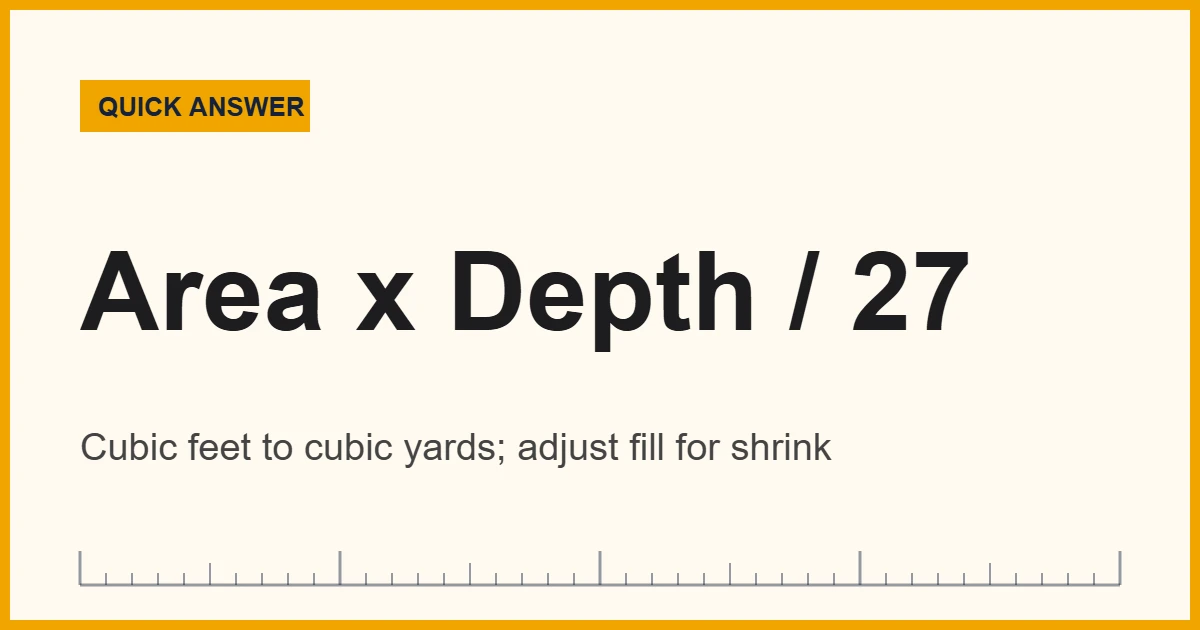
To calculate cut and fill volumes, compare the existing ground with the finished grade at many points, multiply each plan area by its average depth of cut or fill, and add the results. Then divide cubic feet by 27 to get cubic yards, and adjust the fill for soil shrinkage before you order material.
Every grading job, from a shed pad to a mile of road, comes down to one question: how much dirt has to move? First, cut is the soil you dig out where the ground sits too high. Fill, by contrast, is the soil you place where it sits too low. As a result, the gap between the two decides whether you haul material away, buy extra, or simply move it from one side of the site to the other.
In short: earthwork math is area times depth, repeated across the site. Therefore, the skill lies in choosing points that capture the real shape of the ground, so the total does not miss a hump or a hollow.
Similarly, highway engineers use the same idea at a larger scale. For example, the Federal Highway Administration (FHWA) tells designers in its earthwork design guidance to find volumes with the average end area method, which adds up the slices between neighboring cross sections. That guidance also notes that the method tends to slightly overstate the true volume.
Below, you will first find a converter for your plan area. After that, you will see the three main methods, a worked example for each, and finally how shrink and swell change the numbers you actually haul.
Convert the Plan Area for Your Cut and Fill Volumes
Most mistakes start with mixed units. So enter the footprint of your cut or fill zone below and convert it to square feet, square meters, square yards or acres. Next, multiply the square feet by the average depth in feet, and divide by 27 for cubic yards. For metric, multiply square meters by depth in meters to get cubic meters.
For example, a 50 by 30 foot pad that needs 6 inches of cut covers 1,500 square feet. Then 1,500 x 0.5 = 750 cubic feet, and 750 / 27 = 27.8 cubic yards, or about 21.2 cubic meters.
Recommended Tools for Measuring Cut and Fill Volumes
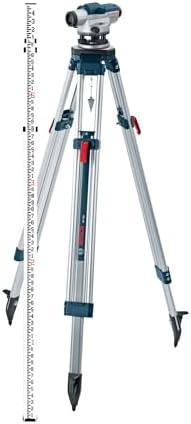
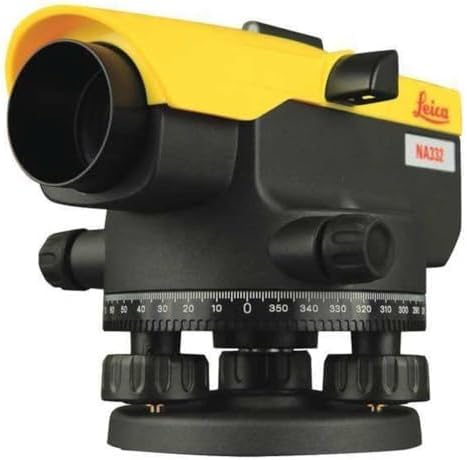
Above all, the math only works if your elevations are right. For small sites, for instance, an automatic optical level and a grade rod are enough. Larger pads and driveways, however, go faster with a self-leveling rotary laser and a receiver, because one person can read grades across the whole site. Also, a measuring wheel helps you lay out the grid or station spacing quickly. We picked these based on manufacturer specs and buyer reports, not hands-on testing.



As an Amazon Associate, Measuring Expert earns from qualifying purchases.
Key Takeaways
- Volume equals plan area times average depth; 27 cubic feet make 1 cubic yard.
- The grid method suits building pads, yards and parking areas.
- Average end area suits long jobs such as roads, ditches and trenches.
- For uneven sections, the prismoidal formula gives a tighter answer.
- Soil swells when dug and shrinks when compacted, so bank, loose and compacted volumes differ.
- Closer grid spacing on rough ground beats any formula for accuracy.
- Deep trenches bring OSHA rules; call 811 before any digging.
What Cut, Fill and Net Volume Mean
Every earthwork estimate compares two surfaces. The first is existing ground, which you measure in the field. Then there is the design surface, the finished grade shown on the plan. Wherever existing ground lies above the design, you have cut. Conversely, wherever it lies below, you have fill. The line where the two surfaces meet is the daylight or grade line, and its depth is zero.
Net volume is simply cut minus fill. A positive net means extra soil to haul off. On the other hand, a negative net means you must import material, often called borrow. When the two nearly match, the site is “balanced”, which usually saves the most money because trucks stay off the road.
| Term | What it means | Typical unit |
|---|---|---|
| Cut (excavation) | Soil removed where the ground is too high | cubic yards or cubic meters |
| Fill (embankment) | Soil placed where the ground is too low | cubic yards or cubic meters |
| Net volume | Cut minus fill; shows export or import | cubic yards or cubic meters |
| Borrow | Material brought in from off site | cubic yards (often bought by the ton) |
| Spoil or waste | Surplus cut hauled away | loose cubic yards (truck loads) |
Three Ways to Calculate Cut and Fill Volumes
In general, all three methods slice the site into simple shapes, find each slice, and add them up. The only difference, then, lies in how you slice. So pick the method that matches the shape of the job.
| Method | Best for | Data you need | Accuracy |
|---|---|---|---|
| Grid (borrow pit) | Pads, lots, yards, parking areas | Existing and design elevations at grid corners | Good; better with tighter spacing |
| Average end area | Roads, ditches, trenches, levees | Cross-section areas at stations along a centerline | Good; usually a little high |
| Prismoidal formula | Long sections whose ends change shape a lot | End areas plus a measured middle section | Better than end area for curved shapes |
| Surface model (software) | Large or irregular sites | Dense survey points, drone or LiDAR data | Best, if the survey is good |
How to Calculate Cut and Fill Volumes With a Grid
The grid method, also called the borrow pit method, is the easiest to do by hand. Here is the full process:
- Set a benchmark. Pick a fixed point that will not move, such as a nail in a curb, and give it an elevation.
- Lay out a grid. Stake squares across the site, often 10, 20 or 25 feet apart. Also, use smaller squares where the ground changes quickly.
- Shoot existing elevations. With a level and rod, read the ground elevation at every grid corner and write it on a sketch.
- Add design elevations. Take the finished grade for each corner from the plan or from your target slope.
- Find cut or fill at each corner. Subtract design from existing. A positive result is cut, while a negative result is fill.
- Average each square. Add the four corner depths of one square and divide by 4.
- Multiply by the square’s area. Area times average depth gives the volume of that square in cubic feet.
- Total and convert. Add cut squares and fill squares separately, then divide each total by 27 for cubic yards.
If a square holds both cut and fill, split it along the zero line, or use a smaller square there. Otherwise, the cut and fill cancel each other inside the square and hide real dirt you must move.
Worked Example: A 40 by 40 Foot Pad
For instance, imagine a 40 by 40 foot pad split into four 20 by 20 foot squares, so each square covers 400 square feet. The whole pad sits above the design grade, so every corner is cut. After shooting the corners, you average each square:
| Square | Corner cuts (ft) | Average depth (ft) | Volume (cu ft) |
|---|---|---|---|
| A | 1.2, 0.8, 1.0, 0.6 | 0.90 | 360 |
| B | 0.8, 0.4, 0.6, 0.2 | 0.50 | 200 |
| C | 1.0, 0.6, 0.9, 0.5 | 0.75 | 300 |
| D | 0.6, 0.2, 0.5, 0.1 | 0.35 | 140 |
| Total | – | – | 1,000 |
1,000 cu ft / 27 = 37.0 cu yd (about 28.3 m3)
That 37 cubic yards is bank volume, meaning soil in its natural state. Once you dig it, however, it takes up more room in the truck, as the shrink and swell section explains.
Average End Area Method for Roads and Trenches
On long, narrow jobs, however, a grid wastes effort. Instead, surveyors cut cross sections at stations along a centerline, typically every 25, 50 or 100 feet. Each cross section shows existing ground, the design template and the side slopes, so you can measure its cut area and fill area in square feet.
V = L x (A1 + A2) / 2
Here, A1 and A2 are the areas of two neighboring sections and L is the distance between them. For example, if one section has 120 sq ft of cut, the next has 180 sq ft, and they sit 100 feet apart, then V = 100 x (120 + 180) / 2 = 15,000 cubic feet. Then dividing by 27 gives 555.6 cubic yards. Finally, repeat for every pair of stations and add the results. The theodolite and level skills in our guide on how to use a theodolite are exactly what you need to shoot these sections.
Prismoidal Formula: When the Ends Differ a Lot
Average end area assumes the shape changes evenly between sections. When one end is much bigger than the other, though, that assumption overstates the volume. The prismoidal formula therefore adds a third section measured halfway between the ends:
V = L x (A1 + 4 x Am + A2) / 6
Using the same stations, suppose the middle section measures 145 sq ft. Then V = 100 x (120 + 580 + 180) / 6 = 14,667 cubic feet, or 543.2 cubic yards. In other words, that is about 12 cubic yards less than the end area result. Of course, on a single pair of stations the difference looks small. Over a mile of road, however, it can add up to many truck loads, which is why some agencies apply a prismoidal correction on large contracts.
Shrink and Swell: Bank, Loose and Compacted Cut and Fill Volumes
Soil does not keep the same volume as you move it. To begin with, in the ground it sits as bank volume. Once excavated, it loosens and swells. After you spread and compact it as fill, it usually ends up denser than it started, so it shrinks. As a result, one bank cubic yard of cut rarely makes exactly one cubic yard of compacted fill.
| Material | Typical change, bank to compacted fill | What it means for you |
|---|---|---|
| Light soil (sandy, silty) | 20 to 40 percent shrink | Plan on much more cut than fill |
| Moderate soil | 10 to 25 percent shrink | Common range for mixed soils |
| Heavy soil (clay) | 15 percent shrink to 5 percent swell | Varies with moisture and compaction |
| Rock | 5 to 25 percent swell | Blasted rock takes more room as fill |
These ranges come from the FHWA earthwork table, which warns that the factors can vary by about a third. So, for example, if your plan needs 500 cubic yards of compacted fill and the soil shrinks 15 percent, you need about 500 / 0.85 = 588 bank cubic yards of cut. Similarly, trucking quotes use loose volume: at a 25 percent swell, 500 bank yards fill roughly 625 loose yards of truck space. Our guide to the angle of repose explains why loose stockpiles also need more ground than you expect.
Cubic Yards, Cubic Feet and Cubic Meters
Earthwork in the US runs on cubic yards, while plans in most other countries use cubic meters. The conversions are exact, because the yard is defined as 0.9144 meters. For a refresher on how cubic units build from length, see our page on volume in cubic units.
| From | To | Multiply by |
|---|---|---|
| Cubic yards | Cubic feet | 27 |
| Cubic feet | Cubic yards | 0.037037 (divide by 27) |
| Cubic yards | Cubic meters | 0.764555 |
| Cubic meters | Cubic yards | 1.307951 |
| Cubic meters | Cubic feet | 35.3147 |
| Acre-foot | Cubic yards | 1,613.33 |
Also, watch depth units. Plans often give elevations in feet and tenths, so 0.5 ft means 6 inches, not 5 inches. Likewise, the same habit matters when you pour footings, as our concrete volume guide shows.
Do and Don’t for Earthwork Estimates
Do
- Tie every elevation to one fixed benchmark.
- Shrink the grid where the ground changes quickly.
- Track cut and fill in separate columns.
- Subtract topsoil stripping before you count usable fill.
- Check software totals with a quick hand calculation.
Don’t
- Mix feet and tenths with feet and inches.
- Let a cut corner and a fill corner cancel inside one square.
- Order fill from the compacted plan volume.
- Assume a site balances just because the drawing says so.
- Skip the 811 call before digging.
Honest Limits of Cut and Fill Volumes Estimates
Above all, any hand estimate is only as good as the points behind it. First, a grid assumes the ground runs straight between corners, so a hidden ridge or dip between stakes simply disappears from the total. Next, shrink and swell factors are averages; your soil could fall well outside them, especially if it is wet. In addition, topsoil, roots, rock and unsuitable clay usually cannot go back as structural fill, which shifts the balance. Finally, the average end area method tends to run a little high. In short, treat a hand estimate as a planning number, and add a contingency before you sign a hauling contract.
When to Call a Surveyor or Engineer
A homeowner can estimate a patio or shed pad with a level and a tape. Bigger jobs, however, deserve a licensed land surveyor and often a civil engineer, for example:
- Property lines are close. Grading onto a neighbor’s lot or into a drainage easement causes real legal trouble.
- Retaining walls or slopes. Steep fills and walls need a proper design.
- Drainage changes. Moving water toward a building or a neighbor is a common and costly mistake.
- Trenches deeper than a few feet. OSHA’s excavation standard calls for a protective system, such as sloping, shoring or a trench box, in trenches 5 feet deep or more unless the cut is in stable rock.
- Paid contracts. When money changes hands per cubic yard, both sides benefit from an independent survey.
Cut and Fill Volumes: Frequently Asked Questions
What is the simplest way to estimate cut and fill volumes?
Multiply the plan area of each zone by its average depth of cut or fill, then add the zones together. For a quick check on a small pad, one area and one average depth is often close enough.
How many cubic feet are in a cubic yard?
There are exactly 27 cubic feet in one cubic yard, because a yard is 3 feet and 3 x 3 x 3 = 27. One cubic yard also equals about 0.765 cubic meters.
Which method gives the most accurate cut and fill volumes?
A surface model built from dense survey points is the most accurate. By hand, the prismoidal formula beats average end area on sections whose shape changes a lot, and a tight grid beats a coarse one.
What is the average end area formula?
Volume equals the distance between two cross sections times the average of their areas: V = L x (A1 + A2) / 2. With areas in square feet and distance in feet, divide by 27 to get cubic yards.
What does a balanced site mean?
A balanced site has cut and fill that roughly match after shrink and swell, so you move soil around the site instead of hauling it away or buying more.
Why do cut and fill volumes not match after compaction?
Soil changes volume as you move it. It swells when dug and loose, then usually shrinks below its original volume when compacted as fill. Typical soils shrink 10 to 40 percent, while rock swells.
What is a shrinkage factor in earthwork?
It is the percentage by which bank soil loses volume once placed and compacted. For example, with 15 percent shrink, 100 bank cubic yards produce about 85 cubic yards of compacted fill.
How far apart should grid points be?
Many small sites use 10 to 25 foot squares. However, use closer spacing where the ground changes quickly or where cut meets fill, and wider spacing on flat, even ground.
Can I calculate earthwork with a spreadsheet?
Yes. Put existing and design elevations in two columns, subtract to get depths, average each square or pair of sections, and multiply by area or distance. Above all, keep cut and fill in separate columns.
Do I need a permit to move dirt on my property?
It depends on your city or county. Many require a grading permit above a set volume, near slopes, or when drainage changes, so check with your local building department first.
Bottom Line
To sum up, earthwork is area times depth, repeated carefully. A grid suits pads and yards, average end area suits roads and trenches, and the prismoidal formula tightens the answer when sections change shape. Whatever method you use, keep cut and fill separate and convert cubic feet to cubic yards by dividing by 27.
After that, adjust for shrink and swell before ordering trucks or material, and add a contingency for soil you cannot reuse. Finally, for anything near a property line, a slope or a deep trench, bring in a licensed surveyor and follow OSHA rules.