

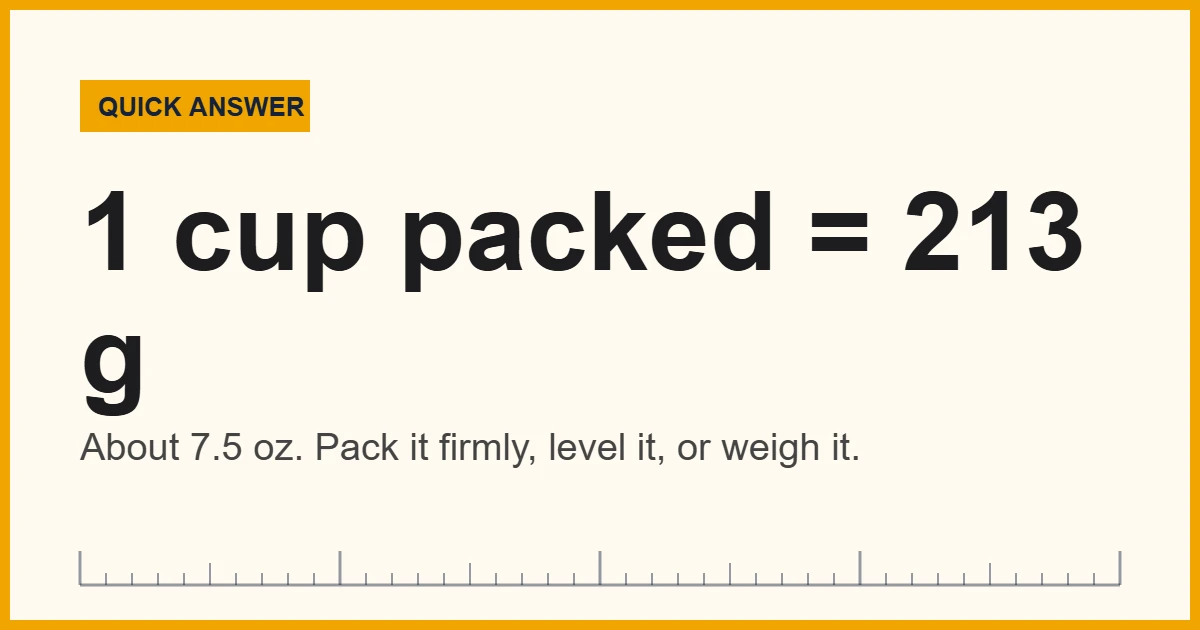
The best way to measure brown sugar is to weigh it: 1 cup of packed light or dark brown sugar weighs about 213 grams (7.5 oz). Without a scale, spoon it into a dry measuring cup, press it down firmly, and level it so it holds the cup’s shape when you tip it out.
Brown sugar is ordinary white sugar coated with a thin film of molasses. That film makes the crystals moist and sticky, so they clump together and trap air. As a result, a scoop of brown sugar can hold very different amounts depending on how hard you press. In contrast, white sugar pours freely and settles on its own.
That is also why almost every American recipe says “packed” next to brown sugar. Packing squeezes out the air pockets, so your cup holds roughly the same amount each time. Weighing goes one step further, because the scale does not care how much air sits between the crystals.
In short: weigh brown sugar when you can, and pack it firmly when you cannot. Both methods give you the amount the recipe writer intended, while a loose, fluffy scoop usually gives you too little.
For example, the test kitchen at King Arthur Baking lists packed brown sugar, light or dark, at 213 grams per cup in its ingredient weight chart. By comparison, the same chart puts granulated white sugar at 198 grams per cup. Similarly, C&H Sugar tells bakers to scoop, press and repeat until the sugar sits flush with the rim.
Below, you will find a weight chart, a gram and ounce converter, a step-by-step method for cups, and fixes for rock-hard sugar. Finally, a short FAQ answers the questions bakers ask most.
Convert Grams to Ounces for Baking
Weighing is the most reliable way to measure brown sugar, so this converter works in weight. Enter grams from a metric recipe (or use 213 g for one packed cup), and it shows ounces, pounds and kilograms. Next, use the chart below if you need cup amounts instead.
Recommended Tools to Measure Brown Sugar
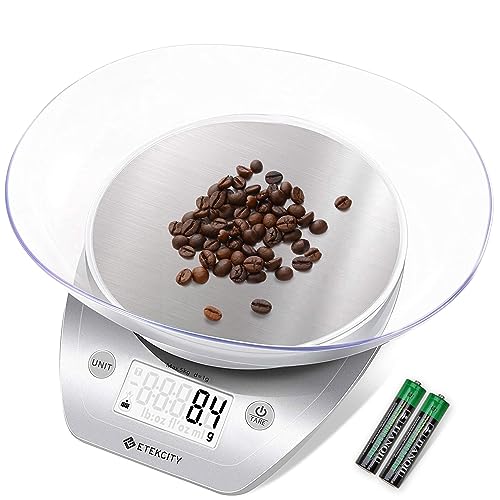
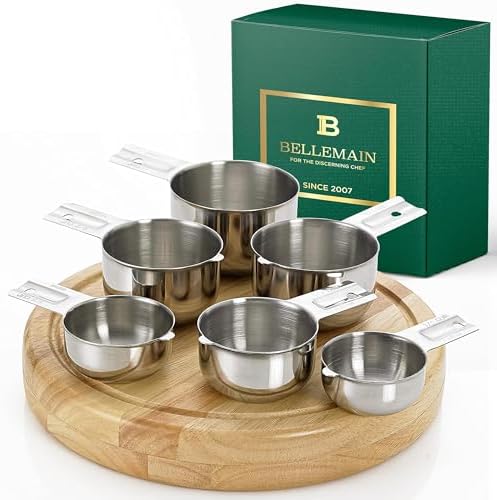
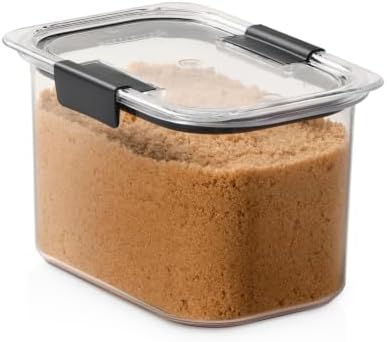
You only need two things. First, a set of sturdy dry measuring cups with flat rims lets you press and level the sugar. Second, a digital kitchen scale with a tare button removes the guesswork completely. In addition, an airtight container with a brown sugar saver keeps the sugar soft enough to measure.



As an Amazon Associate, Measuring Expert earns from qualifying purchases.
Key Takeaways
- One packed cup of brown sugar weighs about 213 g, or 7.5 oz.
- Light and dark brown sugar weigh about the same per cup.
- Recipes that say “brown sugar” in cups almost always mean packed.
- Use dry measuring cups, never a liquid measuring jug.
- Packed sugar should hold the cup’s shape when you turn it out.
- A scale beats any cup, because air pockets do not change weight.
- Soften hard sugar before you measure it, not after.
Brown Sugar Cups to Grams Chart
These values start from 213 grams per packed US cup and scale it down. Also note that the ounce figures are weight ounces, not fluid ounces. Round to the nearest gram for everyday baking.
| Packed brown sugar | Grams | Ounces (weight) |
|---|---|---|
| 1 teaspoon | 4.4 g | 0.16 oz |
| 1 tablespoon | 13 g | 0.47 oz |
| 1/8 cup (2 tbsp) | 27 g | 0.94 oz |
| 1/4 cup | 53 g | 1.88 oz |
| 1/3 cup | 71 g | 2.50 oz |
| 1/2 cup | 107 g | 3.76 oz |
| 2/3 cup | 142 g | 5.01 oz |
| 3/4 cup | 160 g | 5.64 oz |
| 1 cup | 213 g | 7.51 oz |
| 2 cups | 426 g | 15.03 oz |
Going the other way, a 1-pound (454 g) box holds about 2 1/8 packed cups, and a 2-pound bag holds about 4 1/4 cups. Print this chart and tape it inside a cabinet door if you bake often. For other cup conversions, see how many milliliters are in a cup.
Why Recipes Say Packed
Recipe writers pack brown sugar when they develop a recipe, so you need to match them. Otherwise, your cup holds less sugar than theirs did. Because the molasses film makes the crystals cling together, loose brown sugar forms a fluffy pile full of gaps. When you press it, those gaps close and more sugar fits into the same space.
The difference shows up in the finished food. For instance, cookies made with too little brown sugar spread less, taste less of caramel and turn out drier. Meanwhile, too much sugar can make them spread thin and turn greasy at the edges. So the word “packed” is not decoration; it tells you how much sugar the recipe really needs.
| People often confuse | What it really means |
|---|---|
| “1 cup brown sugar, packed” | Press it firmly into a dry cup until full, then level it (about 213 g). |
| “1 cup packed brown sugar” | The same thing. The word order does not change the amount. |
| “Lightly packed” | Press gently, just enough to remove large gaps. It weighs a little less than firmly packed. |
| Fluid ounces (fl oz) | Volume. Liquid cups use them; they do not tell you the sugar’s weight. |
| Ounces (oz) | Weight. One packed cup weighs about 7.5 oz on a scale. |
How to Measure Brown Sugar With Measuring Cups
Use this method whenever you do not have a scale. It works for light, dark and golden brown sugar.
- Choose a dry measuring cup. Pick the cup that matches the recipe amount, such as 1/2 cup or 1 cup.
- Break up any lumps. Rub clumps between your fingers or press them with a fork before you start.
- Spoon the sugar in. Add sugar with a spoon until the cup is about half full.
- Press it down firmly. Use the back of the spoon, your fingertips or a smaller cup to compress it.
- Repeat until full. Keep adding and pressing until the sugar mounds slightly above the rim.
- Level the top. Scrape a straight edge across the rim, then tip the cup over your bowl; the sugar should hold the cup’s shape.
Why a dry cup? Liquid measuring jugs have a pour spout and a fill line below the rim, so you cannot level sugar in them. Our guide to liquid vs dry measuring cups explains the difference in detail.
How to Measure Brown Sugar on a Kitchen Scale
Weighing takes less time than packing, and it is more consistent. Here is the routine:
- Place the bowl on the scale. Then press the tare (zero) button so the display reads 0.
- Set the unit. Switch to grams for the finest steps; ounces work too.
- Add sugar gradually. Spoon it in and slow down as you get close to your target.
- Read the display. Stop at 213 g for each cup, or use the chart above for smaller amounts.
Because the scale reads mass, it ignores air pockets, lumps and how hard you pressed. Therefore two bakers who weigh will get the same amount, while two bakers who pack may not. If you need to convert recipe weights, our explainer on how much an ounce weighs covers ounces and grams.
Light vs Dark: Does It Change How You Measure Brown Sugar?
No. You measure brown sugar the same way whether it is light or dark. Dark brown sugar contains more molasses, so it tastes stronger and looks darker. However, King Arthur lists both at the same 213 grams per packed cup, so one chart covers both.
| Sugar | Texture | Grams per cup | How to measure |
|---|---|---|---|
| Light brown sugar | Moist, clumps | 213 g (packed) | Pack and level, or weigh |
| Dark brown sugar | Moister, clumps more | 213 g (packed) | Pack and level, or weigh |
| Granulated white sugar | Dry, free-flowing | 198 g | Scoop and level, do not pack |
| Confectioners’ sugar | Powdery | 113 g (unsifted) | Spoon in and level, do not pack |
Granulated brown sugar and free-flowing brown sugar products are drier and lighter per cup. So check the package; brands often print their own measuring advice.
What to Do When the Sugar Turns Hard or Lumpy
Brown sugar hardens when its moisture evaporates. As a result, it turns into a solid brick that you cannot pack or level. Soften it first, then measure.
- Microwave it briefly. Put the sugar in a microwave-safe bowl, cover it with a damp paper towel, and heat it in short bursts.
- Add moisture overnight. Seal the sugar in a container with a slice of bread or a soaked terra cotta disk.
- Grate or pulse small amounts. A box grater or a food processor breaks up hard chunks quickly.
- Weigh hard sugar. A scale gives the right amount even if lumps remain, because lumps do not change the weight.
To keep it soft, store brown sugar in an airtight container at room temperature. Also squeeze the air out of the bag before you seal it.
Do and Don’t When You Measure Brown Sugar
Do
- Pack it firmly unless the recipe says otherwise.
- Use flat-rimmed dry measuring cups.
- Level the top with a straight edge.
- Weigh it when a recipe gives grams.
- Soften hard sugar before measuring.
Don’t
- Scoop it loosely like flour.
- Measure it in a liquid jug.
- Swap fluid ounces for weight ounces.
- Leave lumps in the cup.
- Store it in an open bag.
Honest Limits of Cup Measurements
Packing is a habit, not a standard. For one thing, firm pressure from one person is gentle pressure for another, and moist sugar compresses more than dry sugar. Moreover, brands differ slightly in crystal size and molasses content. In short, the 213-gram figure is a reliable average, not a promise for every bag. For most cookies, cakes and sauces, small differences do not matter. For candy, caramel and large batches, however, a scale is the better tool.
When Accuracy Matters Most
Most recipes forgive a spoonful more or less. Still, a few situations need a careful measurement:
- Candy and caramel. Sugar ratios control how the mixture sets, so weigh everything.
- Doubling or tripling a recipe. Small errors per cup add up across several cups.
- Nutrition tracking. Packed and loose cups differ in sugar and calories, so weigh portions if you count them.
Frequently Asked Questions
What is the best way to measure brown sugar?
Weigh it on a kitchen scale; one packed cup is about 213 grams. Without a scale, pack it firmly into a dry measuring cup and level the top.
Do you always pack brown sugar?
Yes, for nearly all American recipes. Unless a recipe says loose or lightly packed, press it in until it holds the cup’s shape.
How much does 1 cup of packed brown sugar weigh?
About 213 grams, or 7.5 ounces, for light or dark brown sugar.
How many grams is 1/2 cup of brown sugar?
About 107 grams, or 3.8 ounces, when packed.
How many tablespoons are in a cup?
There are 16 tablespoons in a US cup. Each packed tablespoon weighs about 13 grams.
Can I measure brown sugar in a liquid measuring cup?
It is better not to. You cannot level sugar in a jug with a spout, so use dry measuring cups or a scale.
Do light and dark brown sugar measure the same?
Yes. Both weigh about 213 grams per packed cup, and you measure them the same way.
How do I measure brown sugar that has gone hard?
Soften it first with a damp paper towel in the microwave, or weigh it, since lumps do not change the weight.
How many packed cups are in a 1-pound box?
About 2 1/8 packed cups are in 1 pound, and about 4 1/4 cups are in a 2-pound bag.
Is packed brown sugar heavier than white sugar?
Yes, per cup. Packed brown sugar weighs about 213 grams per cup, while granulated white sugar weighs about 198 grams.
Bottom Line on How to Measure Brown Sugar
To sum up, weighing is the most accurate way to measure brown sugar: 213 grams equals one packed cup. Without a scale, press the sugar firmly into a dry cup, level it, and check that it holds its shape.
Finally, keep the sugar soft in an airtight container so it is easy to measure next time. The converter and chart above handle any amount you need.