

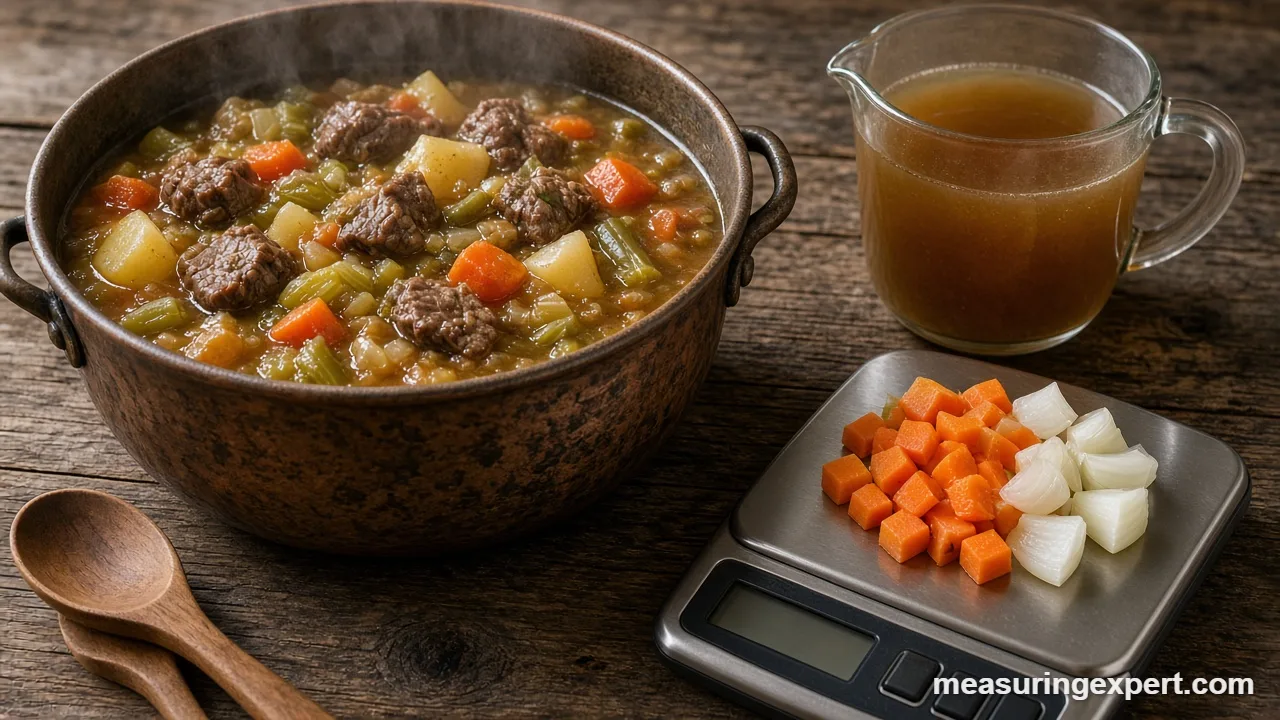
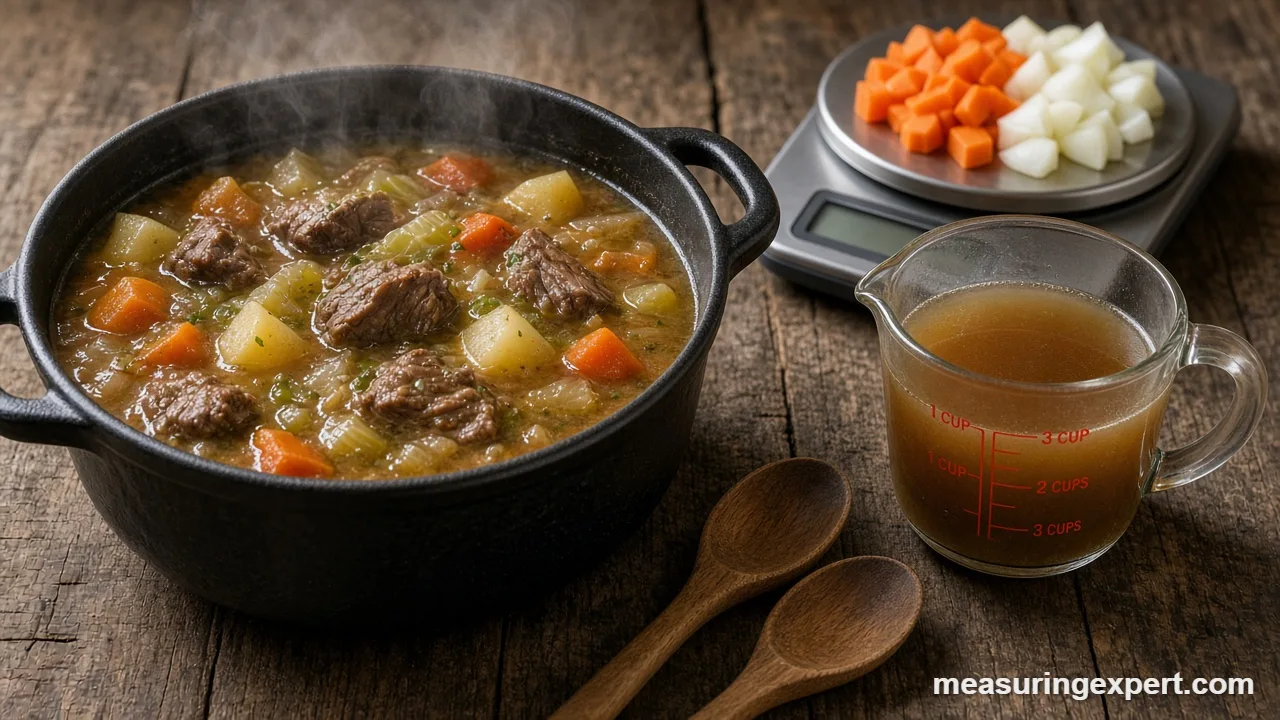
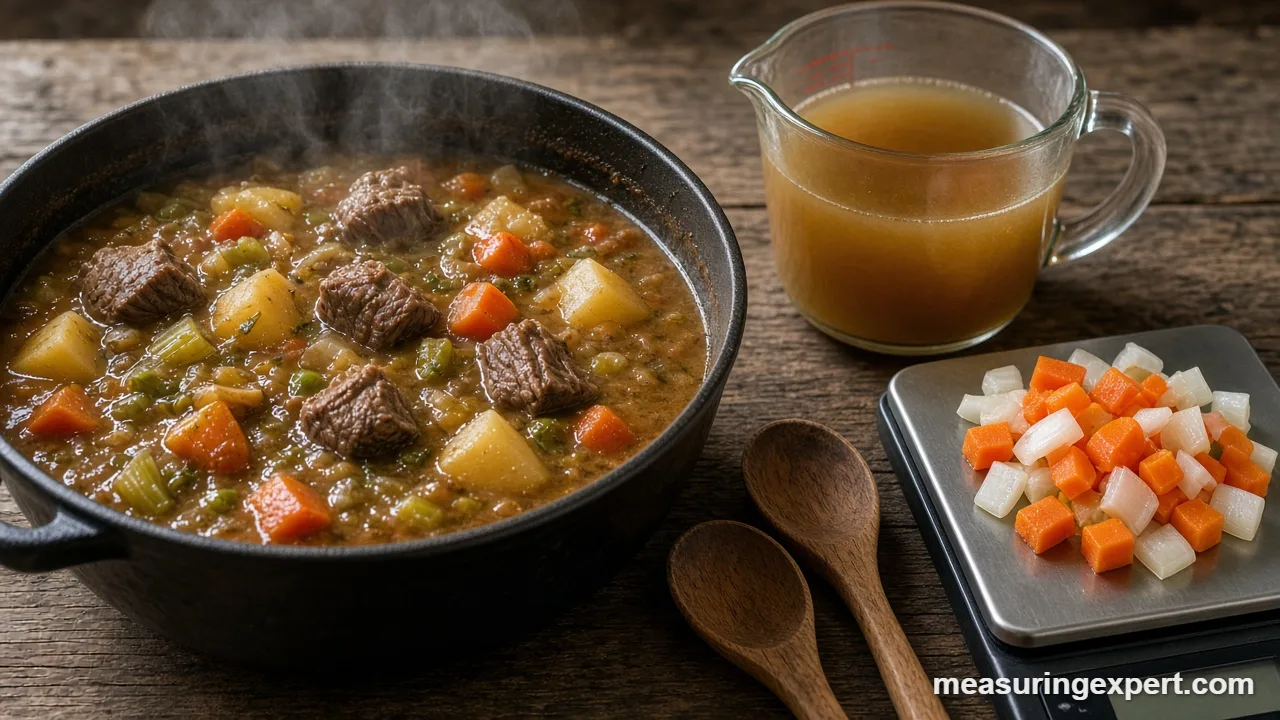
For soup and stew measurements, plan on about 1 1/2 cups of finished soup per serving, so 6 bowls need 9 cups (2 1/4 quarts, or 2.13 L). Weigh solids, because 1 cup of diced onion, carrot or celery is about 142 g. Measure broth in a liquid cup, and add salt in stages.
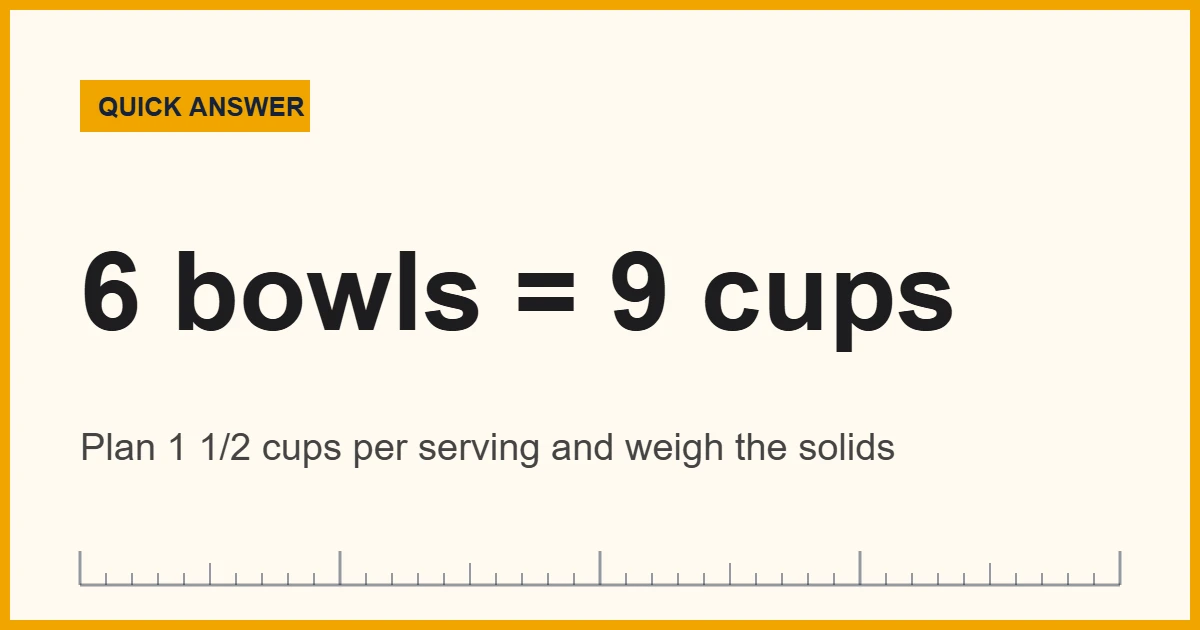
A pot of soup forgives a lot. However, it does not forgive everything: too much salt cannot be taken back, too little broth scorches a stew, and a spoonful of cornstarch can turn a soup into paste. As a result, a few reliable numbers make winter cooking calmer.
In this guide, you get a cups-to-grams chart for the usual soup ingredients, a serving planner, and a converter for cups, quarts and liters. Next, you see how to measure salt, thickener and leftovers safely. Finally, you find the tools that make the job easier.
Ingredient weights come from the King Arthur Baking ingredient weight chart. In addition, the storage and reheating rules come from the USDA Food Safety and Inspection Service page on leftovers and food safety.
Soup and Stew Measurements Chart: Cups to Grams
Use this chart when a recipe lists cups and you would rather weigh. Moreover, the weights are published averages, so treat them as a close starting point.
| Ingredient | Amount | Ounces | Grams |
|---|---|---|---|
| Diced onion, carrot or celery | 1 cup | 5 oz | 142 g |
| Mashed potatoes | 1 cup | 7 1/2 oz | 213 g |
| Long-grain rice, dry | 1/2 cup | 3 1/2 oz | 99 g |
| Brown rice, cooked | 1 cup | 6 oz | 170 g |
| Pearled barley, dry | 1 cup | 7 1/2 oz | 213 g |
| Tomato paste | 2 tablespoons | 1 oz | 29 g |
| Heavy cream or sour cream | 1 cup | 8 oz | 227 g |
| Grated Parmesan | 1/2 cup | 1 3/4 oz | 50 g |
| Butter | 8 tablespoons (1 stick) | 4 oz | 113 g |
| Vegetable oil | 1 cup | 7 oz | 198 g |
| All-purpose flour | 1 cup | 4 1/4 oz | 120 g |
| Cornstarch | 1/4 cup | 1 oz | 28 g |
For other ounce math, see how much an ounce is. Likewise, the same weights help when you bake, as our guide to fall baking measurements shows.
Convert Soup and Stew Measurements to Quarts and Liters
First, enter the cups in your recipe, and the converter shows pints, quarts, gallons and liters with the formula underneath. For example, 9 cups is 2 1/4 quarts, or about 2.13 L.
Recommended Tools for Soup and Stew Measurements
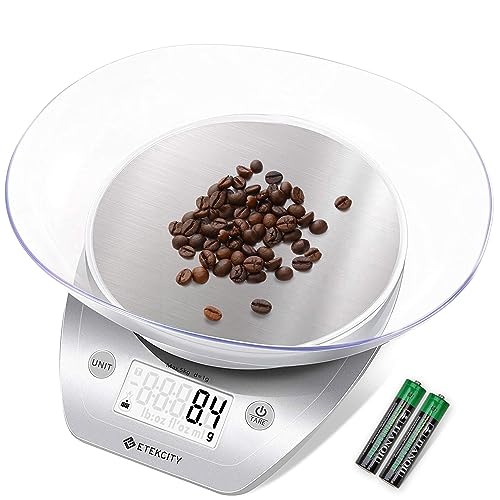
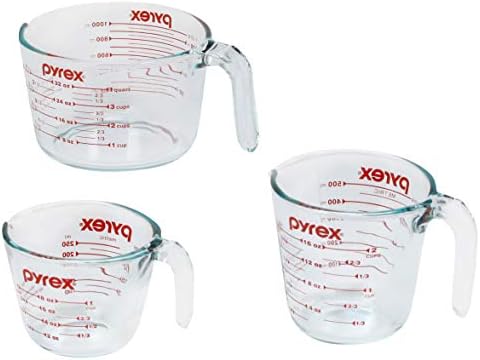
First, a digital scale handles vegetables, meat and grains in one bowl. Next, a glass liquid cup measures broth and cream, while sturdy spoons handle salt and spices. Finally, an instant-read thermometer checks that leftovers reach a safe temperature.



As an Amazon Associate, Measuring Expert earns from qualifying purchases.
Key Takeaways
- Plan about 1 1/2 cups of finished soup per serving.
- One cup of diced onion, carrot or celery weighs about 142 g.
- Kosher salt weighs less than table salt by the teaspoon, so match the salt your recipe names.
- Add salt in stages, because simmering concentrates the broth.
- Refrigerate leftovers within 2 hours, in shallow containers.
- Reheat leftovers to 165 degrees F (74 degrees C).
Planning Soup and Stew Measurements by Serving
Start with the number of bowls, then work backward. For example, this table uses 1 1/2 cups per serving, a planning figure you can raise for hungry eaters or lower for a starter course.
| Servings | Cups | Quarts | Liters |
|---|---|---|---|
| 2 | 3 | 3/4 | 0.71 |
| 4 | 6 | 1 1/2 | 1.42 |
| 6 | 9 | 2 1/4 | 2.13 |
| 8 | 12 | 3 | 2.84 |
| 12 | 18 | 4 1/2 | 4.26 |
Pot size matters as well. A pot that holds exactly the finished volume has no room for simmering, so pick one with several inches of headroom. For instance, 9 cups of soup fit comfortably in a 4-quart pot.
Meanwhile, scaling also needs care. Liquid, vegetables and meat scale evenly, but a wider pot loses more water to evaporation, so a doubled soup may need slightly less than double the broth. Salt and spices, however, should rise more slowly than the rest. Instead, add them in stages and taste.
Vegetables, Grains and Dairy: Weigh Them
First, chopped vegetables are the classic cup-measuring trap. A fine dice packs tightly, while big chunks leave gaps, so the same cup can hold quite different weights. Therefore, weigh onion, carrot and celery when a recipe gives grams. For example, King Arthur lists 1 cup of any of the three at about 142 g.
Grains swell as they cook, so measure them dry. Half a cup of dry long-grain rice weighs about 99 g, and a cup of pearled barley weighs about 213 g. In addition, both soak up broth for as long as they sit in the pot. As a result, leftover soup with rice or barley turns thick overnight, and a splash of extra broth fixes it.
Similarly, meat is easiest by weight. One pound is exactly 453.59237 g, so 2 lb of stew meat is about 907 g. Weigh meat raw and trimmed, because cooked weight is lower.
Next, dairy comes last in most recipes. A cup of heavy cream or sour cream weighs about 227 g (8 oz), and 2 tablespoons of tomato paste weigh about 29 g. Meanwhile, if you want to convert small liquid amounts, our guide to how much 30 mL is covers spoons and ounces.
Salt, Herbs and Spices in Soup and Stew Measurements
Salt is the measurement that causes the most regret, because brands differ so much by volume. According to King Arthur, a tablespoon of table salt weighs about 18 g, a tablespoon of Morton kosher salt about 16 g, and a tablespoon of Diamond Crystal kosher salt about 8 g.
| Salt | Per tablespoon | Per teaspoon (one third) |
|---|---|---|
| Table salt | 18 g | 6 g |
| Morton kosher salt | 16 g | 5.3 g |
| Diamond Crystal kosher salt | 8 g | 2.7 g |
In contrast, herbs follow simpler rules. First, measure dried herbs in level spoons. Fresh herbs are milder, so a common rule of thumb is three times as much fresh as dried, which means 1 tablespoon fresh for 1 teaspoon dried. Also, add woody herbs such as thyme and bay early, and soft herbs such as parsley at the end.
Thickening: Roux and Slurry
In fact, thickeners work best when you measure them. A roux uses equal weights of fat and flour, such as 28 g of butter with 28 g of flour. Because 1 cup of flour is 120 g, 28 g is about 1/4 cup. However, cornstarch is stronger by volume: 1/4 cup weighs about 28 g, so 1 tablespoon is about 7 g.
For a slurry, stir cornstarch into cold water first, then pour it into simmering soup in small amounts. Wait a minute between additions, because the soup keeps thickening as it heats.
Soup and Stew Measurements Step by Step
- Decide the servings. Pick how many bowls you need and multiply by about 1 1/2 cups per bowl to get the finished volume.
- Weigh solid ingredients. Next, set the pot or a bowl on the scale, press tare, and weigh meat, vegetables and grains one after another.
- Measure the liquid. Then pour broth or water into a liquid measuring cup on a flat counter and read the line from the side.
- Level the small spoons. After that, fill each spoon of salt, spice or herb, then sweep a knife across the rim.
- Add salt in stages. Add half the salt early and the rest at the end, because simmering concentrates the broth.
- Thicken with a measured slurry. Whisk cornstarch into cold water first, then stir it into simmering soup a little at a time.
- Cool and store. Finally, divide leftovers into shallow containers and refrigerate them within 2 hours.
Cooling, Storing and Reheating Leftovers
Still, soup is easy to measure and easy to mishandle afterward. The USDA says leftovers must be refrigerated within 2 hours of cooking, and that large batches should be divided into shallow containers so they cool quickly. In addition, refrigerated leftovers keep for 3 to 4 days.
Finally, to reheat, bring leftovers to 165 degrees F (about 74 degrees C), measured with a food thermometer. Moreover, the USDA adds that soups, sauces and gravies should reach a rolling boil. Our guide to the digital thermometer for cooking shows how to take a good reading.
Common Mistakes and What to Do Instead
Do
- Weigh vegetables, meat and grains when you can.
- Add salt in two or three stages.
- Mix cornstarch with cold water before it goes in.
- Cool leftovers in shallow containers.
Don’t
- Swap table salt and kosher salt by the spoonful.
- Fill the pot to the brim.
- Pour dry cornstarch straight into hot soup.
- Leave soup out for more than 2 hours.
Honest Limits of Soup Weights
Published weights are averages. First, chop size, moisture and brand all change what a cup holds. In short, 142 g per cup of diced onion is a good target, not a guarantee. Moreover, soup is forgiving, so taste as you go and let the recipe’s own gram amounts win over any chart.
When Accuracy Matters Most
Most soups tolerate a spoonful here or there. However, two places deserve care: salt, which you cannot remove once it is in, and food safety, where the time and temperature rules above are firm.
Frequently Asked Questions
How many cups of broth do I need for soup and stew measurements?
Plan on about 1 1/2 cups of finished soup per serving, so 6 servings need about 9 cups (2 1/4 quarts, or 2.13 L). Stews are thicker, so they usually need less liquid per serving than brothy soups.
How much does a cup of diced onion, carrot or celery weigh?
King Arthur lists 1 cup of diced onion, carrot or celery at about 142 g (5 oz). However, a finer chop packs more tightly, so the same cup weighs more.
How many ounces are in a quart of soup?
A US quart holds 32 fluid ounces, which is 4 cups or about 946 mL. A fluid ounce measures volume, so a quart of thick stew weighs more than a quart of thin broth.
How much dry rice should I add to soup?
Half a cup of dry long-grain rice weighs about 99 g (3 1/2 oz). Rice swells and absorbs broth as it cooks, so add it near the end or cook it separately for leftovers.
What is the right amount of salt for soup and stew measurements?
First, start small and taste at the end. As a guide, 1 teaspoon of table salt weighs about 6 g, whereas 1 teaspoon of Diamond Crystal kosher salt weighs about 2.7 g. As a result, the same spoonful can be twice as salty.
How do I measure tomato paste?
Two tablespoons of tomato paste weigh about 29 g (1 oz). For example, weigh it into the pot, or oil the spoon first so the paste slides out.
How do I thicken soup with cornstarch?
Mix cornstarch with cold water first, then stir the slurry into simmering soup. One tablespoon of cornstarch weighs about 7 g, since 1/4 cup weighs about 28 g.
Are soup and stew measurements better by weight than by cups?
Yes, weight is more consistent. Weigh meat, vegetables, grains and dairy, then use cups only for broth and water.
How long can I keep leftover soup?
The USDA says leftovers keep in the refrigerator for 3 to 4 days. Also, refrigerate them within 2 hours of cooking, and divide large batches into shallow containers so they cool faster.
What temperature should I reheat soup to?
Reheat leftovers to 165 degrees F (about 74 degrees C), measured with a food thermometer. The USDA also says to bring soups, sauces and gravies to a rolling boil.
Soup and Stew Measurements: The Bottom Line
To sum up, plan 1 1/2 cups per serving, weigh the solids and salt in stages. A cup of diced vegetables weighs about 142 g, and a quart of soup is 4 cups. With those numbers, your soup and stew measurements stay steady from pot to pot.
Finally, use the converter above for any cup amount, and cool leftovers fast. Your next winter pot will taste right and keep safely.
4 thoughts on “How to Measure Ingredients for Winter Soups and Stews: Cups, Weights and Safety”