

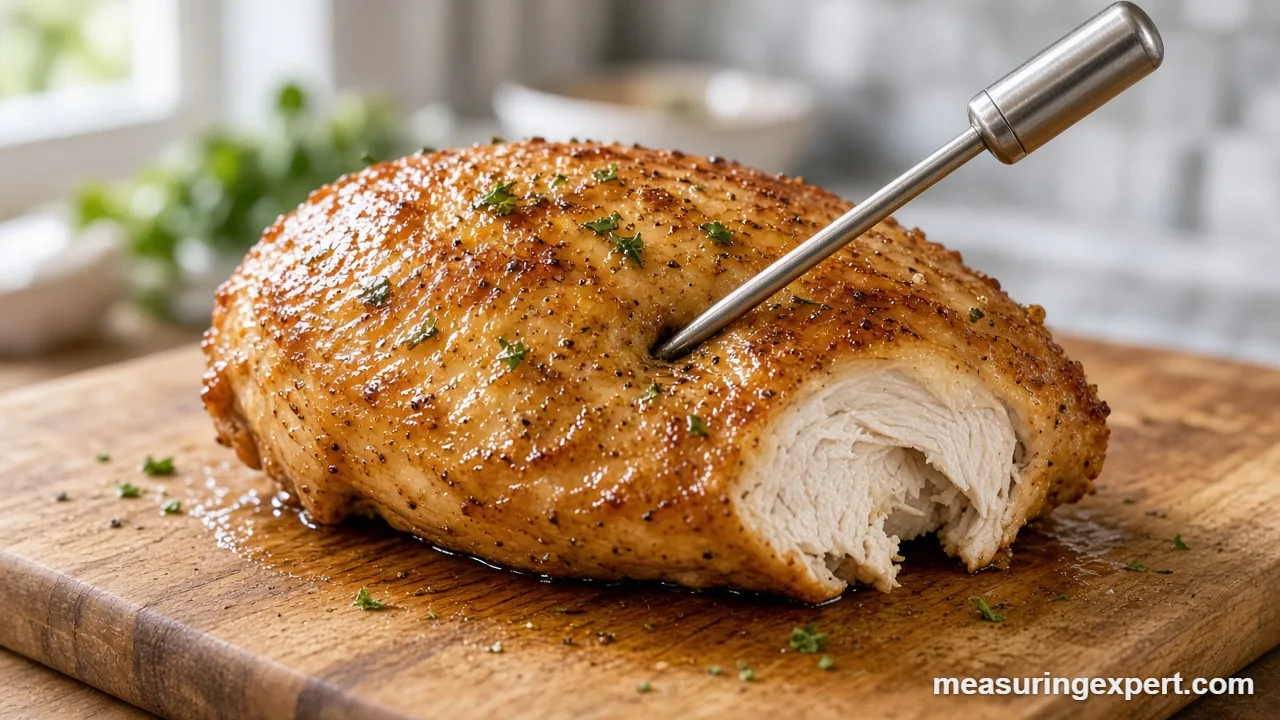
A digital thermometer shows the temperature of food within seconds. Push the probe into the thickest part, away from bone, fat and the pan, and wait until the number stops changing. Then compare it with the safe minimum, such as 165 F (74 C) for poultry, before you take the food off the heat.
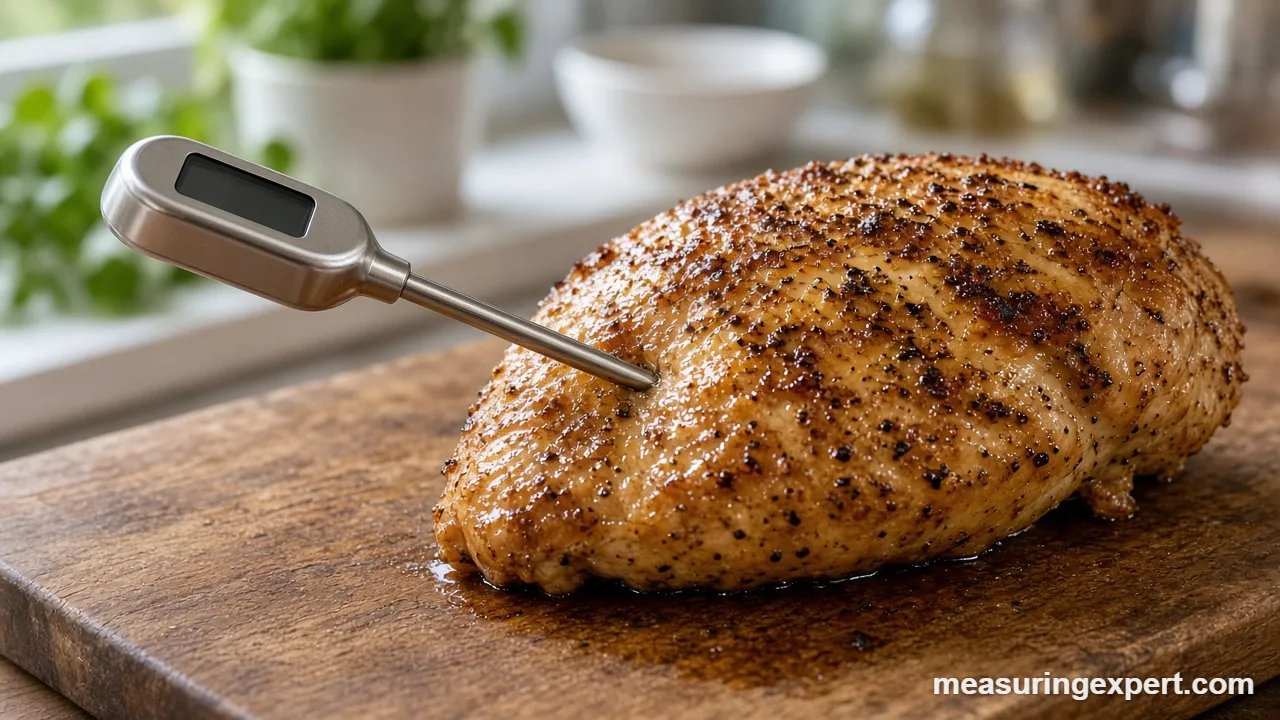
Unfortunately, cooks who guess by color, time or touch get it wrong more often than they expect. For example, a chicken breast can look done at 150 F, and a steak can feel firm at 135 F. A digital thermometer replaces those guesses with a number, so you cook to a target instead of a timer.
These models also beat old dial gauges on speed. A good model settles in two to ten seconds, according to Penn State Extension, while a dial may need 15 seconds to two minutes. As a result, you can check food several times without letting the oven or grill lose heat.
This guide covers how the tool works, which type to pick, where to put the probe, and how to check its accuracy. It also goes beyond meat, because the same tool handles frying oil, candy, bread and custard. For a deeper look at roasts, steaks and chops, see our companion page on meat thermometer doneness temperatures.
Digital Thermometer Converter: Fahrenheit, Celsius and Kelvin
Many displays switch between F and C, but recipes do not always match your setting. Next, type a temperature below to convert it. In addition, the converter shows the formula it used.
Types of Digital Thermometer for Cooking
However, not every digital thermometer works the same way. For example, some give a quick spot reading, others stay in the food for hours, and one kind only reads the surface. So choose by the job you do most often.
| Type | Best for | Typical response | Watch out for |
|---|---|---|---|
| Instant-read (thermocouple or thermistor) | Steaks, chops, burgers, fish, checking many spots | 1 to 10 seconds | Not designed to stay in a hot oven |
| Probe with cable (leave-in) | Roasts, turkey, smoking, slow cooking | Continuous, with an alarm | Cable must stay clear of flames and hot grates |
| Wireless probe | Long cooks on a grill or smoker | Continuous, with an app | Signal range and battery life |
| Infrared (surface) | Pans, pizza stones, grill grates | Under 1 second | Reads the surface only, never the inside of food |
An infrared gun is handy, but it cannot tell you whether a chicken is cooked through. Therefore, treat it as a pan and grill tool, not a food-safety tool. For a wider comparison of models, our best food thermometer roundup is a good next stop.
Recommended Digital Thermometers for Cooking
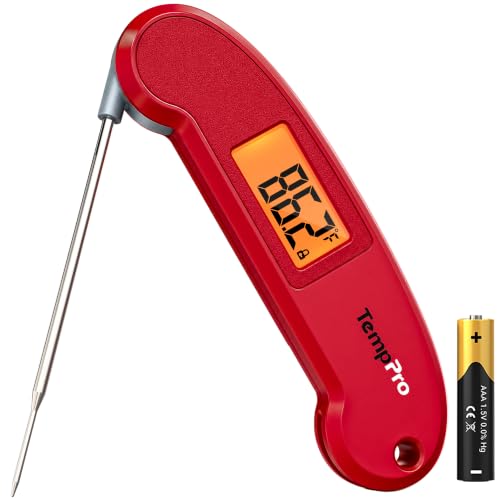
First, look for a thin tip, a clear backlit display and a stated response time. In addition, a water-resistant body makes washing easier. Below, you will find widely reviewed picks from established brands, based on manufacturer specs and buyer reports.


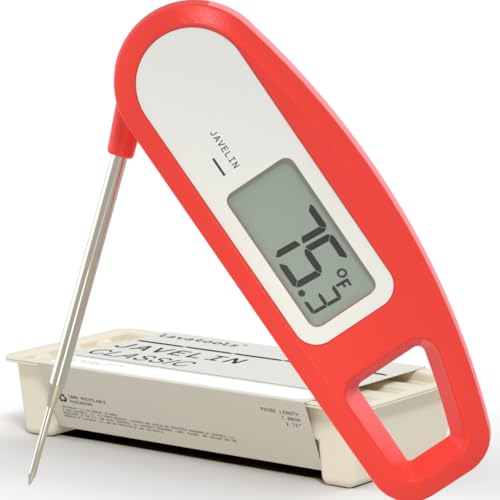
As an Amazon Associate, Measuring Expert earns from qualifying purchases.
Key Takeaways
- Insert the probe into the thickest part of the food and avoid bone, fat and the pan.
- Wait for the reading to hold steady before you trust it.
- Poultry needs 165 F (74 C); whole beef, pork and lamb cuts need 145 F (63 C) plus a 3-minute rest.
- Check the accuracy in ice water, which should read 32 F (0 C).
- Wash the probe after every use so raw juices never touch cooked food.
- An infrared thermometer reads only the surface of food.
How to Use a Digital Thermometer Step by Step
In short, the routine takes under a minute. First, turn the unit on and confirm the display shows the scale you want.
- Check the scale and the battery. Make sure the display reads F or C as the recipe does, and that the battery icon is not low.
- Clean the probe. Wipe it with hot, soapy water or an alcohol wipe so it is clean before it touches food.
- Find the thickest part. Next, look for the center of the roast, the breast or the thick end of the chop.
- Insert the probe. Push it in until the sensing zone sits in the center, usually at least half an inch deep, and keep it clear of bone.
- Wait for a steady number. The display rises quickly and then slows. Therefore, read it once it stops changing for two or three seconds.
- Check a second spot. As a result, a reading in two places confirms that the food is done throughout.
- Remove, rest and wash. Finally, pull the probe out, let the food rest if the recipe says so, and wash the probe again.
Where to Put the Probe
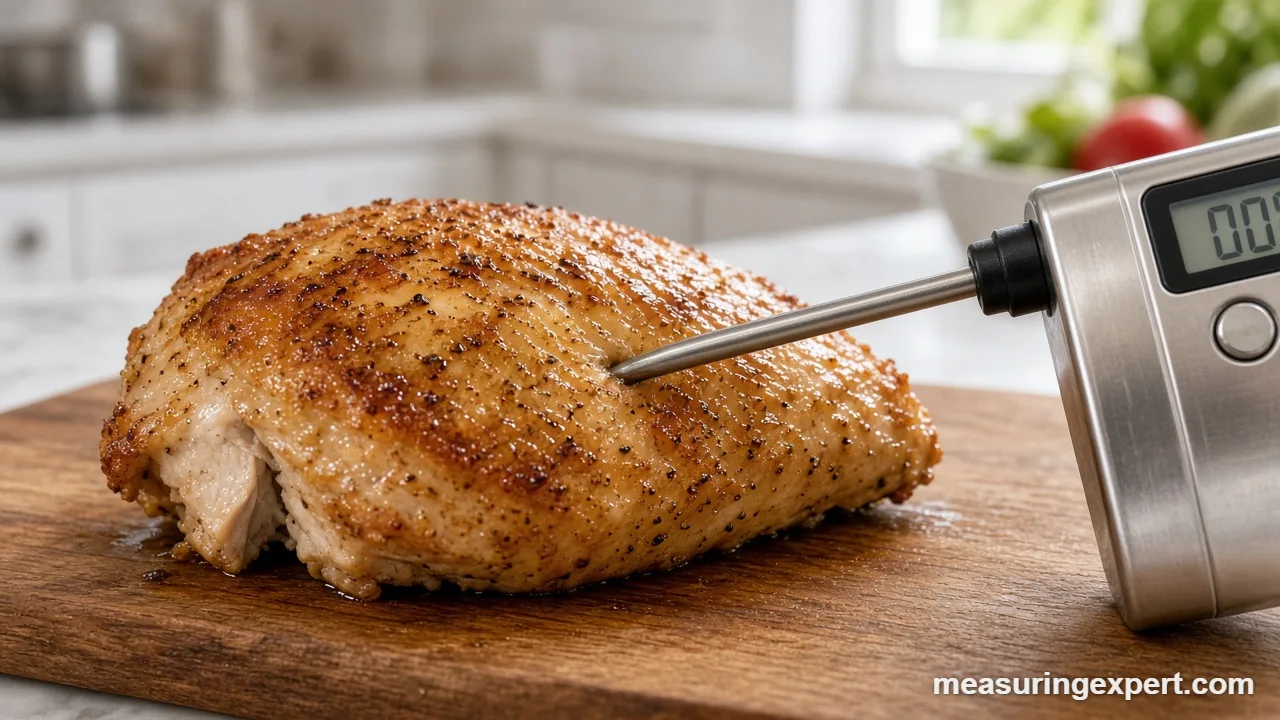
In fact, placement matters as much as the thermometer. For instance, a probe in the wrong spot can read 20 degrees too high or too low. Penn State Extension advises placing the probe in the thickest part of the food and checking a second spot.
| Food | Where to insert the digital thermometer |
|---|---|
| Whole chicken or turkey | Thickest part of the breast and the innermost part of the thigh, without touching bone |
| Chicken breast, chop or steak | Center of the thickest part, from the side if the cut is thin |
| Burger patty | Through the side into the center |
| Roast | Center of the roast, clear of fat pockets and bone |
| Fish fillet | Thickest part, angled in from the top |
| Soup, sauce or oil | Middle of the liquid, off the bottom and sides of the pot |
| Casserole or meatloaf | Center, then one more spot near the edge |
How to Calibrate a Digital Thermometer
For example, kitchen units can drift after a drop or a battery change. Fortunately, a glass of ice water is a quick, free test. Penn State Extension describes the method in its guide to food thermometers.
- First, fill a glass with crushed ice and add cold water to the top.
- Next, stir the glass and wait about a minute.
- Then dip the probe at least 2 inches (5 cm) deep without touching the sides or bottom.
- Finally, read the display once it settles. It should show 32 F (0 C).
If the number is off by a degree or two, note the error and adjust your target. However, if it is off by more, check the manual for a reset or calibration button. Many digital models cannot be adjusted, so replace those that miss by a wide margin. For a full discussion of why tools drift, see our guide to measurement tool calibration.
In addition, a boiling-water check works as a second point. Water boils at 212 F (100 C) at sea level, but it boils about 1 degree F lower for every 500 feet of elevation. As a result, a thermometer at 5,000 feet should read around 202 F (94 C).
Temperatures Beyond Meat
Moreover, this tool is useful well past the grill. In fact, it takes the guesswork out of frying, baking and candy making. The ranges below are common kitchen guidance, not rules, so follow your own recipe when it differs.
| Task | Target | Why it matters |
|---|---|---|
| Deep-frying oil | 350 to 375 F (177 to 191 C) | Too cool gives greasy food; too hot burns the outside first |
| Lean bread loaf | About 200 to 210 F (93 to 99 C) | Confirms that the crumb is set |
| Enriched bread (milk, butter, eggs) | About 180 to 190 F (82 to 88 C) | Rich doughs set at a lower temperature |
| Egg dishes such as quiche | 160 F (71 C) | USDA safe minimum for egg dishes |
| Soft-ball candy stage | 235 to 245 F (113 to 118 C) | Fudge, fondant, pralines |
| Hard-crack candy stage | 300 to 310 F (149 to 154 C) | Brittle, lollipops |
| Leftovers and casseroles | 165 F (74 C) | USDA safe minimum for reheating |
For sous vide, the water bath has its own thermometer, so use the digital thermometer to double-check the bath. Time matters as much as temperature there, so follow a tested chart for your food. The USDA lists its safe minimum internal temperatures for meat, poultry, eggs and leftovers.
Do and Don’t With a Digital Thermometer
Do
- Test the accuracy in ice water every few months.
- Wait for the reading to stop moving.
- Check two spots in large cuts.
- Wash the probe between raw and cooked food.
- Replace weak batteries early.
Don’t
- Touch bone, the pan or the grill grate with the tip.
- Leave an instant-read unit in a hot oven.
- Submerge a digital thermometer body in water.
- Trust an infrared reading for the inside of food.
- Rely on color alone to judge doneness.
Troubleshooting Odd Readings
| Problem | Likely cause | Fix |
|---|---|---|
| Reading keeps climbing | Probe is still heating up | Wait for two or three seconds of a steady number |
| Reading is far too low | Tip not in the center, or tip pushed out the far side | Reinsert sideways into the thickest part |
| Reading is far too high | Tip touches bone or the hot pan | Pull back slightly and recheck |
| Fails the ice-water test | Drift, damage or a weak battery | Change the battery, recalibrate if possible, or replace it |
| Blank or flickering display | Dead battery or moisture | Replace the battery and dry the unit |
| Switches to the wrong scale | F/C button was pressed | Press the scale button and confirm the symbol |
Care and Storage
First, hand-wash the probe in hot, soapy water unless the maker says the whole unit is waterproof. Then dry it fully and keep it in its protective sheath. In addition, store it away from heavy utensils so the tip does not bend. Finally, take out the battery if you will not use it for months.
Honest Limits of Kitchen Thermometers
This tool measures one point, not the whole dish. For example, large or uneven foods can hide a cool pocket, so a second check helps. In short, accuracy ratings of a degree or two are normal for kitchen models, and cheap units may be worse. Because of that, the ice-water test matters more than the box claim. Finally, a thermometer tells you the temperature, but food safety also depends on handling, storage and reheating.
Digital Thermometer FAQs
How do you use a digital thermometer for cooking?
Insert the probe into the thickest part of the food, away from bone and the pan. Wait until the reading stops changing, then compare it with your target temperature.
How deep should the probe go into food?
Most models need the sensing zone in the center, which is usually at least half an inch deep. Therefore, thick roasts need the tip near the middle.
How long does a reading take?
Instant-read models settle in about 1 to 10 seconds. Meanwhile, leave-in probes read continuously, and dial gauges can take up to 2 minutes.
Can you leave the probe in food while it cooks?
Yes, but only if it is a leave-in probe with a heat-safe cable. However, instant-read thermometers are not made to stay in a hot oven.
How do you test a digital thermometer for accuracy?
First, place the probe in a glass of ice water. A good unit reads 32 F (0 C) after the number settles, within a degree or two.
What temperature is chicken done?
Chicken is safe at 165 F (74 C) in the thickest part, according to USDA guidance. Also check the breast and the thigh.
Can a digital thermometer be calibrated?
Yes, some can, usually with a reset or calibration button. Many digital models cannot be adjusted, so replace one that misses by a wide margin.
Why do my readings change each time?
For example, the probe may sit in a different spot, touch bone, or be read too early. Instead, hold it steady and wait for the number to stop moving.
Is an infrared thermometer the same as a digital thermometer?
No. An infrared model reads only the surface, while a probe model reads the inside of food.
How do you clean the probe?
Wash the probe in hot, soapy water after each use, and then dry it fully. However, do not submerge the body unless the maker says it is waterproof.
The Bottom Line
To sum up, a digital probe turns cooking into measuring. First, put the probe in the thickest part, wait for a steady number, and compare it with a trusted target. Moreover, test the unit in ice water now and then so you know it still reads true.
Next, use the converter above whenever a recipe uses the other scale. If you cook a lot of steaks, roasts and chops, continue with our page on doneness temperatures for each meat.
2 thoughts on “How to Use a Digital Thermometer for Cooking: Step-by-Step”