

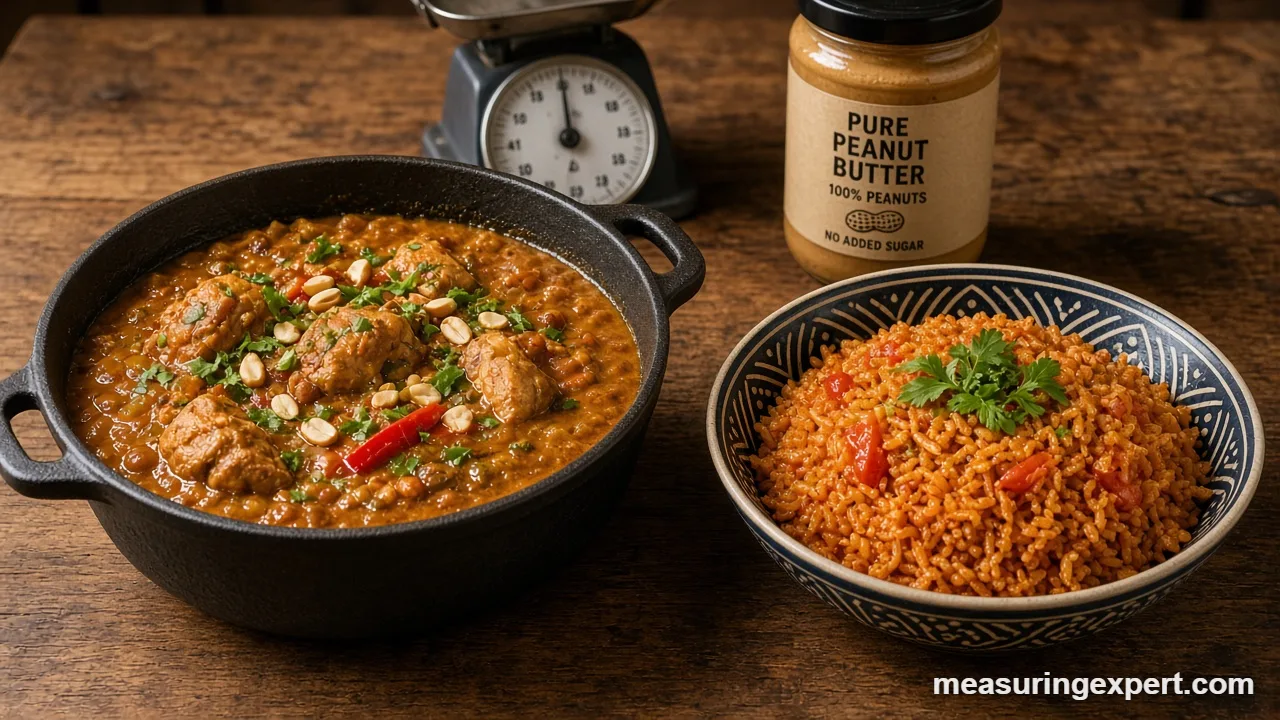
African stew measurements vary by dish, but published recipes show clear ranges. Maafe uses about 3/4 to 1 cup of peanut butter per pound of meat. Jollof rice, served alongside, uses about 3 cups of rice to 3 1/2 cups of liquid, and egusi uses about 2 tablespoons of ground seed per serving.
African Stew Measurements Converter for Pounds, Ounces and Grams
First, enter the weight of the meat, peanuts or rice in your recipe. Then pick its unit, and the converter shows the same weight in pounds, ounces, grams and kilograms. African recipes are often written in grams, while US grocery packages use pounds, so a quick conversion saves mistakes.
In general, West African stews rarely follow a fixed formula. As a result, two cooks can make good maafe with very different amounts of peanut butter. Still, published recipes cluster around similar proportions, and those proportions are what this guide measures. The numbers below come from four published recipes, and each source is named.
In addition, this page stays regional and specific. For that reason, it covers peanut stew (maafe), jollof rice and egusi soup. For general pot sizes, portions and salt in any stew, see our guide to soup and stew measurements.
African Stew Measurements at a Glance
- A North Carolina State University recipe serves 8 with 1 cup of peanut butter and 1 pound of chicken thighs.
- A Saveur lamb maafe serves 6 with 3 pounds of lamb and 3 cups of roasted peanuts, or 1 1/2 pounds of peanut butter.
- One egusi recipe serves 5 with 2/3 cup of ground egusi and 1 pound of meat.
- A jollof recipe serves 6 with 3 cups (550 g) of long-grain parboiled rice and 3 1/2 cups of liquid.
- Chicken in a stew should reach 165 F (74 C).
Maafe: African Stew Measurements for Peanut Stew
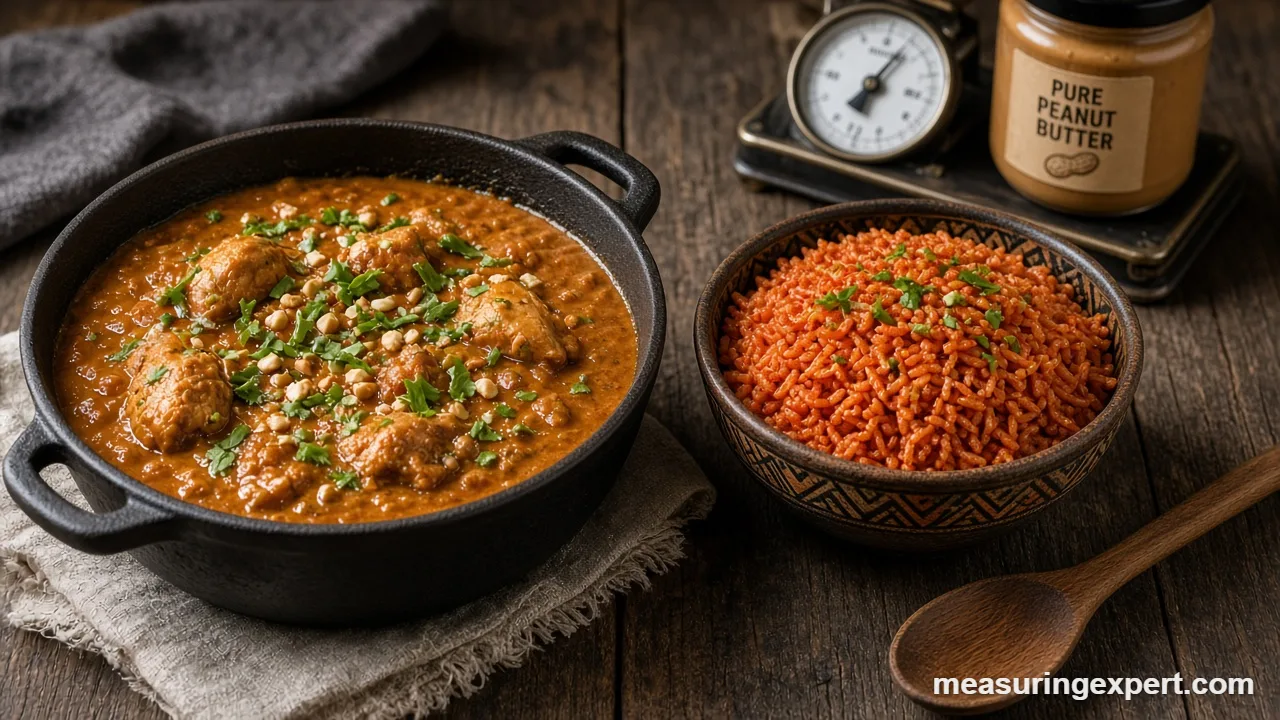
Maafe, also spelled mafe or tigadegue, is a West African stew thickened with ground peanuts or peanut butter. For example, two reliable published recipes show the typical range. The NC State Cooking Essentials recipe makes 8 servings of 1 1/2 cups (460 g each). Meanwhile, the Saveur lamb maafe makes 6 servings with a much richer ratio of meat.
| Measure | NC State chicken and sweet potato | Saveur lamb |
|---|---|---|
| Servings | 8 | 6 |
| Meat | 1 lb chicken thighs (454 g) | 3 lb lamb (1.36 kg) |
| Peanut base | 1 cup peanut butter, no added sugar | 3 cups roasted peanuts or 1 1/2 lb peanut butter |
| Liquid | 3 cups low-sodium chicken broth plus a 28 oz can of crushed tomatoes | 8 cups beef stock (1.89 L) plus 1 cup tomato paste |
| Cooking time | 2 to 4 hours | 3 hours 30 minutes |
The sources do not give the same numbers, so it helps to convert them to a per-serving basis. For instance, the NC State recipe works out to about 57 g of raw chicken and 34 g of peanut butter per serving, using King Arthur’s figure of about 270 g for a cup of peanut butter. In contrast, the Saveur recipe works out to about 227 g of lamb and 113 g of peanut butter per serving. Also, the Saveur dish is served over steamed white rice.
African Stew Measurements for Peanut Butter and Peanuts
In fact, peanut butter weighs more than most cooks expect. King Arthur’s ingredient weight chart lists 1/2 cup of peanut butter at 135 g, and 1 cup of shelled whole peanuts at 142 g. Therefore, 3 cups of roasted peanuts weigh about 426 g, which is much less than the 680 g in 1 1/2 pounds of peanut butter. In other words, the two options in the Saveur recipe are not equal by weight, so weigh whichever one you use and adjust the liquid by feel.
Jollof Rice Measurements and Rice-to-Water Ratios
Because jollof rice is cooked in a tomato base, the water math changes. The University of Maryland Extension gives the general rule of about 2 cups of water per 1 cup of rice, with 1 cup of dry rice yielding about 3 cups cooked. Jollof uses far less plain water because the blended tomatoes, peppers and paste supply moisture.
The African Bites stovetop jollof serves 6 and shows how the numbers compare:
| Ingredient | Amount in the recipe | Metric or per serving |
|---|---|---|
| Long-grain parboiled rice | 3 cups | 550 g total, about 92 g per serving |
| Broth | 2 cups | 475 mL |
| Water | 1 1/2 cups | 350 mL |
| Tomato paste | 1/2 cup | 132 g |
| Cooking oil | 1/3 cup | 75 to 80 mL |
In total, that works out to 3 cups of rice for 3 1/2 cups of liquid, or about 1 : 1.17 by volume, and about 1 : 1.5 by weight. By comparison, plain steamed rice uses 1 : 2. Therefore, the difference is the tomato base, which is simmered for about 30 minutes before the rice goes in. The recipe also cooks the rice on low for 20 to 30 minutes under a tight lid, then rests it 5 minutes.
Egusi: African Stew Measurements for Melon Seed Soup
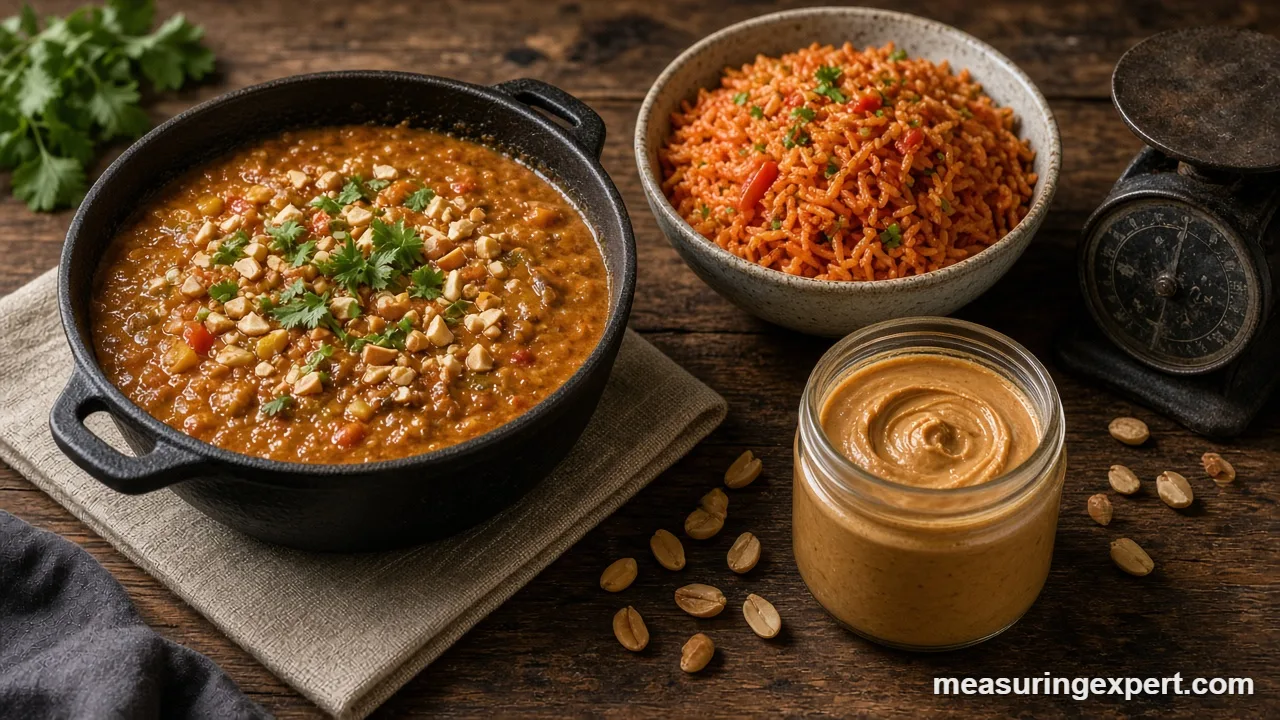
First, egusi is a Nigerian soup thickened with ground melon seeds. The Boston Medical Center egusi recipe serves 5 and builds the soup in stages: boiled meat, a blended pepper base, a blended crayfish base, and then the ground seed fried in palm oil.
| Ingredient | Total | Per serving |
|---|---|---|
| Ground egusi seed | 2/3 cup | about 2 tbsp (31.5 mL) |
| Red palm oil | 3 tbsp (44.4 mL) | about 9 mL |
| Meat | 1 lb (454 g) | about 91 g |
| Sliced spinach | 6 cups | 1 1/5 cups |
| Dried crayfish | 1 cup | about 3 tbsp |
The seed and the oil are the two measurements that matter most, because the seed thickens the whole pot. Likewise, the recipe boils the meat for about 30 minutes, then cooks the blended bases for about 10 minutes and the greens for another 10.
Recommended Tools for African Stew Measurements
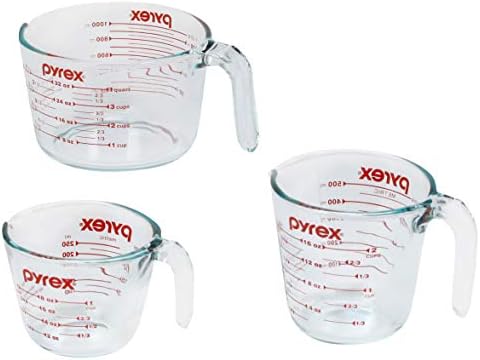
A digital scale is the most useful tool for these recipes, because peanut butter, rice and meat are far easier to weigh than to scoop. In addition, a thermometer confirms that chicken has reached 165 F, and a glass measuring cup handles broth and water. Finally, sturdy measuring spoons help with palm oil and spices.




As an Amazon Associate, Measuring Expert earns from qualifying purchases.
How to Scale African Stew Measurements Step by Step
- Pick one recipe as the base. Note its servings, for example 8 for the NC State maafe.
- Find your scaling factor. Next, divide the servings you need by the recipe servings; 12 servings from an 8-serving recipe is a factor of 1.5.
- Convert to weights. Then use the converter above for meat and peanuts, and the table above for peanut butter.
- Multiply the main ingredients. Next, scale meat, peanut base, rice, liquid and canned tomatoes by the factor.
- Scale salt and chili more gently. Instead, multiply by about three quarters of the factor, taste, and then add more.
- Use a wider pot, not just a bigger one. Stews that reduce for hours also need surface area to thicken in the same time.
- Check the chicken. Finally, insert a thermometer into the thickest piece and confirm 165 F (74 C).
| NC State maafe | 4 servings | 8 servings | 12 servings |
|---|---|---|---|
| Chicken thighs | 1/2 lb | 1 lb | 1 1/2 lb |
| Peanut butter | 1/2 cup | 1 cup | 1 1/2 cups |
| Chicken broth | 1 1/2 cups | 3 cups | 4 1/2 cups |
| Crushed tomatoes | 14 oz | 28 oz | 42 oz |
| Sweet potatoes | 1 | 2 | 3 |
Common African Stew Measurements Mistakes
Do
- Weigh peanut butter instead of scooping it.
- Check that a cup of rice means dry rice.
- Stir peanut butter well before measuring.
- Check chicken with a thermometer.
- Add salt in stages, since broth and bouillon are salty.
Don’t
- Assume 1 cup of peanut butter equals 1 cup of peanuts.
- Use the 1 : 2 rice rule for jollof.
- Lift the lid during the final rice steam.
- Skip the rest after cooking maafe.
- Scale chili and salt exactly with the batch.
Honest Limits of African Stew Measurements
Regional dishes vary by family, village and season, so no single number is correct. In addition, each figure here comes from one published recipe, and a different cook may use half as much peanut butter or twice as much oil. Meanwhile, ingredients vary too: peanut butter differs by brand, and palm oil by color and thickness. In short, use these numbers as a starting point, and then taste and adjust.
When to Ask a Professional
In particular, if you cook for someone with a peanut or seafood allergy, ask their doctor about cross-contact. Similarly, for large batches in a restaurant or community kitchen, follow your local health department’s cooling and holding rules.
Frequently Asked Questions
How much peanut butter goes in maafe?
First, the NC State recipe uses 1 cup for 8 servings, which is about 34 g per serving. In comparison, the Saveur lamb recipe uses 1 1/2 pounds for 6 servings, or about 113 g per serving.
What is the rice-to-water ratio for jollof rice?
For example, one recipe uses 3 cups of rice with 3 1/2 cups of liquid, about 1 to 1.17 by volume. Plain rice uses about 1 to 2, but jollof also gets moisture from the tomato base.
How many grams are in 3 cups of long-grain parboiled rice?
For example, the African Bites jollof recipe lists 3 cups as 550 g. In other words, that is about 183 g per cup, or roughly 92 g per serving for 6 people.
How much ground egusi do I need per serving?
For example, the Boston Medical Center recipe uses 2/3 cup for 5 servings. In other words, that is about 2 tablespoons (31.5 mL) per serving.
How much meat should I use per person in an African stew?
As a result, the recipes we compared range from about 57 g of raw chicken per serving for the NC State dish to about 227 g of lamb per serving for the Saveur dish. Similarly, egusi uses about 91 g.
What temperature should chicken reach in maafe?
In practice, the NC State recipe cooks chicken thighs to 165 F, which is about 74 C. Therefore, check with a thermometer in the thickest piece.
How much liquid goes into a peanut stew?
For example, the NC State recipe uses 3 cups of broth plus a 28 oz can of tomatoes for 1 pound of chicken. In contrast, the Saveur recipe uses 8 cups of stock for 3 pounds of lamb.
Can I use peanuts instead of peanut butter?
Yes. For example, Saveur allows 3 cups of roasted peanuts in place of 1 1/2 pounds of peanut butter. By weight, however, that is about 426 g of peanuts instead of 680 g of peanut butter.
How long does maafe take to cook?
First, the NC State recipe takes 2 to 4 hours in total. The Saveur lamb maafe takes about 3 1/2 hours because lamb needs longer to become tender.
Why does my jollof rice come out wet or hard?
Usually the liquid is off. First, start with about 3 cups of liquid for 3 cups of rice, keep the pot tightly covered, and add a splash of water only if the rice is still firm after the first 20 minutes.
African Stew Measurements: The Bottom Line
To sum up, weigh the peanut butter, rice and meat, and treat the ratios here as a starting point. For example, maafe runs about 34 to 113 g of peanut butter per serving, jollof about 1 to 1.17 rice to liquid, and egusi about 2 tablespoons of ground seed per serving.
Finally, scale salt and chili gently, check chicken at 165 F, and use the converter above for pounds and grams. For other pots, try our guide to measuring soup ingredients.