

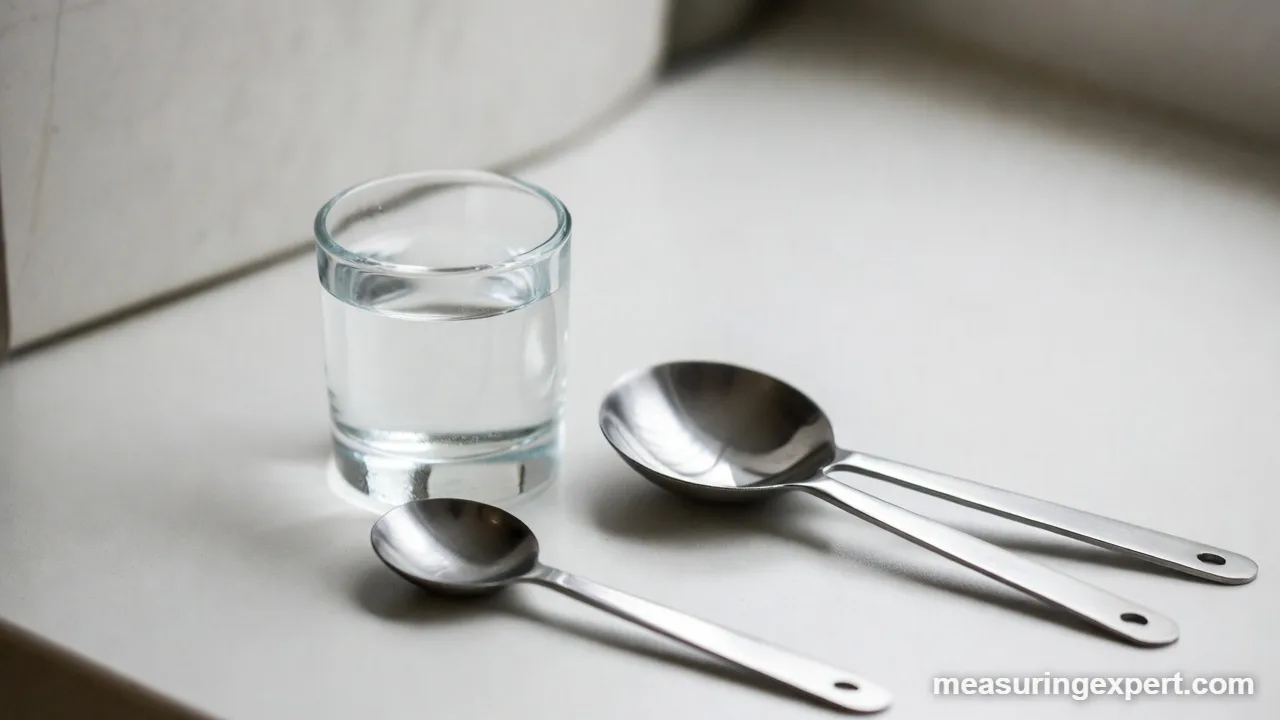
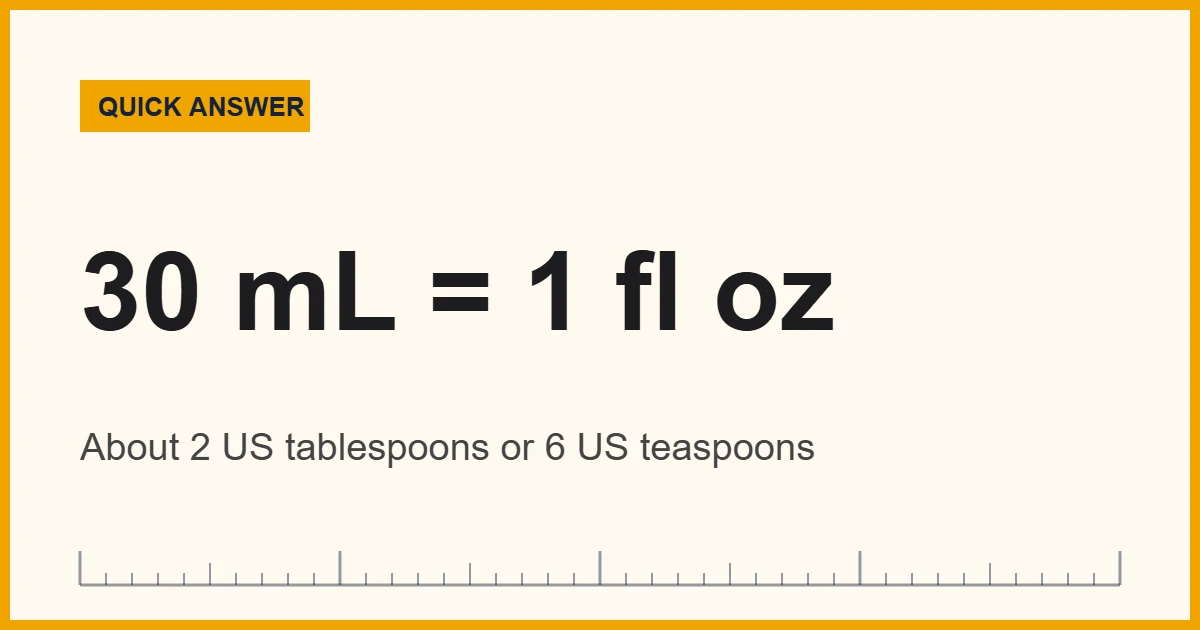
30 ml is about 1 US fluid ounce (1.01 fl oz), 2 US tablespoons (2.03 tbsp) or 6 US teaspoons (6.09 tsp). It is also 0.13 US cup, or just over 1/8 cup. Because food labels round 1 fl oz to exactly 30 mL, you can treat 30 mL as one fluid ounce in everyday cooking.
Convert 30 ml (or Any Amount) to Spoons and Ounces
To begin with, the converter starts at 30 milliliters. Then change the number or the unit, and it instantly shows US teaspoons, tablespoons, fluid ounces and cups. In addition, it lists the rounded metric spoons, so you can check a recipe from another country too.
What a Milliliter Is and Where You Meet 30 ml
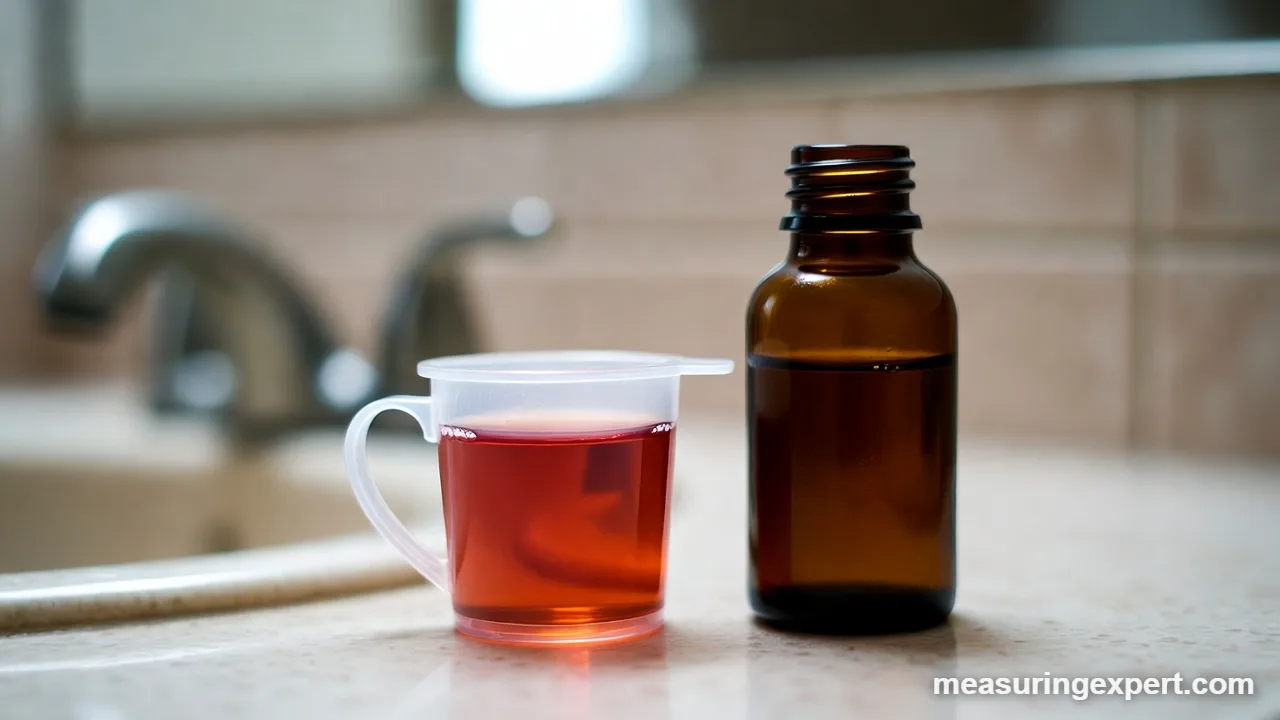
A milliliter (mL) is one thousandth of a liter, and it is the same volume as one cubic centimeter (cc). In short, this is a small amount: about a shot of espresso, a typical dose cup of cough syrup, or the liquid that fills two level tablespoons. For instance, you meet it on travel-size bottles, perfume and serum bottles, medicine cups, and in recipes written in metric units.
First, note that the US kitchen units have exact metric sizes. For example, one US fluid ounce is 29.5735 mL, one tablespoon is 14.787 mL, and one teaspoon is 4.929 mL. As a result, thirty milliliters lands just a little over 1 fl oz, 2 tbsp and 6 tsp. The US National Institute of Standards and Technology (NIST) lists the rounded kitchen equivalents in its metric kitchen measurement table: 1 fluid ounce is 30 mL, 1 tablespoon is 15 mL and 1 teaspoon is 5 mL.
In short, the tiny gap between 29.57 and 30 almost never matters in a kitchen. Even so, it is good to know where the round numbers come from, especially when you measure medicine.
30 ml Conversion Chart
Below, you can see how the volume converts into every unit you are likely to need. Also, the exact column uses the US definitions, and the practical column gives the measure you would actually reach for.
| Unit | Exact value | Practical measure |
|---|---|---|
| US fluid ounces | 1.0144 fl oz | 1 fl oz |
| US tablespoons | 2.0288 tbsp | 2 tbsp |
| US teaspoons | 6.0865 tsp | 6 tsp |
| US cups | 0.1268 cup | 1/8 cup (2 tbsp) |
| Liters | 0.03 L | 3 centiliters (cL) |
| Cubic centimeters | 30 cc | 30 cc |
| Metric teaspoons (5 mL) | 6 tsp | 6 tsp |
| Metric tablespoons (15 mL) | 2 tbsp | 2 tbsp |
| Australian tablespoons (20 mL) | 1.5 tbsp | 1 1/2 tbsp |
| UK (imperial) fluid ounces | 1.0559 fl oz | about 1 fl oz |
Printable tip: print this chart or save it as a PDF from your browser and tape it inside a kitchen cabinet door.
Milliliters Near That Amount at a Glance
Of course, recipes and labels rarely stop at one amount. Therefore, this second chart covers the milliliter values around it, so you can scale a recipe up or down without a calculator.
| Milliliters | US teaspoons | US tablespoons | US fl oz |
|---|---|---|---|
| 5 mL | 1.01 | 0.34 | 0.17 |
| 10 mL | 2.03 | 0.68 | 0.34 |
| 15 mL | 3.04 | 1.01 | 0.51 |
| 20 mL | 4.06 | 1.35 | 0.68 |
| 25 mL | 5.07 | 1.69 | 0.85 |
| 30 mL | 6.09 | 2.03 | 1.01 |
| 45 mL | 9.13 | 3.04 | 1.52 |
| 50 mL | 10.14 | 3.38 | 1.69 |
| 60 mL | 12.17 | 4.06 | 2.03 |
| 90 mL | 18.26 | 6.09 | 3.04 |
| 100 mL | 20.29 | 6.76 | 3.38 |
| 120 mL | 24.35 | 8.12 | 4.06 |
For a smaller amount, see our guide to how much 10 mL is in teaspoons.
Recommended Tools for Measuring 30 ml
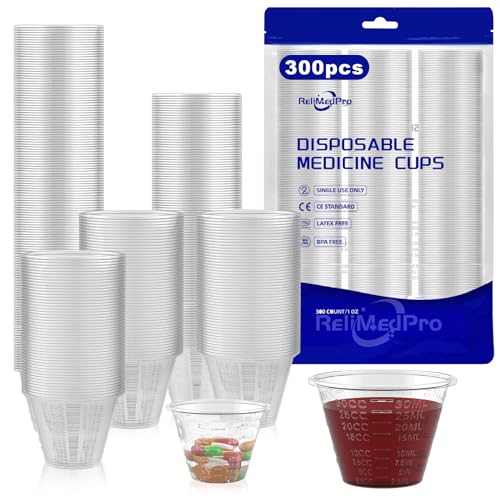
Generally, you do not need lab glass to measure a fluid ounce. Even so, a few simple tools make it faster and more repeatable. First, a mini beaker or a small glass measure with mL and ounce lines lets you pour liquids straight to the mark. Next, a good set of measuring spoons covers it as 2 level tablespoons. Finally, graduated 1 oz medicine cups and an oral syringe help when the liquid is a dose rather than an ingredient.



As an Amazon Associate, Measuring Expert earns from qualifying purchases.
Is 30 ml the Same as 1 Ounce?
Above all, it depends on which ounce you mean. For example, a fluid ounce measures volume, while a plain ounce (oz) measures weight. Because of that, this much water weighs about 30 grams, or roughly 1.06 oz. On the other hand, the same volume of oil weighs less, and 30 mL of honey weighs much more. For that reason, this table separates the units people mix up most often.
| Unit | What it measures | How it compares |
|---|---|---|
| US fluid ounce (fl oz) | Volume, 29.5735 mL | Equals 1.01 US fl oz |
| Nutrition-label fluid ounce | Volume, set at 30 mL by FDA rule | Exactly equal |
| UK (imperial) fluid ounce | Volume, 28.4131 mL | Equals 1.06 UK fl oz |
| Ounce (oz, avoirdupois) | Weight, 28.3495 g | Depends on the liquid; water is about 1.06 oz |
| Cubic centimeter (cc) | Volume, exactly 1 mL | Equals 30 cc |
Meanwhile, the FDA rule comes from 21 CFR 101.9. Its guidance on metric equivalents of household measures says that for nutrition labeling, 1 fluid ounce means 30 mL, 1 tablespoon means 15 mL and 1 teaspoon means 5 mL. This is why a bottle labeled “1 fl oz” often also shows the metric figure next to it. Likewise, if you want the weight side of the story, read how much is an ounce.
How to Measure 30 ml at Home
First, pick the method that matches your tools. Then follow these steps for a level, repeatable amount.
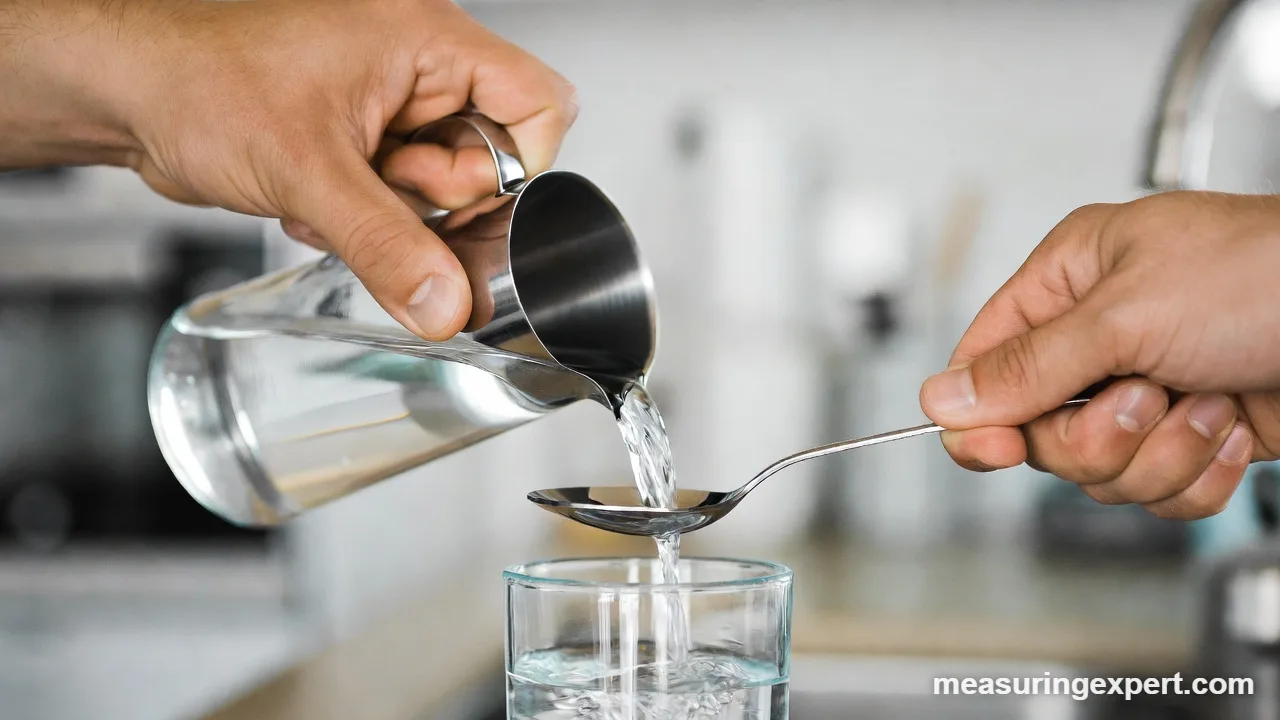
- Choose a marked measure. Use a small beaker, a shot-style measuring glass or a medicine cup with a 30 mL line, or a 1 tbsp measuring spoon.
- Set it on a flat surface. Otherwise, a tilted cup reads high on one side and low on the other.
- Pour slowly to the line. Next, stop just below the mark, then add the last few drops.
- Read at eye level. Then crouch so your eye is level with the line, and read the bottom of the curved surface (the meniscus).
- Use spoons if you have no cup. Instead, fill a tablespoon to the brim twice, or a teaspoon six times.
- Check with a scale for water-like liquids. Finally, place an empty cup on a kitchen scale, press tare, and pour until it shows about 30 g.
What One Fluid Ounce Looks Like in Everyday Life
In general, numbers are easier to picture when you can link them to real objects. So here are some common things that hold about this much liquid:
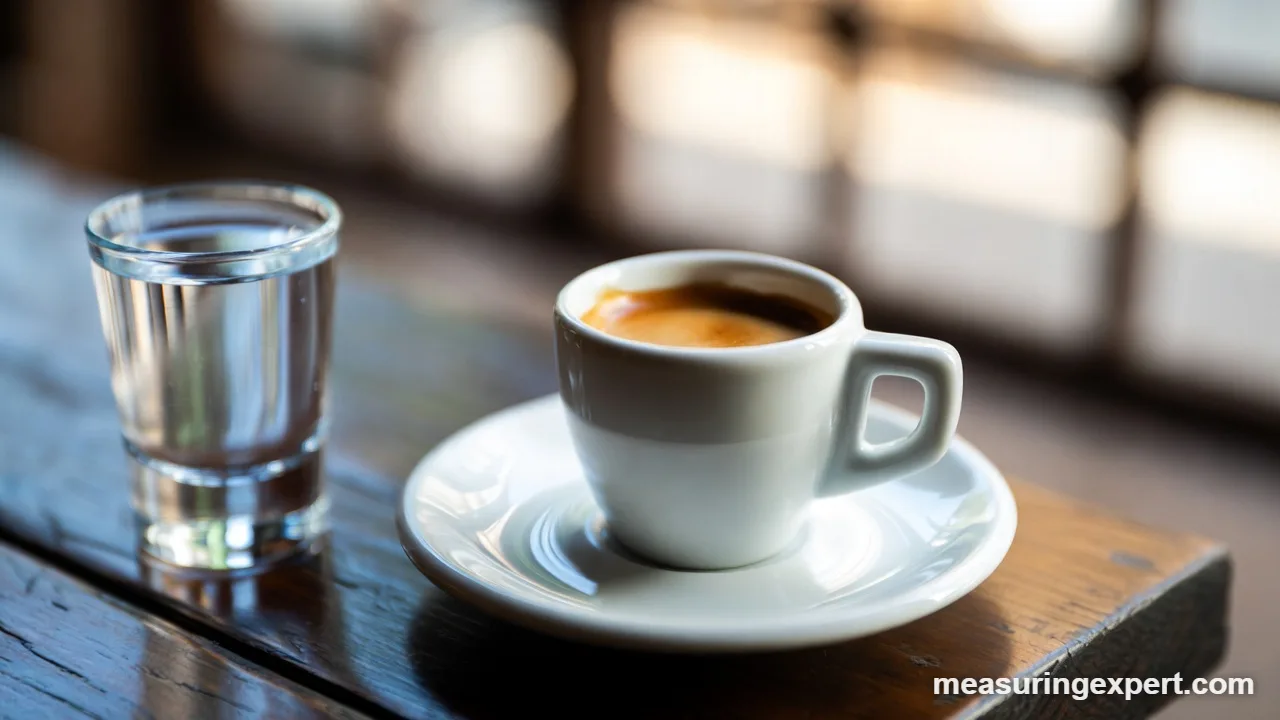
- A standard medicine cup. For example, most plastic dosing cups that come with syrups hold one fluid ounce when full.
- A small shot of liquid. For instance, a US jigger’s large side often holds 1 1/2 fl oz (about 44 mL), while its small side is often 1 fl oz.
- Travel and sample bottles. Similarly, many face serums, essential oils and perfumes come in 1 fl oz bottles labeled 30 mL.
- Two tablespoons of soy sauce or olive oil. In fact, that is a typical amount for a marinade or a salad dressing for two.
For travel, the US Transportation Security Administration lets you carry liquids in containers of 3.4 oz (100 mL) or less, so a one-ounce bottle fits easily. In addition, if you are converting spoon sizes rather than milliliters, our page on the difference between a teaspoon and a tablespoon covers that in detail.
Do and Don’t for Small Liquid Amounts
Do
- Use a measure marked in mL, especially for small doses.
- Also read liquid lines at eye level.
- Fill measuring spoons right to the brim, too.
- Check first whether a recipe uses US, UK or Australian units.
- Weigh water-based liquids when you need extra precision.
Don’t
- Swap fluid ounces and weight ounces, since they measure different things.
- Rely on eating spoons for medicine, because their sizes vary.
- Read a cup from above, since the line then looks higher.
- Guess with a 20 mL Australian tablespoon instead of a US one.
- Assume all small cups hold exactly one ounce; check the marks first.
Honest Limits of These Conversions
In theory, the figures on this page are exact for the definitions. Real kitchens, however, are less tidy. For one thing, measuring spoons and cups carry small manufacturing tolerances, so two “2 tbsp” measures can hold slightly different amounts. In addition, the way you fill a spoon changes the result more than the spoon itself does. For example, a slightly domed tablespoon of thin liquid holds more than a level one.
Weight is another limit, too. After all, a volume tells you nothing about mass until you know the density. For example, that volume of water is about 30 g, but 30 mL of vegetable oil is closer to 27 to 28 g, and the same amount of honey is roughly 42 g. Therefore, if a recipe gives grams, weigh the ingredient instead of converting through milliliters.
When Accuracy Really Matters
Of course, a little extra soy sauce never hurt anyone. However, a few situations call for more care:
- Liquid medicine. Use the dosing cup or oral syringe that comes with the medicine, and dose in mL. Because kitchen spoons vary so much, never use them for doses.
- Baking. Likewise, extracts, liquid sweeteners and leavening liquids affect flavor and rise, so measure them level and in the unit the recipe uses.
- Cocktails and coffee drinks. Because ratios matter, a jigger or a marked shot glass keeps drinks consistent.
- Lab and hobby work. Similarly, for resin, plant food or chemicals, use a graduated cylinder or syringe and follow the product’s own instructions.
Frequently Asked Questions
How much is 30 ml in ounces?
In short, it is 1.01 US fluid ounces, or about 1.06 UK fluid ounces. However, food labels treat it as exactly 1 fl oz.
How many tablespoons are in 30 ml?
There are about 2 US tablespoons (2.03 tbsp). With 15 mL metric tablespoons, on the other hand, it is exactly 2.
How many teaspoons is 30 ml?
Overall, it is about 6 US teaspoons (6.09 tsp), or exactly 6 metric teaspoons of 5 mL.
Is 30 ml the same as 1 oz?
It is about the same as 1 US fluid ounce, which is 29.57 mL. In contrast, a weight ounce is different: water of that volume weighs about 1.06 oz.
How many cups is that?
It is 0.13 US cup, which is just over 1/8 cup. In other words, 1/8 cup equals 2 tablespoons.
How many liters is thirty milliliters?
In metric terms, thirty milliliters is 0.03 liters, or in other words 3 centiliters.
Is one fluid ounce a shot?
It matches a small shot. However, a standard US shot is usually 1.5 fl oz, about 44 mL.
How much does 30 ml of water weigh?
About 30 grams, or roughly 1.06 ounces. However, other liquids weigh more or less, depending on density.
Can I bring a 30 ml bottle on a plane?
Yes. In fact, TSA allows carry-on liquids in containers of up to 3.4 oz (100 mL) each, packed in one quart-size bag.
Is 30 cc the same as 30 ml?
Yes. Because one cubic centimeter equals one milliliter, 30 cc and 30 mL are the same volume.
30 ml: The Bottom Line
To sum up, thirty milliliters equals 1.01 US fluid ounces, 2.03 tablespoons and 6.09 teaspoons. So for everyday cooking, use 1 fl oz, 2 tablespoons or 6 teaspoons and move on.
Finally, when the liquid is a medicine, skip the kitchen spoons and use the marked cup or syringe that came with it. Meanwhile, for any other amount, the converter at the top of this page does the math for you.
14 thoughts on “How Much Is 30 ml? Ounces, Tablespoons, Teaspoons and Cups”