

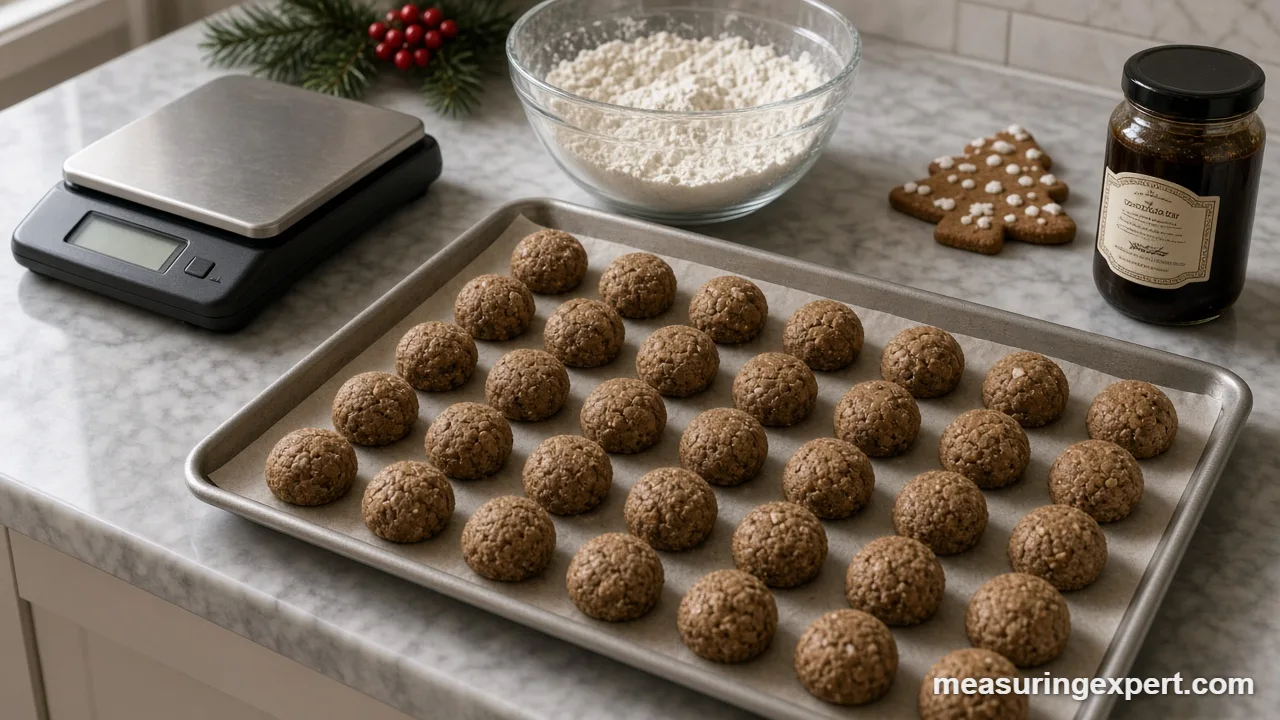
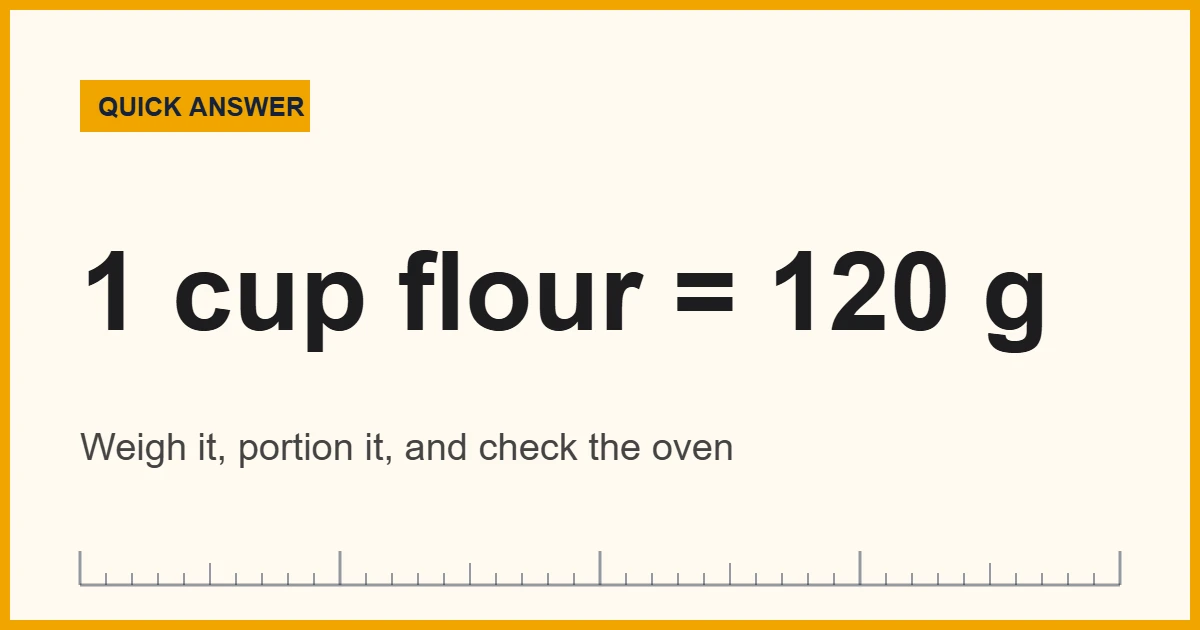
For accurate Christmas baking measurements, weigh your ingredients in grams on a digital scale. As a guide, one cup of all-purpose flour is about 120 g (4.2 oz), one cup of granulated sugar is 198 g (7 oz), one stick of butter is 113 g (4 oz), and one large egg is about 50 g (1.8 oz) without the shell.
Christmas Baking Measurements Converter: Grams, Ounces and Pounds
Holiday recipes arrive from many places, so they use many units. First, enter an amount below in grams, ounces or pounds, and the converter shows the others. As a result, you can follow a European gingerbread recipe on a scale that only shows ounces.
Christmas baking depends on a careful balance of flour, fat and sugar. In fact, cookie dough, gingerbread and frosting all follow that rule. Because the batches are often doubled or tripled for gifts, a small error grows quickly.
As a result, a few reliable numbers solve most problems. The King Arthur ingredient weight chart gives gram weights for common baking ingredients. In addition, the National Institute of Standards and Technology (NIST) lists the kitchen equivalents behind them, such as 5 mL for a teaspoon, 15 mL for a tablespoon and 240 mL for a cup, in its metric kitchen table.
Jump to: Weight chart Eggs, molasses and butter Tools Method Scaling batches Oven Mistakes FAQs
Christmas Baking Measurements by Weight: Ingredient Chart
First, a cup holds a set amount of space, not a set amount of food. Therefore, a packed cup of flour can weigh far more than a fluffed one. The chart below uses King Arthur weights. Also, the ounce column converts them with 1 oz = 28.35 g.
| Ingredient | Amount | Grams | Ounces |
|---|---|---|---|
| All-purpose flour | 1 cup | 120 g | 4.2 oz |
| Bread flour | 1 cup | 120 g | 4.2 oz |
| Granulated sugar | 1 cup | 198 g | 7.0 oz |
| Brown sugar, packed | 1 cup | 213 g | 7.5 oz |
| Powdered sugar, unsifted | 1 cup | 113 g | 4.0 oz |
| Butter | 1 stick (8 tbsp, 1/2 cup) | 113 g | 4.0 oz |
| Vegetable oil | 1 cup | 198 g | 7.0 oz |
| Cream cheese | 1 cup (8-ounce block) | 227 g | 8.0 oz |
| Chocolate chips | 1 cup | 170 g | 6.0 oz |
| Unsweetened cocoa | 1/2 cup | 42 g | 1.5 oz |
| Rolled oats | 1 cup | 113 g | 4.0 oz |
| Molasses | 1/4 cup | 85 g | 3.0 oz |
| Honey | 1 tbsp | 21 g | 0.7 oz |
| Vanilla extract | 1 tbsp | 14 g | 0.5 oz |
| Baking soda | 1/2 tsp | 3 g | 0.1 oz |
Package sizes help, too. Similarly, a 12-ounce bag of chocolate chips is 340 g, or about 2 cups. In addition, an 8-ounce block of cream cheese is about 1 cup. For more on the weight ounce, see how much is an ounce.
Eggs, Molasses and Butter: Measuring the Sticky and Soft Ingredients
Some ingredients refuse to cooperate with a cup. Molasses clings, butter is hard to pack, and eggs come in a shell. For these reasons, weight is both easier and cleaner.
- Eggs. For example, one large egg is about 50 g without the shell, according to the King Arthur chart. A large yolk is about 14 g, and a large white is about 30 to 35 g.
- Half an egg. First, beat one egg in a bowl and pour out 25 g. Then use the rest in an egg wash.
- Molasses. A quarter cup weighs 85 g, so a full cup is about 340 g and a tablespoon about 21 g. Therefore, tare the bowl and pour it straight in.
- Honey. A tablespoon weighs about 21 g. Weighing also avoids the sticky spoon altogether.
- Butter. One stick is 113 g. Cut at the wrapper marks carefully, because a tablespoon is only about 14 g.
Recommended Tools for Christmas Baking Measurements
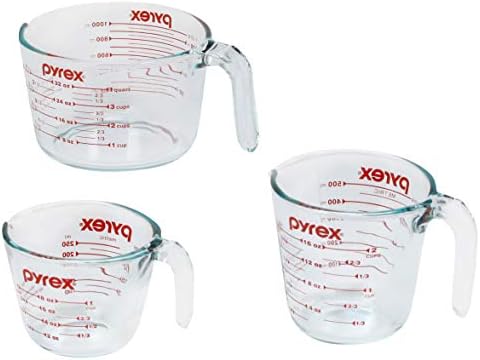
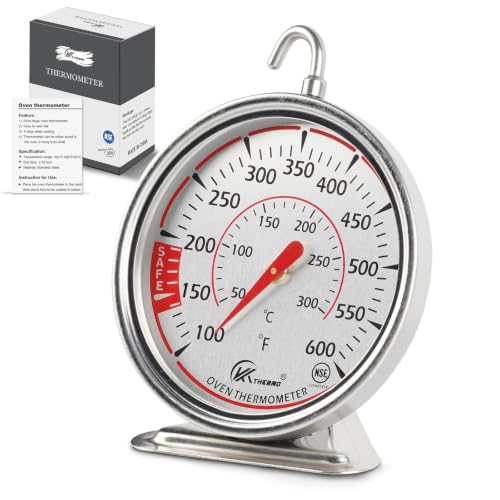
Good tools matter more at the holidays, since you bake more and in a hurry. First, a digital scale with a tare button removes most cup errors. Next, measuring spoons handle baking soda, spices and extracts. In addition, a glass liquid cup is useful for milk, cream and eggnog. Finally, an oven thermometer and an instant-read thermometer check the heat that your dial only guesses.




As an Amazon Associate, Measuring Expert earns from qualifying purchases.
Also, our guide to measuring ingredients with a kitchen scale walks through taring and unit settings.
Key Takeaways
- Weigh flour, sugar and butter in grams whenever possible, because one cup of flour is about 120 g.
- In short, one large egg is about 50 g without the shell.
- Molasses is 85 g per 1/4 cup, so weigh it instead of scooping.
- Therefore, multiply every ingredient by the same factor when you scale a cookie batch.
- Use an oven thermometer, because the dial may not show the real temperature.
How to Get Christmas Baking Measurements Right, Step by Step
- Check the units. First, see whether the recipe lists cups, grams or ounces, and whether it comes from the US or elsewhere.
- Tare the bowl. Place the bowl on the scale and press tare. Then add one ingredient at a time, pressing tare between each.
- Fluff and level flour. If you use cups, stir the flour first, then spoon it into the cup and level it with a knife.
- Pack brown sugar. Press it into the cup, so that it holds its shape when turned out.
- Measure liquids in a clear cup. Set the cup on the counter, then read the line at eye level.
- Weigh the sticky items. Pour molasses and honey directly into the tared bowl so nothing stays on the spoon.
- Lay everything out first. As a result, pre-measuring each ingredient in small bowls helps you spot a missing item before the dough is mixed.
Scaling Cookie Batches for Holiday Platters and Gifts
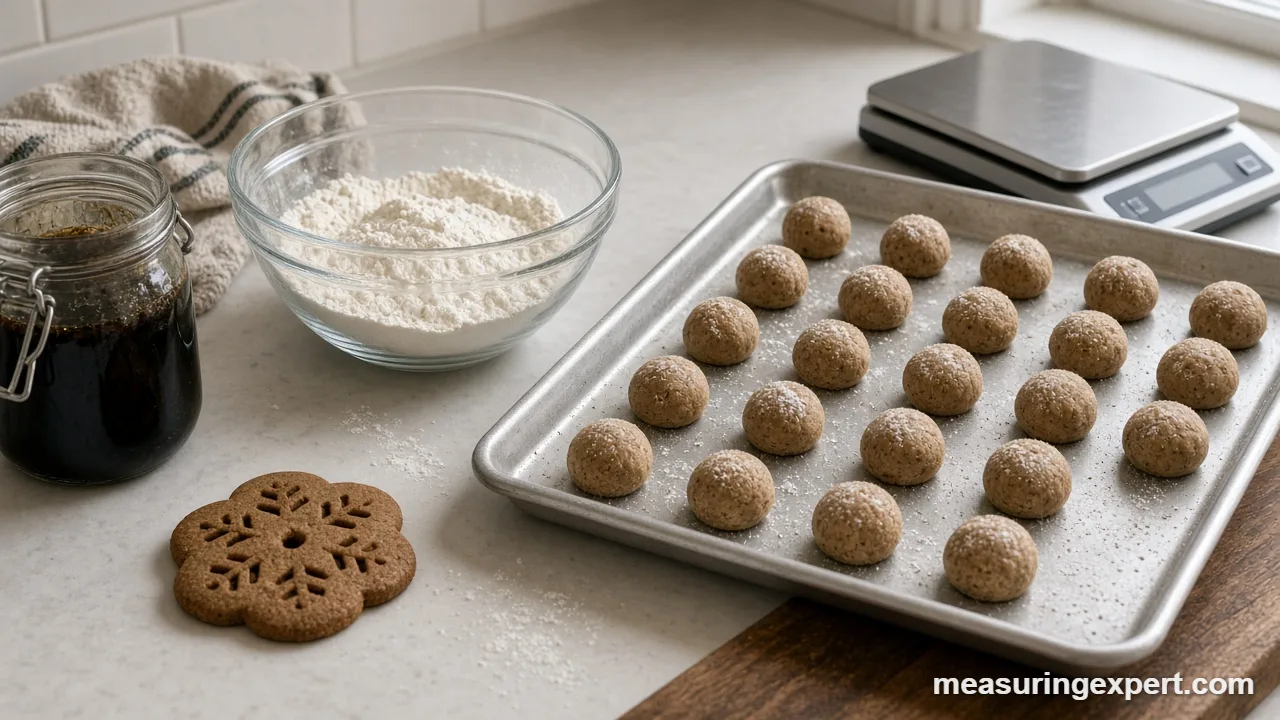
Gift tins need big batches, so the rule is simple: multiply every ingredient by the same number. The table below uses a sample cookie dough, with gram weights taken from the chart above. Weights make the math easy, whereas cups quickly turn into awkward fractions.
| Sample dough | Single batch | Double (x 2) | Triple (x 3) |
|---|---|---|---|
| All-purpose flour | 270 g (2 1/4 cups) | 540 g (4 1/2 cups) | 810 g (6 3/4 cups) |
| Butter | 226 g (2 sticks) | 452 g (4 sticks) | 678 g (6 sticks) |
| Granulated sugar | 149 g (3/4 cup) | 297 g (1 1/2 cups) | 446 g (2 1/4 cups) |
| Large eggs | 1 egg (50 g) | 2 eggs (100 g) | 3 eggs (150 g) |
| Baking soda | 1 tsp (6 g) | 2 tsp (12 g) | 1 tbsp (18 g) |
| Chocolate chips | 255 g (1 1/2 cups) | 510 g (3 cups) | 765 g (4 1/2 cups) |
Next, to plan the cookie count, divide the dough weight by the weight of each cookie. For example, 600 g of dough portioned at 25 g each makes 24 cookies. Similarly, a scoop that holds 2 tablespoons is about 30 mL of dough. Portioning by weight also keeps the cookies the same size, so they bake at the same pace.
Oven Temperature: The Measurement Behind the Measurements
Even perfect ingredients can fail in a wrong oven, so check the heat. In fact, many home ovens run hotter or cooler than the dial says. Therefore, a cheap oven thermometer is worth hanging on the middle rack. Check the reading after the oven has preheated, and then adjust the dial instead of trusting it.
Besides the oven, a cookie sheet also changes results. A dark pan browns the bottoms faster, whereas a pale pan browns more gently. Moreover, a crowded oven changes airflow, so rotate trays halfway through baking.
Common Christmas Baking Measurements Mistakes
- Scooping flour with the cup. This packs the flour, so cookies turn out dry and cakey.
- Using a liquid cup for dry goods. It cannot be leveled, so the amount is only a guess.
- Confusing baking soda and baking powder. They are not interchangeable, so a teaspoon of the wrong one changes the taste and the spread.
- Mixing fluid ounces and ounces by weight. For instance, a cup of honey and a cup of flour fill the same space but weigh very different amounts.
- Packing powdered sugar. The chart value is for unsifted sugar, so do not press it down.
- Using an overseas recipe unchanged. For example, metric cups are 250 mL, and the Australian tablespoon is 20 mL. Read the metric system in cooking to translate them.
Do and Don’t for Holiday Baking
Do
- Weigh flour, sugar and butter first.
- Level every dry spoon and cup instead of heaping it.
- Portion dough by weight, so every cookie matches.
- Check the oven with a thermometer, because dials drift.
- Label scaled recipes clearly, so nobody guesses.
Don’t
- Pack flour into the cup, because it adds too much flour.
- Swap baking soda for baking powder, because they differ.
- Guess the size of an egg, because sizes vary.
- Scale a recipe without scaling the pan, so it fits.
- Trust the oven dial alone, because it can drift.
Honest Limits of Baking Conversions
First, the gram weights in this guide are averages from one published chart. For example, different brands of flour, sugar and chocolate chips can weigh slightly more or less per cup, and humidity changes flour. In short, the numbers are a reliable starting point and not a guarantee. Therefore, if a recipe gives its own gram weights, use those first. Likewise, if your own method works, weigh one cup once and note the result for next time.
When Accuracy Really Matters
Many Christmas treats forgive a little extra chocolate. However, others do not:
- Leavening. Baking soda and baking powder should be measured level, since small errors change the spread and the flavor.
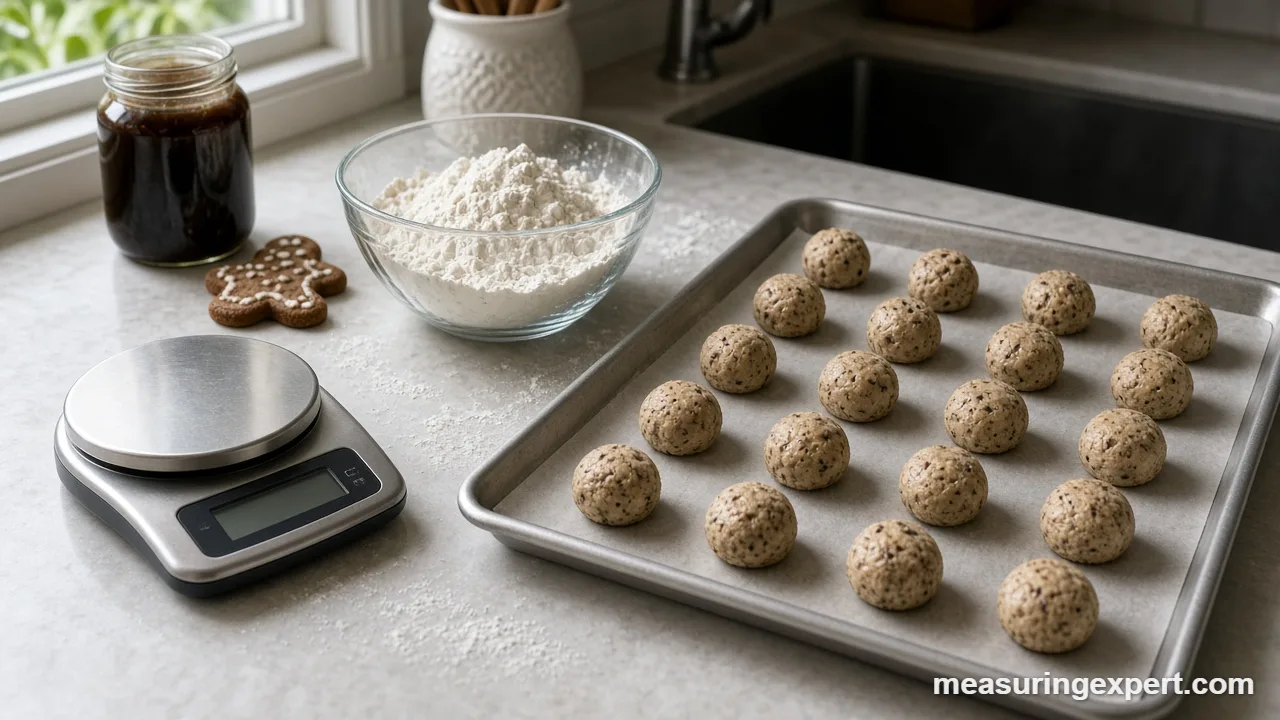
- Gingerbread houses. Because the dough must hold its shape, weigh the flour and molasses.
- Frosting and icing. Because powdered sugar and liquid ratios decide whether icing pipes or runs, weigh both.
- Allergy baking. For instance, substitutions work best when you weigh the swap on a scale.
Frequently Asked Questions
What are the most accurate Christmas baking measurements?
Weights in grams are the most accurate. For example, 120 g of all-purpose flour is the same every time, while a cup can vary with how you fill it.
How many grams are in a cup of flour?
A cup of all-purpose flour is about 120 g (4.2 oz) by the King Arthur chart. Bread flour is also listed at 120 g per cup.
How much does a large egg weigh?
A large egg is about 50 g without the shell. In addition, a yolk is about 14 g, and a white is about 30 to 35 g.
How many cups are in a 12-ounce bag of chocolate chips?
A 12-ounce bag is about 340 g, which is roughly 2 cups, since one cup of chips is 170 g.
How do I measure molasses for gingerbread?
Weigh it, because a quarter cup of molasses is 85 g, so 340 g equals one cup. Pour it into a tared bowl to avoid sticky spoons.
Why do Christmas baking measurements matter for cookies?
Cookies spread and brown based on the balance of flour, fat and sugar. Therefore, a small excess of flour or a shortage of butter changes the texture.
How do I double a cookie recipe?
First, multiply every ingredient by 2, preferably in grams. Then bake in batches, and keep the oven temperature and cookie size the same.
How many cookies will my dough make?
First, divide the total dough weight by the weight of each cookie. For example, 600 g of dough at 25 g per cookie makes 24 cookies.
What is the best scale for baking?
First, look for a digital scale with a tare button, gram and ounce settings, and a capacity high enough for your largest mixing bowl. Several options are listed above.
Do I need a thermometer for Christmas baking measurements?
An oven thermometer is a good idea. Many ovens run hotter or cooler than the dial, so a thermometer shows the real temperature.
Christmas Baking Measurements: The Bottom Line
To sum up, weigh the ingredients that vary, portion dough by weight, and trust a thermometer more than the oven dial. In short, the weight chart and scaling table above cover most of what a holiday baker needs.
Finally, use the converter at the top of the page for any odd amount. If you are short a cup, see our guide to a measuring cup substitute, and for the savory side of the holiday table, read how to measure ingredients for Thanksgiving.
1 thought on “Christmas Baking Measurements: How to Measure Ingredients for Cookies and Gingerbread”