


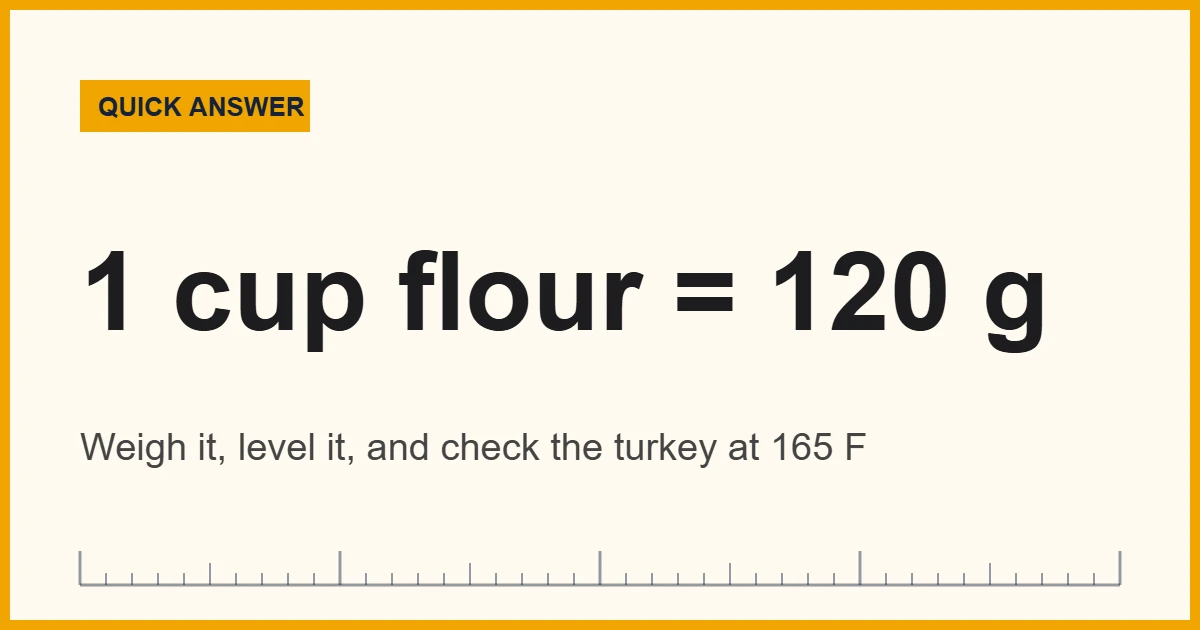
To measure ingredients for Thanksgiving, weigh them on a digital kitchen scale whenever a recipe lists grams or ounces. Otherwise, use dry cups leveled with a knife for flour and sugar, a glass cup read at eye level for liquids, and a thermometer for the turkey. One cup of all-purpose flour weighs about 120 g (4.2 oz).
Measure Ingredients for Thanksgiving: Quick Converter
Holiday recipes mix cups, sticks, spoons and ounces on a single page, so conversions come up constantly. First, enter any amount below and pick the unit you have. The converter then shows the same amount in cups, tablespoons, teaspoons, fluid ounces and milliliters.
In fact, Thanksgiving is the one meal where a small error gets noticed by a whole table. For example, a pie crust with too much flour turns tough. Likewise, gravy with a double dose of salt cannot be rescued. Because many dishes cook at once, there is also little time to fix a mistake.
In practice, a few habits cover almost every dish. First, weigh the ingredients that vary most, such as flour, brown sugar and nuts. Next, use the right cup for the right job. Finally, check the turkey with a thermometer instead of the clock. For example, the King Arthur ingredient weight chart lists 120 g for a cup of all-purpose flour, and the USDA lists 165 degrees F (73.9 degrees C) as the safe temperature for poultry and stuffing.
Measure Ingredients for Thanksgiving by Weight: Cup-to-Gram Chart
First, a cup is a measure of space, not of weight. Therefore, a cup of flour scooped hard from the bag can weigh well over the chart value. The weights below come from the King Arthur chart, and the ounce values are converted with 1 oz = 28.35 g.
| Ingredient | Amount | Grams | Ounces |
|---|---|---|---|
| All-purpose flour | 1 cup | 120 g | 4.2 oz |
| Granulated sugar | 1 cup | 198 g | 7.0 oz |
| Brown sugar, packed | 1 cup | 213 g | 7.5 oz |
| Powdered sugar, unsifted | 1 cup | 113 g | 4.0 oz |
| Butter | 1 stick (8 tbsp, 1/2 cup) | 113 g | 4.0 oz |
| Pumpkin puree | 1 cup | 227 g | 8.0 oz |
| Fresh or frozen cranberries | 1 cup | 99 g | 3.5 oz |
| Chopped walnuts | 1 cup | 113 g | 4.0 oz |
| Diced pecans | 1/2 cup | 57 g | 2.0 oz |
| Maple syrup | 1/2 cup | 156 g | 5.5 oz |
| Molasses | 1/4 cup | 85 g | 3.0 oz |
| Honey | 1 tbsp | 21 g | 0.7 oz |
| Milk | 1 cup | 227 g | 8.0 oz |
In addition, two shortcuts help with grocery packages. A standard 15-ounce can of pumpkin is about 425 g, so it makes just under 2 cups of puree. Likewise, a 12-ounce bag of cranberries is about 340 g, or roughly 3 1/2 cups. For a closer look at the weight ounce, see how much is an ounce.
Recommended Tools to Measure Ingredients for Thanksgiving
In fact, you do not need a drawer full of gadgets. Still, four tools do most of the work. First, a digital scale with a tare button handles flour, sugar and nuts. Next, a set of measuring spoons covers spices and leaveners. In addition, glass or clear liquid cups handle milk, cream and stock. Finally, an instant-read thermometer settles the question of whether the turkey is done. The picks below are digital scales, the tool that improves results the most.


As an Amazon Associate, Measuring Expert earns from qualifying purchases.
Still, if you only buy one item, make it the scale. Our guide to measuring ingredients with a kitchen scale explains the tare function and when grams beat cups.
Key Takeaways
- Weigh flour, brown sugar and nuts when you can; one cup of flour is about 120 g.
- One stick of butter is 8 tablespoons, 1/2 cup or 113 g.
- Use dry cups for dry foods and clear liquid cups for liquids.
- Check the brand of kosher salt, because a tablespoon can weigh 8 g or 16 g.
- Thaw a turkey in the refrigerator at about 24 hours for each 4 to 5 pounds.
- Cook turkey, stuffing and leftovers to 165 degrees F (73.9 degrees C).
How to Measure Ingredients for Thanksgiving, Step by Step
- Read the whole recipe first. First, note any amounts in grams, and check whether the cups are US cups or metric ones.
- Set a bowl on the scale and press tare. The display returns to zero, so you can add flour, sugar or nuts straight into the bowl.
- Fluff, spoon and level dry ingredients. If you must use cups, first stir the flour, then spoon it into the cup, and sweep the top flat with a knife.
- Pack brown sugar only when told to. Press it into the cup until it holds its shape, then level it.
- Pour liquids into a clear cup on a flat counter. Then bend down so your eyes are level with the line, and read the bottom of the curve.
- Measure sticky ingredients last. Coat the spoon or cup with a little oil first so molasses and honey slide out.
- Pre-measure before you start mixing. As a result, small bowls for each ingredient prevent a skipped step when three dishes are in progress.
Scaling Thanksgiving Recipes for a Bigger or Smaller Table
In general, most family recipes serve 6 to 8 people. If more guests arrive, multiply every ingredient by the same factor. Weights also make this easy, because 1.5 times 120 g is simply 180 g. By contrast, 1.5 times a cup needs fractions, which invites mistakes.
| Recipe calls for | x 1.5 | x 2 |
|---|---|---|
| 1 cup flour (120 g) | 180 g (1 1/2 cups) | 240 g (2 cups) |
| 1 cup granulated sugar (198 g) | 297 g (1 1/2 cups) | 396 g (2 cups) |
| 1 stick butter (113 g) | 170 g (12 tbsp) | 226 g (2 sticks) |
| 1 cup cranberries (99 g) | 149 g (1 1/2 cups) | 198 g (2 cups) |
| 1 tsp baking powder | 1 1/2 tsp | 2 tsp |
In addition, pan size matters. For example, doubling a pie filling needs a second pie plate, not a deeper one. Moreover, a larger casserole usually takes longer to heat through, so rely on the thermometer instead of the original time.
Measure Ingredients for Thanksgiving Turkey: Thawing and Temperature
However, the turkey is the one item where time and temperature matter more than cups. The USDA says to allow about 24 hours of refrigerator thawing for every 4 to 5 pounds of turkey, with the refrigerator at 40 degrees F (4.4 degrees C) or below. The USDA thawing guidance gives these whole-turkey times:
| Turkey weight | Refrigerator | Cold water (30 minutes per pound) |
|---|---|---|
| 4 to 12 lb (1.8 to 5.4 kg) | 1 to 3 days | 2 to 6 hours |
| 12 to 16 lb (5.4 to 7.3 kg) | 3 to 4 days | 6 to 8 hours |
| 16 to 20 lb (7.3 to 9.1 kg) | 4 to 5 days | 8 to 10 hours |
| 20 to 24 lb (9.1 to 10.9 kg) | 5 to 6 days | 10 to 12 hours |
Meanwhile, cold-water thawing means a leak-proof bag, fresh water every 30 minutes, and cooking right after the turkey thaws. Once it is ready, the USDA safe temperature chart lists 165 degrees F (73.9 degrees C) for all poultry, stuffing, casseroles and leftovers. A thermometer reading is the only reliable test, because color and cooking time can mislead.
Common Measuring Mistakes at Thanksgiving
In fact, most failed holiday dishes trace back to a handful of errors. As a result, spotting them early saves a lot of effort.
- Scooping flour straight from the bag. This packs the flour, so the cup holds more than the recipe expects.
- Using a liquid cup for flour. The spout and headspace therefore make leveling impossible.
- Mixing up kosher and table salt. As noted above, the same spoon can hold twice as much salt.
- Confusing fluid ounces with ounces by weight. A cup of milk is 8 fl oz and about 8 oz by weight, but a cup of flour is 8 fl oz and only about 4.2 oz.
- Forgetting that a can is not a cup. Instead, check the package weight, as shown in the chart above.
- Trusting a recipe in another country. Metric cups are 250 mL, not 236.59 mL, and a UK or Australian tablespoon differs from a US one. See the metric system in cooking for the details.
Do and Don’t for Holiday Measuring
Do
- Weigh flour, sugar and nuts when the recipe gives grams.
- Level dry cups with a straight edge.
- Read liquid cups at eye level.
- Pre-measure into small bowls.
- Check the turkey with a thermometer.
Don’t
- Swap kosher and table salt one for one.
- Pack flour into the cup.
- Thaw the turkey on the counter.
- Guess a can’s contents in cups.
- Double leavening without checking the recipe.
Honest Limits of Cup and Gram Conversions
However, chart weights are averages, not guarantees. For example, a cup of flour can vary by 15 to 20 grams depending on how it was filled, and humidity changes flour and sugar slightly. In short, treat the chart as a starting point. When a recipe gives its own gram weights, use them instead of the chart. Similarly, if a family recipe works with your own scooping habits, keep doing it your way and simply note the weight once, so you can repeat it.
Also keep in mind that the temperatures and times on this page are food safety minimums, not cooking instructions. Because ovens run hot or cold, a thermometer check is the only way to confirm the result.
When Accuracy Really Matters
For a casserole, a little extra onion hardly matters. However, a few Thanksgiving items need more care:
- Brines and cures. Salt by weight is therefore far safer than salt by the spoon, given the brand differences above.
- Pie crust. Because small changes in flour and water change how tender and flaky the crust turns out, weigh both.
- Leavening. For instance, baking powder and baking soda in rolls and quick breads should be measured level.
- Food safety. In short, thawing time and final temperature are not matters of taste.
Frequently Asked Questions
What is the best way to measure ingredients for Thanksgiving?
In short, weighing on a digital scale is the most consistent method. If you use cups, spoon and level dry ingredients, read liquids at eye level, and check the turkey with a thermometer.
How many grams are in a cup of flour?
A cup of all-purpose flour is about 120 g (4.2 oz) by the King Arthur chart. However, scooping it straight from the bag can add noticeably more.
How much is a stick of butter in cups and grams?
One US stick of butter is 8 tablespoons, 1/2 cup, or 113 g (4 oz).
How many cups are in a can of pumpkin?
A 15-ounce can holds about 425 g of puree, which is just under 2 cups. In addition, one cup of puree weighs about 227 g.
Can I measure ingredients for Thanksgiving without a scale?
Yes. Use dry cups and measuring spoons, level them with a knife, and use a clear cup for liquids. However, expect a little more variation than with a scale.
How long does it take to thaw a 16-pound turkey?
In the refrigerator, a 16-pound turkey needs about 3 to 4 days. In cold water, however, allow about 8 hours and change the water every 30 minutes.
What temperature should the turkey and stuffing reach?
The USDA lists 165 degrees F (73.9 degrees C) as the safe minimum for poultry, stuffing, casseroles and leftovers.
How do I double a Thanksgiving recipe?
First, multiply each ingredient by 2, preferably using grams. Then use a larger or second pan, and check doneness by temperature or texture instead of the original time.
Is kosher salt the same as table salt in a recipe?
No. In fact, a tablespoon of Diamond Crystal kosher salt weighs about 8 g, Morton kosher about 16 g, and table salt about 18 g, so use the type the recipe names.
Should I measure ingredients for Thanksgiving pies differently?
Pies reward precision, so weigh the flour and butter for the crust, keep the water cold and measured, and weigh canned or fresh fillings when you can.
Measure Ingredients for Thanksgiving: The Bottom Line
To sum up, weigh the ingredients that vary, level the ones you scoop, and let a thermometer decide when the turkey is done. Keep the cup-to-gram chart and the thawing table handy, because those two lists answer most holiday questions.
Finally, use the converter at the top of the page for any odd amount. If you need a stand-in for a missing cup, our guide to a measuring cup substitute can help.