

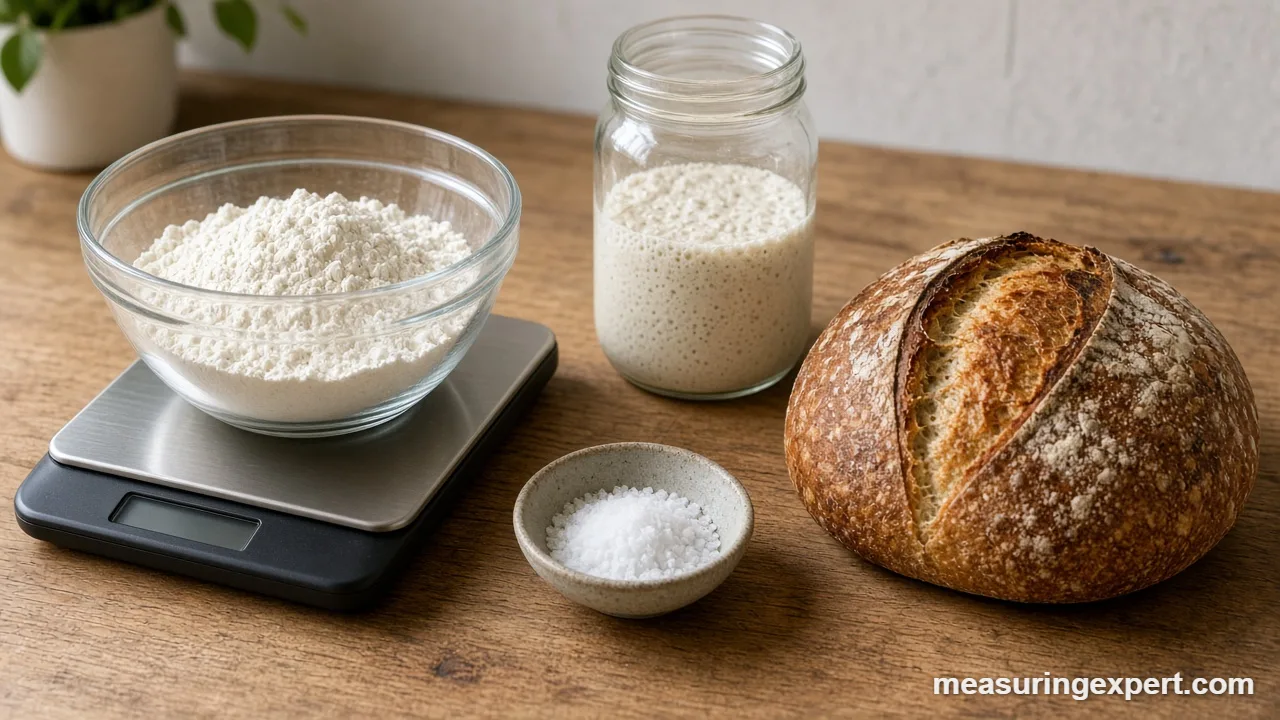
To measure sourdough ingredients, weigh them in grams on a digital kitchen scale instead of using cups. One cup of all-purpose flour weighs about 120 g, but scooping changes that number from loaf to loaf. Weighing flour, water, starter and salt keeps hydration and fermentation steady.
Sourdough Ingredients Converter: Grams, Ounces and Pounds
Most sourdough formulas list grams, while many American kitchen scales also show ounces. Enter an amount below to switch between the two. The converter uses the exact definition of the avoirdupois ounce, 28.3495 g.
A sourdough loaf has only four basic parts: flour, water, salt and starter. Because there are so few, a small error in any one of them shows up in the dough. For example, 20 g too much flour in a 500 g formula stiffens the dough by roughly 4 percent. That is easy to feel and easy to avoid.
This guide explains how to measure sourdough ingredients so each bake matches the last. First comes a sample formula with real numbers. After that, you will see how cups compare with grams, why salt needs the most care, and what to do when you have no scale.
Why Weigh Sourdough Ingredients Instead of Scooping
A cup measures space, not amount. Flour packs down when you dip a cup into the bag, and it fluffs up when you spoon it in. As a result, one cup can hold noticeably different weights on different days.
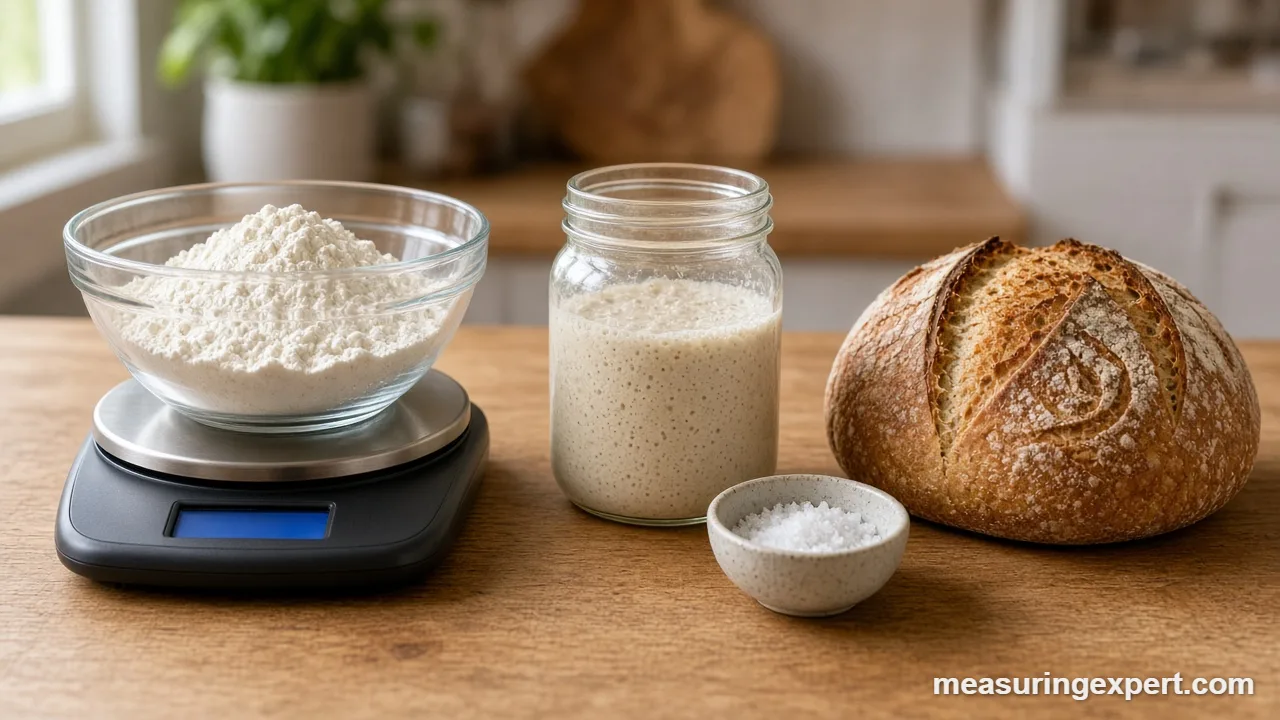
King Arthur Baking lists a cup of all-purpose flour at 120 g in its ingredient weight chart, and it recommends weighing ingredients on a digital scale for best results. In short, grams remove the guesswork that cups add.
Weighing also makes the math simple. Bakers describe a sourdough recipe as percentages of the flour weight. Those percentages only work when every ingredient has a weight. In addition, a scale lets you add everything into one bowl, so you wash fewer dishes.
A Sample Formula in Grams
Here is one balanced loaf, written in both metric and US weights. It makes about 986 g of dough, which suits one large loaf or two small ones. Use it as a starting point, then adjust to your own flour and kitchen.
| Ingredient | Grams | Ounces | Notes |
|---|---|---|---|
| Bread flour or all-purpose flour | 500 g | 17.6 oz | The main flour added to the bowl |
| Water | 375 g | 13.2 oz | 1 g of water is about 1 mL |
| Ripe starter (100% hydration) | 100 g | 3.5 oz | Half flour and half water by weight |
| Fine salt | 11 g | 0.39 oz | About 2% of the total flour |
King Arthur defines hydration as the weight of water divided by the weight of flour, and one of its own sourdough examples works out to 77 percent. Our sample lands in the same range. You can read more in their guide to bread hydration.
Recommended Tools to Measure Sourdough Ingredients
You need very little equipment. First, a digital scale with a tare button does most of the work. Next, look for one that reads in 1 g steps or finer, because salt is only about 11 g in the sample loaf. Also keep a small thermometer nearby so you can note your water temperature each time.


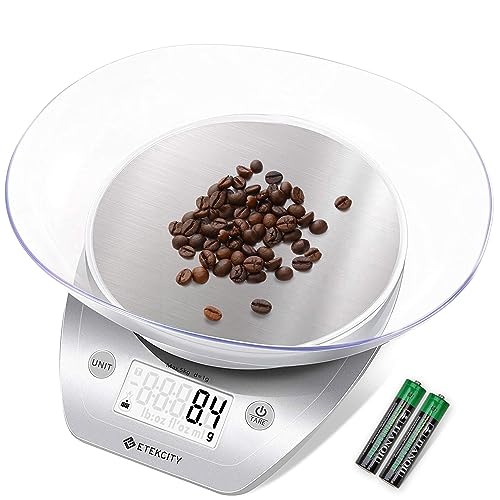
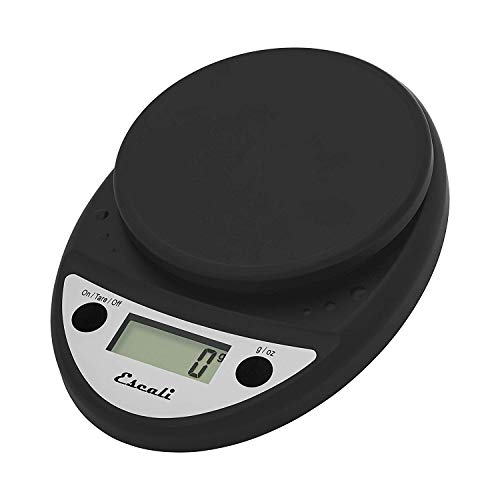


As an Amazon Associate, Measuring Expert earns from qualifying purchases.
Our guide to choosing a food scale covers capacity, resolution and tare features in more detail.
How to Weigh Sourdough Ingredients Step by Step
- Set the scale to grams. Put it on a flat, hard counter and switch the unit before you add anything.
- Place your mixing bowl on the scale. Press tare so the display reads 0 g.
- Add the starter first. A silicone spatula helps it slide out of the jar, and the display shows how much you have.
- Tare and pour in the water. Stop at the target weight, not at a mark on the cup.
- Tare again and add the flour. Pour slowly near the end, because you cannot take flour back out easily.
- Tare once more and add the salt. Use the lowest-capacity scale you own for this step if you have two.
- Write the numbers down. A short note on your actual weights lets you repeat a good loaf.
Flour: Cups Versus Grams for Sourdough Ingredients
Flour causes the most trouble, because it is light and compressible. Different flours also weigh different amounts per cup, so one cup is not one cup. Use the chart below only when a recipe leaves you no choice.
| Ingredient | Per US cup | Approx. ounces | Source |
|---|---|---|---|
| All-purpose flour | 120 g | 4 1/4 oz | King Arthur chart |
| Bread flour | 120 g | 4 1/4 oz | King Arthur chart |
| Whole wheat flour | 113 g | 4 oz | King Arthur chart |
| Medium rye flour | 106 g | 3 3/4 oz | King Arthur chart |
| Sourdough starter | 227 to 241 g | 8 to 8 1/2 oz | King Arthur chart |
| Water | about 236 g | about 8.3 oz | Calculated from 236.59 mL |
Notice that the starter row is a range. A fed, airy starter holds more air than a stirred-down one, so its cup weight changes. For that reason, weigh your starter rather than scooping it.
Water and Hydration
Water is the easiest ingredient to weigh. At room temperature, 1 mL of water weighs very close to 1 g, so a 375 g pour is almost exactly 375 mL. Therefore you can use a liquid measuring cup in a pinch, as long as you read it at eye level.
Hydration tells you how wet the dough will feel. King Arthur describes 55 to 65 percent as firm, and 75 to 85 percent as slack or sticky with all-purpose flour. Whole-grain flours often take more water. As a result, a formula that feels perfect with white flour can seem dry once you swap in whole wheat.
If you want a drier dough, lower the water by 10 to 15 g and mix again. Likewise, add water in small steps if the dough tears. Always record the change so you can repeat it.
Salt: Why Teaspoons Mislead
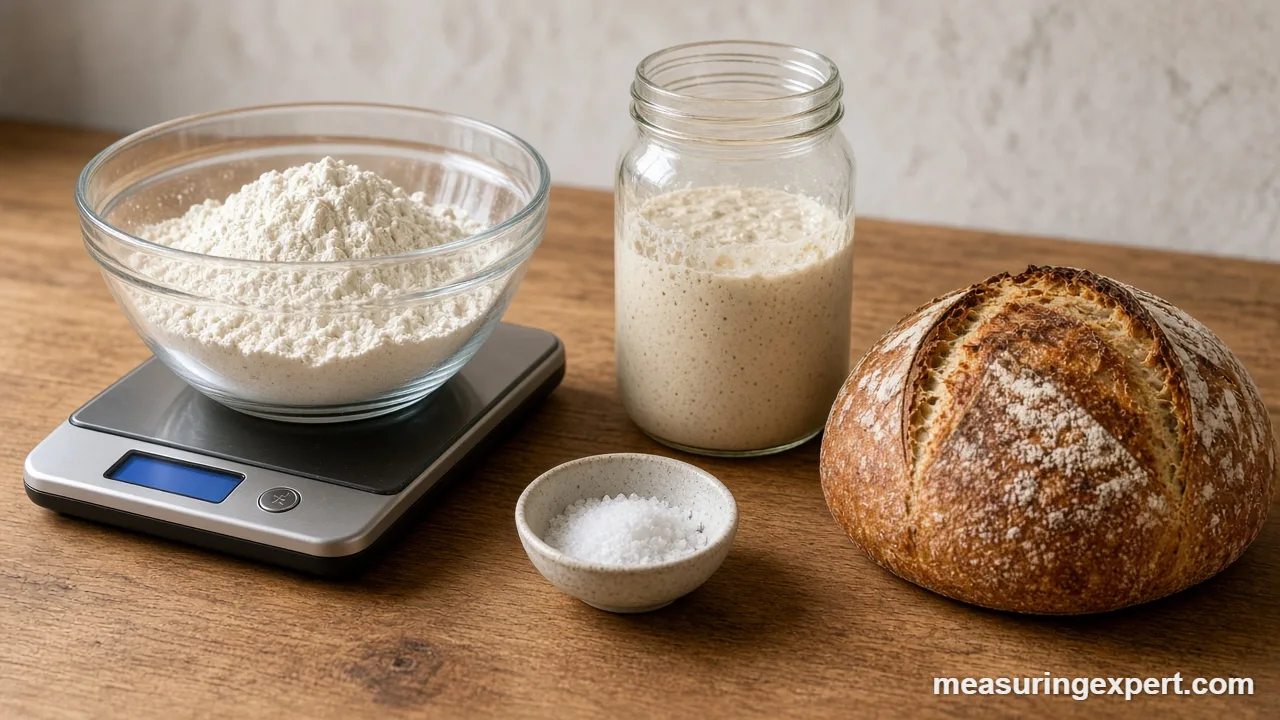
Salt is the ingredient where volume fails worst. King Arthur lists one tablespoon of Diamond Crystal kosher salt at 8 g, Morton kosher at 16 g, and table salt at 18 g. That is more than a 2 to 1 spread between brands.
| Salt type | Per tablespoon | Per teaspoon (1/3 of tbsp) | Teaspoons for 11 g |
|---|---|---|---|
| Diamond Crystal kosher | 8 g | 2.7 g | about 4 tsp |
| Morton kosher | 16 g | 5.3 g | about 2 tsp |
| Table salt | 18 g | 6.0 g | about 1 3/4 tsp |
King Arthur gives a typical salt range of 1.8 to 2.2 percent of flour weight in its baker’s math article. On 550 g of flour, that range is 9.9 g to 12.1 g. Because the window is so narrow, weigh the salt.
Measuring the Starter
Starter behaves like both a flour and a water source. A 100% hydration starter holds equal weights of flour and water, so 100 g of it adds 50 g of each. King Arthur notes that this small amount is generally not a concern in the final calculation, which is why many home bakers count only the flour and water they add. If you want exact hydration, however, count the starter as shown in the sample formula.
For feeding, a common approach is equal weights of starter, flour and water, often written 1:1:1. For instance, 20 g of starter, 20 g of flour and 20 g of water make 60 g. Weighing each feed also helps you see whether the starter is rising on schedule.
The Best Way to Measure Ingredients for Making Sourdough Bread
If you ask which method works best, the answer is the same every time: weigh everything in grams, and use cups or spoons only for tiny extras. The rest of this section covers the details that make that method easy to follow.
When you must use cups
Sometimes a recipe only gives cups. In that case, fluff the flour with a fork, spoon it lightly into the cup, and sweep the top flat with a knife. Do not tap or pack the cup. Then convert using the chart above, and write the gram weight on the recipe so next time you can skip the cups.
Sticky ingredients and wet starter
Sticky foods cling to cups and spoons, so volume measuring wastes some of them. Weighing avoids the problem. Tare the jar or bowl, scoop out what you need, and read the display. For honey or syrup, a lightly oiled spoon also releases more cleanly.
Keep the scale honest for sourdough ingredients
Scales drift, so test yours now and then. A US nickel is specified at 5 g, so a single nickel should read about 5 g. If your scale is off by a full gram or more, replace the batteries and check again. In addition, wipe flour dust from around the sensor.
Scaling Sourdough Ingredients Up or Down
Percentages make scaling easy. Take your added flour weight, then multiply each ingredient by its percentage. For 1,000 g of added flour, the sample formula becomes 750 g water (75%), 200 g starter (20%), and 22 g salt (2.2%).
Similarly, you can cut the recipe for a small test loaf. With 250 g of flour, use 187.5 g water, 50 g starter and 5.5 g salt. Round the water to 188 g, and weigh the salt on the most precise scale you have.
Common Mistakes With Sourdough Ingredients
Most failed loaves trace back to a few habits. Check this list if your bread comes out dense, flat or bland.
- Eyeballing the starter. A rough scoop can swing the amount by dozens of grams, so weigh every feed and every mix.
- Mixing units. Grams for flour and cups for water gives an unknown hydration.
- Trusting volume for salt. Brands differ by a factor of two, as shown above.
- Forgetting to tare. The bowl weight then ends up in your flour total.
- Skipping notes. Without a record, you cannot repeat a great loaf or fix a bad one.
Do and Don’t When Weighing Sourdough Ingredients
Do
- Weigh in grams whenever you can.
- Tare the scale after each ingredient.
- Note your actual weights after each bake.
- Check scale accuracy with a known weight.
- Round water to the nearest gram.
Don’t
- Scoop flour straight from the bag into a cup.
- Swap salt types by volume.
- Use ounces for some items and grams for others.
- Measure by the dial of a worn, drifting scale.
- Assume every flour needs the same water.
Honest Limits of Weighing
A scale gives you a repeatable recipe, not a guaranteed loaf. Flour absorbs water differently by brand, grind and season, so the same grams can feel wetter or drier. Your starter’s strength, your kitchen temperature and your proofing time matter as much as the numbers. Even so, weighing removes the largest source of variation that you control. Treat your first bake from a new bag of flour as a test, and adjust the water in small steps.
For further reading on related conversions, see how much an ounce is, how much 30 mL is and our notes on measuring ingredients for fall baking.
Frequently Asked Questions
How do you measure sourdough ingredients without a scale?
Use the spoon-and-level method for flour, a liquid measuring cup for water, and measuring spoons for salt. Convert with the chart on this page. Expect more variation than with a scale, especially for salt and starter.
How many grams are in a cup of flour for sourdough?
King Arthur lists 120 g per cup for all-purpose and bread flour, 113 g for whole wheat, and 106 g for medium rye. Your own scooping may differ, so weigh when possible.
What are the ratios for sourdough bread?
Recipes vary widely. The sample formula here uses 75% water, 20% starter and 2.2% salt, all based on the flour added. Many home recipes land in a similar range, but follow your recipe for the style of loaf you want.
How do I measure sourdough ingredients when a recipe uses cups?
Fluff the flour, spoon it into the cup, and level it. Then convert to grams with the chart above and note the result. After one bake, you can switch to weighing.
Can you use metal measuring cups for sourdough starter?
For measuring and mixing, stainless steel is fine because contact is brief. For storing starter over days, many bakers prefer glass or food-grade plastic. A scale and a clean jar avoid the question.
What is the biggest measuring mistake with a sourdough starter?
Eyeballing the amount. Starter changes in volume as it rises and falls, so a scoop is unreliable. Weigh both your feeds and the starter that goes into the dough.
What is the secret ingredient in sourdough bread?
There is no secret. A basic loaf uses flour, water, salt and starter. Consistency comes from accurate weights, good timing and a healthy starter.
Should I weigh sourdough ingredients in grams or ounces?
Grams are better. They are a finer unit, so a 1 g step is much smaller than a 1 oz step (28.35 g). Use ounces only if your scale lacks grams, and take the extra decimal place.
How accurate does the scale need to be for sourdough ingredients?
A 1 g scale handles flour, water and starter well. For salt, a 0.1 g scale is better because a 1 g error is about 9% of an 11 g amount.
How much salt goes into sourdough bread?
King Arthur gives about 1.8 to 2.2 percent of the flour weight as typical. For 550 g of total flour, that is roughly 10 to 12 g.
Weigh Once, Bake the Same Loaf Again
To sum up, grams give you repeatable sourdough, and the sample formula shows how little you need: flour, water, starter and salt. Weigh the flour first, watch the salt closely, and write your numbers down.
Finally, use the converter above whenever a recipe mixes ounces and grams. With a reliable scale and a simple notebook, every loaf teaches you something.
1 thought on “How to Measure Sourdough Ingredients by Weight: Grams, Ratios and Tools”