

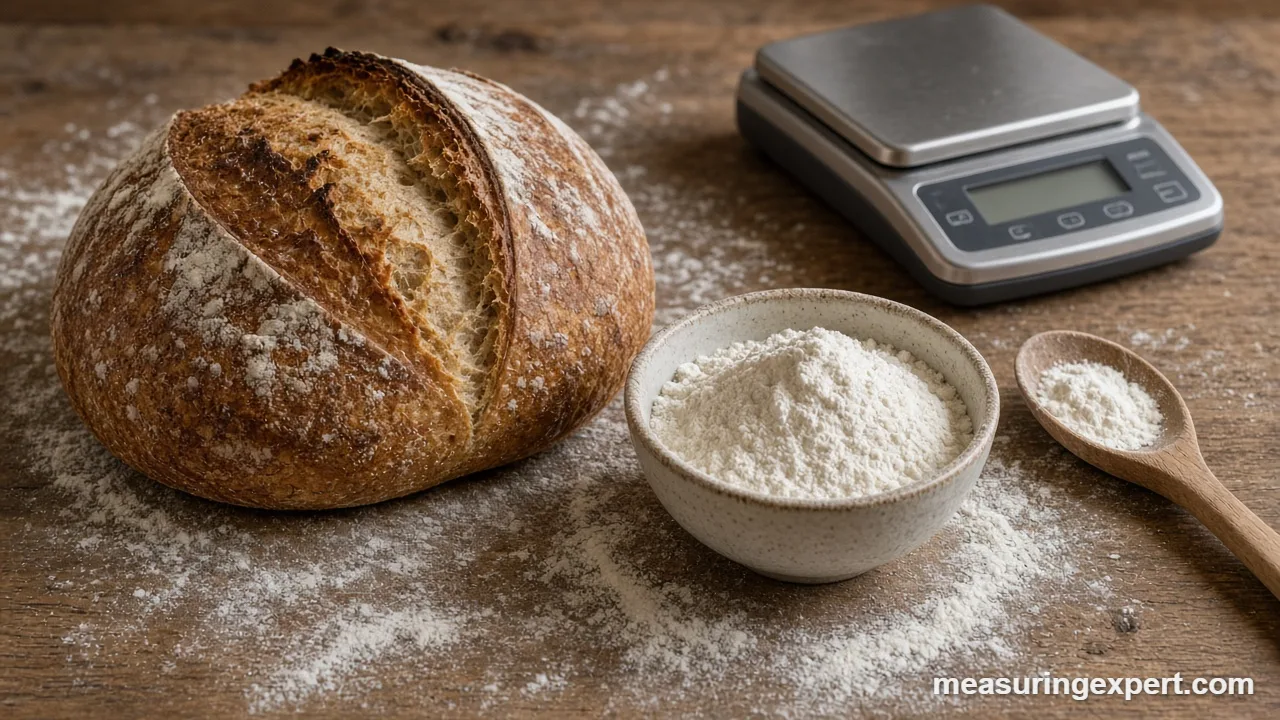
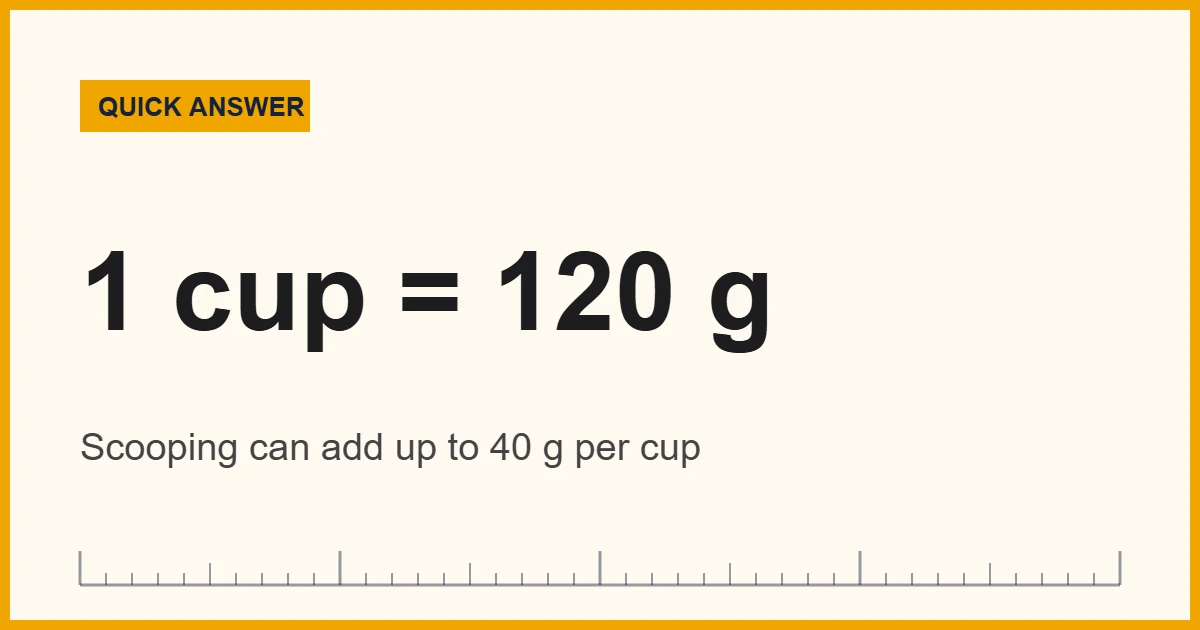
To measure flour for bread, weigh it on a kitchen scale: 120 grams (about 4.2 ounces) equals one cup of all-purpose or bread flour, according to King Arthur Baking. If you must use cups, fluff the flour, spoon it in, and level it. Scooping straight from the bag can add up to 40 grams per cup.
Convert Flour Weights to Measure Flour for Bread
Type the grams your recipe lists to see ounces, pounds and kilograms. For example, 360 grams is the weight of three level cups of all-purpose flour at 120 grams per cup.
Indeed, flour is the one ingredient where a cup can mean two very different amounts. A loaf of bread is mostly flour and water, so a small flour error shifts the whole dough. In short, this guide shows how to measure flour for bread by weight and by cup, with numbers you can check.
The main source is King Arthur Baking, which publishes both a flour measuring article and an ingredient weight chart. For starter, levain and fermentation questions, see our separate guide to measuring sourdough ingredients. This page, instead, stays focused on the flour itself.
Recommended Tools to Measure Flour for Bread
First, a scale is the one tool that changes results. Also, look for a tare button, a display that reads in single grams, and a platform big enough for a mixing bowl. In addition, a set of dry measuring cups and spoons is useful for small amounts of salt and yeast.


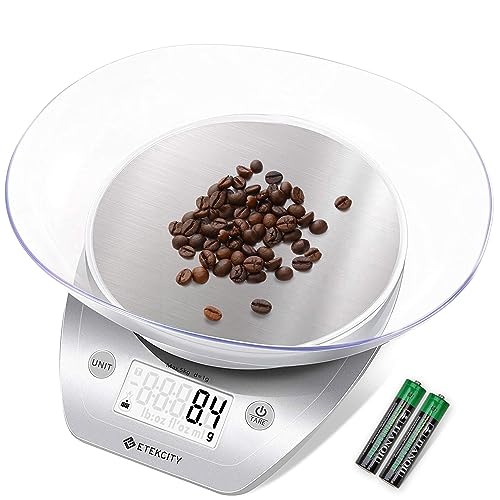


As an Amazon Associate, Measuring Expert earns from qualifying purchases.
Spoon-and-Level vs Scoop vs Weight
There are three common ways to measure flour for bread, and they give different amounts. King Arthur’s recipes assume 1 cup of flour weighs 120 grams. The company also says that packing flour into a cup can push the amount up to 160 grams, which is 40 grams more, or about a third.
| Method | How it works | Typical result per cup | Consistency |
|---|---|---|---|
| Weight (scale) | Pour flour into a bowl until the scale shows the target | 120 g, exactly as set | Highest |
| Fluff, spoon and level | Stir the flour, spoon it into the cup, sweep the top flat | About 120 g (King Arthur) | Good if done the same way each time |
| Fluff, scoop and level | Fluff, scoop with the cup, then level | About 120 g with care (King Arthur) | Medium |
| Dip and sweep, or packed | Push the cup into the bag and level | Up to 160 g | Low |
However, the difference is not the cup. Instead, it comes from how tightly the flour sits when it lands in the cup. Flour settles in the bag, so a cup pushed into it compresses the powder.
How to Measure Flour for Bread Step by Step
- Choose your method. A scale is best. Use cups only if no scale is available.
- Set up the scale. Place your mixing bowl on it, switch to grams, and press tare.
- Look up the target weight. Use the recipe’s grams, or multiply cups by 120 for all-purpose or bread flour.
- Add flour gradually. Spoon or pour until the display reaches the target. Stop a few grams early, then add the last bit slowly.
- Tare again for the next ingredient. Water, salt and yeast can go into the same bowl, one at a time.
- If using cups, fluff first. Stir the flour in its container with a spoon to loosen it.
- Spoon and level. Fill the cup until it overflows, then sweep a straight edge across the top without pressing down.
Grams per Cup to Measure Flour for Bread
This chart uses King Arthur’s published weights. US ounces are rounded to two decimals, using 28.3495 g per ounce.
| Ingredient | Grams per cup | Ounces per cup | Per 1/2 cup |
|---|---|---|---|
| All-purpose flour | 120 g | 4.23 oz | 60 g |
| Bread flour | 120 g | 4.23 oz | 60 g |
| Whole wheat flour (100%) | 113 g | 3.99 oz | 56.5 g |
| Medium rye flour | 106 g | 3.74 oz | 53 g |
| Semolina flour | 163 g | 5.75 oz | 81.5 g |
| Water | 227 g | 8.01 oz | 113.5 g |
However, these values assume the weight chart’s own measuring method, so a packed cup will not match. For more on ounces as a weight, see how much an ounce is.
What a Flour Error Does to Bread Dough
First, bread bakers talk about hydration, which is the weight of water divided by the weight of flour. Because water is usually measured well, the flour is where hydration goes wrong. For example, the math is simple enough to check yourself.
Suppose a recipe asks for 3 cups of flour and 1 1/4 cups of water. At 120 grams per cup, the flour weighs 360 grams. The water weighs about 284 grams, using 227 grams per cup. Hydration is therefore 284 divided by 360, which is about 79 percent, a soft and sticky dough.
Now scoop the same 3 cups at 160 grams each. The flour weighs 480 grams, and the same 284 grams of water gives only 59 percent hydration. As a result, the dough turns stiff, rises less, and bakes into a tighter crumb. Nothing changed except how the flour was measured.
| Flour measure | Flour weight | Water | Hydration |
|---|---|---|---|
| 3 level, fluffed cups | 360 g | 284 g | 79% |
| 3 packed cups | 480 g | 284 g | 59% |
Measure Flour for Bread by Flour Type
Also, different flours do not weigh the same per cup. Whole wheat is a little lighter than white flour in King Arthur’s chart, and medium rye is lighter still. Meanwhile, semolina is much heavier. Consequently, a recipe that swaps one flour for another by cups will not hold the same dough weight.
Therefore, when a recipe gives weights, use them. If it only gives cups, convert with the chart above and then weigh the result. Moreover, check the recipe’s own note on how it measured cups, since publishers do not all use the same cup weight.
Bread flour and all-purpose flour match at 120 grams per cup in the chart. They differ in protein, though, not in cup weight. For other grain-based recipes, our guides on measuring ingredients for pancakes and waffles and on vegan baking measurements show the same weight-first approach.
Do and Don’t When You Measure Flour for Bread
Do
- Weigh flour in grams whenever you can.
- Press tare after adding each ingredient.
- Fluff flour before a cup measure.
- Level with a straight edge, without pressing.
- Write your weights on the recipe.
Don’t
- Dip the cup into the bag and pack it.
- Tap or shake the cup to settle the flour.
- Use a liquid measuring cup for flour.
- Assume all flours weigh 120 grams per cup.
- Add extra flour just because the dough feels sticky.
Common Mistakes When You Measure Flour for Bread
Overall, most errors come from habit, not from a lack of skill. First, many bakers dip and sweep because it is fast. Second, some use a liquid measuring cup, which cannot be leveled well. Third, they add flour during kneading to fight stickiness, which quietly lowers hydration.
Instead of adding flour, wait for a while. Dough often feels sticky early and smooths out as the gluten develops and the flour absorbs water. A rest of 15 to 30 minutes, often called an autolyse, helps in many recipes. Then judge the dough, not the first minute.
Scale accuracy also matters. For example, check that your scale is on a flat surface, set to grams, and has fresh batteries. Weigh a known item, such as a sealed 1-pound bag of flour, which should read about 454 grams.
Honest Limits of Flour Measurements
However, weights in a chart are averages from one test method. Brands vary, and so do humidity and storage. In addition, a home scale usually reads to the nearest gram, so tiny amounts of yeast or salt are better measured with a scale that reads to 0.1 gram or with measuring spoons.
Therefore, treat the chart as a starting point and the dough as the final judge. If your loaves come out dense or flat even with correct weights, look at oven temperature, yeast freshness and proofing time next.
When to Ask an Expert
Finally, for persistent problems, a baking class, a local baker or the recipe author’s help line can save time. Also, allergy or diet questions, such as wheat or gluten avoidance, belong with a doctor or dietitian.
Frequently Asked Questions
What is the best way to measure flour for bread?
Weigh it on a digital scale. King Arthur lists 120 grams per cup for all-purpose and bread flour. A scale removes the packing error that comes with cups.
How many grams is a cup of bread flour?
King Arthur’s weight chart lists bread flour at 120 grams, or 4.23 ounces, per cup.
How do I measure flour without a scale?
Fluff the flour with a spoon, spoon it into the cup until it overflows, then level it with a straight edge without pressing down.
Why does scooping flour add too much?
Pushing a cup into the bag compresses the flour. King Arthur says a packed cup can hold up to 160 grams, which is 40 grams more than 120.
Should I sift flour before measuring?
Only if the recipe says so. Sifting before or after changes a cup measure, but a scale gives the same weight either way.
Does whole wheat flour weigh the same as white flour?
No. King Arthur lists 100 percent whole wheat at 113 grams per cup, compared with 120 grams for bread flour.
How many ounces is a cup of flour?
A cup of all-purpose or bread flour at 120 grams is about 4.23 ounces by weight.
Can I use a liquid measuring cup for flour?
It is not recommended. Liquid cups have extra headspace and cannot be leveled, so the amount is hard to repeat.
How much does too much flour change bread dough?
A lot. In the example above, 3 packed cups instead of 3 fluffed cups drops hydration from about 79 percent to about 59 percent with the same water.
Is this guide the same as the sourdough measuring guide?
No. This page covers flour technique for any bread. The sourdough guide covers starter, levain and related ingredient ratios.
Measure Flour for Bread: The Bottom Line
To sum up, a scale is the most reliable way to measure flour for bread, and 120 grams per cup is the reference for all-purpose and bread flour. Cup measuring works when you fluff, spoon and level the same way every time.
Finally, use the converter at the top of the page when a recipe and your scale use different units, and keep notes on the weights that gave you the best loaf.
2 thoughts on “Measure Flour for Bread: Spoon-and-Level vs Scoop vs Weight”