

To measure ingredients for macarons, weigh everything in grams on a digital scale instead of using cups. For example, one published recipe from King Arthur Baking uses 85 g almond flour, 100 g confectioners’ sugar, 75 g egg whites and 75 g granulated sugar. Weighing also keeps every batch the same.
Convert Macaron Ingredient Weights Between Grams and Ounces
Most macaron recipes list grams, but some US scales default to ounces. Enter a weight below, and the converter shows the same amount in ounces, pounds and milligrams using the exact definition of the avoirdupois ounce (28.349523125 g).
Macarons are unforgiving. A shell is only almond flour, sugar and whipped egg whites, so there is nowhere for a measuring error to hide. As a result, a batter that is a little too wet spreads, and one that is a little too dry leaves a lumpy top.
The good news is that the fix is simple. Instead of scooping, you weigh each ingredient, write the numbers down and repeat them. In this guide, you will see real weights from three published recipes, learn why the almond flour to sugar ratio varies, and then follow a step-by-step routine for weighing, aging and baking.
- Weigh all four shell ingredients in grams; cups cannot capture how finely almond flour or sugar is packed.
- Published recipes use different ratios, so pick one recipe and stick with its weights.
- Age egg whites in the refrigerator for at least 24 hours if your recipe says so, then bring them to room temperature.
- Most recipes bake at 320 to 325 degrees F (160 to 163 degrees C), so check your oven with a separate thermometer.
- A scale with 1 g steps is enough, but 0.1 g steps help with small amounts of salt or cream of tartar.
- Almonds are a tree nut allergen; label shells clearly if you share them.
Why You Should Measure Ingredients for Macarons by Weight
A cup holds a volume, not a mass. Finely ground almond flour and confectioners’ sugar both pack differently depending on how you scoop and shake the cup. Weight does not change with packing, so 100 g is always 100 g.
The recipe from King Arthur Baking shows this clearly. It lists 85 g of almond flour and 100 g of confectioners’ sugar, and both are given as 3/4 cup plus 2 tablespoons. In other words, the same volume weighs about 15 g more for the sugar. A single cup measure therefore cannot stand in for both, and a baker who scoops one cup of each gets a different ratio than the recipe intended.
Precision matters even at small scale. For a 75 g portion of egg whites, a 1 g error is about 1.3 percent. By comparison, a scoop that is off by a tablespoon can shift the dry mix by far more. For this reason, King Arthur Baking says to measure the egg whites by weight, and Joy of Baking recommends a digital scale.
Macaron Ingredient Weights From Three Published Recipes
There is no single official macaron formula. However, comparing recipes shows what stays steady and what moves. The table lists the shell ingredients as each source prints them, along with the oven setting.
| Ingredient | King Arthur Baking | Joy of Baking | Sally’s Baking Addiction |
|---|---|---|---|
| Almond flour | 85 g | 100 g | 125 g |
| Confectioners’ sugar | 100 g | 180 g | 125 g |
| Egg whites | 75 g | 100 g (aged) | 100 g |
| Granulated or superfine sugar | 75 g | 35 g | 80 g |
| Oven setting | 320 F (160 C) | 325 F (160 C) | 325 F (163 C) |
| Bake time | 15 to 20 min | 14 to 16 min | 13 min |
Because the recipes differ, copy one set of weights exactly. Then change a single variable at a time if the shells need adjusting. For more on weights in pastry work, see our guide to measurement in pastry making.
Almond Flour and Sugar Ratios Explained
Dividing the weights shows why the recipes look so different. The next table compares the ratios, calculated from the numbers above.
| Ratio | King Arthur | Joy of Baking | Sally’s |
|---|---|---|---|
| Almond flour to confectioners’ sugar | 0.85 : 1 | 0.56 : 1 | 1 : 1 |
| Almond flour plus confectioners’ sugar to egg whites | 2.47 : 1 | 2.8 : 1 | 2.5 : 1 |
| Granulated sugar to egg whites | 1 : 1 | 0.35 : 1 | 0.8 : 1 |
Two patterns stand out. First, the combined dry mix is about two and a half to nearly three times the weight of the egg whites in all three recipes. Second, the granulated sugar in the meringue varies the most, from 35 g to 80 g per 100 g of whites.
Consequently, no single set of numbers is the one right answer. Pick the formula whose shells you like, and then scale it by weight.
How to Measure Ingredients for Macarons Step by Step
- Set up the scale. Place it on a flat counter, switch the unit to grams and make sure it reads zero.
- Measure the egg whites. Put a clean bowl on the scale, tare it and add the whites until you reach the recipe weight.
- Weigh the almond flour. Use a separate bowl, tare again and add almond flour to the target weight.
- Add the confectioners’ sugar. Add it to the almond flour bowl or a new bowl, depending on the recipe.
- Sift the dry mix. King Arthur Baking sifts the confectioners’ sugar and almond flour together before folding them into the meringue.
- Weigh the granulated sugar. Measure it last in its own small bowl so it is ready to add to the whipping whites.
- Write down the numbers. Note each weight and the bake result, so the next batch changes only one thing.
Aging Egg Whites Before You Measure Them
Several recipes ask for aged whites. Joy of Baking says to separate the eggs at least 24 hours ahead, and up to five days, then cover the whites with a paper towel and refrigerate them. Sally’s Baking Addiction also refrigerates whites for at least 24 hours, and says it helps them whip to greater volume.
Next, bring the whites to room temperature before whipping, because the recipes weigh them at that stage. King Arthur Baking does not mention aging, but it does call for room-temperature whites measured by weight. In short, the weight is what matters most, and aging is a choice that your chosen recipe either includes or leaves out.
Recommended Tools to Measure Ingredients for Macarons
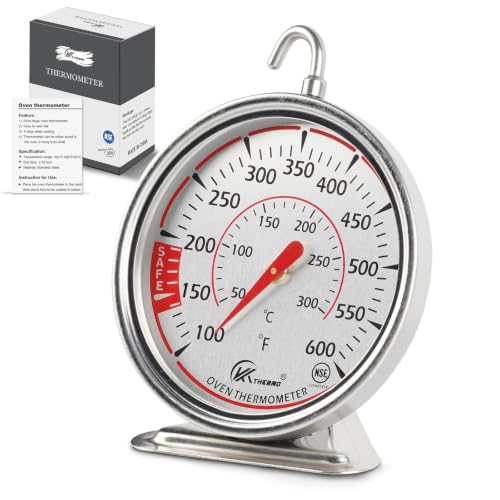
You need very little equipment. First, a digital scale that reads in 1 g steps and has a tare button. Next, a separate oven thermometer, since the recipes warn that ovens can run hot or cold. Finally, a fine sieve and a nonstick mat help with consistent shells.




As an Amazon Associate, Measuring Expert earns from qualifying purchases.
To confirm your scale is accurate, weigh a US nickel. The US Mint lists its weight as 5.00 g, so a reading far from that suggests a problem. In addition, a two-coin check, such as a nickel plus a penny (2.50 g), tests the scale at a second value.
Oven Temperature and Bake Time for Macarons
The three recipes land close together. King Arthur Baking preheats to 320 degrees F and says to use 325 degrees F if your oven moves in 25-degree steps. Joy of Baking and Sally’s Baking Addiction both use 325 degrees F. Joy of Baking also notes that other bakers use 300 or 350 degrees F.
| Degrees F | Degrees C | Where it appears |
|---|---|---|
| 300 | 149 | King Arthur lowers to this if shells brown too much |
| 320 | 160 | King Arthur Baking default |
| 325 | 163 | Joy of Baking and Sally’s Baking Addiction |
| 350 | 177 | Mentioned by Joy of Baking as a higher option |
Because ovens have a tendency to run a little hot or cold, Joy of Baking advises a free-standing oven thermometer. If your thermometer reads 25 degrees F off, set the dial to compensate. For another weighing-first approach, see our guide to measuring flour for bread.
Why Cups Fail for Almond Flour and Sugar
Cups can still help with rough planning. However, the next table shows how far apart the weights of equal volumes can be, using the King Arthur Baking figures.
| Ingredient | Volume given | Weight given | Implied weight per US cup |
|---|---|---|---|
| Almond flour | 3/4 cup + 2 tbsp | 85 g | about 97 g |
| Confectioners’ sugar | 3/4 cup + 2 tbsp | 100 g | about 114 g |
Those per-cup values are only averages from one recipe, and they change with how you fill the cup. For that reason, treat cup conversions as a backup for planning, not a way to bake. If you want to understand weight units, our page on how much an ounce is explains why a fluid ounce and a weight ounce differ.
Common Mistakes When You Measure Ingredients for Macarons
Do
- Weigh every ingredient in grams.
- Tare the bowl before each addition.
- Sift almond flour and confectioners’ sugar together.
- Use room-temperature whites.
- Check the oven with its own thermometer.
Don’t
- Swap cups for grams mid-recipe.
- Mix weights from two different recipes.
- Change several variables in one batch.
- Trust the oven dial alone.
- Weigh on a tilted or soft surface.
Honest Limits of Macaron Measurements
Exact weights get you consistency, not a guarantee. Humidity changes how fast a skin forms on the piped shells; King Arthur Baking says to rest them for at least 30 minutes, or up to 2 hours in a humid environment. Brands of almond flour also differ in fineness and oil, and ovens heat unevenly.
Therefore, expect to adjust bake time or temperature by a few minutes or degrees after the first batch. Keep notes, and change one thing at a time.
When to Check Your Equipment or Ask a Baker
If shells crack, spread or stay hollow even though your weights match the recipe, test the equipment before the recipe. First, verify the scale with coins. Next, check the oven against a separate thermometer. After that, try a different brand of almond flour. If problems continue, a local baking class or a pastry instructor can watch your technique in person.
Frequently Asked Questions
How do I measure ingredients for macarons without a scale?
You can use cups as a rough guide, but results will vary. King Arthur Baking lists 3/4 cup plus 2 tablespoons for both 85 g of almond flour and 100 g of sugar. A scale is a better choice.
What is the ratio of almond flour to sugar in macarons?
It depends on the recipe. The three recipes above use 0.85 to 1, 0.56 to 1 and 1 to 1 almond flour to confectioners’ sugar by weight.
How many grams of egg whites do I need for macarons?
The recipes above use 75 g, 100 g and 100 g of egg whites. Sally’s Baking Addiction says 100 g is usually 3 to 4 large eggs.
Do I need to age egg whites to measure ingredients for macarons?
Not always. Joy of Baking and Sally’s Baking Addiction refrigerate whites for 24 hours or more, while King Arthur Baking uses room-temperature whites without aging.
What oven temperature do macarons need?
Most recipes use 320 to 325 degrees F (160 to 163 degrees C). Some bakers use 300 or 350 degrees F, according to Joy of Baking.
How long do macarons bake?
The recipes above bake for 13 to 20 minutes, depending on the oven and the recipe. Look for set tops that release from the parchment.
Why should I use an oven thermometer for macarons?
Joy of Baking notes that ovens tend to run a little hot or cold. A separate thermometer shows the real temperature inside.
How do I measure ingredients for macarons in ounces?
Divide grams by 28.3495. For example, 100 g is 3.53 oz, and 85 g is 3.00 oz. The converter above does this for you.
How can I check that my kitchen scale is accurate?
Weigh a US nickel. The US Mint lists it at 5.00 g, so your scale should read very close to that.
Should I sift almond flour and powdered sugar?
Yes. King Arthur Baking sifts the confectioners’ sugar and almond flour together before folding them into the meringue.
Measure Ingredients for Macarons: The Bottom Line
To sum up, weigh every shell ingredient in grams, follow one recipe exactly and change one variable at a time. Use aged or room-temperature whites, depending on your recipe, and check the oven with its own thermometer.
Finally, keep a short log of weights, oven settings and results. After a few batches, your own notes will tell you more than any single recipe can. Sources: King Arthur Baking, Joy of Baking, Sally’s Baking Addiction and the US Mint.