

Measurement in pastry making decides whether dough turns out flaky, tender or tough. Weighing beats scooping, because King Arthur Baking lists 1 cup of all-purpose flour at 120 g, and scooping can pack in more. Therefore, weigh flour, sugar and butter on a scale, and use spoons only for small amounts.
Weight Converter for Measurement in Pastry Making
First, type an amount of flour, sugar or butter in grams. Next, read the same weight in ounces, pounds and kilograms. As a result, you can follow a recipe written in any system without guessing.
A pastry fails quietly. For example, the dough looks fine, and the oven looks fine, but the crust comes out tough or the crumb comes out dry. In most cases, the cause is a measuring slip made ten minutes earlier. That is why precise amounts matter more in pastry than in a pot of soup.
The fix is simple. In fact, weighing is the method that professional bakers and recipe writers rely on. For example, King Arthur Baking’s ingredient weight chart gives gram values for dozens of ingredients and recommends a digital scale for best results.
In short, this guide covers the basics. Besides the weights, it shows how to weigh step by step, how to handle liquids and leaveners, and which mistakes cause the most trouble.
Pastry Ingredient Weights: Cups to Grams
First, use this chart for the ingredients that appear in most pastry recipes. The values come from King Arthur Baking’s chart. Moreover, ounce values are rounded to the nearest quarter.
| Ingredient | Volume | Ounces | Grams |
|---|---|---|---|
| All-purpose flour | 1 cup | 4 1/4 oz | 120 g |
| Cake flour | 1 cup | 4 1/4 oz | 120 g |
| Bread flour | 1 cup | 4 1/4 oz | 120 g |
| Granulated sugar | 1 cup | 7 oz | 198 g |
| Brown sugar, packed | 1 cup | 7 1/2 oz | 213 g |
| Confectioners’ sugar, unsifted | 1 cup | 4 oz | 113 g |
| Butter | 8 tbsp (1/2 cup) | 4 oz | 113 g |
| Milk | 1 cup | 8 oz | 227 g |
First, notice that three flours share one number. Even so, the flours behave differently in the dough, because their protein levels differ. In addition, one cup of sugar weighs far more than one cup of flour. For a wider look at kitchen units, see the metric system in cooking.
Recommended Tools for Measurement in Pastry Making
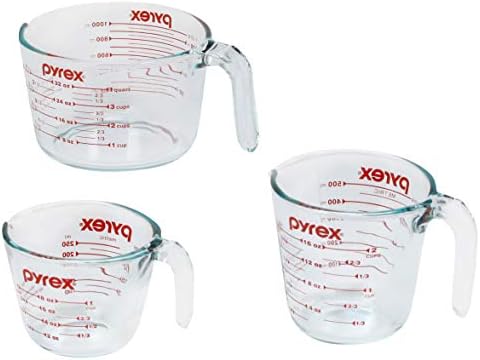
Four tools cover nearly every recipe. First, a digital scale with a tare button handles flour, sugar and butter. Next, a set of level measuring spoons covers salt and leaveners. Also, a clear liquid measuring cup works for milk and cream. Finally, nesting dry cups help when a recipe lists volumes only.



As an Amazon Associate, Measuring Expert earns from qualifying purchases.
Key Takeaways
- First, weigh flour, sugar and butter whenever the recipe lists grams.
- Also, 1 cup of all-purpose flour is 120 g, while 1 cup of granulated sugar is 198 g.
- In addition, a US stick of butter is 113 g, or 4 oz.
- Meanwhile, spoons are best for salt, baking powder and baking soda.
- Therefore, level every spoonful with a straight edge.
- Finally, an oven thermometer shows whether the dial matches the real heat.
Why Measurement in Pastry Making Matters
Pastry has less room for error than most cooking. For example, a stew forgives an extra carrot. However, a pie crust does not forgive extra flour. In short, each ingredient has a job, and the jobs depend on ratios.
What each ingredient does
- Flour gives structure. However, too much makes the crust dense, and too little makes it crumble.
- Fat makes the dough tender and, in layered doughs, creates flaky layers.
- Sugar adds sweetness and also holds moisture and helps browning.
- Liquid binds the dough and creates steam in the oven.
- Leaveners such as baking powder lift the dough, but too much leaves a bitter taste.
Because the ingredients work together, a mistake in one throws off the others. For example, extra flour soaks up liquid, so the dough turns dry. As a result, the baker adds more water, and the crust turns tough. Precise measurement in pastry making prevents that chain reaction.
Measurement in Pastry Making: Weight vs Volume
In short, a cup measures space, while a scale measures mass. Flour is the problem ingredient, because it compresses. Spooning flour lightly into a cup gives one amount, and plunging the cup into the bag gives a larger one. By contrast, 120 g is always 120 g.
| Method | Strength | Weakness |
|---|---|---|
| Digital scale | Same result every time; fewer dishes | Needs a scale and a recipe in grams |
| Dry measuring cups | Fast; works with US recipes | Flour amount varies with the scooping method |
| Measuring spoons | Good for small amounts | Too coarse for large amounts of flour or sugar |
| Liquid measuring cup | Easy to read at eye level | Wrong for dry goods, since they cannot be leveled |
However, liquid cups and dry cups are not interchangeable. For details on the difference, read our guide to how to measure with a measuring cup. Likewise, if you ever lose a cup, this list of measuring cup substitutes helps.
How to Weigh Ingredients for Pastry Step by Step
- Set the scale on a flat surface. A wobbly counter, for example, gives a drifting reading.
- Place the empty bowl on the scale. Wait until the number settles, because it drifts at first.
- Press tare. The display returns to zero, so only the ingredient is counted.
- Add the first ingredient slowly. Stop at the target weight, because removing extra is messy.
- Tare again and add the next ingredient. This lets you weigh everything in one bowl.
- Switch to spoons for tiny amounts. Level each spoonful of salt or baking powder.
- Write down the final weights. Also, notes make the next batch easy to repeat.
For more on choosing a scale, see our page on the food scale.
Measuring Liquids, Fats and Leaveners
Liquids
First, pour milk, cream or water into a clear liquid measuring cup on a flat counter. Then bend down and read the line at eye level. Alternatively, weigh the liquid. King Arthur Baking lists 1 cup of milk at 227 g, which makes weighing easy.
Butter and other fats
A US stick of butter is 8 tablespoons, or 1/2 cup. It weighs 113 g, per King Arthur Baking. Also, most wrappers have tablespoon lines printed on them. However, a scale is more exact, and it also avoids a sticky cup.
Baking powder, baking soda and salt
These ingredients are used in tiny amounts, so even small errors show up. Therefore, use a level measuring spoon. First, stir the container to loosen it, then fill the spoon, and finally sweep a knife across the top. Never use a heaping spoon unless the recipe says so.
Measurement in Pastry Making: Common Mistakes
- Packing flour into the cup. Scooping straight from the bag compresses it, so the dough ends up dry.
- Using the wrong cup. A liquid cup cannot be leveled, and a dry cup cannot be filled to the brim without spilling.
- Mixing up tsp and tbsp. One tablespoon equals three teaspoons, so the error triples the amount.
- Skipping the tare. The bowl weight then counts as flour.
- Trusting the oven dial. Many ovens run hotter or cooler than the setting.
- Measuring over the mixing bowl. A spill then ends up in the batter.
Our guide to the measurements for fall baking shows how these mistakes play out in pies and breads.
Scaling a Pastry Recipe Up or Down
Weights make scaling easy, because you multiply every number by the same factor. For example, a recipe with 120 g of flour and 113 g of butter becomes 180 g of flour and 169.5 g of butter at 1.5 times. Likewise, half a batch needs 60 g of flour and 56.5 g of butter.
| Ingredient | Half batch | Original | 1.5 times | Double |
|---|---|---|---|---|
| Flour | 60 g | 120 g | 180 g | 240 g |
| Granulated sugar | 99 g | 198 g | 297 g | 396 g |
| Butter | 56.5 g | 113 g | 169.5 g | 226 g |
With cups, however, scaling is clumsy. Half of 1/3 cup is awkward to measure, so the error grows. Furthermore, a larger batch may need more baking time, so check for doneness instead of trusting the clock.
Oven Temperature and Time
However, measurement does not stop at the scale. Also, oven heat changes how fat melts and how dough sets. Because of that, an oven thermometer is worth having. Set the dial, wait for the preheat, and then compare it with the thermometer.
| Fahrenheit | Celsius (exact) | Common use |
|---|---|---|
| 350 F | 176.7 C | Cakes, cookies |
| 375 F | 190.6 C | Muffins, pie crusts |
| 400 F | 204.4 C | Turnovers, hand pies |
| 425 F | 218.3 C | Puff pastry, bread |
Recipes usually round these, for example 350 F to 175 C. Even so, the exact values are above in case you want them.
Do and Don’t for Accurate Pastry Measuring
Do
- Weigh flour, sugar and butter.
- Press tare before every ingredient.
- Level spoons with a straight edge.
- Read liquid cups at eye level.
- Check the oven with a thermometer.
Don’t
- Scoop flour straight from the bag.
- Swap liquid and dry cups.
- Use heaping spoons for leaveners.
- Round tiny amounts up.
- Trust the oven dial blindly.
Honest Limits of Pastry Measurements
No method is perfect. For one thing, the weights above are averages from one brand’s chart. Also, another flour or a different humidity level can shift the result slightly. Moreover, a kitchen scale reads in whole grams or tenths of a gram, so tiny amounts of salt can fall below what it can show. In short, treat the numbers as a strong starting point. Then adjust by feel, because dough that is too wet or too dry tells you what it needs.
Likewise, the NIST kitchen table rounds a cup to 240 mL, while the exact US cup is 236.588 mL. As a result, recipes written for different countries can differ by a few percent. The NIST metric kitchen table lists these approximate equivalents.
Frequently Asked Questions
Why is measurement in pastry making so important?
Pastry is a balance of flour, fat, sugar, eggs and liquid. Therefore, a small change in one of them shifts the texture, so exact amounts give flaky, tender and repeatable results.
Is weighing better than cups for measurement in pastry making?
Yes, in most cases. For example, a cup of flour can hold different amounts depending on how you fill it, whereas a scale reads the same every time. King Arthur Baking recommends weighing with a digital scale.
How much does a cup of all-purpose flour weigh?
King Arthur Baking lists 1 cup of all-purpose flour at 120 g, or 4 1/4 oz. Other brands and scooping methods can give a different weight.
How many grams are in a cup of sugar?
Per King Arthur Baking, 1 cup of granulated sugar is 198 g, packed brown sugar is 213 g, and unsifted confectioners’ sugar is 113 g.
How much does a stick of butter weigh?
A US stick is 8 tablespoons, or 1/2 cup. King Arthur Baking lists it at 113 g, which is 4 oz.
How do I measure pastry flour or cake flour accurately?
Set a bowl on the scale, press tare, and add flour until the display shows the amount in the recipe. King Arthur Baking lists cake flour at the same 120 g per cup as all-purpose.
Can better measurement in pastry making fix tough or dry dough?
Too much flour or too little fat or liquid is a common cause. As a result, weighing the flour is the first fix to try, and handling the dough less is the second.
Is measurement in pastry making different for liquids?
Yes. First, use a clear liquid measuring cup on a flat surface and read it at eye level. Alternatively, weigh the liquid, since 1 cup of milk is 227 g per King Arthur Baking.
Can I use measuring spoons for baking powder and salt?
Yes. Small amounts are hard to weigh on most kitchen scales, so level spoons work well. Sweep a straight edge across the top of each spoonful.
How accurate does measurement in pastry making need to be?
Aim for within a gram or two on small amounts and within about 1 to 2 percent on flour and sugar. Tight tolerances matter most for leaveners and salt.
Measurement in Pastry Making: The Bottom Line
To sum up, precise weights give pastry its texture. One cup of flour is 120 g, one cup of sugar is 198 g, and one stick of butter is 113 g, according to King Arthur Baking. Therefore, a scale, level spoons and an oven thermometer cover almost every need.
Finally, use the converter at the top of the page whenever a recipe lists a different unit. With a few good habits, measurement in pastry making stops being a chore and starts being the easiest part of the recipe.