

For weight loss recipes, measure ingredients with a digital kitchen scale in grams. Weight stays the same however an ingredient is packed, while cups and spoons can vary widely. Weigh each item, tare the bowl between additions, and use the numbers on the product label for any calorie math.
Convert Grams and Ounces for Weight Loss Recipes
Recipe cards often mix grams and ounces. Therefore, enter an amount below to see it in the other units. The converter uses the exact definition of the avoirdupois ounce, 28.349523125 g.
Many home cooks search for weight loss recipes and then find that the recipe card lists cups and spoons, not grams. First, this guide covers only the measuring side. It explains how to weigh ingredients, how to read a gram chart, and how to scale a recipe to a portion. In addition, it does not set calorie goals or promise any result.
In short, the reason to weigh is simple. A cup is a unit of volume, so the amount of food inside it depends on how the food is packed. A gram is a unit of mass, so it does not change. As a result, a scale gives the same answer on Monday and on Friday, and a scoop does not.
The FDA explains that serving sizes on a Nutrition Facts label reflect how much people typically eat, not how much they should eat. The same page also says that every nutrient amount on the label is for one serving. Therefore, if your portion differs from the label serving, you need to scale the numbers, and grams make that easy.
Why Weight Beats Cups in Weight Loss Recipes
King Arthur Baking states that weighing ingredients with a digital scale gives the best results, and it publishes a chart of gram weights for common foods. NIST also notes that its metric kitchen table is a set of approximate equivalents meant for home cooking. In other words, cups and spoons are handy, but they are estimates.
Three things make volume unreliable in weight loss recipes. First, dry goods settle or fluff depending on how you fill the cup. Second, sticky foods such as peanut butter leave gaps and cling to the cup. Third, a “tablespoon” of oil or honey can be level, heaping or dripping. As a result, each of these changes the amount you actually eat, and the label math that follows depends on that amount.
Gram Weights for Common Recipe Ingredients
The chart below starts from the King Arthur Baking ingredient weight chart. Per-tablespoon values come from dividing the cup weight by 16, so treat them as close estimates. In addition, brands differ, so a label weight always beats a chart.
| Ingredient | 1 cup (g) | 1 cup (oz) | 1 tbsp (g, approx.) |
|---|---|---|---|
| All-purpose flour | 120 | 4.2 | 7.5 |
| Granulated sugar | 198 | 7.0 | 12.4 |
| Brown sugar, packed | 213 | 7.5 | 13.3 |
| Rolled oats (old-fashioned) | 89 | 3.1 | 5.6 |
| Butter | 226 | 8.0 | 14.1 |
| Olive oil | 200 | 7.1 | 12.5 |
| Vegetable oil | 198 | 7.0 | 12.4 |
| Honey | 336 | 11.9 | 21.0 |
| Peanut butter | 270 | 9.5 | 16.9 |
| Milk | 227 | 8.0 | 14.2 |
Notice how far apart the numbers are. For instance, a cup of rolled oats weighs 89 g, but a cup of honey weighs 336 g. Consequently, “1 cup” tells you nothing about weight until you know the ingredient. For the ounce itself, see how much an ounce is.
Recommended Tools for Measuring Weight Loss Recipes
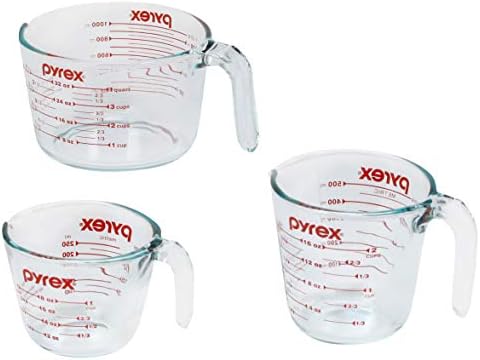
A digital scale is the one tool that does most of the work. First, look for a tare button, a display that switches between grams and ounces, and a platform large enough to hold a mixing bowl. A resolution of 1 g suits most cooking, while 0.1 g helps with small amounts such as spices or yeast. Next, a set of measuring cups and spoons covers water, broth and small seasonings, and a glass liquid cup is easier to read at eye level.




As an Amazon Associate, Measuring Expert earns from qualifying purchases.
How to Weigh Ingredients for Weight Loss Recipes
- Set up the scale. Place it on a flat, hard surface and switch it to grams.
- Put the empty bowl on the platform. Then press tare so the display reads zero.
- Add the first ingredient. Next, pour or spoon it in until the display shows the amount in the recipe.
- Tare again. The display returns to zero, so the next ingredient is measured on its own.
- Repeat for each ingredient. Also write down the final gram weights as you go.
- Weigh the finished dish. Record the total cooked weight so you can portion it later.
This one-bowl method also means fewer dishes. Moreover, it avoids the common slip of adding a second scoop because you lost count.
Label Math for Weight Loss Recipes (Arithmetic Only)
A food label lists calories for a stated serving and gives that serving in grams. To scale it, divide the label calories by the label grams, then multiply by the grams you weighed. This is only arithmetic. In other words, it does not tell you how much to eat.
You can add several ingredients the same way. For instance, suppose rolled oats list 380 calories per 100 g and you weigh 40 g, which gives 152 calories. Likewise, add the 95 calories from a 16 g spoonful of the peanut butter above. The two items total 152 + 95 = 247 calories.
Portioning a Finished Dish by Weight
Then, once a dish is cooked, weigh the whole pot and divide it. For example, if the finished dish weighs 1,200 g and you want four equal portions, each portion is 1,200 / 4 = 300 g. Equally, a portion of 300 g is 300 / 1,200 = 25 percent of the dish, so it holds 25 percent of the total ingredient calories you added up.
First, subtract the weight of the empty pot. Otherwise, the pot is counted as food. To do this, weigh the empty pot, then weigh it again when full, and subtract. Alternatively, tare the scale with the empty pot on it and pour the dish into a bowl placed on the scale.
Also, if you track the same recipe regularly, write the total cooked weight on the recipe card. That way, next time you only need one weighing. See the related guides on measuring heart-healthy meal portions and measuring flour for bread for more weight-based examples.
Common Measuring Mistakes
| Mistake | What goes wrong | Fix |
|---|---|---|
| Scooping flour straight from the bag | The cup packs down and holds more than the chart weight | Spoon into the cup and level, or weigh |
| Heaping spoonfuls of nut butter or oil | A heaping tablespoon can hold well over a level one | Weigh it straight into the pan or bowl |
| Forgetting to tare | The bowl’s weight is counted as food | Press tare with the empty bowl on the scale |
| Mixing fluid ounces and ounces | One is volume and the other is weight | Use grams on the scale and mL for liquids |
| Weighing cooked food against a raw label | Water gain or loss changes the weight | Match raw weight to the raw label |
Do
- Weigh in grams, because the numbers are finer than ounces.
- Check the scale with a known weight now and then.
- Keep the scale dry and on a level surface.
- Record the weights on the recipe card.
Don’t
- Press on the platform while it is settling.
- Weigh above the scale’s stated maximum.
- Trust a chart over the label on your product.
- Use the same weight for raw and cooked food.
Honest Limits of Kitchen Measuring
Overall, a kitchen scale is accurate, but it is not a laboratory instrument. Most models read to the nearest gram, so a 3 g spice amount can be off by a visible share. In addition, cheap scales can drift when the battery runs low. Besides, label values also have tolerances, so a calorie figure from a label is an estimate, not an exact count. For this reason, treat the numbers in this guide as a consistent way to measure, and not as a precise record of what you ate.
When to Ask a Professional
However, measuring tools cannot decide how much food is right for a particular person. A doctor or registered dietitian can answer questions about health conditions, medicines, allergies, pregnancy or eating patterns. Therefore, if you have any of those concerns, ask before you change what you eat.
Frequently Asked Questions
What is the best way to measure ingredients for weight loss recipes?
Use a digital kitchen scale and weigh in grams. Weight does not change with packing, so each batch of a recipe matches the last one.
Is it better to measure ingredients by volume or weight?
Weight is more consistent. A cup of flour can differ noticeably depending on how it is scooped, while 120 g is always 120 g.
How do I measure weight loss recipes without a scale?
Use level measuring cups and spoons, and spoon dry foods in rather than scooping. Results will vary more, so a scale is still the better choice.
How many grams are in a cup of flour?
King Arthur Baking lists 120 g for 1 cup of all-purpose flour, which is about 4.2 oz.
How many grams are in a tablespoon of olive oil?
About 12.5 g, based on the King Arthur figure of 50 g for 1/4 cup. That is roughly 0.44 oz.
Should I weigh food before or after cooking?
Weigh raw food when you use a raw label. Weigh the finished dish only to split it into equal portions.
What does tare mean on a kitchen scale?
Tare resets the display to zero with a container on the platform, so the scale shows only what you add.
How do I calculate calories per gram from a label?
Divide the label calories by the label serving in grams. For example, 190 calories for 32 g is 5.94 calories per gram.
Does a 0.1 g scale make weight loss recipes more accurate?
Only for tiny amounts. For most ingredients a 1 g scale is enough, and the label tolerance is larger than the scale error.
Can this guide tell me how much to eat?
No. It explains measuring only. Ask a doctor or registered dietitian about your own needs.
Weight Loss Recipes: The Bottom Line
In short, a scale in grams is the most reliable way to measure ingredients for weight loss recipes. Weigh raw ingredients, tare between additions, and divide the cooked dish by weight to portion it.
Finally, use the converter at the top of this page for grams, ounces and pounds. Keep in mind that the math here is arithmetic, and a professional should guide any decisions about your own diet.