

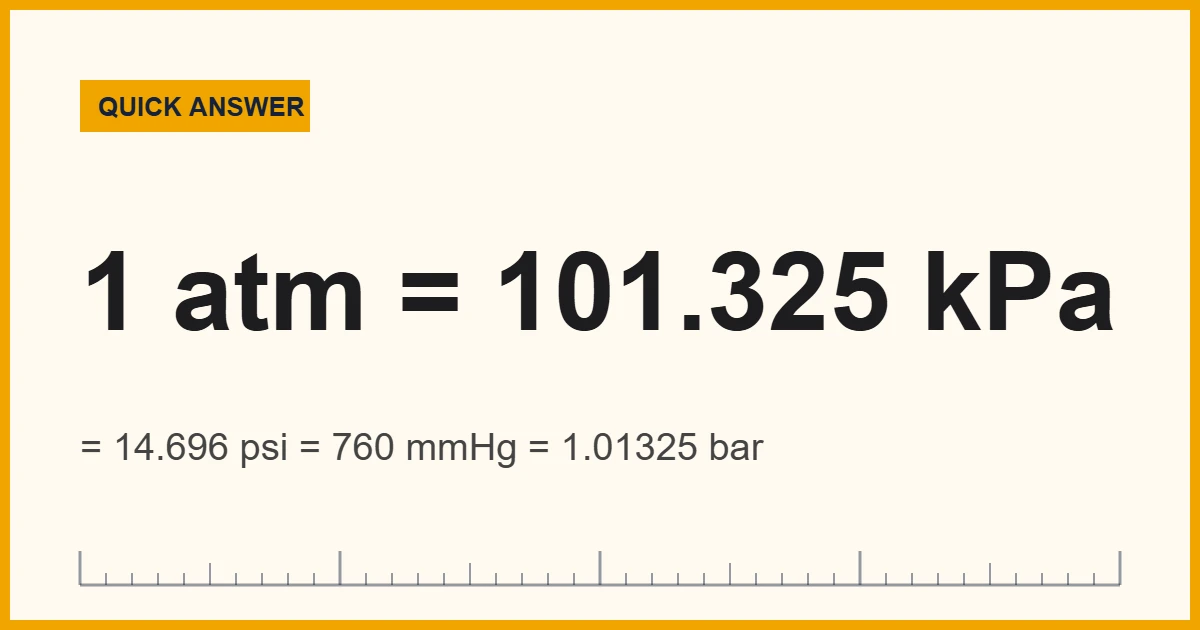
The pressure of a gas is the force its molecules exert on each unit of area, so you describe it in pressure units: pascals (Pa) or kilopascals (kPa) in science, atmospheres (atm), bar, pounds per square inch (psi), or millimeters of mercury (mmHg, also torr). For example, 1 atm = 101.325 kPa = 14.696 psi = 760 mmHg.
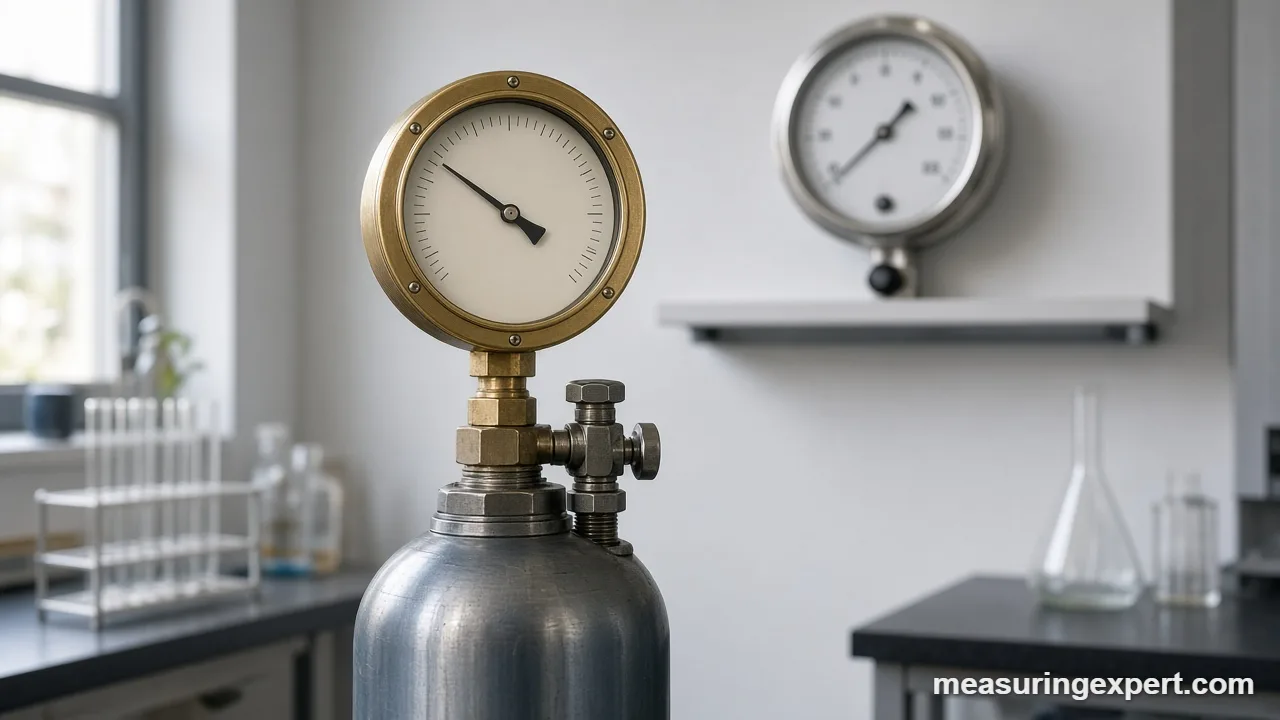
To start, gas molecules never sit still. Instead, they fly around and bounce off every wall of their container, and each bounce gives the wall a tiny push. Now add up billions of those pushes on one square meter, or one square inch, and you get a pressure reading. That is why chemistry teachers say pressure “describes” a gas, along with its volume, temperature and amount.
Which Measurement Describes the Pressure of a Gas?
So which measurement describes it? Pressure does, and you can express it in several units that all mean the same physical thing: force divided by area. For example, scientists use the pascal because it is the SI unit. Meanwhile, tire shops in the US use psi, weather maps use millibars or inches of mercury, and doctors still record blood pressure in mmHg. Because every unit measures the same quantity, you can convert between them with a fixed factor.
In short: pressure is the measurement, and Pa, kPa, atm, bar, psi and mmHg are simply different rulers for it.
The conversion factors on this page come from the US National Institute of Standards and Technology. Its Guide to the SI, Appendix B.8 lists the standard atmosphere as exactly 101,325 Pa and the bar as exactly 100,000 Pa. In addition, NOAA’s JetStream air pressure page gives standard sea-level air pressure as 29.92 inches of mercury, or 1013.25 hectopascals.
Below, you can first convert your own reading. After that, you will find the units side by side, how barometers and gauges work, and finally the difference between gauge and absolute pressure, which trips up many students.
Convert a Gas Pressure Reading
First, type a value and pick its unit. The converter then shows the same pressure in every common unit, using the exact NIST factors. For instance, enter 32 psi to see a typical car tire reading in kPa and bar.
Recommended Tools for Measuring Gas Pressure
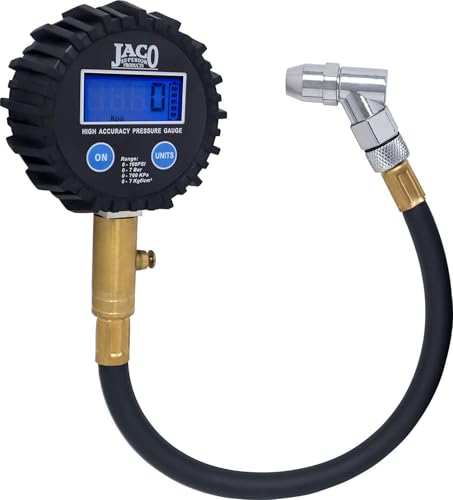
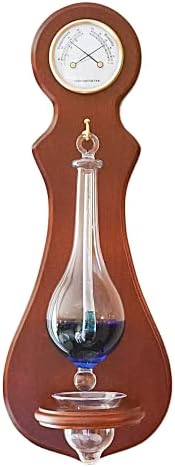
The right instrument depends on what you need to read. First, a digital tire gauge covers car and bike tires. Next, a panel-mount digital gauge suits compressors and lab gas lines. For small differences, such as furnace gas or duct pressure, a manometer reads in inches of water. Finally, a barometer tracks the air pressure around you. In addition, look for a stated accuracy (for example, plus or minus 0.25% of full scale) and a range that puts your normal reading near the middle of the scale.



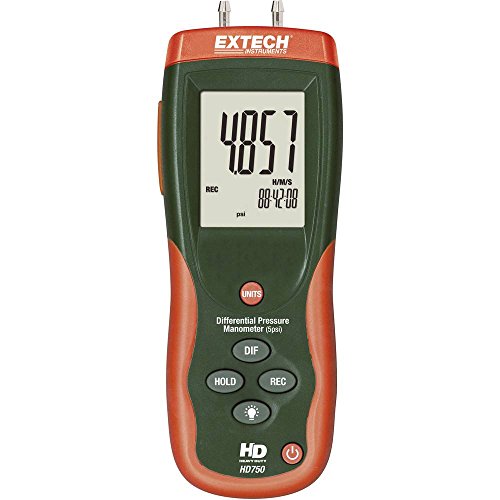
As an Amazon Associate, Measuring Expert earns from qualifying purchases.
Key Takeaways
- In short, pressure is force divided by area; one pascal equals one newton per square meter.
- Standard sea-level air pressure is 101,325 Pa, which equals 1 atm, 14.696 psi, 760 mmHg or 29.92 inHg.
- By comparison, one bar is 100 kPa, slightly less than 1 atm; one millibar equals one hectopascal.
- Torr and mmHg differ by less than one part in a million, so you can treat them as equal.
- Most gauges show gauge pressure, which is absolute pressure minus the air pressure around you.
- Therefore, gas law math (PV = nRT) always needs absolute pressure and kelvins.
- Finally, barometers read air pressure, while manometers and Bourdon gauges read the pressure inside a system.
Units for the Pressure of a Gas, Side by Side
To compare them, each row below describes one standard atmosphere in a different unit. Also, the last column tells you where you will most likely meet that unit.
| Unit | Symbol | 1 atm equals | Exact or defined value | Where you see it |
|---|---|---|---|---|
| Pascal | Pa | 101,325 Pa | 1 Pa = 1 N/m² | SI unit, science and engineering |
| Kilopascal | kPa | 101.325 kPa | 1 kPa = 1,000 Pa | Chemistry class, tire sidewalls, Canada and Europe |
| Hectopascal / millibar | hPa / mbar | 1013.25 hPa | 1 hPa = 100 Pa = 1 mbar | Weather maps outside the US |
| Bar | bar | 1.01325 bar | 1 bar = 100,000 Pa | Scuba tanks, pumps, European tire specs |
| Atmosphere | atm | 1 atm | 1 atm = 101,325 Pa | Chemistry problems, diving depth |
| Pound per square inch | psi | 14.696 psi | 1 psi = 6.894757 kPa | US tires, compressors, gas cylinders |
| Millimeter of mercury | mmHg | 760 mmHg | 1 mmHg = 133.322 Pa | Blood pressure, vacuum work |
| Torr | Torr | 760 Torr | 1 Torr = 1/760 atm | Vacuum systems, lab gas work |
| Inch of mercury | inHg | 29.92 inHg | 1 inHg = 3.386 kPa | US weather reports, aviation altimeters |
| Inch of water | inH2O | 406.8 inH2O | 1 inH2O = 249.09 Pa | HVAC ducts, natural gas appliances |
For instance, notice how small the inch of water is. A furnace burner may run on about 3.5 inches of water, which is only about 0.13 psi. By contrast, a full scuba tank holds around 3,000 psi, or about 207 bar. As a result, no single unit is convenient for every job, and that is why so many units survive.
Why the Pascal Describes the Pressure of a Gas in SI
To begin with, the SI system builds every unit from a few base units. Pressure is force per area, force is mass times acceleration, and therefore one pascal equals one newton on one square meter. That is a very small push; for instance, a sheet of printer paper lying flat presses on a table with less than one pascal. For that reason, chemists usually quote kPa, and meteorologists use hPa.
Moreover, the pascal makes the ideal gas law tidy. If you measure volume in cubic meters, temperature in kelvins and amount in moles, then the gas constant R = 8.314 J/(mol K) gives pressure straight in pascals. Similarly, if you work in liters, kPa pairs nicely with R = 8.314 L kPa/(mol K). For more on how SI and other systems fit together in the lab, see our guide to measurement units in chemistry.
How Barometers and Gauges Measure the Pressure of a Gas
In general, every pressure instrument compares a force with something it already knows. Even so, the design changes with the job. Below, you will find the main types and what each one actually reads.
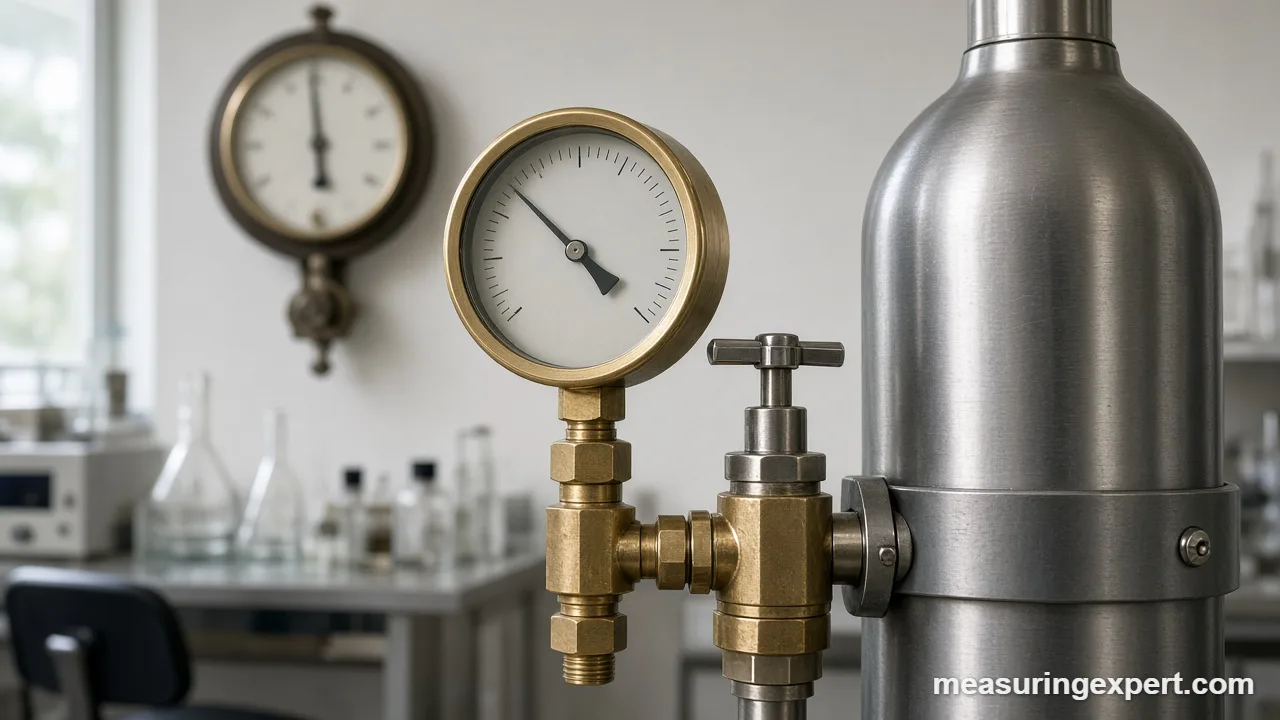
| Instrument | How it works | What it reads | Typical units |
|---|---|---|---|
| Mercury barometer | Air pushes a column of mercury up a sealed glass tube; meanwhile, the column height balances the air pressure. | Absolute air pressure | mmHg, inHg |
| Aneroid barometer | A sealed, flexible metal capsule squeezes or expands as air pressure changes, and levers move a needle. | Absolute air pressure | hPa, inHg |
| U-tube manometer | Here, liquid in a U-shaped tube shifts until the height difference balances the two pressures. | Difference between two pressures | inH2O, mmHg |
| Bourdon tube gauge | A curved, flattened tube tries to straighten under pressure, so it drives a dial needle. | Gauge pressure | psi, bar, kPa |
| Digital transducer | A thin diaphragm flexes, and then strain sensors turn the flex into an electrical signal. | Gauge, absolute or differential | Any, user selectable |
In fact, the mercury barometer explains why mmHg exists at all. At sea level, average air holds up a column of mercury about 760 mm tall. Meanwhile, water is about 13.6 times less dense than mercury, so the same air would hold up roughly 10.3 m (33.9 ft) of water. That is why, in practice, nobody builds water barometers for the home. To see how forecasters use these readings, read our explainer on how air pressure and weather are related.
Gauge vs Absolute Pressure of a Gas
Above all, this distinction causes the most wrong answers. A tire gauge that reads 32 psi does not mean the air inside sits at 32 psi in total. Rather, it means the air is 32 psi above the air outside. Then add about 14.7 psi of atmosphere, and the absolute pressure inside the tire is about 46.7 psi.
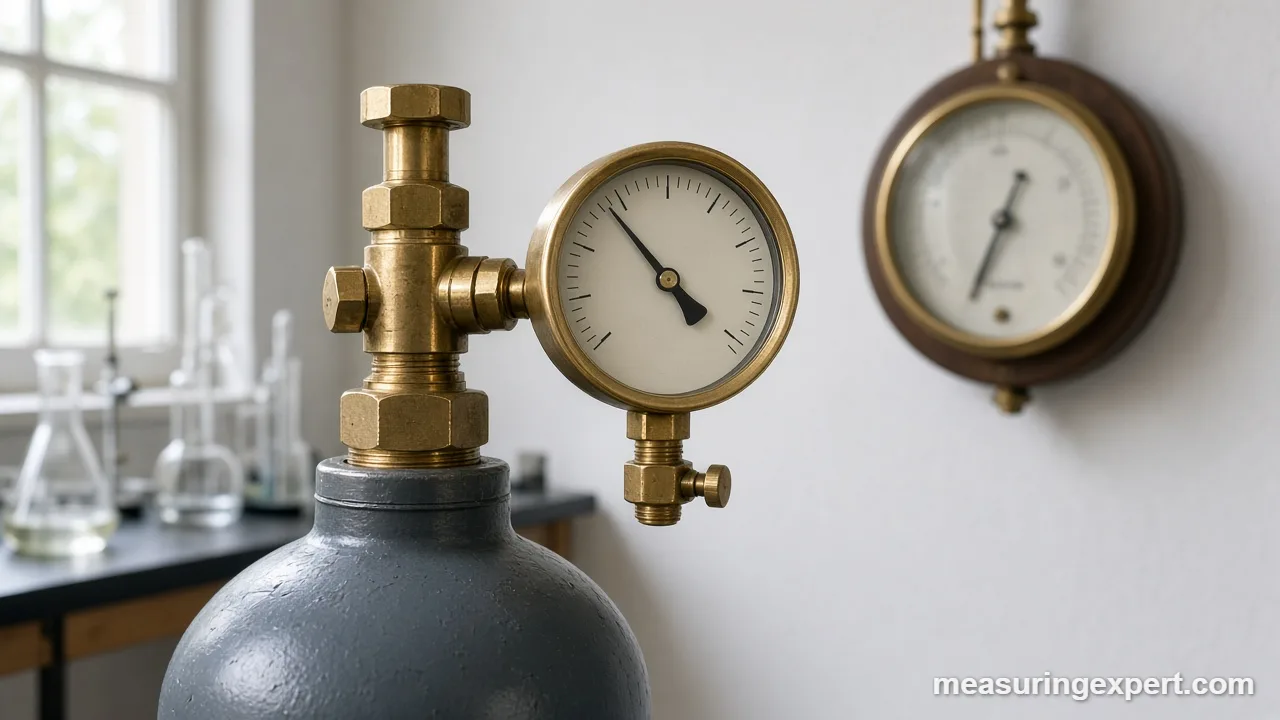
| Type | Zero point | Common labels | Example |
|---|---|---|---|
| Absolute | Perfect vacuum | psia, kPa(a), bar(a) | Sea-level air: 14.7 psia, 101.3 kPa |
| Gauge | Local air pressure | psig, kPa(g), barg | Car tire: 32 psig, about 221 kPa(g) |
| Differential | A second pressure you choose | psid, inH2O | Air filter drop: 0.5 inH2O |
| Vacuum | Local air, counted downward | inHg vacuum, Torr | Vacuum chamber: 1 Torr absolute |
The rule is simple: absolute pressure = gauge pressure + atmospheric pressure. So when a textbook problem gives a gauge reading, convert it to absolute before you plug it into any gas law. Otherwise, your answer for volume or moles can be off by a factor of two or more at low readings.
How to Convert a Gas Pressure Reading
- Identify the unit. Read the label on the dial or display: psi, kPa, bar, inHg or mmHg.
- Decide whether it is gauge or absolute. Look for a “g” or “a” after the unit, or check the manual; most tire and line gauges read gauge pressure.
- Add the atmosphere if you need absolute. Add 14.7 psi, 101.3 kPa or 1.013 bar, or better, the local barometric reading.
- Convert to pascals. Multiply by the factor from the table above, or type the value into the converter.
- Convert to the target unit. After that, divide the pascal value by the target unit’s factor.
- Round sensibly. Keep only as many digits as your instrument can actually resolve.
For example, take a 2.2 bar reading from a European tire chart. First, 2.2 bar equals 220,000 Pa. Next, dividing by 6,894.76 Pa per psi gives about 31.9 psi, so you would set your US gauge to 32 psi.
Pressure and the Ideal Gas Law
Pressure is one of four quantities that together describe a gas: pressure (P), volume (V), amount in moles (n) and temperature (T). The ideal gas law ties them together as PV = nRT. Because of that link, you can calculate pressure from the other three, which is what the old “P = nRT/V” formula means.
Here is a worked example. First, put 2 moles of gas in a 10 L (0.010 cubic meter) container at 300 K. Then P = 2 x 8.314 x 300 / 0.010, which gives about 498,900 Pa. In other words, that works out to roughly 499 kPa, 4.92 atm or 72.4 psi absolute. Likewise, one mole at 0 degrees C (273.15 K) in 22.414 L gives almost exactly 101.3 kPa, which is why chemists once quoted 22.4 L as the molar volume at STP.
Of course, real gases drift from this law at high pressure and low temperature, because their molecules take up space and attract each other. Even so, for air near room conditions the ideal gas law stays within a fraction of a percent. If you are also measuring the container itself, our guide to how volume is measured in chemistry covers the glassware and units.
Everyday Examples of Gas Pressure
After all, numbers make more sense with real objects next to them. So here are common pressures, each converted with the NIST factors.
| Situation | Typical reading | Converted |
|---|---|---|
| Sea-level air (standard) | 29.92 inHg | 101.3 kPa, 14.70 psi, 1013 hPa |
| Denver, 5,280 ft (standard atmosphere) | about 83.4 kPa | about 12.1 psi, 24.6 inHg |
| Car tire (gauge) | 32 psi | about 221 kPa, 2.2 bar |
| Blood pressure (gauge) | 120/80 mmHg | about 16.0/10.7 kPa |
| Home furnace gas (gauge) | 3.5 inH2O | about 0.87 kPa, 0.13 psi |
| Full scuba tank (gauge) | 3,000 psi | about 207 bar |
| 10 m (33 ft) under the sea | about 1 atm extra | about 2 atm absolute |
Do and Don’t When Reading Gas Pressure
Do
- Check whether a reading is gauge or absolute.
- Also use kelvins and absolute pressure in gas laws.
- Pick a gauge range about twice your normal reading, for example 0 to 60 psi for tires.
- Read tire pressure cold, so check it before driving.
- Zero a digital gauge at room pressure first, then connect it.
Don’t
- Mix bar and atm; they differ by about 1.3%.
- Exceed a gauge’s maximum rated pressure.
- Use a water manometer on high-pressure lines, because it can blow out.
- Assume a weather report shows station pressure, because forecasts adjust it to sea level.
- Round 14.696 psi to 15 in precise work.
Honest Limits of Pressure Readings
First of all, every gauge has an accuracy rating, and cheap ones can be off by a few percent. In addition, accuracy is usually stated as a percent of full scale, not of the reading. For example, a 0 to 300 psi gauge rated at 1% can therefore be 3 psi off at any point, which matters a lot at 30 psi. Likewise, temperature shifts readings: a sealed gas gains pressure as it warms, so a tire checked in the sun reads higher than the same tire at dawn. Finally, weather reports adjust station pressure to sea level, so your home barometer will not match the forecast unless you set it for your altitude.
When to Call a Professional
Generally, reading a tire gauge or a classroom barometer is a do-it-yourself job. However, natural gas and propane lines, compressed gas cylinders and pressure vessels are different. A licensed gas fitter or HVAC technician should test appliance gas pressure, and a calibration lab should check any gauge you rely on for safety or legal records. Similarly, see a doctor or nurse for blood pressure questions.
Frequently Asked Questions
Which measurement describes the pressure of a gas?
Pressure itself, meaning force per unit area. You can express it in pascals, kilopascals, atmospheres, bar, psi, mmHg or torr.
What is the SI unit for the pressure of a gas?
The pascal (Pa), equal to one newton per square meter. In practice, chemists often use kilopascals (kPa) because one pascal is tiny.
How many kPa are in 1 atm?
One standard atmosphere equals exactly 101.325 kPa, which is also 14.696 psi and 760 mmHg.
Is 1 bar the same as 1 atm?
No, but they are close. One bar is 100 kPa, while 1 atm is 101.325 kPa, so 1 atm is about 1.3% larger.
What is the difference between torr and mmHg?
Torr is defined as 1/760 of an atmosphere, and mmHg comes from a mercury column. They differ by less than one part in a million.
How do you measure the pressure of a gas in a container?
Connect a pressure gauge, a manometer or a digital transducer to the container. Then add atmospheric pressure if the instrument reads gauge pressure.
What instrument measures air pressure?
A barometer. Mercury barometers use a column of mercury, while aneroid and digital barometers use a sealed capsule or a sensor.
What is gauge pressure?
Gauge pressure is the pressure above the surrounding air. To get absolute pressure, add the atmospheric pressure, about 14.7 psi at sea level.
How is the pressure of a gas calculated?
Use the ideal gas law, P = nRT/V, with absolute temperature in kelvins. With R = 8.314 and volume in cubic meters, the answer comes out in pascals.
Why does gas pressure rise when you heat a sealed container?
Hotter molecules move faster and hit the walls harder and more often. At a fixed volume, pressure therefore rises in proportion to absolute temperature.
The Bottom Line on Gas Pressure
To sum up, pressure is the measurement that describes how hard a gas pushes, and every unit you meet, from pascals to psi, measures that same force per area. In particular, one standard atmosphere ties them together: 101.325 kPa, 14.696 psi, 760 mmHg, 1.01325 bar and 29.92 inHg.
Next time you take a reading, first check whether it is gauge or absolute, then convert with the calculator at the top of this page. For gas law problems, always switch to absolute pressure and kelvins first.
1 thought on “Which Measurement Describes the Pressure of a Gas? Units, Gauges and Gauge vs Absolute”