

Measuring tools fall into six families by what they measure: length, volume, mass, temperature, angle and time. Pick the family first, then match the tool’s range and resolution to your job. A tape measure suits a room, a caliper suits a bolt, and a kitchen scale suits flour.
People search for measuring tools when a job needs a number and they are not sure which instrument gives it. In short, the answer depends on the quantity, the size of the thing, and how close the result has to be. For example, a carpenter cutting a stud can live with a sixteenth of an inch, while a machinist checking a shaft cannot.
This guide works as a hub. First, it sorts measuring tools by what they measure. Next, it explains accuracy, precision and resolution, which are often mixed up. After that, it shows how to choose, check and care for an instrument, and it links to our detailed buying guides for each family.
The standards behind every tool are shared. For instance, the US National Institute of Standards and Technology (NIST) lists the seven SI base units, including the meter for length, the kilogram for mass, the second for time and the kelvin for temperature. As a result, a well-made tape, scale or thermometer anywhere in the world can be traced back to the same definitions.
Convert Length Units: Inches, Feet and Meters
Length is the quantity most measuring tools report, and it is also where inch and metric scales collide. Type a value below, pick its unit, and the converter shows the others using exact definitions (1 inch = 25.4 mm).
Recommended Measuring Tools to Start With
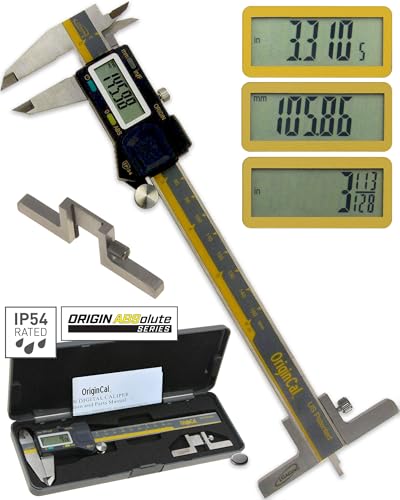
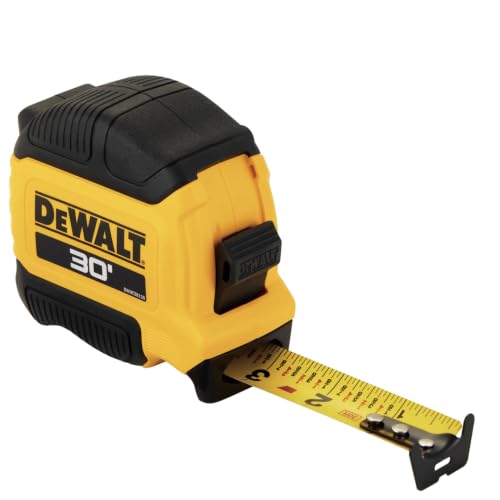
You do not need a full workshop. Instead, one reliable instrument per family covers most households. The list below mixes a tape measure, a digital caliper, a kitchen scale, an infrared thermometer and a laser distance measurer, so you can see how different measuring tools approach different quantities.



As an Amazon Associate, Measuring Expert earns from qualifying purchases.
Key Takeaways
- Measuring tools are easiest to choose by quantity: length, volume, mass, temperature, angle or time.
- Accuracy is closeness to the true value; precision is repeatability; resolution is the smallest step the display or scale shows.
- A tool with fine resolution can still be inaccurate, so check the spec sheet for stated accuracy.
- Pick a range that fits the job, because the best readings sit well inside a tool’s range.
- Take two or three readings and compare them before you trust one number.
- Check against a known reference regularly; dropped or worn tools drift.
- For safety, medical or legal work, use a calibrated instrument and a qualified professional.
Types of Measuring Tools by What They Measure
Every instrument turns a physical quantity into a number you can read. Therefore, the quickest way to narrow your options is to start with the quantity. The six families below cover almost everything a home, shop or kitchen needs.
Measuring Tools for Length and Distance
Length tools range from rulers to lasers. For example, a steel rule or tape measure handles most layout work. In addition, a tape’s hook end slides slightly so that inside and outside readings both come out right. For small parts, a digital caliper reads thousandths of an inch or hundredths of a millimeter, and our guide to the best digital calipers explains what to look for. Across a whole room, a laser distance measurer is faster than a tape; see the best laser distance measurers. Meanwhile, if you want a sturdy general-purpose tape, start with our best tape measure roundup.
Measuring Tools for Volume
Volume tools hold or deliver a known amount of liquid or powder. First, in the kitchen, nested measuring cups and spoons do the job. In a lab or workshop, graduated cylinders and beakers show the level against a printed scale. When you read one, however, put your eye level with the surface and read the bottom of the curved meniscus. Beakers are rougher than cylinders, so they suit mixing more than exact dosing; our guide to laboratory beakers covers the differences.
Measuring Tools for Mass and Weight
Scales and balances measure mass, even though people say weight. Also, a kitchen scale reads grams and ounces, so it is the easiest way to get consistent baking results. Because a cup of flour can vary a lot depending on how it is packed, weighing beats scooping. Our best kitchen scale guide compares the main features, such as tare, capacity and resolution.
Measuring Tools for Temperature
Thermometers cover cooking, weather, HVAC and health. Probe thermometers, for instance, touch the item. Infrared models read surface temperature from a distance, but they only see the surface and can be fooled by shiny materials. For reference, water freezes at 0 degrees C (32 degrees F) and boils at 100 degrees C (212 degrees F) at standard sea-level pressure, which makes an ice bath a handy check. Browse our best thermometer guide for options by use.
Measuring Tools for Angle and Slope
Angle tools include protractors, angle finders, bevel gauges and inclinometers. In geometry, a right angle is 90 degrees and a full turn is 360 degrees. For drawing and school work, a clear protractor is enough; see the best protractor picks. For roof pitch, ramps or stairs, an inclinometer reads slope directly, as our best inclinometer guide explains.
Measuring Tools for Time
Clocks, timers and stopwatches measure time. Specifically, the second is defined by the frequency of a cesium-133 atom (9,192,631,770 cycles), which is why atomic clocks keep the world’s reference time. For sports, labs and cooking, a stopwatch or timer is enough; in short, pick one with a split or lap function if you need intervals. We compare current models in the best stopwatch guide.
Measuring Tools at a Glance
Use this table to match a quantity to its unit and to common tools. It also shows what a reader typically needs to check on the spec sheet.
| Quantity | SI unit | Common measuring tools | Check on the spec sheet |
|---|---|---|---|
| Length | meter (m) | Ruler, tape measure, caliper, laser distance measurer | Range, resolution, stated accuracy |
| Volume | cubic meter (liter in daily use) | Measuring cup and spoons, graduated cylinder, beaker | Graduation step, tolerance class |
| Mass | kilogram (kg) | Kitchen scale, pocket scale, balance | Capacity, readability in g |
| Temperature | kelvin (K); degrees C and F in daily use | Probe, infrared and glass thermometers | Range, response time, accuracy band |
| Angle | radian; degrees in daily use | Protractor, angle finder, inclinometer | Range, resolution in degrees |
| Time | second (s) | Stopwatch, timer, clock | Resolution, lap or split memory |
Most of these quantities have a metric and a US customary version. For example, 1 inch is exactly 2.54 cm, 1 pound is 453.59 g, and 1 US gallon is about 3.785 L.
Accuracy vs Precision vs Resolution in Measuring Tools
These three words appear on every spec sheet, but they mean different things. Mixing them up leads people to buy a tool with many digits and assume it is correct. Consequently, it helps to see them side by side.
| Term | What it means | Example |
|---|---|---|
| Accuracy | How close a reading is to the true value | A scale reads 500 g for a certified 500 g weight |
| Precision (repeatability) | How close repeated readings are to each other | The same scale reads 503 g every time |
| Resolution | The smallest step the display or scale can show | A scale that shows 1 g steps versus 0.1 g steps |
In the example above, the scale is precise but not accurate, because it repeats a wrong number. Similarly, a digital caliper that shows 0.01 mm may only be accurate to 0.03 mm or worse. In short, resolution is not accuracy.
How to Choose Measuring Tools for a Job
- Name the quantity. Decide whether you need length, volume, mass, temperature, angle or time.
- Estimate the size. A bolt, a bookshelf and a room need different ranges, so write down the smallest and largest value you expect.
- Set the tolerance. Decide how close the result must be, such as 1/16 inch for framing or 1 g for baking.
- Match range and resolution. Choose a tool whose resolution is at least a few times finer than your tolerance.
- Check the stated accuracy. Read the spec sheet for accuracy, not only the display digits.
- Consider the environment. Look for water resistance, a backlit display or a rugged case if you work outdoors or in a shop.
- Plan for checks. Keep a reference, such as a gauge block, a known weight or an ice bath, and test the tool on arrival.
Do and Don’t With Measuring Tools
Do
- Measure twice and compare the two readings.
- Zero or tare the tool before each reading.
- Let the tool reach room temperature first.
- Read scales with your eye level to the mark.
- Store tools clean, dry and protected.
Don’t
- Assume more digits means more accuracy.
- Use a tool at the very edge of its range.
- Drop or force a caliper or gauge.
- Trust a surface reading for an internal temperature.
- Mix inch and metric values without converting.
Calibration and Care
Even a good instrument drifts. Wear, shocks, battery changes and temperature swings all move the readings. Therefore, build a short check into your routine.
- Tape and rulers: compare two against each other; also inspect the hook end for bends.
- Calipers: close the jaws, confirm zero, and test on a known size such as a gauge block.
- Scales: place a known weight on the platform and compare; a sealed bag of coins of known mass also works for a rough check.
- Thermometers: use a well-stirred ice bath, which should read about 0 degrees C (32 degrees F).
Honest Limits of Every Instrument
First, no instrument gives the true value. Also, every reading carries some uncertainty from the tool, the method and the person using it. For instance, a tape can sag over a long span, a thermometer lags when the temperature is changing, and a scale reads differently on a soft counter. As a result, a number that looks exact is really a best estimate within a range. Reading the stated accuracy, and keeping your method steady, narrows that range but never removes it.
When to Call a Professional for Measuring Tools
Home instruments are fine for projects, cooking and hobbies. However, some situations need a specialist. Hire a licensed surveyor for property boundaries, a licensed electrician for circuit testing, and a calibration lab when a tool supports quality records or legal sales. In the same way, a clinician should handle body or medical measurements that guide treatment.
Frequently Asked Questions
What are the main types of measuring tools?
The main types measure length, volume, mass, temperature, angle and time. Rulers and calipers cover length, cups and cylinders cover volume, scales cover mass, thermometers cover temperature, protractors cover angle, and stopwatches cover time.
Which instruments are the most accurate?
Accuracy depends on the model and the job, not the tool type. A micrometer is usually finer than a tape measure, and a lab balance is finer than a kitchen scale. Always compare the stated accuracy on the spec sheet.
What is the difference between accuracy and precision?
Accuracy is how close a reading is to the true value. Precision is how close repeated readings are to each other. A tool can be precise yet inaccurate if it repeats the same wrong number.
How do I choose measuring tools for home projects?
Name the quantity, estimate the size, set your tolerance, then pick a tool with a matching range and finer resolution. For most homes, a tape measure, a level, a kitchen scale and a thermometer cover the basics.
What do I need in a basic set of measuring tools?
A 25 ft tape measure, a ruler, measuring cups and spoons, a kitchen scale and a thermometer cover most households. Add a caliper if you work with small parts, and a laser measure if you often measure rooms.
How often should instruments be calibrated?
Home tools need a quick check against a known reference every few months or after a drop. Businesses that rely on measurements for quality or sales should follow the manufacturer’s calibration interval and keep records.
Is resolution the same as accuracy?
No. Resolution is the smallest step a display or scale shows. A caliper may show 0.01 mm yet be accurate only to a few hundredths of a millimeter, so read the accuracy line on the spec sheet.
Are digital or analog instruments better?
Neither always wins. Digital tools are easy to read and convert units, but they need batteries. Analog tools need no power and are good for quick checks, though reading them takes more care.
How many inches are in a foot and centimeters in an inch?
A foot has 12 inches, and 1 inch is exactly 2.54 centimeters. So 1 foot is exactly 30.48 centimeters and 1 yard is exactly 0.9144 meters.
Where can I find standards for measuring tools?
NIST publishes the US guide to the SI units and unit conversions, and the BIPM maintains the international SI. Manufacturer spec sheets give the accuracy and range for a specific tool.
Measuring Tools Guide: The Bottom Line
To sum up, choose measuring tools by the quantity first, then by range, resolution and stated accuracy. Remember that precision and resolution do not guarantee a correct reading, so check each tool against a reference.
Finally, use the converter above for inches, feet and metric lengths, and follow the links to our detailed guides when you are ready to buy. For safety-critical or legal work, rely on calibrated equipment and a qualified professional.