


Speedometers measure speed by counting how fast a wheel, axle or transmission shaft turns, then converting that rotation into miles or kilometers per hour. Older cars use a spinning cable and a magnet. In contrast, modern cars count electronic sensor pulses and let a computer drive the needle or display.





As an Amazon Associate, Measuring Expert earns from qualifying purchases.
Every car, truck and motorcycle sold today has a speedometer, yet few drivers know what it actually measures. Surprisingly, it does not measure speed directly. Instead, it measures rotation and then assumes a tire size.
That one assumption explains almost everything about how speedometers behave. For example, it is why your dashboard and your phone rarely agree, why new tires can change your reading, and why most cars read a little high. In addition, it explains why a speedometer can still work when the GPS signal drops in a tunnel.
In short: a speedometer is a rotation counter with a built-in conversion factor. As long as the wheel size matches what the factory programmed, the reading is close. Once the wheel size changes, however, the reading drifts.
The rules on accuracy are surprisingly loose. For instance, US federal rules for buses and trucks only require speedometers to be within 5 mph at 50 mph, according to 49 CFR 393.82. Meanwhile, the UN regulation used in Europe and many other countries says a speedometer may never show less than your true speed.
Below, you will find a speed converter, the inner workings of mechanical and electronic designs, a step-by-step accuracy check, and the most common causes of error.
Convert a Speedometer Reading to Other Units
Enter a speed from your dashboard, a GPS app or a road sign. The converter then shows it in mph, km/h, meters per second, knots and feet per second, using the exact definition 1 mile = 1.609344 km.
Recommended Tools for Checking Speedometers
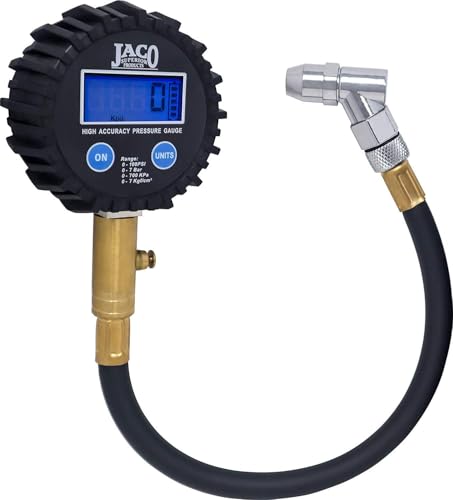
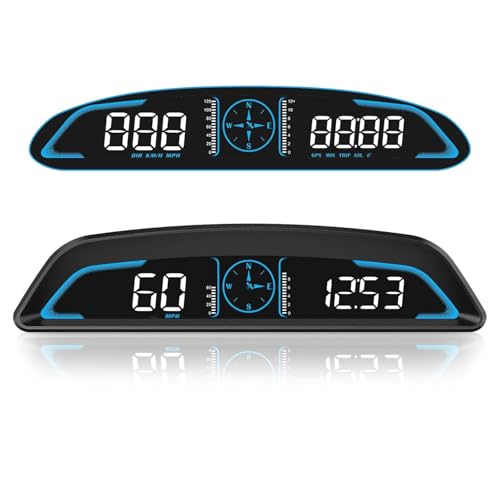
You do not need special equipment to check a speedometer. Still, a few tools make it easier. First, a GPS head-up display gives an independent speed reading. Next, an OBD2 scanner shows the speed the car’s computer reports, along with any sensor fault codes. Finally, a good tire pressure gauge matters, because underinflated tires roll on a slightly smaller radius.
- Speedometers measure rotation, not distance over the ground.
- Mechanical units use a cable, a magnet and an aluminum cup (eddy current).
- Electronic units count pulses from a transmission or ABS wheel sensor.
- Tire size is the biggest source of error; larger tires make the reading low.
- UN rules let a speedometer read high, but never low.
- A GPS app on flat, straight road is the easiest home accuracy check.
- Recalibration after a tire or gear change is a job for a dealer or specialist shop.
How Mechanical Speedometers Measure Speed
The classic design dates back to a 1902 patent by Otto Schulze. A flexible cable runs from a gear on the transmission output shaft up to the dashboard. As the car moves, that cable spins at a rate tied to wheel speed.
Behind the gauge, the cable turns a permanent magnet. Around the magnet sits a thin aluminum cup, called the speed cup, which is attached to the needle. Aluminum is not magnetic. However, the spinning magnetic field induces small electric currents, known as eddy currents, in the cup. These currents create a drag that tries to turn the cup in the same direction as the magnet.
A fine hairspring pulls the cup back toward zero. As a result, the needle settles where the magnetic drag and the spring balance each other. Because the drag grows with magnet speed, the needle moves further as you go faster. Meanwhile, a separate gear train on the same cable turns the odometer wheels.
How Electronic Speedometers Measure Speed
Most cars built since the 1990s have replaced the cable with a sensor. Typically, a vehicle speed sensor (VSS) sits on the transmission, or the car reuses the ABS wheel-speed sensors. Either way, a toothed ring passes a magnetic sensor, and each tooth produces one electrical pulse.
The engine or body computer then counts those pulses per second. Next, it multiplies by a stored calibration factor, often expressed as pulses per mile. Finally, it sends the result to the instrument cluster, which moves a stepper-motor needle or a digital readout.
For example, a system set at 4,000 pulses per mile sees about 66.7 pulses every second at 60 mph. Since everything is software, the same signal can also feed cruise control, the transmission, stability control and the trip computer. That is also why electronic speedometers can read in reverse.
Speedometers Compared: Mechanical vs Electronic vs GPS
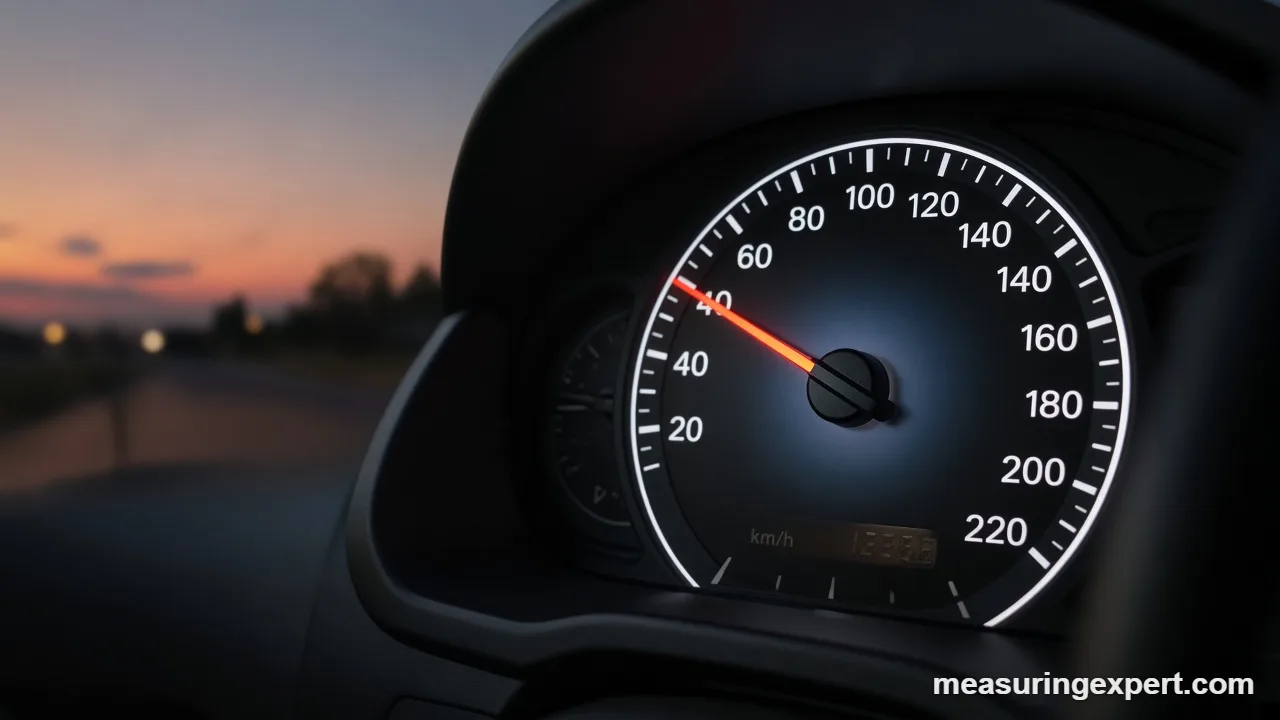
People often lump all speed readings together. In practice, they measure different things, so it helps to see them side by side.
| Type | What it senses | Strengths | Weak spots |
|---|---|---|---|
| Mechanical (eddy current) | Cable rotation from the transmission | Simple, no power needed for the gauge | Cable wear, needle bounce, fixed gearing |
| Electronic (VSS or ABS) | Pulses from a toothed ring | Smooth, shares data with other systems, can be reprogrammed | Still assumes a tire size; a failed sensor means no reading |
| GPS speedometer or app | Change in satellite position or Doppler shift | Ignores tire size, good on open roads | Lags, drops out in tunnels and cities, poor at low speed |
GPS is useful as a reference, and our guide on how to measure speed with an iPhone walks through the apps. Similarly, many drivers now watch speed in their navigation app, and our article on the Google Maps speed limit display explains how that feature works.
The Math Behind Speedometers
Every rotation-based speedometer uses the same idea. Speed equals rotations per minute times the distance the tire covers in one rotation. That distance is the tire’s rolling circumference.
Take a common 225/65R17 tire. Its overall diameter is 17 in (431.8 mm) of wheel plus two sidewalls of 225 mm x 0.65, so about 724.3 mm, or 28.5 in. Therefore, one turn covers about 2,275.5 mm, which works out to roughly 707 turns per mile. So if the wheel spins 707 times in one minute, the car is doing 60 mph.
The rule that follows is simple. If the real tire is bigger than the programmed one, each turn covers more ground. Consequently, the car goes faster than the gauge shows. A smaller tire does the opposite and makes the reading high.
| Tire on the car (car set for 225/65R17) | Diameter | Turns per mile | True speed when gauge shows 60 mph |
|---|---|---|---|
| 225/65R17 (stock) | 724.3 mm (28.5 in) | 707 | 60.0 mph (96.6 km/h) |
| 235/65R17 (taller) | 737.3 mm (29.0 in) | 695 | 61.1 mph (98.3 km/h) |
| 225/60R17 (shorter) | 701.8 mm (27.6 in) | 730 | 58.1 mph (93.6 km/h) |
Values are calculated from nominal tire sizes. Real rolling diameters are slightly smaller because the tire flattens under load.
How Accurate Speedometers Have to Be
There is no single worldwide standard. Instead, the rules depend on the vehicle and the country.
- UN Regulation No. 39 (Europe and many other countries): the indicated speed must never be below true speed. It also may not exceed 110% of true speed plus 4 km/h. At a true 100 km/h, then, the gauge may show anywhere from 100 to 114 km/h.
- US commercial vehicles: buses, trucks and truck-tractors must read within plus or minus 5 mph at 50 mph under 49 CFR 393.82.
- US passenger cars: federal rules set no specific speedometer tolerance. Even so, carmakers that sell globally usually design to the stricter UN rule.
This is why many cars read 2 to 4 mph high at highway speed. Under the UN formula, a true 60 mph allows a reading of up to about 68.5 mph. Most makers stay well inside that range, but they leave a margin so the gauge never reads low on worn or new tires.
What Makes Speedometers Read Wrong
Since the system assumes a fixed tire and gear ratio, anything that changes either one shifts the reading. Here are the usual causes:
- Bigger or smaller tires. A lift kit, oversized off-road tires or low-profile wheels change the rolling circumference.
- Tread wear. Wearing from 10/32 in to 2/32 in of tread shrinks the diameter by about 1/2 in. On the tire above, that makes the gauge read about 1.75% higher.
- Low tire pressure. An underinflated tire rolls on a smaller radius, so the reading creeps up slightly.
- Axle or gear ratio changes. Swapping differential gears changes how fast the sensor spins for a given road speed.
- Wrong drive gear or bad sensor. On older cars, the plastic drive gear sets the ratio, and the wrong tooth count throws it off. Meanwhile, a dirty or failing electronic sensor can cause erratic or zero readings.
How to Check Your Speedometer Accuracy
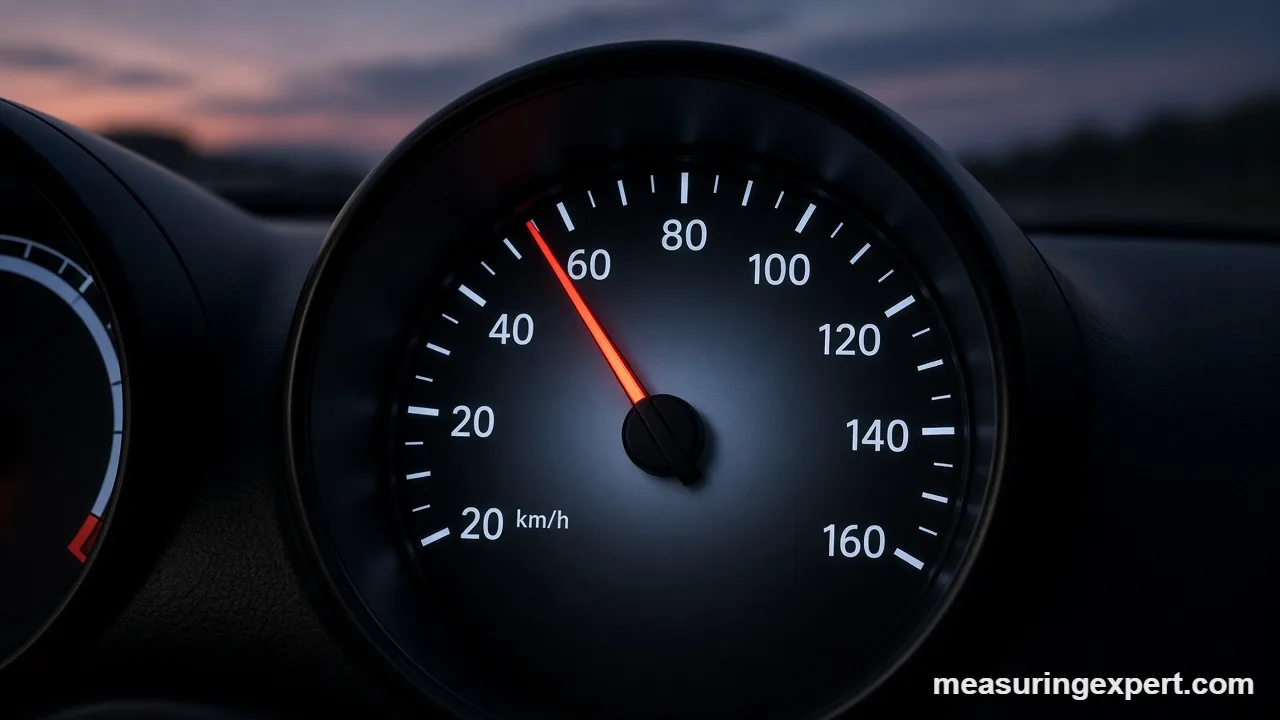
You can do a reasonable check with a phone or a GPS unit. Ideally, have a passenger handle the device while you drive.
- Set tire pressure first. Inflate the tires to the pressure on the driver’s door sticker, measured cold.
- Pick a safe, straight road. Choose a flat highway with light traffic and a clear view of the sky.
- Start the GPS app. Open a GPS speed app or head-up display and wait until it shows a strong satellite lock.
- Hold a steady speed. Use cruise control at 30, 45 and 60 mph if you can, and keep each speed for at least 15 seconds.
- Record both readings. Your passenger notes the dashboard and GPS speeds at each step.
- Work out the percent error. Divide the difference by the GPS speed. For example, 63 on the gauge vs 60 on GPS is 5% high.
- Cross-check with mile markers. At a steady 60 mph, one mile should take exactly 60 seconds, so time several markers as a second check.
Do and Don’t When Testing Speedometers
| Do | Don’t |
|---|---|
| Let a passenger watch the phone | Look at a phone screen while driving |
| Test at several steady speeds | Judge accuracy while accelerating or braking |
| Check tire pressure before testing | Test right after fitting a spare or donut tire |
| Repeat the run in both directions | Trust a single GPS reading under trees or bridges |
| Recalibrate after changing tire size | Assume a reading 2 to 3 mph high is a fault |
Honest Limits
A home GPS check is good, not perfect. GPS speed is calculated from position changes or Doppler shift, so it lags during acceleration and gets noisy at low speeds. It also drops out in tunnels, parking garages and between tall buildings. The government’s GPS accuracy page explains how performance depends on signal conditions and the receiver.
Likewise, the tire numbers on this page are nominal. Real tires of the same size can differ a little between brands, and load flattens them. So treat a 1% difference between your gauge and GPS as noise. On the other hand, a steady 5% or more is worth investigating.
When to Call a Professional
Some speedometer problems need a shop. For example, go to a dealer, a tire shop with calibration tools, or an auto electrician if any of these apply:
- You changed tire size, wheel size or axle ratio and the reading is now off.
- The needle drops to zero, sticks, or jumps around.
- A check-engine or ABS light comes on together with speedometer trouble.
- Your cruise control or automatic transmission shifting acts strangely, since they often share the speed signal.
On newer cars, a shop can usually reprogram the tire size in the computer. Older cars, by contrast, may need a different drive gear or an inline calibration module.
Frequently Asked Questions
How do speedometers measure speed?
They count how fast a wheel, axle or transmission shaft rotates and multiply by the distance one tire rotation covers. Mechanical units use a cable and magnet, while electronic units count sensor pulses.
Are speedometers 100% accurate?
No. Most read slightly high by design. UN rules allow a reading up to 110% of true speed plus 4 km/h, but never below true speed.
Why do speedometers read higher than GPS?
Carmakers build in a margin so the gauge never reads low, even with new, taller tires. Tread wear and low tire pressure can add a little more.
Do bigger tires make speedometers read slower?
Yes. A taller tire covers more ground per turn, so the gauge shows less than your true speed. For example, going from 225/65R17 to 235/65R17 means about 61 mph at an indicated 60.
How does a car know how fast it is going?
A speed sensor on the transmission or the ABS wheel sensors sends pulses to a computer. The computer converts pulses per second into mph using a programmed calibration.
Can speedometers be recalibrated?
Yes. Newer cars can usually be reprogrammed with a scan tool at a dealer or specialist shop. Older mechanical systems may need a new drive gear or a calibration module.
Is GPS more accurate than a speedometer?
At a steady speed on open road, GPS is usually closer to true speed because it ignores tire size. However, it lags when you speed up and loses signal in tunnels.
How accurate must speedometers be in the US?
For buses and trucks, federal rules require accuracy within plus or minus 5 mph at 50 mph. There is no specific federal tolerance for passenger cars.
What is an eddy current speedometer?
It is the classic mechanical design. A spinning magnet induces currents in an aluminum cup, which drags the needle against a spring.
Does the odometer use the same sensor?
Yes. The odometer counts the same rotations, so a tire change that makes the speedometer read low also makes the odometer record fewer miles.
Speedometers: The Bottom Line
To sum up, speedometers measure rotation and convert it to speed with a fixed tire size in mind. Mechanical gauges do it with a cable and a magnet, whereas modern cars count sensor pulses in software. Either way, the tire is the weak link.
Most cars read a few mph high on purpose, and that is normal. So if you change tire size, check the reading against GPS and have it recalibrated. For quick unit changes, finally, use the speed converter near the top of this page.
Black Friday is coming: shop the deals with Prime
4 thoughts on “How Do Speedometers Measure Speed? Mechanical, Electronic and GPS Explained”