

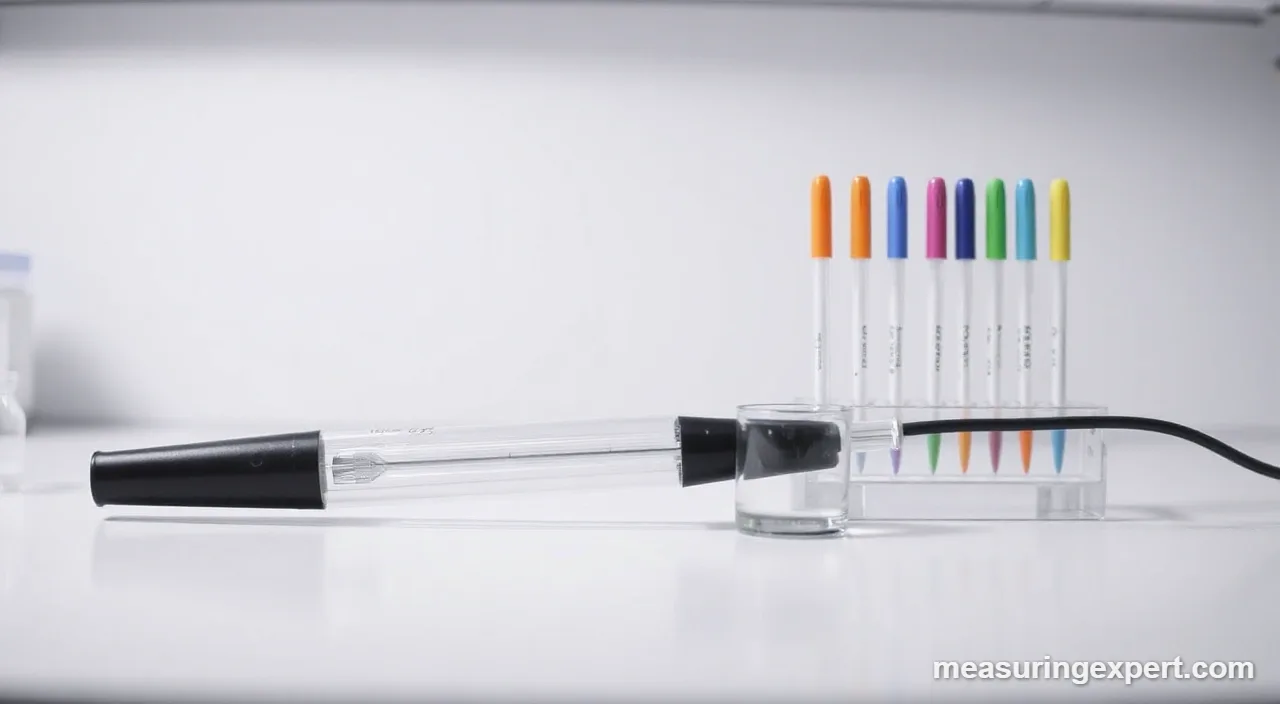
Start with the volume you actually need to move, because that decides everything else. For 1 to 20 microliter work, a fixed-range micropipette such as the Eppendorf Research Plus 2-20 uL is the benchmark; for a general bench or a teaching lab, a Gilson Pipetman L starter kit covers several ranges at once; and for coarse, low-stakes transfers, a plain graduated transfer pipet costs almost nothing. Class A glass volumetric pipets are the choice when you need a single exact volume, such as 5 mL. The ten picks below cover micropipettes, volumetric pipets and disposable transfer pipets, ranked by how well each suits school, hobby and entry-level lab use.
Pipettes look simple, which is why people buy the wrong one. A 10 mL pipettor cannot deliver 50 microliters accurately, and a transfer pipet cannot replace a volumetric one when you are making a standard solution. Matching the tool to the volume range, and to how precise you need to be, is most of the battle.
In short: pick the pipette whose range puts your target volume in the upper part of its scale, buy tips from the same maker, and treat glass volumetric pipets as single-volume precision tools. If you teach, share a bench or tinker at home, a starter kit beats buying single pipettes one at a time.
For context on how accuracy is verified, NIST publishes a standard procedure for calibrating volumetric ware by weighing water delivered from the pipet and converting the mass to volume using water temperature (see NIST SOP 13). Good labs recheck their pipettes regularly this way, and so can you in simplified form.
We already review the broader category in our lab pipette roundup and explain technique in how to use a pipette. This page takes a different angle: it is organized by volume range and use case, with eight to ten ready-to-buy sets and single tools.
As an Amazon Associate we earn from qualifying purchases. Picks are based on manufacturer specs, listing details and buyer reports, not lab testing. For teaching and general lab use. Always follow your lab’s safety rules.
A respected single-channel micropipette for small volumes.
Several single-channel pipettes in one kit for a teaching bench.
Glass pipet for delivering one precise volume.
Key takeaways
- Best overall: the Eppendorf Research Plus 2-20 uL is the benchmark single-channel micropipette for small volumes.
- Best starter set: the Gilson Pipetman L starter kit gives a teaching bench several ranges in one buy.
- Best exact volume: the EISCO Class A 1 mL glass volumetric pipet delivers one precise volume.
- Choose by range first. Accuracy is best in the upper part of a pipette’s scale.
- Glass volumetric pipets do one volume well. Adjustable pipettes do many volumes at once.
- Disposable transfer pipets are for moving liquid, not for measuring it precisely.
- Check pipettes by weighing water, and send critical ones to a calibration lab.
How we chose these pipettes
We shortlisted pipettes whose listings show strong ratings from many shoppers, and compared each against the maker’s description for volume range, material, and intended use. Listings without a clear range, or with very few reviews, were dropped.
The ten picks cover micropipettes, glass volumetric and measuring pipets, and one disposable transfer pipet, so you can match the tool to the job. We limited each brand to two entries and removed near-duplicates. This is a research-based ranking built on specs and buyer reports, not bench testing, and we have not used these units ourselves.
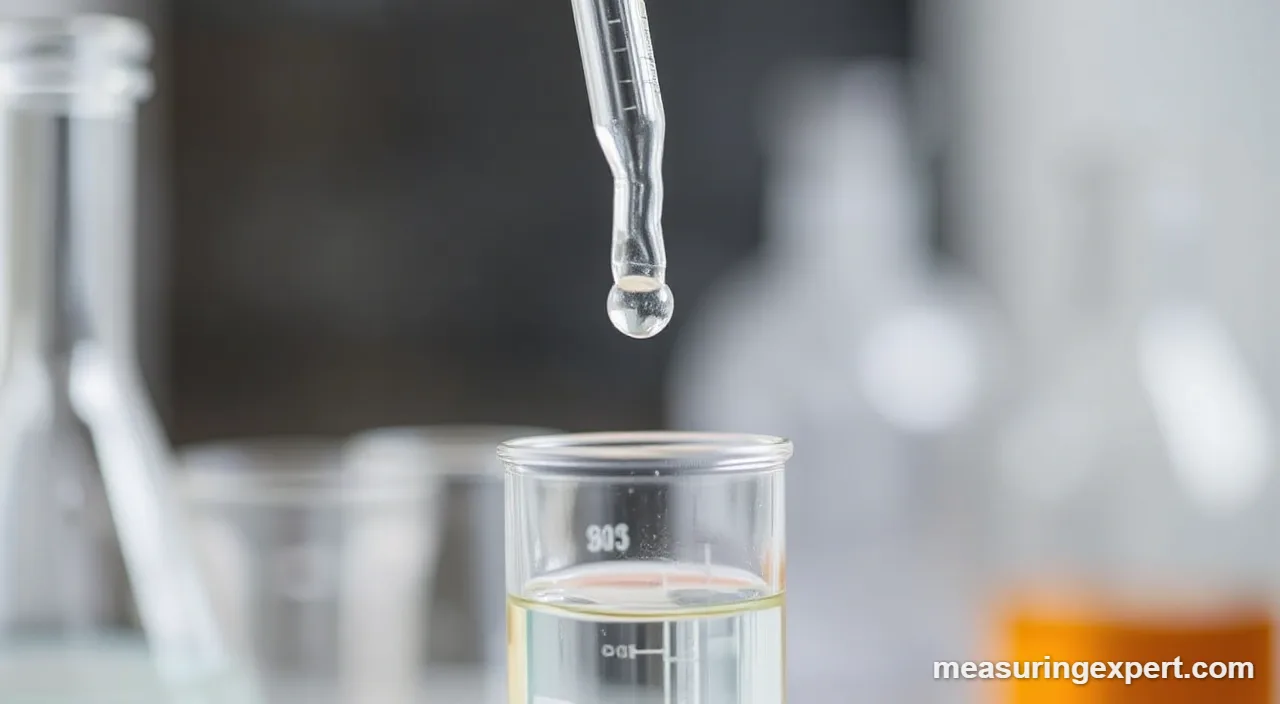
The 10 best laboratory pipettes and sets right now
Picks 1 to 6 are adjustable micropipettes or kits, 7 to 9 are glass pipets, and 10 is a disposable transfer pipet. Always confirm the volume range and what is included on the current listing.
| # | Product | Type | Range or size | Best for |
|---|---|---|---|---|
| 1 | Gilson Pipetman L kit | Micropipette kit | Several ranges | Teaching benches |
| 2 | Eppendorf Research Plus | Micropipette | 2-20 uL | Small volumes |
| 3 | Finnpipette F2 | Micropipette | Adjustable single-channel | General lab work |
| 4 | ONiLAB 100-1000 uL | Micropipette | 100-1000 uL | Large microliter volumes |
| 5 | Four E’s 0.1-1 mL | Micropipette | 0.1-1 mL | Milliliter transfers |
| 6 | Four E’s 1-10 mL | Micropipette | 1-10 mL | Large liquid transfers |
| 7 | Vee Gee Class A 5 mL | Volumetric pipet | 5 mL | Standard solutions |
| 8 | EISCO Class A 1 mL | Volumetric pipet | 1 mL | Exact small volumes |
| 9 | Corning Pyrex 7065-10 | Measuring pipet | Graduated glass | Variable volumes |
| 10 | Globe LDPE transfer pipet | Transfer pipet | Graduated, disposable | Rough transfers |
Buying for a workshop, lab or kitchen? Save with Amazon Business
Gilson Pipetman L starter kit: several single-channel pipettes in one box
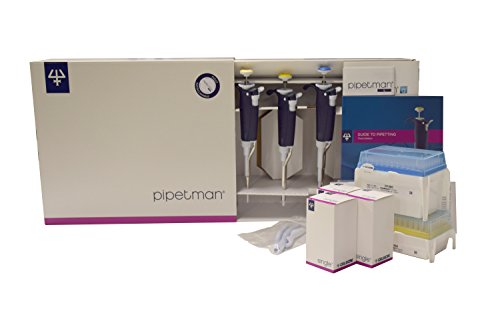
Best for: classrooms and small labs that need several volume ranges at once.
Gilson’s Pipetman line is one of the best known names in laboratory pipettes, and this starter kit bundles single-channel models so you can cover more than one volume range. A kit means one purchase and a consistent feel across sizes.
The kit approach suits a teaching lab or a shared bench, where students will need small, medium and large volumes in the same session. Check the listing for exactly which sizes are included before you buy.
- Starter kit of single-channel Pipetman L pipettes
- Multiple volume ranges in one set
- Adjustable-volume piston design
- Check the listing for sizes, tips and any stand
- Several ranges in one purchase
- Widely recognized brand
- Consistent handling across sizes
- Costs more than a single pipette
- Tips usually sold separately
Skip it if you only ever pipette one volume range.
Eppendorf Research Plus 2-20 uL: the small-volume benchmark
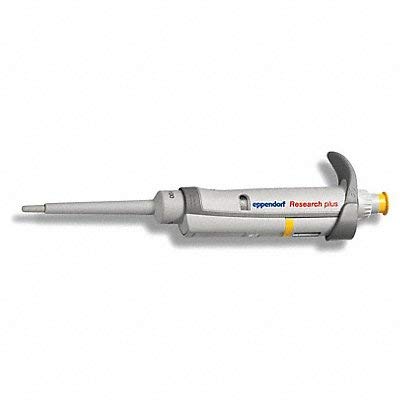
Best for: accurate work with volumes from 2 to 20 microliters.
Eppendorf’s Research Plus is a mainstay of research labs, and this model covers 2 to 20 microliters, the range used for PCR setups, small reagent additions and gel loading. It is the type of pipette many scientists learn on.
Its yellow color coding follows the common convention for this range, which helps when you juggle several pipettes. If your work lives in the single-digit to tens of microliters, this is the tool to start with.
- Single-channel adjustable micropipette
- 2 to 20 uL range per the title
- Color-coded yellow
- Use matching tips from the same maker for best results
- Respected brand for small volumes
- Clear range for a common use
- Familiar ergonomics
- Narrow range, so one pipette is not enough
- Tips are an ongoing cost
Skip it if you mainly move volumes above 200 microliters.
Thermo Scientific Finnpipette F2: an adjustable single-channel workhorse

Best for: general lab and teaching use where a well-known brand matters.
Thermo Scientific’s Finnpipette F2 is an adjustable-volume, single-channel pipette sold for research and teaching labs. The Finnpipette line has a long history in life science labs.
The listing leaves you to choose the model by range, so check which range is on offer before you buy. Pair it with the matching tips and you have a dependable bench tool.
- Adjustable-volume single-channel pipette
- Made by Thermo Scientific
- Piston-driven design
- Range varies by model, so check the listing
- Established manufacturer
- Suited to teaching and research
- Easy to find compatible tips
- Range depends on the specific model chosen
- Premium brand tier
Skip it if you want a very low-cost pipette for occasional use.
ONiLAB adjustable pipettor, 100-1000 uL: a 1 mL workhorse

Best for: transferring 0.1 to 1 mL volumes in a classroom or hobby lab.
ONiLAB’s single-channel adjustable pipettor spans 100 to 1000 microliters, which is the range for buffers, media and dilutions. In a teaching context it often does most of the heavy lifting.
ONiLAB is a lesser-known brand than Gilson or Eppendorf, so for critical work you should verify it against a balance. For general teaching and hobby use, it provides an accessible way to pipette milliliter amounts.
- Adjustable single-channel pipettor
- 100 to 1000 uL per the title
- Piston-driven
- Check the listing for tip compatibility
- Range that covers many dilutions
- More modest commitment than big brands
- Good for teaching
- Less documentation than premium brands
- Verify accuracy for critical work
Skip it if you need documented calibration certificates.
Four E’s Scientific 0.1-1 mL pipette: a budget-friendly mid-range pipettor

Best for: low-pressure projects, school labs and DIY science that use up to 1 mL.
Four E’s Scientific sells a 0.1 to 1 mL adjustable single-channel pipette, which equals 100 to 1000 microliters. It is a straightforward tool for school labs and makers who do not need premium certification.
Because the range is labeled in milliliters, it is easy to relate to recipes, aquarium dosing and classroom experiments. It is a good fit when you need volumes between a fraction of a milliliter and a full milliliter.
- Adjustable single-channel pipette
- 0.1 to 1 mL range per the title
- Piston-driven manual operation
- Check the listing for tip type and included accessories
- Easy range to understand
- Suited to schools and hobbyists
- Lower barrier to entry
- Limited documentation
- Not for regulated work
Skip it if your lab requires traceable certificates.
Four E’s Scientific 1-10 mL pipette: for volumes beyond 1 mL

Best for: moving milliliter-scale volumes in teaching and prep tasks.
When you need to move several milliliters, a 1 to 10 mL adjustable pipette beats a drop-by-drop approach. This Four E’s Scientific model covers that upper range and suits media prep and large dilutions.
It is not a tool for microliter accuracy, so pair it with a smaller pipette for fine work. If you outgrow a 1 mL pipettor, this is the natural next size up.
- Adjustable single-channel pipette
- 1 to 10 mL range per the title
- Manual operation
- Check the listing for compatible tips
- Handles larger volumes quickly
- Complements a smaller pipette
- Practical for prep work
- Heavier in the hand than small pipettes
- Not for fine volumes
Skip it if you never exceed 1 mL.
Vee Gee Scientific Class A volumetric pipets, 5 mL: precise single-volume glass

Best for: delivering exactly 5 mL for standards, titrations and teaching.
A volumetric pipet is a single-volume glass tool with a mark on the neck. This Vee Gee Scientific set is described as Class A, which means a tighter tolerance than general-purpose glassware.
It is the right choice when you need exactly 5 mL, such as in preparing a standard solution. Because it delivers one volume, you will need other pipets for other volumes.
- Class A volumetric pipets, 5 mL
- To-deliver (TD) calibration per the title
- Glass construction
- Intended for a single precise volume
- Tight tolerance for the volume
- Cheap relative to adjustable pipettors
- No mechanical parts to drift
- Only one volume
- Glass can chip, so handle gently
Skip it if you need many different volumes.
EISCO Class A 1 mL volumetric pipet: a precise single-volume glass pipet
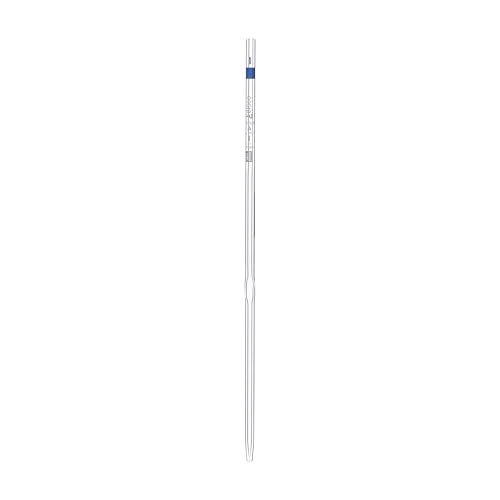
Best for: students and hobbyists who want one precise 1 mL delivery.
EISCO sells educational glassware, and this Class A 1 mL volumetric pipet is marked with blue color coding. Class A designation means a stricter tolerance than general-purpose pipets.
It is a good teaching tool for showing how volumetric glassware works, and it keeps its calibration far better than a plastic dropper. You will need a pipette filler bulb to use it safely.
- Class A volumetric pipet, 1 mL
- Blue color coding per the listing
- Glass construction
- Needs a bulb or filler
- Strict tolerance for a single volume
- Great for teaching
- Long service life when handled well
- Needs a filler bulb
- One volume only
Skip it if you want to change volumes quickly.
Corning Pyrex reusable measuring pipet, color-coded: a graduated glass pipet

Best for: measuring variable volumes with a reusable, graduated glass pipet.
A graduated measuring pipet has markings along its length so you can deliver various volumes with one tool. Corning’s Pyrex version is reusable borosilicate glass with color coding.
It is less precise than a volumetric pipet but more flexible, and suited to routine teaching and prep. As with all glass pipets, use a proper filler bulb, never your mouth.
- Reusable glass measuring pipet
- Graduated along its length
- Color-coded per the listing
- Check the listing for capacity and tolerance class
- Flexible for many volumes
- Reusable and cleanable
- Reputable glass maker
- Less precise than volumetric pipets
- Needs a filler bulb
Skip it if you need the tightest tolerance at one volume.
Globe Scientific graduated transfer pipets: low-cost liquid movers

Best for: rough liquid transfers in classrooms and general prep.
Plastic graduated transfer pipets are the cheapest way to move liquid from one container to another. Globe Scientific’s low-density polyethylene pipet has graduations, but those marks are a guide, not a precision scale.
Use them for adding drops to a sample or moving colored water in a classroom demo. Do not rely on them where exact volumes matter.
- LDPE graduated transfer pipet
- Non-sterile per the listing
- Disposable plastic bulb design
- Check the pack size on the listing
- Very low cost per piece
- Nothing to calibrate
- Great for demonstrations
- Not precise
- Single-use plastic
Skip it if you need to measure volume accurately.
Four kinds of pipette and what each is for
Not every pipette measures in the same way. The table separates the main families so you can match the tool to the task.
| Type | How it works | Volumes | Precision level |
|---|---|---|---|
| Adjustable micropipette | Piston with a dial and a disposable tip | Microliters to a few milliliters | High when used and checked well |
| Volumetric pipet | Glass tube with one mark | One fixed volume | Very high for that volume |
| Graduated measuring pipet | Glass or plastic with a scale | Several volumes | Moderate |
| Transfer pipet | Squeeze bulb, plastic | Approximate drops or mL | Low, for moving liquid |
For more detail on how each one compares for volume, see our guide on lab equipment used to measure volume.
Choosing a volume range
A pipette is most accurate in the upper part of its scale. Choosing a range that places your typical volume near the top reduces error.
| If you usually move | Choose a range like | Example |
|---|---|---|
| 1 to 20 uL | 2-20 uL | Reagent additions |
| 20 to 200 uL | 20-200 uL | Dilutions |
| 100 to 1000 uL | 100-1000 uL or 0.1-1 mL | Media, buffers |
| 1 to 10 mL | 1-10 mL | Large transfers |
| Exactly 1 or 5 mL | Class A volumetric | Standard solutions |
How to use a micropipette
Technique matters as much as the tool. Follow these steps for each transfer.
- Set the volume on the dial within the pipette’s rated range.
- Press a clean tip onto the shaft until it seats firmly.
- Press the plunger to the first stop.
- Immerse the tip a few millimeters into the liquid and release the plunger slowly and smoothly.
- Move to the destination and press to the first stop, then to the second stop to blow out.
- Eject the tip into a waste container and change it for each new liquid.
How to check a pipette by weighing water
The gravimetric method is the standard way to check a pipette, and the NIST procedure is built on it. At about 20 C, 1.000 mL of pure water has a mass of roughly 0.9982 g, so a good 1 mL delivery should weigh close to that.
- Use a balance that reads to 0.1 mg for small volumes and let the water sit at room temperature.
- Place a container on the balance and tare it.
- Deliver the water into the container using your normal technique.
- Record the mass and repeat at least five times.
- Convert mass to volume with a water density table for the water temperature, then compare with the set volume.
Honest limits of pipette accuracy
Accuracy is not a fixed property. Temperature, tip fit, thumb speed and the liquid itself (viscous, volatile or foamy liquids behave differently) all change delivered volume.
Resolution is also not accuracy. A dial that reads to 0.1 uL does not guarantee that the pipette delivers within 0.1 uL. Treat the label as a maximum capability and not a promise for every user.
- Use tips from the same maker
- Pre-wet the tip for viscous liquids
- Keep the pipette vertical when drawing
- Work in the upper part of the range
- Dial below the rated minimum
- Lay a loaded pipette on its side
- Reuse a tip for different liquids
- Force the plunger quickly
When to use a calibration lab
If your results go into a report, a regulated process, or a grading decision, have your pipettes calibrated by an accredited service on a schedule. For home and hobby uses, a basic weighing check is usually enough.
Caring for your pipettes
Store micropipettes upright in a stand, keep them out of hot cars and wipe the shaft if a tip ever leaks. Glass pipets should be rinsed promptly with clean water and dried upright.
If you are also stocking glassware, our guide to laboratory beakers pairs well with a starter pipette kit for a home or classroom bench.
Frequently asked questions
What is the best pipette for a beginner?
A 100-1000 uL adjustable pipette such as the ONiLAB 100-1000 uL covers many everyday jobs, while a starter kit like the Gilson Pipetman L kit suits a teaching bench that needs several ranges.
What is the difference between a pipette and a pipettor?
Pipette usually means the tube or tool, while pipettor often refers to the adjustable, piston-driven device. In practice the words are used interchangeably.
How accurate is a micropipette?
It depends on the model, the volume and the technique. Premium models usually give tighter tolerances. Verify by weighing water delivered at several volumes.
Can I use a pipette for cooking or medicine?
Lab pipettes are not intended for dosing medicine. For medicines, use the dosing device supplied and ask a pharmacist or doctor.
What does Class A mean on a pipet?
Class A is a tighter tolerance grade for glassware, which means smaller allowed errors than Class B or general-purpose items. Check the manufacturer’s tolerance chart.
Do I need to buy tips separately?
Usually yes. Adjustable pipettes need disposable tips, and it is best to use tips designed for your pipette to keep a good seal.
How many microliters are in a milliliter?
There are 1,000 microliters in 1 milliliter. For example, 0.5 mL equals 500 uL. The calculator above converts any value.
Why is the upper part of the range more accurate?
Errors are a larger percentage of a small volume. Working near the top of a pipette’s range reduces the relative error.
How often should I calibrate a pipette?
Many labs do it every six to twelve months or as their quality system requires. Hobby users can check by weighing water a few times a year.
Can a disposable transfer pipet measure volume?
Only roughly. The marks are a guide, so use a micropipette or a volumetric pipet when the volume matters.
The bottom line
The right pipette is the one that fits your volume and your accuracy needs. For small volumes the Eppendorf Research Plus 2-20 uL is a trusted standard, for a teaching bench the Gilson starter kit covers lots of ground, and for one exact volume a Class A glass pipet is the cheap and precise choice.
Whichever you choose, keep tips matched, work in the upper part of the range, and check against a balance now and then. Good technique is the cheapest upgrade of all.
Buying from this list? Get it fast, and catch Black Friday deals, with Prime