

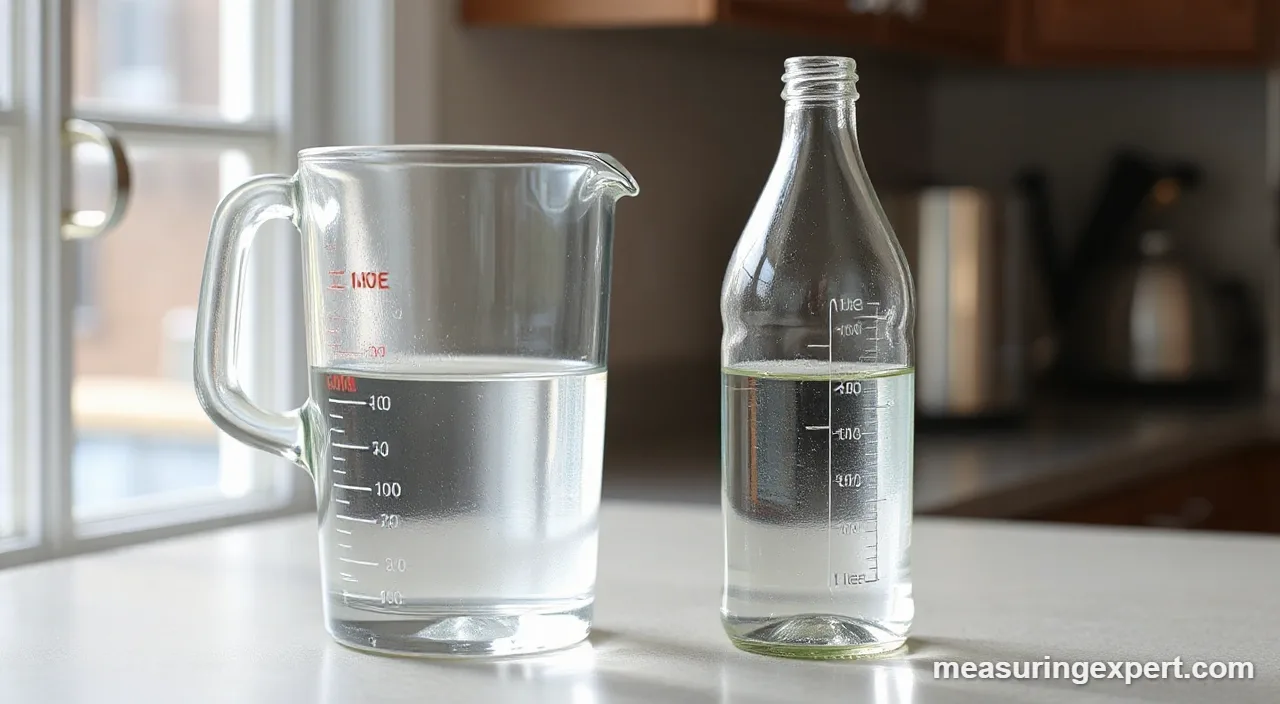
1 US liquid quart equals 946.35 mL, which is 0.946 liters or 32 US fluid ounces. It is not 1,000 mL: a liter is about 5.7 percent bigger. The imperial (UK) quart is larger at 1,136.5 mL, and a US dry quart is 1,101.2 mL.



Buying from this list? Get it fast, and catch Black Friday deals, with Prime
Quarts to Milliliters Converter
Is a quart the same as a liter? Plenty of people assume so, because the two sit side by side on the dairy shelf and look nearly identical. They are close, but not equal, and the gap is exactly the kind of thing that throws off soups, brines and cleaning mixes.
A US liquid quart is a quarter of a gallon, and a gallon is defined as 3.785411784 liters, so a quart is 0.946352946 liters, or 946.35 mL. That is a definition, not a measurement. When the US National Institute of Standards and Technology lists kitchen equivalents in its metric kitchen cooking table, it rounds a quart to 950 mL for convenience, which is fine in the kitchen but not in a lab.
This guide gives you the exact number, a chart for common quart amounts, and a table separating the three different “quarts” that exist. You will also find a short method to convert in your head. For related conversions, see our guide on how much 30 mL is and our explainer on what a cc measurement means.
Key Takeaways
- 1 US liquid quart = 946.35 mL = 0.946 L = 32 US fl oz = 4 US cups.
- A 1 liter bottle holds about 33.8 US fluid ounces, more than a quart.
- 1 imperial quart = 1,136.5 mL; 1 US dry quart = 1,101.2 mL.
- Quick math: multiply quarts by 946 for mL, or by 0.946 for liters.
- For brines and cleaners, use the exact value or a marked jug.
Quart to mL Chart
The chart below converts common amounts of US liquid quarts into milliliters, liters, ounces and cups. It uses the exact definition of 946.352946 mL per quart, rounded to one decimal.
| US quarts | Milliliters | Liters | US fluid ounces | US cups |
|---|---|---|---|---|
| 1/4 quart (1 cup) | 236.6 mL | 0.237 L | 8 fl oz | 1 cups |
| 1/2 quart (1 pint) | 473.2 mL | 0.473 L | 16 fl oz | 2 cups |
| 1 quart | 946.4 mL | 0.946 L | 32 fl oz | 4 cups |
| 1 1/2 quarts | 1419.5 mL | 1.420 L | 48 fl oz | 6 cups |
| 2 quarts (1/2 gallon) | 1892.7 mL | 1.893 L | 64 fl oz | 8 cups |
| 3 quarts | 2839.1 mL | 2.839 L | 96 fl oz | 12 cups |
| 4 quarts (1 gallon) | 3785.4 mL | 3.785 L | 128 fl oz | 16 cups |
| 5 quarts | 4731.8 mL | 4.732 L | 160 fl oz | 20 cups |
| 8 quarts (2 gallons) | 7570.8 mL | 7.571 L | 256 fl oz | 32 cups |
To check any figure in the chart, multiply the quarts by 946.35. For a quick estimate, use 950 mL per quart, which is the NIST rounded value, and subtract about 0.4 percent when you need extra accuracy.
Three Quarts, Three Different Sizes
The word “quart” means “a quarter of a gallon”, and there are three gallons in common use. That is why a recipe from a British cookbook or a US grain scoop can be off from a US milk carton by more than 10 percent.
| Quart type | Milliliters | Liters | Used for |
|---|---|---|---|
| US liquid quart | 946.35 | 0.9464 | Milk, water, stock, oil |
| US dry quart | 1,101.22 | 1.1012 | Berries, grains, produce baskets |
| Imperial (UK) quart | 1,136.52 | 1.1365 | British recipes, older UK measures |
| Liter (metric, for comparison) | 1,000 | 1 | Most of the world outside the US |
The dry quart is a volume measure for produce and grain, not for liquids, so a pint of berries is a smaller volume than a liquid pint. Use the liquid quart unless the label says otherwise.
How to Convert Quarts to Milliliters in Your Head
- Start with the number of quarts. For example, 3 quarts.
- Multiply by 1,000. 3 x 1,000 = 3,000 mL.
- Subtract about 5.4 percent. Take away roughly 160 mL, since 1,000 mL is 5.7 percent over a quart.
- Check against the exact value. 3 x 946.35 = 2,839 mL, so 2,840 mL is the practical answer.
- Round for the job. Use 950 mL per quart for cooking and the exact value for lab or cleaning mixes.
Measuring a Quart at Home
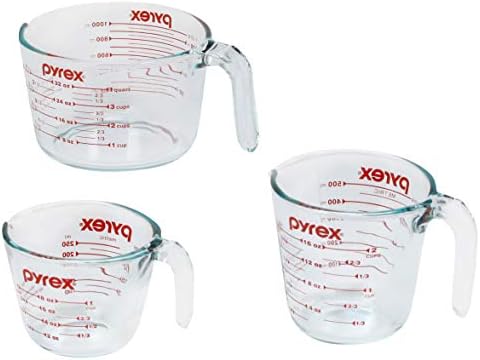
Look for a measuring jug with a quart or 32 oz mark. Place it on a flat counter, pour to the line and check the level at eye level. For a metric jug, fill to 946 mL, or to 950 if your jug is marked in 50 mL steps.
If you only have a liter bottle, fill it to the 1 L line and pour out about 54 mL, or around 3 1/2 tablespoons. That leaves you with a quart. Better still, count out four cups, since a quart is exactly 4 US cups. For smaller amounts, a half quart is 1 pint, or 473.2 mL.
| If you have | To measure a quart |
|---|---|
| A 1 cup measure | Fill it four times |
| A 2 cup measure | Fill it twice |
| A 1 L bottle | Pour out about 54 mL (3 1/2 tbsp) |
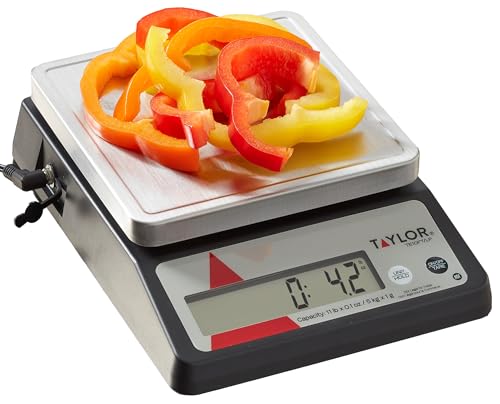
| A kitchen scale | Weigh about 946 g of water |
Quart Containers and Labels at the Store
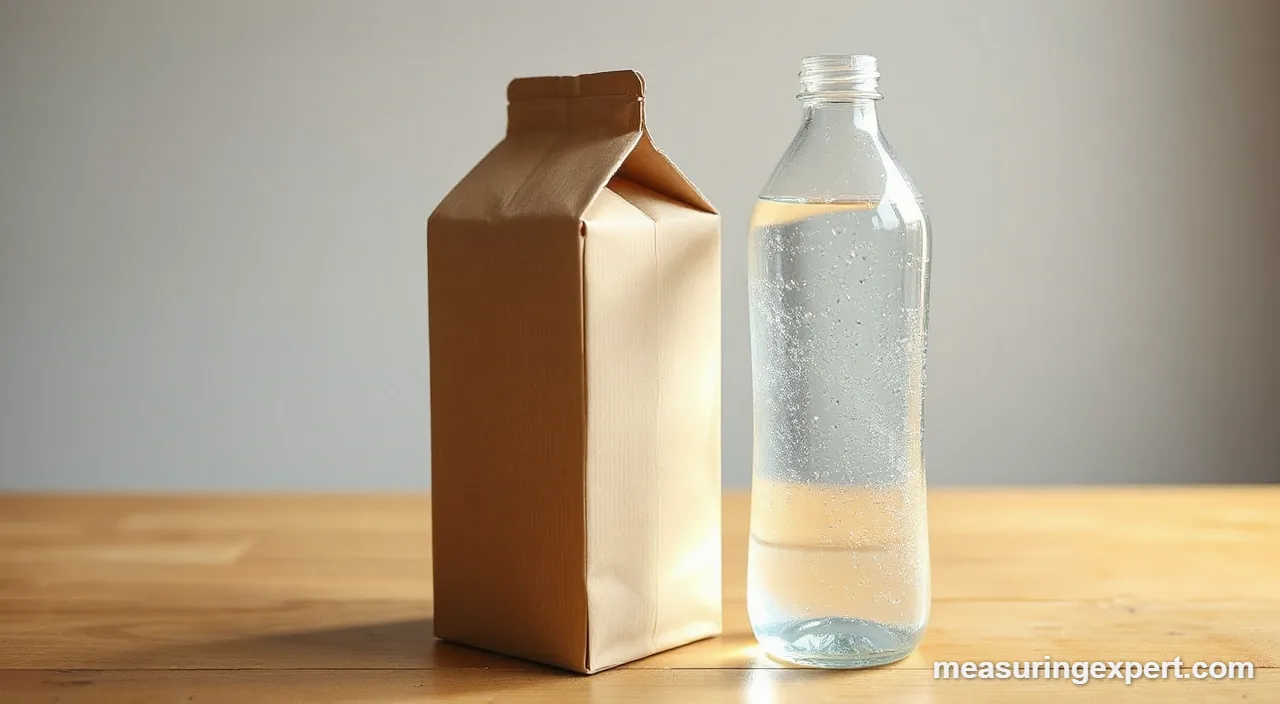
Milk, broth and motor oil often come in quart sizes, but labels in the US must show both US units and metric units. A quart carton might read “32 FL OZ (1 QT) 946 mL”. Some products sold as 1 L show “33.8 FL OZ”. If you are scaling a recipe between the two, convert by volume, not by assuming they match.
The difference matters most in bulk. A restaurant buying stock by the quart and by the liter will see 5.7 percent more liquid in every liter container. Over 20 containers, that is more than one extra quart.
Do and Don’t for Quart Conversions
Do
- Use 946.35 mL per US liquid quart.
- Check which quart the recipe means.
- Use a jug with both quart and mL markings.
- Measure on a flat surface at eye level.
- Round only at the end.
Don’t
- Treat a quart as 1,000 mL.
- Use a dry quart basket for liquids.
- Mix imperial and US units in a single mix.
- Trust an unmarked bottle.
- Pour from the measuring jug without re-checking the line.
Honest Limits of the Quart to mL Conversion
The 946.35 mL figure is exact for the definition, but every real container is a little different. Molded plastic jugs can be off by a few percent, and liquid forms a curved surface that makes the reading depend on your eye. Temperature also changes liquid volume slightly. For most kitchen and household purposes, none of this matters. For anything regulated, such as a lab solution or a fuel mixture, use calibrated volumetric glassware or ask the supplier.
When Accuracy Really Matters
Cleaning solutions, plant nutrients, fish tank additives and brines all depend on a stated concentration per quart or per liter. Dilute by the exact volume, and read the product label for the safe ratio. When a label gives the dose per gallon and you mix a quart, divide by four rather than guessing.
Liquid medicine never belongs in a quart conversion. Use the dosing cup or oral syringe that came with the product, and follow your doctor or pharmacist.
Tools for Measuring a Quart
A measuring jug marked in both quarts and milliliters ends the guessing. These picks are based on product listings, manufacturer specs and buyer reports. For help reading the jug correctly, see our guide on using a measuring jug.
As an Amazon Associate, Measuring Expert earns from qualifying purchases.
Quarts and Milliliters: Straight Answers
How many mL are in a quart?
A US liquid quart holds 946.35 mL.
Is a quart 1000 mL?
No. 1,000 mL is a liter, which is about 5.7 percent larger than a US quart.
How many liters is a quart?
A US liquid quart is 0.946 liters.
How many ounces are in a quart?
There are 32 US fluid ounces in a quart.
How many cups are in a quart?
There are 4 US cups in a quart.
How many mL are in a UK quart?
An imperial quart is 1,136.52 mL, or 1.137 liters.
How many mL are in a dry quart?
A US dry quart is 1,101.22 mL.
How many quarts are in a liter?
A liter is about 1.057 US quarts.
How many quarts are in a gallon?
There are 4 quarts in a US gallon, and a gallon is 3.785 liters.
How many mL are in 2 quarts?
2 US quarts are 1,892.7 mL, or about 1.89 liters.
The Short Version
The short version: 1 US liquid quart is 946.35 mL, 0.946 liters or 32 fluid ounces. It is not 1,000 mL, and it is not the same as an imperial or dry quart.
Use the converter above, check which quart your source means, and read your jug at eye level. For medicine, use only the dosing device that came with it.
Prime for Young Adults: a longer free trial and a lower price after it
2 thoughts on “How Many mL in a Quart? 946 mL, Not 1,000”