

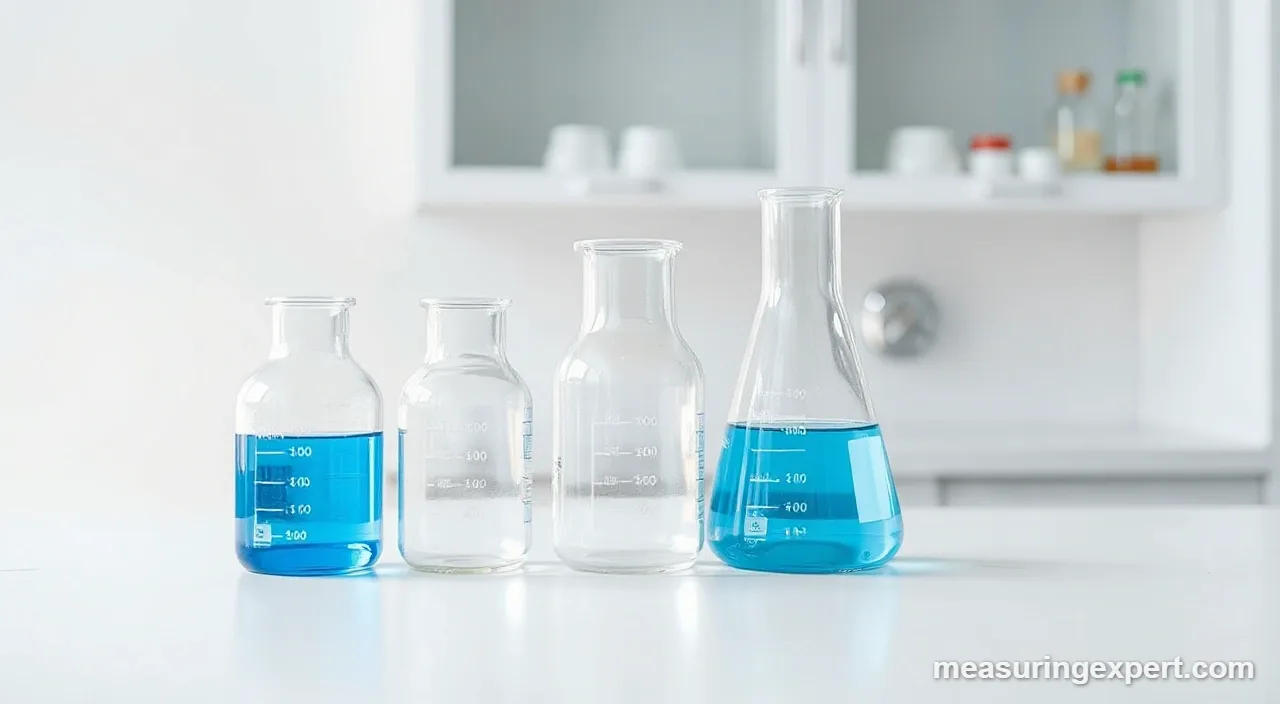
If you want one beaker set that does most jobs, buy borosilicate glass in Griffin low form, such as the Karter Scientific 3.3 Boro set or a Kimble or Pyrex Griffin beaker. Glass handles heat, resists most chemicals and is easy to read, which is why it is the lab default. Choose polypropylene or polymethylpentene plastic, like the Bel-Art, Nalgene or EISCO plastic beakers, when you need shatter resistance for classrooms, kids or fieldwork. Remember that a beaker is for holding, mixing and approximate volumes, not exact measurement. This guide ranks eight options and explains how to check one yourself.
A beaker is the humblest piece of glassware on the bench: a cup with a spout and some printed lines. That simplicity is why people overlook the details that matter, such as glass type, shape, size range, and how rough those printed lines really are.
In short: pick borosilicate glass for heating and chemical resistance, plastic for safety and low breakage, and low-form Griffin beakers for general mixing. Buy a set with several sizes, because a 600 mL beaker is a clumsy tool for 30 mL of liquid.
It also helps to know what beakers are not. NIST’s standard procedure for calibrating volumetric ware covers flasks, pipets, graduated cylinders and burets, the instruments built for accurate volume (NIST SOP 13). Beakers are not on that list, which matches their role as approximate containers.
For more on that point, read our explainer on measuring volume with a beaker and our broader laboratory beakers roundup. This guide is organized as a set-buying guide, comparing glass and plastic and what each size is for.
As an Amazon Associate we earn from qualifying purchases. Picks are based on manufacturer specs, listing details and buyer reports, not lab testing. For education and general lab use. Follow your lab’s safety rules.
Key takeaways
- Best overall glass set: the Karter Scientific 3.3 Boro Griffin set gives you several low-form glass beakers in one purchase.
- Best plastic option: the Bel-Art graduated 600 mL polypropylene beaker is shatter resistant for classrooms and fieldwork.
- Best single glass beaker: the Kimble 14000-400 Griffin is a classic lab-grade choice.
- Choose borosilicate glass for heat and chemicals, plastic for safety and low breakage.
- Low form (Griffin) suits general mixing. Tall form (Berzelius) suits reactions and slow stirring.
- Beaker marks are approximate, often within about 5 percent. Use a cylinder or pipet for accuracy.
- Never put a hot glass beaker on a cold or wet surface.
A borosilicate Griffin low form glass beaker set.
A classic low-form glass beaker from a lab glassware brand.
A shatter-resistant plastic Griffin low form beaker.
- How we chose these beakers
- The 8 best beaker sets and single beakers right now
- Glass or plastic: which beaker material to buy
- Low form, tall form and why shape matters
- Which sizes to buy
- How to check a beaker’s marks with a scale
- What home and school users actually do with beakers
- Heating and safety
- Cleaning and care
- Honest limits of beakers
- When to ask a teacher or lab professional
- Frequently asked questions
- The bottom line
How we chose these beakers
We shortlisted beakers whose listings show strong ratings from many shoppers, then checked each page against the maker’s description for material, form, size range and graduation. Listings that did not say what the beaker was made of, or that had very few reviews, were dropped.
The final eight cover borosilicate glass, polypropylene and polymethylpentene plastic, low and tall forms, and a broader glassware set. No more than two items come from one brand, and near-duplicates were merged. This is a research-based ranking from manufacturer specs and buyer reports, not lab testing, and we have not used these beakers ourselves.
The 8 best beaker sets and single beakers right now
Picks 1 and 3 to 5 are glass, picks 2, 7 and 8 are plastic, and pick 6 is a broader glassware set that includes beakers. Check the listing for the exact sizes and counts.
| # | Product | Material | Form | Best for |
|---|---|---|---|---|
| 1 | Karter Scientific set | Borosilicate 3.3 glass | Griffin low form | General lab and home science |
| 2 | Bel-Art 600 mL | Polypropylene | Griffin low form | Classrooms, fieldwork |
| 3 | Kimble 14000-400 | Glass | Griffin low form | General lab work |
| 4 | Pyrex 1060-1L | Glass | Tall form (Berzelius) | Reactions, reducing splashes |
| 5 | Pyrex Griffin low form | Borosilicate glass | Griffin low form | Everyday lab and kitchen science |
| 6 | EISCO 9-piece set | Glass set | Beakers plus other glassware | Home labs, students |
| 7 | Nalgene 250 mL | Polymethylpentene | Griffin low form | Clarity and durability |
| 8 | EISCO 3-pack 1000 mL | Polypropylene | Raised graduations | Big volumes, outreach |
Buying from this list? Get it fast, and catch Black Friday deals, with Prime
Karter Scientific 3.3 Boro Griffin low form glass beaker set: the all-round glass set
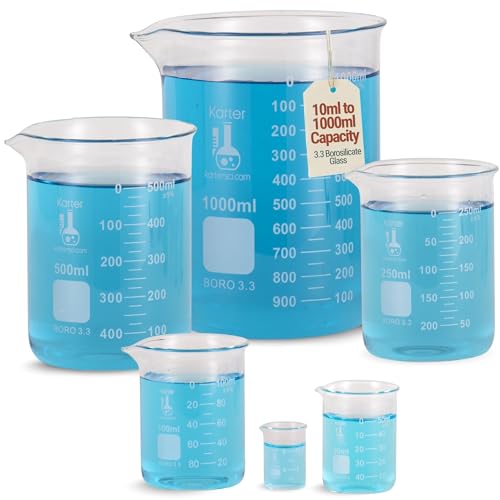
Best for: classrooms, home labs and hobbyists who want several glass sizes.
Karter Scientific sells a set of low-form Griffin beakers made of 3.3 borosilicate glass. Borosilicate 3.3 is the standard lab glass because it handles heat changes better than ordinary glass and resists most common chemicals.
A set matters because one beaker rarely fits every job. Having small, medium and large sizes keeps you from using a huge beaker for a few milliliters. Check the listing for the exact sizes in the set.
- Set of Griffin low-form beakers
- 3.3 borosilicate glass per the title
- Printed graduations for approximate volume
- Check the listing for sizes and pack count
- Several sizes in one purchase
- Heat and chemical resistant glass
- Classic, versatile shape
- Glass can break
- Graduations are approximate
Skip it if you need unbreakable plastic for young kids.
Bel-Art graduated Griffin low-form 600 mL polypropylene beaker: shatter-resistant

Best for: classrooms, outreach and fieldwork where breakage is a risk.
Bel-Art makes lab plastics, and this 600 mL graduated Griffin beaker is polypropylene, a tough, chemical-resistant plastic. A plastic beaker survives drops that would shatter glass.
It is a good choice for demonstrations, kids’ science and outdoor sampling. Polypropylene has temperature limits, so check the maker’s guidance before heating anything in it.
- Graduated Griffin low-form beaker
- 600 mL size per the title
- Polypropylene plastic
- Check the listing for temperature limits and graduation style
- Shatter resistant
- Chemical resistant plastic
- Light and easy to handle
- Lower heat limit than glass
- Can scratch and cloud with use
Skip it if you plan to heat contents on a hot plate.
Kimble 14000-400 glass Griffin low-form beaker: a classic lab piece

Best for: someone who wants a single reliable lab-brand beaker.
Kimble is a long-established maker of laboratory glassware, and the 14000-400 is a low-form Griffin beaker with a double capacity scale per the listing title. Two scales help you read volume at the half and the full range.
It is the kind of beaker you can find on school and professional benches alike. For a single glass beaker, it is a safe pick.
- Glass low-form Griffin beaker
- Double capacity scale per the title
- Lab-brand build
- Check the listing for size and glass type
- Respected lab brand
- Double scale for easier reading
- Classic shape
- Single beaker, not a set
- Graduations are approximate
Skip it if you want several sizes at once.
PYREX 1060-1L 1000 mL tall form Berzelius beaker: for reactions and slow stirring
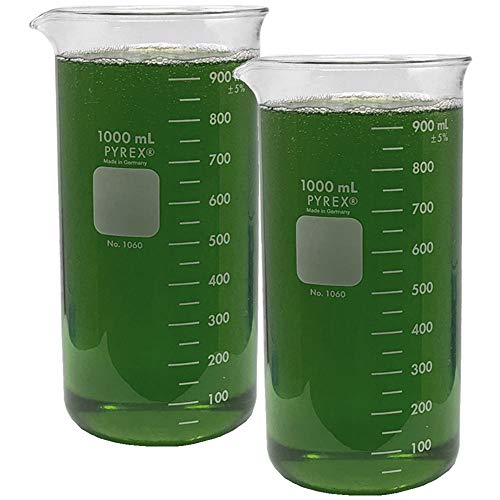
Best for: reactions, slow stirring and tasks where you want less splashing.
The Pyrex 1060-1L is a 1000 mL tall form Berzelius beaker, meaning it is narrower and taller than a Griffin. Pyrex is a household name in glassware.
The tall shape reduces splashing and holds more depth for a given volume, which suits some reactions and long stirring jobs. It is a bit less stable on a bench than a low-form beaker.
- 1000 mL tall form beaker
- Single scale per the title
- Glass body
- Check the listing for glass type
- Less splash during stirring
- Large capacity
- Trusted glassware brand
- Taller and less stable
- Harder to pour small amounts
Skip it if you mostly mix small volumes.
PYREX Griffin borosilicate glass beaker, low form: the everyday glass option

Best for: routine mixing, heating and storing small volumes in a low-form beaker.
Pyrex’s Griffin borosilicate beaker is a standard low-form glass beaker with graduated measuring marks, according to the listing. It handles routine mixing, heating on a hot plate and general bench work.
Low form means a wide base, so it resists tipping. Check the size on the listing since Pyrex sells many volumes under this style.
- Borosilicate glass Griffin low form
- Graduated measuring marks per the listing
- Wide stable base
- Check the listing for exact volume
- Stable wide base
- Heat resistant glass
- Familiar brand
- Size varies by listing option
- Approximate graduations
Skip it if you want a plastic beaker for safety.
EISCO 9-piece laboratory glassware set with a 3-piece beaker set: a starter kit
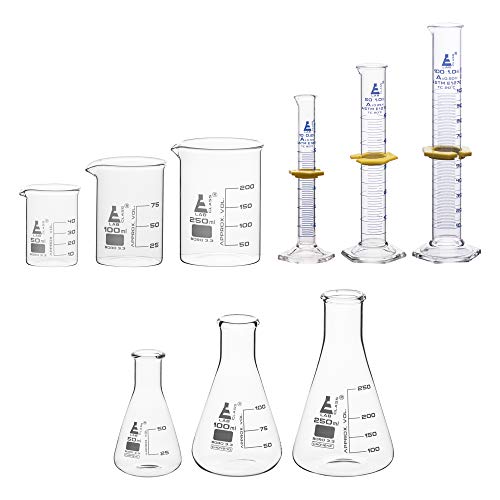
Best for: students and home learners who want beakers plus other basics.
EISCO’s 9-piece laboratory glassware set includes a three-piece beaker set per the title, along with other lab glassware. It is built for students and beginners who want a starter kit.
The set approach is convenient but check the contents. If you only need beakers, a dedicated beaker set offers more sizes for the money.
- 9-piece laboratory glassware set
- Includes a 3-piece beaker set per the title
- Educational glassware
- Check the listing for the other pieces
- Beakers plus other basics
- Good for students
- One purchase covers several items
- Fewer beakers than a dedicated set
- Quality tier is educational
Skip it if you only want beakers.
Nalgene Griffin beaker, low form, polymethylpentene, 250 mL: a clear plastic option
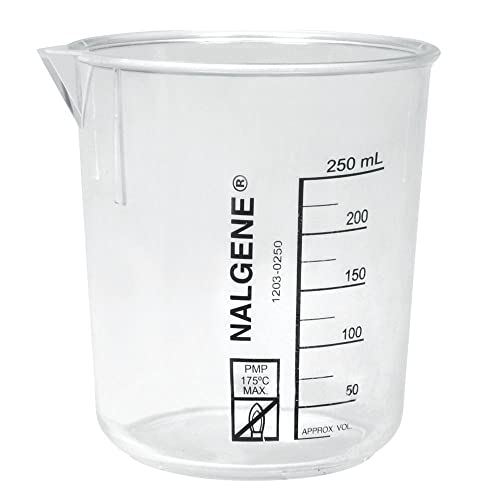
Best for: people who want plastic that is clearer than polypropylene.
Nalgene’s Griffin low-form beaker is made of polymethylpentene, often called PMP, which is a clear, rigid plastic. It looks closer to glass than polypropylene does and is more durable.
At 250 mL it is a handy everyday size. Check the maker’s temperature and chemical guidance before heating or using solvents.
- Griffin low-form beaker
- Polymethylpentene (PMP) plastic
- 250 mL per the title
- Check the listing for temperature rating
- Clearer than polypropylene
- Break resistant
- Reputable plastics brand
- Costs more than basic polypropylene
- Not as heat tolerant as glass
Skip it if you need borosilicate glass for hot plates.
EISCO 3-pack plastic beakers, 1000 mL, polypropylene: big volumes, no breakage

Best for: large-volume mixing for classes, gardens or fieldwork.
EISCO’s three-pack of 1000 mL plastic beakers is made from polypropylene, with raised graduations according to the title. Plastic keeps breakage risk low for busy classrooms.
Large beakers are good for mixing, rinsing and holding samples. As always, graduations are a rough guide.
- Three 1000 mL plastic beakers
- Polypropylene
- Raised graduations per the title
- Check the listing for temperature limits
- Three beakers in one pack
- Break resistant
- Large capacity
- Not for heating
- Rough graduations
Skip it if you need small volumes or heat resistance.
Glass or plastic: which beaker material to buy
Material decides what you can safely do with a beaker.
| Material | Heat | Chemicals | Breakage | Best for |
|---|---|---|---|---|
| Borosilicate glass 3.3 | Handles hot plates and thermal change | Resists most lab chemicals | Can break or chip | Heating, chemistry, accuracy of reading |
| Polypropylene (PP) | Limited, check the maker | Good against many chemicals | Very low | Classrooms, outreach, large volumes |
| Polymethylpentene (PMP) | Higher than PP, check the maker | Good for many uses | Low | Clear plastic with durability |
If you are unsure, buy borosilicate glass for the bench and one plastic beaker for travel or rough work.
Low form, tall form and why shape matters
Griffin low-form beakers have a wide base and short height, which makes them stable and easy to pour from. Berzelius tall-form beakers are narrower and taller, which reduces splashing and suits slow stirring and some reactions.
| Form | Shape | Strength | Limit |
|---|---|---|---|
| Griffin low form | Wide, short | Stable, easy to mix | Larger surface area |
| Berzelius tall form | Narrow, tall | Less splash, deeper liquid | Easier to tip |
For most buyers a set of Griffin low-form beakers is the sensible default.
Which sizes to buy
A beaker works best when the liquid fills roughly a third to two thirds of its volume. Too full and it splashes, too empty and the marks are hard to read.
| Beaker size | Good for | Roughly equal to |
|---|---|---|
| 50 mL | Small samples, reagents | 1.7 fl oz |
| 100 mL | Small mixes, titration | 3.4 fl oz |
| 250 mL | General mixing | 1.06 cup |
| 600 mL | Larger batches | 2.54 cups |
| 1000 mL | Baths, rinsing | 4.23 cups |
A typical home set of 50, 100 and 250 mL beakers covers most needs.
How to check a beaker’s marks with a scale
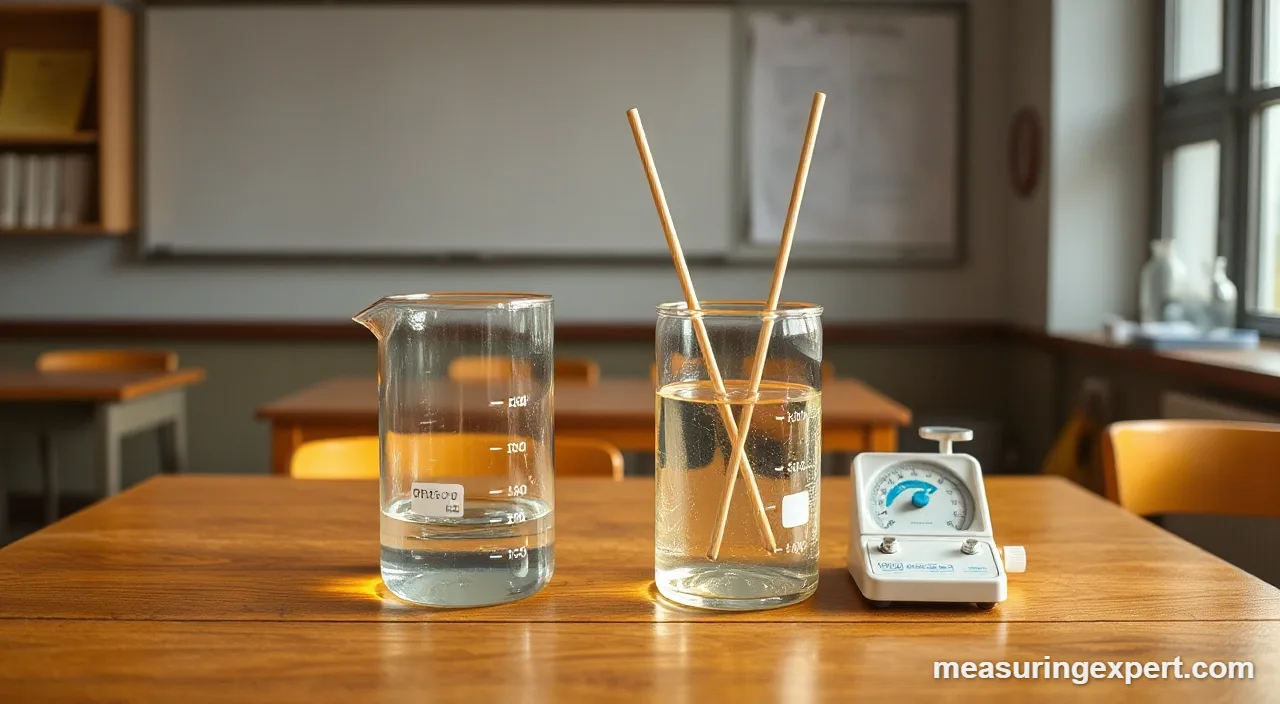
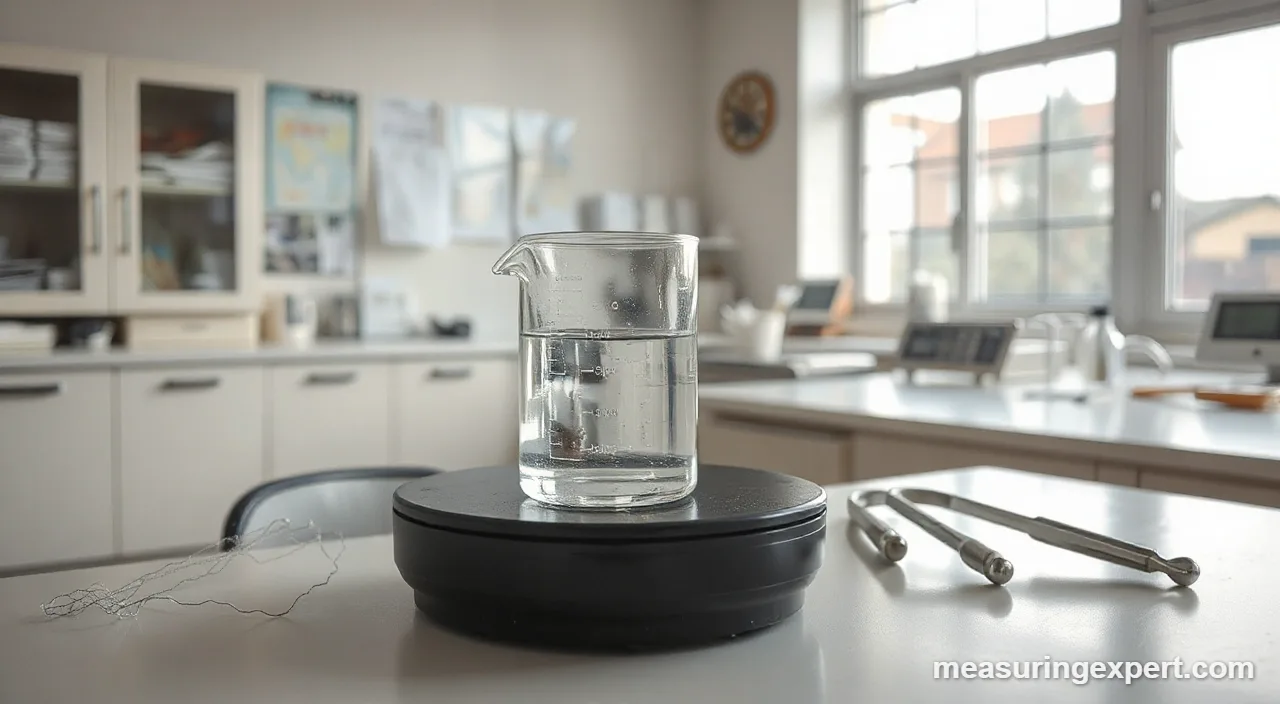
The printed marks on a beaker are approximate. You can see how rough they are with a kitchen scale that reads to 1 g.
- Place the empty beaker on the scale and tare it to zero.
- Pour water in until the liquid just touches the 100 mL line, reading at eye level.
- Read the mass on the scale.
- Compare it with about 99.8 g, which is the mass of 100 mL of water near room temperature.
- Repeat with other lines and note how far the marks drift.
What home and school users actually do with beakers
Most buyers of a beaker set are not running a chemistry lab. They are teaching a science unit, brewing a plant-food solution, making soap or candle wax samples, testing garden soil, watering seedlings with measured amounts, or just mixing paint and glaze. For those jobs the same three habits apply.
| Job | Good beaker choice | Why |
|---|---|---|
| Science class demonstrations | Plastic polypropylene 250 to 1000 mL | Drops and spills do not shatter |
| Heating water or solutions | Borosilicate glass Griffin | Handles heat on a hot plate |
| Mixing garden or hydroponic solutions | Plastic 600 to 1000 mL | Big volumes, easy to rinse |
| Crafts such as candles or soap samples | Glass beakers you keep for crafts only | Easy to clean, never reused for food |
| Soil or water sample collection | Clear plastic like PMP | Light and durable in the field |
Whatever the job, label each beaker by use and do not move a beaker between kitchen and lab tasks. If you are choosing between measuring tools for a project, the sensible order is simple: beaker to hold, cylinder to measure, pipette to dispense.
Finally, remember that printed marks are made for convenience. When a recipe or experiment depends on a precise amount, weigh the liquid instead of reading the marks, and write down both the weight and the line you used so you can repeat it.
Heating and safety
Borosilicate glass handles heat well, but it is not indestructible. Sudden temperature change can crack any glass.
- Heat on a hot plate or with a wire gauze
- Use tongs or heat-resistant gloves
- Wear splash goggles
- Let hot glass cool on a heat-safe pad
- Heat an empty beaker
- Put hot glass on a cold wet surface
- Heat plastic beakers unless the maker says so
- Use a chipped or cracked beaker
Cleaning and care
Rinse after each use, wash with mild detergent and a soft brush, and air dry upside down. Avoid abrasive pads that scratch graduations. For stubborn residue, soak in warm soapy water.
Plastic beakers can cloud with age and solvents. If a plastic beaker deforms in hot water, retire it. For related glassware, see our guide to glassware for measuring volume.
Honest limits of beakers
A beaker is for holding and mixing. The marks may be off by several percent, and reading the line at an angle adds more error. Our own guide estimates a beaker’s volume reading at roughly 5 percent.
If you need accuracy, switch to a graduated cylinder, volumetric flask or pipette. Our lab equipment comparison sets out which tool fits each accuracy level.
When to ask a teacher or lab professional
If you plan to work with hazardous chemicals, heat flammable liquids or do anything beyond simple demonstrations, ask a teacher or lab professional about proper equipment and safety.
Frequently asked questions
What is the best beaker set for home or school use?
A borosilicate glass Griffin low-form set such as the Karter Scientific 3.3 Boro set is best for general use. For classrooms with young kids, plastic beakers like the Bel-Art polypropylene model reduce breakage.
What is the difference between a beaker and a flask?
A beaker has straight sides and a spout. A flask, such as an Erlenmeyer, has a narrow neck that reduces splashing and suits swirling.
How accurate is a beaker?
Not very. The marks are approximate, often within about 5 percent. For accurate volume use a graduated cylinder, volumetric flask or pipette.
Can I heat a plastic beaker?
Only if the maker says it is rated for the temperature. Many plastic beakers have low heat limits, so use glass for hot plates.
What does borosilicate 3.3 mean?
It is a standard lab glass that tolerates temperature changes and resists many chemicals better than ordinary glass.
What size beaker should I buy first?
A 250 mL beaker is a good general size, and a 50, 100 and 250 mL set covers most small jobs.
Low form or tall form?
Low form (Griffin) is the general default. Tall form (Berzelius) reduces splashing and suits slow stirring.
How do I convert mL to ounces?
Divide milliliters by 29.5735. For example, 250 mL is about 8.45 US fluid ounces. The calculator above converts any size.
Can I use a beaker for kitchen measuring?
Not for accuracy. Use a proper measuring cup for cooking. Never use lab glassware for food once it has held chemicals.
How do I clean a beaker?
Rinse, wash with mild detergent and a soft brush, and air dry. Avoid abrasive pads that scratch the marks.
The bottom line
A beaker set is one of the best small upgrades for a home lab or classroom. Choose borosilicate glass like the Karter Scientific set or a Kimble beaker for heat and chemistry, and add a plastic Bel-Art or Nalgene beaker for rough work.
Then use beakers for what they do best: holding, mixing and approximate volume. For exact amounts, reach for a cylinder or pipette, and check your marks with a scale at least once.
Add ad-free music to your kitchen or workshop