

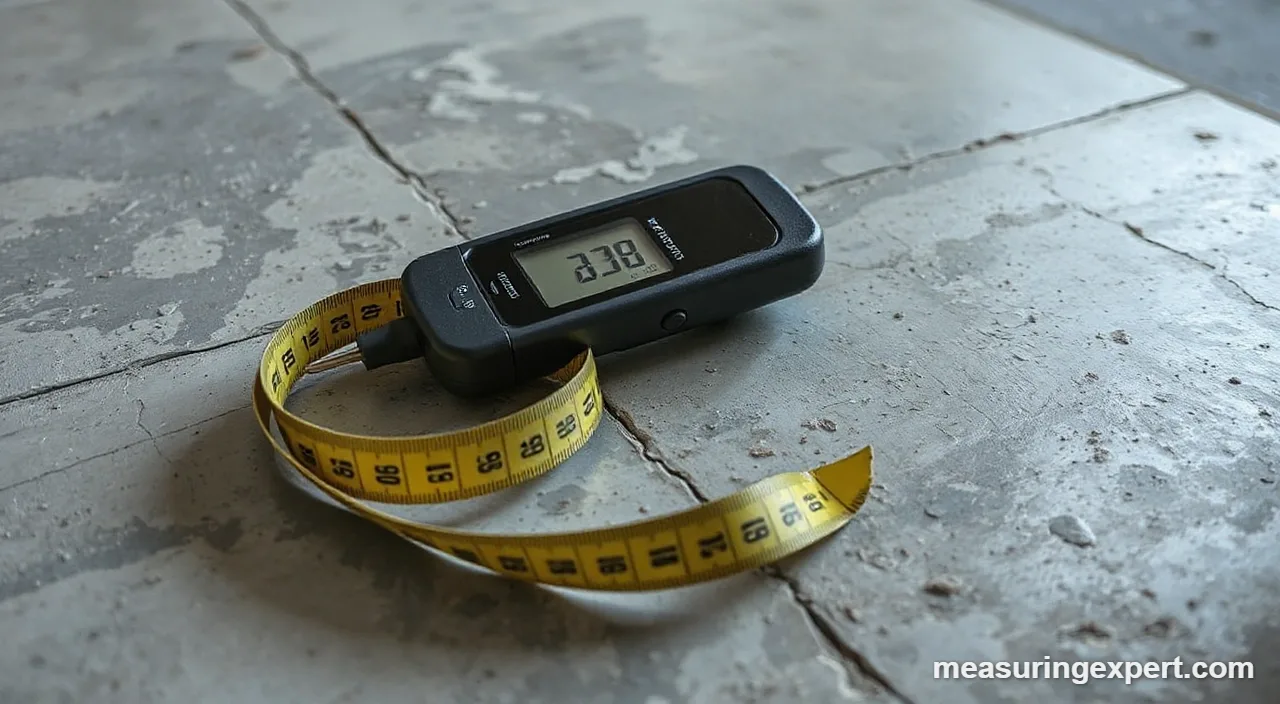
The new flooring is stacked in the garage, the adhesive is open and the slab looks dry. It is a gamble. Concrete holds water for months after it is poured, and moisture that moves up through it later can lift flooring, spoil adhesive and feed mold. A meter helps, but concrete is the hardest material to measure with a handheld tool.
For concrete, a pinless or non-invasive moisture meter such as the Protimeter Aquant or Klein Tools ET140 is a good screening tool, because it lets you sweep a slab and find the wet zones without drilling. It cannot replace the standard in-slab tests used for flooring approval. For those, a trained tester uses in situ relative humidity probes under ASTM F2170, or a calcium chloride kit.
In short: screen with a meter, confirm with a standard test, and follow the flooring maker’s limits before you glue anything down.
ASTM describes the main in-slab method in ASTM F2170, which measures relative humidity inside concrete floor slabs using in situ probes. Flooring makers often cite it in their installation rules, so read the data sheet for your product.
A note on scope. We found six handheld meters that fit this topic and none of them is a dedicated concrete-slab testing system, so this is a 6-pick screening guide rather than a padded top 10, and the guide is honest about what each tool can and cannot do. For related reading, see our best moisture meters, our best wall moisture meters and our best humidity meters.
As an Amazon Associate we earn from qualifying purchases. Picks are based on manufacturer specs and buyer reports, not on lab testing, and we never type prices because they change.
On this page
Kit from a building-damp specialistBest Non-Invasive ScreenProtimeter Aquant Non-Invasive Moisture Meter (BLD5770)
No pins and no holes in the surfaceBest for Slab Temperature and Dew PointExtech MO290 Pinless Moisture Psychrometer with IR Thermometer
Pinless meter plus infrared temperature and psychrometer functions
Key Takeaways
- Handheld meters screen concrete; they do not replace ASTM F2170 or calcium chloride tests.
- Best pro kit: the Protimeter MMS3 standard kit.
- Best non-invasive sweep: the Protimeter Aquant.
- Best slab temperature and dew point check: the Extech MO290.
- Pinless depth is shallow, so readings reflect near-surface moisture.
- Follow the flooring maker limit for the product you will install.
- Picks come from specs and buyer reports, not lab tests.
How We Chose These Meters
We shortlisted moisture meters from listings with strong ratings from many shoppers, comparing the type, depth and features each maker states. We kept tools that can screen building materials and left out soil and plant meters. This is research, not lab testing, and we did not test any of these meters on concrete.
Because no listing in our set is a dedicated slab test system, each pick is described as a screening tool. Each brand appears at most twice.
Recommended Moisture Meters for Screening Concrete
Cards describe what each meter is, using the maker title, and what it can do on concrete. Prices change, so we do not list them.
| # | Pick | Best for | Standout |
|---|---|---|---|
| 1 | Protimeter MMS3 Standard Kit Moisture Meter with Hard Case | inspectors and flooring pros who screen many floors | Kit from a building-damp specialist |
| 2 | Protimeter Aquant Non-Invasive Moisture Meter (BLD5770) | scanning a slab without drilling | No pins and no holes in the surface |
| 3 | Extech MO290 Pinless Moisture Psychrometer with IR Thermometer | checking condensation risk on slabs | Pinless meter plus infrared temperature and psychrometer functions |
| 4 | Klein Tools ET140 Pinless Moisture Meter (3/4 in depth) | contractors and homeowners screening floors and walls | Pinless meter with a stated 3/4 inch depth |
| 5 | Triplett MS245 Pin/Pinless Moisture Meter | people who want both methods in a single meter | Pin and pinless modes in one meter |
| 6 | Extech MO50A Compact Pin Moisture Meter | checking wood sill plates and framing next to the slab | Compact pin meter with an audible alert |
Buying from this list? Get it fast, and catch Black Friday deals, with Prime
#1Best Pro Kit
Protimeter MMS3 Standard Kit Moisture Meter with Hard Case
Best for: inspectors and flooring pros who screen many floors
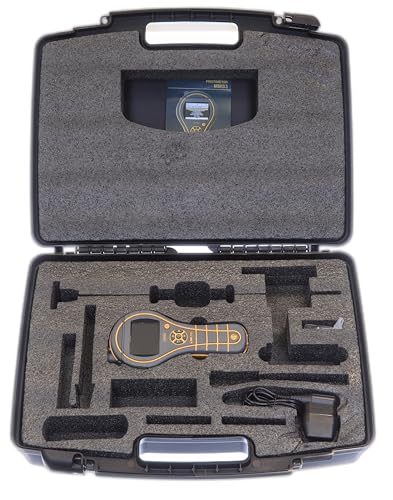
Protimeter has long focused on diagnosing damp in buildings, and the MMS3 is sold as a standard kit with a hard case. For people who screen slabs, walls and timbers in the same week, a kit with a case and accessories is easier to carry and keep together.
Check the kit contents and the scales listed by the maker before you buy; building-material scales vary by model. Use the meter to compare spots across a slab and flag areas for a proper test.
- Model: MMS3 standard kit, per the title
- Hard carrying case, per the title
- Brand: Protimeter
- Building-damp meter
- Organized professional kit
- Brand focused on building moisture
- Good for screening several materials
- More tool than a homeowner needs
- Scales vary, so read the manual
Skip it if you check a floor once.
#2Best Non-Invasive Screen
Protimeter Aquant Non-Invasive Moisture Meter (BLD5770)

Best for: scanning a slab without drilling
A non-invasive meter reads through the surface without pins, so you can sweep a whole slab quickly and mark the areas that read high. The Protimeter Aquant is listed as non-invasive.
Use it to find the wettest zones before you commit to drilling for in-slab probes. Remember that surface readings can be affected by sealers, coatings and surface texture.
- Type: non-invasive meter, per the title
- Model: BLD5770
- Brand: Protimeter
- Handheld digital reading
- Fast sweeps
- No damage to the slab
- Good for mapping damp zones
- Surface reading only
- Coatings can affect results
Skip it if you need an in-slab humidity value.
#3Best for Slab Temperature and Dew Point
Extech MO290 Pinless Moisture Psychrometer with IR Thermometer
Best for: checking condensation risk on slabs
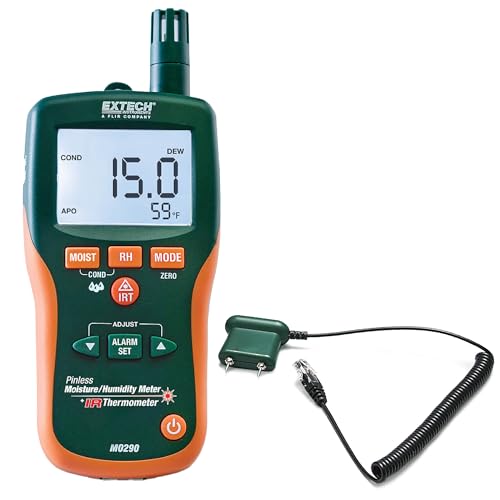
Condensation on a slab depends on its surface temperature versus the air dew point. The MO290 pairs a pinless moisture reading with an infrared thermometer and psychrometer function, which means you can check the slab temperature and the air in one tool.
That helps when a basement floor sweats in summer. The infrared reading shows how cold the slab is, and the air reading shows whether it is below the dew point.
- Type: pinless moisture psychrometer, per the title
- Infrared thermometer included, per the title
- Brand: Extech
- Handheld digital
- Slab temperature and air readings in one tool
- Pinless scanning
- Helps with condensation checks
- Not an in-slab humidity test
- More functions to learn
Skip it if you only need a simple damp check.
#4Best Everyday Pinless Meter
Klein Tools ET140 Pinless Moisture Meter (3/4 in depth)

Best for: contractors and homeowners screening floors and walls
The Klein ET140 title says it detects moisture up to 3/4 inch deep, which makes it a shallow screen rather than a deep slab test. For concrete, that depth means it mostly reads near the surface.
It is helpful for a first look at wet spots after a leak or flood, or to compare one area with another. A real flooring decision needs a deeper in-slab test.
- Type: pinless, per the title
- Depth: up to 3/4 inch, per the title
- Brand: Klein Tools
- Digital reading
- Simple to use
- Quick area scans
- Useful for relative comparisons
- Shallow depth for slabs
- Not a code or warranty test
Skip it if you need a slab humidity value for a flooring warranty.
#5Best Dual-Mode Screener
Triplett MS245 Pin/Pinless Moisture Meter
Best for: people who want both methods in a single meter
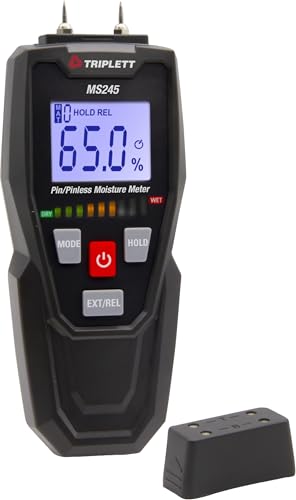
The title says pin and pinless, so you can sweep with the pinless mode and try pins on materials where they work. On concrete, pins are limited, so treat the pin mode as most useful for wood framing nearby.
Dual meters are handy on mixed jobs, such as a basement with a concrete slab, wooden sill plates and drywall.
- Type: pin and pinless, per the title
- Brand: Triplett
- Handheld digital
- Dual-mode operation
- Flexible across materials
- Good for mixed jobs
- Single tool for sweeps and checks
- Concrete readings are only a screen
- More buttons than basic meters
Skip it if you only test concrete.
#6Best Compact Companion
Extech MO50A Compact Pin Moisture Meter
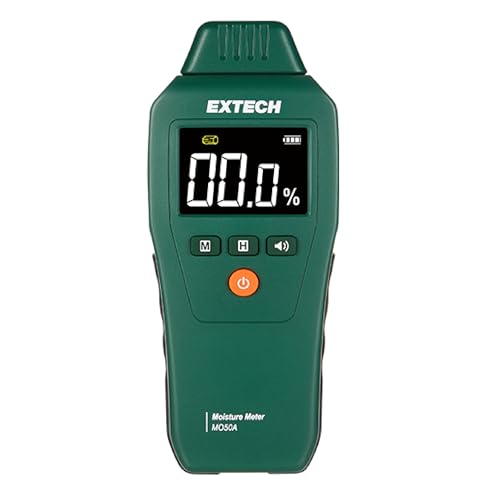
Best for: checking wood sill plates and framing next to the slab
Slabs sit under wood framing, subfloors and sill plates, and those materials show moisture trouble first. This compact pin meter lists an audible alert and a backlit display in its title.
It is not a concrete tool by itself. Use it where the wood meets the slab, and treat high wood readings as a hint that the concrete below may be wet.
- Type: compact pin meter, per the title
- Audible alert, per the title
- Brand: Extech
- Backlit display, per the title
- Good for wood near the slab
- Small and portable
- Alert for quick checks
- Pins do not read concrete well
- Wood and wall tool only
Skip it if your question is only about the slab.
Four Ways to Test Concrete Moisture and What Each Tells You
Concrete moisture is not one number. Different tests measure different things, and flooring makers ask for specific ones.
| Method | What it measures | Who uses it |
|---|---|---|
| Handheld meter (pin or pinless) | Surface or near-surface moisture, relative scale | Homeowners and inspectors for screening |
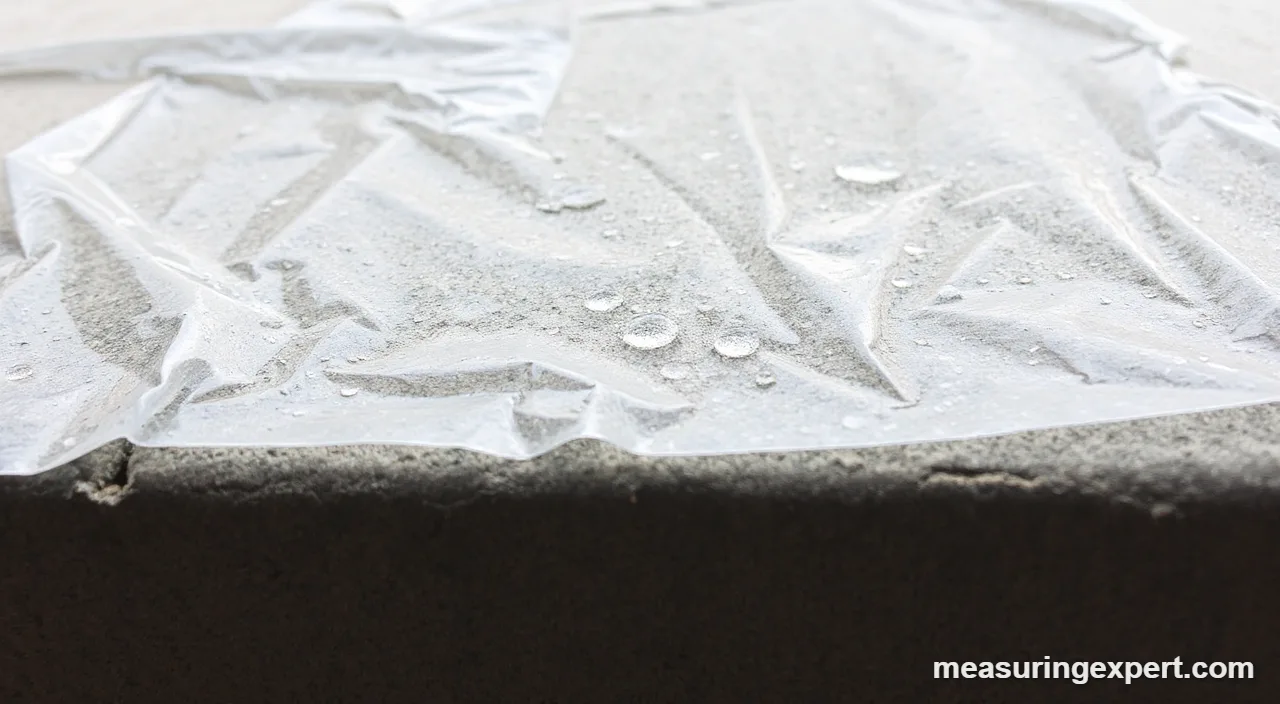
| Plastic sheet test (ASTM D4263) | Whether moisture is rising to the surface | DIY quick check |
| Calcium chloride kit (ASTM F1869) | Moisture vapor emission rate over about 60 to 72 hours | Flooring installers |
| In situ RH probes (ASTM F2170) | Relative humidity inside the slab | Flooring installers and inspectors |
A handheld meter is the cheapest and fastest, but it is only the first step. Treat its numbers as a map of wetter and drier spots.
What Handheld Readings Mean on Concrete
Most handheld meters show a relative scale on concrete rather than true percent moisture. Pinless meters read about 3/4 inch deep or less, so a dry reading on top can hide a wet core. Sealers, paint, coatings and surface roughness change the result. Compare readings across the slab and with a known dry area rather than trusting a single number.
The temperature and humidity of the room matter too. Cold slabs sweat when the dew point is higher than their surface temperature. The dew point calculator above helps you see that risk, and the table shows approximate values for common indoor conditions.
The Plastic Sheet Test: A Simple DIY Check
The plastic sheet test is a quick way to see if moisture is moving up through a slab. It does not give a number, but it can reveal an obvious problem before you spend money.
- Sweep the area clean and make sure the slab is at a normal indoor temperature.
- Cut a clear plastic sheet about 18 by 18 inches (45 by 45 cm).
- Tape all four edges to the slab with duct or sealing tape so no air can pass.
- Leave it in place for at least 16 hours, ideally in the room’s normal conditions.
- Remove the sheet and look for condensation drops under it or dark patches on the concrete.
- If you see either, the slab is too damp to cover. Dry it or call a professional.
- Take a baseline on a known dry area.
- Map readings in a grid.
- Run a plastic sheet test in several spots.
- Check the flooring maker limits.
- Fix leaks before you test again.
- Approve a floor based on one handheld reading.
- Read through thick sealers and trust the number.
- Glue flooring on a slab that fails a plastic sheet test.
- Ignore musty smells or white crusts on concrete.
- Skip professional testing when a warranty requires it.
How to Screen a Slab With a Handheld Meter
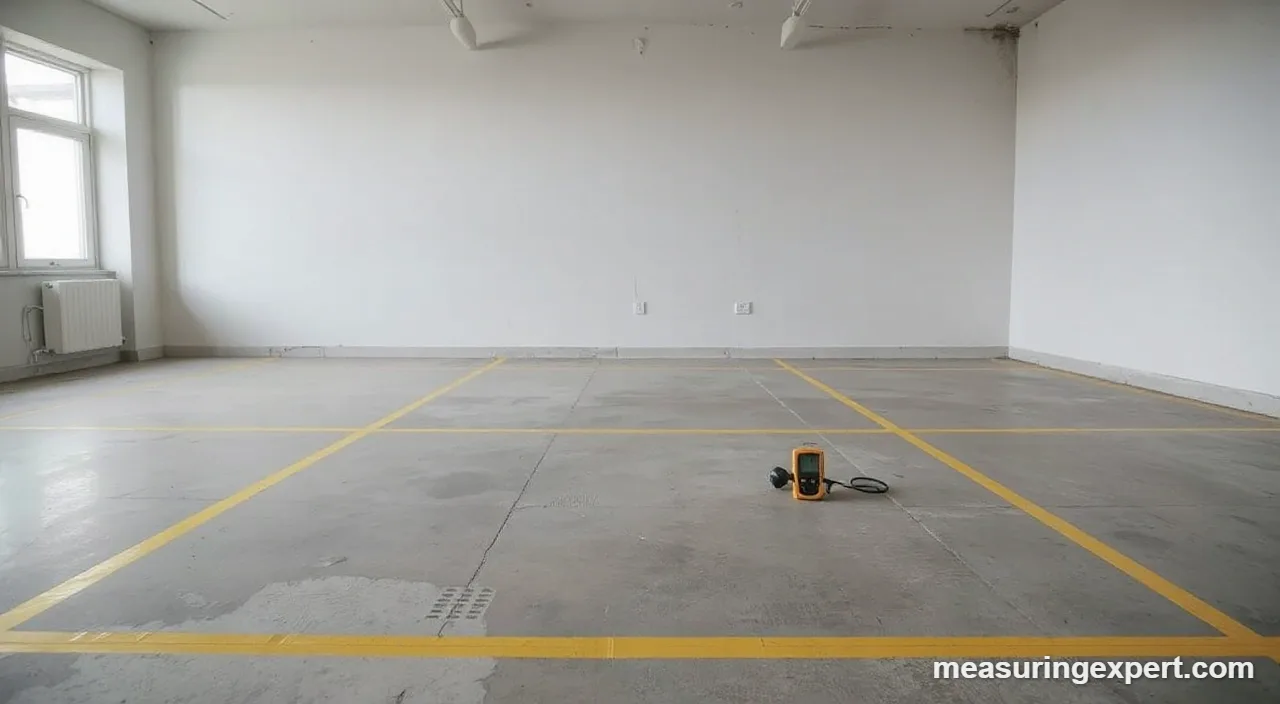
- Set the meter to the masonry or concrete mode if it has one, and read the manual.
- Take a baseline on an area you know is dry, such as an upper wall or a long-dry part of the slab.
- Sweep the slab in a grid of about 2 to 3 feet, with notes for each reading.
- Mark the highest readings with painter’s tape.
- Look for patterns: wet edges, wet near pipes, wet near doors.
- Repeat on another day and under similar weather to confirm.
Use the photos of your readings, the plastic sheet test and the flooring maker’s requirements to decide whether to call for formal testing.
Honest Limits of Handheld Concrete Meters
Handheld meters are fine for screening, but they are not accepted proof of slab dryness for most flooring warranties. Their readings are shallow and relative, and results change with coatings, aggregate type and surface roughness. Do not use a handheld reading alone to approve a floor installation.
When to Call a Professional
Call a flooring professional or an accredited testing company for a formal test when the flooring warranty requires one, when the slab is below grade, when you see efflorescence, stains or musty smells, or when a plastic sheet test shows moisture. For ASTM F2170, the tester drills holes to a set depth, which is 40 percent of the slab thickness for slabs that dry from one side, lets them equilibrate, then reads the probes. If standing water or mold is present, address the water source first and follow EPA guidance. This page is general information, not an engineering or health opinion.
Concrete Moisture FAQ
Can a regular moisture meter test concrete?
It can screen concrete for relative differences, especially a pinless or non-invasive meter. It cannot give the in-slab humidity value that flooring warranties often require.
What is the standard test for concrete moisture?
Two common ones are in situ relative humidity probes under ASTM F2170 and the calcium chloride test under ASTM F1869. Flooring makers usually name which one they accept.
What moisture level is safe for flooring?
It depends on the flooring product. Makers often specify a limit such as a maximum in-slab relative humidity or vapor emission rate, so read the installation guide for your product.
How long does new concrete take to dry?
There is no fixed date, because drying depends on mix, thickness, temperature and humidity. A common rule of thumb is about a month per inch of thickness, but testing is the only reliable way to know.
What is the plastic sheet test?
You tape an 18 inch plastic square to the slab for at least 16 hours and look for condensation or darker concrete. It shows whether moisture is rising but not how much.
Why does my basement floor sweat in summer?
Warm humid air meets a cool slab. If the slab surface is colder than the air dew point, water condenses on it. A dehumidifier and ventilation help.
Do pinless meters read deep into concrete?
Usually not. Many read about 3/4 inch or less, so they reflect near-surface moisture and not the whole slab thickness.
Should I seal a damp slab before installing flooring?
Sealers and moisture barriers have limits, and the right choice depends on the product and slab. Ask the flooring maker or a professional before you coat or cover a damp slab.
What if my slab fails the test?
Find and fix the moisture source, dry the slab with ventilation or dehumidification, and retest. A professional can recommend moisture mitigation systems if the problem persists.
Can I use these meters on other materials?
Yes. Pinless and pin meters are designed for wood and drywall as well, and our moisture meter roundup covers them in more detail.
Bottom Line
Concrete rarely dries on a calendar. Handheld meters help you find the wet zones, and a dew point check explains why a slab sweats, but the decision to install flooring belongs to the standard tests your flooring maker requires.
Use a pinless or non-invasive meter as a screening tool, run a plastic sheet test, and bring in a pro for ASTM F2170 or calcium chloride testing when the stakes are high. A little patience before installation is cheaper than tearing out a failed floor.
Our verdict: the Protimeter Aquant for non-invasive screening, the Protimeter MMS3 kit for professionals, the Extech MO290 for slab temperature and dew point checks and the Klein ET140 for everyday pinless sweeps.
Listen to a free audiobook while you cook, work or wait