

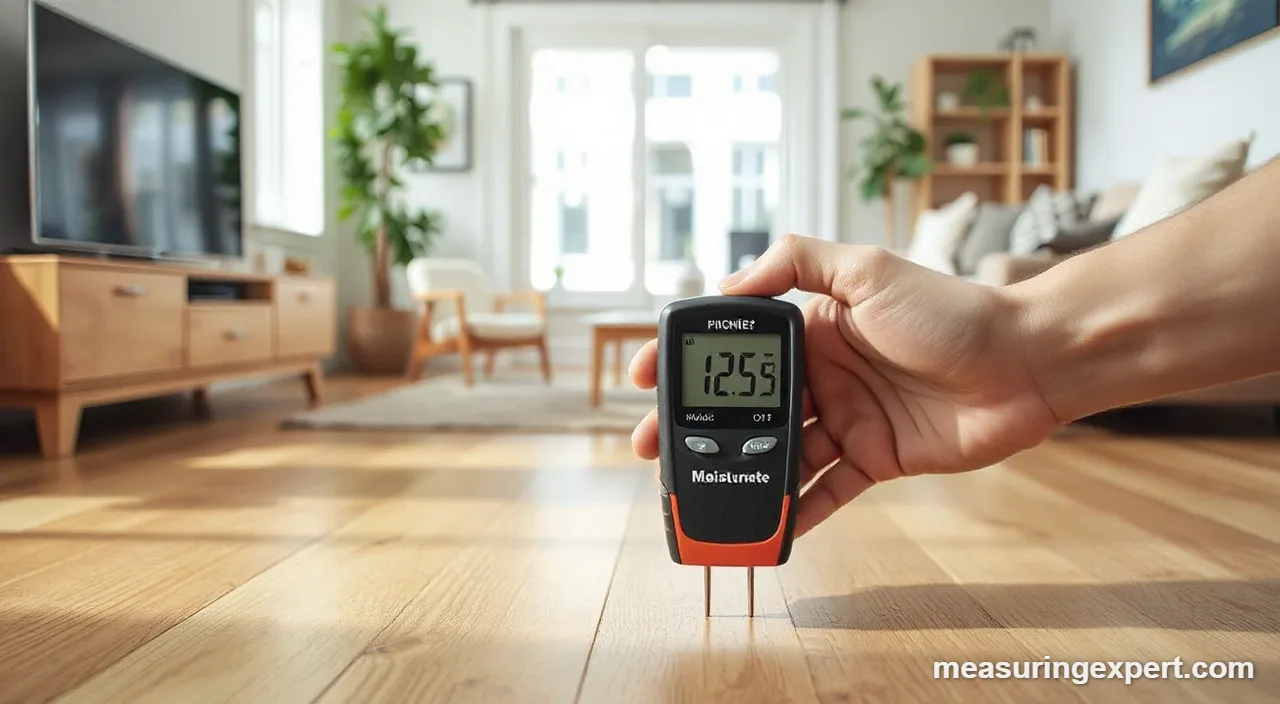
A single stain on a ceiling can mean a drip, a hidden pipe leak or an old problem that dried out years ago. A moisture meter tells you which. It turns “it looks damp” into a number you can compare to a dry area and track over days.
The best moisture meter for most homeowners is a pinless model like the Klein Tools ET140, because you can scan wood floors, trim and drywall for hidden dampness without making holes. Pin meters give exact spot readings, soil probes serve plants, and a dual-mode meter like the Triplett MS245 covers both wood-and-wall methods. Choose by material first: wood, drywall or soil.
In short: pinless for scanning, pin for confirming a spot, and a separate soil probe for plants, because wood meters and soil meters do different jobs.
For reference values, the U.S. Forest Service Forest Products Laboratory covers wood moisture content and recommended levels in its Wood Handbook chapter on drying and moisture control, and the EPA advises keeping buildings dry to avoid mold in its moisture control guidance.
This page ranks 10 meters for wood, walls and soil, explains pin and pinless readings and shows how to cross-check any meter with an oven-dry test. For deeper dives, see our guides to the best wall moisture meters and the best soil moisture sensors.
As an Amazon Associate we earn from qualifying purchases. Picks are based on manufacturer specs and buyer reports, not on lab testing, and we never type prices because they change.
Pinless scan that reads up to 3/4 inch deepBest Basic Pin MeterGeneral Tools MMD4E Moisture Meter for Wood, Walls and Leak Detection
Pin-style probe for wood, walls and leaksBest for WoodworkersOrion 930 Pinless Wood Moisture Meter by Wagner Meters
Wood-focused pinless meter from a wood-moisture specialist
On this page
Key Takeaways
- Best overall: Klein Tools ET140 pinless meter for wood and drywall.
- Best dual-mode: Triplett MS245 with pin and pinless modes.
- Best for woodworkers: Orion 930 pinless wood meter.
- Pinless meters scan for hidden damp; pin meters confirm one spot.
- A reading means little alone; compare with a known dry area of the same material.
- Soil meters and wood meters are different tools; do not swap them.
- Picks are based on specs and buyer reports, not lab tests.
How We Chose These Picks
We shortlisted moisture meters from listings with strong ratings from many shoppers across three jobs: wood, building materials and soil. We compared what each maker states about type, depth, modes and features, and dropped thin listings with unclear specs. This is research, not lab testing.
Each brand appears at most twice, near-duplicates were skipped and accessories were left out. The order weighs ease of use for first-time owners first, then range of materials, then build and brand support.
The 10 Best Moisture Meters Right Now
The first seven picks serve wood and walls. The last three serve plants and soil. Prices change often, so we do not list them; the product cards show current offers.
| # | Pick | Best for | Standout |
|---|---|---|---|
| 1 | Klein Tools ET140 Pinless Moisture Meter | homeowners checking wood and drywall without holes | Pinless scan that reads up to 3/4 inch deep |
| 2 | General Tools MMD4E Moisture Meter for Wood, Walls and Leak Detection | small repairs and quick wood checks | Pin-style probe for wood, walls and leaks |
| 3 | Orion 930 Pinless Wood Moisture Meter by Wagner Meters | lumber, flooring and furniture makers | Wood-focused pinless meter from a wood-moisture specialist |
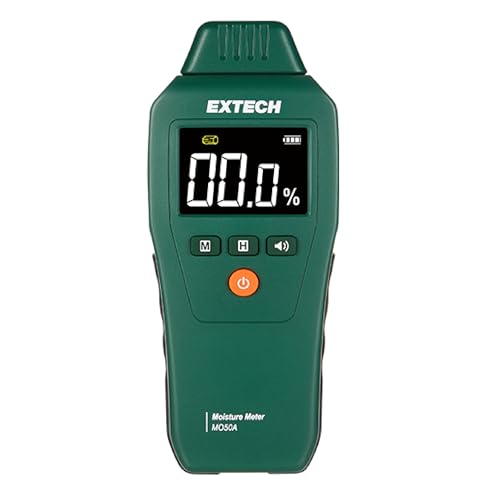
| 4 | Extech MO50A Compact Pin Moisture Meter | tool-bag use on job sites | Audible alert and backlit display in a small body |
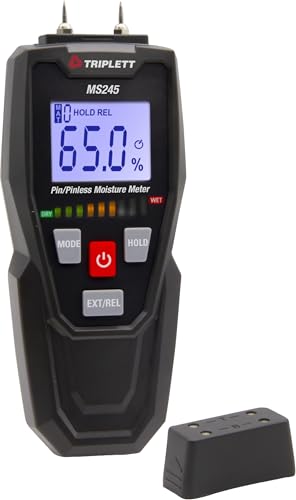
| 5 | Triplett MS245 Pin/Pinless Moisture Meter | people who want both methods in one meter | Switch between pin and pinless modes |
| 6 | Protimeter Aquant Non-Invasive Moisture Meter (BLD5770) | damp surveys on walls and floors | Non-invasive reading for building materials |
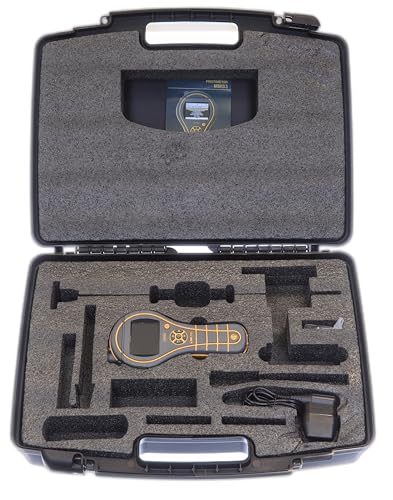
| 7 | Protimeter MMS3 Standard Kit with Hard Case | professionals who want a full kit | Kit with a hard case from a damp-survey brand |
| 8 | XLUX Plant Soil Moisture Meter | indoor and outdoor plants | Easy probe meter for houseplants and garden pots |
| 9 | Luster Leaf Rapitest Analog Soil Moisture Tester | gardeners who want no batteries | Analog dial in a familiar garden tool |
| 10 | Extech MO750 Soil Moisture Meter | serious growers and landscaping jobs | Brand-name soil meter from a test-equipment maker |
Buying from this list? Get it fast, and catch Black Friday deals, with Prime
#1Best Overall
Klein Tools ET140 Pinless Moisture Meter

Best for: homeowners checking wood and drywall without holes
Pinless meters press flat against a surface and read the moisture below it, so there are no pin holes in finished floors, trim or painted drywall. The ET140 title promises detection up to 3/4 inch deep, which covers most framing lumber faces, subfloors and wall board.
That makes it a sensible first meter for a home: scan a suspect wall for a leak, check firewood before burning, or confirm new flooring has acclimated. Treat the number as a relative reading on drywall and a closer estimate on wood, and use the manual to pick the right material mode.
- Type: pinless, per the title
- Depth: up to 3/4 inch, per the title
- Targets: wood and building materials, per Klein
- Output: digital readout
- No pin holes
- Fast scanning over large areas
- Simple enough for a first-time user
- Reads an average over an area, not a point
- Not for soil or plants
Skip it if you need a pin-style reading at one exact spot or you mostly test plants.
#2Best Basic Pin Meter
General Tools MMD4E Moisture Meter for Wood, Walls and Leak Detection

Best for: small repairs and quick wood checks
General Tools aims this meter at three jobs named in the title: wood, walls and water-leak detection. Pin meters push two metal pins into the surface and measure electrical resistance, which responds directly to moisture in the material between the pins.
Because the pins reach one location, it is good for confirming a suspicious spot found by scanning. Expect small pinholes in the surface, so test hidden or unfinished areas first. Read the chart in the manual to adjust for species when testing lumber.
- Type: pin, per the listing
- Targets: wood, walls and water leaks, per the title
- Handheld digital meter
- Includes guidance for material settings in the manual
- Reads one exact spot
- Works on lumber and drywall
- Straightforward controls
- Leaves small holes
- Needs species correction for exact wood values
Skip it if you refuse to put holes in finished surfaces.
#3Best for Woodworkers
Orion 930 Pinless Wood Moisture Meter by Wagner Meters

Best for: lumber, flooring and furniture makers
Wagner Meters is known for wood-moisture tools, and the Orion 930 is a pinless model made for lumber and flooring. Because there are no pins, you can check a stack of boards or a finished floor without marking the wood.
Woodworkers benefit most from this kind of meter because a few percentage points of moisture decide whether boards will cup or glue joints will fail. Check boards at several spots and average them, and hold the meter flat to the face for stable readings.
- Type: pinless, per the title
- Aimed at wood moisture, per the listing
- Handheld digital meter
- Brand focus: lumber, flooring and wood products
- No marks on the wood
- Made around wood readings
- Quick to sweep over boards
- Less useful for plants or plaster
- Surface roughness affects contact
Skip it if your main job is drywall or soil work.
#4Best Compact Pin Meter
Extech MO50A Compact Pin Moisture Meter
Best for: tool-bag use on job sites
This compact pin meter lists an audible alert and a backlit screen in its title, two features that matter when you probe behind a cabinet or in a dim crawl space. The alert tells you when the reading crosses a limit even if you are not looking at the display.
Extech is a familiar test-instrument brand, which helps with manuals and support. As with every pin meter, test at several spots and compare to a known dry area of the same material for context.
- Type: pin, per the title
- Audible alert, per the title
- Backlit LCD, per the title
- Compact handheld body
- Alert without watching the screen
- Backlight for dark spaces
- Small enough for a tool pouch
- Pins leave small marks
- Not designed for soil
Skip it if you want a scanning meter that does not touch the surface.
#5Best Dual-Mode
Triplett MS245 Pin/Pinless Moisture Meter
Best for: people who want both methods in one meter
The MS245 title says pin and pinless, which means you can scan broadly with the pinless side and confirm a hot spot with the pins. That two-step approach is how many inspectors work.
A dual-mode meter costs more than a one-mode meter in most lines, and it asks you to learn two sets of readings. If you tackle wet basements, window leaks and flooring, the extra flexibility pays off.
- Type: pin and pinless, per the title
- Two-step scan and confirm workflow
- Handheld digital meter
- Brand: Triplett test equipment
- Scan first, probe second
- Good for leak hunting
- One tool instead of two
- More to learn than a single-mode tool
- Same material-setting caveats apply
Skip it if you only need to check firewood or lumber occasionally.
#6Best Non-Invasive Building Check
Protimeter Aquant Non-Invasive Moisture Meter (BLD5770)

Best for: damp surveys on walls and floors
Protimeter has a long history in building damp diagnosis, and the Aquant is sold as a non-invasive model. Non-invasive means you press it to the surface and read, with no pins, so painted plaster and finished floors stay intact.
It suits people who diagnose damp problems often, such as property managers and renovators. Read patterns, not single numbers: a wall that is wetter at the bottom than the top tells a different story than a spot reading.
- Type: non-invasive, per the title
- Model number BLD5770
- Aimed at building-material checks, per the brand
- Handheld digital meter
- Surface stays unmarked
- Brand built around damp diagnosis
- Good for pattern mapping
- Pinless readings are comparative on some materials
- Over-spec for a single plant or board
Skip it if you only need a quick check on firewood or a houseplant.
#7Best Pro Kit
Protimeter MMS3 Standard Kit with Hard Case
Best for: professionals who want a full kit
The MMS3 is sold as a standard kit with a hard case, which signals a tool meant to travel between job sites. It sits at the professional end of this list, built for people who diagnose moisture daily.
For a household, it is more instrument than needed, but if you flip houses, run an inspection business or maintain many properties, a kit like this is easier to organize and protect. Read the manual carefully, since scales and probe options matter.
- Model: MMS3 standard kit, per the title
- Hard carrying case, per the title
- Professional damp-survey brand
- Handheld digital meter
- Organized kit with a case
- Trusted brand for building diagnosis
- Suited to repeated daily use
- Likely more tool than a homeowner needs
- Takes time to learn the scales
Skip it if you only check a house once a year.
#8Best Simple Plant Meter
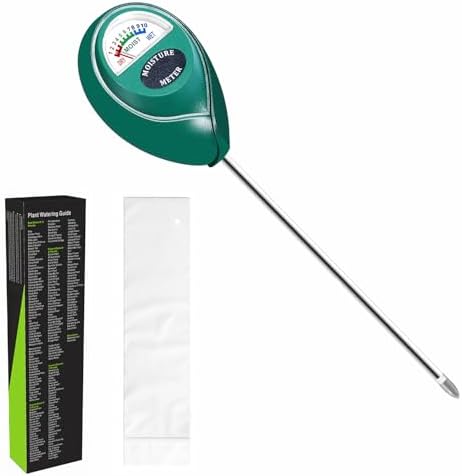
XLUX Plant Soil Moisture Meter
Best for: indoor and outdoor plants
Soil meters work differently from wood and drywall tools: a probe pushed into potting mix gives a quick dry-to-wet reading. The XLUX is a simple probe made for indoor and outdoor plants, with no setup beyond pushing it into the soil.
Use it to stop over-watering, which kills more houseplants than drought. Check at several depths and spots in a big pot, because the top inch dries first. Wipe the probe between pots.
- Type: soil probe, per the title
- For indoor and outdoor plants, per the title
- Simple dry-to-wet reading
- Handheld, no hardware setup
- Very easy to use
- Fast plant checks
- Good for beginners
- Not for wood or walls
- Readings are relative, not percent by weight
Skip it if you want numbers for lumber or drywall.
#9Best Analog Soil Tester
Luster Leaf Rapitest Analog Soil Moisture Tester

Best for: gardeners who want no batteries
The Rapitest is a long-running analog soil tester. You push it into the ground and read a dial, with no batteries or screens to fail, which suits garden beds and big pots.
Analog dials have limits in clay and very dry soil, so confirm with the finger test: if the top two inches of soil feel dry, it is time to water most plants. Treat the dial as a quick guide, not a laboratory reading.
- Type: analog soil probe, per the title
- Dial reading
- No screen to read
- Made by Luster Leaf
- Simple, durable design
- Good for beds and pots
- No electronics to maintain
- Relative reading only
- Needs good soil contact to read well
Skip it if you need to test wood or walls.
#10Best Step-Up Soil Meter
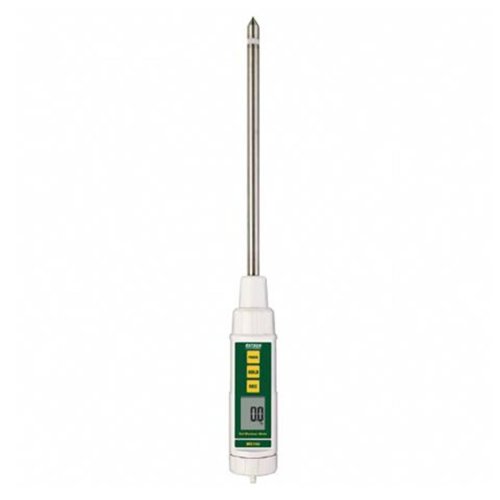
Extech MO750 Soil Moisture Meter
Best for: serious growers and landscaping jobs
Extech makes electronic test tools, and the MO750 is its soil moisture model. It suits growers who want more than a bare dial and are happy to use a branded instrument with a manual.
Soil meters help most when you build a habit: check at the same depth, at the same time of day, in similar soil. The reading then becomes a trend you can trust more than any single number.
- Type: soil moisture meter, per the title
- Extech test-instrument brand
- Probe-based reading
- Handheld unit
- Brand with manuals and support
- Good for repeated garden checks
- More instrument than a basic probe
- Not for wood or walls
- Overkill for a single houseplant
Skip it if you only have a few indoor plants.
Pin vs Pinless: Two Methods, Two Jobs
Pin meters push two metal pins into the material and measure electrical resistance between them. Pinless meters send a radio-frequency field into the surface and read the response. They are often confused, but they answer different questions.
| Feature | Pin meter | Pinless meter |
|---|---|---|
| Reads | One exact spot between the pins | An average over a patch, to a limited depth |
| Surface damage | Small holes | None |
| Best for | Confirming a suspect spot, lumber depth checks | Scanning walls and floors fast |
| Weak at | Hidden or finished surfaces | Dense or metal-backed materials |
A dual-mode meter does both, and using pinless first, then pins to confirm, is how many inspectors work.
What the Numbers Mean on Wood, Drywall and Soil
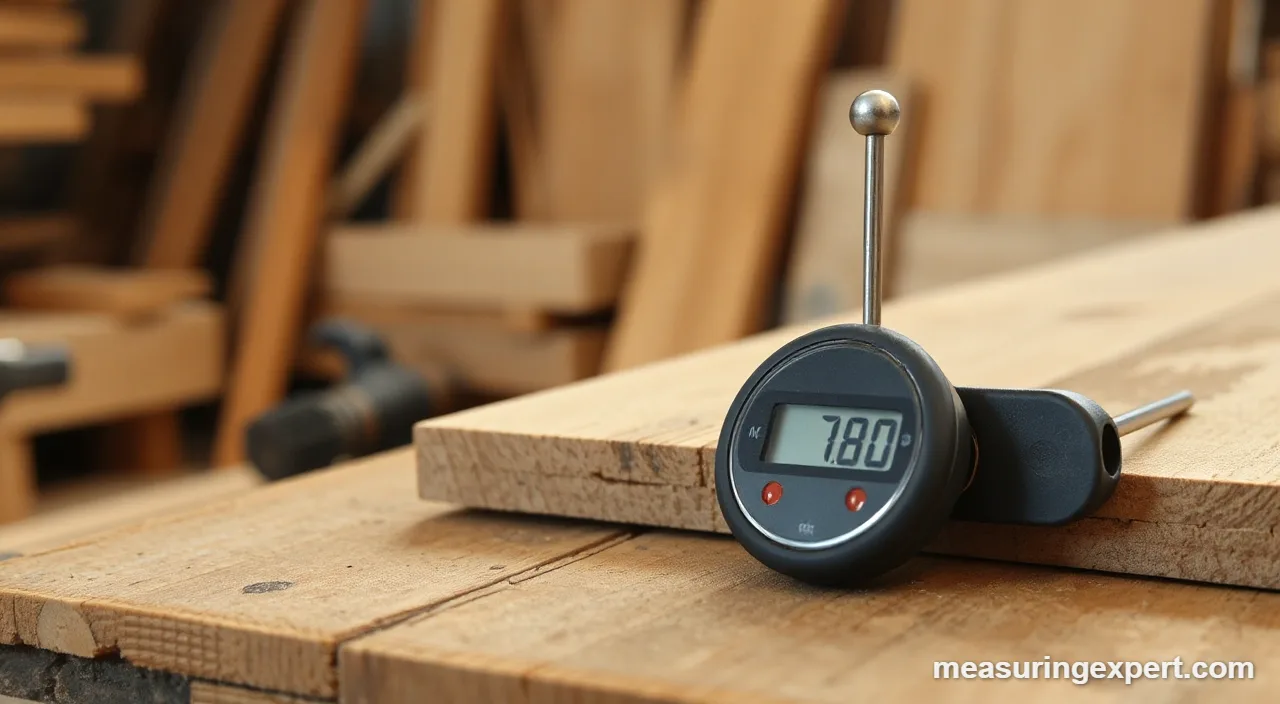
Readings are only meaningful when you know the scale. Wood meters report moisture content as a percent of dry wood weight. Drywall meters often show a relative scale rather than true percent. Soil meters usually show a dry-to-wet dial or a 1 to 10 scale.
| Material | Typical scale | How to use it |
|---|---|---|
| Interior wood | Percent moisture content, often 6 to 9 percent for heated rooms | Compare with the target for your region and the USDA guidance |
| Framing lumber | Percent; kiln-dried lumber is commonly under 19 percent | Check several boards |
| Drywall and plaster | Relative reading | Compare with a known dry spot |
| Garden soil | Dry, moist or wet zones | Check at root depth |
The U.S. Forest Service chapter linked earlier explains why wood in service settles at a moisture level set by the air around it, which is why a board brought indoors can move for weeks.
How to Test a Wall or Floor Step by Step
- Read the manual and set the material mode for wood or drywall.
- Test a spot you know is dry, such as a wall high above the floor, to get a baseline.
- Hold a pinless meter flat against the surface, or push pin tips in along the grain.
- Take at least five readings in a grid, spaced about 6 to 12 inches apart.
- Mark the high readings lightly with painter’s tape and compare them with the baseline.
- Recheck the same spots on another day; a number that keeps rising points to an active leak.
- Note temperature and recent weather, since both change readings.
- Take a baseline reading on dry material first.
- Take several readings and compare them.
- Match the meter mode to the material.
- Recheck suspect areas on another day.
- Keep pins clean and replace worn tips.
- Test through metal lath or foil backing and trust the number.
- Use a soil probe on lumber or a wood meter on plants.
- Probe finished surfaces without permission.
- Assume one high reading means a leak.
- Ignore the manual correction chart for species.
Cross-Check a Wood Reading With the Oven-Dry Method
The oven-dry method is the reference method for wood moisture. You weigh a small sample, dry it fully and weigh it again. The formula is:
Moisture content percent = (wet weight – dry weight) / dry weight x 100
| Wet weight | Dry weight | Moisture content |
|---|---|---|
| 108 g | 100 g | 8 percent |
| 115 g | 100 g | 15 percent |
| 130 g | 100 g | 30 percent |
Use a scale that reads to at least 0.1 g, and use the converter above to switch grams to ounces. Dry the sample in a lab or workshop oven at about 217 to 221 degrees F (103 degrees C) until the weight stops dropping, which can take a day. Do not use a kitchen oven for treated or finished wood.
Honest Limits of Moisture Meters
Meters estimate. Species, density, temperature, surface finishes, metal behind a wall and salts in plaster all shift the number. Pin meters are usually calibrated to a reference species such as Douglas fir, so other woods need a correction from the manual. Pinless meters average over a depth and can mislead on thin or layered material.
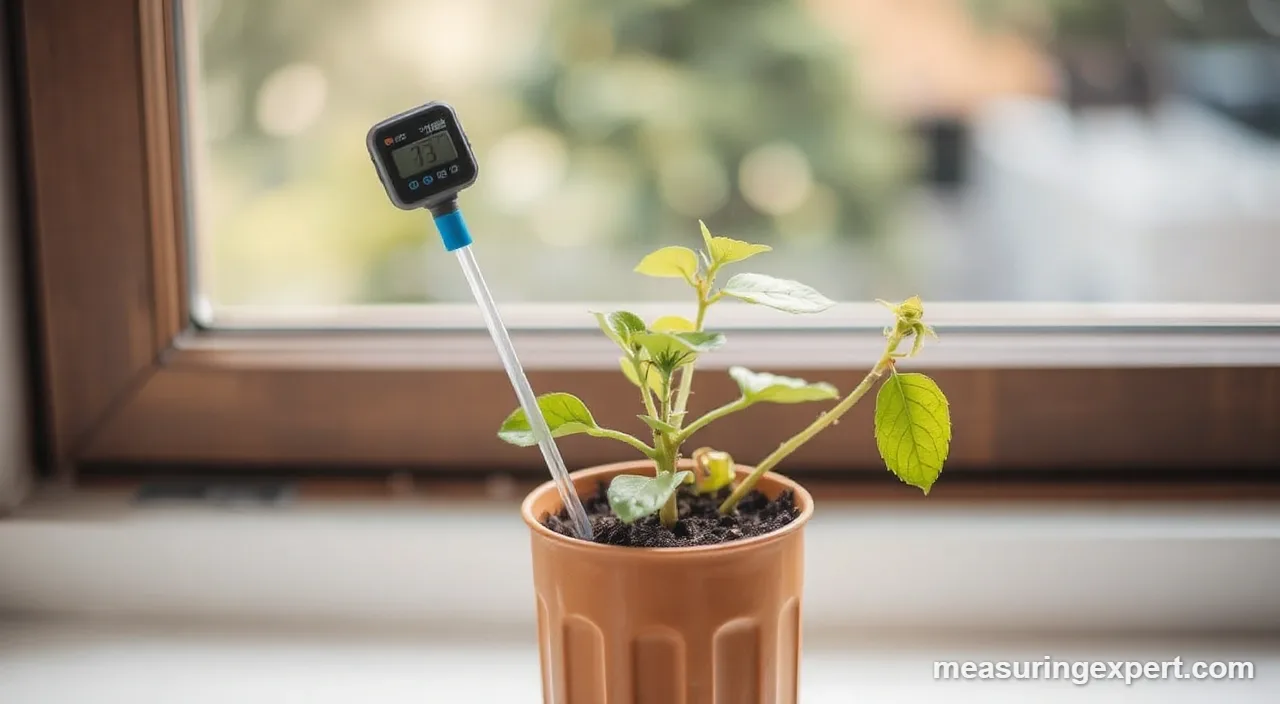
Soil meters read electrical conductivity, so fertilizer salts can fool them. Use any meter to compare spots and track change, and trust a lab or oven-dry result when a decision costs real money.
When to Call a Professional
Call a licensed inspector or water-damage contractor if readings stay high after a leak is fixed, if you see a musty smell or visible mold, or if the damp area is large. The EPA moisture guidance linked above notes that fixing the water source is the first step in mold control. For structural wood, ask a building inspector or engineer before you cut, because a wet-looking beam may still be sound, and a dry-looking one may not be.
This page is general education, not a building-inspection or health opinion.
Moisture Meter FAQ
What is the best moisture meter for a homeowner?
A pinless meter such as the Klein Tools ET140 suits most homeowners because it scans wood and drywall without holes. Add a soil probe if you also care for plants, since soil meters are a separate tool.
What is the difference between pin and pinless meters?
Pin meters push two pins into the material and read resistance at one spot. Pinless meters read an area through the surface with a radio-frequency field and leave no holes. Dual-mode meters offer both.
What moisture level is safe for wood indoors?
Heated indoor wood commonly settles around 6 to 9 percent moisture content, though it depends on region and season. Check the USDA Forest Products Laboratory guidance linked above for recommended levels.
Can a moisture meter detect a leak behind a wall?
It can show dampness near the surface or within its reading depth, which often reveals a leak. It cannot see the pipe, so confirm with a second method or a plumber.
Can I use a wood moisture meter on drywall?
Many meters have a drywall or building-material mode. Without that mode, the reading is only a rough guide. Follow the manual and compare against a known dry spot.
Why do readings change from day to day?
Temperature, humidity, recent rain, surface finish and contact pressure all affect readings. Repeat measurements under similar conditions for a fair comparison.
Do soil moisture meters work well?
They work as a quick guide, especially for avoiding over-watering. Readings vary with soil type and fertilizer salts, so confirm with the finger test, pressing a fingertip two inches into the soil.
How accurate are moisture meters?
Good wood meters are often within a percentage point or two of the oven-dry method on suitable species, but accuracy varies by material, temperature and setup. Treat readings as estimates.
How deep does a pinless meter read?
It depends on the model. The Klein ET140 title lists up to 3/4 inch. Always check the manual for the exact depth and material limits.
How do I calibrate a moisture meter?
Most handheld meters use a check function or reference pad described in the manual. For wood, compare against an oven-dry sample or a lab-checked board, and send professional kits for service when the maker advises.
Bottom Line
The short version: start with a pinless Klein Tools ET140 if your jobs are wood, floors and walls, step up to the Triplett MS245 when you want pins as well, and buy a separate soil probe for plants. A moisture meter is cheap insurance against a hidden leak and a useful partner for woodworking.
Always compare readings with a known dry spot, repeat them on another day and let a professional handle large or persistent damp. When money or health depends on the answer, an oven-dry test or an inspector beats any handheld number.
Our verdict: the Klein Tools ET140 for general use, the Orion 930 for woodworking, the Triplett MS245 for pin plus pinless, and the XLUX or Luster Leaf probes for plants.
Prime for Young Adults: a longer free trial and a lower price after it