

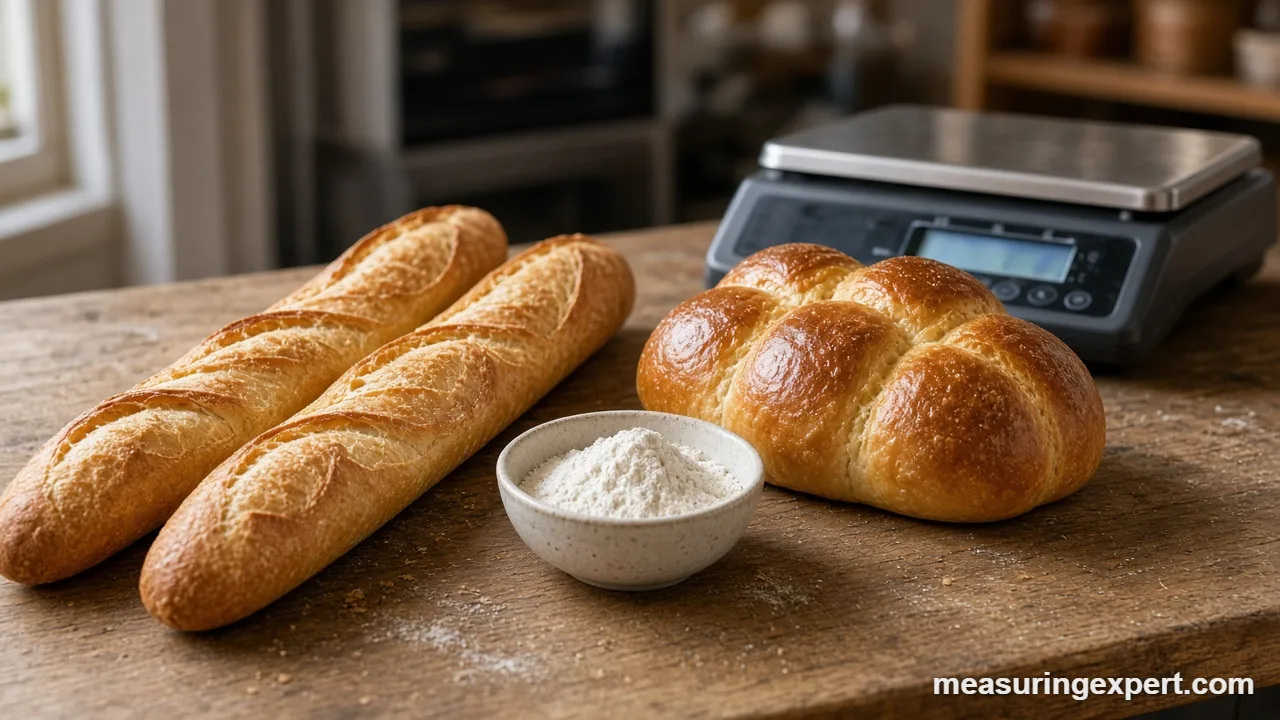
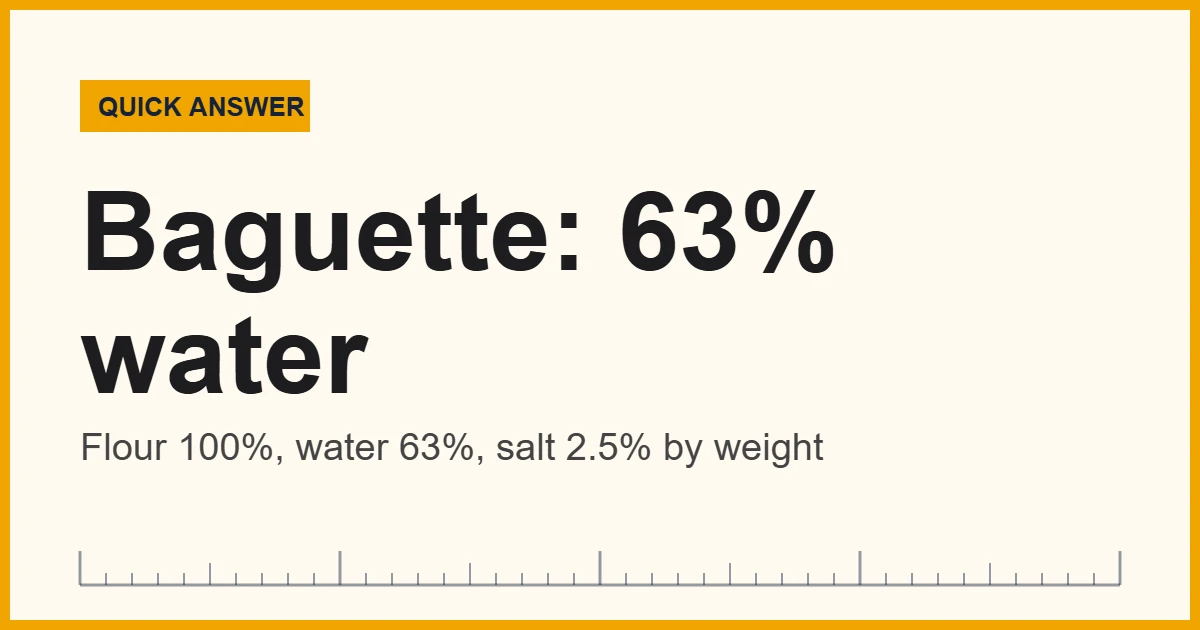
French baking measurements work best by weight and as baker’s percentages. A baguette, for example, is about 100% flour, 63% water and 2.5% salt, so 360 g of flour takes about 227 g of water and 9 g of salt. Weigh in grams, then scale every ingredient from the flour.
Convert Grams to Ounces for French Baking Measurements
French recipes list grams, while many US scales also show ounces. First, type your flour or butter weight below. Then the converter shows the same amount in other units, so you can follow a French formula on any scale.
Bread and viennoiserie doughs depend on ratios, so this guide first focuses on three classics: baguette, brioche and pate a choux. In short, each dough has a fixed relationship between flour, water, fat and eggs. For general scale tips, see our guide to measuring ingredients by weight. For laminated doughs such as croissants, read French pastry butter ratios.
- Baker’s percentage means every ingredient is a percent of the flour weight.
- A baguette sits near 63% water and 2.5% salt in King Arthur’s recipe.
- Brioche carries about 61% egg and 69% butter.
- Pate a choux uses more water than flour, plus eggs added last.
- A cup of all-purpose flour is about 120 g, but weighing is safer.
- Finally, scale any dough by choosing a flour weight and multiplying.
Baker’s Percentages in French Baking Measurements
In other words, a baker’s percentage writes each ingredient as a percent of the flour weight. In fact, King Arthur explains that flour is always 100%. To find a percentage, divide the ingredient weight by the flour weight, then multiply by 100.
Next, hydration is the water as a percent of the flour. For example, 227 g of water with 360 g of flour is 63% hydration. In addition, the method makes recipes easy to scale, because the ratios never change.
| Ingredient | Weight | Baker’s percentage |
|---|---|---|
| Flour | 360 g (12.7 oz) | 100% |
| Water | 227 g (8.0 oz) | 63% |
| Salt | 9 g (0.32 oz) | 2.5% |
Baguette Ratios by Weight
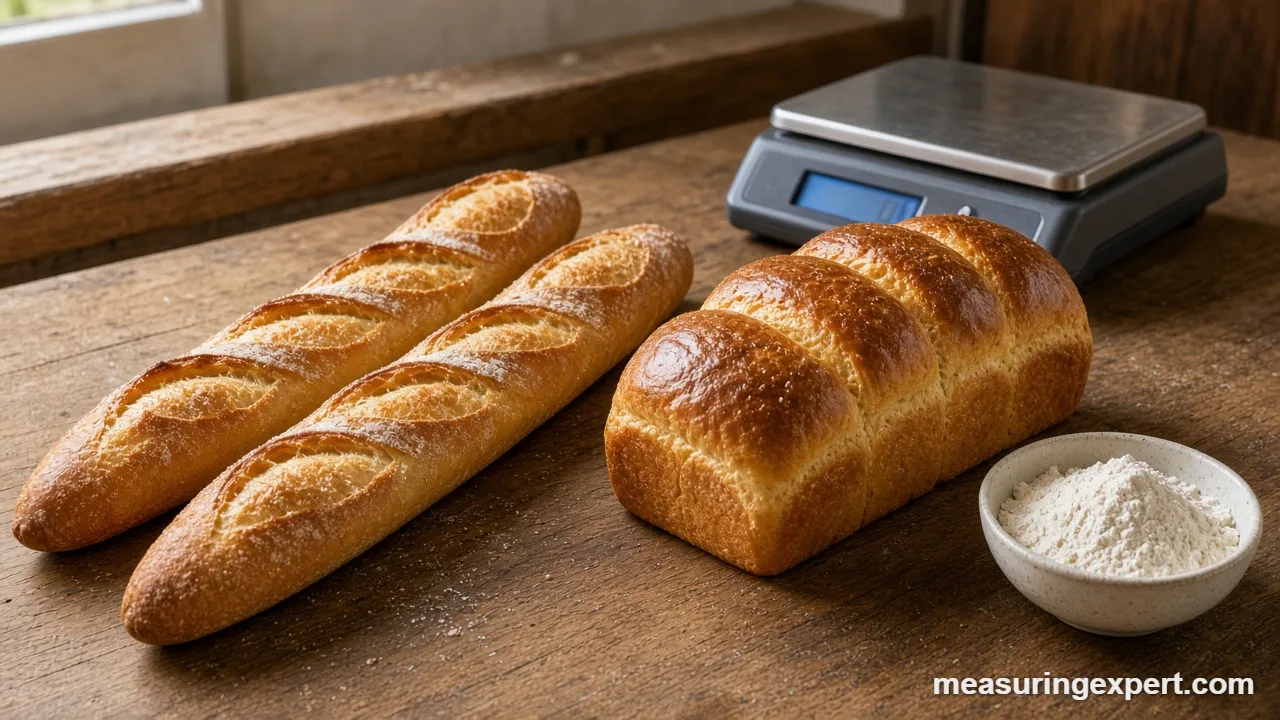
First, a traditional French baguette uses only flour, water, yeast and salt. However, Wikipedia notes that the “tradition” baguette may include small amounts of a few flour additives. King Arthur’s French-style baguette recipe is a simple home version, so its numbers make a good starting formula.
| Ingredient | Weight | Baker’s percentage |
|---|---|---|
| All-purpose flour | 360 g (3 cups) | 100% |
| Water (lukewarm) | 227 g to 283 g (8 to 10 oz) | 63% to 79% |
| Table salt | 9 g (1 1/2 tsp) | 2.5% |
| Instant yeast | 2 tsp | not weighed in the recipe |
Overall, the recipe yields three baguettes of 15 to 18 inches. Also, it bakes at 450 F (232 C) for 20 to 25 minutes. As a result, each loaf starts from about 200 g of dough.
Next, to scale to 1,000 g of flour, multiply the percentages. That gives about 631 g of water and 25 g of salt at the base hydration. Therefore, you only need one calculation to change batch size.
French Baking Measurements for Brioche
Brioche is a rich dough, so its fat and egg ratios matter more than its water. For reference, King Arthur’s classic brioche makes one large loaf or 12 small rolls. Also, egg weight uses King Arthur’s figure of 50 g per large egg.
| Ingredient | Weight | Baker’s percentage |
|---|---|---|
| All-purpose flour | 330 g (11.6 oz) | 100% |
| Cool water | 57 g (2.0 oz) | 17% |
| Large eggs (4) | 200 g (7.1 oz) | 61% |
| Sugar | 25 g (0.9 oz) | 7.6% |
| Unsalted butter | 227 g (8.0 oz) | 69% |
| Salt (3/4 tsp, about 4.5 g) | 4.5 g | 1.4% |
Also, the butter goes in last, two tablespoons at a time. The dough then rests in the fridge for at least 4 hours. Finally, it bakes at 375 F (190 C) until the center reaches 190 F (88 C).
Pate a Choux Ratios by Weight
Meanwhile, pate a choux is a cooked paste, and it puffs from steam. For example, King Arthur’s recipe boils water, butter and salt, then stirs in all the flour at once. Next, the eggs go in one at a time.
| Ingredient | Weight | Baker’s percentage |
|---|---|---|
| Water | 227 g (8.0 oz) | 151% |
| Unsalted butter | 113 g (4.0 oz) | 75% |
| All-purpose flour | 150 g (5.3 oz) | 100% |
| Large eggs (4) | 200 g (7.1 oz) | 133% |
| Salt (3/8 tsp, about 2.3 g) | 2.3 g | 1.5% |
Overall, the recipe makes about 600 g of pastry. However, eggs are the variable. Therefore, the paste should be smooth, shiny and fall slowly from a spoon, and you may use a little less than the full amount.
For other pastry creams and fillings, see measurement in pastry making.
Comparing French Baking Measurements Side by Side
| Dough | Flour | Main liquid | Fat | Eggs |
|---|---|---|---|---|
| Baguette | 100% | 63% water | none | none |
| Brioche | 100% | 17% water | 69% butter | 61% |
| Pate a choux | 100% | 151% water | 75% butter | 133% |
As a result, the three doughs behave very differently. A baguette is lean and chewy, while brioche is enriched and soft. Meanwhile, choux is a paste that depends on steam.
How to Scale French Baking Measurements
- Pick a flour weight. First, decide how much flour you want to use, such as 500 g or 1,000 g.
- Write down the percentages. Next, list each ingredient as a percent of the flour, taken from your formula.
- Multiply. Then multiply the flour weight by each percentage and divide by 100.
- Weigh in one bowl. Next, place the bowl on the scale, tare it, and add each ingredient in turn.
- Keep notes. Finally, record the final dough feel so you can adjust water next time.
For example, 500 g of flour for brioche needs about 87 g of water, 303 g of egg, 38 g of sugar and 344 g of butter. In addition, add about 7 g of salt. As a result, the whole batch is easy to weigh.
US Cups to Grams for French Recipes
If a recipe is in cups, first convert it to grams. For reference, the values below come from King Arthur’s ingredient weight chart.
| Ingredient | 1 US cup |
|---|---|
| All-purpose flour | 120 g (4.25 oz) |
| Granulated sugar | 198 g (7 oz) |
| Butter (2 sticks) | 227 g (8 oz) |
| Milk | 227 g (8 oz) |
| 1 large egg | 50 g (1.8 oz) |
However, a scooped cup of flour is often heavier. Therefore, spoon the flour into the cup and level it if you must use cups. Our guide to measuring flour for bread explains the method.
Recommended Tools for French Baking Measurements

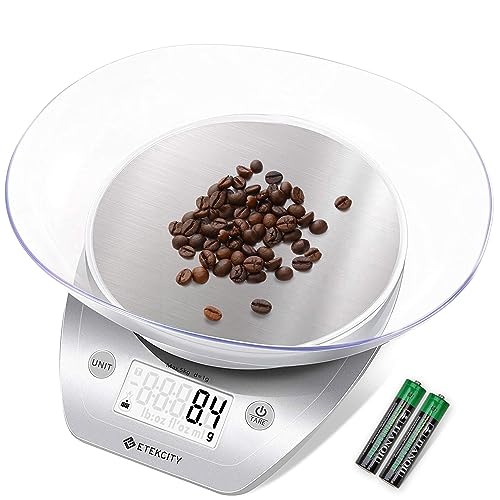
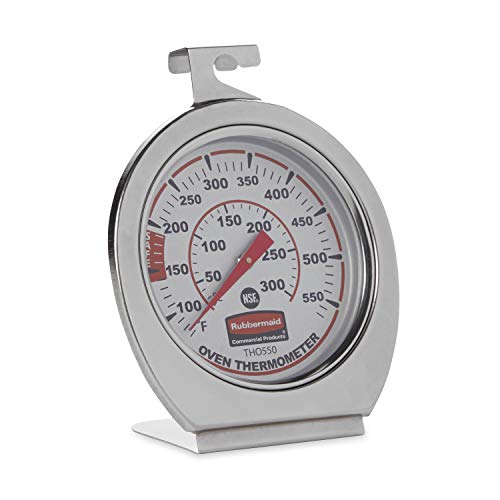


As an Amazon Associate, Measuring Expert earns from qualifying purchases.
Do and Don’t for Dough Weights
Do
- First, weigh flour, water and salt in grams.
- Also keep a little water back for new flours.
- Then check dough and oven temperatures with a thermometer.
- Finally, write down each batch.
Don’t
- Mix cups and grams in one recipe.
- Add all the choux eggs without checking the paste.
- Put cold butter into brioche before the dough is ready.
- Guess the oven temperature.
Honest Limits of Ratios
In short, ratios are a starting point. For instance, flour protein, room temperature, and mixing time change how much water a dough accepts. In addition, egg sizes vary, so the choux and brioche egg weights shift from batch to batch. Similarly, ovens run hot or cold, so check doneness by color and, for brioche, by center temperature.
When to Ask a Professional
For example, if you plan to sell bread, ask your local health department about labeling and food rules. A trained baker can also help with large batches, long fermentation and food safety.
Frequently Asked Questions
What are French baking measurements?
French baking measurements are weights in grams, usually written as ratios to the flour. A baguette, for example, is about 100% flour, 63% water and 2.5% salt.
Why do French recipes use grams instead of cups?
In short, grams are more consistent. As a result, a French recipe gives the same dough every time, while a cup of flour can vary by 20 grams or more.
How much water goes in a baguette?
King Arthur’s baguette recipe uses 227 g of water for 360 g of flour, which is 63% hydration. In addition, it allows up to 283 g, or about 79%, for a softer dough.
How much salt does a baguette need?
Likewise, the same recipe uses 9 g of salt for 360 g of flour. That equals 2.5% of the flour weight.
What is the butter ratio in brioche?
King Arthur’s classic brioche uses 227 g of butter for 330 g of flour, so butter is about 69% of the flour weight. The dough also holds about 61% egg.
What is the ratio for pate a choux?
King Arthur’s recipe uses 227 g of water, 113 g of butter, 150 g of flour and 4 large eggs. Therefore, water is about 151% and butter about 75% of the flour.
How do I scale a French recipe up or down?
First, pick the new flour weight. Then multiply that weight by each ingredient’s baker’s percentage to get the new weights.
How many grams is a cup of flour for French baking?
King Arthur lists 1 cup of all-purpose flour at 120 g. However, French flours differ, so a weighed amount is safer than a cup.
What temperature should I use for baguettes and brioche?
King Arthur bakes its baguettes at 450 F (232 C) and its brioche at 375 F (190 C). Also, check your oven with a separate thermometer.
Do French baking measurements change with the flour?
Yes, because flours absorb different amounts of water, so keep a little water back. Then add it only if the dough feels too stiff.
French Baking Measurements: The Bottom Line
First, weigh your ingredients in grams. Then express them as percentages of the flour, and scale from there. Finally, keep notes, because your flour and oven will shape the result.
For sources, see King Arthur Baking’s baker’s percentage reference, its French-style baguette, classic brioche and pate a choux recipes.