

Degrees and gradians are two units for measuring angles. A degree divides a full circle into 360 parts, while a gradian (also called a gon) divides it into 400. As a result, a right angle is 90 degrees or 100 gradians. One gradian equals 0.9 degree, and one degree equals about 1.111 gradians.
If your calculator has a tiny “GRAD” light, or a surveying instrument shows “gon,” you have met the gradian. In fact, it is a degree with a different scale. Therefore, the two units describe the same angle with different numbers.
Below, you will first find a conversion chart, the two formulas, a side-by-side comparison and some history. After that, you will see where each unit is used and how to avoid the classic calculator mistake.
Degrees and Gradians Conversion Chart
First, use this chart for the angles that come up most often. The gradian column is exact for the whole numbers shown, and the radian column is rounded to four decimals. In addition, 100 gradians always equals one right angle.
| Degrees | Gradians (gon) | Radians |
|---|---|---|
| 1° | 1.1111 | 0.0175 |
| 5° | 5.5556 | 0.0873 |
| 10° | 11.1111 | 0.1745 |
| 15° | 16.6667 | 0.2618 (pi/12) |
| 30° | 33.3333 | 0.5236 (pi/6) |
| 45° | 50 | 0.7854 (pi/4) |
| 60° | 66.6667 | 1.0472 (pi/3) |
| 90° | 100 | 1.5708 (pi/2) |
| 120° | 133.3333 | 2.0944 (2 pi/3) |
| 180° | 200 | 3.1416 (pi) |
| 270° | 300 | 4.7124 (3 pi/2) |
| 360° | 400 | 6.2832 (2 pi) |
Notice the pattern: the right angle, the straight angle and the full turn all land on round gradian numbers. For example, 45 degrees is exactly 50 gradians, which is half a right angle.
How to Convert Degrees and Gradians
First, the conversion needs only one number. A full turn is 360 degrees and 400 gradians, so the ratio is 10 to 9.
- Find the unit. A small circle after the number means degrees, while “g,” “grad” or “gon” means gradians.
- Convert degrees to gradians. Multiply by 10, then divide by 9. For example, 30 degrees x 10 / 9 = 33.33 gradians.
- Convert gradians to degrees. Multiply by 0.9. For example, 37 gradians x 0.9 = 33.3 degrees.
- Do a quick check. Confirm that 90 degrees gives 100 gradians and that 100 gradians gives 90 degrees.
- Round last. Keep the extra digits until the final answer, because 1/9 repeats forever.
Degrees often come with minutes and seconds. In that case, turn them into decimal degrees first. For instance, 47 degrees 30 minutes is 47.5 degrees, which equals 52.78 gradians.
The National Institute of Standards and Technology (NIST) lists the same factors in its SI conversion tables. In addition, it gives 1 degree as 1.745329 x 10^-2 radian and 1 gon (grade) as 9.0 x 10^-1 degree.
Degrees and Gradians Compared Side by Side
| Feature | Degree | Gradian (gon) |
|---|---|---|
| Full circle | 360 | 400 |
| Straight angle | 180 | 200 |
| Right angle | 90 | 100 |
| One unit in the other | 1° = 1.1111 gon | 1 gon = 0.9° |
| One unit in radians | pi / 180 = 0.017453 | pi / 200 = 0.015708 |
| Smaller parts | Minutes and seconds (base 60) | Decimals (milligon, base 10) |
| Typical symbol | ° | gon, or older g and grad |
| Everyday use | Maps, compasses, school math | Some surveying instruments |
The decimal subdivision is the main selling point of the gradian. As a result, a right angle of 100 gon makes mental arithmetic easy, because 1 gon is also 1 percent of a right angle. However, degrees win on familiarity, since almost every tool and textbook uses them.
Where Each Unit Came From
The degree is very old. For example, ancient astronomers used base-60 numbers, and a circle of 360 parts fit that habit well. In addition, 360 has 24 whole-number divisors, so it splits cleanly into halves, thirds, quarters, fifths, sixths and many more.
The gradian is much younger. In contrast, it appeared in France during the French Revolution, alongside the metric system, as a “metric degree” with 400 parts per circle. Later, the name “gon” was adopted to avoid confusion with “grade,” which means an ordinary degree in parts of northern Europe, according to Wikipedia’s gradian article.
As a result, the gradian never replaced the degree. It did, however, survive in a few technical fields, which the section on surveying covers.
Gradian vs Percent Grade: Do Not Mix Them Up
The word “grade” causes trouble. For instance, a gradian is an angle unit, while a percent grade is a slope: rise divided by run, times 100. For example, a 100% grade is 45 degrees, which is 50 gradians. Likewise, a 10% grade is only 5.71 degrees, or 6.35 gradians.
The converter below changes degrees into percent grade and roof pitch. For gradians, use the chart above.
Where Surveyors Use Degrees and Gradians
Today, however, gradians live mostly in surveying, especially in Europe, where the unit is called the gon. Many total stations can show degrees, gons or mils, so you can switch the display in the settings. Our article on angle measurement in surveying compares the units in more detail.
The decimal scale also helps with small angles. For example, one milligon equals 0.0009 degree, or 3.24 arcseconds. At 100 meters, one gon moves a point about 1.57 meters. For a feel of how small angles behave, see the smallest angle you can measure.
If you set up a total station, therefore, the unit setting matters before the first shot. Our walkthrough on how to use a total station covers that setup. For a broader look at why angle units matter, read the importance of angle measurement.
Check Your Calculator Mode
Most scientific calculators have three angle modes: DEG, RAD and GRAD. Because of that, if the mode is wrong, trig answers are wrong too. For example, sin(30) is 0.5 in degree mode. In gradian mode, however, sin(30) is 0.454, because 30 gradians is only 27 degrees.
| Entry | DEG mode | GRAD mode |
|---|---|---|
| sin(30) | 0.5 | 0.454 |
| cos(45) | 0.7071 | 0.7604 |
| cos(50) | 0.6428 | 0.7071 |
So if an exam answer looks slightly off, check the mode first. Similarly, if a program expects radians, convert degrees or gradians before you call the function.
Recommended Tools for Working With Angle Units
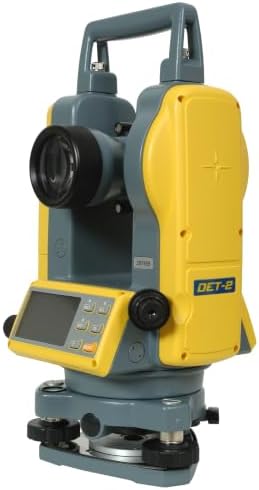
In practice, a scientific calculator with a clearly marked angle mode saves a lot of grief. First, look for a display that shows DEG, RAD or GRAD at all times. Next, check that the manual explains how to switch modes. For field work, a digital theodolite lets you choose the angle unit on screen.



As an Amazon Associate, Measuring Expert earns from qualifying purchases.
If you also measure angles by hand, our comparison of a protractor vs bevel gauge shows which one suits your job.
Key Takeaways
- A full turn is 360 degrees or 400 gradians, so a right angle is 90 degrees or 100 gradians.
- Gradians = degrees x 10 / 9, and degrees = gradians x 0.9.
- “Gon” is the modern name for the gradian, also written grad or g.
- A gradian is an angle, but a percent grade is a slope.
- Surveyors in Europe use gons, while most other fields use degrees.
- Always check the angle mode on a calculator or instrument before you start.
Do and Don’t When Switching Angle Units
Do
- Write the unit next to every angle.
- Check the calculator or instrument mode.
- Convert once, at the end.
- Test with 90 degrees and 100 gradians.
- Keep extra digits during the work.
Don’t
- Assume “grade” always means the same thing.
- Mix degrees and gons in one data file.
- Round 33.33 and then convert again.
- Trust a result without a quick check.
- Ignore the unit label on a drawing.
Honest Limits of Degrees and Gradians
Overall, both units are only labels for the same angle, so neither is more accurate than the other. Instead, accuracy comes from the instrument and the method. Moreover, the gradian is rare outside surveying, and some newer calculators no longer include it. Therefore, a drawing that uses gons may confuse a reader who expects degrees.
Also, the numbers on this page are standard conversions, not a replacement for a project’s own specifications. Therefore, when a contract, deed or plan states its units, follow those units exactly.
When to Ask a Surveyor
If a property description or plan uses gons, ask a licensed land surveyor to interpret it. In the same way, ask an engineer when an angle unit affects safety or structure. In short, a professional can confirm the unit, the reference direction and the rounding rules.
Frequently Asked Questions
What is the difference between degrees and gradians?
A degree is 1/360 of a circle, while a gradian is 1/400. Therefore, one gradian equals 0.9 degree, and a right angle is 100 gradians.
How do you convert degrees to gradians?
First, multiply the degrees by 10 and divide by 9. For example, 45 degrees is 50 gradians.
How do you convert gradians to degrees?
Simply multiply the gradians by 0.9. For instance, 200 gradians is 180 degrees.
How many gradians are in a circle?
In short, there are 400 gradians in a full circle, 200 in a straight angle and 100 in a right angle.
Is a gradian the same as a gon?
Yes, because the gon is the international name for the gradian, which is also written grad or g.
Why do some countries use gradians?
The gradian was created in France with the metric system. As a result, it stayed in use in surveying, mostly in Europe.
Are degrees and gradians part of the SI?
The radian is the SI unit of plane angle. In contrast, the gradian is not part of the SI. However, tables such as NIST’s list its conversion factors.
What is gradian mode on a calculator?
It is the setting that treats angles as gradians, so sin(30) means the sine of 30 gradians. Switch to degree mode for school work.
Is a gradian the same as a percent grade?
No. A gradian is an angle unit, but a percent grade measures slope. For example, a 100% grade is 45 degrees, or 50 gradians.
How many arcseconds are in a gradian?
One gradian equals 54 arcminutes, which is 3,240 arcseconds. That is because it equals 0.9 degree.
Degrees and Gradians: The Bottom Line
To sum up, degrees and gradians describe the same angles on two scales. A circle has 360 degrees or 400 gradians, and the conversion is a simple 10-to-9 ratio.
Finally, use degrees for everyday work, expect gons on some European survey instruments, and always check the unit label or calculator mode before you trust a number.