

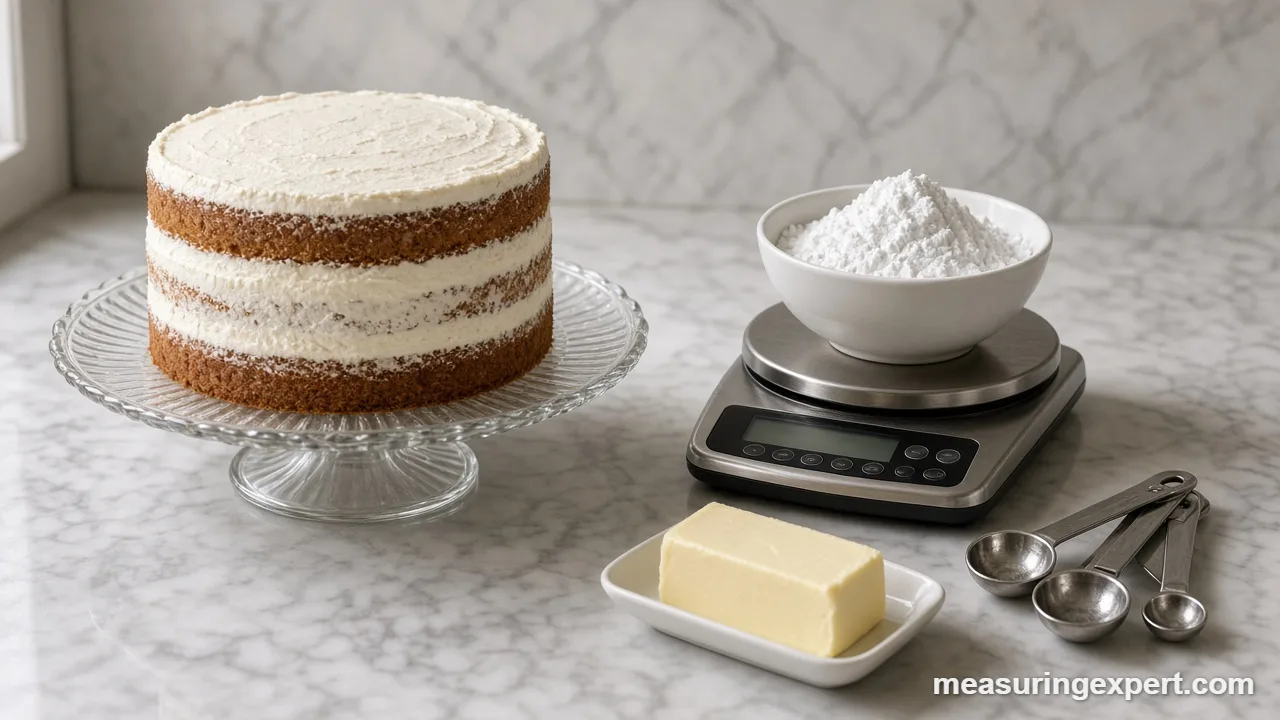
Cake decorating measurements start with weight and a few key amounts. A US stick of butter and 1 cup of unsifted confectioners’ sugar each weigh 113 g, according to King Arthur Baking. Meanwhile, a two-layer cake needs about 3 1/2 to 4 cups of frosting, which is roughly 830 to 950 mL.
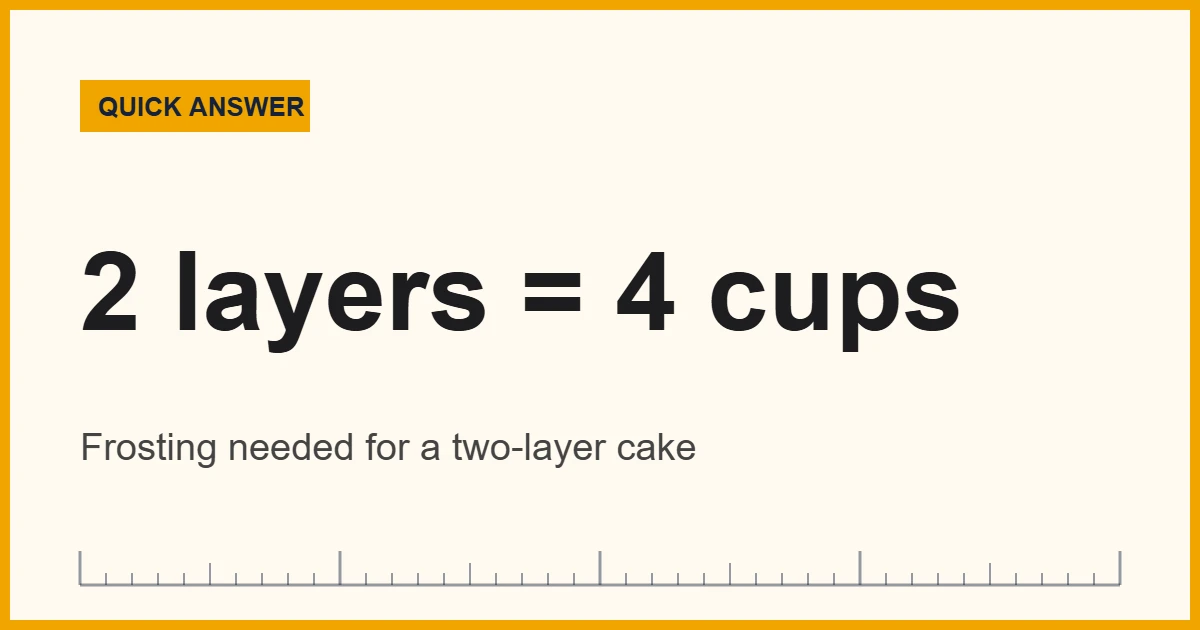
Frosting Converter for Cake Decorating Measurements
First, enter the cups of frosting your cake needs. Next, read the same amount in milliliters, fluid ounces and tablespoons. As a result, you can plan a batch in whichever unit your bowl or recipe uses.
A cake can bake perfectly and still fail at the decorating stage. For example, icing that is too thin slides off the sides. In contrast, icing that is too stiff tears the crumb. Therefore, both problems usually trace back to a small measuring slip.
Instead, the cure is to measure more carefully, and to know how much to make. King Arthur Baking’s frosting guide lists the amounts for each cake size. In addition, its ingredient weight chart gives gram values for icing ingredients.
This page covers both. In short, it shows how much frosting to make, how to weigh the ingredients, and how to measure the tiny amounts that change color and texture.
How Much Frosting Each Cake Needs
First, use this table to plan the batch. The cup amounts come from King Arthur Baking, and they cover filling, frosting and decorating together. Moreover, the milliliter values use the exact US cup of 236.588 mL.
| Cake | Frosting (US cups) | Milliliters |
|---|---|---|
| Single-layer cake | 1 1/2 cups | 355 mL |
| 9 x 13 inch sheet cake | 2 1/2 to 3 cups | 591 to 710 mL |
| 2-layer cake | 3 1/2 to 4 cups | 828 to 946 mL |
| 3-layer cake | 5 to 5 1/2 cups | 1,183 to 1,301 mL |
| 4-layer cake | 6 cups | 1,420 mL |
Cupcakes follow a simple rule of about 2 tablespoons each. For instance, one dozen cupcakes need about 1 1/2 cups, and two dozen need 3 1/2 to 4 cups. Likewise, three dozen need about 6 cups.
Recommended Tools for Cake Decorating Measurements
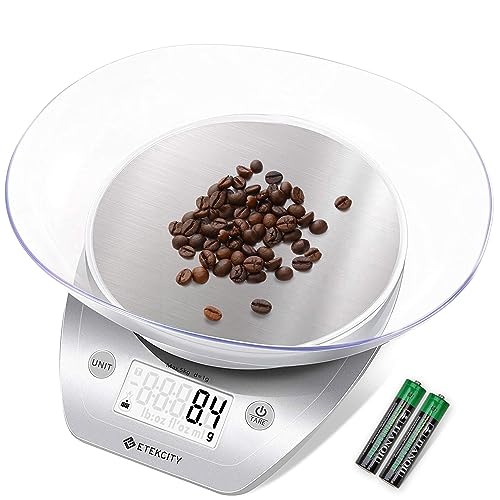
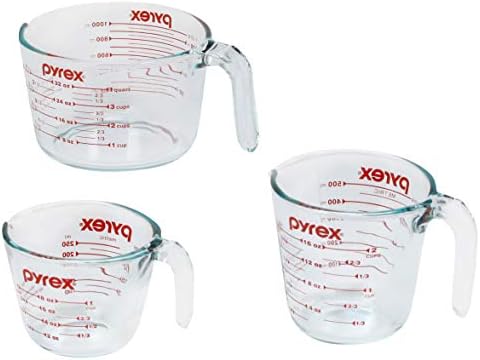
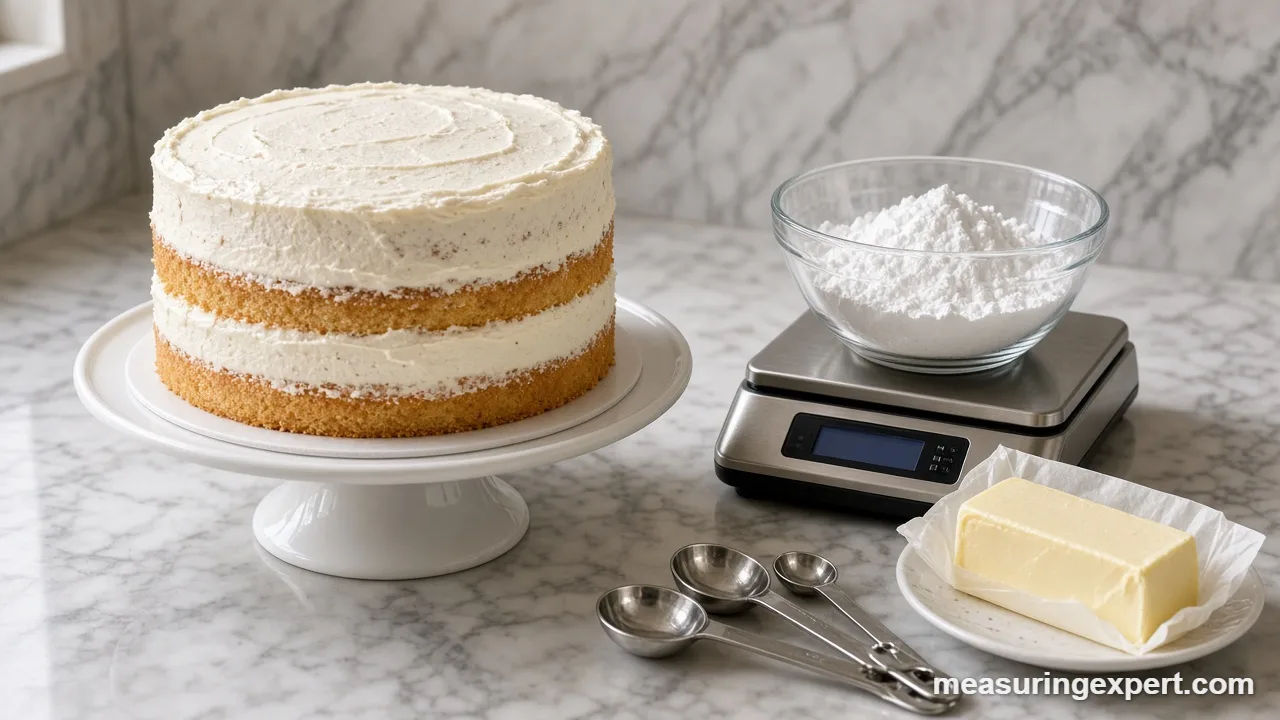
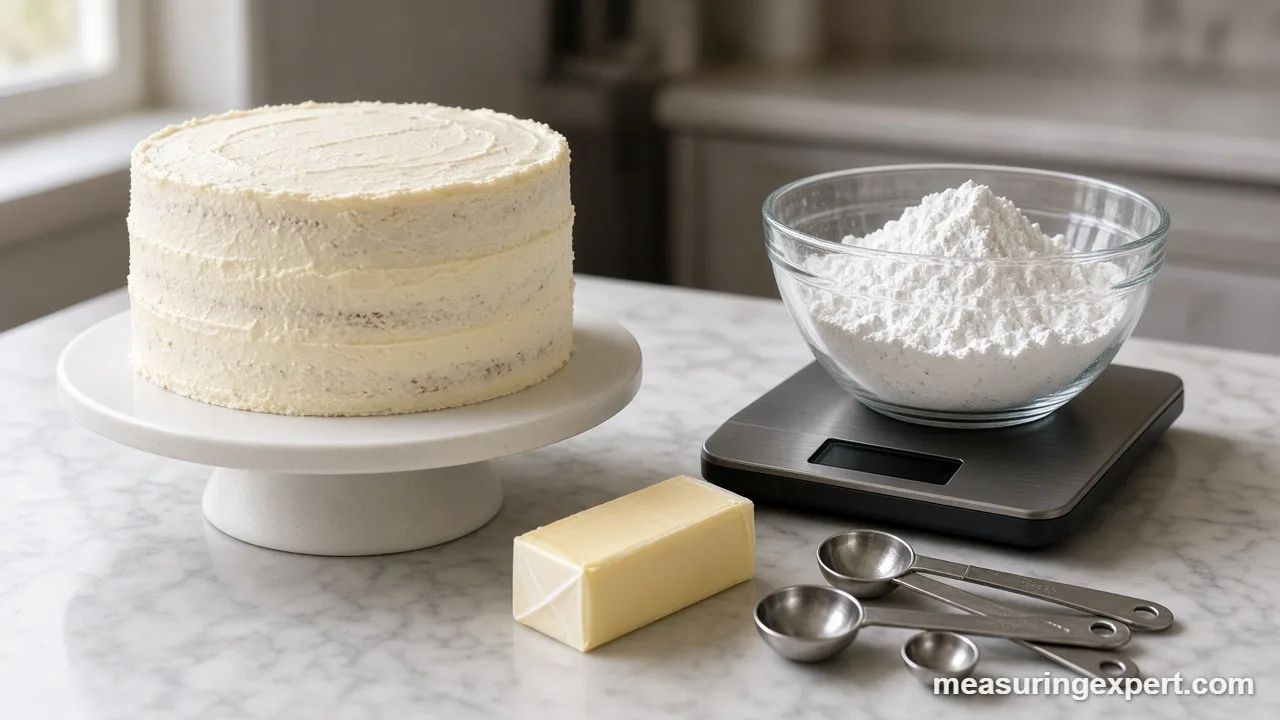
A few tools do most of the work. First, a digital scale with a tare button handles butter and icing sugar. Next, level measuring spoons cover extracts and thinning liquid. Also, a clear liquid cup measures milk or cream, and nesting cups help with recipes written in volumes.



As an Amazon Associate, Measuring Expert earns from qualifying purchases.
Key Takeaways
- First, a two-layer cake needs about 3 1/2 to 4 cups of frosting.
- Also, 1 cup of unsifted confectioners’ sugar and 1 US stick of butter each weigh 113 g.
- In addition, a teaspoon is about 4.93 mL, so thin icing a teaspoon at a time.
- Meanwhile, cupcakes use about 2 tablespoons of frosting each.
- Therefore, weigh the big ingredients and use level spoons for the small ones.
- Finally, make a little extra frosting instead of running short.
Cake Decorating Measurements for Icing Ingredients
Icing is mostly sugar and fat, so those two set the texture. In fact, weighing them removes the biggest source of error. The values below come from King Arthur Baking’s chart.
| Ingredient | Volume | Ounces | Grams |
|---|---|---|---|
| Confectioners’ sugar, unsifted | 1 cup | 4 oz | 113 g |
| Granulated sugar | 1 cup | 7 oz | 198 g |
| Brown sugar, packed | 1 cup | 7 1/2 oz | 213 g |
| Butter | 8 tbsp (1/2 cup) | 4 oz | 113 g |
| Milk | 1 cup | 8 oz | 227 g |
Sifted or unsifted icing sugar
For example, powdered sugar clumps in the bag and fluffs up after sifting. As a result, a cup of sifted sugar weighs less than a cup of unsifted sugar. The chart above lists the unsifted weight, so weigh the sugar first and sift afterward.
If a recipe is written in cups, read the comma carefully. “1 cup sifted” means sift first and then measure. In contrast, “1 cup, sifted” means measure first and then sift. For a broader look at kitchen units, see the metric system in cooking.
How to Measure Icing Ingredients Step by Step
- Set a clean bowl on the scale. First, use a dry bowl big enough for the full batch.
- Press tare. The display returns to zero, so only the ingredient is counted.
- Weigh the butter. A US stick is 113 g, or 4 oz.
- Tare and add the icing sugar. Weigh it instead of scooping, since scooped sugar packs unevenly.
- Measure the liquid in small steps. Start with 1 teaspoon, which is about 5 mL, and mix before adding more.
- Add flavoring with a level spoon. Pour extracts over a separate bowl first.
- Write down the final amounts. Also, notes let you repeat a good batch.
For help choosing a scale, see our guide to the food scale.
Cake Decorating Measurements for Color and Flavor
Food coloring
In fact, color is the smallest measure in the kitchen. Add it a little at a time with a clean toothpick or small spoon. Then stir fully, because the color looks different once it blends. Also, stop slightly early, since many colors deepen as the icing rests.
Extracts and flavorings
Use a level measuring spoon, and pour over a separate bowl. As a result, this keeps a spill out of the batch. Moreover, strong flavors need only small amounts, so measure instead of eyeballing.
Adjusting Icing Consistency With Small Measures
Therefore, thin icing slowly. One teaspoon is about 4.93 mL, and that is often enough to change the texture. Stir in one measured teaspoon, mix well, and then check again. If you overshoot, add a spoonful of sifted icing sugar, which is the usual fix.
| Spoon | Milliliters (US) | Best use |
|---|---|---|
| 1/4 tsp | 1.23 mL | Strong extracts, gel color |
| 1/2 tsp | 2.46 mL | Extracts, salt |
| 1 tsp | 4.93 mL | Thinning icing |
| 1 tbsp | 14.79 mL | Larger liquid additions |
Our guide to how to measure with a measuring cup explains why liquid and dry cups differ.
Scaling a Frosting Batch for a Bigger Cake
In short, weights make scaling easy. For example, a recipe that uses 226 g of butter, which is two sticks, doubles to 452 g. Likewise, if you need 1 1/2 times a batch, multiply every weight by 1.5. Cups work too, but small amounts of liquid are harder to scale.
Next, use the table near the top to pick the target amount. For instance, a three-layer cake needs about 5 to 5 1/2 cups, which is more than a standard two-layer batch. As a result, make a double batch and keep the extra covered.
Cake Decorating Measurements: Common Mistakes
- Scooping icing sugar. The cup packs differently each time, so the icing varies.
- Adding liquid all at once. Soupy icing is hard to rescue.
- Mixing up tsp and tbsp. One tablespoon equals three teaspoons, so the error triples the amount.
- Skipping the tare. The bowl weight then counts as sugar.
- Making too little frosting. Mixing a second batch to match the first is difficult.
- Measuring over the batch. A spill of extract then ends up in the bowl.
Do and Don’t for Cake Decorating Measurements
Do
- Weigh butter and icing sugar.
- Press tare before each ingredient.
- Add liquid a teaspoon at a time.
- Level every spoon with a straight edge.
- Make a little extra frosting.
Don’t
- Scoop sugar straight from the bag.
- Pour in liquid by eye.
- Use a heaping spoon for extract.
- Guess the cake size.
- Add all the color at once.
Honest Limits of Frosting Measurements
However, the amounts above are guides, not guarantees. For one thing, the cup ranges assume standard 8-inch or 9-inch round cakes. Also, another pan depth or a thick decorative finish changes the need. Moreover, the weights come from one brand’s chart, so your sugar or butter may differ slightly. In short, treat the numbers as a strong starting point, and then adjust by feel.
Likewise, the milliliter values on this page use the exact US cup, while labels and metric recipes round it to 240 mL. As a result, results can differ by a small amount between sources. The NIST metric kitchen table lists these rounded equivalents.
Frequently Asked Questions
What are the key cake decorating measurements to know?
First, know three numbers. A US stick of butter is 113 g, 1 cup of unsifted confectioners’ sugar is 113 g, and a two-layer cake needs about 3 1/2 to 4 cups of frosting.
How much frosting do I need for a two-layer cake?
King Arthur Baking suggests 3 1/2 to 4 cups for a two-layer 8-inch or 9-inch round cake. That covers the filling, the outside and the decoration.
How much frosting does one cupcake need?
King Arthur Baking figures about 2 tablespoons per cupcake. Therefore, one dozen cupcakes need about 1 1/2 cups.
How much does a cup of powdered sugar weigh?
King Arthur Baking lists 1 cup of unsifted confectioners’ sugar at 113 g, or 4 oz. Sifted sugar is lighter per cup, so weigh it for steady results.
Should I measure icing sugar before or after sifting?
Follow the wording. “1 cup sifted” means sift first and then measure. “1 cup, sifted” means measure first and then sift. Weighing avoids the question.
Is weighing better for cake decorating measurements than cups?
Yes. Powdered sugar and flour both pack differently from one scoop to the next. As a result, grams give the same icing every time.
How much liquid should I add to thin icing?
Add it a little at a time. A teaspoon is about 5 mL, so stir in 1 teaspoon, mix well, and check the texture before you add more.
How do I measure gel food coloring for cake decorating?
Use a toothpick or a clean small spoon, and add a little at a time. Color deepens as the icing rests, so stop earlier than you think.
Can I use measuring spoons for extracts and flavorings?
Yes. In addition, level spoons work well for extracts. Pour over a small bowl first, and then add the measured amount to the icing.
How much extra frosting should I make for cake decorating?
King Arthur Baking advises erring on the side of too much frosting. Aim for the upper end of the range if you plan to pipe borders.
Cake Decorating Measurements: The Bottom Line
To sum up, good icing starts with weighed butter and sugar. A US stick of butter and a cup of unsifted confectioners’ sugar each weigh 113 g, and a two-layer cake needs about 3 1/2 to 4 cups of frosting. Therefore, a scale, level spoons and a little extra frosting cover nearly every case.
Finally, use the converter at the top of the page when your recipe lists a different unit. With a few careful habits, cake decorating measurements become the easy part, and the decorating stays fun.
2 thoughts on “Cake Decorating Measurements: How to Measure Ingredients and Frosting”