

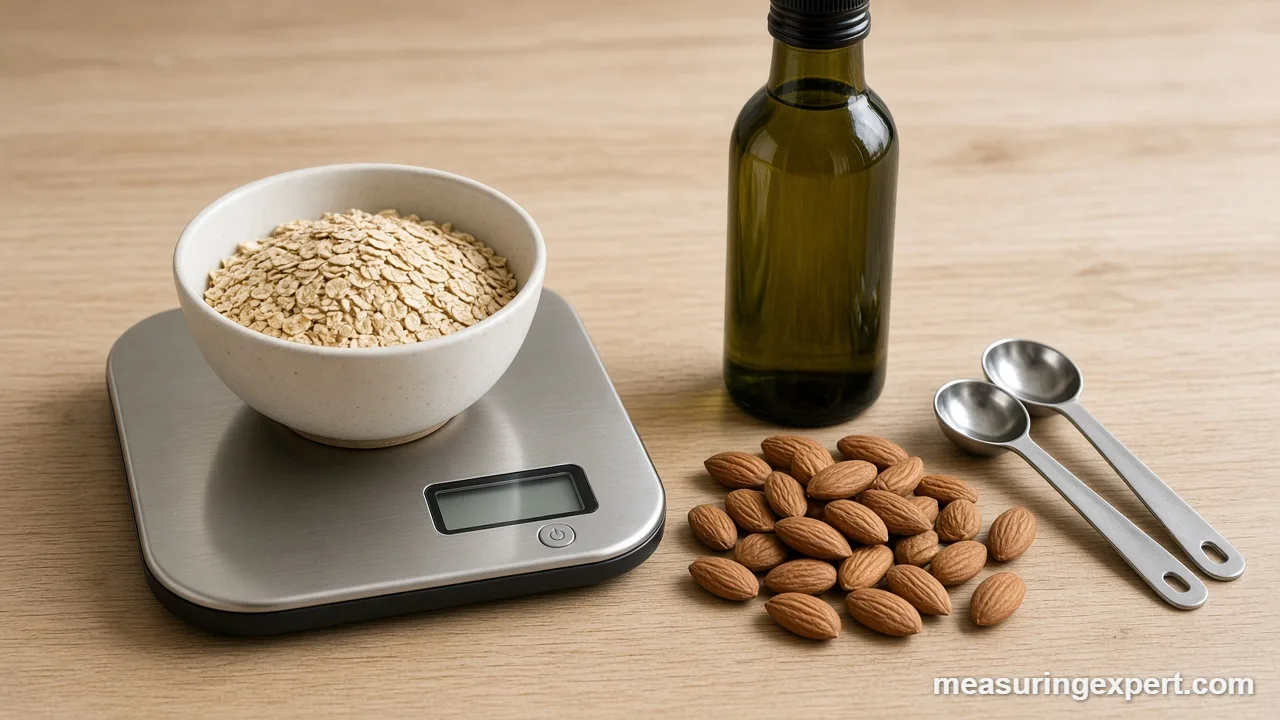
For anti-inflammatory recipes, the most reliable way to measure ingredients is a digital kitchen scale for oils, grains, nuts and seeds, plus level measuring spoons for spices and a cup guide for vegetables. Weighing gives the same amount every time, so each batch and each portion stays consistent.
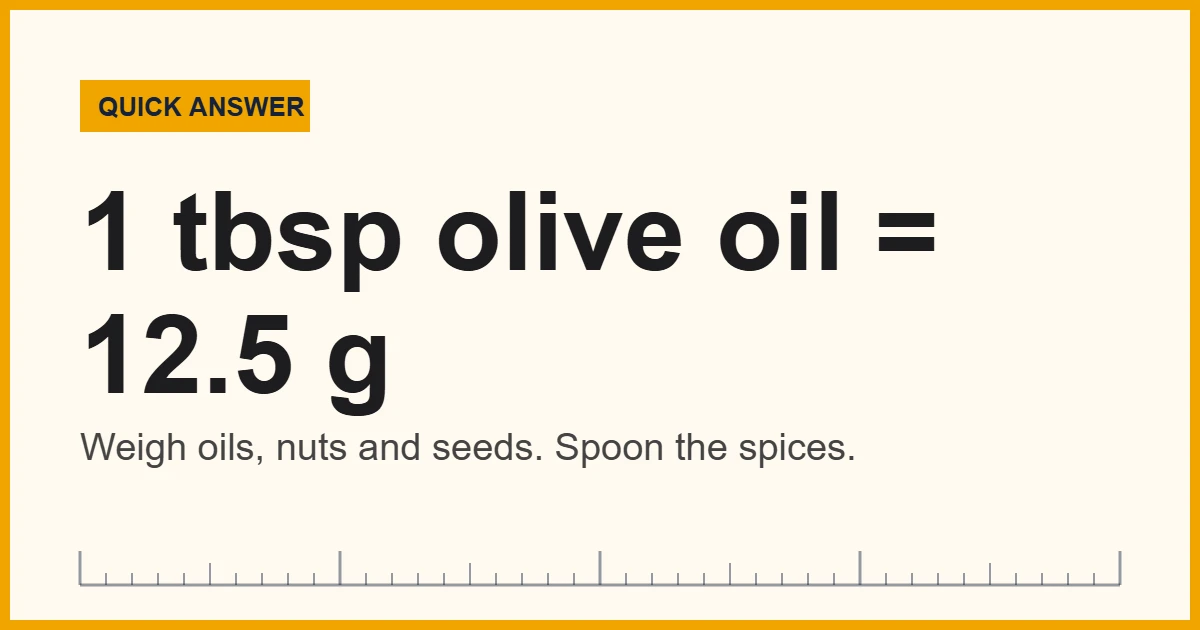
Convert Grams, Ounces and Pounds for Recipe Weights
For instance, many recipes list olive oil, oats or nuts in grams, while US labels use ounces. Enter a weight below and the converter shows the other units using the exact NIST definitions.
Anti-inflammatory recipes tend to lean on a handful of ingredients: olive oil, nuts, seeds, oats, leafy greens, spices and cooked grains. However, each one behaves differently in a measuring cup. For example, oil pours, nuts roll, seeds pack and greens are mostly air. As a result, one measuring method rarely fits the whole recipe.
In short, this guide stays on the measuring side. It does not say which foods help with any health condition, because that is a question for a doctor or registered dietitian. Instead, it shows how to get the same amount every time. For example, King Arthur Baking publishes an ingredient weight chart that lists olive oil, oats, almonds and seeds in grams, and USDA MyPlate lists what counts as one cup of vegetables.
Below, you will find a weight chart, a cup guide for vegetables, a batch-portioning method, and a list of common mistakes. If you want the general case for weighing, see our guide to measuring ingredients by weight.
Weight Chart for Anti-Inflammatory Recipes
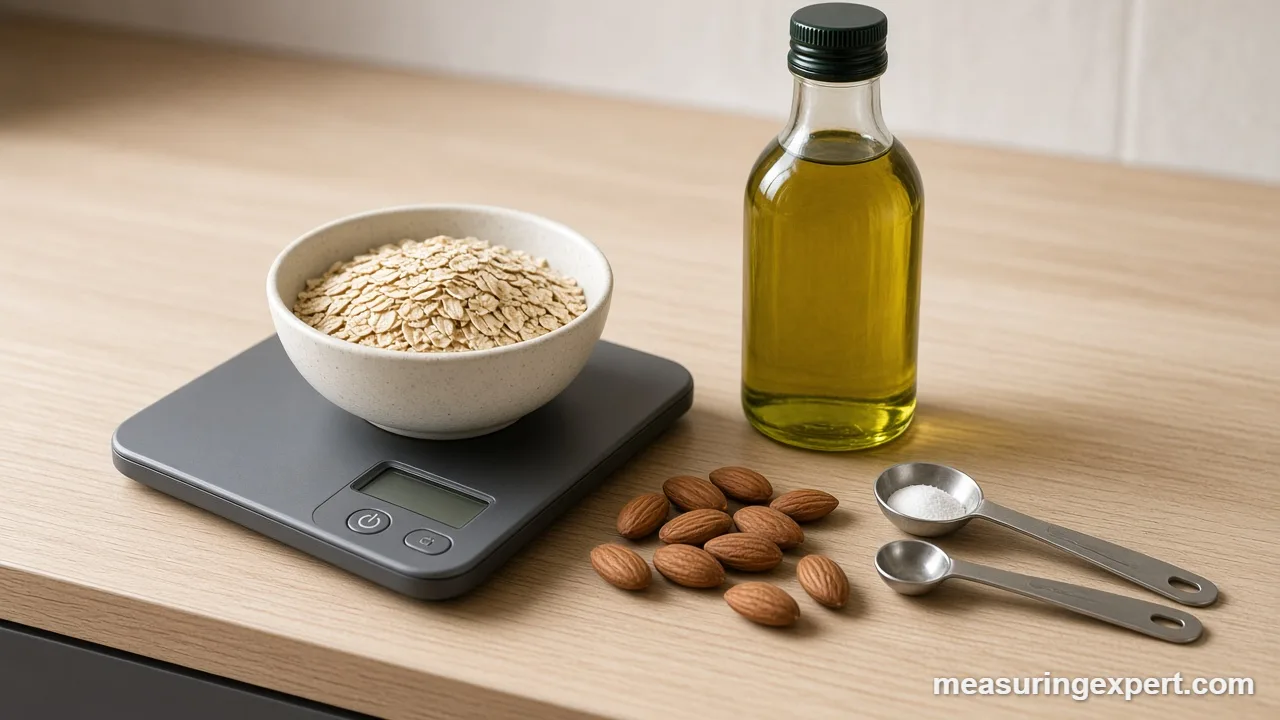
Use this chart to turn cup measures into grams for ingredients that often appear in anti-inflammatory recipes. The values come from the King Arthur chart, and the per-tablespoon figures are simple divisions of the listed amounts.
| Ingredient | Volume | Ounces | Grams |
|---|---|---|---|
| Olive oil | 1/4 cup | 1 3/4 | 50 |
| Rolled oats | 1 cup | 4 | 113 |
| Almond flour | 1 cup | 3 3/8 | 96 |
| Whole almonds | 1 cup | 5 | 142 |
| Chia seeds | 1/4 cup | 1 1/3 | 37 |
| Flaxseed | 1/4 cup | 1 1/4 | 35 |
| Coconut oil | 1/2 cup | 4 | 113 |
| Cooked brown rice | 1 cup | 6 | 170 |
| Honey | 1 tablespoon | 3/4 | 21 |
Two quick conversions help here. First, 50 g of olive oil in 1/4 cup means 1 tablespoon is about 12.5 g. Second, 1 ounce (28.35 g) of whole almonds is roughly one fifth of a cup, since a full cup is 142 g. Of course, brands and grind sizes differ, so treat these as typical values.
Recommended Tools for Anti-Inflammatory Recipes
A scale does most of the work in anti-inflammatory recipes, because oils, nuts and seeds are dense and easy to over-pour. First, choose one with a tare button and a grams setting. Next, look for a platform large enough to hold a mixing bowl. Also, keep a sturdy set of measuring spoons for spices and extracts. For a deeper comparison, see our roundup of food scales for cooking and baking.


As an Amazon Associate, Measuring Expert earns from qualifying purchases.
Key Takeaways
- Weigh oils, nuts, seeds and grains. Use spoons for spices and extracts.
- Olive oil: 50 g per 1/4 cup, or about 12.5 g per tablespoon.
- Rolled oats: 113 g per cup. Whole almonds: 142 g per cup.
- Two cups of raw spinach count as one cup of vegetables on MyPlate.
- Weigh a finished batch, then divide the total to portion it evenly.
- This article covers measuring only, so it gives no medical or diet advice.
Measuring Oils and Liquids in Anti-Inflammatory Recipes
In fact, oil is the easiest ingredient to over-pour. A tablespoon of olive oil is about 12.5 g, so a glug from the bottle can easily double it. For that reason, many cooks weigh oil straight into the pan or bowl.
To do that, place the pan or bowl on the scale and press tare. Next, pour until the display reaches the target. Because oil clings to spoons, this also avoids the film left behind in a measuring cup.
| Method | Strength | Weakness |
|---|---|---|
| Scale (grams) | Same amount each time | Needs a tare reset |
| Measuring spoon | Quick for 1 to 2 tablespoons | Easy to overfill or under-fill |
| Liquid measuring cup | Good for 1/4 cup and up | Reading error from the wrong angle |
In the US, nutrition labels round 1 tablespoon to 15 mL and 1 cup to 240 mL, according to the FDA metric equivalents guidance. By comparison, the exact US cup is 236.6 mL. The gap is small, but it is one more reason to pick one system and stay with it.
Measuring Vegetables and Greens for Anti-Inflammatory Recipes
Vegetables are bulky and uneven, so cup measures swing widely with how finely you chop. USDA MyPlate gives practical equivalents instead. For instance, 2 cups of raw spinach or other leafy greens count as 1 cup, while 1 cup of chopped broccoli, carrots or cauliflower counts as 1 cup.
| Vegetable | Counts as 1 cup (MyPlate) |
|---|---|
| Raw spinach or romaine | 2 cups raw |
| Cooked kale or collards | 1 cup cooked |
| Broccoli | 1 cup chopped or florets |
| Carrots | 1 cup chopped, or 2 medium |
| Cauliflower | 1 cup pieces or florets |
| Sweet potato | 1 cup sliced or mashed, cooked |
First, if a recipe lists vegetables by weight, use the scale. If it lists them by cup, chop first and then measure, because the recipe author almost always meant the chopped amount.
How to Portion Batches of Anti-Inflammatory Recipes
In general, batch cooking works best when every container holds the same amount. Also, weighing the finished dish is faster and more even than eyeballing scoops.
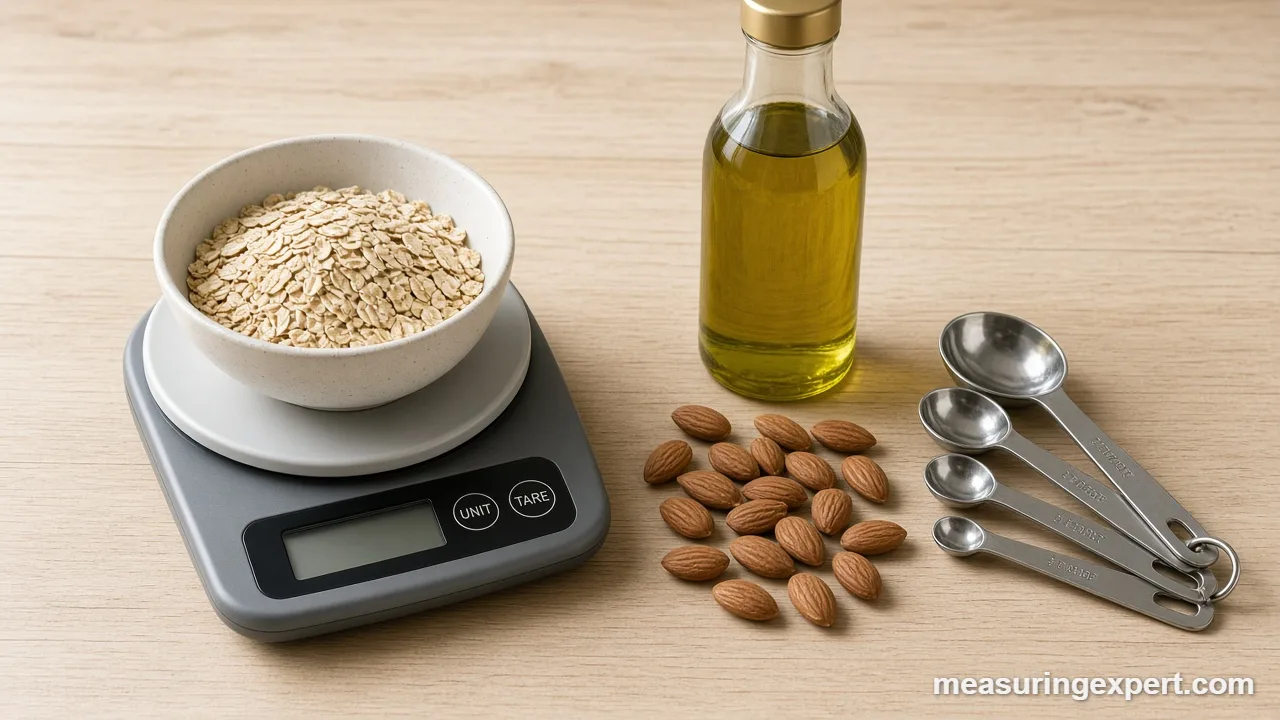
- Weigh the empty pot. Place the pot on the scale, or write down its empty weight.
- Cook the full batch. Let it cool slightly so steam does not reach the scale.
- Weigh the pot with the food. Subtract the empty weight, or tare before filling.
- Divide by the number of servings. For example, 1,600 g of soup split four ways is 400 g (14.1 oz) each.
- Tare each container. Place the empty container on the scale and press tare.
- Fill to the target weight. Spoon in the food until the display shows your portion.
- Label the containers. Write the weight and the date on each one.
Our guide to freezing meal portions covers container sizes and labeling in more detail.
Measuring Spices and Small Amounts
Spices are used in small quantities, and most home scales read in whole grams. Therefore, weighing a teaspoon of ground spice is not practical. Instead, use level measuring spoons and keep the spoon flat.
Similarly, a level US teaspoon holds about 4.93 mL, and a tablespoon holds about 14.79 mL. Nutrition labels, however, round these to 5 mL and 15 mL. However, if a recipe gives a spice in grams, a scale that reads to 0.1 g is the better choice. For a quick refresher on spoon volumes, see how much 30 mL is in spoons and ounces.
Common Mistakes With Anti-Inflammatory Recipes
- Measuring oil by eye. A free pour often adds more than the recipe lists.
- Packing seeds into a cup. Chia and flax settle, so cup amounts drift.
- Measuring greens before chopping. Raw leaves shrink when cooked, and loose cups hold little.
- Mixing raw and cooked weights. One cup of cooked rice weighs far more than one cup of dry rice.
- Forgetting to tare. The container is then counted as part of the food.
- Switching units mid-recipe. Pick grams or cups and stay with it.
Do and Don’t for Measuring Ingredients
Do
- Weigh oils, nuts, seeds and grains.
- Level spoons with a straight edge.
- Note whether an amount is raw or cooked.
- Weigh a finished batch before portioning.
- Write the gram weights on recipes you repeat.
Don’t
- Scoop with the measuring cup itself.
- Round tablespoons up when pouring oil.
- Weigh hot pans directly on the scale.
- Assume one brand’s cup weight fits every product.
- Treat a measuring guide as dietary advice.
Honest Limits of Measuring Anti-Inflammatory Recipes
Weighing makes amounts repeatable, but it cannot make a recipe healthier or promise any effect on the body. Chart weights are also averages, so a different brand of oats or almonds may weigh a little more or less per cup. Moreover, a recipe written in cups was usually tested with cups, so converting it to grams carries over the author’s own cup. In short, a converted recipe is only as exact as the chart behind it.
Likewise, scales have limits too. In addition, most home models read to the nearest gram and may drift as batteries weaken. Therefore, weigh the large ingredients and use spoons for the small ones.
Frequently Asked Questions
What is the best way to measure ingredients for anti-inflammatory recipes?
Use a digital scale for oils, nuts, seeds and grains, and level measuring spoons for spices. Weighing gives the same amount each time, which keeps batches consistent.
Do I need a scale for anti-inflammatory recipes?
No, but it helps. Cups and spoons work for many dishes, but a scale is more reliable for dense ingredients such as oil, nuts and seeds, and for dividing a batch into equal portions.
How many grams is a tablespoon of olive oil?
About 12.5 g. King Arthur lists 1/4 cup of olive oil as 50 g, and a quarter cup holds 4 tablespoons.
How many grams are in a cup of rolled oats?
One cup of King Arthur rolled oats is 113 g, or 4 ounces, but other brands can differ slightly.
How much is one ounce of almonds in cups?
One ounce is about 28.35 g. Because a cup of whole almonds is 142 g, an ounce is roughly one fifth of a cup.
How many cups of spinach count as one cup of vegetables?
USDA MyPlate counts 2 cups of raw spinach as 1 cup of vegetables, while cooked spinach counts at 1 cup.
Should I measure vegetables raw or cooked?
Follow the recipe wording. If it says “1 cup chopped carrots,” measure after chopping. If it says “1 cup cooked,” measure after cooking.
How do I divide a batch of soup into equal portions?
Weigh the food, subtract the pot, and divide by the number of servings. For example, 1,600 g split four ways is 400 g each.
Are cup and gram measurements interchangeable in anti-inflammatory recipes?
Not exactly. A cup measures volume, and the grams in it depend on the ingredient. Use a weight chart for each ingredient.
Does this guide say which foods reduce inflammation?
No. This guide covers measuring only, so for advice about your own diet or any health condition, talk to a doctor or registered dietitian.
Anti-Inflammatory Recipes: The Bottom Line
To sum up, weigh the dense ingredients, use spoons for the small ones, and use MyPlate cup equivalents for vegetables. The numbers to remember are 12.5 g per tablespoon of olive oil, 113 g per cup of rolled oats and 142 g per cup of whole almonds.
Finally, weigh your next batch once and write the grams on the recipe. After that, use the converter at the top of this page whenever a recipe lists ounces or pounds.
1 thought on “Anti-Inflammatory Recipes: How to Measure Ingredients Accurately”