

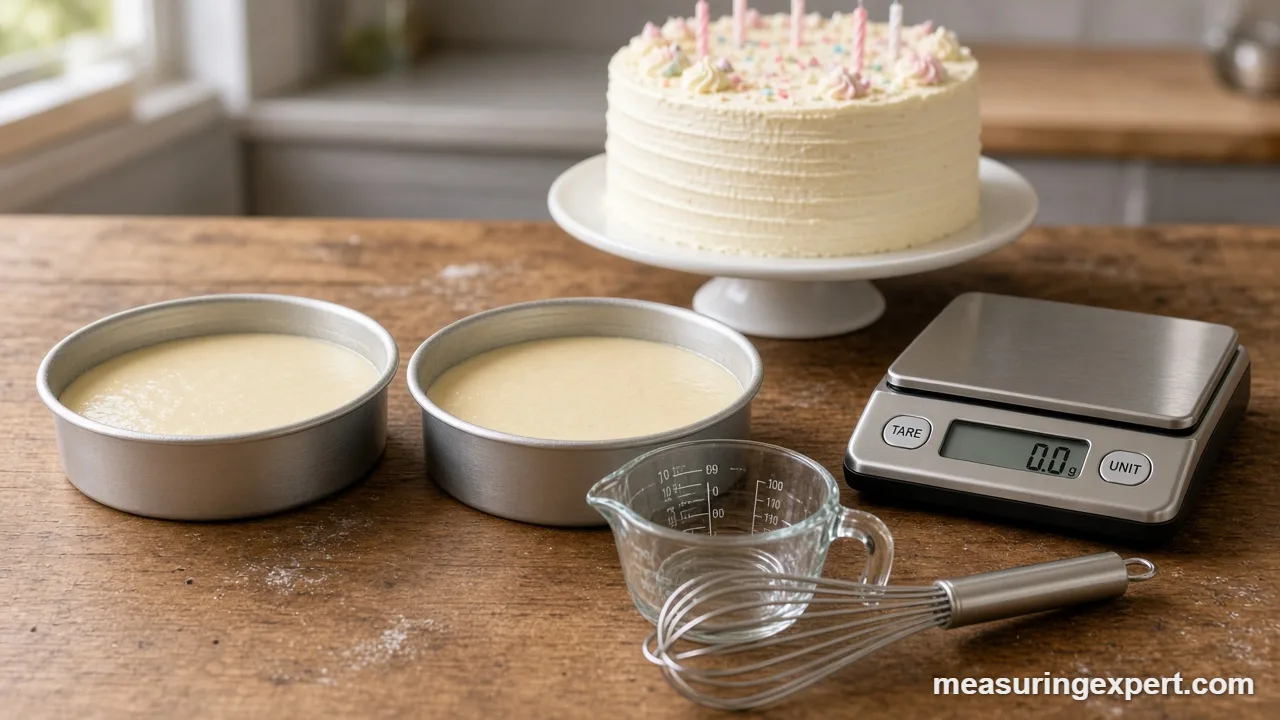
To measure birthday cake ingredients, weigh them on a scale, then match the batter to your pan. Fill each pan only one half to two thirds full. A 9 x 2 inch round holds about 8 cups, so it takes 4 to 5 1/3 cups of batter, and an 8 x 2 inch round takes 3 to 4 cups.
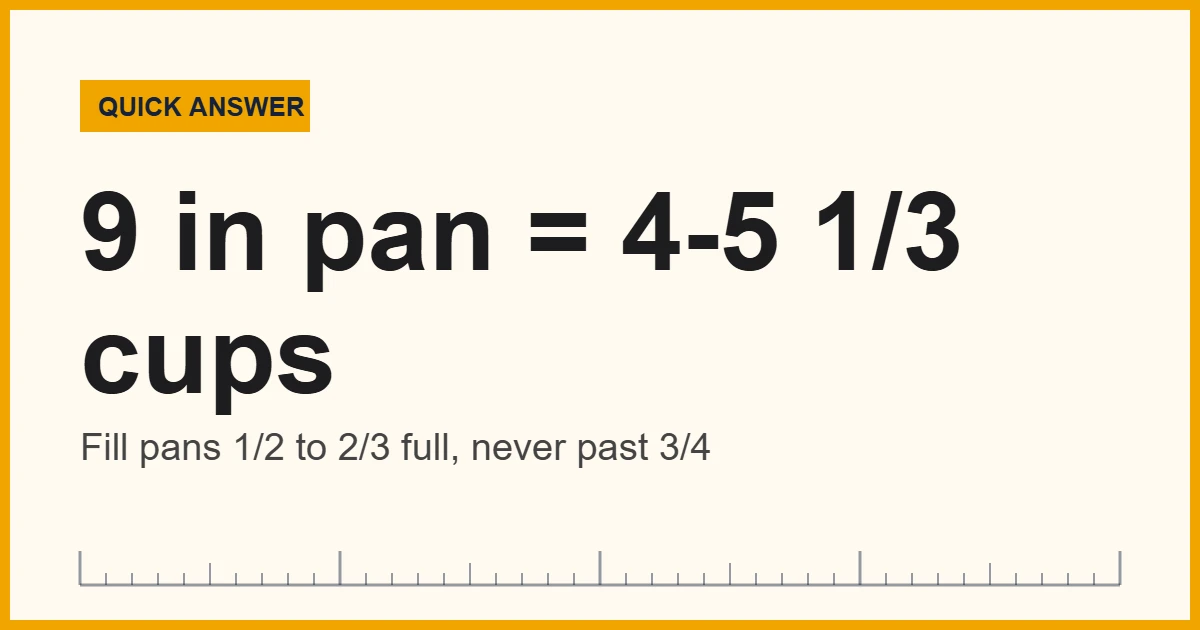
Convert Cake Batter Volume to Cups, Milliliters and Fluid Ounces
Pan sizes are listed in cups, while many recipes use milliliters or fluid ounces. First, enter a batter volume below to see it in each unit. In addition, the converter helps when you compare a recipe yield with the capacity of the pan you own.
Why Pan Size Matters
In fact, a birthday cake goes wrong in two ways: the batter is off, or the batter does not suit the pan. For example, batter that is off usually comes from scooped flour or rushed measuring. A mismatch between batter and pan, however, leads to domed centers, overflow in the oven or thin, dry layers. As a result, the pan size matters as much as the recipe.
Overall, two baking sources agree on the pan numbers used here. First, Sally’s Baking Addiction lists pan capacities and a recommended fill level. Similarly, Pretty Simple Sweet explains how to convert a recipe between pans by area or by volume.
How Pan Size Decides the Way You Measure Birthday Cake Ingredients
In short, pan capacity means how much water the pan holds when filled to the brim. Cake batter rises, so you never fill a pan that far. For instance, Sally’s Baking Addiction advises about 2/3 full, and says to fill pans about 1/2 to 2/3 full unless a recipe says otherwise. However, Pretty Simple Sweet sets a firmer ceiling: never more than 3/4 of the way.
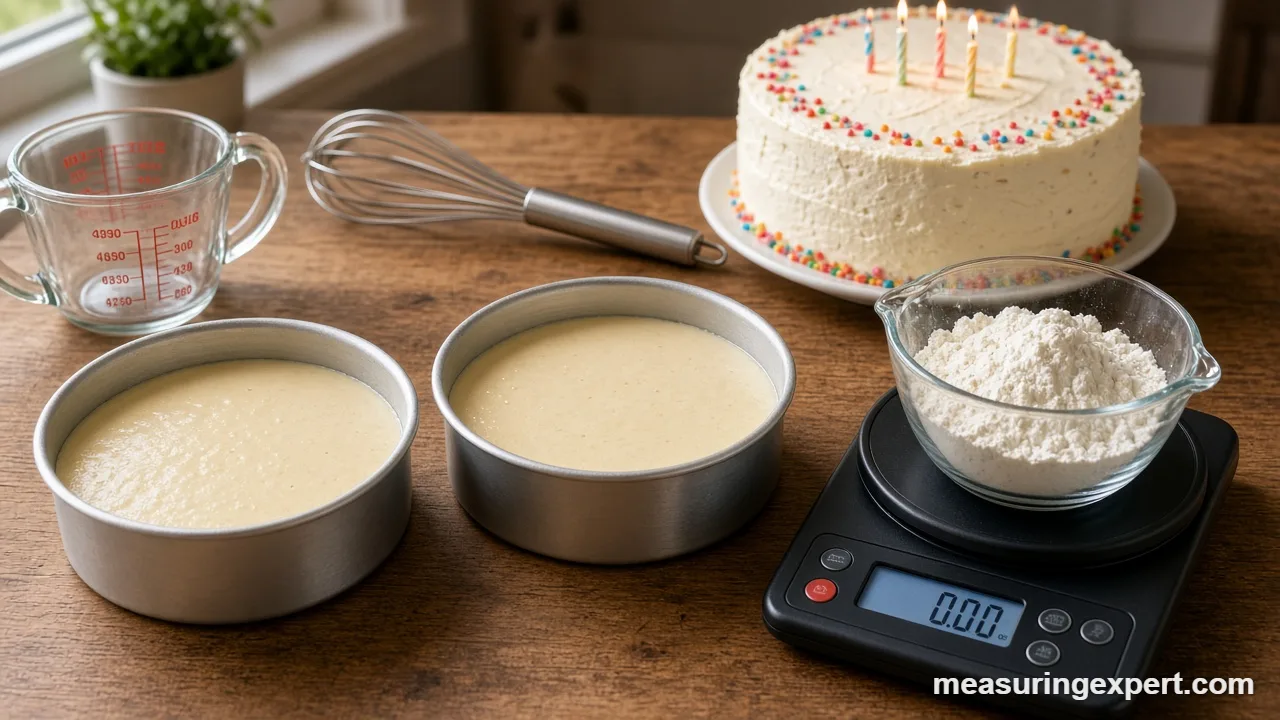
| Pan | Full capacity | Batter at 1/2 full | Batter at 2/3 full |
|---|---|---|---|
| 6 x 2 inch round | 4 cups (946 mL) | 2 cups | 2 2/3 cups |
| 8 x 2 inch round | 6 cups (1,420 mL) | 3 cups | 4 cups |
| 9 x 2 inch round | 8 cups (1,893 mL) | 4 cups | 5 1/3 cups |
| 8 x 8 inch square | 8 cups (1,893 mL) | 4 cups | 5 1/3 cups |
| 9 x 9 inch square | 10 cups (2,366 mL) | 5 cups | 6 2/3 cups |
| 11 x 7 inch rectangle | 10 cups (2,366 mL) | 5 cups | 6 2/3 cups |
| 9 x 13 inch rectangle | 14 cups (3,312 mL) | 7 cups | 9 1/3 cups |
| 9 x 5 inch loaf | 8 cups (1,893 mL) | 4 cups | 5 1/3 cups |
How to Read the Pan Table
The capacities come from the two sources above, which match each other. In addition, the fill columns are simple fractions of those capacities. For example, 2/3 of 8 cups is 5 1/3 cups. Pans with the same capacity can often stand in for each other, since a 9 x 2 inch round, an 8 x 8 inch square and a 9 x 5 inch loaf all hold about 8 cups. Even so, a different shape changes baking time.
Batter Needed for Common Birthday Cake Builds
In general, most birthday cakes use two or three layers, a sheet pan or a single deep round. Therefore, the total batter depends on how many pans you fill. The table adds up the fill range from the previous table.
| Cake build | Pans | Total batter (1/2 to 2/3 full) | In milliliters |
|---|---|---|---|
| Small 6 inch, 2 layers | two 6 x 2 inch | 4 to 5 1/3 cups | 946 to 1,262 mL |
| Standard 8 inch, 2 layers | two 8 x 2 inch | 6 to 8 cups | 1,420 to 1,893 mL |
| Standard 8 inch, 3 layers | three 8 x 2 inch | 9 to 12 cups | 2,129 to 2,839 mL |
| Tall 9 inch, 2 layers | two 9 x 2 inch | 8 to 10 2/3 cups | 1,893 to 2,524 mL |
| Sheet cake | one 9 x 13 inch | 7 to 9 1/3 cups | 1,656 to 2,208 mL |
In practice, use the middle of each range when you are unsure. Next, weigh the finished batter so every layer gets an equal share. Otherwise, a batter that fills a pan unevenly bakes into layers of different heights, and those are hard to stack.
Recommended Tools to Measure Birthday Cake Ingredients
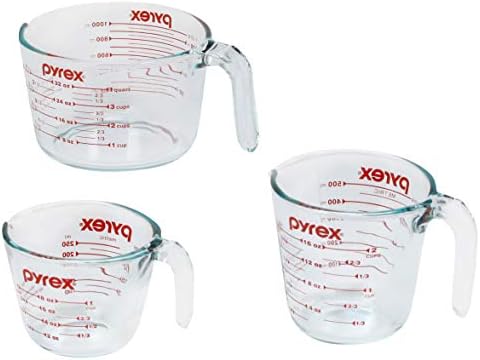
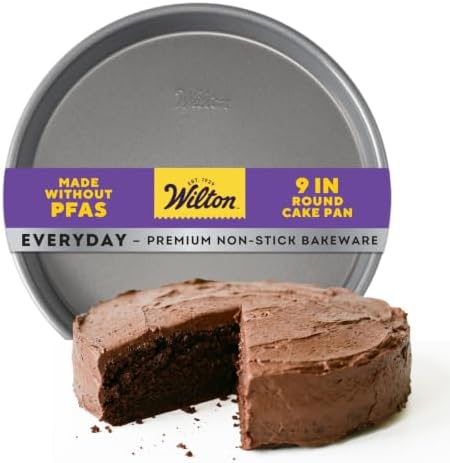
In total, four tools cover most of the work. First, a digital scale with a tare button weighs flour, sugar and batter. Next, measuring cups and spoons handle small amounts. Also, a glass liquid measure helps with milk, and a standard round pan keeps your batter math simple.




As an Amazon Associate, Measuring Expert earns from qualifying purchases.
Key Takeaways
- Fill cake pans about 1/2 to 2/3 full, and never past 3/4.
- A 9 x 2 inch round holds about 8 cups; an 8 x 2 inch round holds about 6 cups.
- Two 8 inch layers need about 6 to 8 cups of batter in total.
- Scale a recipe by the ratio of pan capacity, or by pan area.
- Weigh scaled eggs and split batter between pans by weight.
- Larger pans bake longer, so adjust the time and check early.
How to Scale a Recipe When You Measure Birthday Cake Ingredients
Sometimes the recipe asks for a pan you do not own. Pretty Simple Sweet describes two ways to scale: divide the area of your pan by the area of the recipe pan, or divide the capacity of your pan by the capacity of the recipe pan. Then multiply every ingredient by that factor.
| Recipe written for an 8 x 2 inch round, your pan is | By capacity | By area |
|---|---|---|
| 6 x 2 inch round | 4 / 6 = 0.67 | 28.3 / 50.3 = 0.56 |
| 9 x 2 inch round | 8 / 6 = 1.33 | 63.6 / 50.3 = 1.27 |
| 10 x 2 inch round | 10 / 6 = 1.67 | 78.5 / 50.3 = 1.56 |
| 9 x 13 inch rectangle | 14 / 6 = 2.33 | 117 / 50.3 = 2.33 |
Overall, the two methods land close together. Because the capacity chart already accounts for pan height, it is the better default. Then round to the nearest practical measure.
Remember that area is only a rough guide, since pan depth changes the result. In addition, a bigger pan with the same amount of batter gives a thinner cake that bakes sooner. Sally’s Baking Addiction advises starting to check for doneness earlier than the recipe states, and Pretty Simple Sweet notes that larger pans need longer. For timing help, see our guide to using a kitchen timer.
How to Measure Birthday Cake Ingredients and Batter Step by Step
- Choose the pans. First, confirm each pan size and depth, and check the capacity with water if the size is unclear.
- Find the batter target. Next, use the pan table to pick a batter volume between 1/2 and 2/3 of the full capacity.
- Scale the recipe. Then multiply every ingredient by the pan factor, and weigh the eggs.
- Weigh the dry ingredients. Place the bowl on the scale, press tare and add each ingredient in turn.
- Measure the liquids. Use a liquid measuring cup on a flat surface and read it at eye level.
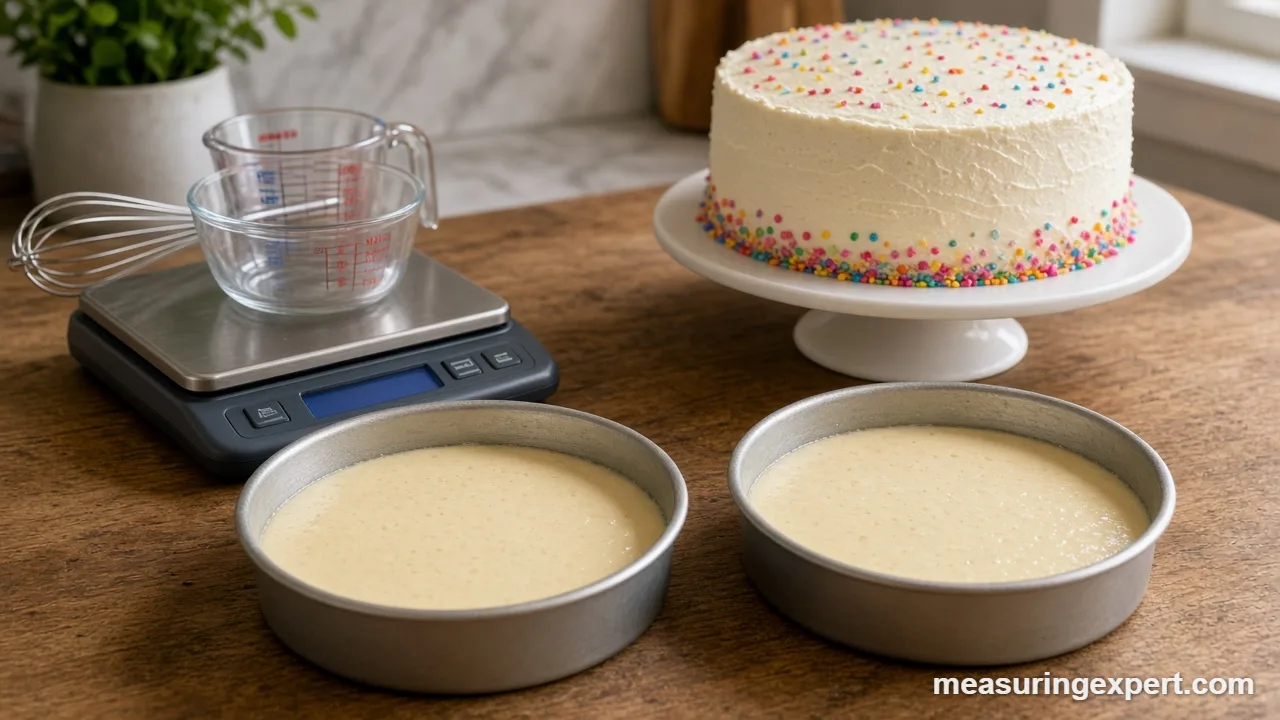
- Mix and weigh the batter. Weigh the full bowl first, then pour batter into each pan on the scale.
- Check the fill. The batter should sit at no more than about 2/3 of the pan height.
- Bake and check early. Finally, start testing sooner than the recipe says if the pan is different, and write down the result.
Our guide to cake decorating measurements continues from here, with frosting, layers and fillings.
Do and Don’t When You Measure Birthday Cake Ingredients
Do
- Weigh flour and sugar when the recipe lists grams.
- Fill pans only 1/2 to 2/3 full.
- Split batter between layers by weight.
- Check doneness early in an unfamiliar pan.
- Write down what worked.
Don’t
- Fill a pan to the brim.
- Pack flour into a measuring cup.
- Scale eggs by guessing.
- Assume a pan is the size stamped on it.
- Keep the old bake time in a new pan.
Honest Limits of Pan and Batter Numbers
In fact, pan charts are guides, not guarantees. For one thing, sloped pan walls and rounded corners change the true volume. Geometry gives about 7 cups for an 8 x 2 inch round, for example, while baking charts list 6 cups, so the chart numbers are rounded for practical use. Moreover, batters differ in how much they rise. Therefore, treat the fill range as a starting point, and adjust after your first bake. In addition, our explainer on the metric system in cooking helps when a recipe lists milliliters.
When to Ask a Baker or Cake Decorator
If you are baking a tiered wedding-style cake, a carved shape or a large order for a party, ask an experienced baker. Tall tiers need more than batter math, because structure and support matter. Similarly, a decorator can advise on dowels, boards and transport.
Frequently Asked Questions
How much batter do I need for a 9 inch round cake pan?
A 9 x 2 inch round holds about 8 cups when full. Therefore, fill it 1/2 to 2/3 full, which is 4 to 5 1/3 cups of batter.
How many cups of batter fill an 8 inch pan?
An 8 x 2 inch round holds about 6 cups. At 1/2 to 2/3 full, it takes 3 to 4 cups of batter.
How full should I fill a cake pan?
Fill it about 1/2 to 2/3 full. Pretty Simple Sweet advises never going past 3/4, so the batter has room to rise.
How do I measure birthday cake ingredients for a different size pan?
First, divide your pan capacity by the recipe pan capacity to get a factor, then multiply every ingredient by it. For instance, going from an 8 inch to a 9 inch round gives 8 / 6 = 1.33.
Can I use a 9 x 13 inch pan instead of two 9 inch rounds?
Roughly, yes. A 9 x 13 inch pan holds about 14 cups, while two 9 x 2 inch rounds hold 16 cups in total. As a result, the sheet cake will be a little thinner, so check it early.
How do I split cake batter evenly between layers?
First, weigh the empty pan on a scale, press tare, and pour in batter until the weight matches the other pan. Then repeat for each layer.
How many cups does a 6 inch cake pan hold?
A 6 x 2 inch round holds about 4 cups. That means 2 to 2 2/3 cups of batter at the usual fill level.
Why weigh eggs when I measure birthday cake ingredients?
Scaling a recipe often gives a fraction of an egg. Weighing beaten egg lets you multiply the original amount by the scaling factor exactly.
Should the baking time change when I switch pans?
Yes, because larger pans bake longer, and smaller pans bake faster. Begin checking for doneness earlier than the recipe states.
Is it better to measure birthday cake ingredients by weight or by volume?
Weight is more consistent for dry ingredients such as flour, because scooping varies. Use volume for liquids and small amounts of leavening and spices.
Measure Birthday Cake Ingredients: The Bottom Line
To sum up, start with the pan. A 9 x 2 inch round holds 8 cups, an 8 x 2 inch round holds 6 cups, and the batter should fill only 1/2 to 2/3 of that. Scale every ingredient by the pan factor, and weigh eggs and batter for equal layers.
Finally, bake once and record the result. Over time, those notes will tell you the best batter volume for each pan you own. For the next step, see our guide to cake decorating measurements.
1 thought on “How to Measure Birthday Cake Ingredients: Pan Sizes, Batter Cups and Scaling”