


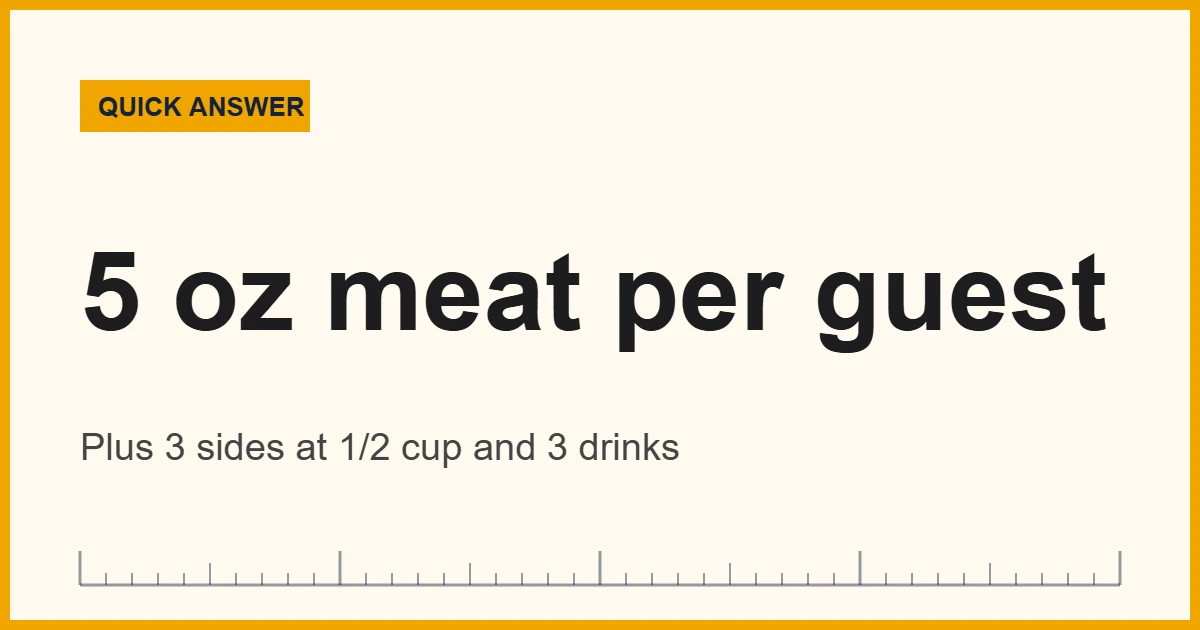
Plan graduation party food by the guest: about 5 oz (140 g) of cooked main protein, three side dishes at 1/2 cup (120 mL) each, 1 1/2 rolls, 2 desserts and 3 drinks. For 50 guests, that means roughly 15.6 lb (7.1 kg) of cooked meat. Then adjust for age, time of day and menu length.
Scale Graduation Party Food Batches: Gallons, Quarts and Cups
Big batches mean big containers, so enter the total volume you need and read it in the units your pots, pitchers and drink dispensers use. For example, 3 gallons of lemonade is 12 quarts, 48 cups or 11.36 L.
In fact, a graduation party mixes ages, schedules and appetites. Some guests arrive hungry after the ceremony, while others stop in for cake and leave within the hour. As a result, the right amount of graduation party food depends less on the size of the guest list than on the length of the event and the number of dishes on the table.
Therefore, this guide builds the numbers from the ground up. First, you get per-guest planning amounts in US and metric units. Next, you see what those amounts mean for 25, 50, 75 and 100 guests. After that, you learn how to scale a recipe and how long food can sit out before it becomes a risk. If you are setting up a self-serve spread, the sibling guide on measuring ingredients for a buffet covers the serving line itself, while this page focuses on menu quantities.
Graduation Party Food Per Guest: The Planning Numbers
First, these amounts assume a sit-down or buffet meal that lasts about four hours and includes a main dish, three sides, bread, dessert and drinks. They are planning rules of thumb, not standards, and the ounce figures are weight ounces (see how much an ounce is), not fluid ounces. However, they match the ranges that many party planners use, such as the per-person chart in the Almanac party planner for cooking for a crowd.
| Item | Per guest (US) | Per guest (metric) | Note |
|---|---|---|---|
| Main protein, cooked and boneless | 5 oz | 140 g | Range is 4 to 6 oz. Raw weight must be higher because meat loses water as it cooks. |
| Pasta as a side, dry | 2 oz | 57 g | Makes about 1 cup cooked. |
| Each cooked side dish | 1/2 cup | 118 mL | Three sides add up to 1 1/2 cups per guest. |
| Green salad | 1 1/2 cups | 355 mL | Lightly packed, undressed. |
| Rolls or buns | 1 1/2 | – | Plan 2 per guest for sandwiches. |
| Dessert pieces | 2 | – | Cupcakes, cookies or 2-inch cake squares. |
| Drinks | 3 x 12 fl oz | 3 x 355 mL | 36 fl oz (1.06 L) in total. |
| Ice | 1 lb | 0.45 kg | For drinks only; extra ice keeps cold food safe. |
Graduation Party Food Quantities for 25, 50, 75 and 100 Guests
The table below multiplies each planning number by the guest count and rounds up to practical amounts. In addition, it shows the cooked volume of one side dish at 1/2 cup per guest, so you can size a pan or slow cooker.
| Item | 25 guests | 50 guests | 75 guests | 100 guests |
|---|---|---|---|---|
| Cooked main protein | 7.8 lb (3.5 kg) | 15.6 lb (7.1 kg) | 23.4 lb (10.6 kg) | 31.3 lb (14.2 kg) |
| Dry pasta for one pasta side | 3.1 lb (1.4 kg) | 6.3 lb (2.8 kg) | 9.4 lb (4.3 kg) | 12.5 lb (5.7 kg) |
| One cooked side dish | 12.5 cups (2.96 L) | 25 cups (5.9 L) | 37.5 cups (8.9 L) | 50 cups (11.8 L) |
| Green salad | 37.5 cups (8.9 L) | 75 cups (17.7 L) | 112.5 cups (26.6 L) | 150 cups (35.5 L) |
| Rolls | 38 | 75 | 113 | 150 |
| Dessert pieces | 50 | 100 | 150 | 200 |
| Drinks | 7 gal (26.6 L) | 14 gal (53.2 L) | 21 gal (79.8 L) | 28 gal (106.5 L) |
| Ice | 25 lb (11.3 kg) | 50 lb (22.7 kg) | 75 lb (34 kg) | 100 lb (45.4 kg) |
First, take the 50-guest column to check the math. Each guest gets 5 oz of cooked meat, so 50 x 5 oz = 250 oz, which is 15.6 lb. Likewise, 50 guests x 36 fl oz of drinks = 1,800 fl oz, or 14.06 gallons.
For example, buying cooked meat by the pound at the deli is easy. However, raw meat is different, because the finished weight depends on the cut and the cooking method. Therefore, check the label or ask the butcher, and round up rather than down for a main dish that guests expect to see in the pan until the end. For a related plan, see our guide to birthday party treat measurements, which sizes cupcakes and snacks for kids.
How to Scale a Recipe for Graduation Party Food
- Find the scale factor. Divide the servings you need by the servings the recipe makes. For example, a recipe for 8 that must feed 40 has a factor of 5.
- Multiply the main ingredients. Next, weigh flour, pasta, meat and cheese on a scale instead of counting cups, because weights stay exact when the numbers get large.
- Convert big volumes. Then turn 15 cups of milk into 3 3/4 quarts (3.55 L) with the converter above, so you can pick a pot that holds it.
- Hold back on seasoning. Multiply salt, hot spices and strong herbs by about 3 to 4 first, taste, and then add more in small steps.
- Match the pan to the batch. Next, compare surface areas, such as 117 square inches for a 9 x 13 pan against 234 square inches for a 13 x 18 half sheet pan.
- Watch the clock and the thermometer. Bigger, deeper batches cook slower, so rely on internal temperature and texture instead of the original time.
For example, a macaroni and cheese for 8 uses 1 lb (454 g) dry pasta, 3 cups of milk and 1 tsp of salt. For 40 servings, therefore, you need 5 lb (2.27 kg) of pasta and 15 cups (3.55 L) of milk. The salt multiplies to 5 tsp, which is 1 2/3 tbsp, but start with about 3 tsp and taste before you add the rest.
Recommended Tools for Measuring Graduation Party Food
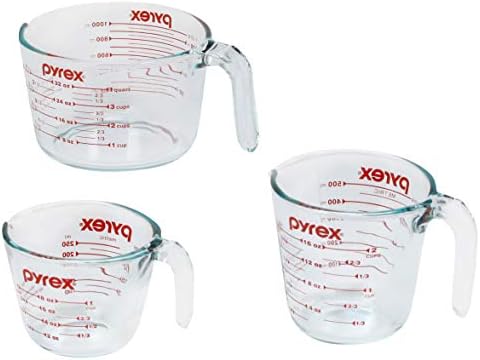
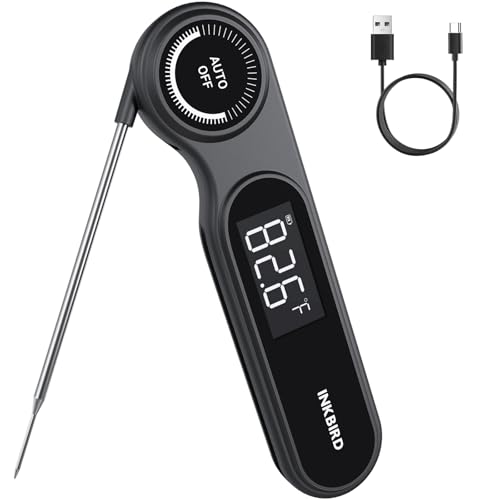
In general, large batches reward better tools. First, a digital scale with a tare button lets you weigh pasta, meat and cheese straight into the pot. Next, a 4-cup liquid measuring cup handles broths and sauces without constant refilling. Finally, an instant-read thermometer confirms that hot food stays hot and that meat is cooked through.



As an Amazon Associate, Measuring Expert earns from qualifying purchases.
Key Takeaways
- In short, graduation party food needs about 5 oz (140 g) of cooked main protein per guest.
- Next, plan three sides at 1/2 cup (118 mL) each, plus 1 1/2 rolls per guest.
- Also, drinks come to about 3 per guest, or 36 fl oz (1.06 L), plus 1 lb of ice.
- Scale recipes by weight first, then season in small steps.
- Finally, keep hot food at 140 F (60 C) or above and cold food at 40 F (4 C) or below.
- Above all, discard perishable food that sits out more than 2 hours, or 1 hour above 90 F (32 C).
Adjusting Graduation Party Food for Your Crowd
Overall, the base numbers fit an average mixed crowd. However, real guest lists rarely look average, so adjust in a few simple ways.
| Situation | Adjustment |
|---|---|
| Many teenagers or athletes | For example, add about 25 percent to the main protein, sides and rolls. |
| Many young children | In contrast, cut main and sides by about a third, and keep the dessert count the same. |
| Open house with a drop-in window | Plan for 60 to 70 percent of the guests to be present at once, and refill in waves. |
| Light snacks only, no meal | Instead, skip the pasta and large sides and plan 10 to 12 appetizer pieces per guest. |
| Only two sides instead of three | Raise each side from 1/2 cup to 3/4 cup (177 mL). |
| Long event over 4 hours | Also add one extra drink per guest and about 25 percent more dessert. |
In addition, count the guests who may eat less of the main dish, such as vegetarians. Add a dish that works as a main for them instead of only extra sides. Otherwise, the meat table runs low while the salad bowls stay full.
Graduation Party Food Hold Times and Safe Temperatures
Above all, food that sits out for hours is the biggest risk at an open house. The USDA Food Safety and Inspection Service explains that bacteria grow fastest between 40 F and 140 F, and their numbers can double in as little as 20 minutes. Its Danger Zone page also sets the time limits used in the table below.
| Rule | US | Metric |
|---|---|---|
| Hold hot food at or above | 140 F | 60 C |
| Hold cold food at or below | 40 F | 4 C |
| Danger zone | 40 F to 140 F | 4 C to 60 C |
| Maximum time out of refrigeration | 2 hours | 2 hours |
| Maximum time above 90 F outdoors | 1 hour | 1 hour above 32 C |
As a result, the practical answer is to serve in waves. First, put out about half of each dish, and keep the rest in the oven or refrigerator. Then swap in a fresh tray when the first one empties or reaches the time limit. Also, use chafing dishes, warming trays or slow cookers for hot dishes, and set cold dishes in containers on ice. Also note the start time on a sticky note next to each dish, because a party makes it easy to lose track.
Do and Don’t When Planning Party Food
Do
- Weigh big-batch ingredients instead of counting cups.
- Round the main dish up and the unusual side dishes down, because the main goes first.
- Keep a thermometer in the hot and cold dishes, so you can check them.
- Serve in waves and replace trays on a schedule.
- Label dishes for common allergens, because guests ask.
Don’t
- Multiply salt and hot spices by the full scale factor.
- Top up an old tray with fresh food.
- Leave desserts with cream or custard out in the sun.
- Count a guest list without removing no-shows and adding plus-ones.
- Skip the ice, because it chills drinks and cold dishes.
Honest Limits of Party Food Math
In short, these figures are planning tools, not guarantees. For one thing, appetite varies with the time of day, the weather and the menu. A heavy appetizer table, for instance, cuts main-dish demand, while a late-afternoon start raises it. Moreover, raw-to-cooked weights depend on the cut, the fat content and the cooking method, so two roasts of the same raw weight can finish quite differently. Finally, treat the table as a starting point, keep a small reserve in the freezer or fridge, and write down what you actually used for the next event.
Frequently Asked Questions
How much graduation party food do I need per person?
In short, plan about 5 oz (140 g) of cooked main protein, three sides at 1/2 cup each, 1 1/2 rolls, 2 desserts and 3 drinks per guest for a four-hour party.
How much meat do I need for 50 guests?
Therefore, you need about 15.6 lb (7.1 kg) of cooked boneless meat at 5 oz per guest. Buy more raw weight, because meat loses water during cooking.
How many sides should a graduation party food menu have?
As a rule, three sides at 1/2 cup each is a good base. If you only serve two, raise each to 3/4 cup (177 mL) per guest.
How much graduation party food should I make for an open house?
Plan for 60 to 70 percent of guests to be present at once, but make the full per-guest amount overall, and refill dishes in waves.
How many desserts per guest should I plan?
Overall, plan 2 small pieces per guest, such as cupcakes, cookies or 2-inch cake squares. A guest list of 50 therefore needs about 100 pieces.
How much do I need to drink for 100 guests?
Plan 3 drinks of 12 fl oz each per guest. As a result, that comes to about 28 gallons (106.5 L) for 100 guests, plus about 100 lb of ice.
How long can graduation party food sit out?
In short, USDA guidance says to keep perishable food out of refrigeration no longer than 2 hours, or 1 hour if the temperature is above 90 F (32 C).
What temperature should hot food stay at?
In general, keep hot food at 140 F (60 C) or above, using chafing dishes, warming trays or slow cookers. Likewise, keep cold food at 40 F (4 C) or below.
How do I scale a recipe from 8 servings to 40?
First, multiply all main ingredients by 5, weigh them where possible, and start with only 3 to 4 times the salt and strong spices before you taste.
Should I weigh or measure by cups for big batches?
Weigh when you can. In fact, a scale is more consistent than cups at large quantities, because scooping errors add up across many cups.
Graduation Party Food: The Bottom Line
To sum up, plan 5 oz of cooked main protein, three half-cup sides, 1 1/2 rolls, 2 desserts and 3 drinks per guest, then multiply by your guest count and adjust for your crowd. Scale recipes by weight, season in steps, and use the converter at the top for pot and dispenser sizes.
Finally, remember the clock. Serve in waves, hold hot food at 140 F or above and cold food at 40 F or below, and discard food that has sat out too long. As a result, with those numbers on one prep sheet, the party takes care of itself.