

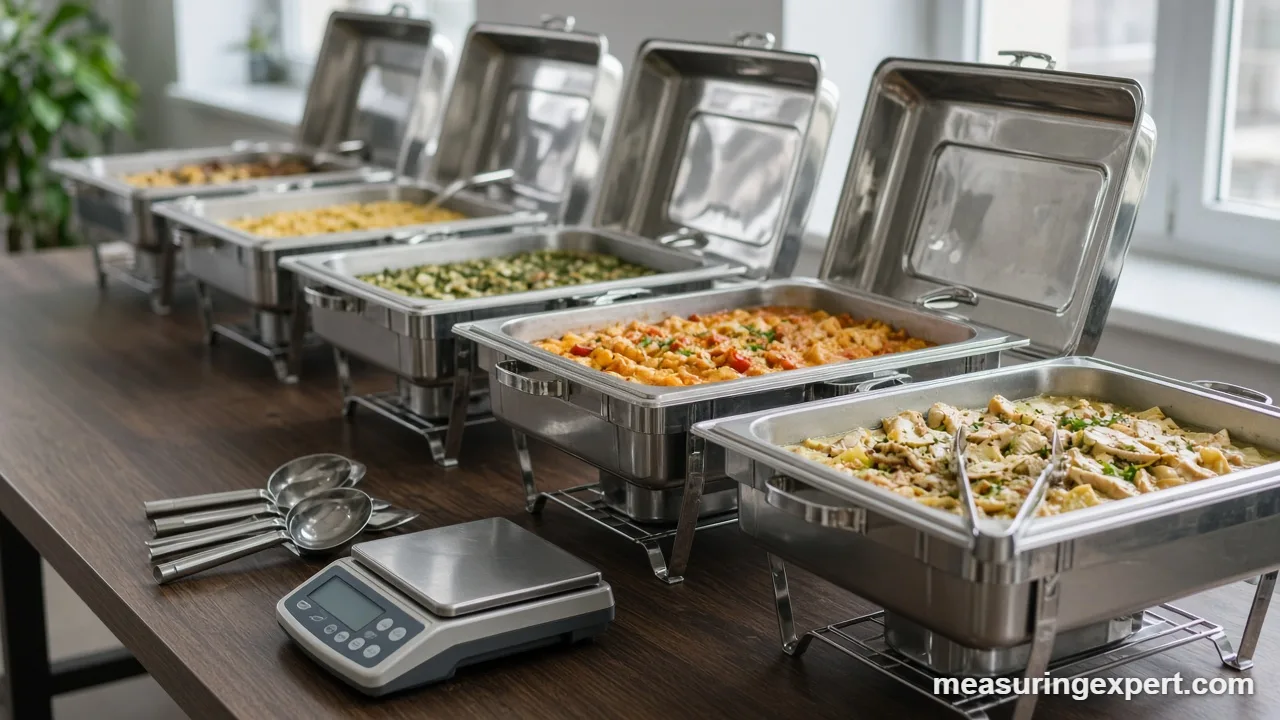
The best way to measure ingredients for buffet meals is to weigh them and plan from your guest count. Multiply a per-guest portion, such as 5 oz (142 g) of cooked meat or 1 cup (237 mL) of salad, by the number of guests. Then add about 10 percent as a margin.
Measure Ingredients for Buffet Meals With This Weight Converter
Enter the total you worked out, then switch units. The converter uses the exact definitions of the pound and the ounce, so a shopping list in pounds matches the ounces on your scale. For example, 15.6 lb of cooked meat is about 7.1 kg.
A buffet looks simple, yet it hides a planning problem. Guests serve themselves, so you cannot control portions at the table. Instead, you control them before the food comes out. In other words, good numbers in the kitchen replace guessing at the serving line.
This guide shows how to measure ingredients for buffet cooking, from a per-guest portion to a finished prep sheet. In addition, it covers the tools, the scaling math, and the food safety limits that apply once the dishes sit out. The FDA publishes a short page on serving up safe buffets, and we rely on it for the time and temperature numbers below.
Portion Chart to Measure Ingredients for Buffet Service
These per-guest amounts are planning rules of thumb, not official standards. Start here, and then adjust for your menu, the time of day and how hungry your guests are. The totals already include the exact conversions to quarts, liters and kilograms.
| Dish | Per guest | 25 guests | 50 guests | 100 guests |
|---|---|---|---|---|
| Cooked main protein | 5 oz (142 g) | 7.8 lb (3.5 kg) | 15.6 lb (7.1 kg) | 31.3 lb (14.2 kg) |
| Salad | 1 cup (237 mL) | 6.25 qt (5.9 L) | 12.5 qt (11.8 L) | 25 qt (23.7 L) |
| Hot vegetable | 1/2 cup (118 mL) | 3.1 qt (3.0 L) | 6.25 qt (5.9 L) | 12.5 qt (11.8 L) |
| Starch (rice, pasta, potatoes) | 1/2 cup (118 mL) | 3.1 qt (3.0 L) | 6.25 qt (5.9 L) | 12.5 qt (11.8 L) |
| Dessert | 1 piece | 25 pieces | 50 pieces | 100 pieces |
Add about 10 percent on top of each total. Furthermore, if guests choose among several mains, split the protein total across them instead of making the full amount of each dish. For a deeper look at the ounce, see how much an ounce is.
Recommended Tools for Measuring Buffet Ingredients
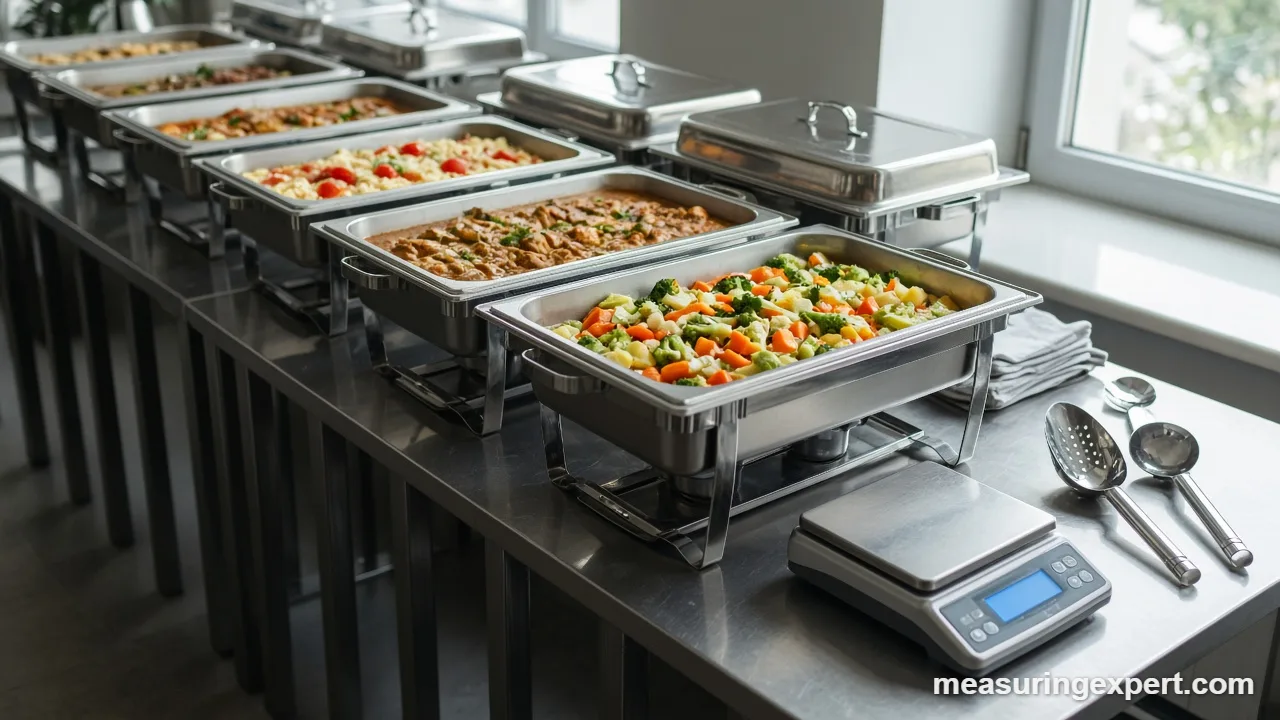
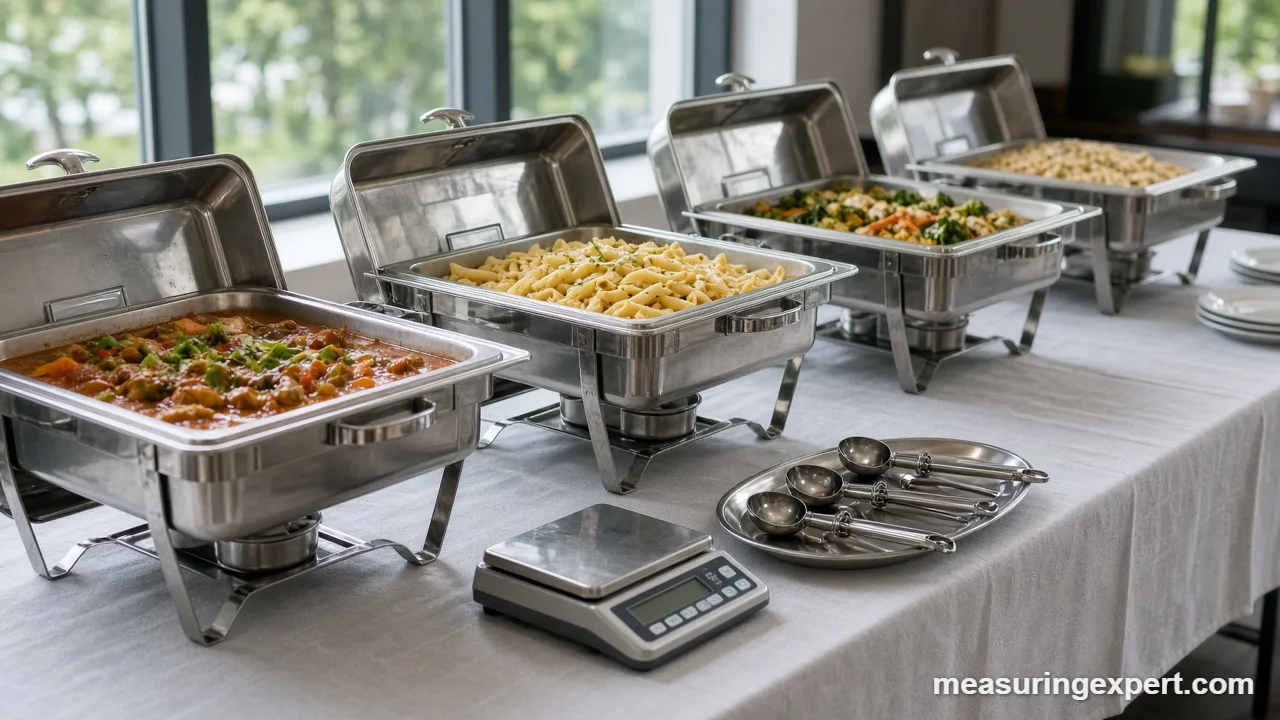
You need four things: a scale with a tare button, a set of measuring cups and spoons, portion scoops or ladles for the serving line, and a thermometer. First, choose a scale that reads in both grams and ounces. Next, look for a platform wide enough to hold a large bowl. Finally, pick a thermometer with a quick readout so you can check each pan without delay.


As an Amazon Associate, Measuring Expert earns from qualifying purchases.
Weight vs Volume When You Cook for a Crowd
A cup measures space, while a scale measures mass. As a result, the same cup can hold different amounts of an ingredient. The King Arthur ingredient weight chart lists 120 g for a cup of all-purpose flour and 198 g for a cup of granulated sugar. In contrast, a cup of water is about 237 g, so volume tells you little about weight.
| Method | Best for | Weak spot |
|---|---|---|
| Weighing (grams, ounces) | Flour, sugar, rice, meat, cheese, large batches | Needs a scale big enough for the bowl |
| Measuring cups | Liquids, stock, sauces, salad volume | Packing changes dry amounts |
| Measuring spoons | Salt, spices, leaveners | Level versus heaping changes the dose |
| Portion scoops and ladles | Serving line, even portions | Sizes differ by brand |
For liquids, our guide to how much 30 mL is helps you move between milliliters, ounces and spoons.
How to Measure Ingredients for Buffet Cooking, Step by Step
- List every dish and the guest count. Write the menu and the number of guests on one prep sheet so every later number comes from the same source.
- Pick a portion for each dish. Choose a per-guest amount, such as 5 oz of cooked protein or 1 cup of salad, and write it beside the dish.
- Multiply and add a margin. Multiply each portion by the guest count, then add about 10 percent for late arrivals and second helpings.
- Convert to one unit. Use the converter above to turn ounces, pounds and cups into the unit your tools show, so you shop and weigh in one system.
- Weigh and pre-portion. Put a container on the scale, press tare, and weigh each ingredient into labeled bowls or bags before you start cooking.
- Cook in batches and check temperatures. Cook in batches that fit your pans, and check hot food at 140 F or warmer and cold food at 40 F or colder.
Scaling a Recipe for Fifty Guests
Scaling is just multiplication, but a few details deserve care. First, find the multiplier by dividing your guest count by the recipe’s servings. For instance, a recipe that serves 8 needs a multiplier of 6.25 for 50 guests. Then multiply every weight by that number.
However, seasoning and cooking time do not always grow in a straight line. Therefore, add salt and spices at about three quarters of the scaled amount, taste, and adjust. Similarly, a deeper pan needs longer to heat through, so check the center with a thermometer.
If you grill for a crowd, our sibling guide on measuring summer BBQ ingredients applies the same method to outdoor menus.
Common Mistakes When You Measure Ingredients for Buffet Menus
- Mixing raw and cooked weights. Meat shrinks as it cooks, so a raw weight and a cooked weight are not the same number.
- Scooping flour from the bag. Packing adds weight, so a scooped cup can weigh much more than a spooned one.
- Forgetting to tare. The bowl then counts as ingredient and throws off the total.
- Using one unit system halfway. Switching between cups and grams invites rounding errors.
- Skipping the margin. Without a margin, late guests find an empty tray.
Do and Don’t for Buffet Prep
Do
- Write the portion size beside each dish.
- Weigh dry goods and meat in large batches.
- Label pre-portioned bowls with the dish name.
- Keep a thermometer at the serving line.
- Note leftovers so next time’s numbers improve.
Don’t
- Guess portions from the size of the pan.
- Assume every ladle holds the same amount.
- Pack flour into a cup to save time.
- Scale spices in a straight line without tasting.
- Leave perishable dishes out past the time limit.
Honest Limits of Buffet Math
No formula predicts a crowd exactly. Appetites change with the time of day, the length of the event and the variety on offer. In short, a long menu spreads portions thin, while a short menu concentrates them on a few dishes. Scales also carry a small error, often about 1 g, and cups vary with how you fill them. For a family party, that precision is plenty. Even so, treat the chart as a starting estimate and keep notes after each event.
Holding Times and Food Safety
Good measuring ends at the serving line, and food safety takes over from there. The FDA advises keeping hot food at an internal temperature of 140 F (60 C) or warmer and cold food at 40 F (4 C) or colder. It also says to discard perishables left out more than 2 hours, and the limit drops to 1 hour when the room is above 90 F (32 C).
As a result, small trays refilled often beat one huge tray that sits for hours. Also, serve cold dishes over ice and hot dishes over a heat source, and check temperatures with a thermometer rather than by touch.
Frequently Asked Questions
How do I measure ingredients for buffet service without a scale?
Use level measuring cups and spoons, and write down the cup count per dish. For example, plan 1 cup of salad per guest. However, a scale is faster and more consistent for flour, rice and meat, so borrow one if you can.
How much food should I plan per guest at a buffet?
A common planning rule is about 5 oz (142 g) of cooked main protein, 1 cup (237 mL) of salad, and 1/2 cup (118 mL) each of a hot vegetable and a starch. Treat these as starting points, then adjust for your menu and your guests.
Should I measure ingredients for buffet recipes by weight or volume?
Weight is better for large batches. A cup of flour is about 120 g in the King Arthur chart, but packing changes that number. A scale removes the guesswork, while cups and spoons suit small amounts of spices and liquids.
How many cups are in a gallon for buffet math?
There are 16 US cups in a US gallon, or 4 quarts. In metric terms, 1 gallon is about 3.785 L, so 50 one-cup servings need about 3 gallons.
How much extra should I add when I measure ingredients for buffet menus?
Many hosts add about 10 percent for late guests and second helpings. Add more for dishes that vanish first, such as desserts, and less for a side dish that is rarely finished.
Do I weigh meat raw or cooked?
Check which weight your recipe or portion rule uses. Meat loses water as it cooks, so a raw weight and a cooked weight differ. Decide on one, write it on your prep sheet, and use it for every dish.
What size ladle or scoop gives a standard portion?
Portion scoops and ladles are labeled by volume. A 4 oz ladle holds about 118 mL, which is 1/2 cup, and a 2 oz scoop holds about 59 mL. Check the engraving on yours, because sizes vary by brand.
How long can food sit out on a buffet?
The FDA says to discard perishable food left out more than 2 hours, unless you keep it hot or cold. If the room is above 90 F (32 C), the safe holding time drops to 1 hour.
What temperatures keep buffet food safe?
The FDA advises keeping hot food at an internal temperature of 140 F (60 C) or warmer, and cold food at 40 F (4 C) or colder. Check with a food thermometer instead of guessing.
How do I scale a recipe up for 50 people?
Divide the new guest count by the recipe’s serving count to get a multiplier, then multiply every ingredient by it. Cook in batches, because spices and cooking times do not always scale in a straight line.
Measure Ingredients for Buffet: The Bottom Line
To sum up, pick a portion for each dish, multiply by your guest count, add a margin, and weigh the ingredients instead of scooping them. Then convert every total into one unit with the tool at the top of this page.
Finally, watch the clock and the thermometer once the food is out. Careful numbers in the kitchen, plus safe holding times at the table, keep every guest fed and every tray fresh.
1 thought on “How to Measure Ingredients for Buffet Meals: Portions and Weights”