

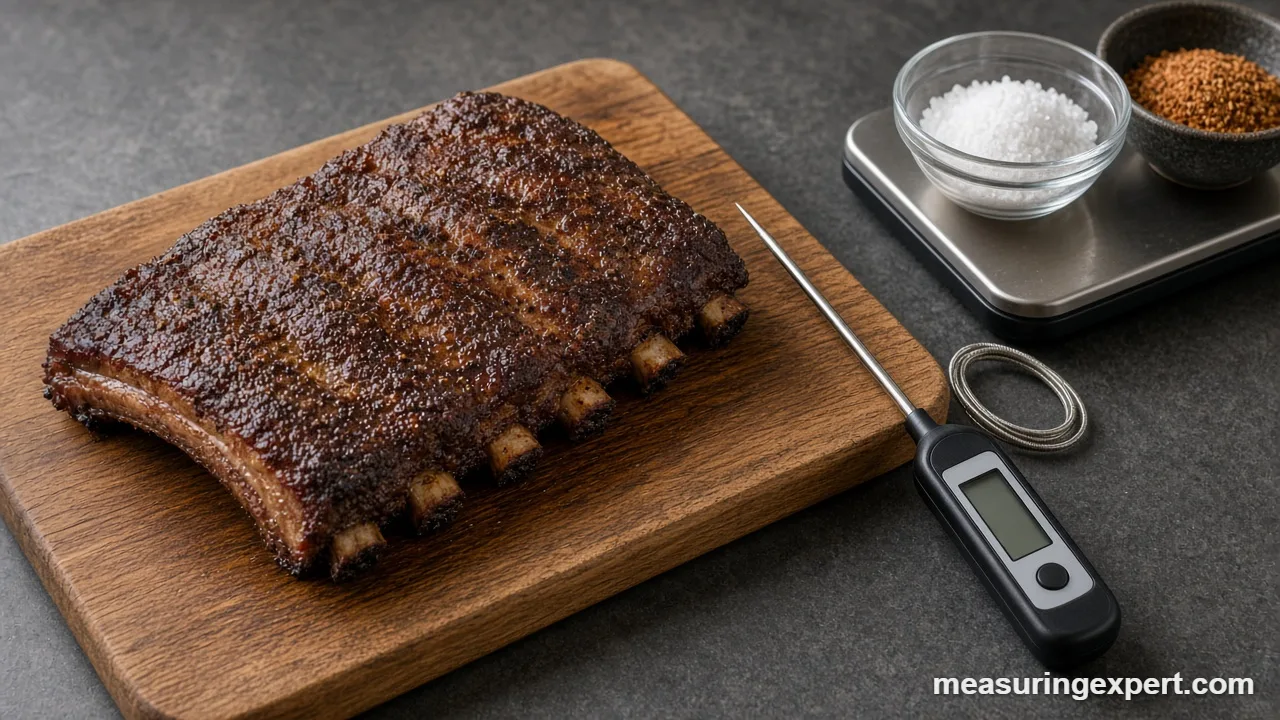
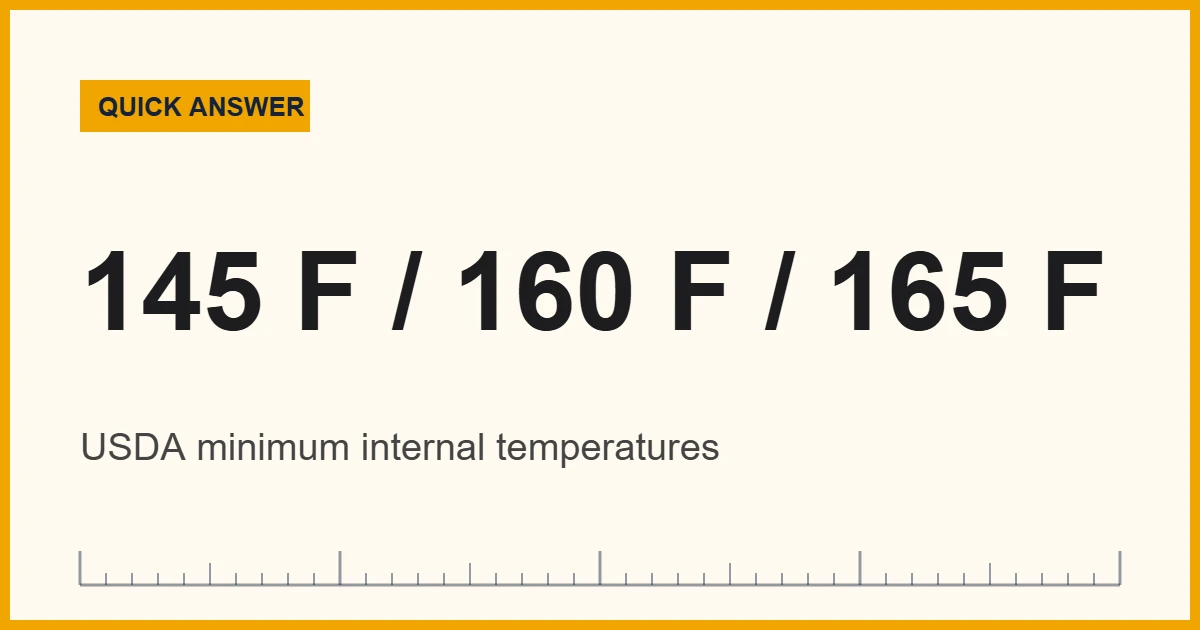
Measuring smoking meat ingredients comes down to weight and heat. Weigh the salt, since 1 tablespoon holds anywhere from 10 g to 23 g depending on the brand. Then check the meat with a thermometer: USDA says 145 F (62.8 C) for whole cuts of beef and pork, 160 F (71.1 C) for ground meat, and 165 F (73.9 C) for poultry.
Convert Smoker and Meat Temperatures
First, enter any temperature in Fahrenheit to see the Celsius value. As a result, you can follow a US food-safety chart with a metric thermometer, or the other way around.
Smoking is slow, so small errors have time to grow. For example, a rub with too much salt stays too salty for the whole cook, and a probe in the wrong spot can report a number that is 20 degrees off. For that reason, the best smoking meat ingredients plan treats two things as measurements instead of guesses: the weight of the salt, and the internal temperature of the meat.
Cooks often scoop salt by the tablespoon. However, a tablespoon of fine table salt weighs more than twice as much as a tablespoon of Diamond Crystal kosher salt, according to America’s Test Kitchen. In other words, the same “1 tablespoon” can be very salty or quite mild. In short, weighing fixes that, and a percentage of the meat’s weight scales from a 2 lb rack to a 12 lb packer brisket without any new math.
Overall, this guide covers salt by weight, rub scaling, brine math and a thermometer table based on USDA numbers. You will also find the smoker temperature range USDA recommends and the mistakes that cause most bad results. If you want the full doneness picture for steaks and roasts, see our meat thermometer doneness chart.
Smoking Meat Ingredients at a Glance
First, this table lists what to measure, how to measure it, and the number to aim for. The salt percentages are common starting points among cooks, not a regulation, so adjust them to your own taste. The temperatures come from USDA.
| What you measure | Best tool | Starting point or target |
|---|---|---|
| Salt in a dry rub | Kitchen scale | About 1% to 1.5% of the meat’s weight |
| Salt in a wet brine | Kitchen scale | About 4% to 5% of the water’s weight |
| Sugar and spices | Scale, or level measuring spoons | Taste-based, scaled by weight of meat |
| Smoker air temperature | Oven-safe or probe thermometer | 225 F to 300 F (107 C to 149 C), per USDA |
| Meat internal temperature | Instant-read or probe thermometer | 145 F, 160 F or 165 F, depending on the meat |
Recommended Tools for Measuring Smoking Meat Ingredients
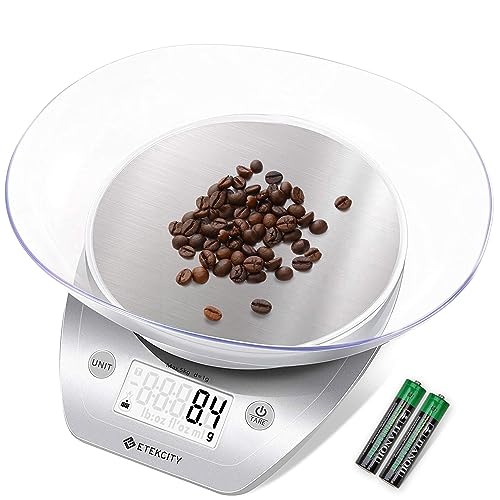
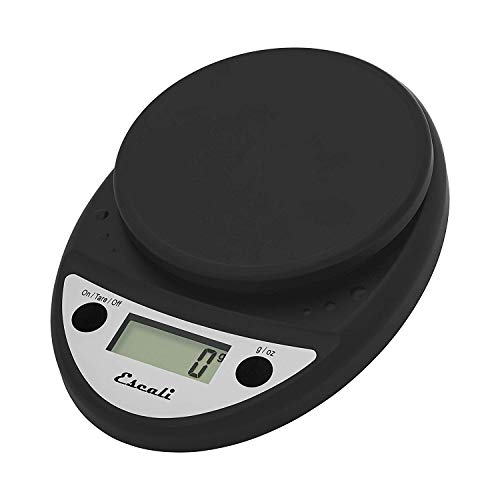
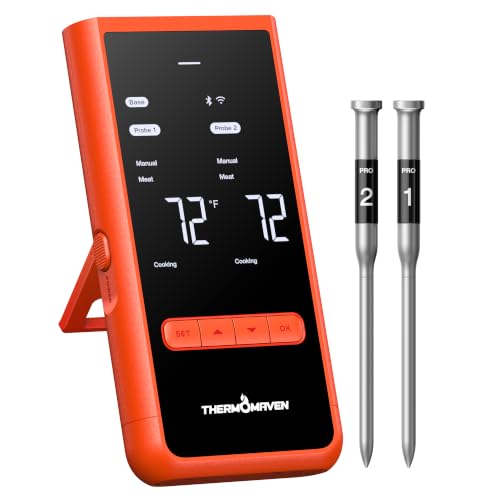
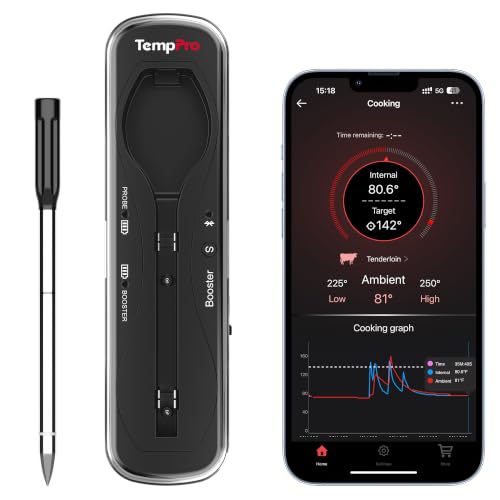
In short, three tools do most of the work. First, a digital kitchen scale that reads in grams handles salt, sugar and spices. Next, a set of measuring spoons helps with small amounts of spice. Finally, USDA says to use two thermometers: a food thermometer for the meat, and an oven-safe thermometer for the air inside the smoker. In addition, a leave-in probe with an alarm saves a lot of lid-lifting.


As an Amazon Associate, Measuring Expert earns from qualifying purchases.
Key Takeaways
- Weigh salt in grams instead of scooping it. One tablespoon ranges from about 10 g to 23 g.
- Start a dry rub at about 1% to 1.5% salt by meat weight, then adjust to taste.
- For a wet brine, think in percent of water weight, not cups per gallon.
- USDA minimums: 145 F for whole cuts of beef, pork, lamb and veal; 160 F for ground meat; 165 F for poultry.
- Keep the smoker between 225 F and 300 F, and check it with a separate thermometer.
- Thaw meat before smoking, and marinate or brine it in the refrigerator.
Why Salt Is the Smoking Meat Ingredient to Weigh
In fact, salt is the one ingredient where volume misleads the most. Also, crystal shape changes how much fits in a spoon. America’s Test Kitchen reports about 10 g per tablespoon for Diamond Crystal kosher salt, 16 g for Morton kosher salt and 23 g for standard table salt. Consequently, a rub written with one brand can be more than twice as salty when you make it with another.
| Salt type | Approx. weight per tablespoon | Swap ratio |
|---|---|---|
| Diamond Crystal kosher | 10 g | 2 parts |
| Morton kosher | 16 g | 1 1/2 parts |
| Table salt | 23 g | 1 part |
The swap ratio comes from the same source and works for converting between salts by volume. Even so, the most reliable fix is a scale. Next, set the bowl on the scale, press tare, and add salt until you reach the target in grams.
Scaling a Dry Rub by Meat Weight
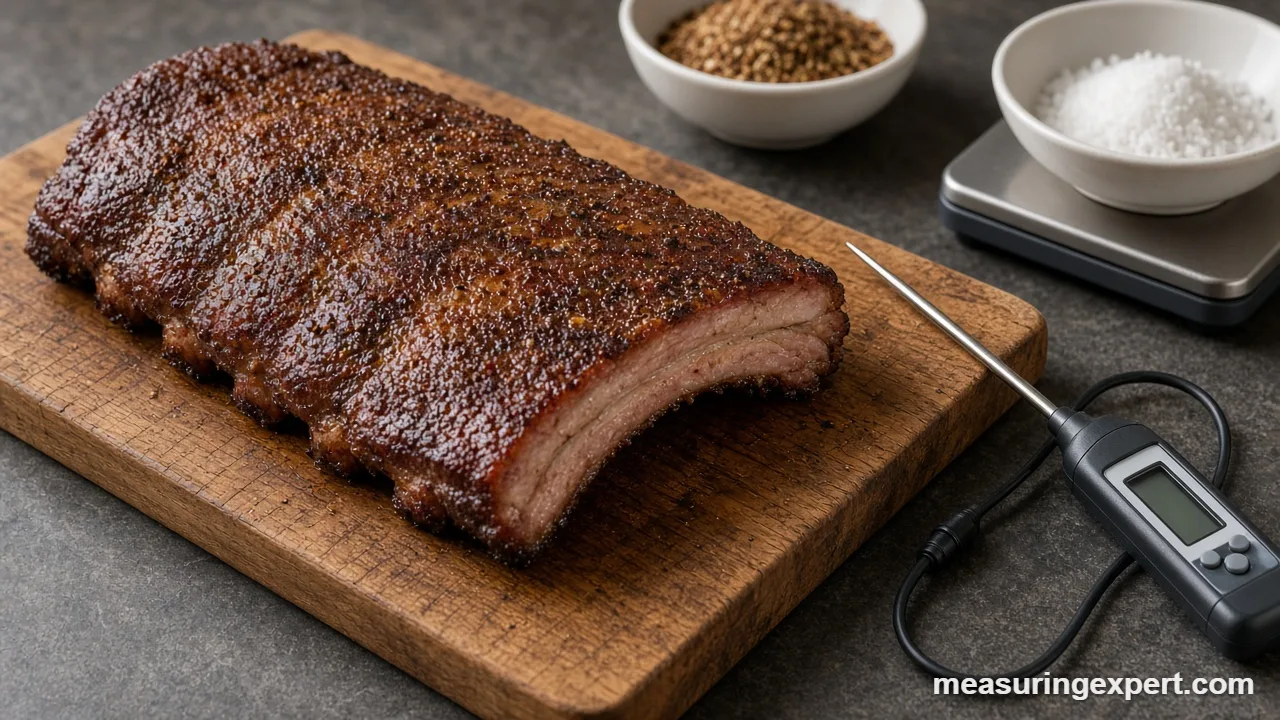
In practice, a percentage of the meat’s weight is easier to scale than a fixed spoon count. First, weigh the trimmed meat. Next, multiply by the salt percentage, and then weigh that amount of salt. The table below, for instance, shows 1% and 1.5% for common sizes, using 1 lb = 453.59 g, with spoon equivalents for each salt type.
| Meat weight | Salt at 1% | Salt at 1.5% | 1.5% in Diamond Crystal | 1.5% in Morton | 1.5% in table salt |
|---|---|---|---|---|---|
| 2 lb (907 g) | 9.1 g | 13.6 g | 1.4 tbsp | 0.9 tbsp | 0.6 tbsp |
| 3 lb (1,361 g) | 13.6 g | 20.4 g | 2.0 tbsp | 1.3 tbsp | 0.9 tbsp |
| 5 lb (2,268 g) | 22.7 g | 34.0 g | 3.4 tbsp | 2.1 tbsp | 1.5 tbsp |
| 8 lb (3,629 g) | 36.3 g | 54.4 g | 5.4 tbsp | 3.4 tbsp | 2.4 tbsp |
| 12 lb (5,443 g) | 54.4 g | 81.6 g | 8.2 tbsp | 5.1 tbsp | 3.5 tbsp |
Similarly, sugar and spices follow the same idea. For example, if a 5 lb pork shoulder rub tastes right with a given weight of paprika and brown sugar, a 10 lb batch simply doubles each weight. In addition, writing the recipe in grams makes it repeatable the next time. If you want to check conversions between ounces and grams, our guide on how much an ounce is has the exact values.
Brine Math for Smoking Meat Ingredients
A wet brine is salt dissolved in water, so the salt percentage refers to the water’s weight. For instance, 1 quart of water weighs about 946 g, and a 5% brine needs about 47 g of salt. The table gives the amounts for two common strengths, with spoon equivalents for each salt type.
| Brine strength | Salt per quart of water | Diamond Crystal | Morton kosher | Table salt |
|---|---|---|---|---|
| 4% | 37.9 g | 3.8 tbsp | 2.4 tbsp | 1.6 tbsp |
| 5% | 47.3 g | 4.7 tbsp | 3.0 tbsp | 2.1 tbsp |
Likewise, for a gallon of water (about 3,785 g), multiply the quart amounts by four. Also, sugar in a brine is optional and works by taste. Whatever the recipe, keep the container in the refrigerator, because USDA advises marinating in the refrigerator and not on the counter. Also keep raw meat and its liquid away from cooked or ready-to-eat food, with separate boards and utensils.
Meat Thermometer Table: USDA Safe Minimum Temperatures
Smoking meat ingredients only matter if the meat reaches a safe temperature, so this table is the part to bookmark. The values are USDA safe minimum internal temperatures, measured with a food thermometer. Also, Celsius values are converted from the Fahrenheit figures.
| Meat | Minimum internal temp | Celsius | Rest time |
|---|---|---|---|
| Steaks, roasts and chops of beef, pork, lamb, veal | 145 F | 62.8 C | 3 minutes |
| Raw (fresh) ham | 145 F | 62.8 C | 3 minutes |
| Ground beef, pork, lamb and sausage | 160 F | 71.1 C | None listed |
| Rabbit and venison | 160 F | 71.1 C | None listed |
| All poultry, including ground and stuffing | 165 F | 73.9 C | None listed |
| Fish, whole or fillet | 145 F | 62.8 C | None listed |
| Leftovers and casseroles | 165 F | 73.9 C | None listed |
However, these numbers are minimums. In practice, tough cuts such as brisket and pork shoulder are usually cooked much higher, often around 195 F to 205 F (90.6 C to 96.1 C), because collagen needs time and heat to soften. In other words, that is a texture choice, not a USDA rule. Therefore, the safety floor is still the number in the table.
USDA also describes the “danger zone” as 40 F to 140 F (4.4 C to 60 C), where bacteria grow fastest. In addition, perishable food should not sit out for more than 2 hours, or 1 hour when it is above 90 F outside. Smoking uses low heat, so USDA says frozen meat can take too long to get through that range. So thaw it first.
How to Check Smoking Temperatures Step by Step
- Thaw the meat in the refrigerator. Frozen meat can stay in the danger zone too long at smoker temperatures.
- Place a smoker thermometer at grate level. Use an oven-safe thermometer or a probe, and compare it with the built-in dial.
- Hold the smoker at 225 F to 300 F. This is the range USDA gives for smoking and grilling.
- Insert the food thermometer into the thickest part. Keep the tip away from bone, fat and gristle, which read differently.
- Check in more than one spot. Large cuts heat unevenly, so confirm the reading in two or three places.
- Compare with the table above. Remove the meat only after it reaches at least the USDA minimum, then rest it as listed.
Finally, test the thermometer itself now and then. For example, in a glass of crushed ice and water, a good probe reads 32 F (0 C). Water boils at 212 F (100 C) at sea level and lower at altitude, so the ice test is the more dependable one.
Do and Don’t With Smoking Meat Ingredients
Do with smoking meat ingredients
- Weigh salt in grams.
- Write rubs as percentages or grams so they scale.
- Use two thermometers: one for the meat, one for the smoker.
- Brine and marinate in the refrigerator.
- Keep raw and cooked food on separate boards.
Don’t with smoking meat ingredients
- Assume all tablespoons of salt weigh the same.
- Skip the thermometer and judge by color.
- Smoke a frozen roast and hope for the best.
- Reuse marinade from raw meat as a sauce without boiling it.
- Substitute curing salt for table salt.
Honest Limits of These Numbers
Overall, the 1% to 1.5% salt range and the 4% to 5% brine range are common cooking starting points, not official standards. Also, taste, the cut, how long the meat sits in the rub, and the salt in your other ingredients all shift the result. Likewise, the spoon equivalents are rounded and depend on the brand and how the salt is packed. For this reason, the grams column is the dependable one. USDA temperatures, by contrast, are food-safety minimums, and thermometers have their own error, so check yours against ice water.
When to Be Extra Careful
In short, take more care with poultry, ground meat and anything cured at home. For example, curing with nitrite, long cold smoking and smoking fish at low temperatures carry higher risks than a standard hot smoke. For those projects, therefore, follow a tested recipe from a trusted source, such as a university extension service or USDA guidance, and ask a food-safety professional if you are unsure.
Frequently Asked Questions
How much salt do smoking meat ingredients need per pound?
A common starting point is 1% to 1.5% of the meat’s weight, which is about 4.5 g to 6.8 g of salt per pound. Adjust to taste, and weigh it instead of using spoons.
Is a tablespoon of kosher salt the same as a tablespoon of table salt?
No. According to America’s Test Kitchen, a tablespoon is about 10 g for Diamond Crystal, 16 g for Morton kosher and 23 g for table salt.
What internal temperature is safe for smoked pork or beef?
USDA lists 145 F (62.8 C) for steaks, roasts and chops, with a rest of at least 3 minutes. Ground meat needs 160 F (71.1 C).
What internal temperature is safe for smoked chicken and turkey?
All poultry needs to reach 165 F (73.9 C) according to USDA. This applies to breasts, thighs, wings and whole birds alike.
What temperature should the smoker be for smoking meat ingredients to cook safely?
USDA says to keep the smoker or grill between 225 F and 300 F (107 C to 149 C). Use a separate oven-safe thermometer to check the air temperature.
Do I need two thermometers?
Yes, ideally. USDA recommends a food thermometer for the meat and an oven-safe thermometer for the smoker, because the built-in dial can be off.
Can I smoke frozen meat?
USDA advises thawing first. Smoking uses low temperatures, so frozen meat may take too long to reach a safe internal temperature.
How do I scale smoking meat ingredients for a bigger cut?
Weigh the meat, then multiply by your salt percentage. For example, 1.5% of a 5 lb (2,268 g) cut is 34 g of salt. Scale sugar and spices the same way by weight.
How long can raw or smoked meat sit out?
USDA says perishable food should not sit out for more than 2 hours, or 1 hour when the air is above 90 F. The danger zone runs from 40 F to 140 F.
Why do brisket and pork shoulder go past 145 F?
Those cuts are tough, so cooks take them to about 195 F to 205 F to soften collagen. That is for tenderness, and it is above the USDA safety minimum.
Smoking Meat Ingredients: The Bottom Line
To sum up, weigh the salt, write your rub as a percentage of the meat’s weight, and use the thermometer table instead of guessing. As a result, one tablespoon of salt can weigh anywhere from 10 g to 23 g, so grams beat spoons every time.
Finally, check the meat against the USDA minimums: 145 F for whole cuts, 160 F for ground meat and 165 F for poultry. Keep the smoker between 225 F and 300 F, thaw first, and use the converter at the top of the page when a chart is in the other temperature scale.
1 thought on “Smoking Meat Ingredients: How to Measure Salt, Rubs and Temperatures”