

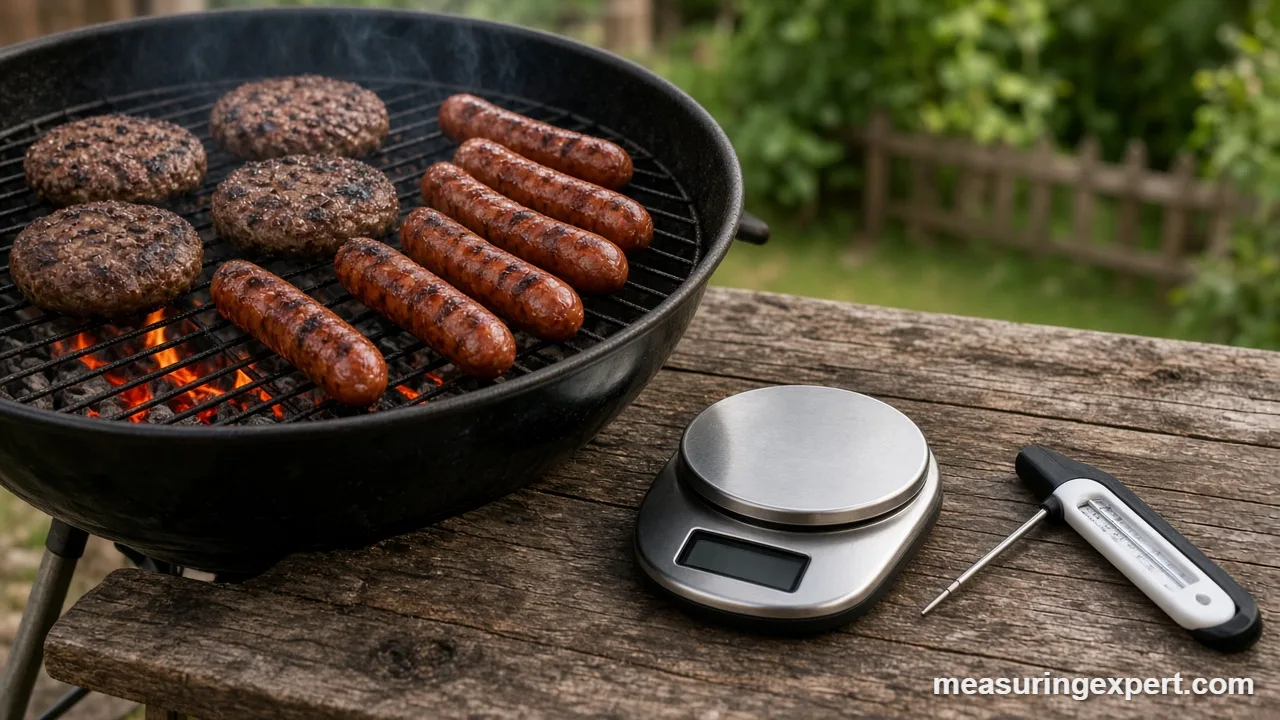
To measure summer BBQ ingredients well, weigh the meat in pounds or grams, then check doneness with a thermometer. Burgers need 160 degrees F (71 degrees C), poultry 165 degrees F (74 degrees C), and steaks 145 degrees F (63 degrees C), according to USDA. Spoons and cups handle rubs, sauces and marinades.
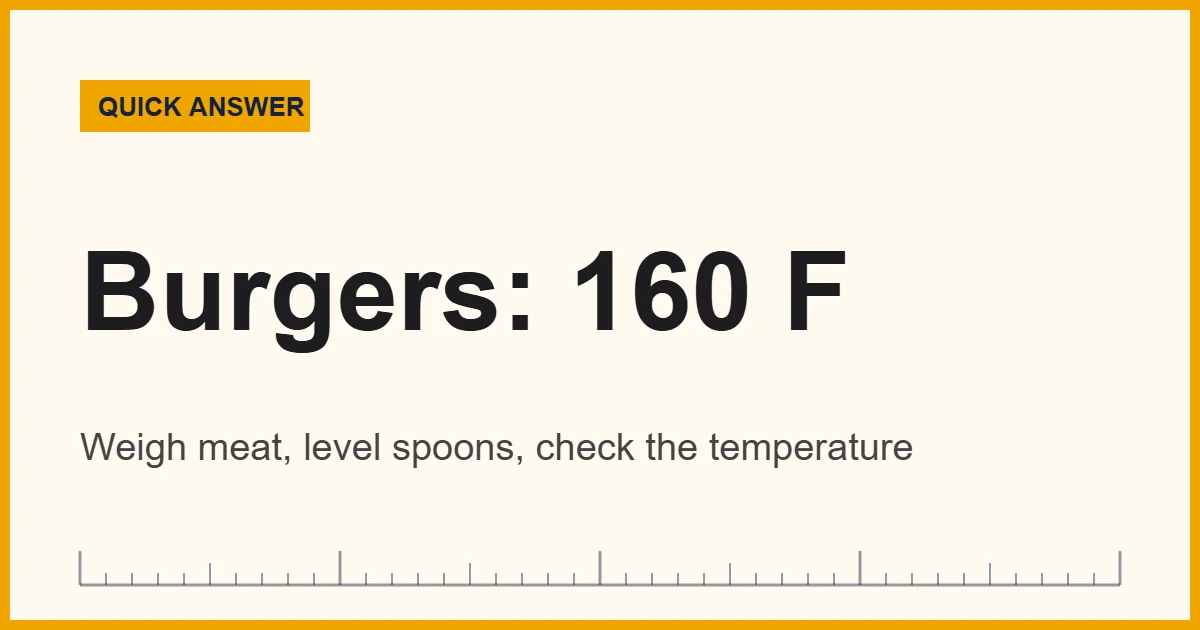
Convert Grill, Oven and Food Temperatures
First, grilling recipes mix Fahrenheit, Celsius and Kelvin, especially when they come from overseas. Therefore, type a temperature below, and the converter shows the other scales instantly.
A summer cookout asks you to measure in three places at once: the raw meat, the sauce and rub, and the heat. For example, a patty that is 20 grams too heavy changes cooking time, while a rub that is twice as salty ruins dinner. As a result, a small amount of planning pays off at the grill.
This guide shows how to measure summer BBQ ingredients for a crowd, from patty weights to marinade timing. First, you will see the food safety temperatures. After that come portion math, tools, and the mistakes that cause dry or unsafe food.
Temperatures Are Part of the Recipe
In fact, a food thermometer is a measuring tool, and USDA treats it that way. The agency’s grilling guidance says meat browns quickly on a grill, so color alone is not proof of doneness. Instead, check the thickest part with a thermometer.
| Food | Safe minimum internal temperature | Celsius |
|---|---|---|
| Burgers (ground beef, pork, veal, lamb) | 160 F | 71.1 C |
| Poultry, whole or ground | 165 F | 73.9 C |
| Steaks, chops and roasts, then rest 3 minutes | 145 F | 62.8 C |
| Fish and shellfish | 145 F | 62.8 C |
| Holding cooked meat before serving | 140 F or warmer | 60.0 C |
These figures come from the USDA summer food safety release and the FSIS grilling guidance. Similarly, for smoking, the same guidance suggests keeping the air temperature between 225 and 300 degrees F (107 to 149 degrees C).
How to Measure Summer BBQ Ingredients for a Crowd
However, raw weight is what you buy, while cooked weight is what guests eat. Meat loses water and fat on the grill. Consequently, cooked portions are smaller than the raw cut. One published BBQ guide says most barbecue cuts lose about 30 to 40% of their raw weight and suggests dividing cooked weight by 0.65 to find the raw amount.
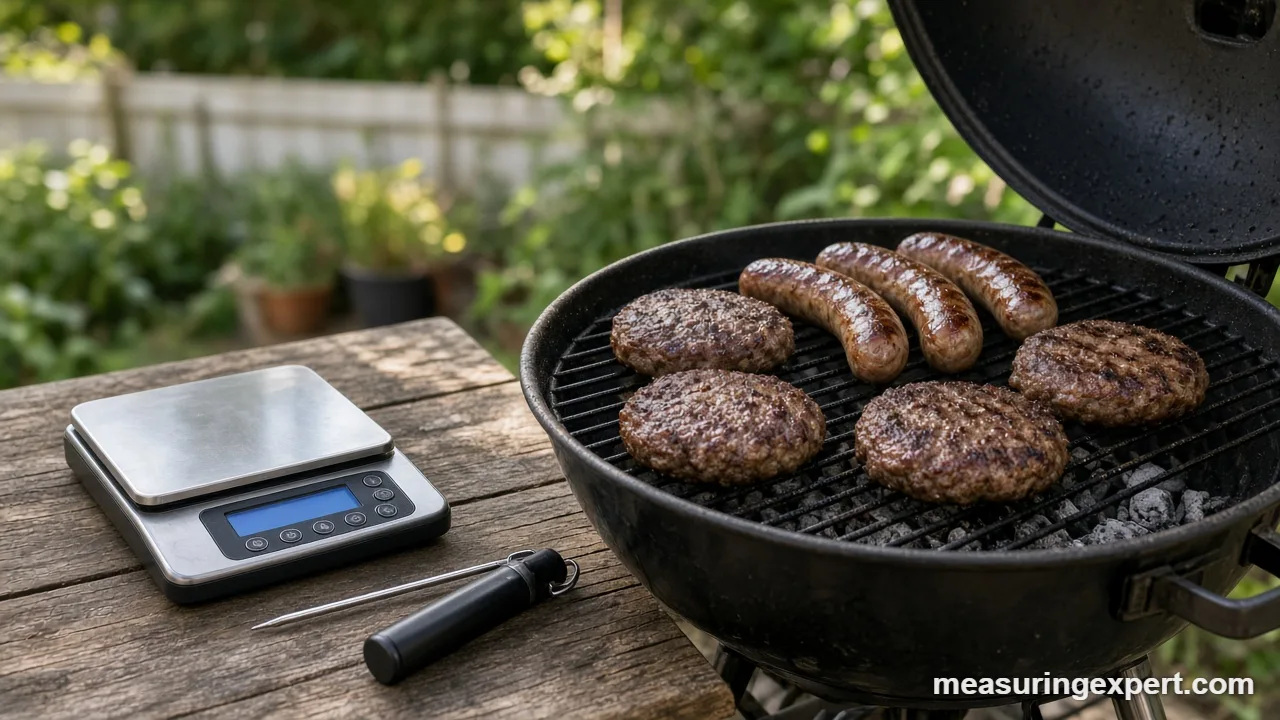
Keep in mind that the guide is a commercial source, and its own charts do not match each other exactly. Therefore, treat the 0.65 factor as a planning shortcut rather than a rule. For example, 12 guests at 1/2 lb of cooked brisket each need 6 lb cooked, or about 9.2 lb raw.
| Guests | Pulled pork at 3/4 lb raw each | Brisket at 3/4 to 1 lb raw each | Burgers at 1/3 lb each |
|---|---|---|---|
| 8 | 6 lb (2.7 kg) | 6 to 8 lb | 2.7 lb (1.2 kg) |
| 12 | 9 lb (4.1 kg) | 9 to 12 lb | 4 lb (1.8 kg) |
| 20 | 15 lb (6.8 kg) | 15 to 20 lb | 6.7 lb (3.0 kg) |
| 30 | 22.5 lb (10.2 kg) | 22.5 to 30 lb | 10 lb (4.5 kg) |
Note that the pulled pork and brisket figures are the raw amounts per person from that guide, and the burger column is plain multiplication. In addition, the guide suggests planning 5 to 10% extra. Finally, round up to the next whole pound when you shop.
If your guests will also drink from a pitcher, see our guide to measuring lemonade ingredients for a batch recipe that scales cleanly.
Burger, Sausage and Patty Weights
Weighing each patty is also the simplest way to get even cooking. Simply put, equal weight means equal thickness, and equal thickness means equal time on the grill. As a result, every burger finishes together. Furthermore, the same trick works for sausages, kebab portions and chicken thighs.
| Patty size | Grams | Ounces | Typical use |
|---|---|---|---|
| 1/4 lb | 113.4 g | 4 oz | Standard burger |
| 1/3 lb | 151.2 g | 5.33 oz | Larger burger |
| 1/2 lb | 226.8 g | 8 oz | Pub-style burger |
Here is a quick tip for even patties. First, set a bowl on the scale, press tare, and add meat until you reach the target. Next, shape it gently, because overworking ground meat makes it dense. If ounces and grams confuse you, read how much an ounce is by weight and by volume.
Recommended Tools to Measure Summer BBQ Ingredients
In short, two tools matter most: a scale and an instant-read thermometer. Also, a scale with a tare button handles patties, rubs and big cuts. Meanwhile, a thermometer takes the guesswork out of doneness. A set of metal measuring spoons completes the kit for rubs and sauces.


As an Amazon Associate, Measuring Expert earns from qualifying purchases.
How to Measure Summer BBQ Ingredients Step by Step
- Plan the headcount. Decide how many guests you expect and how much meat each person eats.
- Do the portion math. Multiply guests by the raw weight per person, then add 5 to 10% extra.
- Weigh the meat. Place a tray on the scale, press tare, and add the meat until you reach the target weight.
- Portion patties and sausages. Divide the total by the number of servings and weigh each piece.
- Measure the rub and marinade. Level your spoons and cups, and write down the amounts you used.
- Grill, then check the temperature. Insert the thermometer into the thickest part and compare it to the safe minimum.
- Rest and hold. Let steaks rest for 3 minutes, and keep cooked food at 140 degrees F (60 degrees C) or warmer.
Marinades, Rubs and Sauces
Rubs and sauces are small quantities, so in practice spoon accuracy matters more than scale accuracy. Also, level every dry spoonful, and pack brown sugar firmly if the recipe says so. In addition, for conversions between teaspoons and milliliters, our 30 mL guide shows the exact values.
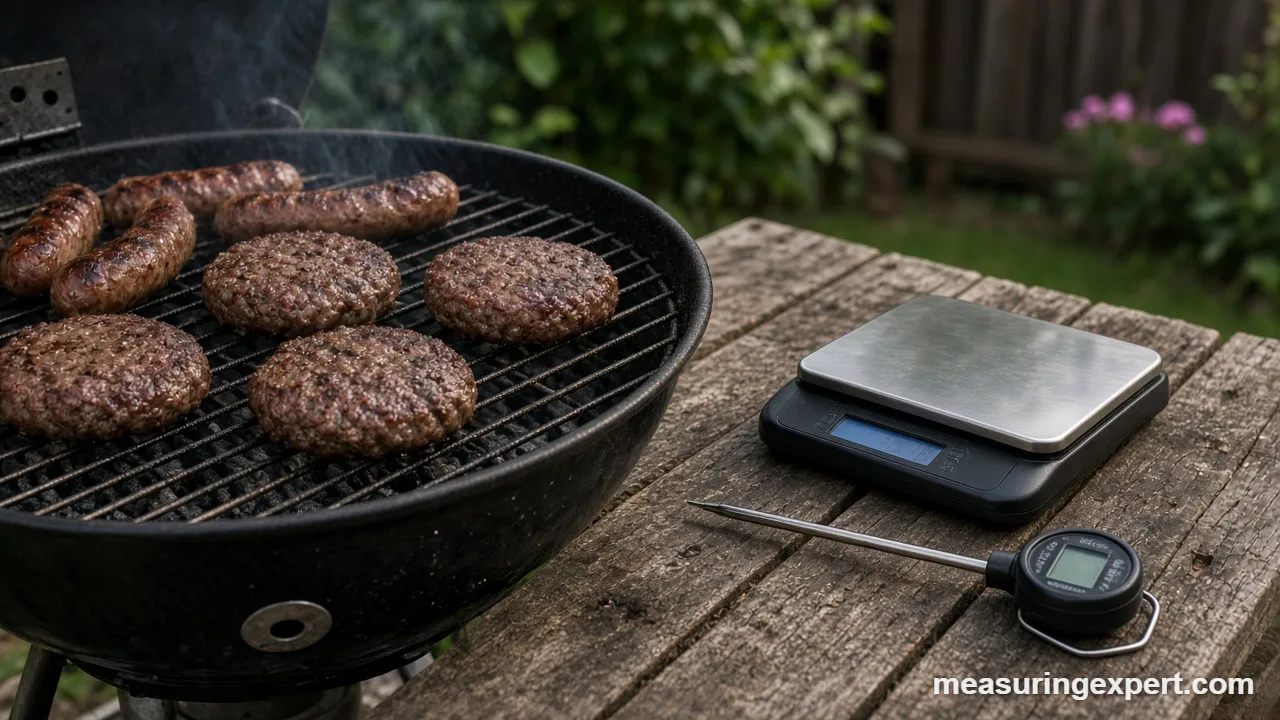
USDA gives clear marinade timing. In particular, it says most recipes call for 6 to 24 hours, and after two days the marinade may break down the meat’s fibers. Also, marinate in the refrigerator, never on the counter.
Also, set aside a portion of the marinade for sauce before raw meat touches it. Otherwise, the leftover liquid is unsafe to serve. If you plan to baste with a marinade that has touched raw meat, boil it for a few minutes first. Instead of boiling, you can simply throw it out.
To scale a rub, divide the number of pounds you are cooking by the number of pounds the recipe was written for. For instance, a rub written for 3 lb of pork and used on 7.5 lb of pork needs 2.5 times each ingredient (7.5 divided by 3). In addition, weigh the salt, since it has the biggest effect on taste.
Do and Don’t at the Grill
Do
- Weigh patties to equal sizes.
- Check the thickest part with a thermometer.
- Marinate in the refrigerator.
- Level dry spoonfuls for rubs.
- Plan 5 to 10% extra meat.
Don’t
- Judge doneness by color alone.
- Reuse raw marinade without boiling.
- Scale a rub by eye for a big cut.
- Leave cooked meat below 140 degrees F for long.
- Press on patties while they cook.
Honest Limits of These Numbers
Overall, portion sizes depend on the menu, the side dishes and the appetites of your guests. Therefore, every table here is a planning start. Moreover, shrinkage varies with the cut, the fat level and the cooking method. In short, adjust the quantities after your first cookout and write down what you used.
However, this page also does not replace the food safety rules on the USDA site. For example, large events, catering and anyone with a weakened immune system should follow current USDA and local health department guidance.
Frequently Asked Questions
What is the best way to measure summer BBQ ingredients?
Weigh the meat on a scale, measure rubs and sauces with leveled spoons, and use a thermometer to check doneness.
How do I measure summer BBQ ingredients for 12 people?
Multiply 12 by the raw weight per person. For example, 1/3 lb burgers need 4 lb, and 3/4 lb of pulled pork each needs 9 lb.
How much meat should I buy per person for a BBQ?
One published guide suggests 3/4 lb raw pulled pork or 3/4 to 1 lb raw brisket per person, plus 5 to 10% extra.
Why measure summer BBQ ingredients by weight?
Weight gives equal portions and even cooking. It also avoids the packing differences that make cups and spoons inconsistent.
What temperature should burgers reach?
USDA says burgers made from ground beef, pork, veal or lamb should reach 160 degrees F (71 degrees C).
What temperature is safe for chicken on the grill?
Whole and ground poultry should reach 165 degrees F (74 degrees C), measured in the thickest part.
How long can I marinate meat?
USDA says most recipes call for 6 to 24 hours in the refrigerator. After two days, the marinade can make meat mushy.
Can I reuse marinade as a sauce?
Only if you boil it first. The safer choice is to set aside some fresh marinade before the raw meat goes in.
How much does a 1/3 pound patty weigh in grams?
A 1/3 lb patty weighs about 151 g, or 5.33 oz. A 1/4 lb patty is about 113 g.
How much does meat shrink on the grill?
One BBQ guide says most cuts lose about 30 to 40% of their raw weight. The loss varies by cut and method.
Measure Summer BBQ Ingredients: The Bottom Line
To sum up, weigh your meat, level your spoons, and check the temperature of every cut. Burgers reach 160 degrees F, poultry 165 degrees F, and steaks 145 degrees F with a short rest.
Finally, use the converter near the top whenever a recipe switches between Fahrenheit and Celsius. Then, write your final quantities down, so next summer’s cookout is easier to plan.