

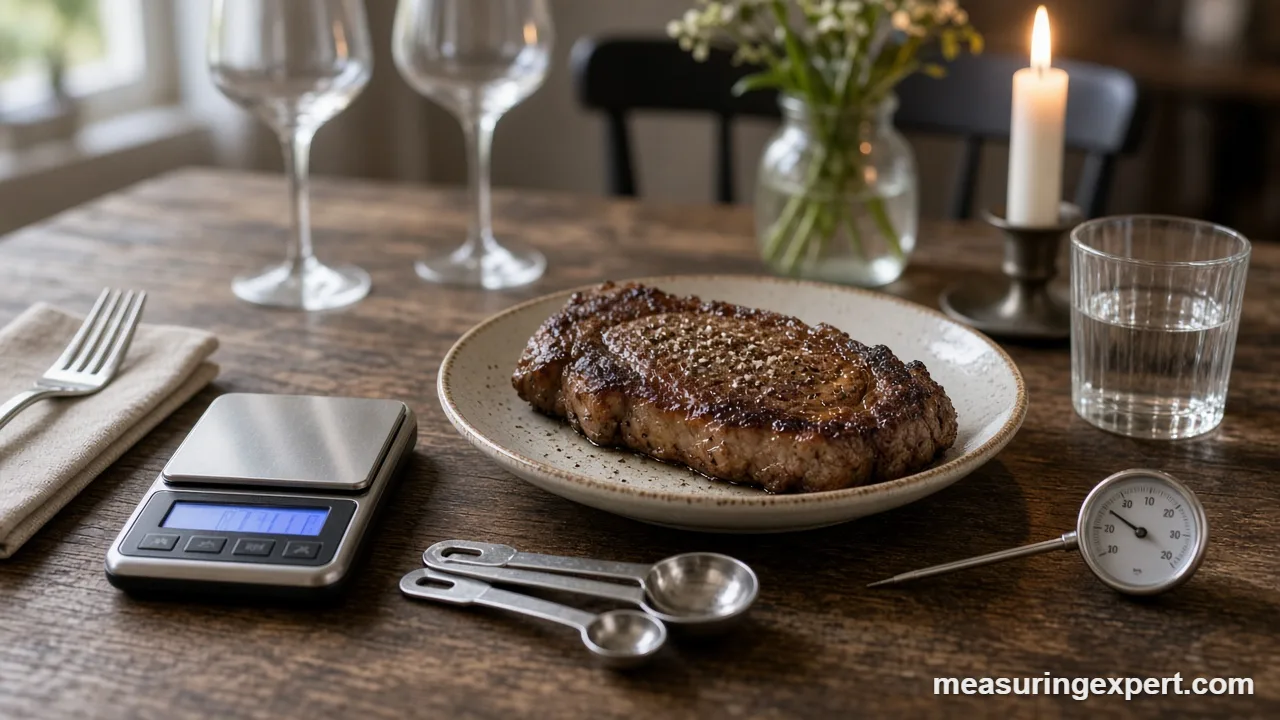
Anniversary dinner measurements come down to three habits: weigh the ingredients that matter, halve recipes by exact spoon and cup amounts, and check doneness with a thermometer. For example, 1/2 cup of all-purpose flour weighs about 60 g, and steaks need 145 F (63 C) inside, followed by a 3-minute rest.
Halve a Recipe: Anniversary Dinner Measurements Converter
Most recipes serve four to six, but an anniversary dinner usually serves two. Therefore, to scale one down, first enter the original amount below. Then divide the result by two, or by the factor you need. In addition, the converter shows the same amount in cups, spoons and milliliters, so you can pick the tool that fits.
So a special dinner leaves little room for guesswork. For example, a sauce that is too salty or a dessert that does not set can sink the evening, and you cannot start over once the guest has arrived. As a result, it helps to settle the numbers before you turn on the stove.
This guide covers anniversary dinner measurements for a meal for two, so it explains how to halve amounts, when to weigh instead of scoop, which portion sizes to plan, and which temperatures to check. Also, the weights come from the King Arthur Baking ingredient chart, and the safe temperatures come from the USDA.
Anniversary Dinner Measurements: Halving Table for Two
For instance, dividing 1/3 cup or 3/4 cup in your head is hard when the candles are lit. Therefore, use this table instead. Because each row halves the amount exactly, you can read it quickly. Meanwhile, the milliliter column uses the US definition of the cup and spoon.
| Recipe says | Half of it | Half in mL |
|---|---|---|
| 1 cup | 1/2 cup | 118.3 mL |
| 3/4 cup | 6 tbsp | 88.7 mL |
| 2/3 cup | 1/3 cup | 78.9 mL |
| 1/2 cup | 1/4 cup | 59.1 mL |
| 1/3 cup | 2 tbsp + 2 tsp | 39.4 mL |
| 1/4 cup | 2 tbsp | 29.6 mL |
| 2 tbsp | 1 tbsp | 14.8 mL |
| 1 tbsp | 1 1/2 tsp | 7.4 mL |
| 1 tsp | 1/2 tsp | 2.5 mL |
| 1/2 tsp | 1/4 tsp | 1.2 mL |
However, one egg is the awkward case. Beat it in a small bowl, then use about half. Also, if a recipe mixes ounces and cups, see how much an ounce is before you divide.
Recommended Tools for Anniversary Dinner Measurements
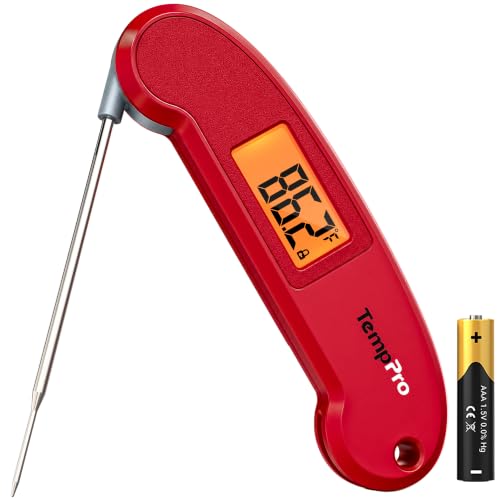
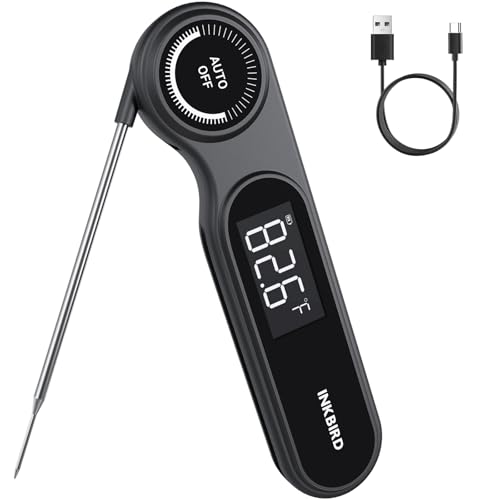
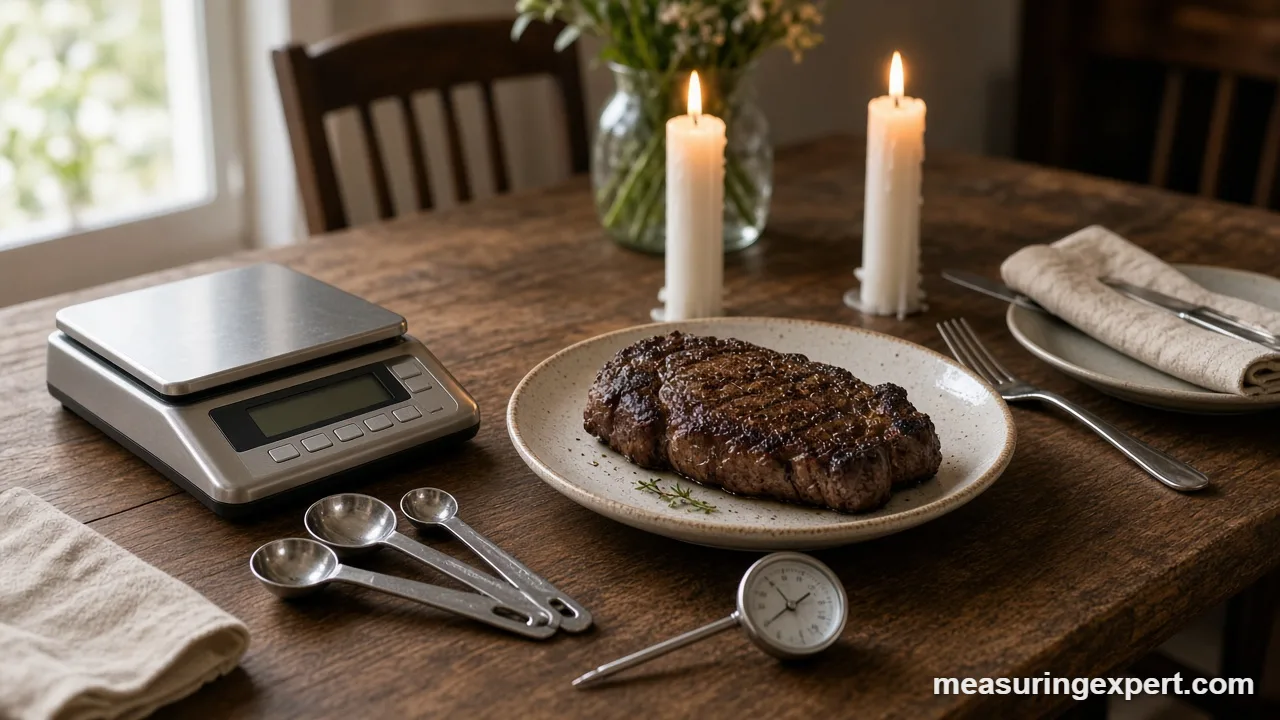
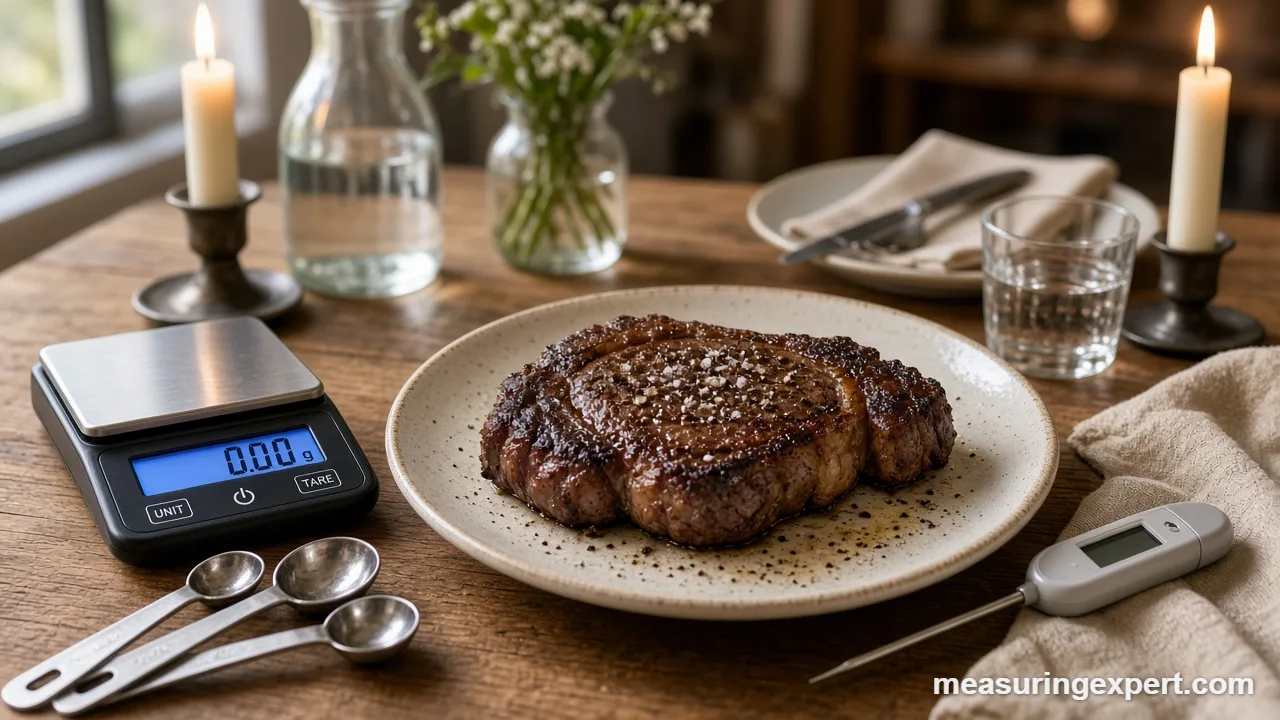
In practice, a short list of tools covers almost every dinner for two. First, a digital scale with a tare button handles flour, sugar, butter and portions of meat. Next, a set of measuring spoons covers salt, spices and extracts, so look for engraved markings that stay readable. Finally, an instant-read thermometer tells you when meat or a casserole has reached a safe temperature.


As an Amazon Associate, Measuring Expert earns from qualifying purchases.
Key Takeaways
- First, halve every ingredient by the same factor, not just the main one.
- Next, weigh flour, sugar and butter: 1 cup of all-purpose flour is about 120 g.
- Steaks, chops and roasts need 145 F (63 C) and a 3-minute rest.
- Also, ground meat needs 160 F (71 C), and poultry and leftovers need 165 F (74 C).
- However, kosher salt and table salt weigh different amounts per tablespoon.
- Also, test your recipe once before the big night if it is new to you.
Weigh or Scoop: Anniversary Dinner Measurements by Weight
Cups measure volume, so the weight they hold changes with how you fill them. Weighing, however, removes that variation. In addition, a scale makes halving easy because you divide a single number instead of fractions of a cup. First, the King Arthur Baking chart lists the weights below; the right-hand column is simply half of each.
| Ingredient | 1 cup (or stated amount) | Half of that |
|---|---|---|
| All-purpose flour | 120 g (4 1/4 oz) | 60 g (1/2 cup) |
| Granulated sugar | 198 g (7 oz) | 99 g (1/2 cup) |
| Brown sugar, packed | 213 g (7 1/2 oz) | 106 g (1/2 cup) |
| Milk | 227 g (8 oz) | 113 g (1/2 cup) |
| Heavy cream | 227 g (8 oz) | 113 g (1/2 cup) |
| Butter | 8 tbsp = 113 g (4 oz) | 4 tbsp = 56 g (2 oz) |
Also, these numbers come from the King Arthur Baking ingredient weight chart. For more on why weighing beats scooping, read measuring ingredients by weight.
Portion Planning for a Dinner for Two
Because cups vary, portions are easier to plan in grams than in cups. For example, USDA MyPlate counts 1 ounce of cooked lean beef or 1 ounce of cooked chicken or turkey as one ounce-equivalent, so cooked weight is the number to track. Therefore, the table converts common cooked portions to grams.
| Cooked portion | Grams | MyPlate ounce-equivalents (lean beef or poultry) |
|---|---|---|
| 3 oz | 85 g | 3 |
| 4 oz | 113 g | 4 |
| 6 oz | 170 g | 6 |
| 8 oz | 227 g | 8 |
Then multiply the portion by two for two people. However, weigh the food after cooking if you want an exact count, since cooking changes the weight.
Temperature Checks for Anniversary Dinner Measurements
Also, safe cooking is a measurement too. For that reason, the USDA lists these minimum internal temperatures, and a thermometer is the only reliable way to check them.
| Food | Fahrenheit | Celsius |
|---|---|---|
| Steaks, chops, roasts (beef, pork, lamb, veal) | 145 F, then rest 3 minutes | 63 C |
| Fish | 145 F | 63 C |
| Ground meat and sausage | 160 F | 71 C |
| Egg dishes such as quiche | 160 F | 71 C |
| Poultry, leftovers and casseroles | 165 F | 74 C |
Moreover, the figures come from the federal safe minimum internal temperature chart. In short, put the probe into the thickest part of the food, away from bone. Then read it before you plate.
How to Plan Anniversary Dinner Measurements Step by Step
- Pick a tested recipe. First, choose one with weights or clear cup amounts, and avoid recipes with vague terms like “a handful”.
- Divide every amount. First, use the halving table, and write the new numbers beside the old ones.
- Convert tricky amounts to weight. Also check the weight table for flour, sugar, butter and cream.
- Set out the tools. Next, lay out scale, spoons, bowls and thermometer before you start.
- Measure everything first. Then place each ingredient in a small bowl, so you can cook without stopping.
- Cook to temperature. Instead of watching the clock, check the thickest part of the food with the thermometer, not the clock.
- Rest and plate. Finally, let steaks rest for 3 minutes at 145 F, then serve.
Also, if your measuring is mostly liquid, how to use a measuring jug explains reading the scale at eye level.
Common Anniversary Dinner Measurements Mistakes
| Mistake | What goes wrong | Fix |
|---|---|---|
| Halving only the main ingredient | The balance of the dish shifts | Divide every line of the recipe |
| Swapping kosher and table salt by volume | The dish tastes much saltier or blander | Weigh salt, or match the brand named |
| Using the full cooking time | A smaller portion can overcook | Check with a thermometer early |
| Scooping flour straight from the bag | The cup packs and holds extra flour | Weigh it: 120 g per cup |
| Testing the recipe for the first time that night | No time to fix surprises | Make a trial run earlier in the week |
Do and Don’t for Dinner-for-Two Measuring
Do
- Write down the halved amounts before you start.
- Weigh flour, sugar, butter and cream.
- Use a thermometer for meat and casseroles.
- Prepare small bowls of each ingredient.
- Label which salt the recipe uses.
Don’t
- Round halved spice amounts up without tasting.
- Trust the clock instead of the thermometer.
- Pack a cup unless the recipe says to.
- Skip the rest time for steaks.
- Try a new recipe for the first time on the big night.
Honest Limits of Halving Recipes
In fact, halving works well for sauces, sides and many mains. However, it works less well for baking, because a smaller batch heats and sets differently, and pan size changes the result. In addition, very small amounts, such as 1/8 teaspoon, are hard to measure by volume. For these reasons, therefore, bake a half recipe in a smaller pan and use the visual cues in the recipe as well as the thermometer.
When to Ask for Help
If a guest has a food allergy, a medical diet or a pregnancy, check the recipe with them or with their doctor. After all, a measuring guide cannot cover those needs.
Frequently Asked Questions
What are the best anniversary dinner measurements for two people?
First, halve a four-serving recipe, weigh flour, sugar and butter, and decide meat portions by cooked weight. Then confirm doneness with a thermometer.
How do I halve a recipe that uses 1/3 cup?
Half of 1/3 cup is 2 tablespoons plus 2 teaspoons, which is about 39.4 mL. However, a scale makes this easier for dry ingredients.
How much does 1 cup of flour weigh?
One cup of all-purpose flour weighs 120 g (4 1/4 oz) in the King Arthur Baking chart. As a result, half a cup is 60 g.
What is the safe temperature for steak?
The USDA lists 145 F (63 C) for steaks, chops and roasts, followed by a 3-minute rest. Therefore, use a thermometer rather than guessing.
What temperature should chicken reach?
Poultry should reach 165 F (74 C) at the thickest part. Similarly, leftovers and casseroles should reach the same temperature.
Can I use table salt instead of kosher salt?
Not by volume, because each weighs a different amount. According to the King Arthur chart, a tablespoon of table salt weighs 18 g, while Diamond Crystal kosher weighs 8 g. So weigh the salt instead.
How many tablespoons are in half a cup?
There are 8 tablespoons in 1/2 cup. In addition, that equals 24 teaspoons or about 118 mL.
How do I halve one egg?
First, beat the egg in a small bowl and use about half of it. Alternatively, choose a recipe that uses whole eggs for two servings.
Do anniversary dinner measurements change for baking?
Yes, because baking depends on exact ratios, so weigh the ingredients and use a smaller pan. However, sauces and sides are more forgiving.
Which tools do I need for anniversary dinner measurements?
A digital scale, measuring spoons and an instant-read thermometer cover most dinners for two. Also add liquid and dry measuring cups for convenience.
Anniversary Dinner Measurements: The Bottom Line
To sum up, plan your anniversary dinner measurements before you cook: halve every line of the recipe, weigh the ingredients that matter, and decide your portions in grams. Then use the converter at the top whenever a fraction gets awkward, so the math never slows you down.
Finally, trust the thermometer over the clock, and rehearse any new recipe once. As a result, with the numbers settled, you can spend the evening at the table instead of at the stove.