

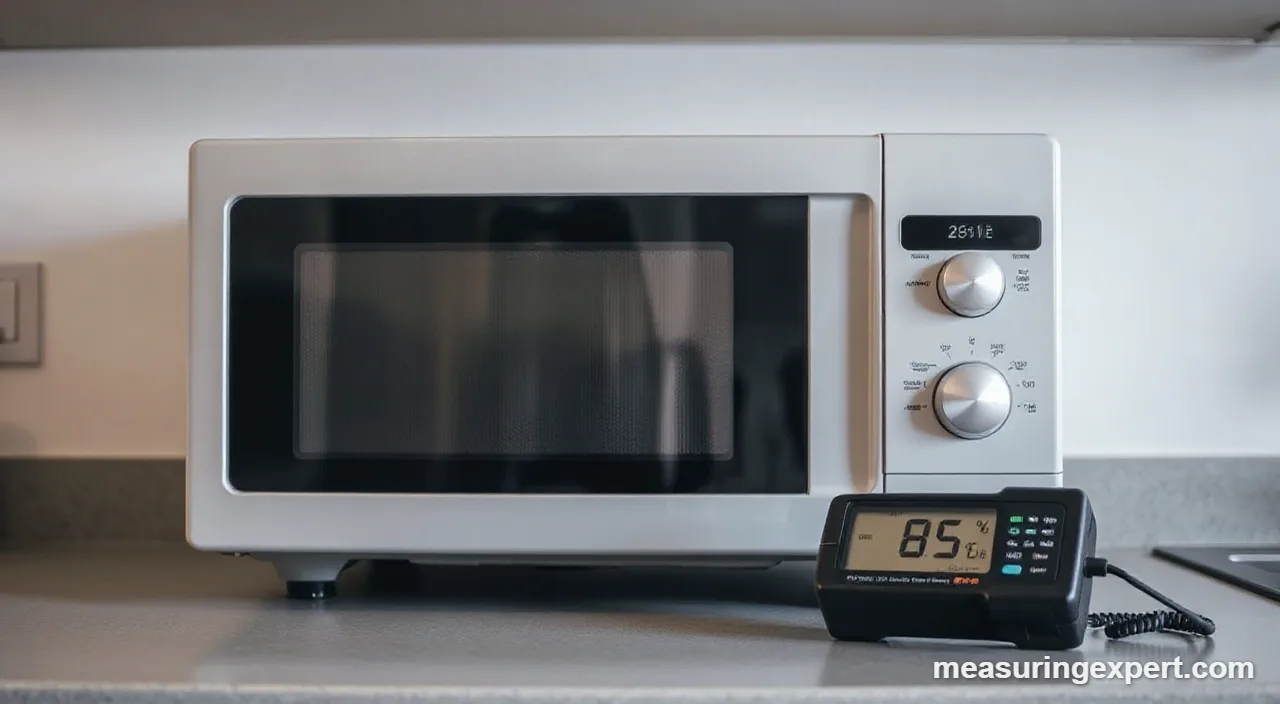
A true certified microwave leakage detector is a professional instrument, and a consumer RF or EMF meter cannot prove that your oven meets the federal limit. What a home meter can do is show a relative change: compare readings around the door seam with readings a short distance away, and watch for a sudden jump. Meters that cover the 2.45 GHz band, such as the Case and Cornet ED98QPro5G (0.1 to 8 GHz) or the GQ EMF-390, are the closest consumer option. The simpler, FDA-backed approach is a visual check: a door that closes firmly, undamaged hinges, latches and seals, and no operation with the door open. If anything looks damaged, stop using the oven and contact the maker.
Most people never think about their microwave until a door latch feels loose, a seal looks worn or a news story mentions leakage. Then the obvious question appears: is there a gadget that can tell me if my oven leaks?
The honest answer has two halves. Dedicated leakage testers exist and are used by technicians and inspectors, but we did not find one among the products we can recommend. What shoppers can buy is an RF or EMF meter, a general-purpose radio-frequency detector that responds to the same band microwave ovens use, around 2.4 GHz.
In short: use a meter as a curiosity tool and a comparison aid, not as a certificate. Rely on the visual checks and the manufacturer’s service channel for anything that matters. We found only four closely matching meters, so this is a short buying guide rather than a top-10 list.
The numbers that matter come from the FDA. Under federal rules, an oven’s leakage over its lifetime is limited to 5 milliwatts per square centimeter measured about 2 in from the surface, and the FDA’s page on microwave ovens advises against using an oven if the door does not close firmly or is bent, warped or damaged (see FDA on microwave ovens).
Below you will find a distance calculator, our four meter picks, a safe home-check routine, how to read a meter without fooling yourself, and when to call for service. For more on RF and field meters in general, see our EMF meter roundup.
As an Amazon Associate we earn from qualifying purchases. Picks are based on manufacturer specs, listing details and buyer reports, not lab testing. This page is general education. It is not a safety certification, and no consumer meter replaces professional testing.
Key takeaways
- A consumer RF meter cannot certify that a microwave meets the 5 mW/cm2 federal limit.
- The Case and Cornet ED98QPro5G covers 0.1 to 8 GHz, which includes the band microwave ovens use.
- The GQ EMF-390 is a 3-in-1 meter with an RF function, a flexible option for general home checks.
- Compare readings around the door seam with readings a few inches away. Look for sudden jumps, not absolute numbers.
- The FDA says to stop using an oven whose door does not close firmly, is bent, or keeps running when open.
- Energy falls off steeply with distance. At 20 in, an ideal reading is about 1/100 of the reading at 2 in.
- If in doubt, contact the maker, not a meter.
- How we picked these four meters
- Recommended RF meters to compare microwave readings
- What the federal limit actually says
- Visual checks you can do without a meter
- What a consumer RF meter can and cannot do
- How to use a meter for comparisons
- Do and don’t for microwave safety
- Reading a meter without fooling yourself
- Honest limits
- When to call a professional
- Frequently asked questions
- The bottom line
How we picked these four meters
We looked for field meters whose listings mention RF measurement and show strong ratings from many shoppers, then compared each page with the maker’s description of frequency range and intended use. Listings that did not mention RF, or that had very few reviews, were dropped.
We did not find a dedicated microwave leakage tester among matching products, and we will not pad the list with unrelated tools. Four RF-capable meters met our criteria, so this is a short buying guide. It is research-based, from manufacturer specs and buyer reports, not lab testing.
Recommended RF meters to compare microwave readings
These are general-purpose RF and EMF meters, not certified leakage testers. Check each listing for its frequency range and measurement units.
| # | Product | Type | Notes |
|---|---|---|---|
| 1 | Case and Cornet ED98QPro5G | RF meter | 0.1 to 8 GHz range per the title |
| 2 | GQ EMF-390 | 3-in-1 EMF meter | Includes RF function |
| 3 | Case and Cornet ED88TPlus | EMF and RF detector | 5G version per the title |
| 4 | TF2 EMF meter | 3-in-1 meter | Magnetic, electric and RF |
Buying from this list? Get it fast, and catch Black Friday deals, with Prime
Case and Cornet ED98QPro5G electrosmog meter, 0.1 to 8 GHz
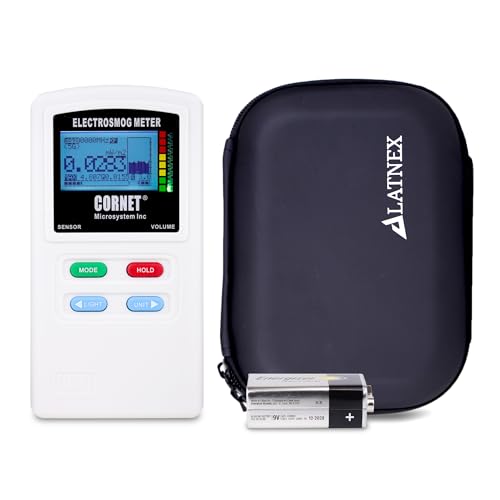
Best for: curious owners who want an RF meter that covers the microwave oven band.
The ED98QPro5G is listed as an electrosmog meter covering 0.1 to 8 GHz. Microwave ovens operate near 2.4 GHz, which falls inside that span, so the meter should respond to oven energy.
Response does not equal accuracy. Use it to compare spots around the door and to notice a sudden jump, then follow the FDA’s advice if the oven looks damaged.
- RF and electrosmog meter
- 0.1 to 8 GHz per the title
- Handheld
- Check the listing for units, display and averaging features
- Frequency range includes the oven band
- Handheld and simple
- Useful for comparisons
- Not a certified leakage tester
- Units may need interpretation
Skip it if you want a certified instrument.
GQ EMF-390 advanced 3-in-1 EMF, ELF and RF meter
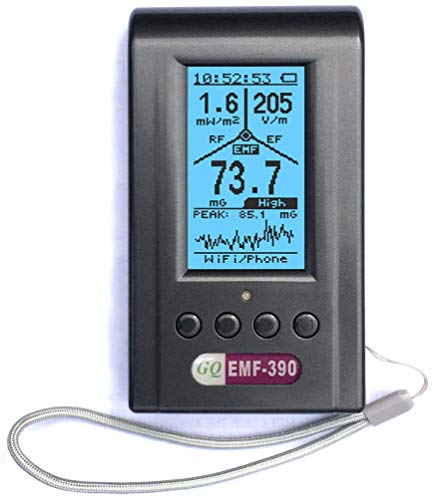
Best for: those who want one meter for EMF, ELF and RF checks.
GQ’s EMF-390 is described as an advanced 3-in-1 EMF, ELF and RF meter. The RF function is the one that matters for microwave oven checks.
It is a flexible home meter that also covers other fields. As with all consumer meters, treat readings as comparisons, not certification.
- 3-in-1 EMF, ELF and RF meter
- Handheld device
- RF measurement function per the title
- Check the listing for the RF frequency range
- Several measurement modes
- Popular among hobbyists
- Useful for general home checks
- Complex for beginners
- Not certified for leakage
Skip it if you only need a simple RF indicator.
Case and Cornet ED88TPlus 5G EMF and RF detector
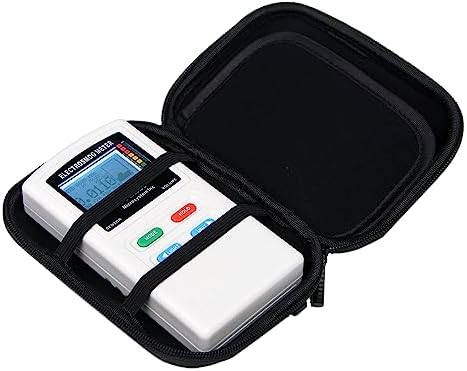
Best for: general RF detection including newer bands.
The ED88TPlus is a newer-version EMF and RF detector, per the listing. It is aimed at general home RF detection rather than any single appliance.
Check the listing for its frequency range before relying on it near a microwave oven.
- EMF and RF detector
- 5G-ready version per the title
- Handheld
- Check the listing for range and units
- Handheld convenience
- General RF detection
- Simple use
- Range must be confirmed
- Not a leakage tester
Skip it if you want certified leakage testing.
TF2 EMF pollution meter: magnetic, electric and RF field detector
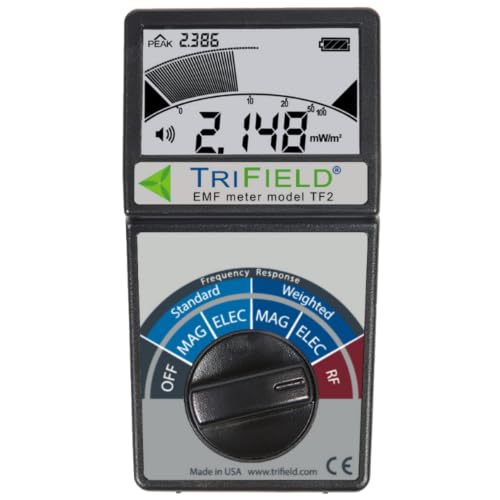
Best for: a simple home meter for general field awareness.
The TF2 is a 3-in-1 meter that measures magnetic, electric and RF fields. Its RF function is the relevant one for oven comparisons.
It is a basic tool that suits curiosity more than precision. Treat results as rough comparisons.
- 3-in-1 EMF meter
- Magnetic, electric and RF fields per the title
- Handheld
- Check the listing for RF range and units
- Several field types
- Simple use
- Good for general awareness
- Limited documentation
- Not a leakage tester
Skip it if you want the widest RF range.
What the federal limit actually says
The FDA states that microwave oven leakage over its lifetime is limited to 5 milliwatts per square centimeter, measured about 2 in from the oven surface. That is a very specific measurement, taken with calibrated equipment and a defined method.
The FDA also notes that energy drops off quickly with distance, so a reading at 20 in is roughly 1/100 of a reading at 2 in. That matches the simple inverse-square idea shown in the table.
| Distance | Centimeters | Ideal relative power |
|---|---|---|
| 2 in | 5.08 cm | 100% |
| 4 in | 10.16 cm | 25% |
| 8 in | 20.32 cm | 6.25% |
| 12 in | 30.48 cm | 2.78% |
| 20 in | 50.8 cm | 1% |
Real ovens do not behave like a perfect point source, so treat the table as a rule of thumb. Our explainer on the speed of light and microwaves covers the physics.
Visual checks you can do without a meter
The FDA’s own advice is simple and costs nothing. Look at the door and the parts that keep the energy in.
- Unplug the oven and open the door.
- Inspect the door seals and the metal edges for dirt, warps and damage.
- Check the hinges and latches for looseness or bending.
- Close the door gently and confirm that it closes firmly with no gap.
- Plug the oven back in and make sure it stops when you open the door during a cycle.
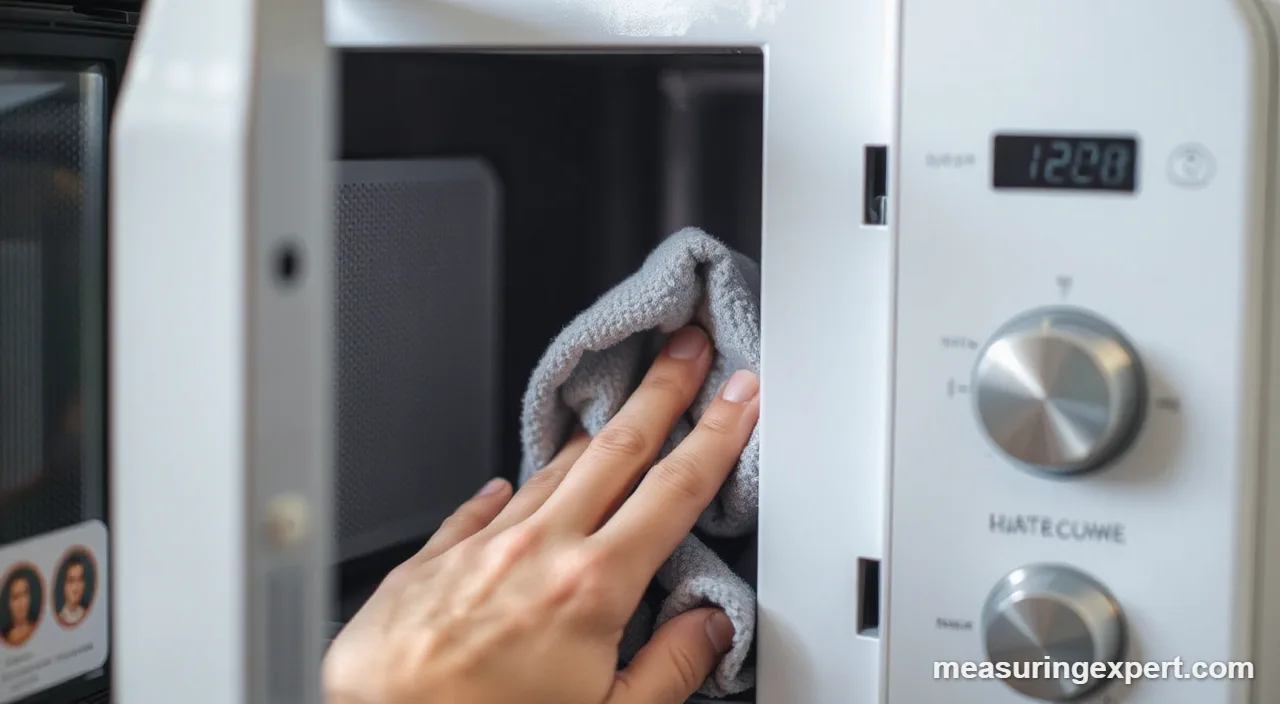
- Clean food from the seal area with a damp cloth.
What a consumer RF meter can and cannot do
RF meters respond to radio-frequency energy in a range of frequencies. Some include the band microwave ovens use. That makes them handy for seeing relative changes, but they are not built to certify compliance.
| A meter can | A meter cannot |
|---|---|
| Show a relative jump near a seam | Prove the oven meets the 5 mW/cm2 limit |
| Compare one spot with another | Replace calibrated test equipment |
| Detect other RF sources such as Wi-Fi | Tell you what is safe or unsafe in a health sense |
| Help you notice a change over time | Fix a damaged oven |
Many consumer meters report in units such as microwatts per square meter or milliwatts per square meter, which differ from the federal limit’s mW per square centimeter. If you need to convert, 1 mW/cm2 is 10 W/m2 (10,000 mW/m2), so the 5 mW/cm2 limit equals 50 W/m2.
How to use a meter for comparisons
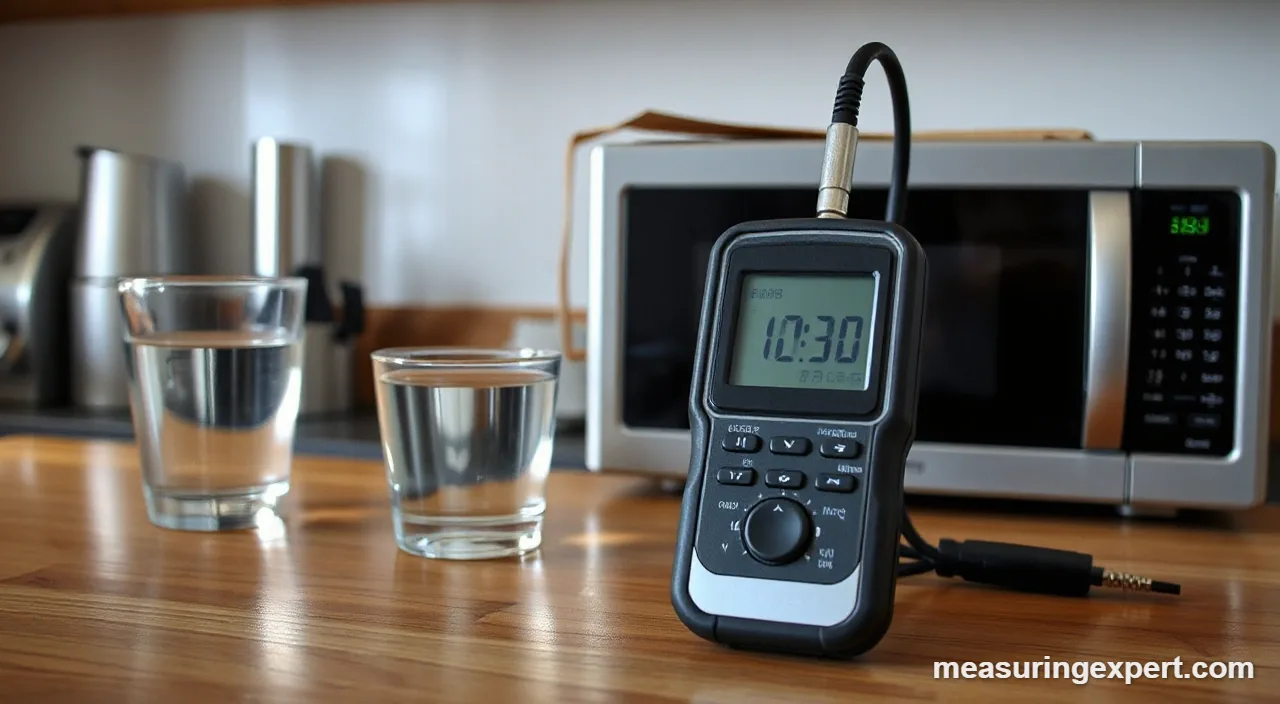
If you choose to use a meter, keep the method consistent so that you can notice changes.
- Switch the meter to its RF mode and wait for the reading to settle.
- Hold the meter 2 in from the door seam with the oven running on a cup of water, never empty.
- Move slowly along the seam and note the highest reading.
- Repeat 8 in away and compare.
- Write down the readings and the date.
- Repeat in a few months to see whether the pattern has changed.
Do and don’t for microwave safety
A few habits do more for safety than any gadget.
- Keep the door seals clean
- Stop using a damaged oven
- Use microwave-safe containers
- Contact the manufacturer for service
- Run the oven empty
- Use it with the door open
- Try to repair the door yourself
- Rely on a consumer meter as proof
Reading a meter without fooling yourself
Meters pick up more than your oven. Wi-Fi routers, Bluetooth devices and cell phones all contribute to the background. Measure a baseline with the oven off, then with it on, and compare.
Remember that a meter tells you about energy at the sensor, not about any health outcome.
Honest limits
Consumer meters differ in sensitivity, frequency response and calibration. Without a reference source, you cannot know how far a reading is from the truth. The FDA’s measurement is taken under defined conditions, which a casual test does not replicate.
A quiet meter does not prove an oven is safe, and a high reading does not prove it is unsafe. That is why the visual checks and the maker’s service channel matter more.
When to call a professional
Call the manufacturer or a qualified appliance technician if the door is damaged, the seal is worn, the oven operates with the door open, or you have any doubt about its condition. Replacing an older or damaged oven is often the practical answer.
Frequently asked questions
Can I test my microwave for leaks at home?
You can do visual checks of the door, hinges, latches and seals, and you can compare readings with an RF meter. A consumer meter cannot certify that an oven meets the federal limit.
What is the federal limit for microwave leakage?
The FDA states a lifetime limit of 5 milliwatts per square centimeter, measured about 2 in from the oven surface.
Which meter is best for microwave readings?
The Case and Cornet ED98QPro5G, listed at 0.1 to 8 GHz, covers the band microwave ovens use. The GQ EMF-390 is a flexible 3-in-1 option.
Is a leaking microwave dangerous?
The FDA advises stopping use of an oven with a damaged door or one that runs with the door open. Beyond that, contact the manufacturer or a technician rather than guessing.
Why does the reading drop so quickly with distance?
Energy spreads out as it travels. The FDA notes that a reading at 20 in is about 1/100 of the reading at 2 in.
How far should I stand from a microwave?
The FDA says leakage is measured at about 2 in and falls off rapidly with distance. Normal use at arm’s length is typical, and following the maker’s instructions is best.
Can Wi-Fi affect my meter reading?
Yes. Wi-Fi and Bluetooth operate near 2.4 GHz, so they can show up on an RF meter and confuse a comparison.
How do I convert inches to centimeters for a test?
Multiply inches by 2.54. For example, 2 in is 5.08 cm. The calculator above converts any distance.
Should I replace an old microwave?
If the door, seal or latch is damaged, or the oven behaves oddly, contact the manufacturer and consider replacement.
Do I need a meter at all?
No. Careful visual checks and following the FDA’s advice are enough for most people.
The bottom line
There is no shortcut for certifying a microwave at home. The best protection is the simplest: keep the door and seals clean and undamaged, never use an oven that will not close firmly, and contact the manufacturer when something looks wrong.
If you are curious, a meter such as the Case and Cornet ED98QPro5G or the GQ EMF-390 can show relative changes around the door, but treat it as a curiosity tool. For anything that matters, rely on the FDA’s guidance and a qualified technician.
Listen to a free audiobook while you cook, work or wait