

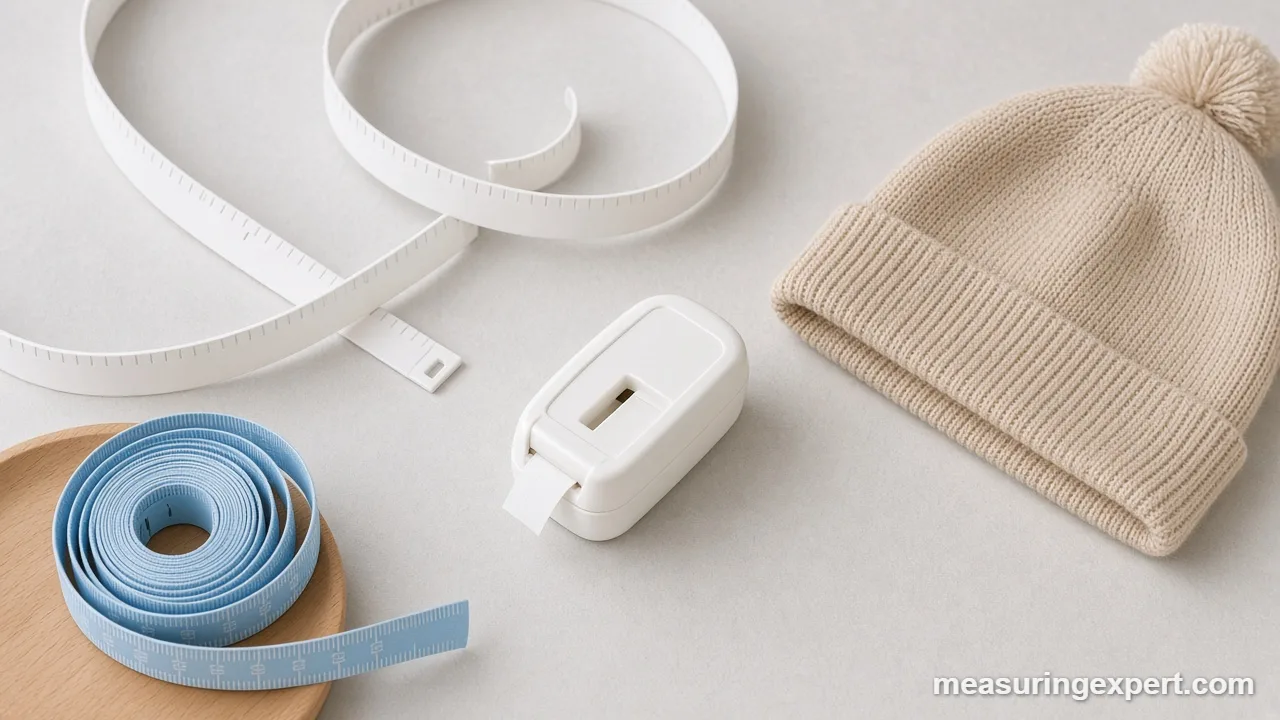
The best head circumference tape for most families is the seca 212, because its non-stretch disposable tapes read to 1 mm across 0 to 59 cm, which covers newborns to toddlers. Your choice comes down to who you measure, a baby or an adult, and whether you want single-use, reusable or retractable tapes.
In short: pick the seca 212 for clinic-style infant checks, an AnthroFlex loop tape for reusable home use, HARFINGTON for cheap spares, and a long retractable tape for adult hat sizes.
As an Amazon Associate, Measuring Expert earns from qualifying purchases. Our picks are based on research, specifications and owner feedback, not paid placement.
Best Overall
Best Budget
Best for Hat Size
Quick Answer: Which Head Tape Fits Your Job
- Clinic-style infant checks: seca 212, with non-stretch single-use tapes.
- Reusable loop for a wiggly baby: AnthroFlex insertion tape, similar to the Lasso design.
- Cheap spares for daycare: HARFINGTON six-pack of flat 60 cm tapes.
- High-contrast home log: BLLNDX red and white two-pack.
- Adult fitted hat size: Perfect Measuring Tape 80 in retractable.
- Measuring your own head: PECULA lock-pin body tape.
On This Page
- Comparison table
- The 7 picks, reviewed
- How we chose
- Lasso, flat, paper or soft tape
- What the specs mean
- How to measure a baby’s head
- Reading CDC and WHO charts
- Head size to hat size
- Length converter
- Care and accuracy checks
- Honest limits
- FAQ
- Bottom line
Best Head Circumference Tape Comparison Table
First, decide who you will measure most often: a baby, an adult, or both. That one choice narrows the best head circumference tape for you more than any other spec.
| # | Image | Product | Best For | Standout Feature | Amazon |
|---|---|---|---|---|---|
| 1 |  | seca 212 Head Circumference Tape with Dispenser | Clinic-grade infant checks | Non-stretch disposable tapes, 1 mm marks | View |
| 2 | 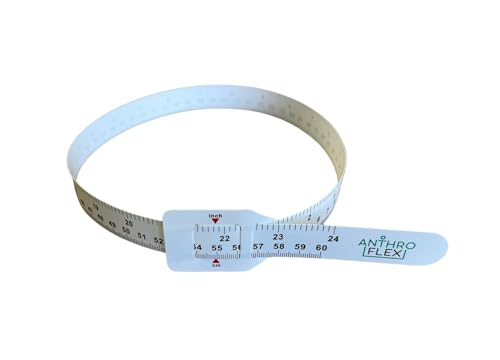 | AnthroFlex Infant Head Circumference Tape (5-Pack) | Reusable insertion tape for OFC | Non-stretch plastic with an end insert | View |
| 3 | 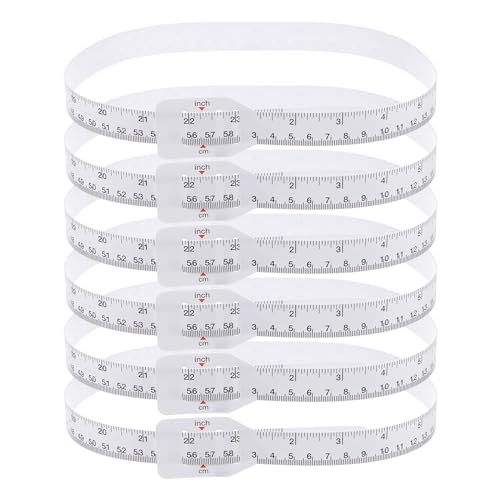 | HARFINGTON Head Circumference Tape 60 cm (6-Pack) | Low-cost reusable spares | Six flat plastic tapes, 24 in (60 cm) | View |
| 4 |  | BLLNDX Head Circumference Measuring Tape (2-Pack) | Easy-read home checks | Red and white color scheme, 60 cm | View |
| 5 |  | PERFECT MEASURING TAPE Retractable Tailor’s Tape 80 in | Adult hat size and body | 80 in (2 m) retractable, fractional inch and metric | View |
| 6 | 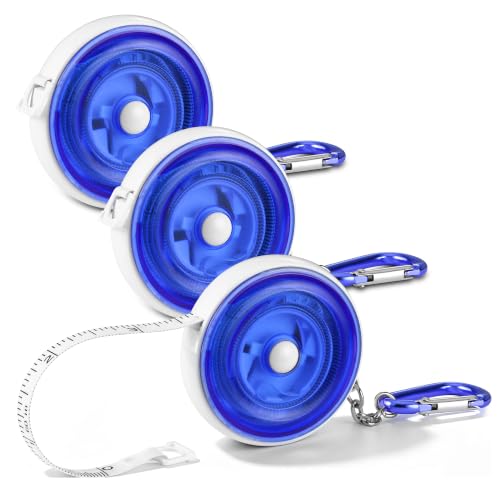 | WORKPRO Soft Tape Measure 60 in (3-Pack) | Family hat and body sizes | Three 60 in (150 cm) dual-scale tapes | View |
| 7 |  | PECULA Body Measuring Tape 60 in | Measuring your own head | Lock pin and push-button retract | View |
The 7 Best Head Circumference Tape Picks, Reviewed
To begin with, each pick below solves a different problem, from a clinic dispenser to a tape for your own hat size. So, read the “Best for” line first, and then match the specs to the head you need to measure.
Best Overall
1. seca 212 Infant Measuring Tape Dispenser
Best for: parents, nurses and midwives who want the same style of tape many clinics use, with a fresh tape for every baby.
The seca 212 is our pick for the best head circumference tape overall. In short, it is a dispenser that holds 15 single-use tapes made from a non-stretch synthetic material, so each measurement starts with a clean, unworn strip. Because the tape cannot stretch, a firm pull around the head does not shrink the reading, which is the most common error with soft tapes.
On the measuring side, seca lists a range of 0 to 59 cm (0 to 23 in) with 1 mm graduation, so you can read to the nearest millimeter. Also, the tape is double-sided: the front is for head circumference, and the back is marked for checking facial symmetry. For a newborn or a toddler, therefore, 59 cm is plenty. However, it is too short for most adult heads, so it is not a hat-size tool.
- Range: 0 to 59 cm (0 to 23 in), per seca
- Graduation: 1 mm (1/16 in), per seca
- Non-stretch disposable synthetic tapes, 15 per dispenser
- Double-sided: head circumference front, facial symmetry back
Pros
- Non-stretch material keeps readings honest
- Fresh tape for each child, which suits clinics
- Fine 1 mm graduation, so readings are precise
Cons
- Too short for adult hat sizing, so adults need another tape
- Refills cost more than a reusable tape
- Also overkill for a one-time hat fitting
Skip it if: you only need an occasional hat size, because a long soft tape is cheaper for that job.
Best Reusable
2. AnthroFlex Infant Insertion Tape (5-Pack)
Best for: home users and pediatric offices that want a Lasso-type insertion tape they can wipe and reuse.
AnthroFlex makes an insertion-style tape, the same basic idea as the Lasso tape used in many UK clinics. Specifically, the free end feeds through a slot near the zero mark, so the tape forms a loop that you can snug around the head with one hand. As a result, the zero point stays in place while a baby wiggles, and you read the number right where the tape crosses itself.
According to the listing, the tapes are plastic, reusable and non-stretchable, and they are designed for occipitofrontal circumference (OFC) measurement, which is the standard head measurement in pediatrics. Since the brand did not have a spec page we could open, we do not quote a length or a graduation here, so check the listing photos before you buy.
- Pack of 5 reusable tapes, per the listing
- Plastic, non-stretchable material
- End insert slot for a one-handed loop
- Made for OFC (occipitofrontal circumference) measurement
Pros
- Loop design is easy to use on a moving baby
- Reusable, so lower cost over time
- Five tapes, so spares for a diaper bag
Cons
- No spec page we could verify for length and marks
- Plastic can crease if you store it folded
- Not long enough to be a general body tape
Skip it if: you want a single tape for both baby checks and adult measurements, since these loops are sized for infants.
Best Budget
3. HARFINGTON Flat Plastic Head Rule 60 cm (6-Pack)
Best for: families, daycares and classrooms that want several cheap tapes to keep in different places.
If you simply want a flat, non-stretch head tape at a low cost, the HARFINGTON six-pack is a sensible pick. Per the listing, each tape is a flat plastic rule 24 in (60 cm) long, and the maker suggests it for child head and arm circumference. Consequently, it reaches a little past the seca range, which leaves room for a toddler with a larger head.
Flat plastic tapes stay stiffer than cloth, so they lie flat instead of twisting. On the other hand, there is no insertion slot, so you need both hands.
- Length: 24 in (60 cm), per the listing
- Flat plastic material
- Six tapes per pack
- Suggested for head and arm circumference
Pros
- Very low cost per tape, so spares are easy
- Flat strip resists twisting, so marks stay square
- Enough tapes to share with caregivers
Cons
- No insertion slot for one-handed use
- Also a generic brand with limited documentation
- Plastic may kink if crushed in a bag
Skip it if: you want a loop-style tape that holds its own zero point; instead, look at AnthroFlex.
Best Two-Pack
4. BLLNDX Infant Head Measuring Tape (2-Pack)
Best for: parents who want a simple, high-contrast tape for logging their baby’s head size between doctor visits.
Next up, the BLLNDX set is a small two-pack of head tapes. According to the listing, each tape measures 60 x 2 cm (24 x 0.79 in) and uses a white and red color scheme. That contrast makes the marks easier to see in a dim nursery.
Even so, a home number is only a rough log, because your pediatrician’s clinic reading is the one that goes on the growth chart.
- Size: 60 x 2 cm (24 x 0.79 in), per the listing
- Two tapes per pack, so you get a spare
- White and red color scheme for contrast
Pros
- High-contrast markings, so reading is easy
- Compact and light, so it fits a diaper bag
- A spare tape in the box
Cons
- No maker spec page to confirm graduation
- Only two tapes, so fewer spares
- Also lacks an insertion slot
Skip it if: you need a clinic-style disposable tape or a loop design, so the seca 212 or AnthroFlex fits better.
Best for Hat Size
5. PERFECT MEASURING TAPE Retractable Tailor’s Tape 80 in
Best for: adults measuring for a fitted hat, a helmet liner or a headband, plus general body and sewing jobs.
Adult heads are usually larger than a baby tape can handle, so a full-length tailor’s tape is the better tool. The Perfect Measuring Tape model retracts into a pocket case and, per the listing, runs 80 in (2 m) with fractional inch and metric scales. Thus, you can read a head size as 22 3/8 in or as 56.8 cm and match either style of hat chart.
Fractional inches matter for hats, because US fitted hat sizes move in steps of 1/8 in of hat size, which is roughly 3/8 in (1 cm) of head circumference.
- Length: 80 in (2 m), per the listing
- Fractional inch and metric scales
- Retractable pocket-size case
- For fabric, body and sewing measurements
Pros
- Long enough for any adult head
- Fractional inch marks suit hat charts
- Also retracts for tidy storage
Cons
- However, awkward on a wriggling infant
- Retracting spring can tug while you hold it
- Not a non-stretch medical tape
Skip it if: you only measure babies, because a short head tape is easier to handle.
Best Value Soft Tape
6. WORKPRO Soft Tape Measure 60 in (3-Pack)
Best for: households that want a few dependable soft tapes for hats, clothing and craft projects.
WORKPRO is a mainstream tool brand, and this three-pack gives you 60 in (150 cm) soft tapes with dual-sided scales, according to the listing. As a result, one tape covers a hat size, a waist and a sewing project.
However, soft tapes can stretch slightly with age, so check an old one against a ruler now and then.
- Length: 60 in (150 cm), per the listing
- Dual-sided inch and cm scales
- Three tapes per pack
- Retractable design with carabiner clip
Pros
- Three tapes, so one for each room
- Covers adult hat and body sizes
- Also from an established tool brand
Cons
- Soft tape can stretch over years
- Not designed for infant OFC checks
- Small markings, so some eyes may struggle
Skip it if: you want a non-stretch tape for tracking a baby’s head growth; in that case, choose seca or AnthroFlex.
Best Lock-Pin Tape
7. PECULA Body Measuring Tape 60 in
Best for: anyone measuring their own head for a hat or a helmet without a helper.
Measuring your own head is awkward, because you need one hand at the forehead and one at the back. The PECULA body tape helps here: per the listing, it is a 60 in tape with a lock pin and push-button retraction. Accordingly, you can hook the end, wrap the tape around your head, and let the case hold the loop while you check the mark in a mirror.
Still, the loop can tilt down at the back, so use a mirror to keep it just above the eyebrows and ears.
- Length: 60 in, per the listing
- Lock pin to hold the loop
- Push-button retract mechanism
Pros
- Easy one-person hat measurement
- Retracts into a compact case
- Also useful for body measurements
Cons
- Too bulky for a newborn’s head
- Loop can tilt without a mirror check
- No maker spec page we could verify
Skip it if: you are measuring a baby, since the case is too bulky for a small head.
How We Chose the Best Head Circumference Tape
To be clear, we did not run hands-on tests. Instead, we compared maker spec pages and product listings, read owner feedback for common complaints, and matched each tape to a real job, such as a newborn check or an adult hat fitting. In particular, we weighed five points.
- Stretch: non-stretch plastic, synthetic or paper beats cloth for infant readings.
- Range: about 60 cm (24 in) for babies, and 60 in (150 cm) or more for adult hats.
- Marks: 1 mm or 1/16 in steps, with clear contrast.
- Handling: an insertion slot, a lock pin or a flat strip that does not twist.
- Brand: recognizable makers, no stretchy novelty tapes, and no more than two picks per brand.
For specs, we used maker pages where we could open them, such as the seca 212 product page. Where a maker page was not available, we only repeat what the listing states. For growth charts, we relied on the WHO and the CDC, which we cite in the chart section below.
Also measuring height and weight? Our best child growth chart tape guide covers wall charts for older kids, and our best baby scale guide covers weighing at home.
Lasso, Flat, Paper or Soft Tape?
Every best head circumference tape on our list falls into one of four broad groups.
| Type | Stretch | Typical length | Reuse | Best for |
|---|---|---|---|---|
| Insertion (Lasso-type) loop | Non-stretch plastic | About 60 cm (24 in) | Reusable, wipe clean | Wiggly babies, home and clinic |
| Disposable synthetic or paper | Non-stretch | About 60 cm or 36 in (91 cm) | Single use | Clinics, hygiene, many children |
| Flat plastic rule | Non-stretch | About 60 cm (24 in) | Reusable | Cheap spares, daycare |
| Soft or retractable tailor’s tape | Can stretch slightly with age | 60 to 80 in (150 to 200 cm) | Reusable | Adult hat size, body, sewing |
In short, an insertion tape threads its free end through a slot beside the zero mark, so it forms a closed loop that stays put on a moving baby; the Lasso tape used in UK child health clinics made this style popular. Disposable paper tapes do not stretch, but they crease and tear, so a bent zero end can throw a reading off. Soft tailor’s tapes, by contrast, are long enough for adults but can lengthen with age.
What the Specs on a Head Tape Mean
In general, head tape listings use a few terms that are easy to mix up. So, here is what each one means when you are measuring a head.
- Range: the longest circumference the tape can measure. For example, the seca 212 stops at 59 cm (23 in), which is ample for infants but short for many adults.
- Graduation: the smallest marked step, such as 1 mm or 1/16 in. Finer marks help you record to 0.1 cm, the usual clinic precision.
- Stretch: whether the tape lengthens under tension. Any stretch makes the reading too small, because the marks spread apart.
- Units: most baby tapes print centimeters, while US hat charts use inches. Dual-scale tapes save a conversion step.
- Zero point: where the scale starts. Some tapes start at the very tip, while others leave a blank lead, so always line up the printed 0, not the end of the strip.
When you shop for the best head circumference tape, stretch matters most. For example, a 1 percent stretch on a 40 cm head hides 4 mm, and that is enough to blur a trend between two checkups.
How to Measure a Baby’s Head with the Best Head Circumference Tape
To start, pediatric staff measure the occipitofrontal circumference, or OFC, which is the largest loop around the skull. So, here is the same method for home use.
- First, choose a non-stretch head tape and check that the zero end is clean and not bent.
- Calm the baby, ideally while they sit on a lap or lie on their back, and remove hats, clips and thick braids.
- Next, place the tape just above the eyebrows and above the tops of the ears.
- Then, slide the back of the tape over the widest part of the back of the head.
- Pull the tape snug so it touches the skin all the way around, but do not press into the scalp.
- Read the mark where the tape meets the zero point, to the nearest 0.1 cm or 1/16 in.
- Finally, repeat the measurement three times and record the largest value with the date.
Reading CDC and WHO Head Circumference Charts
On its own, however, a single head measurement means little. Instead, doctors plot it on a growth chart and watch the trend across visits. In the United States, the CDC recommends the 2006 WHO growth charts for children under 24 months, and the CDC charts for ages 2 to 19, according to the CDC growth chart recommendations. That report also notes that CDC head circumference values cover children under 36 months.
Meanwhile, the WHO head circumference-for-age standards run from birth to 5 years. In addition, they come as charts and tables for boys and girls, in both percentiles and z-scores. So, a reading at the 50th percentile simply means half of the reference children of that age and sex had smaller heads.
From Head Size to Hat Size for Adults
In fact, hat sizing uses the same loop as a baby check: just above the eyebrows and ears, and around the back of the head. However, adults should measure where the hat will sit, which is often a little higher on the forehead.
For US fitted hats, the size is about the head circumference in inches divided by pi (3.1416). Therefore, 22 in is a size 7, and every 1/8 of hat size adds about 3/8 in (1 cm) of circumference. European sizes are simpler, because they use the circumference in centimeters.
| Head circumference | Centimeters | US fitted hat size |
|---|---|---|
| 21 1/4 in | 54.0 cm | 6 3/4 |
| 21 5/8 in | 54.9 cm | 6 7/8 |
| 22 in | 55.9 cm | 7 |
| 22 3/8 in | 56.8 cm | 7 1/8 |
| 22 3/4 in | 57.8 cm | 7 1/4 |
| 23 1/8 in | 58.7 cm | 7 3/8 |
| 23 1/2 in | 59.7 cm | 7 1/2 |
| 24 in | 61.0 cm | 7 5/8 |
Note that brand charts differ by a size here and there. So, if you fall between sizes, go up and use a sizing strip. For more tape options for waists, chests and arms, see our best body measuring tape guide, and for a related fit check, our guide on how to measure neck size uses the same snug-not-tight rule.
Head Size Length Converter (cm and in)
Often, a baby tape reads in centimeters while a hat chart or a doctor’s note uses inches. So, use this converter to switch between the two before you compare numbers.
For reference, 1 in equals exactly 2.54 cm. Thus, divide centimeters by 2.54 to get inches, or multiply inches by 2.54 to get centimeters.
Caring for the Best Head Circumference Tape
First, store reusable tapes flat or loosely rolled. After all, a sharp crease near the zero end shifts every reading. Next, wipe plastic tapes with a mild disinfectant wipe between children, and let them dry before you roll them up.
Second, check your tape against a steel ruler once in a while. To do this, lay the tape flat beside the ruler and compare the 0, 10, 30 and 50 cm marks. If any mark is off by more than 1 mm, then retire that tape, especially if you use it for a baby’s head log.
Do:
- Always keep the tape level all the way around the head.
- Take three readings and keep the largest one.
- Record the date and the units each time.
Don’t:
- Use a stretchy elastic or novelty tape for a baby’s chart.
- Press the tape into the scalp or soft spot.
- Panic over one odd home reading; ask the pediatrician instead.
Honest Limits of the Best Head Circumference Tape
Admittedly, not even the best head circumference tape removes human error. For example, thick hair, a tilted loop or a crying baby can each change a reading by several millimeters.
Also, home measurements are not medical tests. In short, use them to keep a simple log and to prepare questions, but trust the clinic measurement and your pediatrician’s judgment for anything about growth or development.
Best Head Circumference Tape FAQ
What is the best head circumference tape for babies?
For most families and clinics, the seca 212 is the best head circumference tape. Its tapes do not stretch, it reads to 1 mm, and it covers 0 to 59 cm, which fits newborns through toddlers. For a reusable option, an insertion tape like AnthroFlex works well.
Where do you measure head circumference on a baby?
Wrap the tape just above the eyebrows, above the ears, and around the most prominent part of the back of the head. In other words, this path is the occipitofrontal circumference, or OFC. Move the tape slightly up and down and record the largest reading.
How accurate is the best head circumference tape at home?
A careful home reading with a non-stretch tape is usually within a few millimeters, but small errors are common. The tape may tilt, the baby may move, or the hair may add bulk. Therefore, use home numbers as a rough log and rely on your pediatrician’s measurement for the chart.
Which growth chart should I use for head circumference?
In the United States, the CDC recommends the WHO growth charts for children under 2 years. WHO head circumference-for-age standards run from birth to 5 years, with separate charts for boys and girls in percentiles and z-scores.
Is the best head circumference tape also good for hat sizes?
Only for small heads. After all, most baby head tapes stop near 59 to 60 cm (23 to 24 in), and many adult heads are close to that limit. For an adult hat, a 60 in or 80 in soft or retractable tape is easier and safer to read.
How do I convert head circumference to a hat size?
For US fitted hats, divide the head circumference in inches by pi (3.1416) and round to the nearest 1/8. For example, 22 3/8 in is a size 7 1/8. European hat sizes simply use the circumference in centimeters, such as 57.
Should I use a stretchy tape to measure head size?
No, because a stretchy tape gets longer as you pull it, so the reading comes out smaller than the real head. Choose a non-stretch plastic, synthetic or paper tape, and pull it snug but not tight.
How often should a baby’s head be measured?
Usually, your pediatrician measures head size at routine well-child visits in the first years. You do not need to measure at home between visits, but a gentle home log can help you share questions with the doctor.
Can a head circumference tape replace a doctor visit?
No. A home tape is a handy tool, but it does not replace pediatric checkups. Growth charts are not meant to be a sole diagnostic tool, and only a clinician can judge whether a change in head size needs follow-up.
Is a paper tape the best head circumference tape for clinics?
It can be. Paper tapes do not stretch, so they give fair readings, and single use suits clinics. However, they tear and crease easily, so lay them flat and replace any tape with a bent zero end.
Bottom Line on the Best Head Circumference Tape
For most families and clinics, the seca 212 Head Circumference Tape with Dispenser is the one to get. Above all, its non-stretch tapes read to 1 mm, and a fresh tape for each child keeps things clean. However, if you want a reusable loop, choose AnthroFlex, and for adult hat sizes, a long retractable tape like the Perfect Measuring Tape is the smarter choice.
Black Friday is coming: shop the deals with Prime
1 thought on “7 Best Head Circumference Tapes for Babies and Hat Sizes (2026)”