

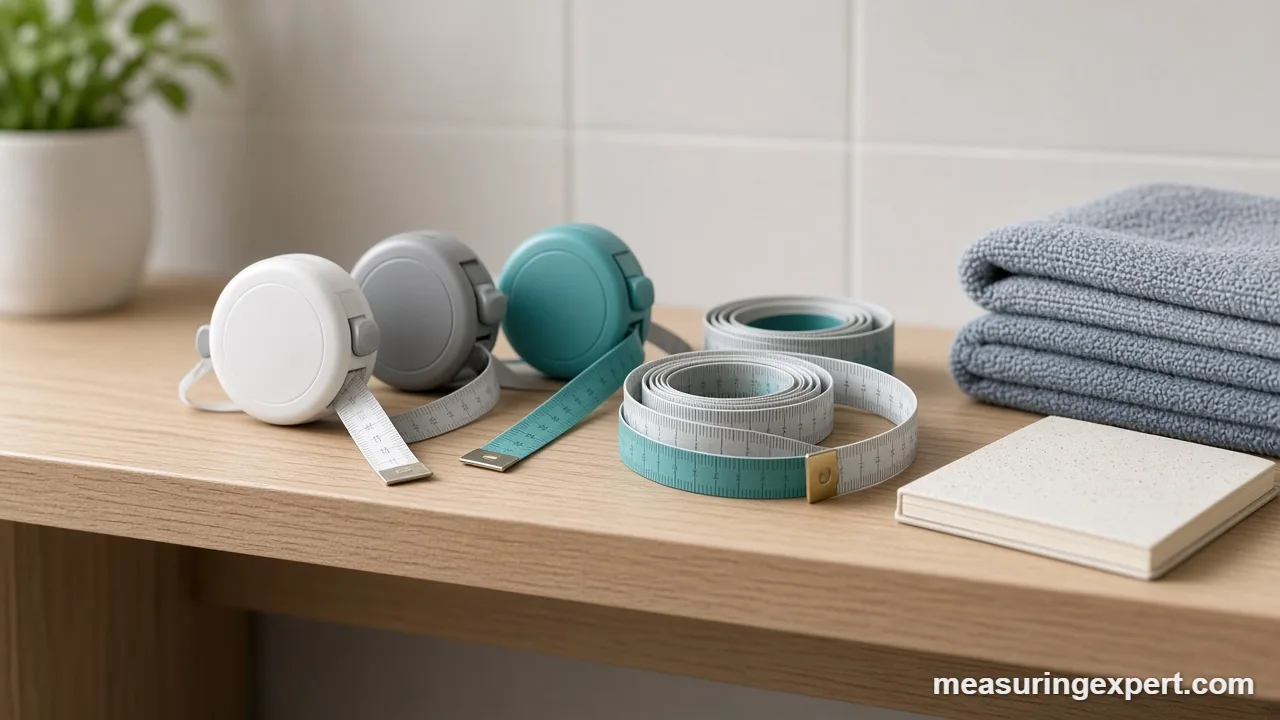
The best body measuring tape for most people is the MyoTape, because its end locks into the case and holds the loop at the same tension every time, even with one hand. What decides your pick is how you log results, how long the tape is and whether you need a lock.
In short: get the MyoTape for repeatable readings, the WORKPRO 3-pack for a low cost, and the RENPHO smart tape if you want readings sent to an app.
As an Amazon Associate, Measuring Expert earns from qualifying purchases. Our picks are based on research, specifications and owner feedback, not paid placement.
This guide covers tapes for tracking your own waist, hips, chest, arms and thighs over time. If you sew or fit garments, our best sewing measuring tape guide is the better place to start. Note that this page is about measuring well, not about diet or weight-loss goals.
Best Overall

Best Budget
Best Smart
Quick Answer: Which Best Body Measuring Tape Fits You?
- MyoTape Body Tape Measure: a locking loop for one-hand, repeatable readings.
- RENPHO Smart Body Measuring Tape: readings sync to the RENPHO Health app.
- Baseline 12-1201 Gulick Tape, 60 in: a spring tension handle for the most repeatable pull.
- seca 201 Circumference Tape: a medical-brand tape with an 80 in (205 cm) range.
- Baseline 12-1211 Measurement Tape, 72 in: 72 in of woven fabric tape for larger bodies.
- WORKPRO 3-Pack Soft Tape Measure: three retractable 60 in tapes at a low cost.
- GDMINLO Double Scale Soft Tape: a flat tape for partner readings and small areas.
On This Page
- Comparison table
- The picks, reviewed
- How we chose
- Tape types compared
- Specs that matter
- How to measure waist and hips
- Chest, arms and thighs
- Inch and centimeter converter
- Care and accuracy checks
- Honest limits
- FAQ
- Bottom line
Best Body Measuring Tape Comparison Table
First, use the table to match a tape to how you track. Then read the review for the measuring details.
| # | Product | Best For | Standout Feature | Amazon |
|---|---|---|---|---|
| 1 | MyoTape Body Tape Measure | Solo tracking with repeatable tension | End rod locks into the case for one-hand loops | View |
| 2 | RENPHO Smart Body Measuring Tape | App logging without a notebook | Sends each reading to the RENPHO Health app | View |
| 3 | Baseline 12-1201 Gulick Tape, 60 in | Clinic-style, research-like repeatability | Spring-loaded Gulick attachment for constant tension | View |
| 4 | seca 201 Circumference Tape | Clinical-style girth readings | 80 in (205 cm) range with one-hand fastening | View |
| 5 | Baseline 12-1211 Measurement Tape, 72 in | Larger bodies and chest readings | 72 in woven fabric tape from a rehab-equipment maker | View |
| 6 | WORKPRO 3-Pack Soft Tape Measure | Low cost and spares around the house | Three retractable tapes with carabiner clips | View |
| 7 | GDMINLO Double Scale Soft Tape | Partners measuring each other | Flat, non-retractable tape that lies smooth on skin | View |
The 7 Best Body Measuring Tape Picks, Reviewed
We open with the locking tape that suits most people. After that come a smart option, two clinic-style tapes, a medical-brand tape and two budget picks.
Best Overall
1. MyoTape Body Tape Measure
Best for: anyone who measures alone and wants each reading taken at the same tension.
The MyoTape from AccuFitness is the best body measuring tape for most home trackers. The reason is simple. You pull the tape around your waist, seat the end rod in the slot on the case, and then press the center button to draw the loop snug. Because the case does the holding, your free hand can steady your shirt or check the mirror.
The 60 in (152 cm) vinyl tape shows inches on one side and centimeters on the other. In addition, the marks go down to 1/16 in and 1 mm, which is finer than you need for body work. One quirk matters, though. The scale starts at 1 3/4 in to allow for the curved part of the housing, so read the number at the edge of the case, not from the tip.
- Length: 60 in (152 cm)
- Dual scale: inches and centimeters
- Graduations: 1/16 in and 1 mm
- Push-button retraction and locking
- Vinyl tape with finger grips on the handles
Pros
- Locking loop makes self-measuring far easier
- Also, the push button gives even, repeatable tension
- Fine 1/16 in and 1 mm marks
Cons
- However, the offset start point confuses first-time users
- At 60 in, it is short for very large chest or hip readings
- No app or memory
Skip it if: you need more than 60 in of tape; the 72 in Baseline below gives more slack.
Best Smart
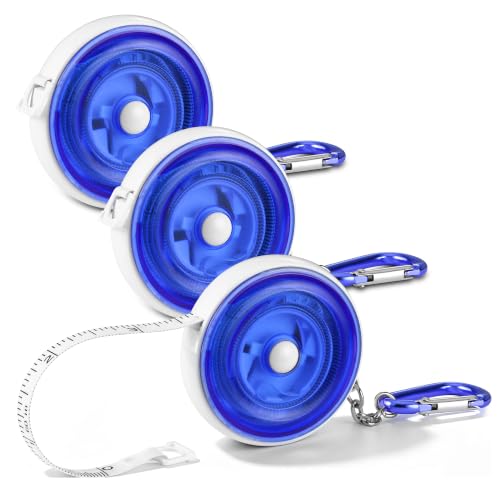
2. RENPHO Smart Body Measuring Tape
Best for: people who already use a RENPHO scale or want charts without typing numbers.
RENPHO is best known for smart scales, and the main draw of its smart tape is logging. You wrap the tape around the body part, and the reading appears on the digital screen. Then it syncs to the RENPHO Health app, which can also hold readings from RENPHO scales. As a result, the trend chart builds itself.
RENPHO lists its smart tapes at plus or minus 3 mm (about 1/8 in). That is close to what a careful person reads off a good manual tape, so the gain is convenience rather than precision. Also, you can set the unit to inches or centimeters and save readings to preset body areas such as the waist, hips and arms.
- Accuracy: +/-3 mm (+/-3/32 in) per RENPHO
- Readings in inches or centimeters
- Digital display with app sync to RENPHO Health
- Preset body areas, including neck, waist, hips, biceps, thighs and calves
- Compact retractable case
Pros
- Logs and charts readings for you
- Also, it pairs with the same app as RENPHO scales
- Large digital readout is easy to see
Cons
- Needs a phone and an app account for the full benefit
- However, it is no more accurate than a good manual tape
- Electronics add a battery or charging chore
Skip it if: you prefer a paper log or do not want another app; the MyoTape does the measuring part just as well.
Best Pro
3. Baseline 12-1201 Measurement Tape with Gulick Attachment, 60 in

Best for: coaches, trainers and serious trackers who want the same pull on the tape every time.
The Gulick design is the classic answer to the tension problem. A spring-loaded attachment sits at the end of the tape, and you pull until the spring reaches its set point. Because the spring sets the pull, two people should apply about the same tension. That is why this style shows up in clinics and fitness testing.
Baseline, from Fabrication Enterprises, builds its 12-1201 on a 60 in (152 cm) woven fabric tape with inches and centimeters and a push-button retractor. However, the attachment makes the tape bulkier than a pocket tape, and it takes a few tries to learn the pull. Once you have it, though, readings line up well from week to week.
- Length: 60 in (152 cm)
- Spring-loaded Gulick attachment for constant tension
- Woven fabric tape in a plastic case
- Calibrated in inches and centimeters
- Push-button retractor
Pros
- Spring sets the tension, not your hands
- Also, it suits trainers who measure many people
- Clinic-style build from a therapy brand
Cons
- Bulkier than a simple pocket tape
- However, the tension handle takes practice
- Costs more than a basic soft tape
Skip it if: you want the simplest tool for occasional checks; the MyoTape is easier to learn.
Best Medical Grade
4. seca 201 Ergonomic Circumference Measuring Tape

Best for: anyone who wants a medical-brand tape that covers large girths and still works one-handed.
seca is a German maker of medical scales and measuring systems, and the 201 is its handheld girth tape. Like the MyoTape, it lets you fasten the start of the tape to the retraction housing. As a result, you can close the loop around your waist and read it with one hand.
Its range is the standout. The tape runs 0 to 205 cm (0 to 80 in), so it handles a broad chest or hips without strain. In addition, the scale is graduated in 1 mm and 1/8 in steps and printed on the side for easy reading. Note that Amazon carries inch and centimeter versions, so check the listing before you buy.
- Range: 0-205 cm (0-80 in)
- Graduation: 1 mm or 1/8 in
- One-handed use: tape start fastens to the housing
- Size: 70 x 22 x 65 mm; weight 50 g
- Retractable tape with a side-printed scale
Pros
- Long 80 in range in a small case
- Also, one-hand fastening like a locking tape
- Made by an established medical brand
Cons
- Costs more than consumer body tapes
- However, versions may show only inches or only centimeters
- No tension spring or app
Skip it if: you want both scales on one tape at a low cost; the MyoTape shows inches and centimeters together.
Best Long Tape
5. Baseline 12-1211 Measurement Tape, 72 in

Best for: larger bodies, chest readings and anyone who wants extra tape to hold comfortably.
This is the plain-tape sibling of the Gulick model above, and it is built for repeated body measurements rather than sewing. The 12-1211 uses a woven fabric tape in a plastic case, with inches and centimeters and a push-button retractor.
The big win is length. At 72 in (183 cm), it wraps a broad chest or hips with room to spare, so you are not pinching the last few inches. However, this version has no tension device. If you want built-in tension, choose the Gulick version above.
- Length: 72 in (183 cm)
- Woven fabric tape in a plastic case
- Calibrated in inches and centimeters
- Push-button retractor
- Clinic-grade line from Fabrication Enterprises
Pros
- Long enough for nearly any body size
- Also, the woven fabric drapes well around curves
- Same clinic-style build as the Gulick model
Cons
- No lock or tension device on this model
- However, fabric can absorb sweat and needs drying
- Plain case with no app
Skip it if: you measure alone and struggle to hold the loop; a locking tape like the MyoTape is easier.
Best Budget
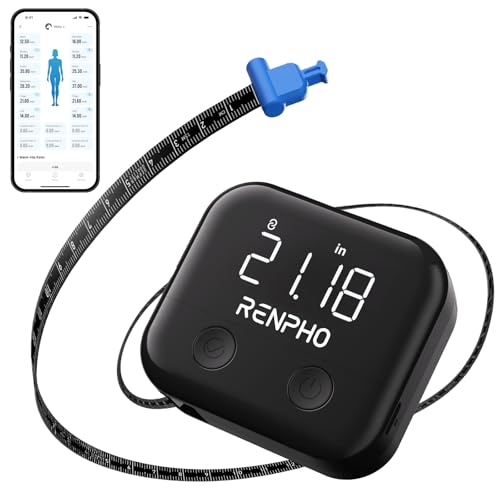
6. WORKPRO 3-Pack Soft Tape Measure, 60 in
Best for: a tight budget, a household that wants one tape per room, or a gym bag spare.
WORKPRO is better known for hand tools, but its soft tape is a solid low-cost body tape. You get three retractable 60 in (150 cm) tapes, each with dual-sided scales and a carabiner clip. So you can keep one in the bathroom, one in a gym bag and one in a drawer.
Because each tape winds back into its case, it stays clean and untangled between readings. On the other hand, there is no lock for the loop. In practice, you hold the zero end against the scale with one hand and read with the other, just as you would with any soft tape.
- Length: 60 in (150 cm) each
- Three tapes per pack
- Retractable soft tape
- Dual-sided scales
- Carabiner clip on each case
Pros
- Low cost per tape
- Also, retracting keeps the tape clean and flat
- Clip makes it easy to store or carry
Cons
- No lock, so tension depends on your hands
- However, a coiled tape can curl near the end
- Short for very large chest readings
Skip it if: you measure yourself often and want repeatable tension; spend a little more on the MyoTape.
Best Flat Tape
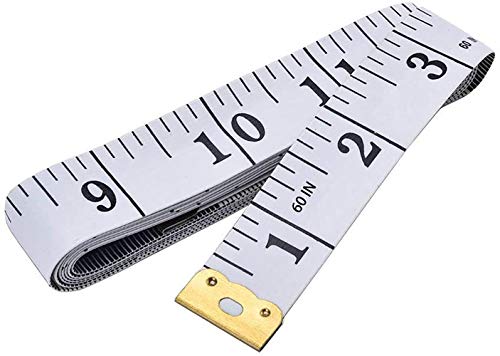
7. GDMINLO Soft Tape Measure, Double Scale, 60 in
Best for: a partner or coach taking the reading, and anyone who prefers a simple flat tape.
Sometimes the old-fashioned flat tape is the right tool. The GDMINLO is a 60 in soft vinyl tape with inches on one face and centimeters on the back. With no case, it lies flat against the skin and wraps tight curves, such as the neck or upper arm, without a bulky housing in the way.
It works best when someone else holds it for you. For example, a partner can line up the zero end, check the tape is level at the back and read the scale at eye level. In contrast, measuring yourself with a flat tape takes practice, because both hands are busy.
- Length: 60 in (150 cm), per the listing
- Inches on one side, centimeters on the reverse
- Soft, flexible vinyl
- No case, so it lies flat on the skin
Pros
- Very simple, with nothing to break
- Also, it wraps small areas like the neck and arm well
- Easy to read when a partner holds it
Cons
- No lock or tension aid for solo use
- However, it can tangle or kink in a drawer
- Cheap vinyl may stretch with heavy use
Skip it if: you always measure alone; a locking or retractable tape saves frustration.
How We Chose the Best Body Measuring Tape
To be clear, we did not run hands-on tests. Instead, these picks are research-based. We read manufacturer spec pages, public health measuring protocols and owner feedback. Then we scored every tape on the same measuring criteria.
- Repeatable tension: a lock, a push-button loop or a tension device ranked higher, because tension is the biggest source of error.
- Readable scale: we wanted inches and centimeters, with clear marks at 1/8 in or finer and 1 mm.
- Length: 60 in (152 cm) was the minimum; longer tapes earned credit for larger bodies.
- Logging: app sync counted as a plus, but only when the stated accuracy was published.
- Material: vinyl, fiberglass-reinforced or woven fabric tapes that resist stretching scored better.
- Brand and variety: finally, we kept to known brands, at most two per brand, and covered distinct uses.
For the method, we followed the waist protocol in the CDC NHANES anthropometry manual and the simpler home steps from the NIH National Heart, Lung, and Blood Institute. Specs come from pages such as the AccuFitness MyoTape page and the RENPHO and Fabrication Enterprises product pages.
Tape Types: Matching the Best Body Measuring Tape to You
Before you pick a model, pick a type. Each type solves a different problem, so the table below shows the trade-offs at a glance.
| Type | How it holds tension | Best use | Main drawback |
|---|---|---|---|
| Locking retractable (MyoTape style) | End rod seats in the case; a button draws the loop snug | Measuring yourself, one hand | Short offset at the start of the scale |
| Smart tape | Retracting case with a digital readout | App logging and charts | Needs power and a phone |
| Tension-handle (Gulick style) | Spring handle shows a set pull | Clinics and research-style repeatability | Bulkier and pricier |
| Retractable soft tape | Your hands | Low cost, tidy storage | Tension varies by user |
| Flat soft tape | Your hands | Partner readings, small areas | Hard to use alone |
Specs That Matter for Body Tapes
A body tape looks simple, yet a few details decide whether your readings agree from week to week.
Tension control: Soft tissue compresses, so pulling harder gives a smaller number. So the same waist can read differently from one session to the next. That is why the NHANES manual asks for a tape that is snug but does not compress the skin. A lock or a tension handle helps you repeat that feel.
Scale and resolution: For body tracking, 1/8 in (3.2 mm) marks are enough, and 1 mm marks are better. Note that NHANES records waist to the nearest 0.1 cm in a lab setting. At home, however, reading to the nearest 0.5 cm or 1/4 in is honest, since posture and breath move the number more than that.
Length: Most body tapes are 60 in (152.4 cm). That covers the waist and hips for most adults. Still, if your chest or hip reading is above about 50 in (127 cm), a 72 in (182.9 cm) tape leaves slack to hold. Likewise, a 120 in (304.8 cm) tape suits very large bodies.
Material and stretch: Vinyl, fiberglass-reinforced and woven fabric tapes all work. However, cheap vinyl can creep longer with heat and heavy use. So a tape that reads long will make every girth look smaller than it is.
Smart features: App tapes save typing and plot trends. On the other hand, their stated accuracy, about plus or minus 3 mm on RENPHO models, is no better than a careful manual reading. Choose a smart tape for convenience, not for extra precision.
How to Measure Your Waist and Hips the Same Way Every Time
Consistency matters more than any single number. The steps below follow the CDC NHANES waist protocol, adapted for home use. Our how to measure your waist guide covers the landmark in more detail.
- Pick a time: Measure at the same time of day, ideally in the morning before you eat, and wear thin clothing or none at the site.
- Stand relaxed: Stand straight with your feet together, arms loose at your sides and your weight on both feet.
- Find the landmark: For the waist, feel for the top of the hip bone on your side. For the hips, find the widest part of the buttocks.
- Wrap the tape level: Wrap the tape around the body and check in a mirror that it sits parallel to the floor all the way around.
- Set the tension: Make the tape snug on the skin without pressing in. A locking or tension-handle tape helps you repeat this.
- Read after a normal breath out: Breathe normally and read the tape at the end of a relaxed exhale, without sucking in your stomach.
- Repeat and log: Take two or three readings, write down the average, and note the date, time and landmark you used.
For the waist, NHANES marks a line just above the top of the right hip bone, where it meets the side midline of the body. The tape then goes around in a level plane at that line. In contrast, NIH home guidance simply says to wrap the tape just above the hipbones and read it right after you breathe out. Either way, the key is to use the same landmark each time.
Measuring Chest, Arms and Thighs
Once your waist and hips are routine, you can add a few more sites. The same rules apply: a level tape, light contact and a fixed landmark.
- Chest: wrap the tape around the fullest part of the chest, under the armpits, with arms relaxed. Read at the end of a normal breath out.
- Upper arm: let the arm hang loose and measure around the midpoint between the shoulder tip and the elbow.
- Thigh: stand with weight on both feet and measure a set distance above the kneecap, such as 6 in (15 cm). Then write that distance down.
- Neck: measure just below the Adam’s apple area, keeping the tape level and the head facing forward.
Also, always measure the same side, usually the right, so that left-right differences do not show up as change. For leg length and trouser sizes instead, see how to measure your inseam.
Inch and Centimeter Converter
Many tapes show both scales, but apps and charts may ask for one. Use the converter to switch between inches and centimeters. One inch is exactly 2.54 cm by definition.
For example, a 32 in reading equals 81.3 cm. Likewise, 1/8 in is 3.2 mm, so the two scales give about the same practical resolution.
Care and Accuracy Checks
First, check a new tape against a steel ruler or a rigid tape measure. Lay both flat and compare the 12 in (30.5 cm) and 24 in (61 cm) marks. Next, repeat the check once or twice a year. If the soft tape reads more than about 1/8 in (3 mm) long over 24 in, replace it.
In addition, keep the tape away from heat, such as a sunny car or a radiator, because vinyl softens and stretches. Wipe it with a damp cloth after use, then let it dry before it retracts.
Do and Don’t
Do:
- Use the same tape for every reading.
- Measure at the same time of day and on bare skin.
- Take two or three readings and log the average.
- Write down which landmark you used.
Don’t:
- Pull the tape until it presses into the skin.
- Hold your breath or suck in your stomach.
- Switch between tapes or units mid-log.
- Read the scale from above at an angle.
Honest Limits of Even the Best Body Measuring Tape
A tape measures girth, and that is all. It cannot tell muscle from fat, and it says nothing about health on its own. Moreover, even careful repeat readings differ a little, so a change of a few millimeters is usually noise.
So, look at trends over several weeks rather than single days. If you have health questions about your measurements, ask your doctor, who can put them in context with other checks.
Best Body Measuring Tape FAQ
What is the best body measuring tape for most people?
For most people, the best body measuring tape is a locking, retractable model like the MyoTape. Its end hooks into the case, so the loop holds the same tension each time and you can measure alone with one hand.
Is a smart body measuring tape more accurate than a manual one?
Not really. RENPHO lists its smart tapes at plus or minus 3 mm, which is about 1/8 in. Instead, the real gain is logging, because the reading goes to the app without a pencil.
Where should I place the tape to measure my waist?
Follow the CDC NHANES method. Find the top of your hip bone on the side, wrap the tape level around your middle at that line, and read it at the end of a normal breath out.
How do I measure my hips consistently?
Stand with your feet together and wrap the tape level around the widest part of your buttocks. Also, use a mirror to check that the tape stays parallel to the floor all the way around.
How often should I take body measurements?
Every two to four weeks works well for most people. Daily readings mostly show water, meals and posture, so they make small real changes harder to see.
Can I use a sewing tape measure for body measurements?
Yes. A soft 60 in (150 cm) sewing tape reads the body well. However, it has no lock, so tension depends on your hands. See our sewing tape guide for those picks.
Do fabric tapes stretch over time?
Cheap vinyl and cloth tapes can stretch with heavy use and heat. Therefore, check yours against a steel ruler or rigid tape once or twice a year and replace it if it reads long.
How long should the best body measuring tape be?
A 60 in (152 cm) tape covers most waist, hip and chest readings. Choose 72 in (183 cm) or longer if you measure larger bodies or want slack to hold the ends comfortably.
Should I measure in inches or centimeters?
Either works, so pick one unit and stay with it. Centimeters with millimeter marks give finer steps, while 1/8 in or 1/16 in marks are fine for home tracking.
Why do my measurements change from day to day?
Small swings come from food, fluid, posture, breathing and tape tension. As a result, measure at the same time of day, in the same spot, and log the average of two or three readings.
Bottom Line on the Best Body Measuring Tape
For most people, the MyoTape Body Tape Measure is the best body measuring tape, because its locking loop makes solo readings repeatable. If you want app charts, choose the RENPHO smart tape. If cost matters most, the WORKPRO 3-pack does the job. Whichever you pick, use the same landmark, tension and time of day each time.
2 thoughts on “7 Best Body Measuring Tape Picks for Fitness Tracking (2026)”