

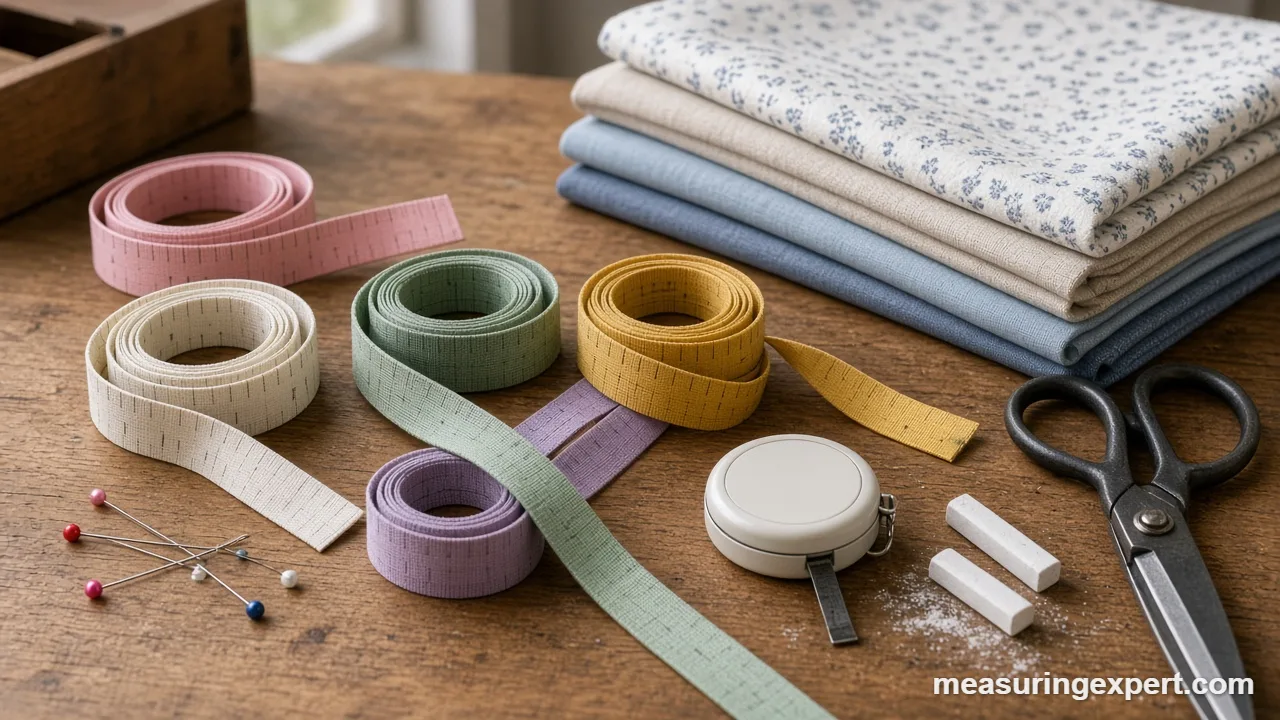
The best sewing measuring tape for most people is the Dritz Sew 101, a 60 in fiberglass tape with 1/16 in marks and a metric side. What decides your choice is the job: a fiberglass tape for fitted clothes, a retractable one for travel, and a 120 in or longer tape for quilts.
In short: pick the Dritz Sew 101 for daily sewing, the Allary Rollfix for your bag, and the Dritz 3712 Zero Center for quilting.
As an Amazon Associate, Measuring Expert earns from qualifying purchases. Our picks are based on research, specifications and owner feedback, not paid placement.
This guide is about tapes for sewing, quilting and tailoring. If you mainly track body changes for fitness, see our best body measuring tape picks. For a stiff tape that stays straight across a gap, read our best tape ruler guide.
Best Overall

Best Retractable
Best for Quilters

Quick Answer: Best Sewing Measuring Tape by Job
- Dritz Sew 101: a non-stretch fiberglass 60 in tape for everyday sewing.
- SINGER 60 in 2-pack: for example, one tape for the machine and one for the cutting table.
- Allary Rollfix: a retractable tape that stays tidy in a travel kit.
- Perfect Measuring Tape: printed fractions for fast tailoring reads.
- Wisdompro 120 in and SINGER 96 in: long tapes for yardage, quilts and curtains.
- Dritz 3712 Zero Center: a 144 in quilting tape that finds the middle for you.
On This Page
- Comparison chart
- The 7 tapes, reviewed
- How we chose
- Tape types compared
- Markings and stretch
- Inch to centimeter converter
- How to measure
- Stretch check
- Do and don’t
- Honest limits
- FAQ
- Final pick
Best Sewing Measuring Tape Comparison Chart
First, use this chart to shortlist two or three tapes. Then read the reviews for the measuring details.
| # | Product | Best For | Standout Feature | Amazon |
|---|---|---|---|---|
| 1 | Dritz Sew 101 (60 in) | Everyday sewing | Non-stretch fiberglass with 1/16 in marks | View |
| 2 | SINGER 60 in (2-pack) | Two sewing stations | Two 60 in tapes in one pack | View |
| 3 | Allary Rollfix (2-pack) | Purse and travel kits | Retracts into a small case | View |
| 4 | Perfect Measuring Tape (80 in) | Tailoring and fitting | Fractional inch labels plus metric | View |
| 5 | Wisdompro 120 in | Yardage and quilts | 10 ft (3 m class) length | View |
| 6 | SINGER 00258 (96 in) | Curtains and drapes | 8 ft vinyl tape for windows and tables | View |
| 7 | Dritz 3712 Zero Center | Centering quilts | Reverse side counts out from a center zero | View |
The 7 Best Sewing Measuring Tape Picks, Reviewed
We start with the all-round fiberglass tape. After that come the value pack, the retractable options and the long tapes for quilting and home decor.
Best Overall
1. Dritz Sew 101 Tape Measure, 1/2 x 60 Inch
Best for: garment sewing, alterations and anyone who wants one reliable soft tape in the sewing box.
The Dritz Sew 101 is our pick for the best sewing measuring tape for most people. Also, it is a plain 60 in (152.4 cm) soft tape, and that is the point. Dritz describes it as non-stretch reinforced fiberglass, so it holds its length far better than a cheap vinyl strip. In addition, the inch side is marked down to 1/16 in (about 1.6 mm), which matches the precision most patterns ask for.
The reverse side carries metric and inch scales. As a result, you can take a body measurement in inches and then flip the tape to read centimeters for a European pattern. However, the tape is 1/2 in wide, which is a little narrower than the classic 5/8 in tape. So it bends easily around a neck, wrist or armhole, although the numbers are slightly smaller.
- Length: 60 in (152.4 cm)
- Width: 1/2 in (about 1.3 cm)
- Material: non-stretch reinforced fiberglass, per Dritz
- Resolution: 1/16 in on the inch side
- Reverse side: metric and inch scales
Pros
- Fiberglass core resists stretch, so readings stay true
- Fine 1/16 in marks for seam allowances
- Dual scale for US and metric patterns
Cons
- Narrow tape means smaller printed numbers
- No case, so it can tangle in a drawer
- 60 in is short for quilts and drapes
Skip it if: you mostly measure quilt tops or curtains; instead, a 120 in or 144 in tape saves you from marking and moving.
Best Value Pack
2. SINGER 60-Inch Tape Measure, 2 Pack

Best for: keeping one tape at the machine and one at the cutting table.
Most sewists lose a tape measure at least once a week. Therefore, a two-pack makes sense. For example, this SINGER set gives you two 60 in tapes, so one can hang by the machine while the other stays with the cutting mat.
In addition, SINGER is one of the oldest names in home sewing, and its notions are easy to find. However, the listing does not state the tape material, so we cannot promise fiberglass-level stretch resistance. For that reason, check a new tape against a steel rule before you trust it for fitted garments, as we explain in the check section below.
- Length: 60 in each (152.4 cm)
- Count: two tapes per pack
- Use: sewing, crafts and body measurements
Pros
- Two tapes for the price of a single trip
- Trusted sewing brand
- Easy to replace when one wears out
Cons
- Tape material is not stated on the listing
- No retractable case
- Short for large quilts
Skip it if: you want proven stretch resistance; in that case, the fiberglass Dritz Sew 101 lists it plainly.
Best Retractable
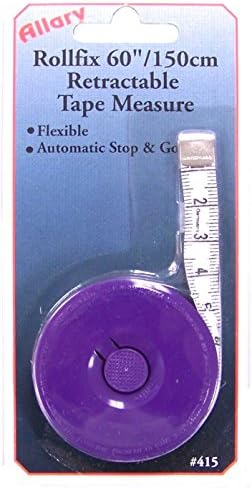
3. Allary Rollfix 60 Inch/150 cm Retractable Tape Measure, Set of 2
Best for: travel sewing kits, knitting bags and quick body checks.
A retractable sewing tape winds back into a small case. As a result, it stays clean and untangled in a purse or knitting bag. For example, the Rollfix set from Allary includes two cases in assorted colors, each holding a 60 in (150 cm) tape.
Next, note one detail about dual-scale tapes sold as 60 in/150 cm. Because 60 in equals 152.4 cm, the metric side often stops at 150 cm while the inch side runs to 60 in. In practice, that small gap only matters when you measure something longer than about 59 in in metric. Also, a spring case adds a few seconds per measurement, so it suits quick checks more than all-day pattern work.
- Length: 60 in / 150 cm
- Style: retractable case
- Count: set of two in assorted colors
- Scales: inch and metric
Pros
- Case keeps the tape clean, so it never tangles
- Small enough for any notions pouch
- Two units for home and travel
Cons
- Spring cases can wear out with heavy use, so handle them gently
- Metric side may stop short of the inch side
- Case gets in the way on tight curves
Skip it if: you measure flat pattern pieces all day; instead, a loose tape lies flatter on the table.
Best for Tailors
4. Perfect Measuring Tape Retractable Tailor’s Tape, 80 Inch/2 m

Best for: tailors, alterations shops and makers who hate counting tick marks.
Most sewing tapes show inch numbers with plain tick marks between them. This retractable tailor’s tape instead prints fractional inch values, so 5/8 or 3/8 is easier to read at a glance. As a result, you can mark hems and seam allowances quickly.
The tape is about 80 in long, and its other side shows metric. Note that 2 m equals about 78.7 in, so treat the two lengths as round numbers rather than an exact match. In addition, the extra length over a 60 in tape helps for full-length measurements such as shoulder to floor. Perfect Measuring Tape Co. sells a range of tailoring tapes, which signals a focus on fitting work rather than generic crafts.
- Length: about 80 in (2 m)
- Scales: fractional inch and metric
- Style: retractable, pocket size
- Uses: fabric, body and sewing measurements
Pros
- Fraction labels cut reading errors because you skip counting ticks
- Longer than a standard 60 in tape
- Pocket-size retractable case
Cons
- Busier markings can feel cluttered
- Spring case adds bulk on small curves
- Costs more than basic soft tapes
Skip it if: you sew from metric patterns only; in that case, any plain dual-scale tape will do.
Best 120-Inch
5. Wisdompro 120 Inch Soft Tape Measure

Best for: quilters, upholstery projects and checking yardage without moving the tape.
A 120 in tape covers 10 ft (304.8 cm) in one pull. As a result, you can measure a queen quilt edge, a long table runner or 3 1/3 yd of fabric without marking and moving. Also, the Wisdompro is a soft, yellow tape, and the bright color stands out against most fabrics.
Long tapes are harder to handle, so fold the extra length in a loose zigzag on the table. Also, check the far end of any long tape against a steel tape now and then. This matters because a small stretch adds up over 120 in. For example, a 0.5% stretch would put the far end about 0.6 in (1.5 cm) off.
- Length: 120 in (304.8 cm)
- Type: soft tape
- Color: yellow for contrast on fabric
Pros
- Covers twice the length of a standard tape
- High-contrast yellow
- Good for yardage and quilt borders
Cons
- Awkward for small body measurements because of its length
- Material is not detailed on the listing
- Easy to tangle, so fold it with care
Skip it if: you only fit garments; instead, a 60 in tape is easier to wrap around a body.
Best for Home Decor
6. SINGER 00258 Extra Long Vinyl Tape Measure, 96 Inch

Best for: curtains, tablecloths, bed skirts and other home decor sewing.
At 96 in (243.84 cm), this SINGER tape spans 8 ft. Therefore, it covers a standard window drop or a dining tablecloth in one length. In addition, it sits between the 60 in and 120 in classes, which makes it a good middle choice for home decor work.
However, the listing describes it as vinyl. Vinyl is soft and easy to read, but it can stretch over time more than fiberglass. So keep it for long, forgiving jobs such as drapes, and use a fiberglass tape for close-fitting garments.
- Length: 96 in (243.84 cm, 8 ft)
- Material: vinyl
- Brand: SINGER, model 00258
Pros
- One pull covers most window drops
- Middle length is easier to handle than 120 in
- Familiar brand and part number
Cons
- Vinyl can stretch more than fiberglass, so check it often
- Long for small body checks
- No retractable case
Skip it if: you need the highest accuracy for fitted clothing; choose a fiberglass tape instead.
Best for Quilters
7. Dritz Longarm 3712 Zero Center Tape Measure, 3/4 x 144 Inch
Best for: longarm quilting, centering borders and placing motifs.
This Dritz tape solves a specific problem: finding the middle. First, one side reads as a normal 144 in tape. The other side, according to Dritz, starts at 72 in, falls to 0 at the center and climbs back to 72 in. As a result, you can lay it across a quilt, line up the 0 with the center seam, and read equal distances to each side.
The tape is 3/4 in wide, so the numbers are large and easy to read on a frame. Also, Dritz notes that it works for right- and left-handed users. At 144 in, or exactly 4 yd (365.76 cm), it spans even a king-size quilt width.
- Length: 144 in (365.76 cm, 4 yd)
- Width: 3/4 in
- Zero-center side: 72 in to 0 to 72 in, per Dritz
- Standard side: inch markings along the full length
- Item number: 3712
Pros
- Makes centering fast because the zero sits in the middle
- Wide tape with large numbers
- Long enough for king-size quilts
Cons
- Overkill for garment sewing
- Long length needs room to unroll, so clear the table first
- Dritz lists it as a pre-order item at times
Skip it if: you sew clothes rather than quilts; instead, the Dritz Sew 101 is the better daily tape.
How We Chose the Best Sewing Measuring Tape
We did not run hands-on tests. Instead, these picks are research-based. First, we read maker product pages, such as the Prym Americas pages for Dritz tapes. Next, we read the product listings and owner feedback. Finally, we checked unit facts against NIST. We then scored each tape on these points:
- Stretch resistance: a stated fiberglass core earned credit, since stretch is the main source of error in a soft tape.
- Markings: we looked for 1/16 in or 1/8 in resolution, a metric side and clear numbers.
- Length: we covered 60, 80, 96, 120 and 144 in tapes, because each length suits a different job.
- Form: we included loose tapes and retractable cases, since each has a place.
- Variety: no more than two picks per brand, and no tapes already featured in our body tape and tape ruler guides.
In addition, where a listing did not state the material, we say so in the review. Similarly, we left out any spec we could not confirm.
Best Sewing Measuring Tape Types: Which Style Fits?
Overall, sewing tapes come in a few clear styles. So decide on the style first, and then compare brands.
| Type | Typical length | Strength | Weak spot | Example |
|---|---|---|---|---|
| Soft fiberglass tape | 60 in (152.4 cm) | Resists stretch; wraps curves | Tangles without a case | Dritz Sew 101 |
| Soft vinyl tape | 60 to 96 in | Cheap and easy to read | Can stretch over time | SINGER 00258 |
| Retractable sewing tape | 60 to 80 in | Clean, compact storage | Case is bulky on curves | Allary Rollfix |
| Long quilting tape | 120 to 144 in | Covers quilts and yardage in one pull | Awkward for body work | Wisdompro, Dritz 3712 |
| Tailor tape with fractions | About 80 in | Fast, low-error reading | Busier scale | Perfect Measuring Tape |
As a result, many sewists end up with two tapes. For example, they keep a fiberglass 60 in tape for fitting and a long tape for quilts or curtains.
Markings, Dual Scales and Stretch Explained
A soft tape looks simple. However, three details decide how accurate it is in real use.
Resolution. Most US sewing tapes mark every 1/8 in, and better ones mark every 1/16 in. A 1/16 in step is about 1.6 mm. That matters because a common seam allowance is 5/8 in (about 1.6 cm), and small errors add up across many seams. For instance, a 1/16 in error on each of 8 seams adds up to 1/2 in at the waist.
Dual scale. A dual-scale tape shows inches on one side and centimeters on the other. Some also repeat inches on the back, so you can read from either end. Since 1 in is exactly 2.54 cm by definition (see the NIST page on SI length units), you never need to guess a conversion. Still, check the ends. A tape sold as 60 in/150 cm often runs to 152.4 cm on the inch side but stops at 150 cm on the metric side.
Stretch resistance. Specifically, fiberglass threads inside the tape stop it from growing when you pull it snug. Plain vinyl, by contrast, can creep longer with heat and tension. Even a 1% stretch puts the 60 in mark about 0.6 in (1.5 cm) off, which is enough to change a dress size. Therefore, the best sewing measuring tape for fitted clothes is a fiberglass one.
End tab. Also, most tapes have a metal tip at the zero end. Check that the scale starts at the outer edge of the tab, not the inner edge, and that the tab is not bent.
Sewing Length Converter: Inches, Centimeters and Yards
Patterns, fabric shops and tapes do not always use the same unit. So use this tool to switch between inches, centimeters, yards and meters.
In short, the rule is simple: multiply inches by 2.54 to get centimeters, and divide inches by 36 to get yards. For example, a 45 in skirt length is 114.3 cm, or 1.25 yd of fabric before hems and seams.
How to Measure with a Sewing Tape, Step by Step
Above all, good technique matters as much as the tape. Also, these steps work for both flat fabric and body measurements.
- Check the zero end: Look at the metal tab and confirm the scale starts right at its edge. A bent tab can add a small error to every reading.
- Choose the scale: Decide whether your pattern uses inches or centimeters, and keep that side facing up.
- Lay or wrap the tape: For flat pieces, lay the tape flat with no twist. For the body, wrap it level and snug, with one finger of room.
- Read straight on: Look straight down at the mark rather than at an angle. Reading from the side can shift your result by a mark or two.
- Record and round: Write the number down at once, to the nearest 1/8 in or 0.5 cm, then label it.
- Repeat the measurement: Measure a second time. If the two results differ by more than 1/4 in, measure a third time and use the middle value.
For body work, our guides on how to measure your waist and how to measure for a suit show where to place the tape for each point.
Check Your Sewing Tape for Stretch
Every soft tape should get a quick check when it is new, and then once or twice a year. First, lay a steel ruler or steel carpenter tape flat on a table. Next, place the soft tape beside it, with the zero ends lined up exactly. Then smooth the soft tape flat without pulling it.
After that, compare the marks at 12 in, 36 in and 60 in. If the soft tape reads long or short by more than about 1/16 in at 36 in, it is no longer reliable for fitted garments. In that case, move it to rough jobs such as crafts, and buy a new fiberglass tape for clothing. Also, check the metal tab for bends, since a bent tab shifts every reading.
Do and Don’t Tips for Sewing Tapes
Honest Limits of Even the Best Sewing Measuring Tape
A soft tape is a great tool for curves, but it has limits. First, it cannot give you a straight cutting line; use a ruler for that. Second, body measurements change with posture and breathing, so two careful readings can still differ by 1/4 in. Third, cheap tapes may print marks a little off, even when new. Finally, no tape fixes a poor fit on its own. Instead, a muslin test garment still tells you more than any number.
Best Sewing Measuring Tape FAQ
What is the best sewing measuring tape for beginners?
For most beginners, the best sewing measuring tape is a 60 in fiberglass tape with inches on one side and centimeters on the other. The Dritz Sew 101 fits that brief, because Dritz lists non-stretch fiberglass and 1/16 in marks.
Is fiberglass or vinyl better for a sewing tape?
Fiberglass is better for accuracy, because the glass fibers resist stretching. Vinyl is soft and cheap, but it can stretch with heat and heavy use. So keep a fiberglass tape for fitted garments.
How long should a sewing tape measure be?
A 60 in (152.4 cm) tape covers almost all body measurements. However, quilters and home decor sewists benefit from a 96 in, 120 in or 144 in tape for borders, curtains and yardage.
Why does my 60 inch tape show 150 cm instead of 152 cm?
Many dual-scale tapes are cut to round lengths. Since 60 in equals 152.4 cm, a tape labeled 60 in/150 cm may stop at 150 cm on the metric side. Check both ends if you measure near the full length.
How do I check if my tape measure has stretched?
Lay it flat beside a steel ruler or steel tape and line up the zero ends. Then compare the 36 in mark. If the soft tape reads more than about 1/16 in off, replace it for fitted work.
Is a retractable tape good for sewing?
Yes, for quick checks and travel kits. A retractable tape stays clean and coiled. However, the case can get in the way on tight curves, so many sewists keep a loose tape too.
Can I use a tailor tape for body measurements?
Yes. Tailor tapes are made for bust, waist, hip and inseam measurements. Keep the tape snug but not tight, and keep it level around the body.
What is the difference between a sewing tape and a tape ruler?
A sewing tape is soft and wraps around curves. A tape ruler or steel tape is stiff and stays straight across a gap. Use the soft tape for bodies and curves, and a stiff ruler for straight cutting lines.
Does the best sewing measuring tape need metric markings?
It helps a lot. Many modern patterns, especially European ones, give sizes in centimeters. A dual-scale tape lets you read either unit without math. One inch is exactly 2.54 cm.
How often should I replace a sewing tape measure?
Replace it when the numbers wear off, the end tab bends, or the stretch check shows an error. For a busy sewist, that might be every year or two; for occasional use, much longer.
Bottom Line: Our Best Sewing Measuring Tape Pick
For most sewists, the Dritz Sew 101 is the best sewing measuring tape to buy. It uses non-stretch fiberglass, marks every 1/16 in and carries a metric side. If you sew on the go, add the Allary Rollfix retractable set. For quilts, the Dritz 3712 Zero Center makes centering quick and exact.
2 thoughts on “Best Sewing Measuring Tape: 7 Picks for Sewing, Quilting and Tailoring”