
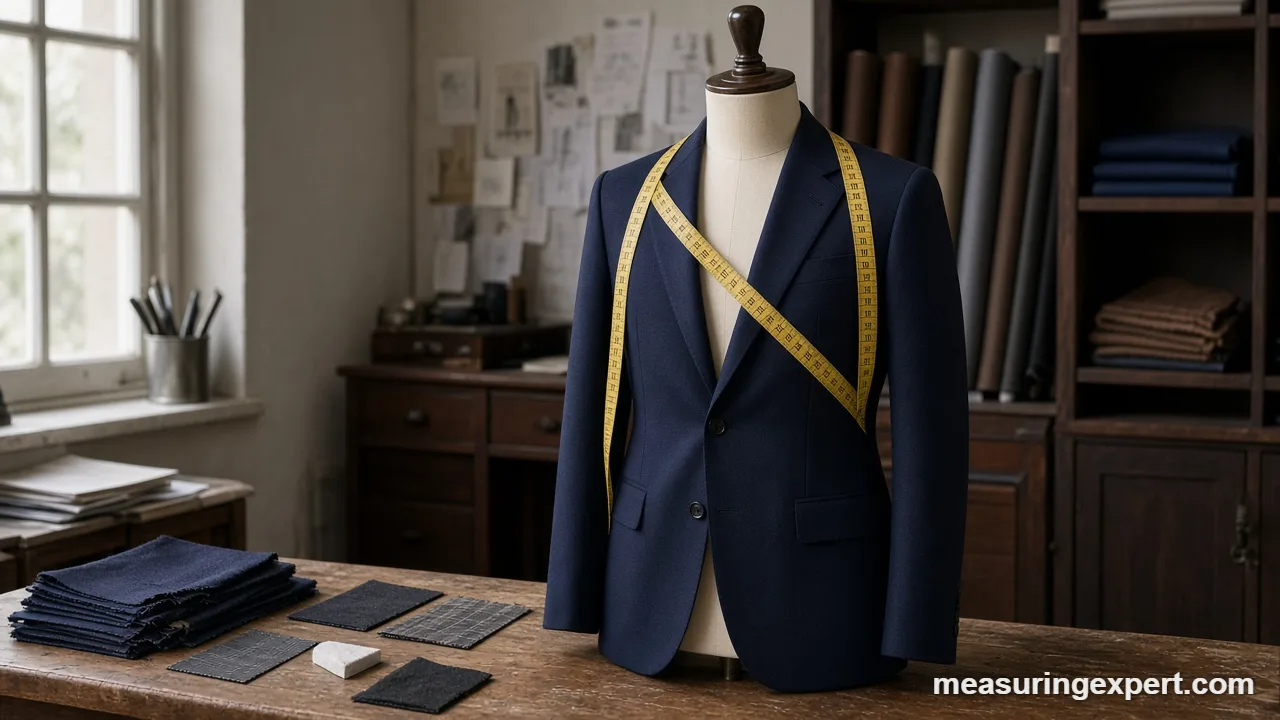
To measure for a suit, use a soft tape to take your chest, overarm, shoulder, sleeve, jacket length, waist, seat, inseam and outseam. Your jacket size is simply your chest measurement in inches, so a 40-inch chest wears a 40. Next, your height picks short, regular or long, and the trousers usually run 6 inches smaller.
A suit that fits well looks expensive even when it is not. By contrast, a pricey suit in the wrong size looks borrowed. The good news is that most of the fit comes down to a handful of numbers you can take at home in about ten minutes, with a cheap tailor’s tape and a helper.
The old version of this page mixed up some of those numbers. For example, it claimed a size 42 suit fits a man who is 6 feet 2 inches tall. However, that is not how suit sizes work. Instead, the 42 describes the chest, while height decides the length code (S, R or L). So a 5-foot-6 man and a 6-foot-3 man can both wear a 42, just in different lengths.
In short: chest gives the jacket number, height gives the letter, waist and inseam set the trousers, and the other measurements help you or a tailor fine-tune the fit. Once you have them written down, you can shop online, compare brands, or walk into a store with a clear target.
Major retailers describe the same core method. For instance, the Men’s Wearhouse measuring guide explains that a US size 40 jacket matches a 40-inch chest. It also notes that standard jackets assume an overarm about 7 inches larger than the chest.
Convert Your Suit Measurements to Centimeters
US suit sizes use inches, while European brands and many tailors work in centimeters. So type any measurement below to switch between the two. The converter uses the exact definition of 1 inch = 2.54 cm.
Recommended Tools to Measure for a Suit
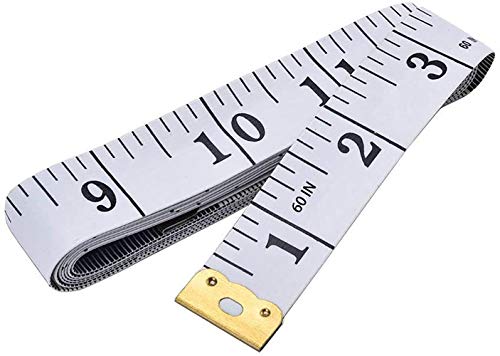
You only need one real tool: a flexible cloth or vinyl tape that reads in both inches and centimeters. A steel tape measure will not wrap around a body, so it gives wrong numbers. Also, a retractable soft tape is handy if you plan to measure more than once, because it stays clean and untangled in a drawer.




As an Amazon Associate, Measuring Expert earns from qualifying purchases.
- Jacket size equals your chest measurement in inches: a 42-inch chest wears a 42.
- Height sets the length code. Short is roughly 5’4″ to 5’7″, regular 5’8″ to 6’0″, and long 6’1″ to 6’4″.
- The drop is the gap between jacket size and trouser waist; 6 inches is standard.
- Overarm is usually about 7 inches more than the chest; a bigger gap means broad shoulders or arms.
- Jacket sleeve and shirt sleeve are measured differently, so do not swap them.
- Measure over a thin shirt, stand relaxed, and keep the tape level and snug.
- Even a perfect home measurement gets fine-tuned by a tailor at the fitting.
What You Need Before You Measure for a Suit
Good numbers start with good conditions. First, wear a thin dress shirt or a T-shirt and well-fitting trousers, not a sweater or jeans with a heavy belt. Second, empty your pockets. Third, ask someone to help, because the shoulder, sleeve and jacket length are hard to measure on yourself.
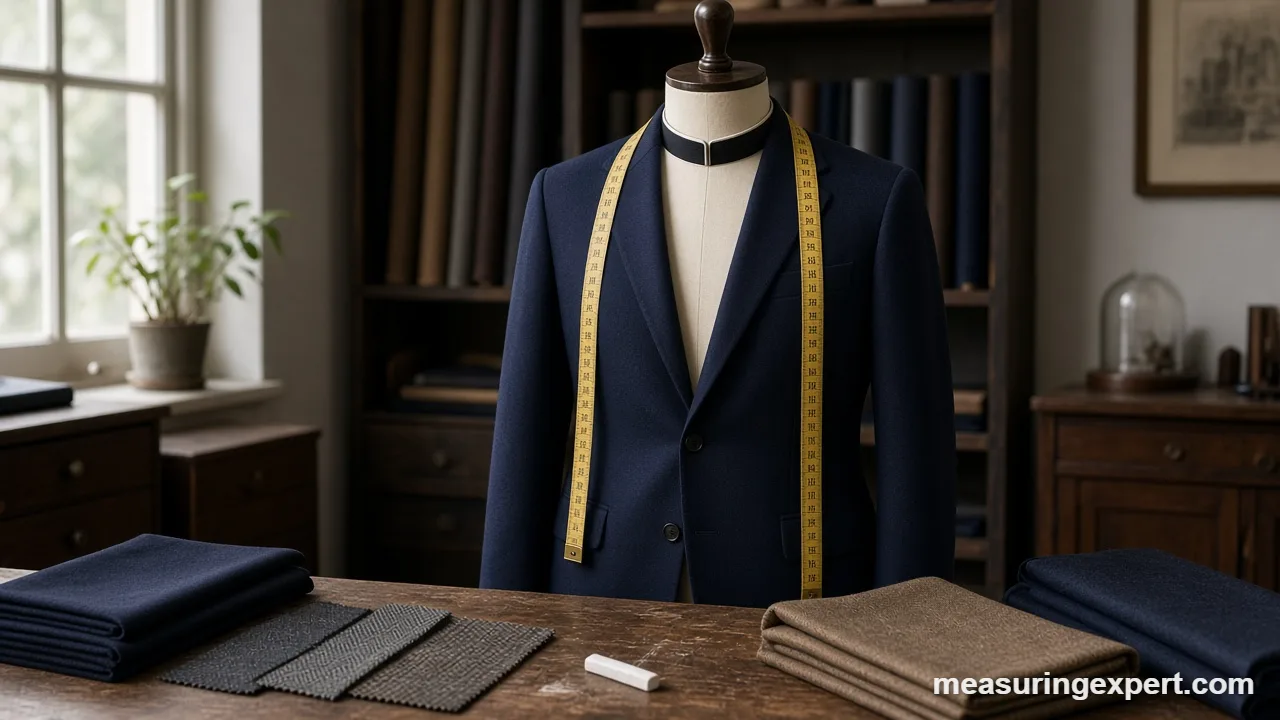
Stand straight but relaxed, with your weight on both feet and your arms hanging at your sides. Also, breathe normally rather than puffing your chest out or sucking in your stomach. Then write each number down as you go, to the nearest quarter inch, because a 1/4 inch is about 0.64 cm and small errors add up.
How to Measure for a Suit, Step by Step
First, work from the top down. The jacket measurements come first, followed by the trouser measurements. Here is the full set:
- Chest. Wrap the tape around the fullest part of your chest, under the armpits and across the shoulder blades, then lower your arms and read it.
- Overarm. With arms relaxed, wrap the tape around your arms and chest together at their widest point, roughly level with the upper arm.
- Shoulder. Place the tape on the bony tip of one shoulder and run it across the upper back to the tip of the other shoulder.
- Sleeve. For a jacket, measure from the shoulder tip, down the outside of a slightly bent arm, to just above the wrist bone.
- Jacket length. Have a helper measure from the base of the collar at the back of the neck straight down to where the hem should fall, usually covering the seat.
- Waist. For trousers, measure around where you wear dress trousers, usually near the navel, with one finger under the tape.
- Seat. Stand with feet together and measure around the fullest part of your buttocks and hips.
- Inseam. Measure from the crotch down the inside of the leg to where you want the trousers to end, usually the top of a dress shoe.
- Outseam. Finally, measure down the outside of the leg from the top of the waistband to the same end point.
For more detail on the leg measurement, our guide to what an inseam is and how to measure it walks through both the body method and the measure-your-best-trousers method. Similarly, the chest wrap uses the same technique as a bust measurement: level all the way around and snug, not tight.
How Jacket Size Comes From Your Chest
A US or UK suit size is the chest measurement in inches. So if your chest measures 41 1/2 inches, you are between a 41 and a 42, and the 42 is usually the safer choice. However, brands cut slightly differently, so treat the number as your starting point rather than a guarantee. European sizes, by comparison, usually add 10 to the US number; for example, a 40 US is about a 50 EU.
| Chest (in) | Chest (cm) | US/UK jacket size | Typical trouser waist (6-inch drop) | Expected overarm (about +7 in) |
|---|---|---|---|---|
| 36 | 91.4 | 36 | 30 in (76.2 cm) | about 43 in |
| 38 | 96.5 | 38 | 32 in (81.3 cm) | about 45 in |
| 40 | 101.6 | 40 | 34 in (86.4 cm) | about 47 in |
| 42 | 106.7 | 42 | 36 in (91.4 cm) | about 49 in |
| 44 | 111.8 | 44 | 38 in (96.5 cm) | about 51 in |
| 46 | 116.8 | 46 | 40 in (101.6 cm) | about 53 in |
| 48 | 121.9 | 48 | 42 in (106.7 cm) | about 55 in |
| 50 | 127.0 | 50 | 44 in (111.8 cm) | about 57 in |
Also, the overarm column matters more than most people think. If your overarm is well over 7 inches above your chest, you probably have broad shoulders or big arms. In that case, size up the jacket by one and have the waist taken in, because a tailor can remove fabric far more easily than add it.
Suit Drop: Matching Trousers to the Jacket
The drop is the difference between the jacket size and the trouser waist. According to the Oliver Wicks sizing guide, the industry standard is 6 inches. As a result, a size 40 jacket usually comes with 34-inch trousers.
Generally speaking, that works for an average build. On the other hand, athletic cuts often use a 7- or 8-inch drop for men with a large chest and slim waist. Meanwhile, some relaxed or portly cuts use a smaller drop of about 4 inches. If your own chest minus waist is far from 6, look for suit separates, which let you buy the jacket and trousers in different sizes.
Short, Regular or Long: Picking the Length Code
The letter after the size, such as the R in 42R, sets the jacket length and sleeve length. In other words, it comes from your height, not your chest. The ranges below follow the Men’s Wearhouse guide; still, other brands shift them by an inch or so.
| Length code | Height (US) | Height (metric) |
|---|---|---|
| Short (S) | 5’4″ to 5’7″ | about 163 to 170 cm |
| Regular (R) | 5’8″ to 6’0″ | about 173 to 183 cm |
| Long (L) | 6’1″ to 6’4″ | about 185 to 193 cm |
| Extra long (XL) | taller than long sizes | varies by brand |
If you are on a border, go by arm length and torso length rather than height alone. For example, a 6-foot man with long arms often fits a long better than a regular. As a rule of thumb, the jacket should cover your seat, and many tailors say its length should be about half the distance from the collar seam to the floor.
Shirt Sleeve vs Jacket Sleeve and Other Mix-Ups
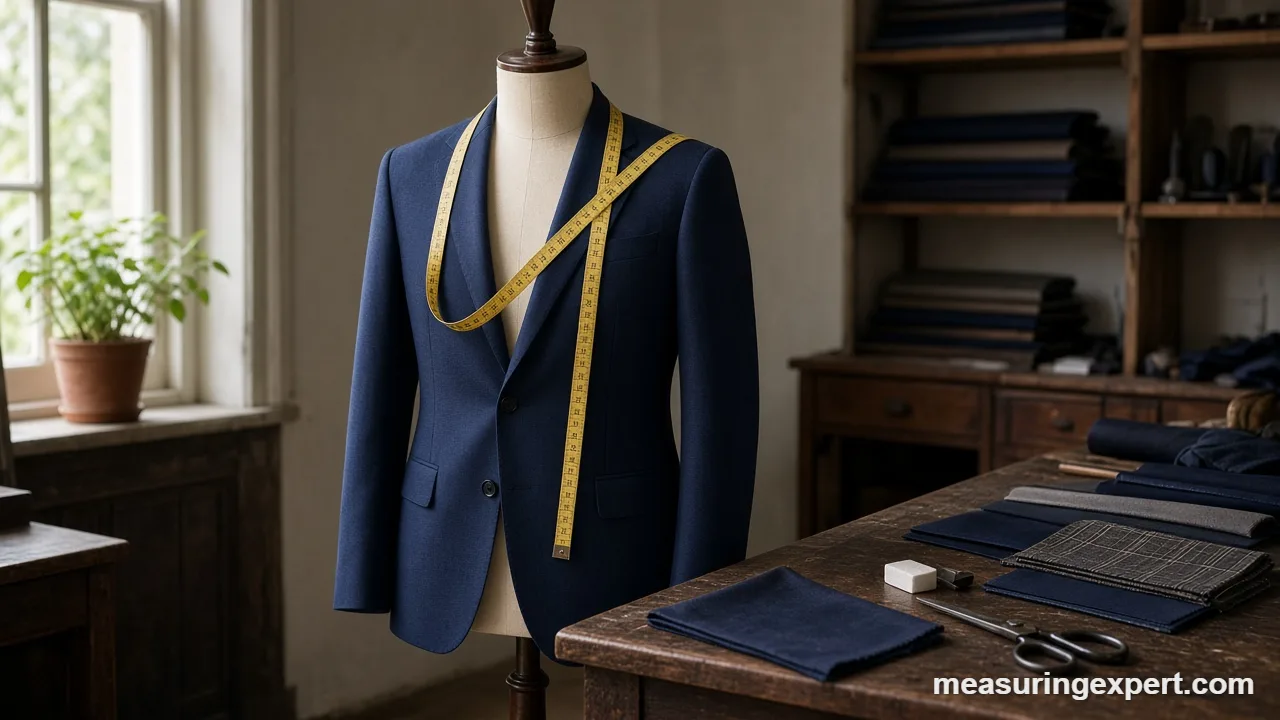
In fact, several suit measurements share a name with a different measurement. Consequently, people often enter the wrong number in an online size form. This table separates the pairs that cause the most trouble.
| Often confused | How it is measured | Why it matters |
|---|---|---|
| Shirt sleeve | From the center back of the neck, over the shoulder, to the wrist | A dress shirt size such as 16/34 uses this number |
| Jacket sleeve | From the shoulder tip to just above the wrist bone | About 1/4 to 1/2 inch of shirt cuff should show below it |
| Chest | Around the torso under the arms | Gives the jacket size |
| Overarm | Around the arms and chest together | Shows if you need extra room across the shoulders |
| Inseam | Crotch to hem, inside the leg | The length on most trouser tags |
| Outseam | Waistband to hem, outside the leg | Used by tailors to check rise and length together |
Because of that, read each size form carefully. If it asks for “sleeve” without saying which one, check whether its diagram starts at the neck or at the shoulder.
Do and Don’t When You Measure for a Suit
Do
- Wear a thin shirt and trousers that fit.
- Keep the tape level all the way around.
- Stand relaxed and breathe normally.
- Write each number down straight away.
- Check the brand’s own size chart.
Don’t
- Measure over a sweater or a jacket.
- Pull the tape so tight it dents the skin.
- Use a steel tape measure on your body.
- Guess the chest from your T-shirt size.
- Confuse shirt sleeve with jacket sleeve.
Honest Limits of Home Measurements
Above all, home measurements get you close, not perfect. For one thing, a body is soft, so how firmly the tape is pulled can change a chest reading by an inch. Moreover, posture changes the shoulder and jacket length numbers, and measuring yourself in a mirror tends to tilt the tape. In addition, each brand grades its patterns differently; a 42R from one label can fit like a 41R or 43R from another. Finally, fit is partly taste: a slim cut and a classic cut in the same size feel very different. In short, use your numbers to narrow the choice, then try the suit on or rely on a good returns policy.
When to See a Tailor
Most menswear stores will measure you for free, and a tailor’s numbers include the small allowances a home tape cannot show. Also, see a professional if you are buying a suit for a wedding or other big event, if you fall between sizes, or if your drop is far from 6 inches. Similarly, a tailor is the right call for sleeve, hem and waist alterations, which most suits need anyway.
Measure for a Suit: Frequently Asked Questions
How do I measure for a suit at home?
Use a soft tape and a helper. Take your chest, overarm, shoulder, sleeve, jacket length, waist, seat, inseam and outseam over a thin shirt, standing relaxed. Then match the chest to a jacket size and your height to S, R or L.
Is my jacket size the same as my chest measurement?
Yes, in US and UK sizing the jacket number is your chest in inches. So a 40-inch chest wears a size 40. Brands vary slightly, so check their chart.
What does 42R mean?
42R means a jacket for a 42-inch chest in a regular length, which usually suits men about 5’8″ to 6’0″. It does not describe your height directly.
What is the drop on a suit?
The drop is the jacket size minus the trouser waist. The standard is 6 inches, so a 40 jacket usually comes with 34-inch trousers.
Should I measure for a suit over a shirt?
Yes. Wear a thin dress shirt or T-shirt, because a suit is worn over a shirt. Avoid sweaters and thick layers, which add inches.
How do I know if I need a short, regular or long?
Go by height first: about 5’4″ to 5’7″ is short, 5’8″ to 6’0″ regular, and 6’1″ to 6’4″ long. If you have long arms or a long torso, try the longer size.
How long should a suit jacket be?
A suit jacket should cover the seat of your trousers. Many tailors use about half the distance from the collar seam to the floor as a guide.
Where should a suit sleeve end?
The jacket sleeve should end just above the wrist bone, so about 1/4 to 1/2 inch of shirt cuff shows below it.
Can I measure for a suit by myself?
You can take the chest, waist, seat and inseam alone. However, the shoulder, sleeve and jacket length are much more accurate with a helper.
How do I measure for a suit in centimeters?
Measure the same way and read the metric side of the tape, or convert: multiply inches by 2.54. For example, a 40-inch chest is 101.6 cm.
The Bottom Line
To sum up, your chest measurement in inches is your jacket size, your height chooses short, regular or long, and the trousers normally run 6 inches smaller. The overarm, shoulder, sleeve, seat and outseam then tell you where a standard suit will need adjusting.
So grab a soft tape and a helper, write every number down, and compare it with the brand’s own chart. After that, let a tailor handle the final sleeve and hem length, because that last half inch is what makes a suit look like yours.