

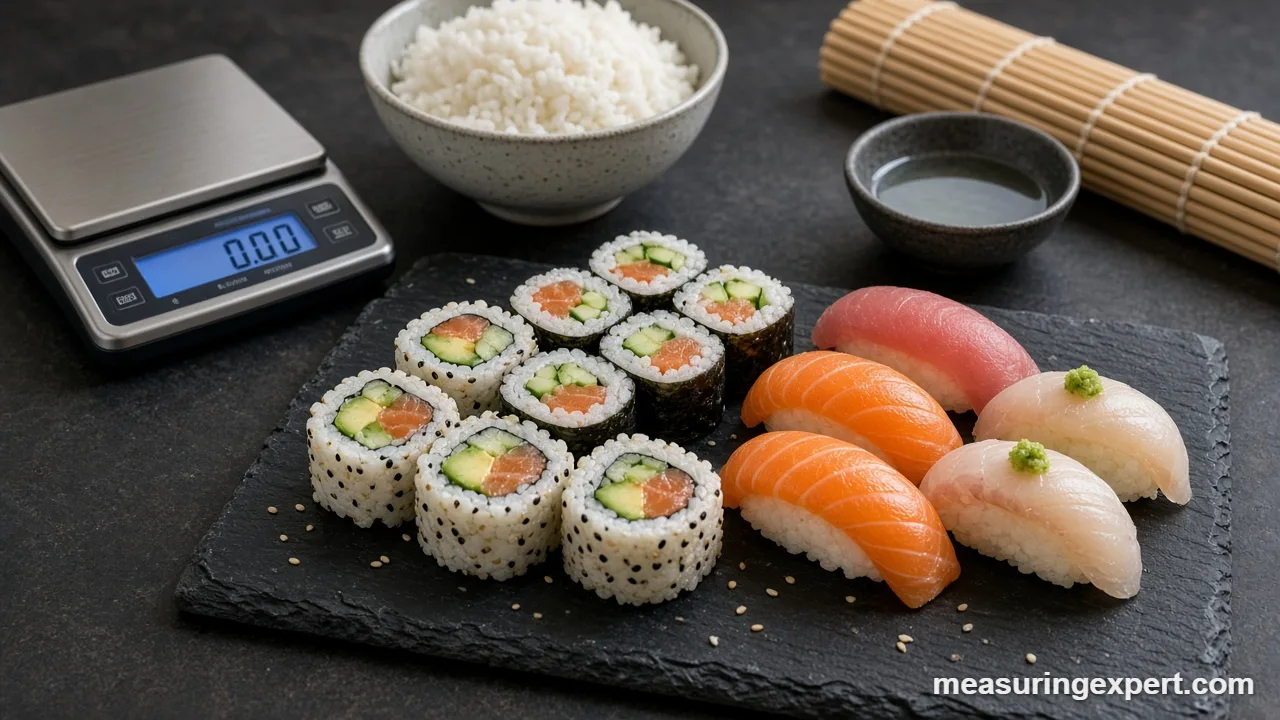
Sushi making measurements start with the rice. One Japanese rice cup is 180 mL, and one cup of uncooked rice takes about 25 mL of rice vinegar, 20 g of sugar and a pinch under half a teaspoon of salt. Weigh the rice, measure the water and vinegar in mL, and keep every roll the same size.
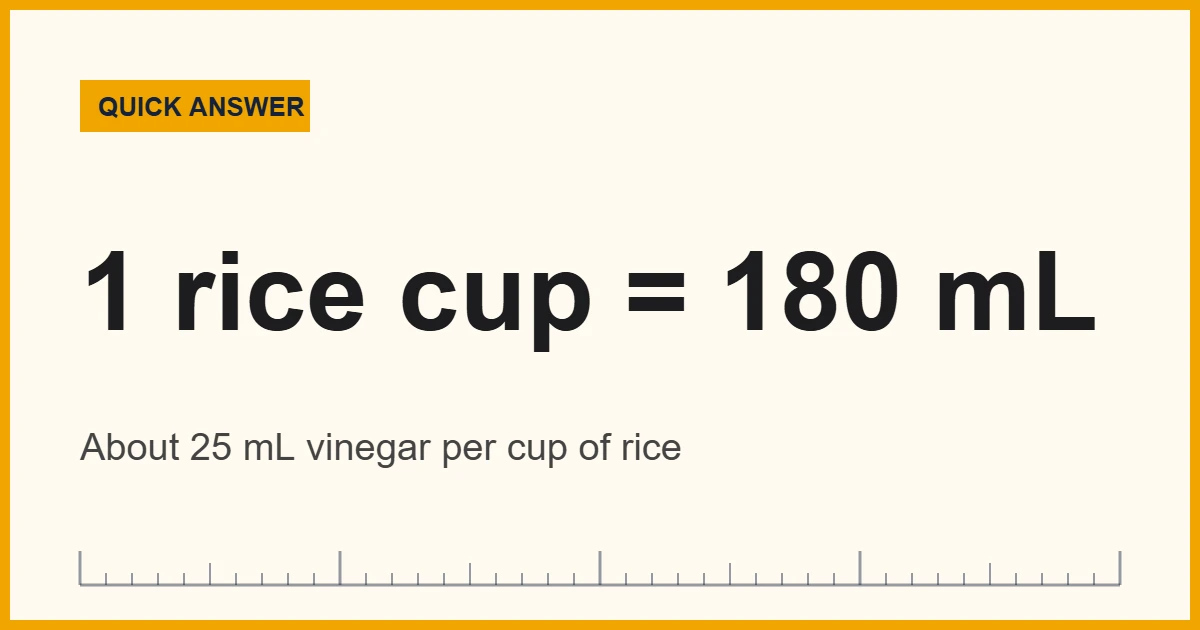
Convert Sushi Making Measurements: Rice Cups, mL and Spoons
Recipes for sushi rice often mix a 180 mL Japanese cup, a 240 mL US cup and tablespoons. Therefore, start with the converter below. It is set to 180 mL, so you can see right away how a rice cooker cup compares with a US measuring cup.
In fact, good sushi depends on a few numbers: how much rice goes into the pot, how much vinegar goes into the rice, and how much rice and filling go into each roll. Indeed, even small slips show. Too much water gives mushy rice, and too much vinegar makes it sharp and wet.
Fortunately, the numbers are easy to control. Published recipes give clear starting points, for example the SunRice sushi rice method and the sushi rice recipe by Japanese cook Hiroko Liston. This page compares the two, converts them to US and metric units, and covers fish safety and nori as well.
- A Japanese rice cup is 180 mL, about 0.76 US cup.
- SunRice uses 1 cup of rice to 1 1/2 cups of water.
- Hiroko Liston notes about the same volume of water as rice, slightly less for firmer rice.
- Seasoning per cup of uncooked rice ranges from 25 mL to 3 tablespoons of vinegar.
- Use the same cup for rice and water.
Sushi Making Measurements for the Rice: Water and Cup Size
First, rice is where sushi making measurements matter most. Both sources agree on the method (rinse, cook, season, cool), but they differ on the water. However, that is not an error. A 180 mL cup and a US cup are different sizes, and each recipe was written for its own rice and pot.
| Source | Cup used | Rice to water |
|---|---|---|
| SunRice (Australia) | Not stated; use one measuring jug for both | 1 cup rice to 1 1/2 cups water |
| Hiroko Liston | 180 mL cup | About equal volumes; slightly less water for firmer rice |
As a result, the safest rule is to use one container for both rice and water, then adjust by a spoonful or two on the next batch. For example, if the rice came out soft, cut the water slightly. If it came out hard, add a little more.
In addition, weight helps. Because a cup of rice can pack differently each time, weigh your usual amount once on a scale and write the grams on the recipe. After that, you can repeat it exactly.
Sushi Making Measurements for Vinegar, Sugar and Salt
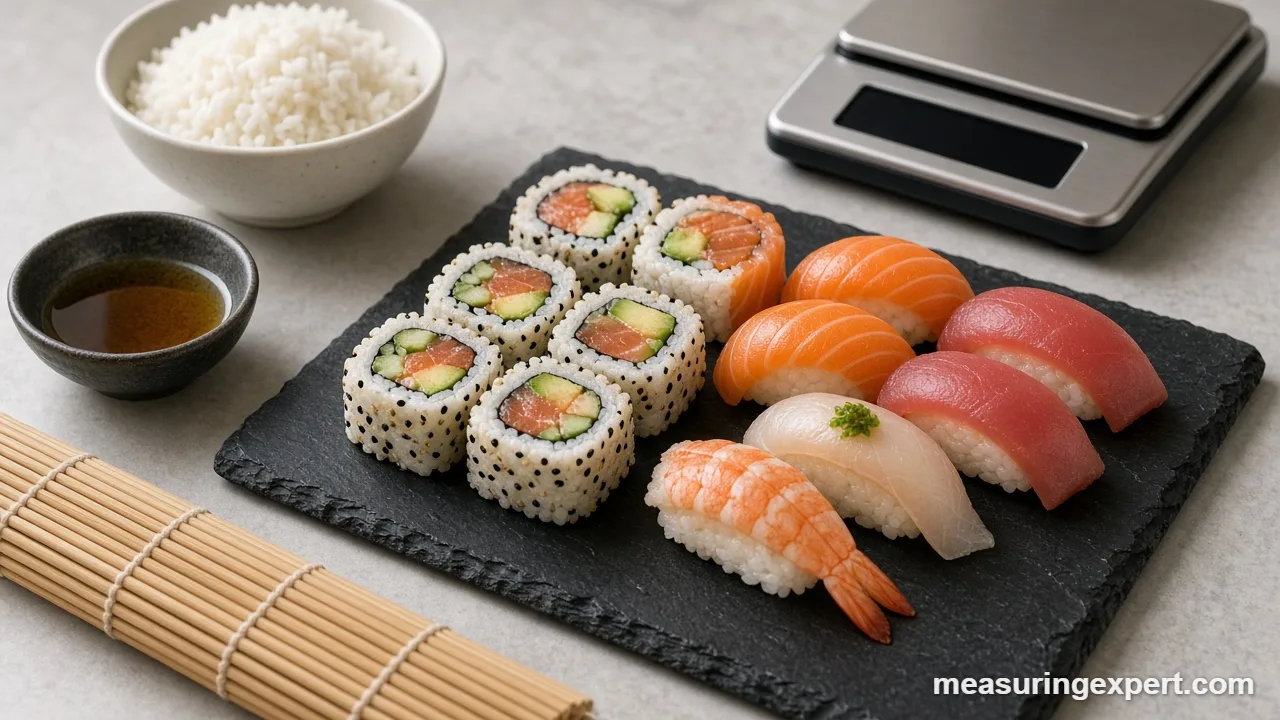
The seasoning mix is small, so a few extra drops show clearly. Here are the two published amounts per 1 cup of uncooked rice, converted into spoons.
| Source (per 1 cup uncooked rice) | Rice vinegar | Sugar | Salt |
|---|---|---|---|
| Hiroko Liston (180 mL cup) | 25 mL (about 1 2/3 tbsp) | 20 g | 2 mL (just under 1/2 tsp) |
| SunRice | 3 tbsp (about 44 mL) | 2 tbsp caster sugar | 1/2 tsp |
The SunRice mix is stronger per cup. In short, start with the lower amount and taste. You can always add more vinegar, but you cannot take it out.
For a bigger batch, scale in a straight line. Liston’s recipe for 5 cups of uncooked rice uses 120 mL of rice vinegar, 100 g of sugar and 2 teaspoons of salt. Notice that 5 times the single-cup amount (125 mL) is close to the 120 mL she gives, so small rounding is fine.
Recommended Tools for Sushi Making Measurements
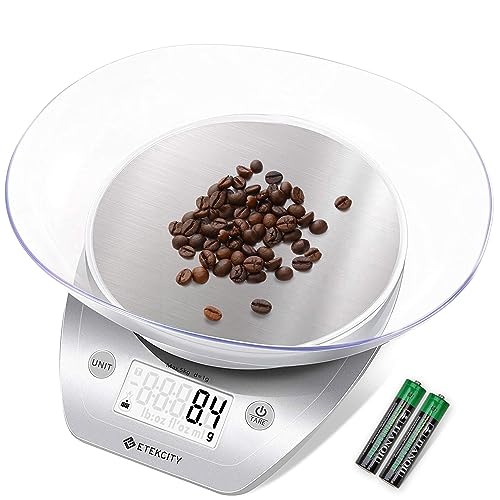
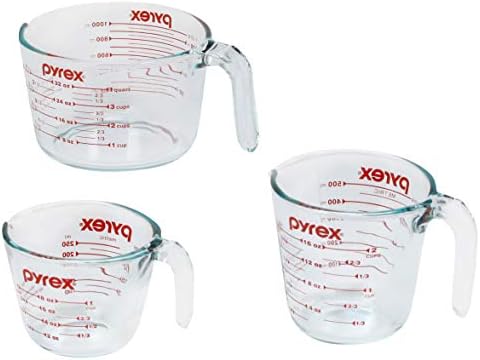
A few simple tools make the numbers repeatable. First, a digital scale with a tare button handles the rice, fish and fillings. Next, metal measuring spoons cover the vinegar mix. In addition, a clear liquid cup with mL markings checks the water, and a rolling mat keeps each roll the same size.



As an Amazon Associate, Measuring Expert earns from qualifying purchases.
How to Follow Sushi Making Measurements Step by Step
- Pick one cup. Use a 180 mL rice cup or a marked liquid cup, and use it for both the rice and the water.
- Measure the rice. Level the cup, or weigh the rice on a scale and note the grams.
- Rinse the rice. Rinse under cold water until the water runs mostly clear, then drain well.
- Add the water. Use the ratio from your recipe, for example 1 cup of rice to 1 1/2 cups of water.
- Cook and rest. Cook, then let the rice stand covered for the time your recipe gives.
- Season by measure. Mix the vinegar, sugar and salt, fold it into the rice, and fan to cool.
Fish and Filling Portions in Sushi Making Measurements
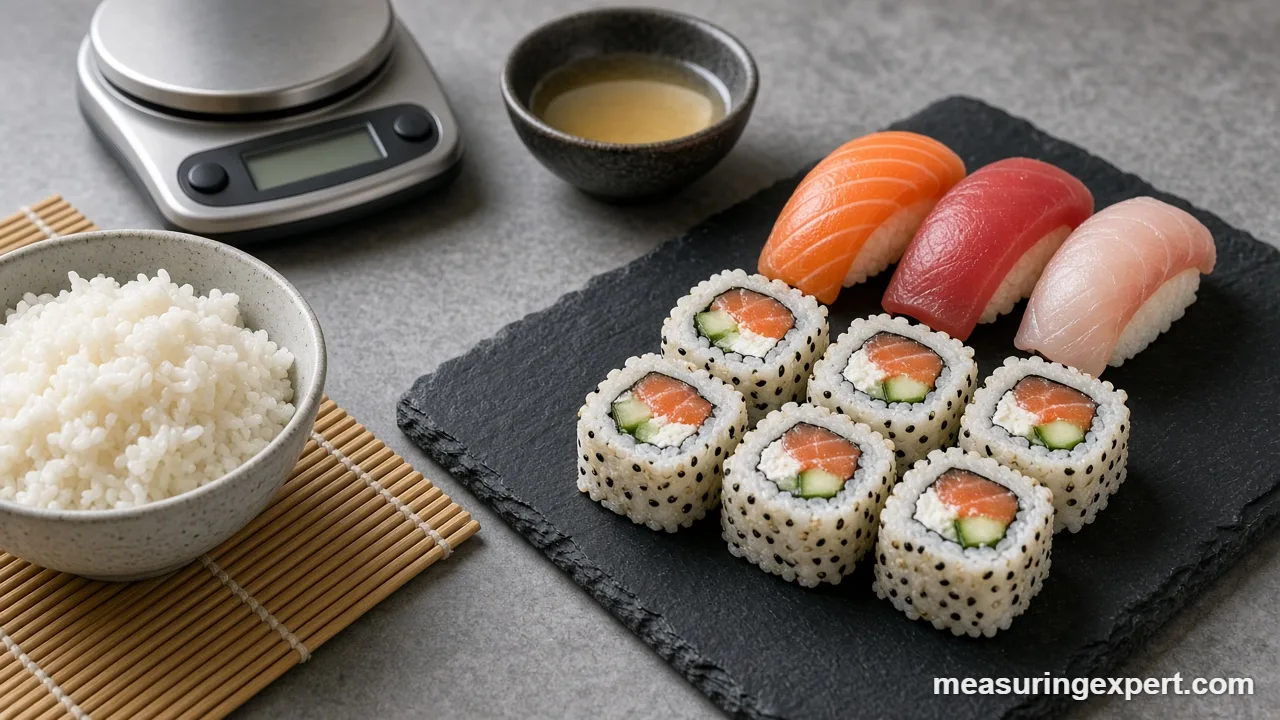
There is no single official portion for a piece of nigiri or a roll. Instead, consistency is the goal. For that reason, weigh one slice or one scoop of filling that looks right to you, then repeat that weight every time.
Similarly, the same idea works for rolls. Weigh the rice for one roll, spread it to the same edge each time, and keep fillings in thin, even strips. Otherwise, uneven fillings make rolls bulge or split when you cut them.
| Item | How to keep it consistent |
|---|---|
| Nigiri rice ball | Weigh one ball that suits the fish, then reuse that weight |
| Roll rice layer | Weigh the rice per sheet of nori |
| Fish slices | Cut the same thickness and weigh one as a sample |
| Fillings | Cut strips to the same width and length |
Safe Temperatures in Sushi Making Measurements
Because of the risks, raw fish needs extra care. The FDA says it is always best to cook seafood thoroughly, and that the rule of thumb for raw fish is to eat fish that was previously frozen, as explained on its page about selecting and serving seafood safely. It also advises keeping seafood in a refrigerator at 40 degrees F (about 4.4 degrees C) or below, and using a refrigerator thermometer to check.
For freezing, one county health department lists these parasite-destruction options for fish served raw. They apply to restaurants, but they show the numbers involved.
| Freezing method | Temperature | Time |
|---|---|---|
| Freeze and store | -20 C (-4 F) or below | At least 7 days (168 hours) |
| Freeze solid, then store | -35 C (-31 F) or below | At least 15 hours |
| Freeze solid, then store colder | -35 C (-31 F), then -20 C (-4 F) or below | At least 24 hours |
These figures come from Fairfax County Health Department guidance. Many home freezers do not reach -35 C, so please ask the fishmonger whether the fish was frozen to a standard that suits raw use.
Nori and Filling Notes for Sushi Making Measurements
Nori sheet sizes can differ between brands, so the easiest way to keep rolls even is to buy one brand and cut the sheets the same way each time. Likewise, spread the rice to a consistent thickness and leave a clear strip at the far edge so the roll seals.
In addition, keep fillings dry. Otherwise, wet fillings soften the nori. Therefore, pat vegetables and fish with a paper towel before they go on the rice.
Common Sushi Making Measurements Mistakes
- Using two different cups. A 180 mL cup for rice and a 240 mL cup for water changes the ratio a lot.
- Adding all the vinegar at once. Start with the lower amount and taste.
- Skipping the rinse. Otherwise, extra starch leaves the rice gummy.
- Eyeballing roll size. Uneven rolls cook, cut and look uneven.
- Leaving fish out. Raw fish should stay cold until you use it.
For other cooking styles, see our guide to Japanese cooking measurements, and read why measuring ingredients by weight is more reliable than cups. Our page on how much 30 mL is helps with small liquid amounts.
Do and Don’t for Sushi Making Measurements
Do
- Use one cup for rice and water.
- Weigh the rice once and note the grams.
- Mix the seasoning separately.
- Keep raw fish at 40 F or below.
- Repeat the same portion weights.
Don’t
- Add extra water to rescue dry rice mid-cook.
- Pour in vinegar by eye.
- Press the rice hard into the cup.
- Leave raw fish out on the counter.
- Overfill rolls.
Honest Limits of Sushi Making Measurements
Meanwhile, every rice brand absorbs water a little differently, and each pot loses steam at its own rate. Also, rice vinegars vary in strength and sweetness. In short, the amounts here are starting points, not guarantees. Finally, taste the rice, note what worked, and adjust the next batch by a small step.
When Accuracy Really Matters in Sushi Making Measurements
Most of this is about taste and texture. Two parts, however, deserve strict care:
- Fish handling. Temperature and freezing history affect safety, so follow official guidance.
- Rice cooling. Because bacteria grow in warm food, cooked rice should not sit warm for hours, so cool and serve it promptly and refrigerate leftovers.
Sushi Making Measurements FAQs
How big is a Japanese rice cup?
A Japanese rice cup is 180 mL, which is about 0.76 US cup or just over 12 tablespoons.
What is the rice to water ratio for sushi rice?
SunRice uses 1 cup of rice to 1 1/2 cups of water, while Hiroko Liston uses about equal volumes. Use one cup for both and adjust to taste.
How much vinegar do I need for 1 cup of sushi rice?
Hiroko Liston uses 25 mL of rice vinegar per 180 mL cup of uncooked rice. SunRice uses 3 tablespoons per cup.
How much sugar and salt go in sushi rice?
For 1 cup of uncooked rice, the published amounts are 20 g of sugar and just under 1/2 teaspoon of salt, or 2 tablespoons of caster sugar and 1/2 teaspoon of salt.
Should I weigh or measure sushi rice by cup?
Weighing is more repeatable, because a cup of rice can pack differently each time. Weigh your usual amount once and reuse the grams.
How should I scale the seasoning for a bigger batch?
Scale it in a straight line. For example, Liston uses 120 mL of vinegar, 100 g of sugar and 2 teaspoons of salt for 5 cups of uncooked rice.
Is it safe to eat raw fish at home?
The FDA says it is best to cook seafood, and that eating fish previously frozen is the rule of thumb for raw fish. Some groups should avoid raw fish entirely.
What temperature should raw fish be kept at?
The FDA advises a refrigerator at 40 degrees F (about 4.4 degrees C) or below.
How do I make rolls the same size?
For example, weigh the rice for each roll, spread it to the same edge, and cut fillings into even strips.
What tools do I need for sushi measuring?
A digital scale, measuring spoons, a marked liquid cup and a rolling mat cover almost every step.
Sushi Making Measurements: The Bottom Line
To sum up, use one cup for rice and water, weigh the rice, and measure the vinegar mix in mL or spoons. Keep portions consistent and treat raw fish with care.
Finally, use the converter at the top of this page whenever a recipe switches between a 180 mL rice cup, US cups and spoons.