

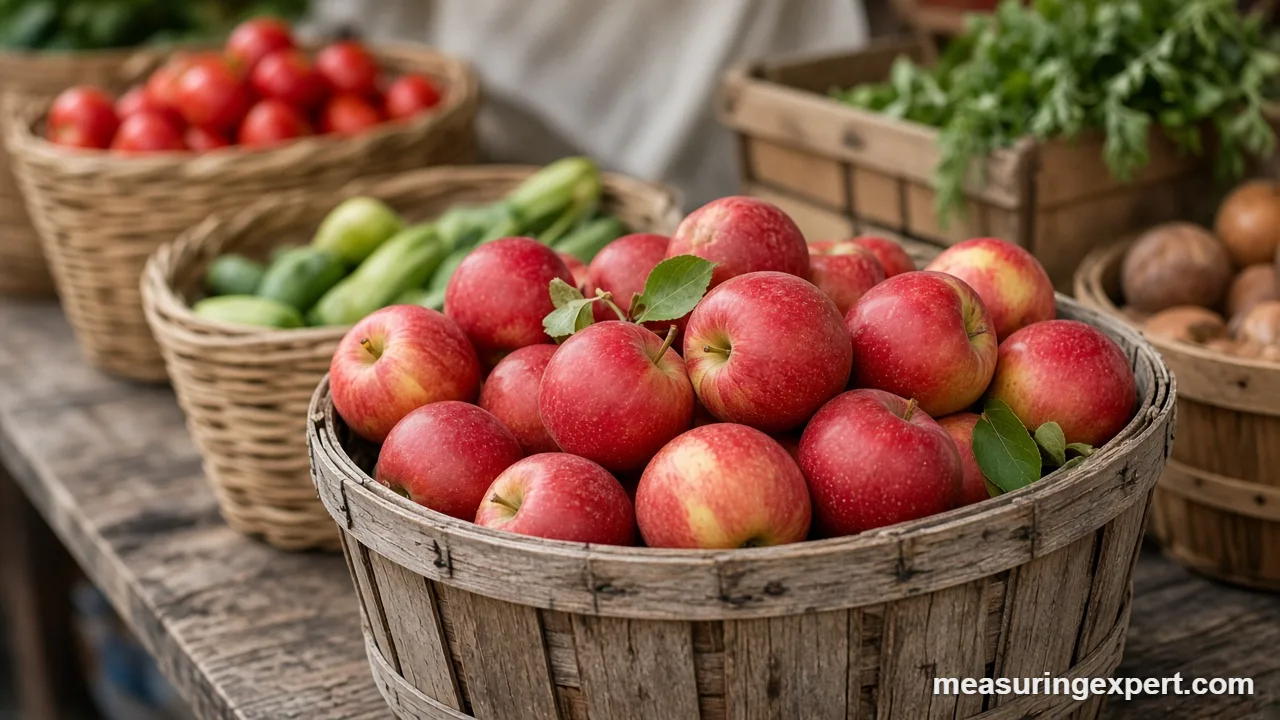
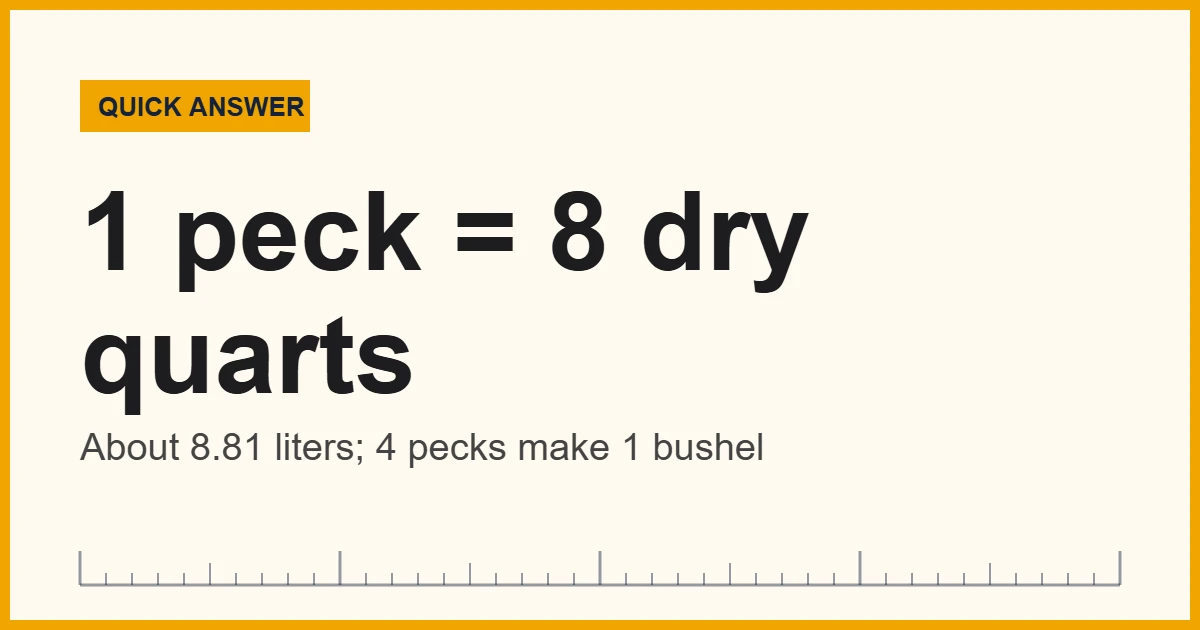
A peck is a US dry volume unit equal to 8 dry quarts, 16 dry pints or 2 dry gallons. In metric terms, it is about 8.81 liters (537.605 cubic inches). Also, four pecks make one bushel, while the older British imperial peck is slightly larger at about 9.09 liters.
Peck Converter: Liters to Gallons, Quarts and Cups
The site converter works in liquid and metric units, so start from liters. Since the US unit is 8.81 liters, type 8.81 for one, 4.405 for a half, or 35.24 for a full bushel. The results then also show the same space in US liquid gallons, quarts, pints, cups and milliliters.
You will mostly meet this unit at orchards, farm stands and farmers markets. Apples, peaches, green beans and tomatoes are still sold this way, by the whole or half basket, in many parts of the US. You also hear it, for example, in old nursery rhymes and songs. However, very few people could say how big one actually is.
Fortunately, the answer is fixed by law and by standards. For example, the US National Institute of Standards and Technology (NIST) lists the US unit as 8.809 768 liters in its SI conversion factors. Similarly, the USDA defines it as 8 quarts, or 537.605 cubic inches, in its handbook of weights and measures for agricultural commodities.
In short, a peck is a container size, not a weight. Below you will find a chart, the dry versus liquid trap, the British version, typical produce weights and a simple way to measure one at home.
Peck Conversion Chart
These values use the exact US definition of 537.605 cubic inches. In addition, the liter and liquid gallon columns are rounded to two decimals.
| Pecks | Dry quarts | Bushels | Liters | US liquid gallons | Cubic inches |
|---|---|---|---|---|---|
| 1/4 | 2 | 1/16 | 2.20 L | 0.58 | 134.40 |
| 1/2 | 4 | 1/8 | 4.40 L | 1.16 | 268.80 |
| 1 | 8 | 1/4 | 8.81 L | 2.33 | 537.61 |
| 2 | 16 | 1/2 | 17.62 L | 4.65 | 1,075.21 |
| 3 | 24 | 3/4 | 26.43 L | 6.98 | 1,612.82 |
| 4 | 32 | 1 | 35.24 L | 9.31 | 2,150.42 |
| 8 | 64 | 2 | 70.48 L | 18.62 | 4,300.84 |
| 10 | 80 | 2 1/2 | 88.10 L | 23.27 | 5,376.05 |
This chart is printable: use your browser’s print option and keep it with your canning notes. Also, for liquid volumes in the kitchen, our guide to how many quarts are in a gallon covers the liquid side of the US system.
Recommended Tools for Measuring a Peck
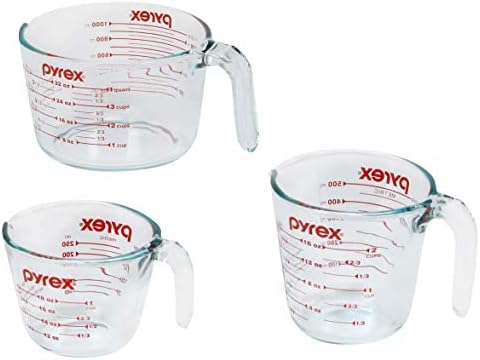
You rarely need a certified dry measure today. Instead, a half bushel basket holds two pecks, and a kitchen scale tells you what your produce actually weighs. Next, a large glass measuring cup lets you check a basket’s volume with water or dry beans. Finally, sturdy dry measuring cups help when a recipe asks for a fraction of your harvest.



As an Amazon Associate, Measuring Expert earns from qualifying purchases.
Why a Peck Is Not 2 Gallons of Milk
Many charts say “a peck is 2 gallons”. However, that is only true for dry gallons. This is because the US actually has two quart systems. The dry quart is about 1.10 liters, while the liquid quart is about 0.95 liters. As a result, it holds about 2.33 US liquid gallons, not 2.
| People often confuse | Dry measure (used for pecks) | Liquid measure (milk, water) |
|---|---|---|
| Pint | Dry pint: 33.6 in³, about 0.551 L | Liquid pint: 28.875 in³, about 0.473 L |
| Quart | Dry quart: 67.2 in³, about 1.101 L | Liquid quart: 57.75 in³, about 0.946 L |
| Gallon | Dry gallon: 268.8 in³, about 4.405 L | Liquid gallon: 231 in³, about 3.785 L |
| Whole unit | 8 dry quarts, about 8.81 L | About 9.31 liquid quarts |
US Peck vs the Imperial Version
The UK, Canada and other Commonwealth countries used the imperial version. Specifically, it is defined as 2 imperial gallons, and an imperial gallon is exactly 4.546 09 liters. Therefore, the imperial unit is 9.092 18 liters, about 3% more than the US one.
| Unit | US (Winchester-based) | Imperial (British) |
|---|---|---|
| Peck | 8.810 L (537.605 in³) | 9.092 L |
| Bushel (4 pecks) | 35.239 L (2,150.42 in³) | 36.369 L |
| Quarts in each | 8 dry quarts | 8 imperial quarts |
For a basket of apples, that 3% gap hardly matters. Still, it does show up in old British recipes and historic trade records. If you also work with other old units, see our overview of American units of measurement.
How Much Does a Peck of Produce Weigh?
This unit measures space, so its weight depends on what fills it. For example, small, dense produce packs tighter than large, round fruit. For this reason, sellers often quote weights rather than volume today.
| Produce | USDA weight per bushel | Approximate weight per quarter bushel |
|---|---|---|
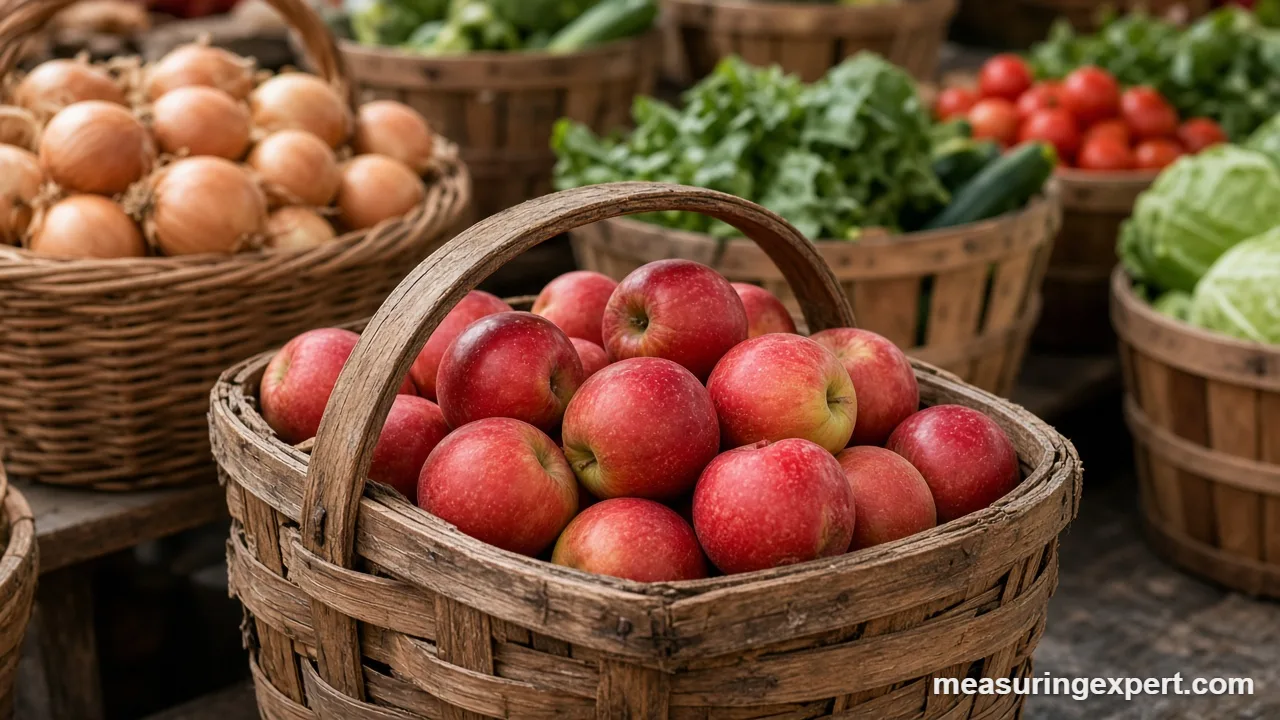
| Apples (bushel basket) | 40 lb (18.1 kg) | about 10 lb (4.5 kg) |
| Snap beans | 28 to 32 lb (12.7 to 14.5 kg) | about 7 to 8 lb (3.2 to 3.6 kg) |
First, these figures come from the USDA handbook linked above. Next, the last column simply divides the bushel weight by four. In practice, a medium apple weighs about 0.4 pounds (182 g), so one basket holds roughly 25 medium apples. Fruit size, however, changes that count a lot.
How to Measure a Peck at Home
- Find a container of known size. A half bushel basket holds 2 pecks, so half of it is the amount you want.
- Check it with a liquid measure. First, line the container with a plastic bag and pour in 8.81 liters, or 9.31 US liquid quarts, of water.
- Mark the water line. Then use tape or a marker on the inside. That line marks one level unit.
- Empty and dry the container. After that, fill it with produce up to the line.
- Level the top. Otherwise, a heaped basket can hold far more than a level one, so decide which one you need.
- Weigh the result. Finally, write the weight down, because next time you can simply weigh the same produce.
Where the Unit Comes From
The peck is an old English dry measure for grain, flour and produce. Also, the word came into Middle English through Anglo-French, and its deeper origin is unclear. In addition, the US system grew from the English Winchester bushel of 2,150.42 cubic inches, which is why the US unit is exactly a quarter of that. Britain, by contrast, redefined its dry and liquid units together in 1824 around the imperial gallon. Meanwhile, the US kept the older bushel, and the two pecks drifted apart.
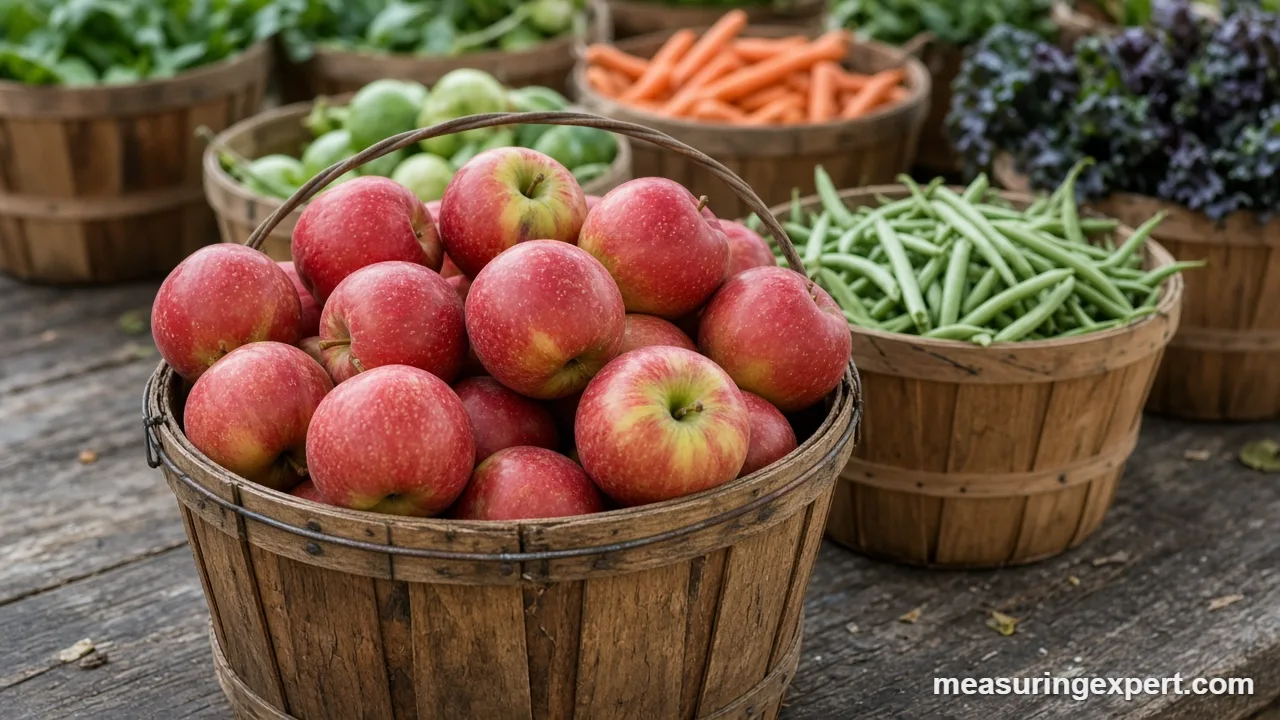
Today, the unit survives mostly in produce sales and in the phrase “a peck of” something. By contrast, most commodity trading uses weight instead.
Do and Don’t
Do
- Use 8.81 liters as the US value.
- Remember that four pecks make one bushel.
- Ask whether a seller’s basket is level or heaped.
- Weigh produce instead when a recipe needs precision.
- Label old British amounts as imperial, so readers know the size.
Don’t
- Treat it as 2 liquid gallons.
- Mix dry quarts with liquid quarts, because they differ.
- Assume every basket of apples has the same count.
- Measure liquids this way; use liters or gallons.
- Rely on a decorative basket as a true measure, since few are certified.
Honest Limits of Peck Measurements
The definition is exact; however, real baskets are not. Most produce baskets sold today are not certified measures, so a “peck basket” may hold a bit more or less. Also, sellers often heap the top, which adds volume the definition ignores. In addition, weight per basket changes with variety, size and ripeness. For example, small apples pack with less air between them than large ones. So treat weight figures as typical, not exact. Finally, our converter works in liters because it has no dry quart setting; the dry values on this page come from the definitions above.
When Accuracy Really Matters
For a pie or a batch of applesauce, a rough basketful is fine. However, canning is different. That is because tested canning recipes rely on the right ratio of produce to acid, sugar and salt. So if a recipe gives both pecks and pounds, use the pounds. Likewise, if you sell produce, check your state weights and measures rules, because many states require sales by weight or by a certified measure.
For more on how dry and liquid units differ between countries, see metric vs imperial.
Peck FAQs
What is a peck in measurement?
A peck is a dry volume unit. Specifically, the US version equals 8 dry quarts, 2 dry gallons or about 8.81 liters.
How many quarts are in a peck?
There are 8 dry quarts in one. In liquid quarts, however, the same space is about 9.31 quarts.
How many pecks are in a bushel?
There are 4 pecks in a bushel. Meanwhile, a US bushel is 2,150.42 cubic inches, or about 35.24 liters.
Is a peck 2 gallons?
Yes, but only in dry gallons. In US liquid gallons, however, it is about 2.33 gallons.
How many liters is a peck?
A US peck is about 8.81 liters. By comparison, the imperial version is about 9.09 liters.
How much does a peck of apples weigh?
About 10 pounds (4.5 kg), based on the USDA figure of 40 pounds for a bushel basket of apples. Still, fruit size changes the exact weight.
How many apples are in a peck?
Roughly 25 medium apples, since a medium apple weighs about 0.4 pounds. Similarly, small apples fit more, and large apples fit fewer.
How big is a half bushel?
In short, a half bushel is 2 pecks, 16 dry quarts or about 17.62 liters.
How many cubic feet is a peck?
The US unit is about 0.311 cubic feet, because it equals 537.605 cubic inches.
What foods are sold by the peck?
For instance, apples, peaches, pears, tomatoes, green beans, peppers and potatoes are common examples at farm stands and markets.
The Bottom Line
To sum up, a peck is 8 dry quarts, 2 dry gallons or about 8.81 liters, and four of them make a bushel. It measures space, not weight, so a peck of apples weighs about 10 pounds while lighter produce weighs less. Finally, when precision matters, weigh your produce and use the converter above for liquid or metric equivalents.