

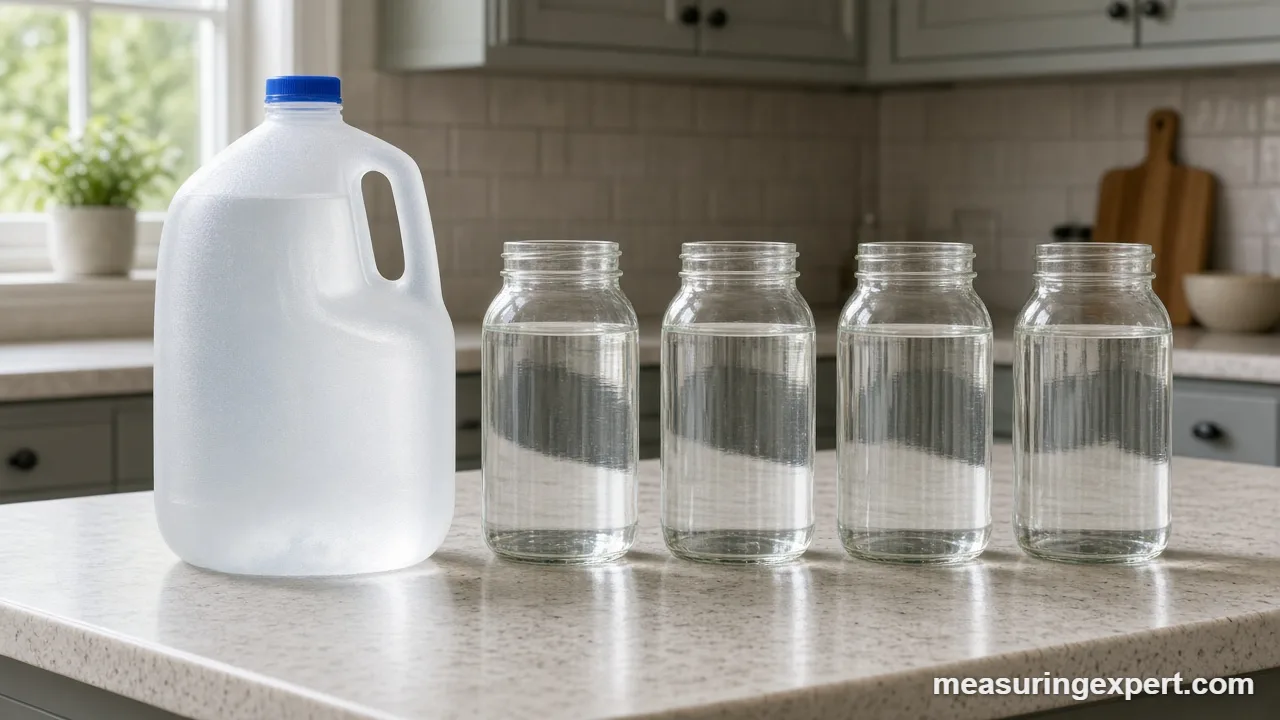
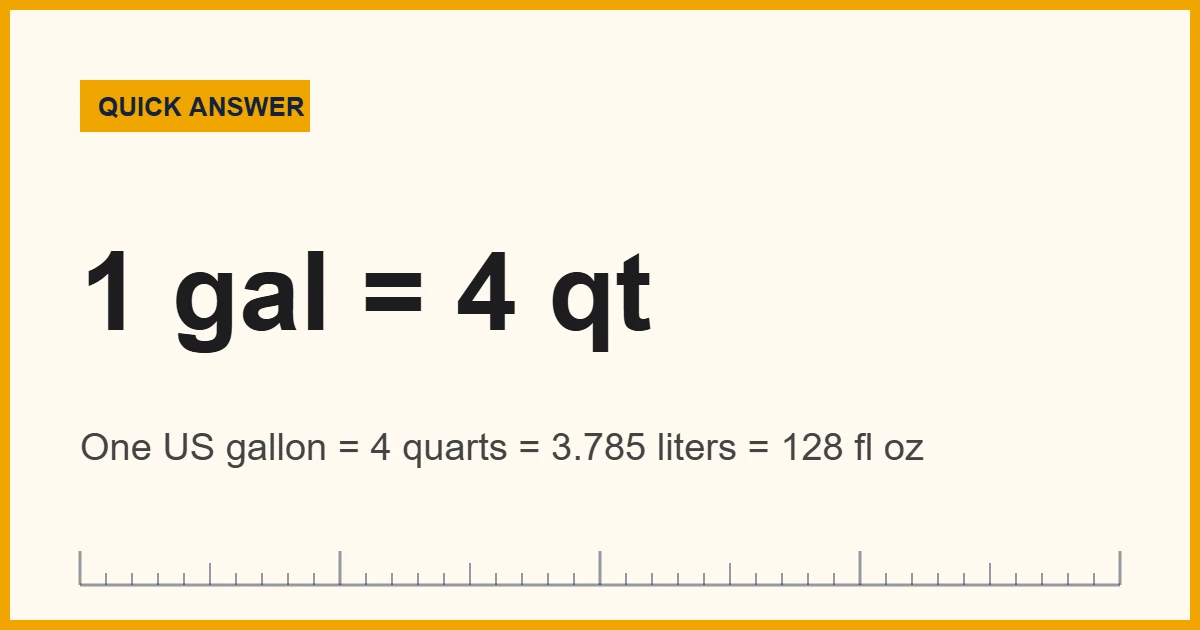
There are exactly 4 quarts in a gallon in the US system. One US gallon is defined as 231 cubic inches, about 3.785 liters, so each US liquid quart holds about 0.946 liters (946 mL), 32 fluid ounces or 4 cups. The British imperial gallon also holds 4 quarts, but both units are about 20% larger.
Convert Gallons to Quarts (and Back)
First, enter any amount and choose the unit you have. The converter then uses the exact US definitions and shows quarts, pints, cups, fluid ounces, liters and milliliters at once.
The word “quart” comes from “quarter”, and that is the easiest way to remember it. In other words, a quart is a quarter of a gallon, so four of them fill one gallon. Also, you meet both units every day in the US: milk and juice come in half gallons and gallons, motor oil comes in quarts, and big stockpot recipes often switch between the two.
The number of quarts in a gallon never changes within one system, because both units are defined together. For example, NIST, the US agency that maintains official measurement standards, lists the gallon as about 3.79 liters and the liquid quart as about 0.95 liter in its table of approximate US-to-metric conversions. Therefore, if you divide one by the other, you get 4.
However, there is one catch. The UK, the US and older dry measures each use a different quart, so the size of the quart matters even though the count usually stays at four. Below, you will find a quick chart first, then the full breakdown and the regional differences.
Quarts in a Gallon: Quick Conversion Chart
This chart covers the amounts people look up most, so it is a good place to start. In addition, all values use US liquid measures, and the liter column is rounded to three decimals.
| US gallons | US quarts | Liters | Also equals |
|---|---|---|---|
| 1/4 gal | 1 qt | 0.946 L | 2 pints, 4 cups |
| 1/2 gal | 2 qt | 1.893 L | 4 pints, 8 cups |
| 3/4 gal | 3 qt | 2.839 L | 6 pints, 12 cups |
| 1 gal | 4 qt | 3.785 L | 8 pints, 16 cups, 128 fl oz |
| 1 1/2 gal | 6 qt | 5.678 L | 12 pints, 24 cups |
| 2 gal | 8 qt | 7.571 L | 16 pints, 32 cups |
| 2 1/2 gal | 10 qt | 9.464 L | 20 pints, 40 cups |
| 3 gal | 12 qt | 11.356 L | 24 pints, 48 cups |
| 4 gal | 16 qt | 15.142 L | 32 pints, 64 cups |
| 5 gal | 20 qt | 18.927 L | 40 pints, 80 cups |
| 10 gal | 40 qt | 37.854 L | 80 pints, 160 cups |
Printable tip: save or print this chart and tape it inside a pantry door. Next, to go the other way, divide quarts by 4. So 6 quarts is 1 1/2 gallons, and 1 quart is 1/4 gallon.
Recommended Tools for Measuring Quarts and Gallons
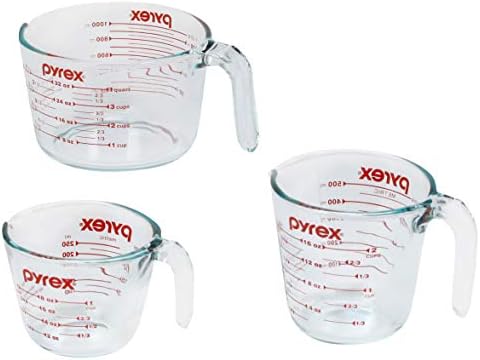
A large marked measuring cup is the simplest way to check quarts at home. First, look for printed or molded quart lines that are easy to read at eye level. Next, choose a clear or translucent body so you can see the liquid surface. Also, a one-gallon pitcher with ounce and milliliter marks helps with garden sprays, pool chemicals and big batches of tea.


As an Amazon Associate, Measuring Expert earns from qualifying purchases.
How a Gallon Breaks Down Into Smaller Units
In fact, US liquid measures follow a neat halving pattern. Specifically, each step down is half of the one above, except the first step from gallon to quart, which is a quarter. Then, once you see the pattern, you can rebuild the whole chart from memory.
| Unit | Per gallon | Per quart | Metric (exact US definition) |
|---|---|---|---|
| Gallon | 1 | 1/4 | 3.785411784 L |
| Half gallon | 2 | 1/2 | 1.892705892 L |
| Quart | 4 | 1 | 946.352946 mL |
| Pint | 8 | 2 | 473.176473 mL |
| Cup | 16 | 4 | 236.5882365 mL |
| Fluid ounce | 128 | 32 | 29.5735295625 mL |
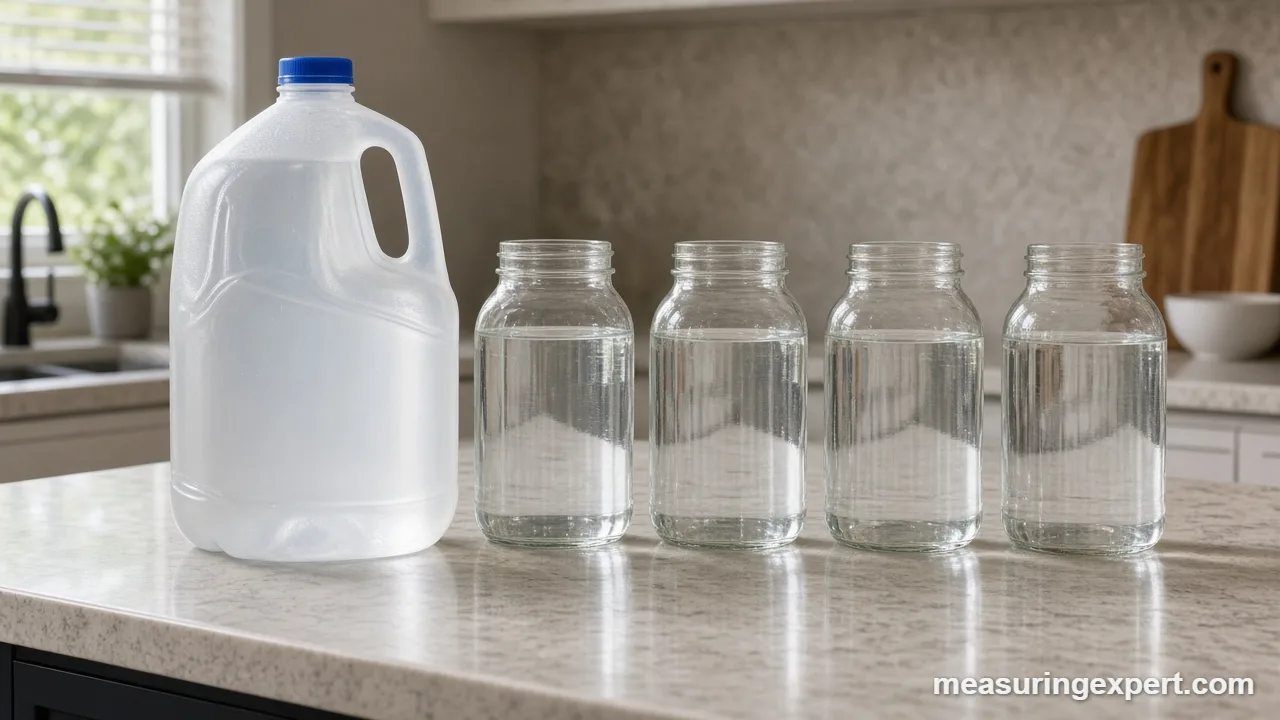
A popular memory trick is the “Gallon Man” drawing. First, you draw a big G, then put four Q shapes inside it for the quarts, two P shapes inside each Q for the pints, and two C shapes inside each P for the cups. As a result, you can count 4 quarts, 8 pints and 16 cups in a single gallon at a glance. Similarly, our guide to how many mL are in a gallon walks through the metric side of the same numbers.
How Many Quarts in a Gallon: US, Imperial and Dry
Overall, every system below has 4 quarts in a gallon of its own kind. The trouble starts when you mix a quart from one system with a gallon from another. For instance, a British recipe and a US milk jug use different gallons, so the liter values do not match.
| System | Gallon | Quart | Quarts per gallon |
|---|---|---|---|
| US liquid | 3.785 L (231 cubic inches) | 0.946 L | 4 |
| Imperial (UK, older Canadian) | 4.546 L | 1.137 L | 4 |
| US dry | 4.405 L (268.8 cubic inches) | 1.101 L | 4 |
| Metric “quart” (informal) | – | about 1 L | not a defined unit |
The figures above match the conversion factors in the NIST Guide to the SI, Appendix B, which gives 3.785412 L for the US gallon, 4.54609 L for the imperial gallon, 0.9463529 L for the US liquid quart and 1.101221 L for the US dry quart.
Meanwhile, the US dry quart is mostly seen on berry baskets and farm-market produce. Because it is about 16% larger than a liquid quart, you should not pour a liquid quart of water into a dry quart basket and expect it to fill exactly.
How to Measure Quarts in a Gallon at Home
Instead of guessing, you can check the conversion yourself with any marked quart container. Then you will know whether an unmarked bucket or pot really holds a gallon.
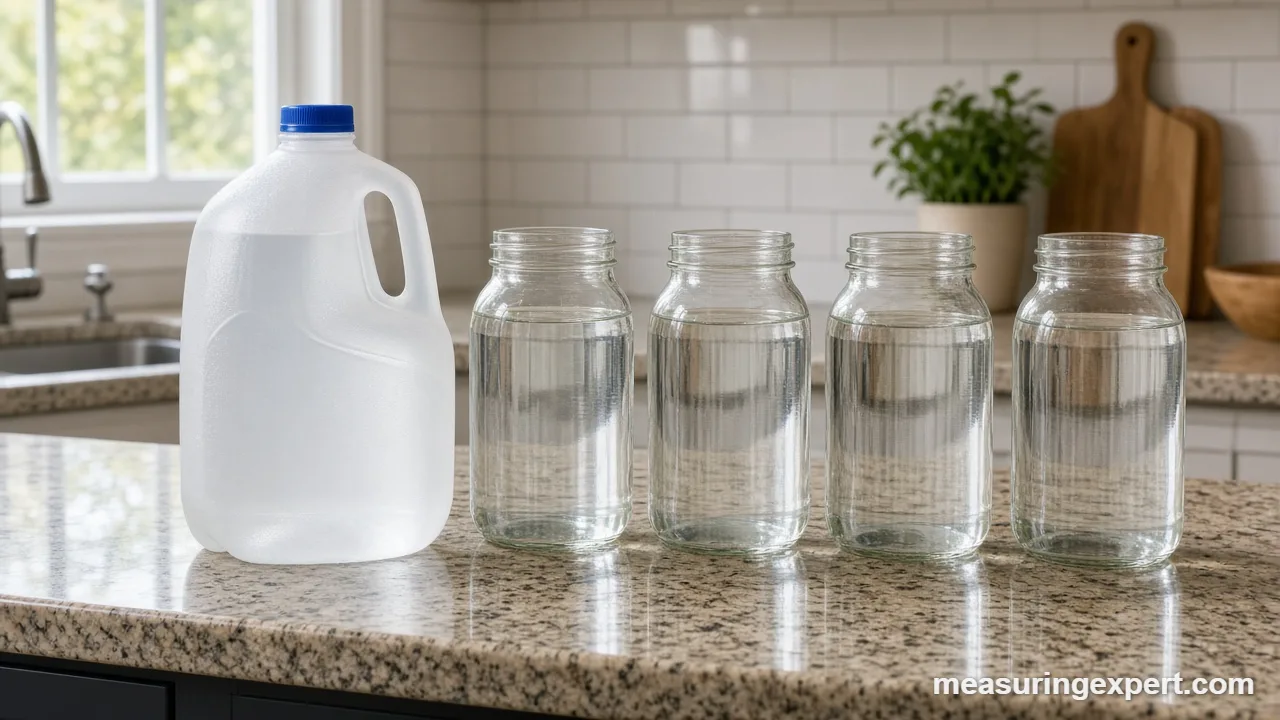
- Find a marked quart measure. Generally, a 4-cup measuring cup or a quart pitcher works well.
- Set it on a level counter. Otherwise, a tilted cup gives a false reading.
- Fill it to the 1-quart line at eye level. Crouch so your eye is even with the line, and read the bottom of the curved surface.
- Pour it into the empty container. Let it drain fully before you refill.
- Repeat and count. Four full quarts make one US gallon; mark the level on the container if you plan to reuse it.
- Check with the converter above. Enter your count of quarts to see the total in gallons and liters.
Do and Don’t With Quarts and Gallons
Do
- Check whether a recipe is American or British.
- Read liquid levels at eye level on a flat surface.
- Use liters when a label lists both units.
- Keep a dedicated pitcher for chemicals, since residue lingers.
- Divide quarts by 4 to get gallons.
Don’t
- Assume a dry quart equals a liquid quart.
- Treat a liter as an exact quart, because it is about 6% larger.
- Mix food and garden measuring cups.
- Guess when a bucket has no marks.
- Confuse fluid ounces with weight ounces.
Honest Limits of Quart and Gallon Conversions
The count of quarts in a gallon is exact, but real containers are not. Also, packers fill store jugs by weight or volume within legal tolerances, so a “gallon” of milk can hold slightly more or less than 3.785 L. Likewise, kitchen measuring cups have printed lines that can be off by a few percent.
Weight, however, is a separate issue. A quart is a volume, so what it weighs depends on the liquid. A gallon of water weighs about 8.3 lb (3.78 kg) at room temperature, and a quart weighs about 2.1 lb (0.94 kg). By contrast, a gallon of oil weighs less and a gallon of honey weighs much more. In short, never use quarts to estimate weight unless you know the density.
Finally, the US dry gallon is rarely used in commerce today. Still, the dry quart survives on produce, and that is why the table above lists both.
When Accuracy Really Matters
Generally, for soups, punch and pasta water, a little over or under a quart rarely matters. Still, some jobs need more care:
- Garden and pool chemicals. Labels give doses per gallon, so a wrong quart count changes the strength. So read the label first, and use a dedicated pitcher.
- Canning and brines. Salt and acid ratios keep food safe, so follow a tested recipe exactly.
- Engine oil and coolant. Your owner’s manual lists capacity in quarts and liters, because overfilling can cause problems.
- Medicine. Never convert liquid medicine with kitchen measures. Instead, use the dosing device that comes with it.
Quarts in a Gallon: Frequently Asked Questions
How many quarts in a gallon of water?
There are 4 quarts in a gallon of water. Water does not change the count, because a quart and a gallon are both volumes. That gallon weighs about 8.3 lb (3.78 kg).
How many quarts in a gallon of milk?
A US gallon of milk holds 4 quarts, the same as any other liquid. Similarly, a half gallon of milk holds 2 quarts.
Is 4 quarts half a gallon?
No. Instead, four quarts make a full gallon. Half a gallon is 2 quarts, or about 1.89 liters.
Is 2 quarts the same as 1 gallon?
No. In fact, two quarts equal half a gallon. So you need 4 quarts for 1 gallon.
Are there 4 quarts in a gallon in the UK too?
Yes. An imperial gallon also has 4 imperial quarts, but each one is about 1.137 liters, so the whole gallon is about 4.546 liters.
How many US quarts are in an imperial gallon?
An imperial gallon holds about 4.8 US liquid quarts, because it is about 20% larger than a US gallon.
How many cups and pints are in a quart?
A US quart has 2 pints, 4 cups or 32 fluid ounces. So a gallon has 8 pints, 16 cups and 128 fluid ounces.
Is a liter bigger than a quart?
Yes, slightly. In fact, one liter is about 1.057 US quarts. See our guide to how many quarts are in a liter for a full chart.
How many quarts are in 5 gallons?
There are 20 quarts in 5 US gallons, because each gallon holds 4. That is about 18.93 liters.
Do dry quarts in a gallon work the same way?
Yes. A US dry gallon has 4 dry quarts of about 1.101 liters each. However, dry quarts are mainly used for produce, not liquids.
The Bottom Line
To sum up, a US gallon holds exactly 4 quarts, which is 8 pints, 16 cups or 128 fluid ounces, about 3.785 liters in total. The imperial gallon also splits into 4 quarts, but its quarts are bigger, so one imperial gallon equals about 4.8 US quarts.
So, check which system a recipe or label uses, measure at eye level, and let the converter at the top of the page handle unusual amounts.
6 thoughts on “How Many Quarts in a Gallon? US, UK and Dry Quarts Explained”