

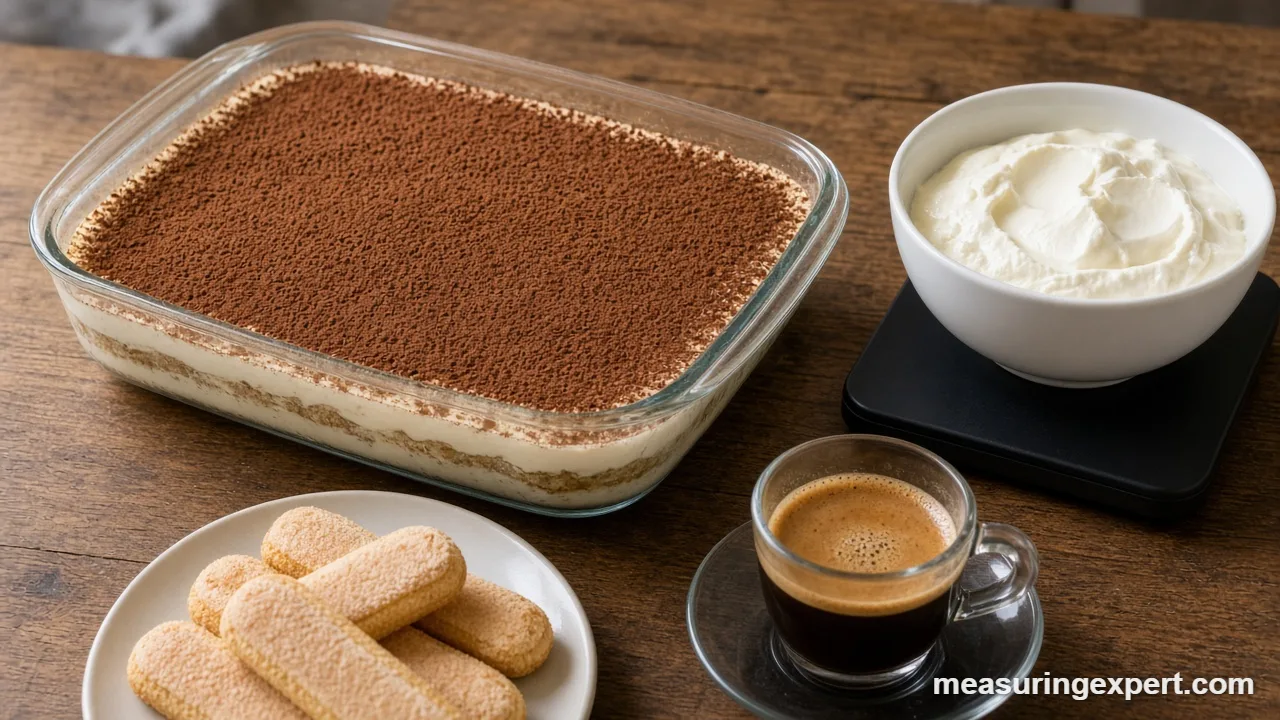
To measure tiramisu ingredients accurately, weigh them. A typical 9-serving batch uses about 500 g (17.6 oz) of mascarpone, 5 egg yolks (about 70 g), 100 g of sugar and 300 mL of espresso. Because the yolks go into a cream, USDA says egg mixtures should reach 160 F (71.1 C), or you can use pasteurized eggs.
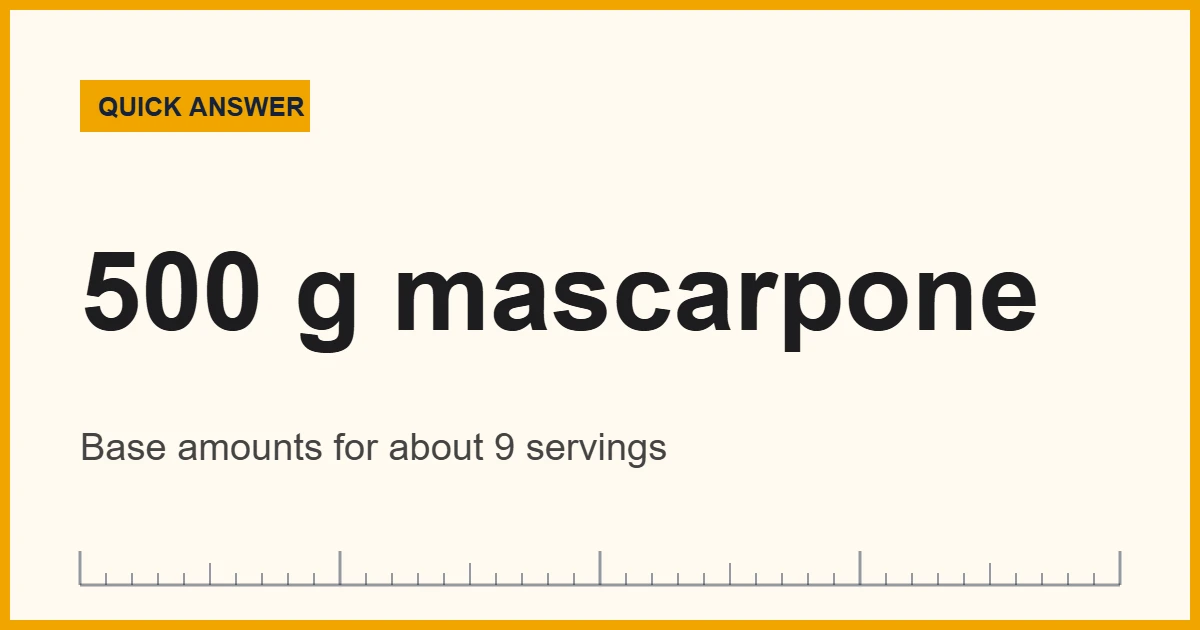
Convert Tiramisu Weights and Ounces
First, enter a weight in grams to see ounces, pounds and more. As a result, you can match a European recipe to the 8 oz and 16 oz mascarpone tubs sold in US stores.
Tiramisu has only a handful of ingredients, so each one matters. For example, too much mascarpone makes the cream stiff, while too little leaves it loose. In the same way, an extra splash of coffee turns the ladyfingers to mush. For that reason, the best way to measure tiramisu ingredients is by weight for the solids and by volume for the liquids.
In fact, cups are a weak spot for this dessert. For example, a cup of mascarpone weighs about 227 g according to King Arthur Baking, but how firmly you pack it changes the result. As a result, a scale removes that guesswork. In addition, grams make it easy to scale the recipe up or down without awkward fractions.
Overall, this guide gives a sample base recipe in grams and cups, a scaling chart for 6 to 18 servings, and egg safety numbers from USDA. If you also bake other dessert layers, our guide to measurement in pastry making covers the same habits.
Measure Tiramisu Ingredients: Base Recipe Amounts
First, the table below is a sample base for about 9 servings. It is a template for practice, not a standard, so adjust the sugar and liqueur to your taste. Also, the cup values come from the King Arthur ingredient weight chart, and the milliliter values use the exact US definitions.
| Ingredient | Metric | US approx. | Job in the dessert |
|---|---|---|---|
| Mascarpone | 500 g | 17.6 oz, about 2 1/4 cups | Creamy body |
| Egg yolks | 70 g (5 large) | 2.5 oz | Richness and structure |
| Granulated sugar | 100 g | 3.5 oz, about 1/2 cup | Sweetness |
| Heavy cream | 240 g | 8.5 oz, about 1 cup plus 1 tbsp | Lightness once whipped |
| Espresso, cooled | 300 mL | 10.1 fl oz, about 1 1/4 cups | Soaks the ladyfingers |
| Liqueur (optional) | 45 mL | 3 tbsp | Flavor |
| Unsweetened cocoa | 15 g | about 3 tbsp | Dusting on top |
| Ladyfingers | count what fits | about 24 to 30 | Layers |
However, ladyfingers vary in size by brand. Therefore, count how many fill one layer of your dish instead of trusting a fixed number. Most recipes use two layers, so buy enough for both.
Recommended Tools to Measure Tiramisu Ingredients
First, a digital scale with a tare button does most of the work. Next, a glass liquid measuring cup handles espresso and cream, and a set of measuring spoons covers cocoa and liqueur. Finally, an instant-read thermometer helps if you cook the yolks to 160 F. In short, the tools below are widely reviewed picks for these jobs.


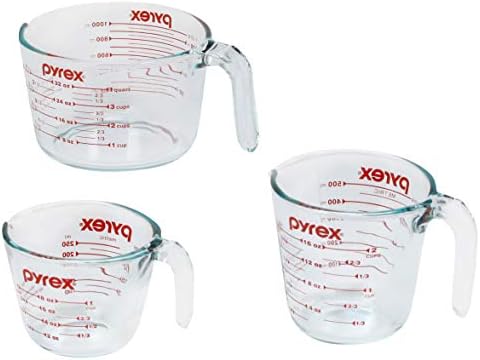


As an Amazon Associate, Measuring Expert earns from qualifying purchases.
Key Takeaways
- First, weigh mascarpone, sugar and yolks in grams; measure espresso and liqueur in milliliters.
- For example, a cup of mascarpone is about 227 g, a cup of granulated sugar about 198 g.
- One large egg yolk is about 14 g, and a whole large egg about 50 g.
- Therefore, scale a base recipe by multiplying every weight by the same factor.
- Also, USDA says egg mixtures should reach 160 F (71.1 C); pasteurized eggs are the other route.
- Finally, keep the dessert cold, and do not leave it out for more than 2 hours.
Grams vs Cups to Measure Tiramisu Ingredients
Volume measures are fine for liquids, but dry and creamy ingredients pack differently each time. In addition, the table lists King Arthur Baking values so you can convert a cup-based recipe into grams.
| Ingredient | Volume | Ounces | Grams |
|---|---|---|---|
| Mascarpone | 1 cup | 8 | 227 |
| Heavy cream | 1 cup | 8 | 227 |
| Granulated sugar | 1 cup | 7 | 198 |
| Superfine sugar | 1 cup | 6 3/4 | 190 |
| Confectioners’ sugar | 1 cup | 4 | 113 |
| Unsweetened cocoa | 1/2 cup | 1 1/2 | 42 |
| Large egg, whole | 1 egg | 1 3/4 | 50 |
| Large egg yolk | 1 yolk | 1/2 | 14 |
Cocoa is listed per half cup, so one tablespoon works out to about 5.25 g (42 g divided by 8 tablespoons). Likewise, a tablespoon of confectioners’ sugar is about 7 g. These are chart averages, so a spoon of your brand may differ a little.
Scale Your Tiramisu for More or Fewer Servings
First, pick a factor by dividing the servings you want by 9. For example, 12 servings is a factor of 1.33. Then multiply every weight in the base table by that factor. Finally, the chart below does the math for common sizes.
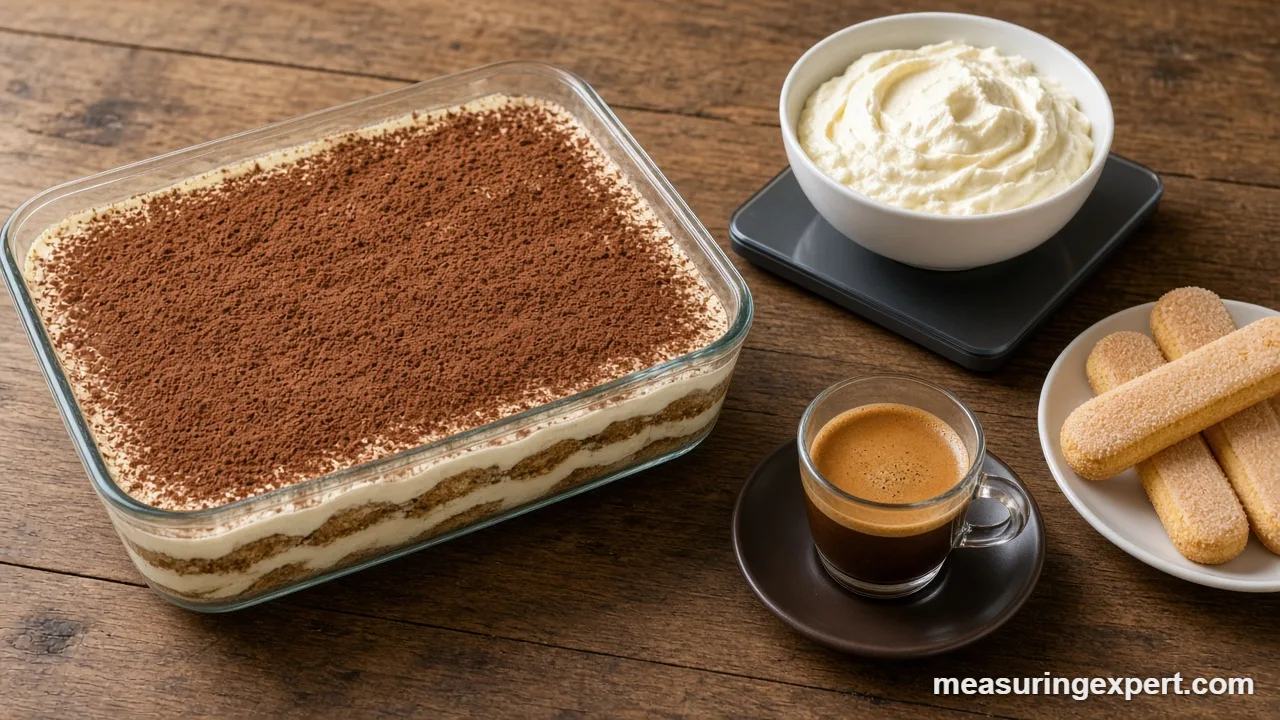
| Servings | Mascarpone | Egg yolks | Sugar | Heavy cream | Espresso | Cocoa |
|---|---|---|---|---|---|---|
| 6 | 333 g | 47 g (3 to 4 yolks) | 67 g | 160 g | 200 mL | 10 g |
| 9 | 500 g | 70 g (5 yolks) | 100 g | 240 g | 300 mL | 15 g |
| 12 | 667 g | 93 g (6 to 7 yolks) | 133 g | 320 g | 400 mL | 20 g |
| 18 | 1,000 g | 140 g (10 yolks) | 200 g | 480 g | 600 mL | 30 g |
However, yolks do not divide neatly. In that case, whisk the yolks together and weigh out the amount you need, rather than guessing at half a yolk. Moreover, mascarpone sells in 8 oz (227 g) and 16 oz (454 g) tubs, so round to the nearest tub if you prefer. If you want a feel for ounce conversions, see how much an ounce is.
Eggs: Measure Tiramisu Ingredients Safely
Classic tiramisu uses raw or lightly cooked egg yolks, so food safety is part of measuring. For example, an Ohio State University food-safety column notes that the CDC recommends pasteurized eggs for dishes such as tiramisu, and advises cooking egg mixtures to 160 F (71.1 C). Similarly, the USDA lists the same 160 F for egg dishes.
| Option | What to do | Number to hit |
|---|---|---|
| Pasteurized eggs | Buy them labeled pasteurized and use as directed | No cooking step needed |
| Cooked yolk custard | Whisk yolks and sugar over gentle heat, then check with a thermometer | 160 F (71.1 C) |
| Eggless filling | Skip yolks and fold mascarpone with whipped cream | Not applicable |
Meanwhile, time matters too. Also, egg dishes should not sit at room temperature for more than 2 hours, or 1 hour when it is 90 F or hotter. Therefore, assemble the dessert, cover it and refrigerate it promptly. In addition, our guide to the digital thermometer for cooking explains how to read one correctly.
How to Measure Tiramisu Ingredients Step by Step
- Set up the scale. First, put a clean bowl on it, press tare and switch to grams.
- Weigh the yolks. Separate the eggs, then add yolks until the display reaches your target, about 14 g each.
- Weigh the sugar. Next, tare again, and add 100 g for a 9-serving batch.
- Weigh the mascarpone. Then use a separate cold bowl and add 500 g, or one 16 oz tub plus a little extra.
- Measure the liquids. Pour cooled espresso into a glass measuring cup, and read it at eye level on a flat surface.
- Weigh the cocoa last. Finally, spoon about 15 g into a small sieve for dusting.
Cold espresso matters for texture, because hot coffee makes ladyfingers soggy. In addition, a quick dip is enough for each ladyfinger, because they keep soaking after they are in the dish.
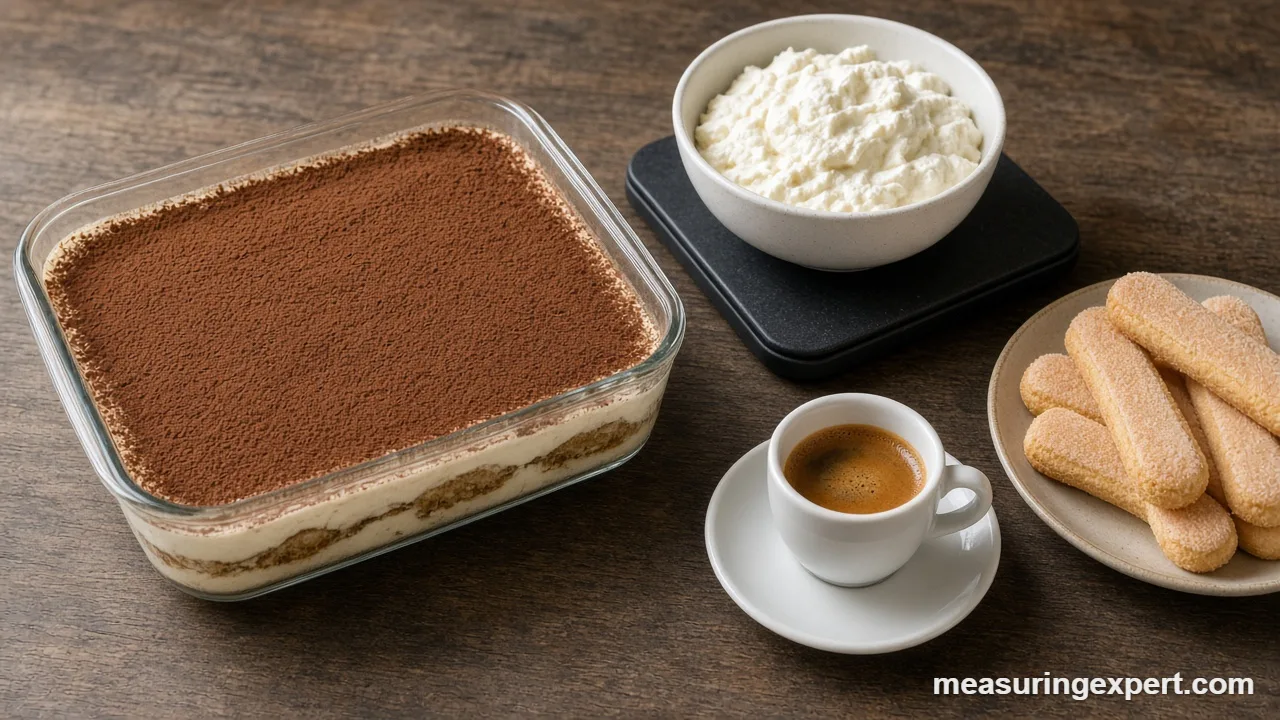
Espresso, Liqueur and Cocoa: Measure the Small Amounts
In fact, small amounts cause outsized problems. For example, a tablespoon too much liqueur can overpower the cream, and a tablespoon too much coffee can make the bottom layer wet. Therefore, use measuring spoons for liqueur: 3 US tablespoons is about 44 mL, close to the 45 mL in the base recipe.
| Amount | Milliliters | US measure |
|---|---|---|
| Liqueur, small | 30 mL | 2 tbsp (1 fl oz) |
| Liqueur, base recipe | 45 mL | 3 tbsp |
| Espresso, 6 servings | 200 mL | about 3/4 cup plus 1 1/2 tbsp |
| Espresso, 9 servings | 300 mL | about 1 1/4 cups |
| Espresso, 12 servings | 400 mL | about 1 2/3 cups |
Also, for cocoa, sift it over the top just before serving so it stays dry. Weigh it if you want an even coating, since a heavy dusting tastes bitter.
Do and Don’t When You Measure Tiramisu Ingredients
Do when you measure tiramisu ingredients
- Weigh mascarpone, sugar and yolks in grams.
- Cool the espresso before dipping, because hot coffee soaks in too fast.
- Check cooked yolks with a thermometer, so you know they reached 160 F.
- Scale every ingredient by the same factor.
- Refrigerate the finished dessert promptly, because egg dishes spoil at room temperature.
Don’t when you measure tiramisu ingredients
- Pack mascarpone into a cup, because packing changes the weight.
- Guess half a yolk.
- Pour hot coffee over ladyfingers, since they turn soggy.
- Skip the egg-safety step.
- Leave the dish out for hours, because bacteria grow at room temperature.
Honest Limits of These Amounts
In short, the base recipe is a sample, not a rule. Tastes differ, mascarpone brands differ in thickness, and egg sizes vary, so a “large” yolk may weigh slightly more or less than 14 g. Likewise, cup values are chart averages, and the number of ladyfingers depends on their size and your dish. For this reason, taste the cream before layering and adjust sugar or liqueur in small steps. The safety numbers, by contrast, are fixed USDA and CDC guidance and should not be bent.
When to Be Extra Careful
Also, take extra care when serving tiramisu to guests who are pregnant, elderly, very young or immunocompromised. Alcohol in the liqueur is another factor, since it does not fully cook off in a no-bake dessert. In those cases, use pasteurized eggs, leave out the liqueur, or ask a doctor or dietitian about what is safe.
Frequently Asked Questions
What is the best way to measure tiramisu ingredients?
Weigh the solids in grams and measure the liquids in milliliters. In fact, a digital scale with a tare button is the most reliable tool, especially for mascarpone, sugar and egg yolks.
How much mascarpone do you need for tiramisu?
A common base is 500 g (17.6 oz) for about 9 servings. In other words, that is roughly two 8 oz tubs plus a little more, or one 16 oz tub if you accept a slightly lighter cream.
How many egg yolks go into a 9-serving tiramisu?
The sample recipe uses 5 large yolks, about 70 g, since one large yolk is about 14 g. Therefore, weigh the yolks if your eggs are larger or smaller.
How many layers should tiramisu have?
Most recipes use two layers of soaked ladyfingers with cream between and on top. However, the right count depends on your dish, so check that the layers fit.
Should mascarpone be cold or at room temperature for tiramisu?
First, keep it cold, and mix it gently. Warm mascarpone can turn loose or grainy, so take it out of the refrigerator only as you need it.
Is it safe to measure tiramisu ingredients with raw eggs?
In fact, the CDC recommends pasteurized eggs for tiramisu. Otherwise, cook the egg mixture to 160 F (71.1 C), as USDA advises for egg dishes.
How many grams is a cup of mascarpone?
King Arthur Baking lists 1 cup of mascarpone at 227 g, or 8 oz. Packing changes the exact amount, so weigh it when you can.
How do I measure tiramisu ingredients for a bigger group?
Divide the servings you want by 9, then multiply every weight in the base recipe by that factor. For example, for 18 servings, double everything.
How much espresso do I need for the ladyfingers?
The base recipe uses 300 mL (about 1 1/4 cups) of cooled espresso for 9 servings. Dip each ladyfinger briefly instead of soaking it.
How long can tiramisu sit out?
Egg dishes should not sit at room temperature for more than 2 hours, or 1 hour when it is 90 F or hotter. Also, refrigerate it as soon as it is assembled.
Measure Tiramisu Ingredients: The Bottom Line
To sum up, weigh the solids, measure the liquids and scale everything by one factor. In short, a 9-serving batch uses about 500 g of mascarpone, 70 g of yolks, 100 g of sugar and 300 mL of espresso.
Finally, treat the eggs as a safety step, with pasteurized eggs or a custard cooked to 160 F. In addition, use the converter at the top of the page when a recipe lists ounces, and chill the dessert promptly.
1 thought on “Measure Tiramisu Ingredients: Grams, Cups and Eggs for Perfect Layers”